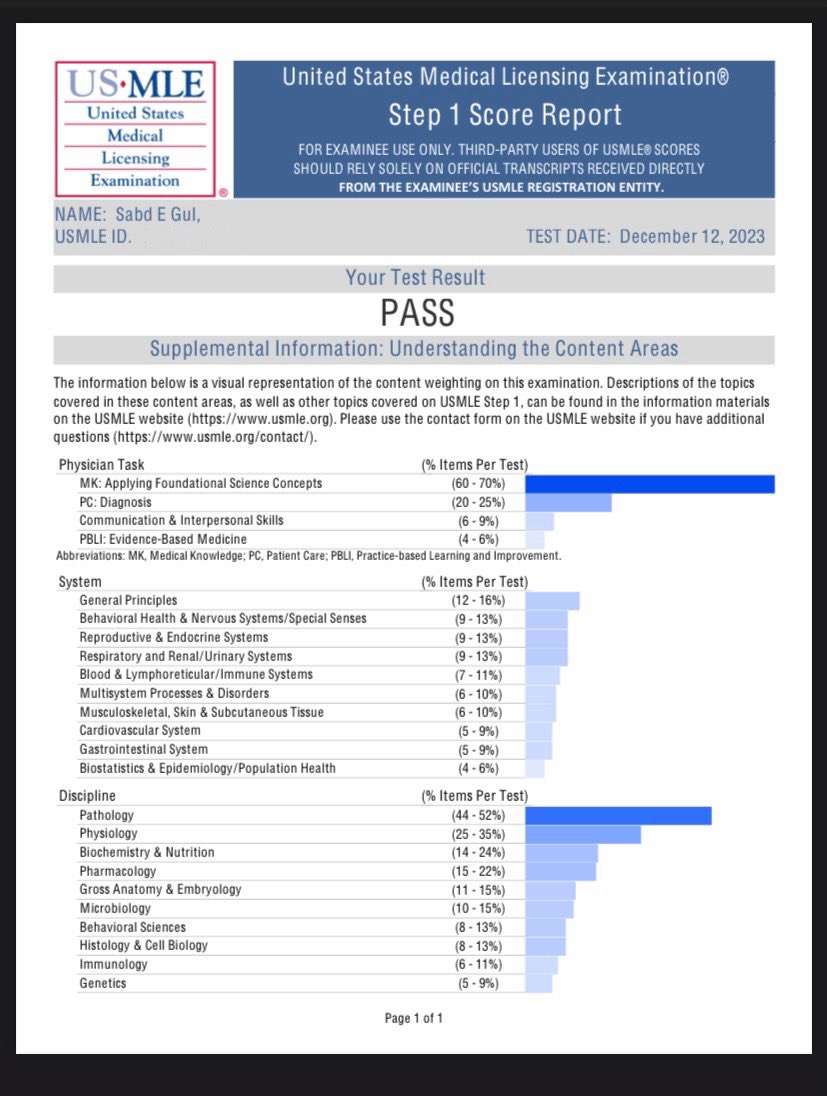
God is The Greatest indeed. Worked my ass off for this exam in the face of hurdles and numerous other struggles. It was me against the world but I did it. Alhamdulillah. One step at a time. Pun intended.
People don't understand when I say I like grapes but not grape flavored products. That sht don't even be tasting like grapes.. it be tasting like... purple.
And y'all maď that makes sense.
HOW TO VALUE YOURSELF
1. Not appreciated – Keep your distance
2. Not invited – Don’t go
3. Invited late – Decline
4. Ignored – Stop approaching
5. Betrayed – Forgive & move on
6. Be forgotten – Forget them
7. Insulted – Outshine them with success
8. Used – Set firm boundaries
9. Disrespected – Walk away with dignity
10. Underestimated – Let your results speak
11. Taken for granted – Stop overgiving
12. Manipulated – Protect your peace
13. Surrounded by negativity – Choose solitude over disrespect
14. Lied to – Believe actions, not words
15. Controlled -Take back your power
An angel will find you, or else a book, or a friend, or perhaps a vision, or a dream — or the strange touch of a tree or sudden memories of a beloved elder sharing a wisdom; perhaps a travel leading you to a starry sky in awe and remember ancient things ... you will be found.
Tip 92:
There is absolutely no room for spelling, punctuation, or grammar mistakes in your ERAS CV or Personal Statement. Not a single error is acceptable. Please understand the level of competition. The stakes are high, and there is no forgiveness for carelessness at this stage. The ERAS CV and Personal Statement must be flawless.
At this level, programs assume that if you cannot proofread your own work for accuracy, you may also be careless with patient charts, orders, or communication. That’s why there is zero tolerance for mistakes.
The best approach is to:
Proofread multiple times,
Use grammar tools as a safety net,
Ask mentors, colleagues, or professional editors to review, and
Step away for a day and re-read with a fresh perspective.
#IMresidency #Match2026 #ERAS #AIinMedicine #IMwithArslan
Tip series for New Interns PGY1
Tip 88: Dont Complain, Dont Complain, Dont Complain
Please refrain from jumping into complaints early on. Once you begin your residency program, it’s natural to notice flaws, issues, or areas that seem to need improvement. However, avoid the instinct to immediately criticize.
Remember, this program has been training and graduating competent physicians long before your arrival. Give yourself time to understand the system, the reasoning behind how things are structured, and the context in which they operate.
You may feel that you have better ideas or see ways to improve things—and that’s valuable. But first, take time to adjust, observe, and absorb. Learn the system before suggesting changes. Constructive feedback is essential and always welcome—but timing, approach, and understanding are equally important.
Also, never forget the hard work it took to get here. Remember the uncertainty, the long nights, the sacrifices—and how life felt before you matched. Value this achievement deeply. Enjoy the process
#IMwithArslan #AIinMedicine #ERAS #USMLE
Good Luck May team ! Seeing my students striving and on the pathway to residency. 9 years ago Ayesha was my student when I was teaching Physiology in Khyber Medical College ! It is a small world.
Marrying the right guy matters, but marrying into an educated family is so important & often less talked about. My in-laws, both professors, make me feel so liberated! To younger women, my advice: Marry into generational education, not generational wealth. You'll be much happier.
Must-Know ECGs for USMLE Step 2 CK 📈❤️
............
1/ Normal ECG
P Wave: Atrial depolarization, should be upright in leads I, II, and aVF.
PR Interval: 120-200 ms (3-5 small boxes).
QRS Complex: < 120 ms (< 3 small boxes).
QT Interval: < 440 ms in men, < 460 ms in women.
T Wave: Ventricular repolarization, should be upright in most leads.
..............
2/ ST-Elevation Myocardial Infarction (STEMI)
Key Features:
ST Elevation: >1 mm in two contiguous leads.
Q Waves: May develop later, indicating myocardial necrosis.
T Waves: Inversion following ST elevation.
Regions:
Anterior: Leads V1-V4
Inferior: Leads II, III, aVF
Lateral: Leads I, aVL, V5, V6
.................
3/ Non-ST-Elevation Myocardial Infarction (NSTEMI)
Key Features:
ST Depression: Horizontal or downsloping in two contiguous leads.
T Wave Inversion: May be present.
Difference from STEMI: No ST elevation, but positive cardiac biomarkers (e.g., troponins).
...............
4/ Atrial Fibrillation (AFib)
Key Features:
Irregularly Irregular Rhythm: No distinct P waves.
Variable R-R Intervals: Irregular QRS complexes.
Fibrillatory Waves: Fine or coarse baseline oscillations.
................
5/ Atrial Flutter
Key Features:
Sawtooth Pattern: Regular, rapid atrial contractions (flutter waves).
Rate: Typically around 300 bpm atrial rate, with a 2:1 conduction often resulting in a ventricular rate of 150 bpm.
.................
6/ Ventricular Tachycardia (VT)
Key Features:
Wide QRS Complexes: >120 ms.
Regular Rhythm: Rapid, usually 100-250 bpm.
AV Dissociation: P waves independent of QRS complexes (may not be visible).
...........
7/ Ventricular Fibrillation (VFib)
Key Features:
Chaotic, Irregular Baseline: No discernible QRS complexes, P waves, or T waves.
Life-Threatening: Immediate defibrillation required.
.............
8/ First-Degree AV Block
Key Features:
Prolonged PR Interval: >200 ms (more than 5 small boxes).
Regular Rhythm: All P waves followed by QRS complexes.
.............
9/ Second-Degree AV Block
Mobitz Type I (Wenckebach):
Key Features: Progressive lengthening of the PR interval until a beat is dropped (P wave not followed by QRS).
Grouped Beating: Pattern of gradually increasing PR intervals.
Mobitz Type II:
Key Features: Fixed PR intervals with intermittent dropped beats.
More Concerning: Can progress to complete heart block.
................
10/ Third-Degree (Complete) AV Block
Key Features:
Complete AV Dissociation: Atria and ventricles beat independently.
P Waves and QRS Complexes: No relationship between them.
Regular P-P and R-R Intervals: Independent of each other.
................
11/ Wolff-Parkinson-White (WPW) Syndrome
Key Features:
Short PR Interval: < 120 ms.
Delta Wave: Slurred upstroke of the QRS complex.
Wide QRS Complex: >120 ms.
................
12/ Hyperkalemia
Key Features:
Peaked T Waves: Tall, narrow, symmetrical.
Widened QRS Complexes: Progressively widen with increasing potassium levels.
Flattened P Waves: May disappear with severe hyperkalemia.
..................
13/ Hypokalemia
Key Features:
Flattened T Waves: Or T wave inversion.
U Waves: Prominent, following the T wave.
ST Depression: Possible.
..............
14/ Pulmonary Embolism (S1Q3T3 Pattern)
Key Features:
S Wave in Lead I: Deep S wave.
Q Wave in Lead III: Q wave.
Inverted T Wave in Lead III: T wave inversion.
........................
15/ Pericarditis
Key Features:
Diffuse ST Elevation: In multiple leads, not confined to an anatomical region.
PR Segment Depression: Especially in leads II, aVF, and V4-V6.
Study Tips:
Memorize Key Patterns: Recognize the classic ECG changes associated with each condition.
Practice Interpretation: Use online resources and practice ECGs to hone your skills.
Clinical Correlation: Always correlate ECG findings with patient symptoms and history.
Good luck to all those preparing for Step 2 CK! Keep practicing and stay confident! #USMLE #Step2CK #ECG #MedicalEducation
Feel free to share and discuss! 💬📈📚
If matching into residency programs seems challenging right now, go back 10 years on memory lane when being accepted into medical school sounded difficult.
Each of you are examples of resilience and commitment. Keep punching back at life especially in face of a challenge
"I think that at this moment
maybe nobody in the universe is thinking about me,
I’m the only one who’s thinking me,
and if I were to die now
nobody, not even I, would think me.
And this is where the abyss begins,
as when I go to sleep.
I’m my own support and I take it away from me.
I help to curtain everything with absence.
That may be why
when you think of someone
it’s like saving them."
- Roberto Juarroz
Photo: Sophie (France, 1954) by Édouard Boubat