@discoposse The fundamentals aren't sexy to talk about at a conference or a vendor pitch. A hijacked Terraform binary or provider could be really fun for those that believe GIT is an audit log.
@CTOAdvisor The 50% is all hype particularly when you think about assembly lines for cars. All of those are still not fully automated despite them having a very finite number of operations in most cases and something that the car manufacturers have been working on for decades.
@CTOAdvisor This should be easily achieved in an entirely closed environment where the AI has full insight into everything in the estate. An experiment I'd start with is can the AI reliably find the current version of every piece of hardware and software then find at least the latest version
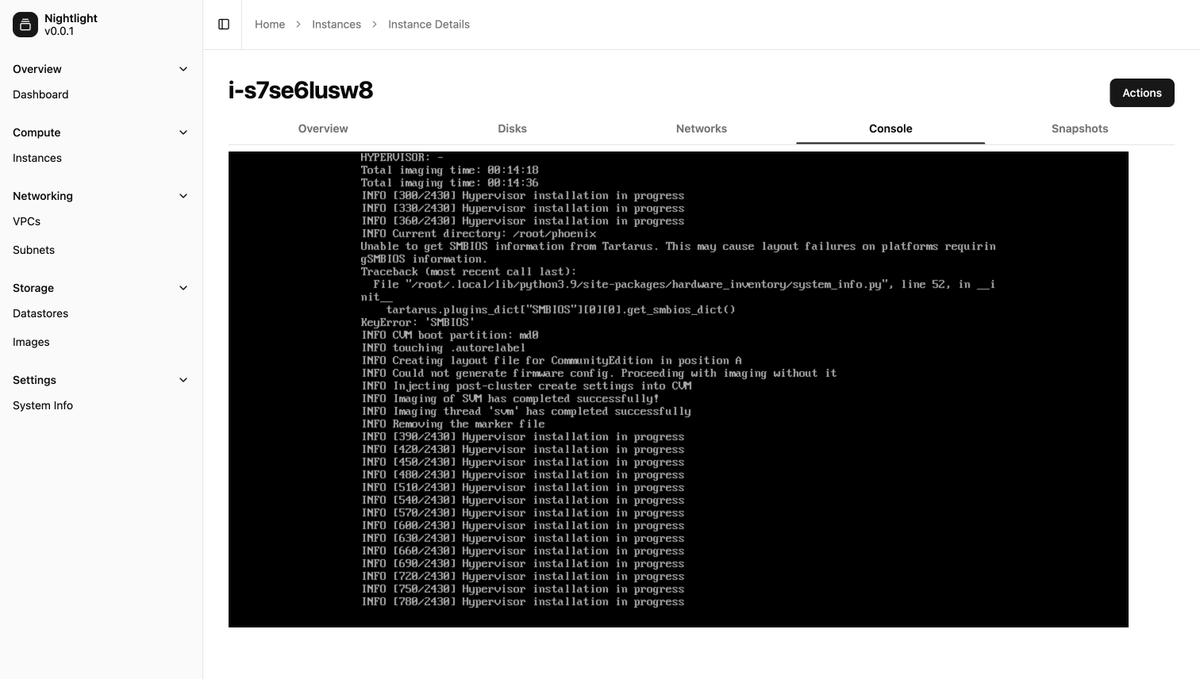
Install Nutanix community edition nested on the homelab hypervisor for some migration testing. Having an extremely lightweight virtualization solution makes tinkering infinitely easier.
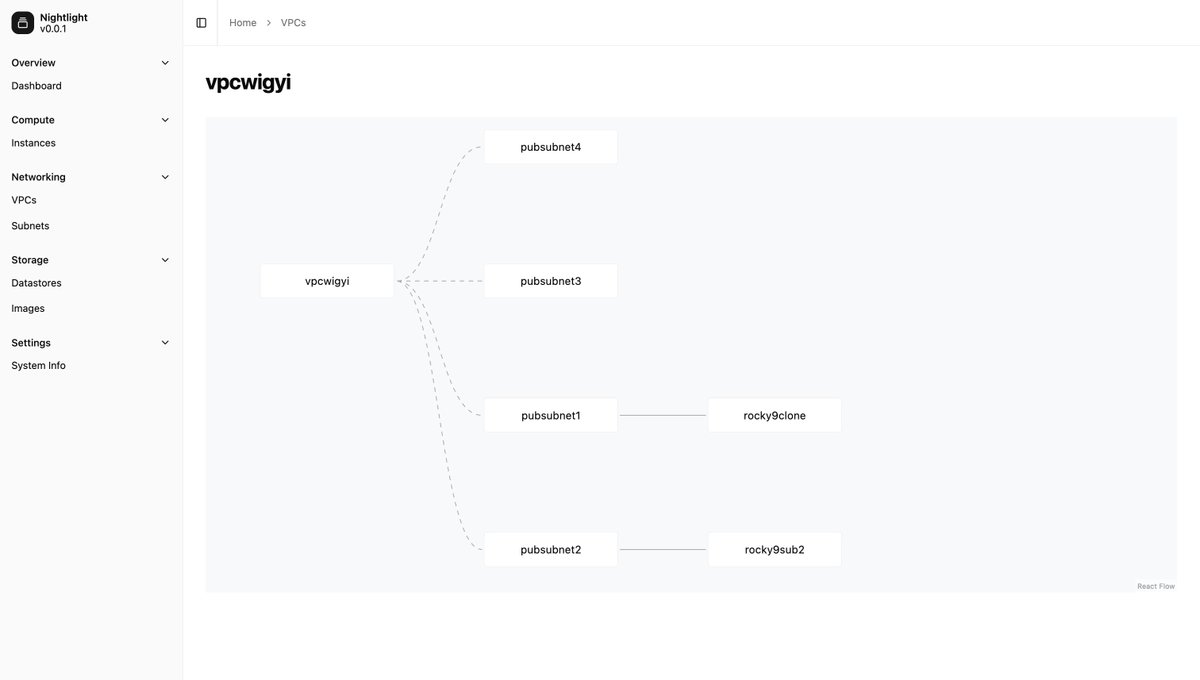
Spent time getting the network visualizer in the homelab hypervisor working. Now I can quickly see what subnets a VPC has and what instances are connected to those subnets.
Working on adding network visualization to the homelab hypervisor to quickly see what subnets I've got workloads connected to while working on OpenFlow flows.
@rnelson0 Those use case specifics are ideal places to start the conversation. Are our apps generic enough to run on dissimilar hypervisors between dev and prod? Do we need to meet stringent security requirements? Usually I just see a feature by feature checklist comparison spreadsheet.
I would argue all VMware replacement conversations should start with what applications the business needs to run. The features and ecosystem support the workloads running on the virtualization platform. Do dev and test workloads need data protection or HA?
@rnelson0 That raises the question of whether to have a small footprint that mirrors production that you cycle apps through in a short lived fashion or you go with a more persistent larger dev environment. Thinking all things cost to value trade off if we're talking more licenses.
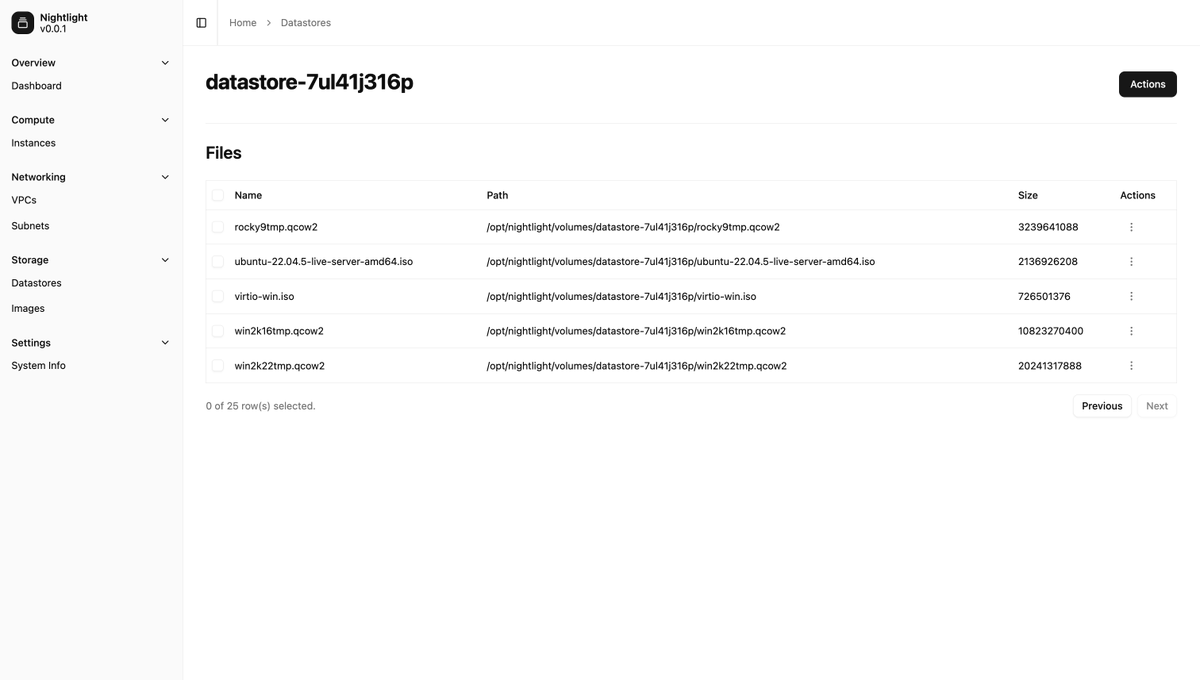
Speed has been the focus of the homelab hypervisor that I've been working on and being able to go from not installed to ready to run virtual machines in a matter of seconds accomplishes the goal. The OS installation is stateless and I usually run it from a USB on real hardware.
@darthVikes@MichaelCade1 There's definitely a middle ground that melds concepts like immutable infrastructure and a very lightweight virtualization layer without all the bells and whistles. Microvms are interesting but have limited use cases for orgs with a lot of 3rd party apps.
@MichaelCade1 It has a built-in metadata server like AWS to simplify cloud-init and the goal with the networking is to support more advanced use cases for testing like integrated proxy servers and "air-gapped" environments. All features focused on lab or test environments.
@MichaelCade1 I do a lot of testing that doesn't need enterprise features in a hypervisor like DRS, HA, Live Migration, etc. The "hypervisor" is based on Alpine Linux with KVM and Open vSwitch. It boots in about 90 seconds. I'm using it to run Nutanix AHV and Hyper-V at the moment.
@MichaelCade1 This is what makes one think about whether it was significantly underpriced for years given the breadth of very polished features and broad ecosystem of integrated solutions. How does one determine fair market value without a relatively close competitor?
@TheNJDevOpsGuy By no means do I believe that AI will replace a majority of engineers but there will be a portion of engineers, who are real people, will lose their jobs to AI. I believe the conversation needs a middle ground. Everyone can't adapt to the same degree and AI won't take every job.