GreenWeb International Resources Ltd was created to be at your service whenever you need agricultural resources as input for your businesses. Write us a mail and lets talk.
[email protected]#GreenWebNG#resources#commodities
THE DREAM SMALLHOLDER FARM: Self-Sufficient Living at Its Best
This breathtaking illustration captures what every passionate farmer dreams of a compact, fully integrated smallholder farm that produces food, generates its own energy, raises livestock, and sells directly to the public, all within a beautifully organized single property set against a lush mountain backdrop.
What This Farm Has and Why It Works
Vegetable Production: The Daily Income Engine
The foreground is dominated by lush, well-tended raised vegetable beds bursting with cabbages, tomatoes, leafy greens, and peppers. These fast-growing crops provide daily and weekly cash flow the lifeblood of any smallholder operation. Organized beds with clear pathways signal disciplined crop rotation and good weed management.
Roadside Farm Stand: Direct Market Access
At the entry and exit gate, a vibrant fresh produce market stall displays vegetables, fruits, and herbs directly to passing customers on the main road. This farm-to-consumer model eliminates middlemen, maximizes profit margins, and builds a loyal local customer base. It is one of the smartest income strategies a small farm can adopt.
Fish Pond and Canal: Water and Protein
A well-stocked fish pond sits alongside a natural canal running the full length of the property. Fish farming provides high-value protein for home consumption and sale, while the canal supplies irrigation water and creates a cooling microclimate for surrounding crops and fruit trees.
Aquaponics Unit: Closing the Nutrient Loop
Circular aquaponics tanks are visible near the solar setup, integrating fish and vegetable production in a closed water system delivering two harvests from one water source.
Solar Panels and Water Tanks: Energy Independence
A solar panel array with water storage tanks powers the farm's irrigation and household needs. This reduces operating costs dramatically and ensures uninterrupted production regardless of grid reliability.
Free-Range Poultry: Low-Cost Protein and Fertility
Chickens roam freely across the compound, contributing eggs, meat, and natural pest control while their manure enriches the vegetable beds organically.
Fruit Orchard: Long-Term Wealth
The back of the property is lined with mature fruit trees mangoes, lychees, and bananas providing seasonal income and food security year after year with minimal maintenance once established.
The Bigger Picture
This farm is not just productive, it is a lifestyle and a legacy. Every square metre earns. Every waste stream becomes a resource. Every enterprise supports another.
This is the blueprint for rural prosperity done right.
The big business on Kienyeji chicken
You do not keep Kienyeji chicken for fun. You keep them for income. These are Three clear income streams.
Meat
-Indigenous chicken meat sells higher than broilers in most Kenyan markets. In Nairobi and other towns, one mature bird ranges between Ksh 1000 to Ksh 2,000 depending on weight and season.
-Demand peaks during festive seasons and family events. Plan your production cycle to hit December and April.
-Target hotels, roadside eateries, and direct consumers who prefer organic taste.
-Grow birds to 1.8 to 2.5 kg live weight for better returns. Manage feed well to control cost.
If you manage 500 birds and sell 400 annually at an average of Ksh 1,500, you gross Ksh 600,000 from meat alone.
Eggs
-Kienyeji eggs attract premium prices due to yolk color and taste. A tray often sells between Ksh 600 to Ksh 900 depending on location.
-One improved Kienyeji hen lays 180 to 220 eggs per year under good feeding and lighting.
-Sell fertile eggs to farmers who want to hatch. Fertile eggs fetch more than table eggs.
-Build a loyal market in your church, estate, and online platforms.
If you keep 300 layers producing 180 eggs per year, you get 54,000 eggs. That is 4,500 trays. At Ksh 600 per tray, you gross Ksh 2,700,000 before costs.
Chicks
-Day old improved Kienyeji chicks sell between Ksh 90 to Ksh 150 depending on breed and demand.
-Invest in a reliable incubator. Maintain hatchability above 75 percent through proper egg handling.
-Farmers prefer buying from someone they trust. Offer guidance with every chick you sell.
-Package 1 month old chicks at higher prices for beginners who fear brooding losses.
If you hatch 1,000 chicks per month and sell at Ksh 110, you gross Ksh 110,000 monthly.
The strength of Kienyeji chicken lies in diversification. Meat gives bulk cash. Eggs give daily cash flow. Chicks give fast turnover.
If you treat your flock as a business, track feed cost, mortality, egg production, and market demand. Numbers guide profit.
Focus on management. Feed quality. Market planning.
That is where the real business sits
#LetsGrowTogether
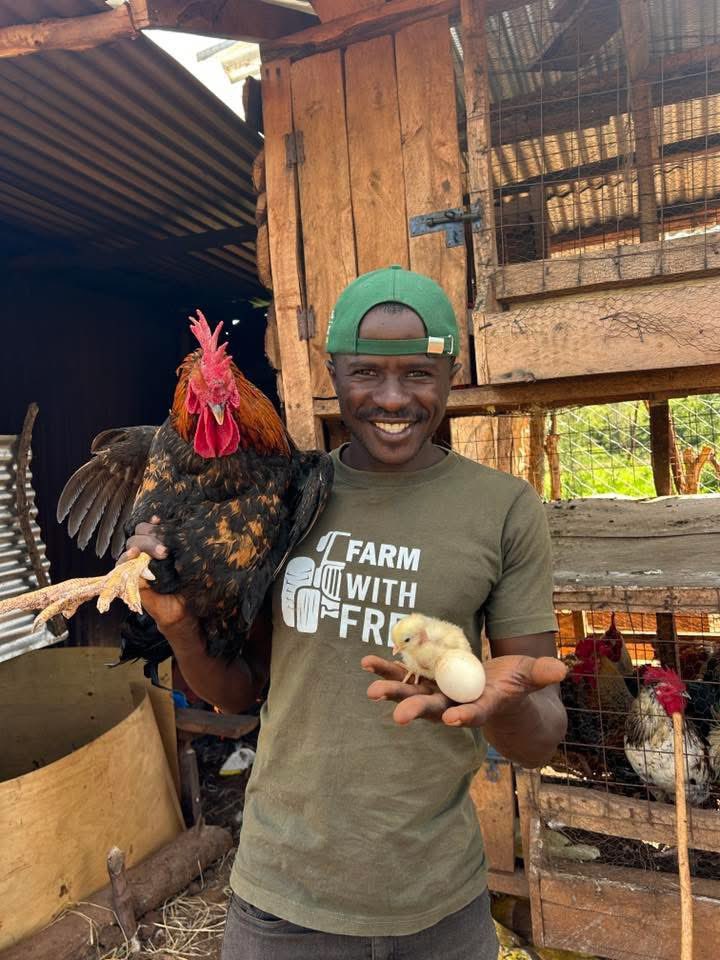
A well-fed chicken must show some drama during egg-laying. Mine are not just noisy they even provokes hawks over the roof😂😂.
Chicken feeding patterns decide whether you lose money or make money in eggs and meat.
I feed mine on commercial feed in the morning, then give vegetables and free-range them the better part of the day.
With commercial feed alone, you will never realize profit.
#LetsGrowTogether
IS FREE-RANGE CHICKEN REALLY HEALTHIER?
Let’s talk chicken—literally. 🐔
You’ve seen the labels: “Free-Range,” “Pasture-Raised,” “Organic.” But what does it really mean for your health, your wallet, and the chicken?
Free-range chickens are allowed to roam outside, peck at bugs, scratch the soil, and live a more natural life. That movement and diet can lead to leaner meat, better flavor, and even higher levels of nutrients like omega-3s and vitamin D.
But here’s the catch: not all “free-range” claims are created equal. In some countries, it could mean just a few minutes of outdoor access per day. So it’s not just about the label—it’s about the practice.
For farmers, going free-range can mean happier birds, better customer trust, and premium pricing. For consumers, it’s about knowing your food lived well before it landed on your plate.
So... is free-range chicken healthier? Yes—but only when it’s truly free-range.
👇 Drop your thoughts below. Would you pay more for truly free-range chicken?
#FreeRangeChicken
#PoultryFarming
Hello Fam, happy weekend!
Poultry farming is more than just raising chickens, it’s a pathway to nutrition, income, and healthier communities. Every egg collected is a step toward food security.
#PoultryFarming
🍅 This One Trick Made My Tomato Plants Explode with Fruit – You Won’t Believe What I Used! 👀👇
I’ve tried dozens of gardening hacks…
But nothing worked as powerfully as this simple, natural ingredient.
My tomato plants went from “meh” to massive harvests.
Let me explain 🧵
DIY guide to create your own home incubator! 🌟
Here’s what you’ll need:
• A sturdy cardboard box
• A light bulb with socket and electrical cord
• A thermometer and hygrometer
• Sawdust or shredded paper for bedding
• A water container for humidity
• Fertilized eggs
Follow these easy steps:
1. Prepare the box
Take a cardboard box large enough to hold the eggs. Add a layer of sawdust or paper for good thermal retention.
2. Install the heat source
Attach an incandescent bulb to the center of the lid or on one side of the box. It will help maintain a constant temperature.
3. Monitor temperature and humidity
Place a thermometer and hygrometer inside. The ideal temperature is about 99.5°F, and humidity should be between 50 and 60%. Add a water container to maintain humidity.
4. Place the eggs
Put the fertilized eggs in the box, spaced apart for good air circulation.
5. Turn the eggs regularly
Gently turn the eggs 2 to 3 times a day to prevent the embryo from sticking to the shell.
6. Monitor and adjust
Check the temperature and humidity daily. Adjust the height of the bulb if necessary.
7. Hatching after 21 days
Around day 18, stop turning the eggs and slightly increase humidity (65-70%) to facilitate hatching. After 21 days, the chicks should start to hatch!
This simple method allows you to incubate eggs economically at home!
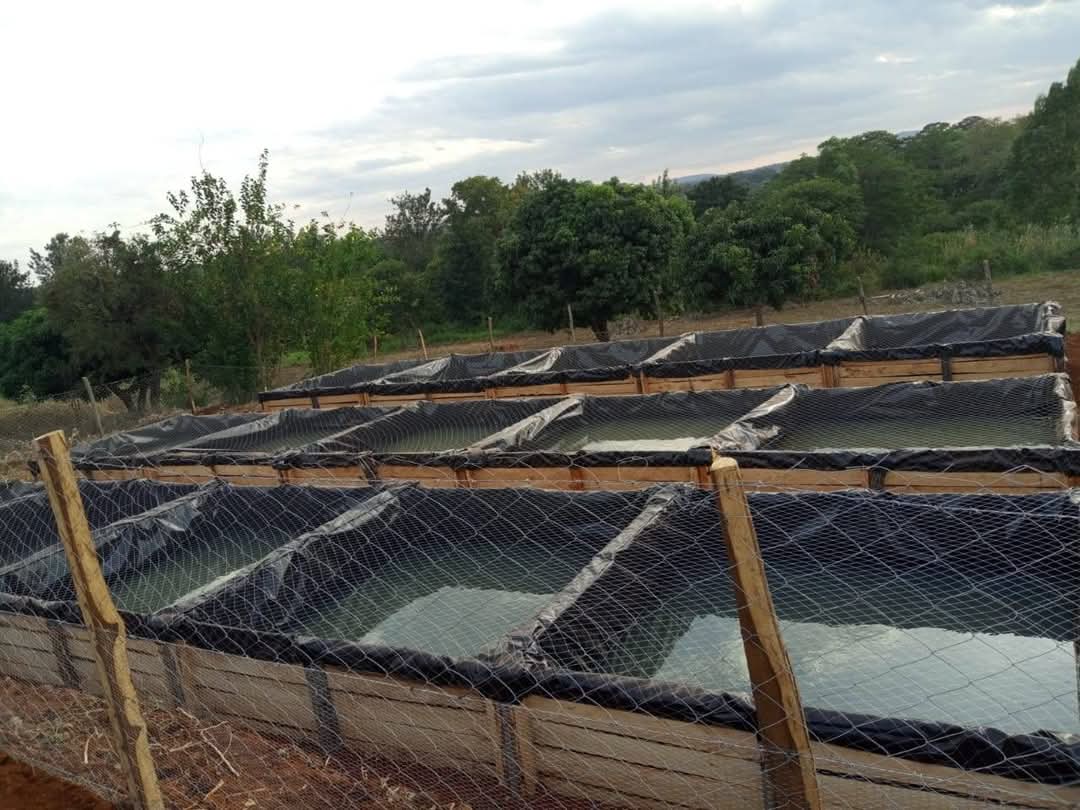
This is a fish pond.
The materials needed to construct it include timber, damliner, covernets, nails, plumbing materials and posts.
The pond capacity is as follows:
Each ponds measures 4M by 2M by 1.3M high.
Total volume is 10,400 litres of water per pond.
For the three ponds: 10400×3= 31200 litres of water.
Let us determine the stocking capacity.
I will use catfish for this case(Since it is one of the most loved by famers for rearing).
One catfish need 10L of water.
For one pond it should carry; 10400L÷10 =1040 fingerlings of catfish.
That means for the three ponds, you will be able to keep 3120 heads of catfish minimum.
The construction takes only Ksh. 65,000 each pond.
HOW TO REDUCE CANNIBALISM IN CATFISH
Catfish have high tolerance to high stocking rate. However, a times the vice of cannibalism arises just like in poultry.
Here are several ways to reduce that:
1. Feed the fish optimally.
Ensure that you give enough food to the fish especially the blood meal.
2. Avoid overcrowding.
Know the maximum number of fish your pond can keep (for catfish, the stocking rate should be 1 for every 10l of water).
3. Enrich your fish pond with hiding points for smaller fish eg.hiding pipes. This is called habitat enrichment.
4. Regularly, monitor your pond and harvest larger fish to reduce the damage to smaller ones.
5. Do proper water quality management. Water should have optimum pH, oxygen and temperatures.
6. Develop proper feeding programmes.
We construct fishponds for farmers countrywide. We also supply fingerlings and help farmers get market for their produce.
Farm smarter with #OptimistFarmer