Roman concrete could repair its own cracks.
Some Roman buildings have stood for 2,000 years, while modern concrete can start to crumble within decades. For a long time, scientists did not fully understand why.
The Romans made their concrete from lime, water and volcanic ash from the area around Pozzuoli, near Naples. The ash reacted with the lime and created a material that grew stronger over time instead of weaker.
In 2023, a team from MIT led by Admir Masic found another piece of the puzzle, small white lumps of lime scattered through the concrete.
Scientists had always thought these lumps were a sign of careless mixing. In fact, they were the repair kit. When a crack forms and rainwater gets in, the lime dissolves and refills the crack with new mineral, sealing it from the inside.
The secret was “hot mixing.” Instead of using slaked lime, the Romans added quicklime directly to the mix. It heated up as it reacted with water and left these lumps behind on purpose.
To test the idea, the team cracked samples of concrete made with the Roman method and let water run through them. Within two weeks, the cracks had sealed completely. In concrete made without the lime lumps, the water kept flowing.
Roman harbour concrete went even further. Pliny the Elder wrote that once it touched the waves, it became a single block of stone that grew stronger every day. In 2017, geologist Marie Jackson showed he was right, seawater slowly grows rare crystals inside the concrete that hold it together.
mammal of the day 30: snow leopard (panthera uncia)
> found in: mountains of central and south asia
> habitat: rocky slopes, usually 3,000 to 5,000 meters up
> eats: wild sheep and goats, marmots, pikas, and hares
> status: vulnerable
📸: Irbis1983 (public domain)
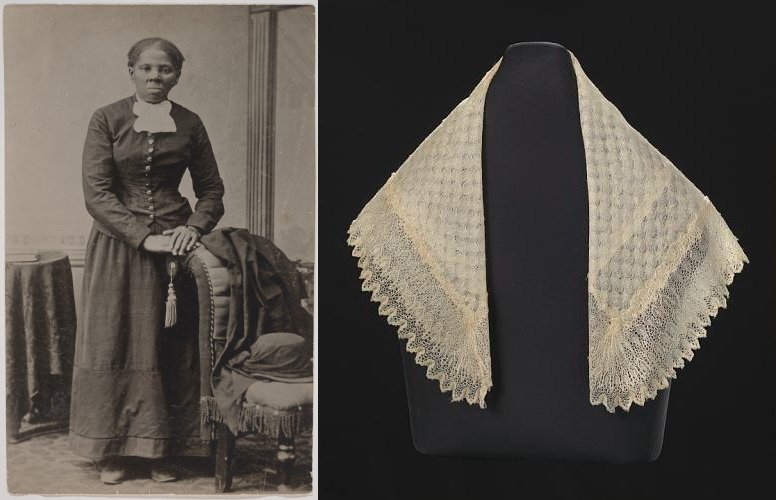
In 1897, Queen Victoria of the United Kingdom sent Harriet Tubman a white silk-lace and linen shawl (measuring about 36.5 by 28.5 inches) along with an invitation to attend the Queen's Diamond Jubilee celebration....
Tubman was now in her seventies. Decades earlier, she had escaped slavery in Maryland, then repeatedly risked her freedom by returning south to guide others to safety. During the Civil War, she served the Union as a nurse, scout and spy and helped lead the Combahee River Raid, which liberated more than 700 enslaved people.
But freedom had not made her wealthy.
Tubman spent much of her later life in Auburn, New York, struggling financially while supporting relatives and working to establish a home for elderly African Americans.
Across the Atlantic, however, her extraordinary life had become known.
In 1897, Queen Victoria celebrated her Diamond Jubilee, marking 60 years on the British throne. According to the Tubman family history associated with an extraordinary surviving artifact, Victoria sent Tubman a commemorative medal and an exquisite shawl.
It was no ordinary piece of fabric.
Made of silk, lace and linen, the cream-colored shawl was approximately seven feet long, decorated with floral embroidery and fringe.
Tubman treasured it.
The contrast between the two women could hardly have been greater.
Victoria had been born into royalty and spent most of her life surrounded by palaces, servants and ceremony.
Tubman had been born enslaved, escaped with a price on her head and spent years risking capture to lead others toward freedom.
Yet somehow their stories intersected in a single object.
Tubman kept the shawl for the rest of her life.
More than a century later, her descendants donated it to the Smithsonian's National Museum of African American History and Culture.
And there it remains.
A delicate piece of silk that traveled from the world of a queen to the shoulders of a woman who had once been legally considered someone else's property.
Harriet Tubman never wore a crown.
But by 1897, even royalty knew her name.
#archaeohistories
🚨🍷 THE WINE HEIST: $5.8 MILLION GONE IN ONE NIGHT
Italy 🇮🇹 has just been hit by what is being reported as the biggest wine heist in its history
And the thieves didn’t exactly go for supermarket wine
They stole 30,000 bottles worth an estimated €5 million from Marchesi Antinori, one of Italy’s most legendary wine dynasties, founded in 1385
Around 10,000 bottles of Solaia, about as many of Tignanello, plus Guado al Tasso and special formats, all from the 2023 vintage
Seven masked thieves
Two large trucks
A warehouse in Cortona, Tuscany
An extraordinary mystery that calls for everyone’s cooperation
If you are offered bottles of Antinori wine at unbelievably low prices, do your due diligence and verify their origin
You could be one step closer to helping track down these audacious thieve…
This sculpture is 2000 years old.
It shows a warrior in the last minutes of his life, and for centuries, people mistook him for someone else...
One arm braces him against the ground while the blood from the gash in his side, carved right into the marble, keeps running down. He's wearing a twisted collar around his neck, a torc, which told anyone who saw him exactly what he was: a Gaul, one of the northern warriors the ancient world feared most.
What you’re looking at is a Roman marble copy of a lost Greek bronze, made around 230 BC for King Attalus I of Pergamon to celebrate his victory over the Gauls. It was meant to be a trophy, a monument to the enemy’s defeat. And yet the sculptor didn’t make him a monster or a coward. He gave his enemy dignity, courage, and a death that still breaks your heart more than two thousand years later. Perhaps that was meant to make the victory look even greater: the braver the enemy, the more glorious the win. But what’s left, now that the battle and the kingdom have become distant history, is something much more human: a man dying with grace, carved with compassion by the very people who wanted him dead.
It was dug up in Rome in the 1620s, and for centuries he was mistaken for a dying gladiator. Thomas Jefferson wanted a copy for his home at Monticello. Napoleon took him to Paris as a prize of war in 1797, and he only came home to the Eternal City in 1816, where he rests today in the Capitoline Museums.
When Lord Byron stood in front of him, he wrote some of the most famous lines in English poetry:
He leans upon his hand, his manly brow
Consents to death, but conquers agony.
Greece Voted World’s Best Country by Condé Nast Traveller
Greece has been named the world’s best country for 2026 by Condé Nast Traveller readers, scoring 98.14 out of 100 ahead of Italy, Spain and France.
https://t.co/hIOKoHJ7Az
The Smithsonian just welcomed five very spotted new arrivals. Born October 5 in Front Royal, Virginia, the adorable cheetah cubs are already stealing hearts on the zoo’s live Cheetah Cam.
https://t.co/hY28LcCE9V
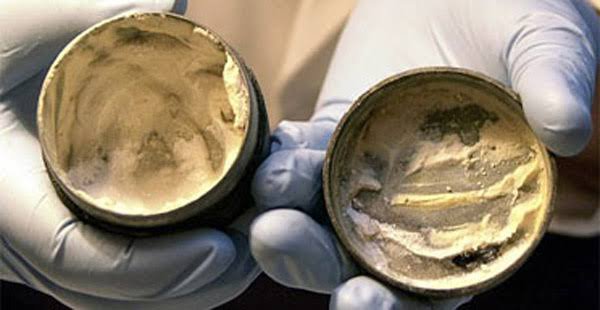
A 2,000-year-old Roman face cream was discovered in a sealed tin container at the Tabard Square excavation site in Southwark, London....
In 2003, archaeologists digging at Tabard Square in Southwark, London, found a small tin canister in the boundary ditch of a Roman temple complex. It is barely 6 cm across and dates to around AD 150. It had probably been placed there with other ritual objects as an offering to the gods. Its close-fitting lid was still on, and when conservators opened it, they found a soft white cream inside. The marks of the last fingers to scoop it out were still visible.
Researchers at the University of Bristol, led by Professor Richard Evershed, analysed the cream. They found animal fat mixed with starch and tin oxide. The fat and starch made a smooth moisturiser, and the tin oxide gave the skin a pale, translucent glow, an early foundation for a society that prized a fair complexion. When the team made their own version from the same recipe, it felt greasy at first and then dried to a smooth, powdery finish. After almost 1,900 years, a Roman beauty product still works.
#archaeohistories