No exploitation in the wild so far. The window to patch may be short.
As of 18 November 2026, Group-IB #ThreatIntelligence has found no evidence of Java4Shell exploitation in the wild, and our review of public reporting found no confirmed malicious exploitation. But a full RCE exploit already exists privately, and crash-only PoCs are expected to spread quickly. Read our technical analysis of CVE-2026-114938, including exposure conditions, affected versions, mitigation and investigation guidance: https://t.co/aCmJaOF3pR
About an hour to find. Two more to build a working exploit. Under $200 in #AI tokens.
That’s how researchers describe #Java4Shell (CVE-2026-114938), a memory-corruption flaw in OpenJDK’s Base64 decoder. They demonstrated RCE in Jira, Confluence, Jenkins and other enterprise applications.
The good news: exposure depends on three conditions. Here’s how to check yours
Look for the crash, then work backwards.
On services that meet the exposure conditions, correlate bursts of Base64 parsing errors with JVM crashes, hs_err_pid logs or unexpected restarts. Memory corruption can surface later, for example during garbage collection, so the triggering request may come well before the failure. A decoding error or crash in isolation is weak evidence. If compromise is suspected, review process, file and network activity, preserve evidence and contain the workload.
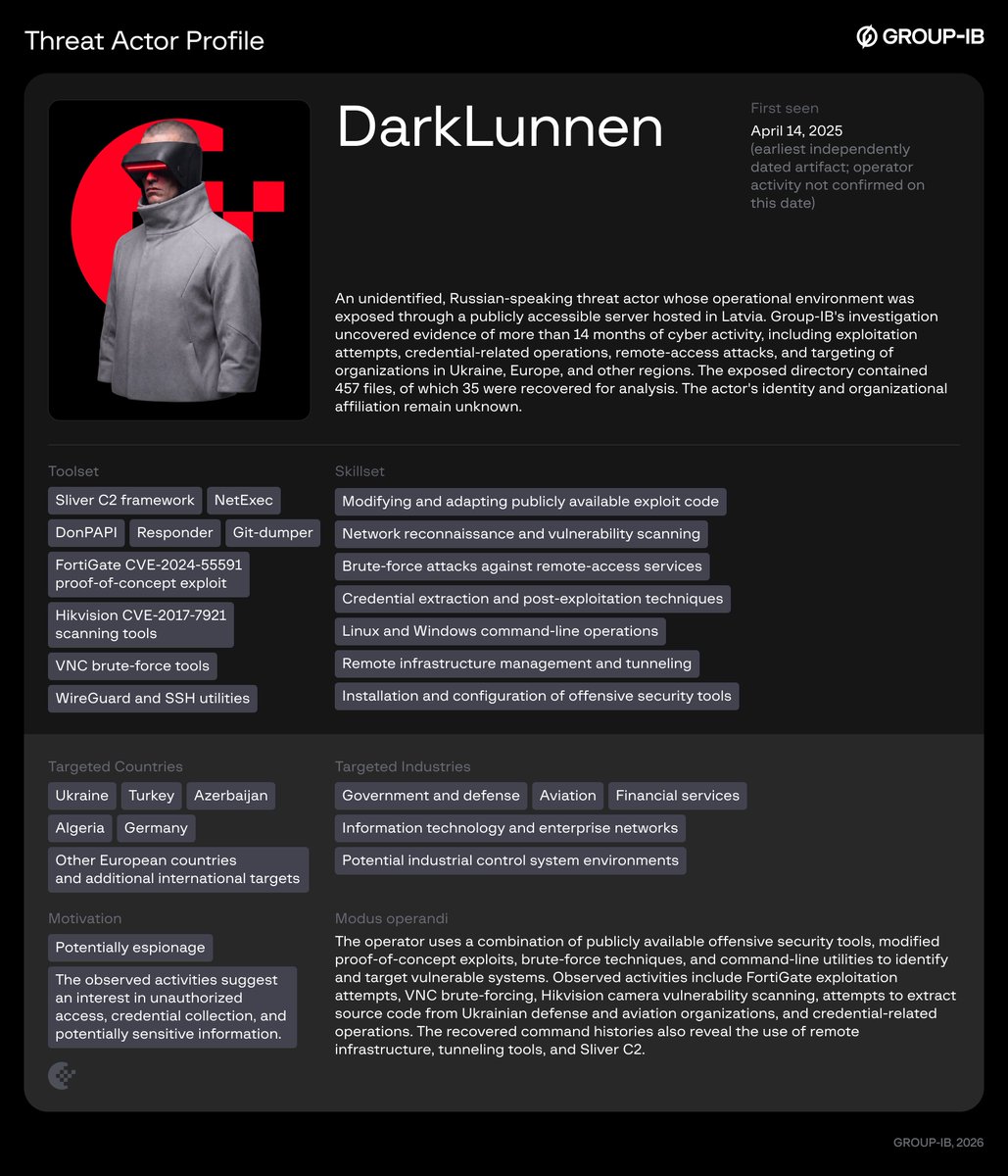
Only 35 of the 457 files exposed on DarkLunnen’s server were recovered before it went offline, leaving significant gaps around the full scope of its infrastructure, tooling and operations. Group-IB has not linked DarkLunnen to a previously identified threat actor and invites the CTI community to examine potential overlaps in infrastructure, tools and TTPs. Explore the full investigation: https://t.co/A4vJ12eDc7
Group-IB #ThreatIntelligence researchers uncovered more than 14 months of offensive cyber operations linked to a threat actor we track as #DarkLunnen. An exposed server revealed the operator’s working environment, including tools, target lists, stolen configurations and shell histories documenting activity across #Europe and other regions. Before the server went offline, researchers recovered 35 files totaling 3.1 GB, revealing activity involving FortiGate exploitation, VNC brute-forcing, surveillance camera targeting, credential access and post-exploitation tooling.
The investigation also uncovered large-scale remote access activity. A VNC campaign recorded 5,775 endpoints reported as successfully authenticated, while a separate results set contained HMI-related desktop names associated with industrial environments. Researchers also identified scanning of 12,183 IP addresses for Hikvision devices affected by CVE-2017-7921, with eight reported as vulnerable. The evidence supports access attempts and exposure of industrial interfaces, but does not confirm manipulation of industrial processes or surveillance feeds. #ThreatIntel
Ukrainian defense and aviation organizations were another major focus. Shell history showed git-dumper commands targeting Aerorozvidka, UkrSpecSystems, Skyeton and other aviation-related infrastructure, although successful source code theft could not be confirmed. The same environment contained Sliver C2 activity and references to hundreds of unrecovered artifacts, including a Sliver database, SSH records, credential databases, a Kerberos golden ticket, a #WireGuard configuration and a code-signing key. Group-IB has not linked DarkLunnen to a previously known threat actor and is calling on the CTI community to contribute to this research by sharing intelligence on overlaps in infrastructure, tooling and TTPs. Read the full research: https://t.co/A4vJ12eDc7
The exposed environment also revealed large-scale remote access and surveillance targeting. One VNC campaign recorded 5,775 endpoints reported as successfully authenticated, while a separate log contained 945 results, roughly a quarter with HMI-related desktop names linked to industrial environments. #DarkLunnen also scanned 12,183 Ukrainian IPs for Hikvision cameras affected by CVE-2017-7921 and identified eight as vulnerable. The evidence indicates access to HMI interfaces and attempted camera access, but does not confirm industrial process manipulation or camera compromise.#CyberSecurity
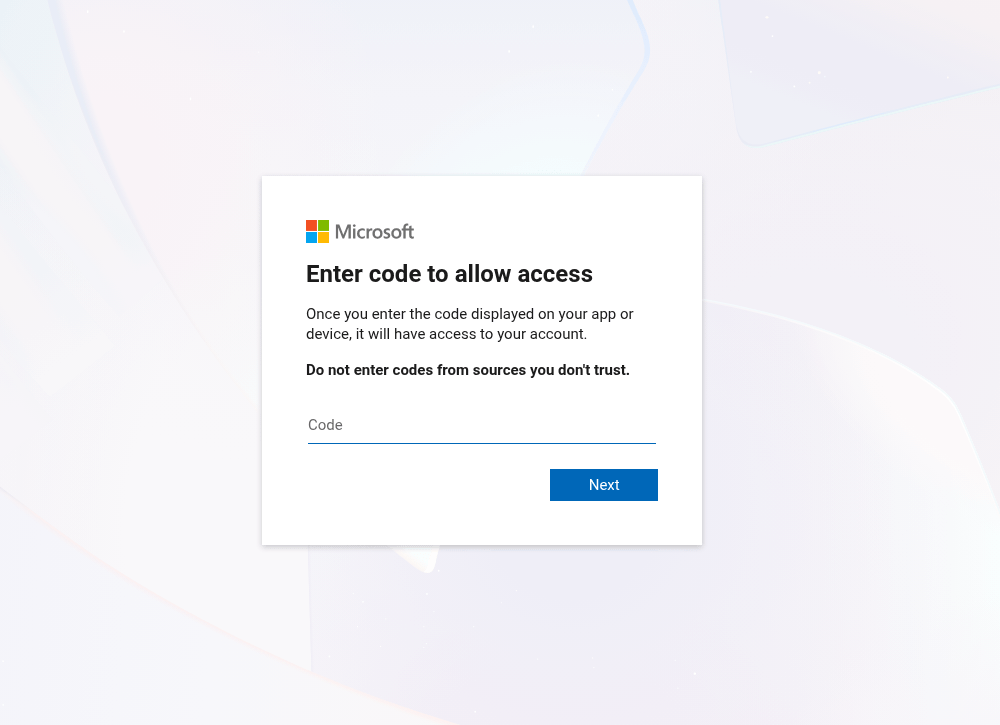
How does MadApe abuse Microsoft Device Code authentication to bypass password-based defenses and achieve account takeover? Read the full technical analysis on the Group-IB blog: https://t.co/qoypvE5KNR
Group-IB has uncovered #MadApe, a previously undocumented #phishingkit that abuses Microsoft's legitimate Device Code authentication flow to take over #Microsoft365 accounts without collecting a password. The campaign uses business-themed PDF lures, multi-stage redirect chains, and fake document-sharing pages to trick victims into completing the authentication on Microsoft's own portal, effectively bypassing traditional credential-harvesting defenses and satisfying #MFA requirements.
Infrastructure analysis expanded the dataset to 155 root domains, with #DeviceCodePhishing components observed on dedicated subdomains or URL paths associated with 97 of them. Shared decoy content, coordinated domain registration patterns including same-second registrations through Dynadot, and a common subdomain naming convention tie the infrastructure to a single provisioning pipeline, with the kit's own operator panel exposed on the same hosts serving the #phishing pages and decoy sites.
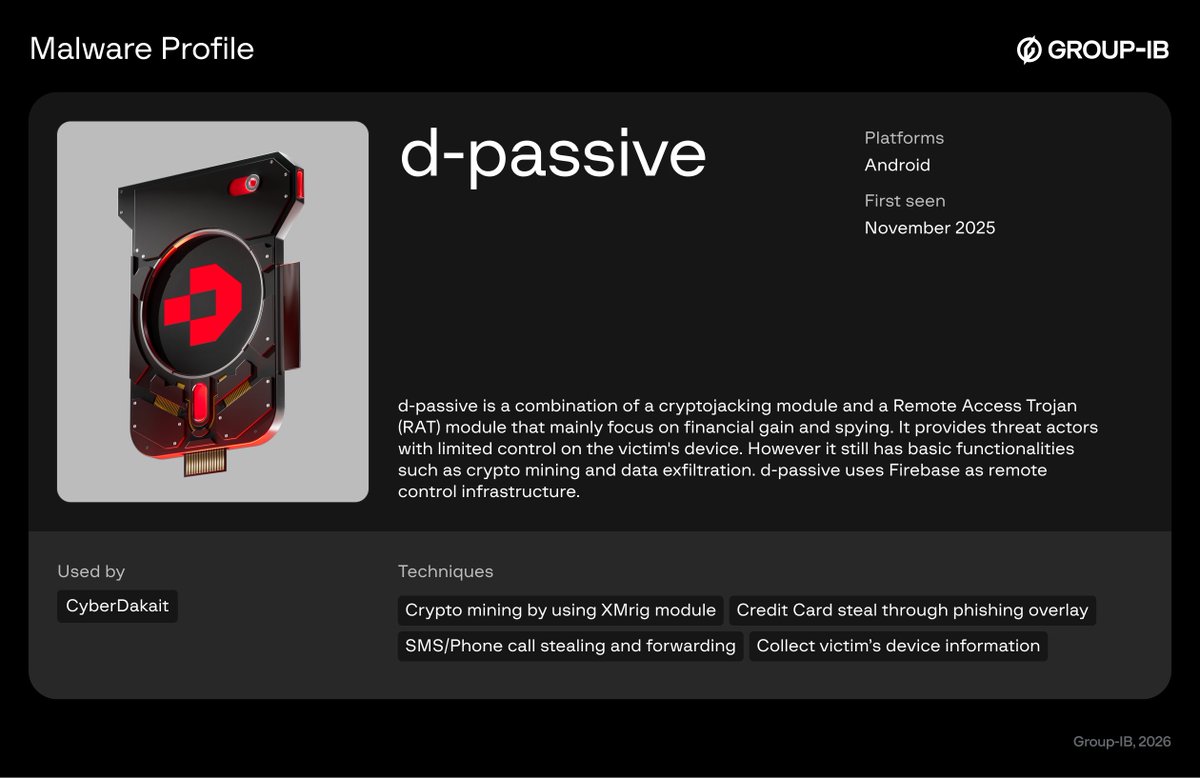
CyberDakait combines social engineering, Android malware, phishing infrastructure, RAT functionality, cryptojacking, and operator-controlled C2 tooling into a persistent financial fraud operation. Group-IB’s investigation found malicious APK distribution through GitHub, multiple C2 architectures across seven malware families, Android-based malware development using tools such as AIDE, MT Manager, Acode, and Apktool M, and a dedicated Cyb3rx controller used to manage infected devices. Read the full technical analysis for the infection chain, malware family classification, victimology, C2 communication, operator tooling, indicators of compromise, infrastructure, and defensive recommendations: https://t.co/9wM3n7vcXt
Group-IB identified a sophisticated #Androidmalware campaign by the financially motivated threat cluster #CyberDakait targeting India’s financial services sector since July 2025. The operation deploys seven distinct Android trojan families through coordinated smishing and vishing campaigns in which threat actors impersonate representatives of different Indian banks and other financial institutions. Targeted individuals are routed to phishing websites that drop malicious APK files designed to harvest sensitive data, including mobile banking credentials, credit card details, card images, and account balances. The malicious APKs are commonly hosted on #GitHub and act as droppers, installing a RAT alongside an XMRig cryptocurrency mining component. In several cases, the malware presents a fake Google Play update page while silently downloading and installing an additional malicious payload in the background. #ThreatIntelligence
Although CyberDakait’s seven Android malware families share #phishing themes, packers, XMRig-based #cryptojacking, and RAT capabilities such as SMS interception, SMS forwarding, call forwarding, and credit card theft through phishing overlays, technical analysis revealed significant differences in their network communication, database structures, and telemetry formats. These differences led Group-IB to track GhostBat, cyb3rx, godz, d-passive, d-shine, tenxen, and appkjl as distinct malware families rather than variants of a single shared codebase. The campaign also uses persistence mechanisms including wake locks, a silent audio loop, foreground services, and requests to disable Android battery optimization, helping malicious processes remain active while RAT and mining components operate in the background. #MalwareAnalysis