➠ Founder Discipline
Building GrowVernance means choosing restraint when shortcuts are available.
Fast wins are tempting.
They create momentum, metrics, and noise.
But not all growth is healthy.
And not every opportunity strengthens long-term trust.
We say no to engagements that dilute responsibility.
No to partnerships that prioritize optics over structure.
No to growth paths that move quickly but leave systems fragile underneath.
Trust compounds slowly.
It’s built through consistency, clarity, and decisions that hold up under pressure — not just when conditions are favorable.
Sustainable ecosystems aren’t formed by taking every deal.
They’re shaped by knowing which paths preserve integrity and which quietly erode it.
At GrowVernance, discipline is part of the architecture.
We design systems meant to last — even when saying no is the harder choice.
Because long-term trust is not accelerated.
It’s protected.
➠ Structural Insight
Structure isn’t about adding rules.
It’s about removing confusion.
Most communities don’t fail because there are too few policies.
They fail because no one knows where decisions come from, who owns outcomes, or how change actually happens.
When structure is missing, people compensate with assumptions.
Assumptions turn into friction.
Friction quietly erodes trust.
Good structure does the opposite.
It makes roles legible.
It makes authority visible.
It makes decision paths predictable.
People don’t need to guess where to go for answers.
They don’t need to rely on personalities or insider access.
They don’t need constant reassurance.
They simply operate.
That’s the difference between a group that feels busy and a system that feels stable.
At GrowVernance, we don’t design governance to restrict behavior.
We design it to reduce uncertainty — so communities can move with confidence, even during change.
Because clarity scales.
Confusion doesn’t.
➠ Agents aren’t offline because of intelligence
↳ they’re offline because of cost
Every agent today:
▸ runs for a task
▸ shuts down
▸ waits
▸ restarts later
Not because it has to…
but because 𝗸𝗲𝗲𝗽𝗶𝗻𝗴 𝗶𝘁 𝗮𝗹𝗶𝘃𝗲 𝗶𝘀 𝗲𝘅𝗽𝗲𝗻𝘀𝗶𝘃𝗲
➠ The difference isn’t small «—» it’s structural.
@usenaive (serverless):
▸ ~$44–60K
Self-host:
▸ ~$740K → $1.5M
▸ AWS VM model → ~$14M
Same agents.
Same workloads.
Completely different cost curve.
➠ Most people think AI agents are limited by intelligence.
They’re not.
They’re limited by 𝗵𝗼𝘀𝘁𝗶𝗻𝗴 𝗲𝗰𝗼𝗻𝗼𝗺𝗶𝗰𝘀.
@usenaive just exposed something important:
▸ agent work is bursty
▸ but infrastructure is billed continuously
▸ so cost ≠ compute…
Most people think the hard part of building a company is writing code.
That’s no longer true.
The real bottleneck is something far less visible:
𝘁𝘂𝗿𝗻𝗶𝗻𝗴 𝗰𝗼𝗱𝗲 𝗶𝗻𝘁𝗼 𝗮𝗻 𝗼𝗽𝗲𝗿𝗮𝘁𝗶𝗻𝗴 𝘀𝘆𝘀𝘁𝗲𝗺.
Most people think crypto is complicated because of charts and volatility.
That’s not the real issue.
The real issue is: people don’t know what to trust.
That’s where @Bybit_Official fits in.
@Bybit_Official@BybitAfrica@KyennMark
➠【Reflection: What system failures teach builders】
Most system failures aren’t random.
They’re lessons «—» just poorly observed ones.
━━━━━━━━━━━━━━━━━━━
➠ Builders often study success.
↳ but systems reveal their truths through failure
━━━━━━━━━━━━━━━━━━━
◆ 【Reflection: What System Failures Teach Builders】
━━━━━━━━━━━━━━━━━━━
➠ 1. Structure is destiny
▸ weak design → unstable behavior
▸ misaligned incentives → distorted outcomes
↳ systems do exactly what they’re built to do
━━━━━━━━━━━━━━━━━━━
➠ 2. Complexity compounds silently
▸ small inefficiencies stack
▸ coordination weakens over time
▸ recovery becomes harder
↳ collapse is accumulated, not sudden
━━━━━━━━━━━━━━━━━━━
➠ 3. Signals appear early
▸ declining clarity
▸ slowing decisions
▸ shifting behavior
↳ failure is visible before it’s acknowledged
━━━━━━━━━━━━━━━━━━━
➠ 4. Speed hides fragility
▸ rapid growth masks misalignment
▸ activity disguises instability
↳ momentum ≠ strength
━━━━━━━━━━━━━━━━━━━
➠ 5. Trust is the final layer
▸ once broken, hard to restore
▸ once lost, system weakens
↳ survivability depends on it
━━━━━━━━━━━━━━━━━━━
╰┈➤ The real lesson:
Failure isn’t just an outcome «—»
↳ it’s feedback the system failed to integrate
━━━━━━━━━━━━━━━━━━━
✔ Strong builders don’t avoid failure
▸ they learn to read it early
▸ respond before it compounds
▸ design for stability under stress
━━━━━━━━━━━━━━━━━━━
【Systems don’t fail without warning】
↳ builders just fail to interpret the signals
➠【Treasury management realities most DAOs ignore】
Most DAOs treat treasury like a static pool.
It isn’t.
It’s a dynamic system under continuous stress.
┃ Structure → behavior → outcome
If treasury structure is weak:
▸ capital sits idle
▸ runway becomes unclear
▸ decisions turn reactive
↳ Outcome: slow erosion, not sudden failure
——————————————————————
The real issue:
Many treasuries are optimized for holding…
not for functioning.
➠ No clear allocation strategy
➠ No liquidity tiering (operational vs strategic)
➠ No stress-tested outflow scenarios
——————————————————————
Treasury is not a balance.
It’s an operating system.
▸ How capital is deployed
▸ When it can be accessed
▸ What conditions trigger movement
These define behavior under pressure.
——————————————————————
What resilient treasuries do differently:
▸ segment capital by purpose
▸ model worst-case liquidity events
▸ align spending with predictable inflows
↳ They design for continuity, not comfort
———————————————————————
Most DAOs don’t fail because they run out of funds.
They fail because their treasury can’t respond when conditions change.
✔ Capital that isn’t structured… isn’t usable.
Most treasury discussions fixate on size.
But size doesn’t determine resilience.
Structure does.
▸ Can the DAO meet obligations without selling at the worst time?
▸ Is there a clear path from treasury → operations → growth?
▸ Are decisions pre-defined or improvised under pressure?
Because:
➠ Unstructured capital creates forced decisions
➠ Forced decisions destroy long-term positioning
◆ Treasury quality shows up when conditions turn.
✔ If it only works in good markets, it isn’t treasury management.
@Delphoenix_INTL This thread should be mandatory reading for every DAO core contributor. We have to move past the obsession with raw treasury size and start optimizing for structural resilience and operational readiness. Brilliant.
➠【Why Many Protocols Are Not Institution-Ready】
Most teams think institutional capital is waiting for:
▸ more users
▸ higher TVL
▸ stronger narratives
It’s not.
Institutions are waiting for:
➠ systems that behave predictably under pressure
And most protocols fail before that point.
┃ The core issue isn’t adoption.
It’s structural unreadiness.
Institutions evaluate:
➠ Structure → Behavior → Outcome
But most protocols optimize for:
➠ Attention → Activity → Optics
That mismatch is where the gap exists.
◆ Where protocols break:
▸ Unclear control surfaces
Who can act? Under what conditions?
Often undefined or hidden behind complexity
▸ Unpredictable governance behavior
Decisions shift with sentiment
→ not systems
▸ Weak stress design
Works in normal conditions
Fails under volatility or congestion
▸ Ambiguous upgrade authority
Can the system evolve safely?
Or does it centralize under pressure?
▸ Incentive misalignment
Short-term participants driving long-term decisions
┃ The result:
➠ behavior becomes inconsistent
➠ risk becomes unquantifiable
➠ capital stays cautious
Institutions don’t need perfection.
They need:
▸ legibility
▸ consistency
▸ controlled evolution
◆ The shift required:
From:
➠ building systems that attract usage
To:
➠ building systems that withstand scrutiny
Because in the end:
➠ adoption proves interest
But only:
➠ structure proves investability
@Delphoenix_INTL This should be required reading for every Web3 founder before they ever try to pitch an institutional fund. You've perfectly articulated the gap between building for optics and building for actual resilience.
Most conversations about “institutional readiness” stay abstract.
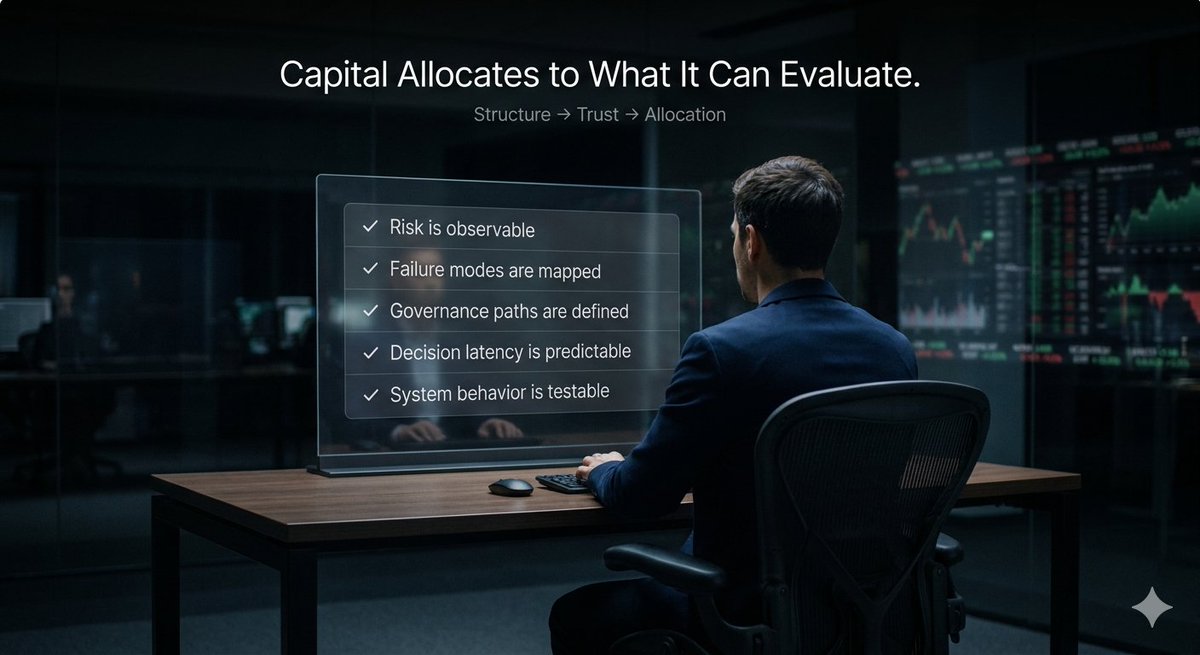
But institutions don’t allocate based on narratives.
They allocate based on checklists.
➠ Can this system withstand stress?
➠ Is risk observable and bounded?
➠ Are decision paths predictable under pressure?
➠ Can failure modes be identified before they occur?
If it can’t be evaluated, it won’t be trusted.
If it isn’t trusted, it won’t be funded.
Institutional readiness isn’t a label.
It’s a framework of verifiable conditions.
✔ Structure before scale.
➠【Governance Quality Determines Protocol Value】
Most people still value protocols like products:
▸ users
▸ volume
▸ TVL
But serious capital doesn’t price activity.
It prices:
➠ how decisions get made under pressure
Because two protocols can look identical on the surface…
…and behave completely differently when it matters.
I broke this down properly:
▸ where governance actually fails
▸ how it impacts valuation
▸ what high-quality systems do differently
If you’re thinking long-term, not just narratives:
Read this.
@Delphoenix_INTL Most founders treat governance as a post-launch marketing add-on — usually just a basic DAO interface. This breakdown is the exact blueprint for why governance must be stress-tested and engineered as a core system from day one.
Most governance discussions still stay at the surface:
▸ voting models
▸ participation rates
▸ proposal counts
But that’s not where the real signal is.
The real question is:
➠ how stable is decision-making when incentives diverge?
Because governance doesn’t get tested during alignment.
It gets tested during:
▸ conflict
▸ stress
▸ capital at risk
If the system can’t handle that…
Valuation isn’t just uncertain.
It’s mispriced.
@Delphoenix_INTL Most founders treat governance as a post-launch marketing add-on — usually just a basic DAO interface. This breakdown is the exact blueprint for why governance must be stress-tested and engineered as a core system from day one.
➠【Why Transparency Beats Hype for Serious Investors】
Hype attracts attention.
Transparency allocates capital.
Most teams optimize for visibility.
Serious capital optimizes for clarity under risk.
┃ Investors don’t buy narratives.
They price uncertainty.
▸ What exactly am I exposed to?
▸ Where can this system fail?
▸ Who controls the levers under stress?
If these aren’t clear:
↳ capital either stays out
↳ or demands a discount
◆ Structure → behavior → outcome:
Opaque systems → speculation-driven flows → unstable capital
Transparent systems → informed allocation → durable capital
┃ What transparency actually looks like:
▸ Explicit risk surfaces (custody, oracles, governance)
▸ Verifiable data (not curated dashboards)
▸ Clear economic flows (who earns, who pays, when)
▸ Stress behavior defined upfront (not discovered in crisis)
↳ Not perfection.
↳ Predictability.
◆ The hidden cost of hype:
It compresses perceived risk short-term…
and amplifies it violently when reality shows up.
That’s why:
▸ TVL spikes don’t equal trust
▸ attention doesn’t equal conviction
▸ growth without clarity doesn’t compound
┃ Serious capital behaves differently:
It stays where outcomes are legible.
Even if returns are lower,
they are understandable.
╰┈➤ The shift:
From “tell a better story”
to “show a clearer system”
✔ Final principle:
Capital doesn’t fear risk.
It fears unknown risk.
And transparency is how you remove it.
↳ Most teams misunderstand what “being transparent” actually means.
It’s not:
▸ dashboards
▸ vanity metrics
▸ curated reporting
That’s presentation.
┃ Real transparency is decision-grade clarity:
▸ Can an investor model downside before upside?
▸ Can they trace value flow without assumptions?
▸ Can they predict behavior under stress?
If not:
↳ you don’t have transparency
↳ you have packaged opacity
╰┈➤ The consequence:
Hype attracts capital.
But only transparency lets it stay.