🆕 New paper out in Eng. applications of AI!
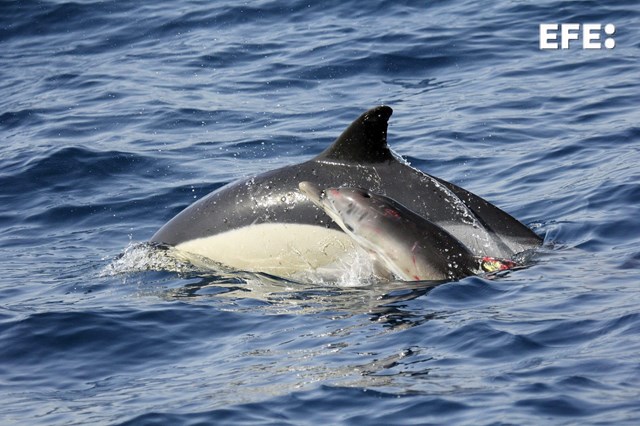
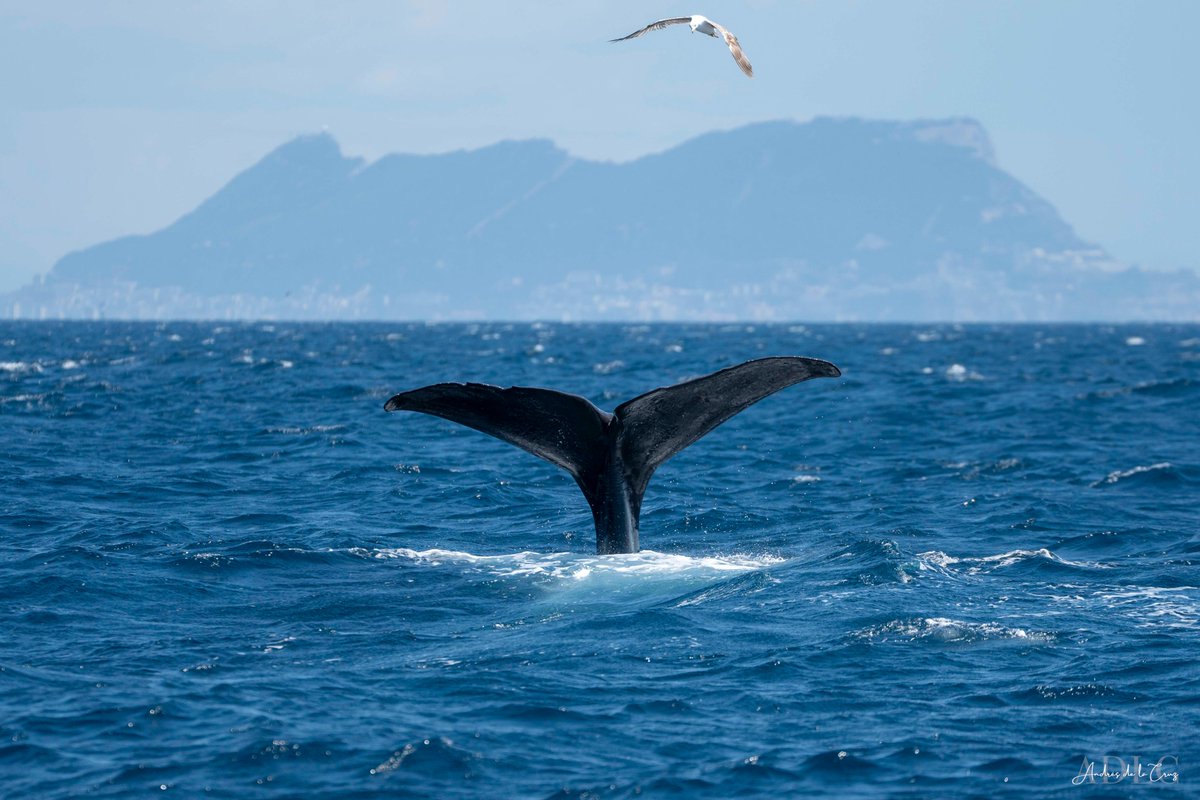
We propose iterative deep learning for detecting cetacean whistles in one of the noisiest marine regions: the Strait of Gibraltar 🐋🔊
While baseline models collapsed under noise, we reached 0.88 F1
🔗 https://t.co/syvy0CmQ08
Investigadoras de la Universidad de Cádiz desarrollan un sistema para detectar silbidos de cetáceos en el Estrecho de Gibraltar
🌐 https://t.co/Pm1xrlDb67
Un equipo del Instituto de Investigación Marina (INMAR) de la Universidad de Cádiz ha desarrollado un sistema de inteligencia artificial para detectar silbidos de cetáceos en el Estrecho de Gibraltar, uno de los entornos marinos más ruidosos y complejos del mundo.
🌊 Investigadoras de la Universidad de Cádiz han desarrollado un sistema de inteligencia artificial capaz de detectar silbidos de cetáceos en el Estrecho de Gibraltar, uno de los entornos marinos más complejos por su intenso tráfico y ruido submarino.
Not only birds!
Can AI detect cetacean movements whistles in one of the noisiest seas on Earth? Yes! 🐬 In our new paper, we show it’s possible using deep learning in the Strait of Gibraltar.
🔗 https://t.co/UpXK6Xdz6l
🆕 New paper out in Eng. applications of AI!
We propose iterative deep learning for detecting cetacean whistles in one of the noisiest marine regions: the Strait of Gibraltar 🐋🔊
While baseline models collapsed under noise, we reached 0.88 F1
🔗 https://t.co/syvy0CmQ08
Choosing the “optimal” ROC threshold is not always optimal for ecology.
We show how confidence threshold calibration can balance automation vs expert review depending on monitoring goals.
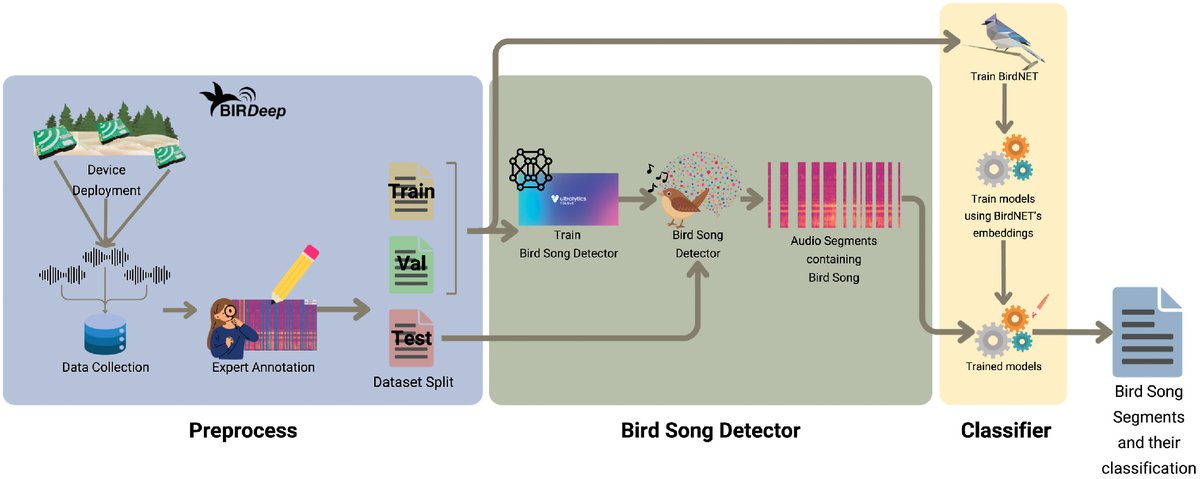
I'm thrilled to share with you our lattest publication with the brilliant @GrunCrow as the first author. We propose here a two-stage pipeline for analyzing audios from a acoustic monitoring programme in Doñana; 1) using a detector of vocalizations, 2) a fine-tuned classificator.
First week of June I went to the SIBECOL & AEET meeting in Pontevedra
I presented advances from #SEANIMALMOVE on using ecoacoustics for bird & marine mammal monitoring
Some results are saved for upcoming papers — but the talk still won Best Multidisciplinary Predoc Oral Comm!
All data and methods are shared and publicly available:
📰Paper: https://t.co/jKr1OfTh3V
📁Dataset: https://t.co/2T6hjQnXX5
🤖Simplified Repository: https://t.co/xLRgu3TglB
🤖Main Repository: https://t.co/7LoXyYqCmB
We just updated our paper “A Bird Song Detector for improving bird identification through Deep Learning: a case study from Doñana”, officially accepted in Ecological Informatics
📍 Doñana National Park
📊 Passive Acoustic Monitoring
🤖 YOLOv8 + BirdNET
📰 https://t.co/jKr1OfTh3V
General models like BirdNET are powerful, but local adaptation is key, but sometimes even fine-tuning or custom classifiers are not enough.
By separating detection and classification, we boost precision and reduce noise in PAM workflows.