i’m watching bridges evolve and @hyperbridge might be the biggest leap yet.
fast. scalable. 100% trustless.
the first verifiable, multichain bridge with no middlemen, no committees, no single point of failure
all secured by @Polkadot.
why does this matter?
- $2B+ has been lost to hacked bridges.
- most bridges today feel like handing cash to a stranger.
- hyperbridge changes things, pure crypto with no compromises.
here’s how it works:
- no multisigs just cryptographic proofs.
- no delayed txs it’s settled near instantly.
- no bottlenecks just parallel processing across chains.
- scales across L2s like @Optimism, @arbitrum, and more.
- built on polkadot’s billion-dollar security layer.
this isn’t just a better bridge but a new way for chains to talk securely, trustlessly, at scale.
are you ready to bridge smarter?
I have to say this is a whole new low and only shows desperation.
You guys obviously can't compete on technology so you resort to poisoning our SEO?
Masterful gambit honestly. But it won't save you.
Back in 2022, the @hyperbridge team started building because they saw a flaw in the cross-chain landscape:
LayerZero had just launched — with a 2-of-2 multisig as its “security model”.
It wasn’t hidden. It was proudly public.
To them, that was the problem.
We’ve entered the Web2.5 era — where teams can’t build real decentralized infra, so they ship semi-trusted, VC-signed bridges.
But here’s the catch:
Trusted systems don’t scale globally.
They only scale within their “circles of trust”.
You trust the system because you trust the backers — a16z, big names, U.S. jurisdiction.
That’s fragile. And exclusive.
HyperBridge chose a different path:
→ No reliance on trust
→ Just cryptographic proofs
→ Built on @Polkadot for real decentralization
Because in the long run, only decentralized systems scale across borders, laws, and markets.
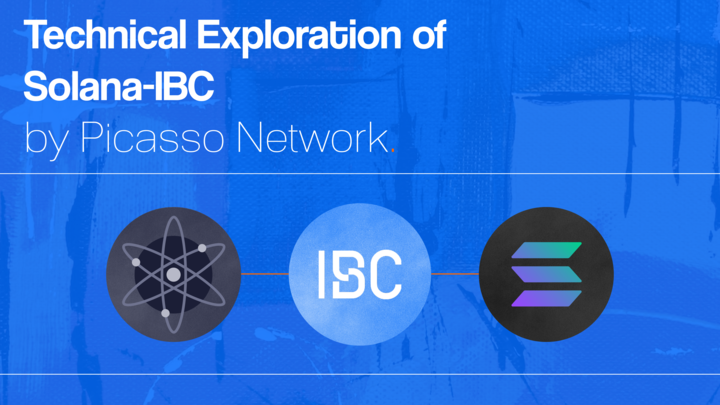
IBC is now connected to @solana, brought to production by the team at @Picasso_Network and @ComposableFDN.
They built a custom IBC solution that overcomes Solana's lack of native state proofs without requiring changes to its native architecture.
As @andyyy said, "Chain abstraction is inevitable, just like modularity was."
A new star is rising in the unified Web3 space: @mantis.
The thesis is strong: a SVM L2, with native yields, best execution, and chain-abstracted order flow.
Big deal? Let's find out ↓
Mantis solvers just got a serious upgrade ✨
Our Data Layer now feeds @mantis with live #Ethereum, #Solana, and #Osmosis data, supercharging cross-chain intent solving 🧩
See how Synternet's real-time data streams are reshaping #DeFi 👇
https://t.co/OOFnWjPCjE
There are lots of design considerations when designing an L2 on Solana.
1. What is the interoperability standard?
2. What does the proof mechanism look like? Do we need 7 day withdrawal periods?
3. Does the L2 rollback based on the L1 ?
In short, we've leaned heavily into our background in IBC to answer a lot of these questions.





![AltcoinsFrance's tweet photo. 💎 • Crypto Pépite • 💎
→ Picasso Network $PICA
• [#THREAD 🇫🇷]❗️🚨
• 📈| Potentiel : ( x100 )
• 📊| Niveau de risque [ Élevé ]
➩ @Picasso_Network, leader du concept « Inter-Blockchain Communication » https://t.co/iZttxtetoQ](https://pbs.twimg.com/media/F-L-AbMXgAErHyf.jpg)


