🧾 ورقة علمية مفيدة جدًا للمبتدئين في مجال البحث العلمي!
تشرح بشكل مبسط ومنظم الخطوات الأساسية لكتابة ورقة علمية من الفكرة وحتى النشر، بما يشمل كتابة أقسام البحث المختلفة، اختيار المجلة المناسبة، والتعامل مع عملية المراجعة العلمية.
ننصح بقراءتها لكل من يرغب في تطوير مهاراته البحثية أو يستعد لكتابة بحثه الأول 📚✨
🔗 رابط المقال:
https://t.co/7fa7Twf78i
最近在带入组的本科实习生,发现怎么读论文其实是科研训练里最容易被忽略的一步。
推荐一篇每个科研新人都该读的经典短文:S. Keshav 的 How to Read a Paper。
文章提出了非常实用的“三遍读论文法”:
第一遍,5 到 10 分钟快速扫读:标题、摘要、引言、章节标题、结论和参考文献。
目标是回答 5C:
Category, Context, Correctness, Contributions, Clarity。
也就是判断这篇论文是什么、和谁相关、假设是否合理、贡献是什么、写得清不清楚。
第二遍,认��读论文主线,但先跳过证明细节。重点看图表、实验设置、结果是否清楚、引用了哪些关键工作。
第三遍才进入深度理解:尝试像复现一样重建作者的思路,检查假设、方法、创新点和潜在漏洞。
放在今天看,这个方法和 AI 辅助读论文其实很契合。
第一遍可以让 AI 帮忙快速总结论文的研究问题、核心贡献和主要结论,但自己一定要判断这篇文章是否真的值得继续读。
第二遍可以让 AI 帮忙解释方法、实验设置、图表和不熟悉的概念,但不能只看 AI 总结。关键图表、实验设计和结果数字一定要回到原文核对。
第三遍可以让 AI 扮演 reviewer,帮你追问:这篇文章的假设是否成立?实验是否支持结论?有没有 missing baseline?有没有潜在的数据泄漏、评价偏差或过度 claim?
读论文不是“读完”就行。真正重要的是知道什么时候快速跳过,什么时候认真理解。
尤其在 AI 工具越来越强的情况下,科研新人更需要训练自己的判断力。
AI 可以帮你压缩信息,但不能替你决定一篇论文是否重要、是否可信、是否值得借鉴。
https://t.co/8gUc4HbLwR
🇧🇷 O Brasil é o país com...
🇯🇵 mais japoneses (e descendentes) fora do Japão.
🇮🇹 mais italianos (e descendentes) fora da Itália.
���🇧 mais libaneses (e árabes do Levante) fora do mundo árabe.
🇵🇹 a maior comunidade portuguesa fora de Portugal.
🌍 a maior população afrodescendente fora da África.
🇺🇦 um dos maiores polos de ucranianos fora da Ucrânia.
✡️ a 2ª maior comunidade judaica da América Latina.
🪕 Uma das maiores populações ciganas (Romani) do mundo.
🏹 Um dos países com maior diversidade indígena.
👨🏿��🦰🧒🏻🧒🏾👩🏿🦱🧔🏼👨🏽🦲Maior miscigenação e diversidade cultural do mundo.
Somos a terra onde o mundo diverso se encontra e se torna um só. Não atoa, o passaporte brasileiro é um dos mais falsificados ao redor do mundo, pois literalmente qualquer um poderia ser um brasileiro.
A gente ama a Copa do Mundo e as Olimpíadas porque quando vemos pessoas de QUALQUER país do mundo, também nos vemos!
Alerta de utilidade pública!
O @govbr lançou um aplicativo 100% gratuito para aprender inglês e espanhol, com direito a lições rápidas, ofensivas e mascotes brasileiros. Segue o fio que te mostro como ele é por dentro: 🧵👇
On the one-year anniversary of EMPIRE OF AI, I am so, so excited to announce The AI Resist List, a new project that documents examples of resistance to the AI empires around the world.
https://t.co/mJqk5FxkFY
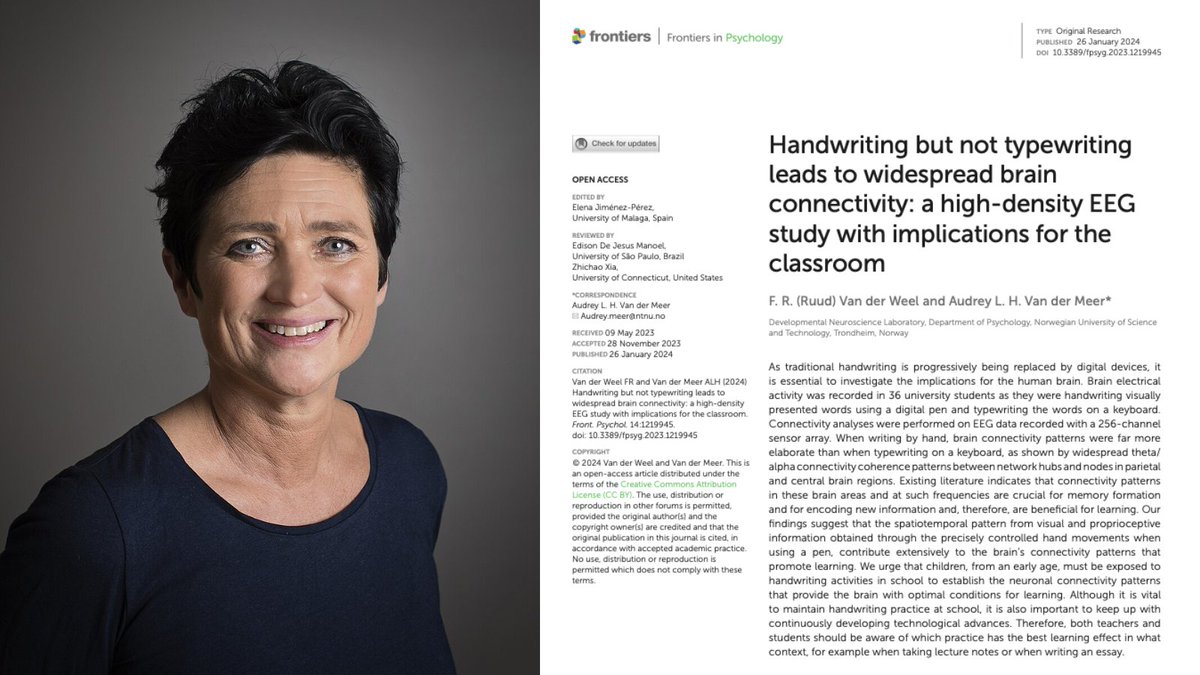
A Norwegian neuroscientist spent 20 years proving that the act of writing by hand changes the human brain in ways typing physically cannot, and almost nobody outside her field has read the paper.
Her name is Audrey van der Meer.
She runs a brain research lab in Trondheim, and the paper that closed the argument was published in 2024 in a journal called Frontiers in Psychology. The finding is brutal enough that it should have changed every classroom on Earth.
The experiment was simple. She recruited 36 university students and put each one in a cap with 256 sensors pressed against their scalp to record brain activity. Words flashed on a screen one at a time.
Sometimes the students wrote the word by hand on a touchscreen using a digital pen, and sometimes they typed the same word on a keyboard. Every neural response was recorded for the full five seconds the word stayed on screen.
Then her team looked at the part of the data most researchers had ignored for years, which is how different parts of the brain were communicating with each other during the task.
When the students wrote by hand, the brain lit up everywhere at once.
The regions responsible for memory, sensory integration, and the encoding of new information were all firing together in a coordinated pattern that spread across the entire cortex. The whole network was awake and connected.
When the same students typed the same word, that pattern collapsed almost completely.
Most of the brain went quiet, and the connections between regions that had been alive seconds earlier were nowhere to be found on the EEG.
Same word, same brain, same person, and two completely different neurological events.
The reason turned out to be something nobody had really paid attention to before her work. Writing by hand is not one motion but a sequence of thousands of tiny micro-movements coordinated with your eyes in real time, where each letter is a different shape that requires the brain to solve a slightly different spatial problem.
Your fingers, wrist, vision, and the parts of your brain that track position in space are all working together to produce one letter, then the next, then the next.
Typing throws all of that away. Every key on a keyboard requires the exact same finger motion regardless of which letter you are pressing, which means the brain has almost nothing to integrate and almost no problem to solve.
Van der Meer said it plainly in her interviews.
Pressing the same key with the same finger over and over does not stimulate the brain in any meaningful way, and she pointed out something that should scare every parent who handed their kid an iPad.
Children who learn to read and write on tablets often cannot tell letters like b and d apart, because they have never physically felt with their bodies what it takes to actually produce those letters on a page.
A decade before her, two researchers at Princeton ran the same fight using a completely different method and ended up at the same answer. Pam Mueller and Daniel Oppenheimer tested 327 students across three experiments, where half took notes on laptops with the internet disabled and half took notes by hand, before testing everyone on what they actually understood from the lectures they had watched.
The handwriting group won by a wide margin on every question that required real understanding rather than surface recall.
The reason was hiding in the transcripts of what the two groups had actually written down.
The laptop students typed almost word for word, capturing more total content but processing almost none of it as they went, while the handwriting students physically could not write fast enough to transcribe a lecture in real time, which forced them to listen carefully, decide what actually mattered, and put it in their own words on the page.
That single act of choosing what to keep was the learning itself, and the keyboard had quietly skipped the choosing and skipped the learning along with it.
Two studies. Two countries. Same answer.
Handwriting makes the brain work. Typing lets it coast.
Every note you have ever typed instead of written went into your brain through a thinner pipe. Every meeting, every book highlight, every idea you captured on your phone instead of on paper was processed at half depth.
You did not forget those things because your memory is bad. You forgot them because typing never woke the part of the brain that would have made them stick.
The fix is the thing your grandmother already knew.
Pick up a pen. Write the thing down. The slower road is the faster one.
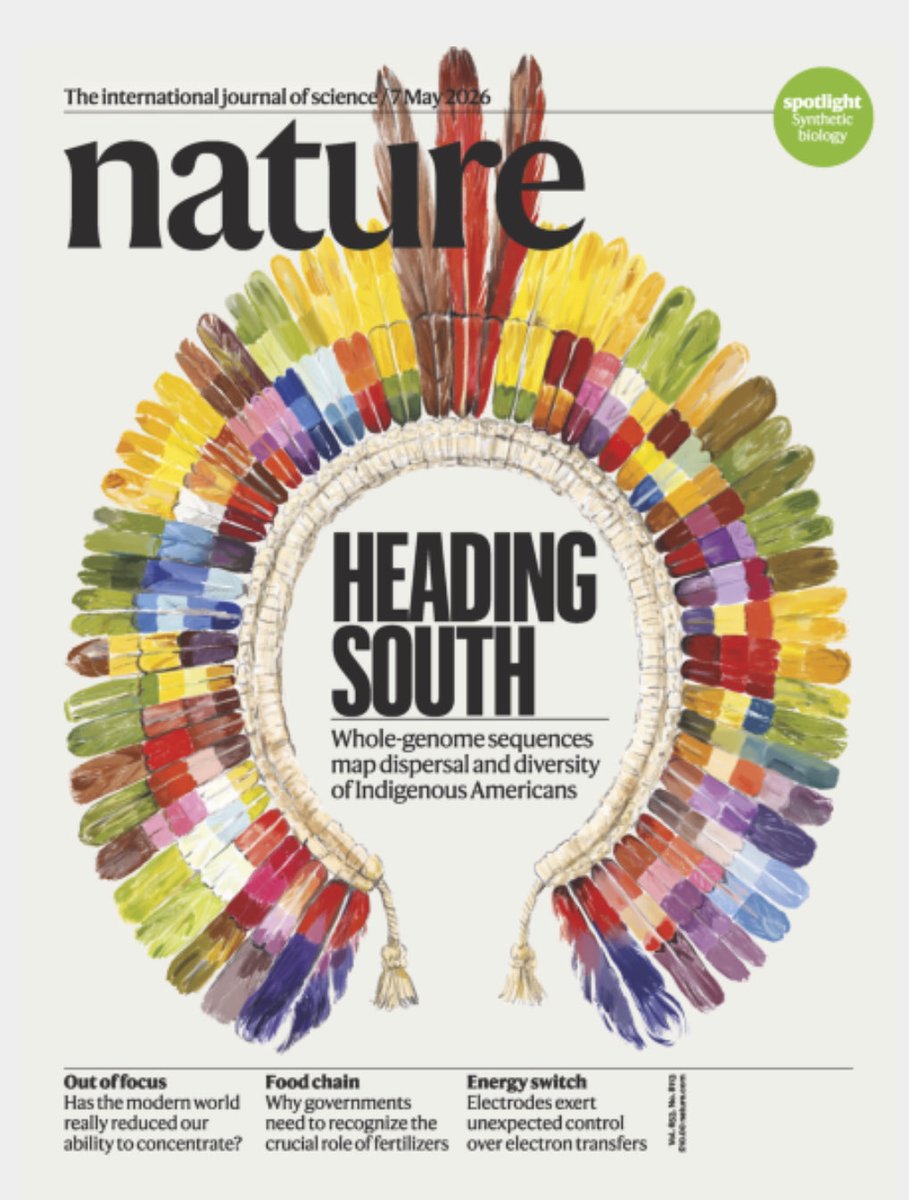
A última edição da Nature tem uma pesquisa feita na USP na capa! Trabalho belíssimo que usa genômica evolutiva para compreender a colonização da Am. do Sul. Chefiado pela Profa Tábita Hünemeier do IB/USP. Ciência brasileira de altíssimo nível! 👏
HOLLIS da Universidade de Harvard é uma ferramenta maravilhosa.Escreva um tema ou autor (poder ser, inclusive, em português).Há um levantamento automático não só das referências, como também dos PDFs de resenhas, artigos, teses etc sobre o tema ou o autor. https://t.co/vh3VTGUvrb