This is how the C-17 Globemaster III can descend from 30,000 feet to 5,000 feet in less than two minutes.
This tactical descent profile allows the aircraft to remain at higher altitudes for as long as possible before making a rapid, steep descent into its destination. By doing so, the C-17 minimizes the time it spends within enemy air defense and missile engagement ranges, enhancing survivability in hostile environments.
📹: Raj 360
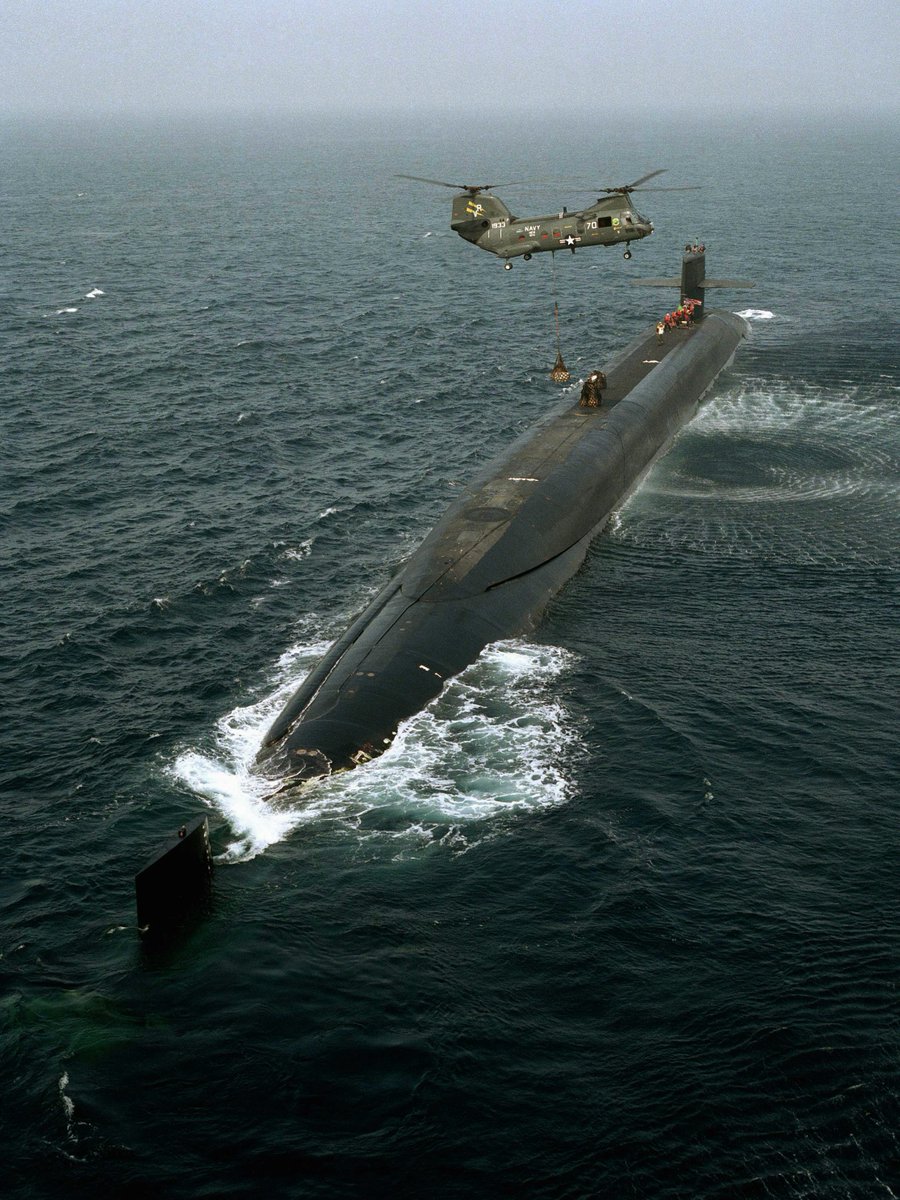
As the U.S. Navy officially retires the blue-collar C-2 Greyhound, I’m reminded of the time we said goodbye to another absolute legend of fleet logistics: the CH-46 Sea Knight. Here’s a throwback shot from 1991 of a Sea Knight dropping off goodies to the USS Ohio (SSBN-726). The good ol' days.
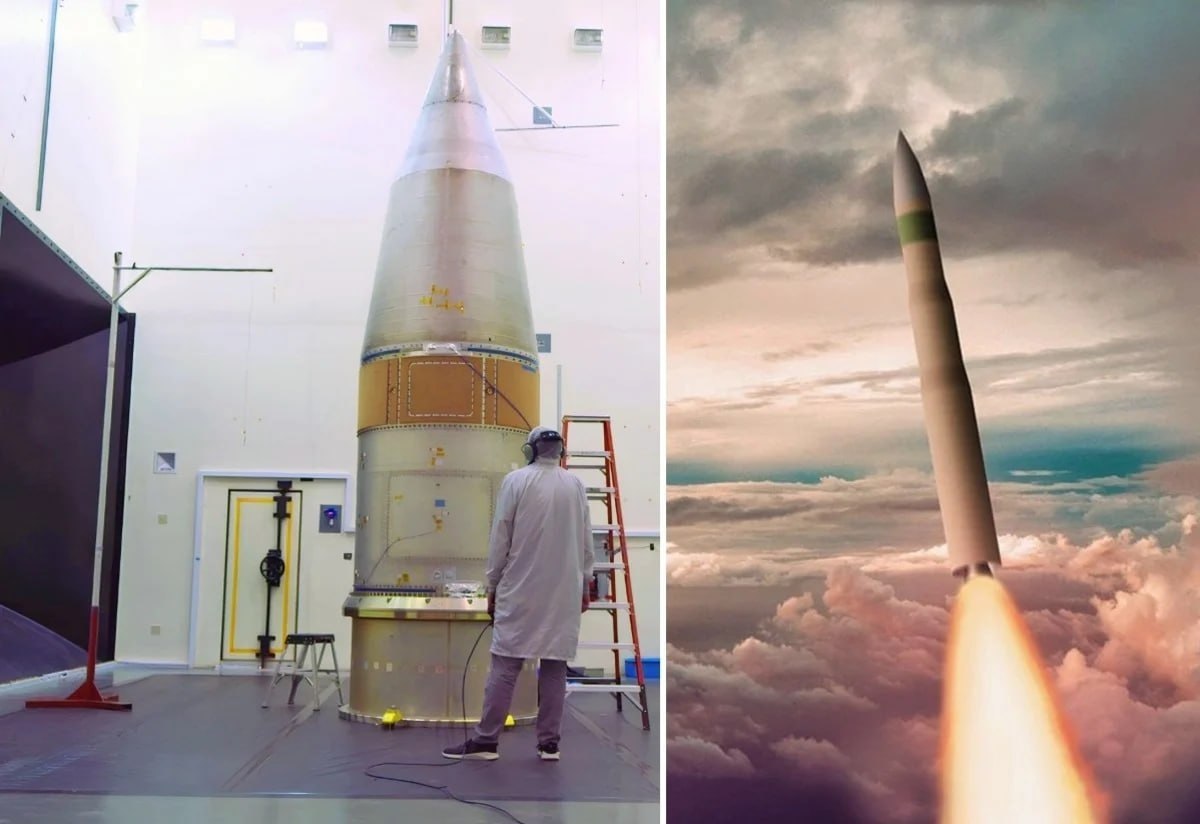
Northrop Grumman has released the first-ever photos of the next-generation LGM-35A Sentinel nuclear-armed intercontinental ballistic missile (ICBM).
The Sentinel is set to replace the aging Minuteman III ICBMs currently in service with the U.S. military.
In coordination with the Royal Australian Air Force and U.S. Navy, a Royal New Zealand Air Force P-8A Poseidon aircraft and crew from No. 5 Squadron successfully fired two AGM-84 Harpoon guided missiles at a decommissioned target ship, with both missiles hitting the target.
Chinese 3rd stages make up 80% of the low earth orbit mass which will kick off Kessler syndrome.
If the West wants orbital A.I. centers.
Deorbiting these Chinese "Kessler syndrome starter sets" has to be the highest policy priority. ⬇️
1/
𝗖𝗵𝗶𝗻𝗮’𝘀 𝗦𝗽𝗲𝗻𝘁 𝗥𝗼𝗰𝗸𝗲𝘁𝘀 𝗔𝗿𝗲 𝗧𝘂𝗿𝗻𝗶𝗻𝗴 𝗟𝗼𝘄 𝗘𝗮𝗿𝘁𝗵 𝗢𝗿𝗯𝗶𝘁 𝗜𝗻𝘁𝗼 𝗮 𝗗𝗲𝗯𝗿𝗶𝘀 𝗠𝗶𝗻���𝗳𝗶𝗲𝗹𝗱
China has left over 40 times more abandoned rocket body mass in long-lived low Earth orbits than the rest of the world combined.
From 2021 through 2025 they abandoned 51 spent stages above 650 km. The US abandoned four. Russia abandoned one.
China's abandoned mass in those orbits more than tripled to 305,000 kilograms.
These stages often retain fuel that can explode later.
They're pushing this harder to build out their satellite constellations.
Read the full article:
https://t.co/9XAQKYXbyT
A U.S. Air Force UH-1N "Huey" assigned to the 1st Helicopter Squadron at Joint Base Andrews, Maryland, appears to have made a hard landing in a field near Union Bridge, Maryland, approximately 55 miles northwest of Washington, D.C.
The 1st Helicopter Squadron provides helicopter transportation for senior government and military officials throughout the National Capital Region.
The cause of the apparent hard landing and the condition of those aboard are not yet known.
Source: https://t.co/5bhtiy7Nau
Nox Metals exists so America can build 100x more factories and technologically abundant industrial capacity in the West.
We are announcing our $11.5M Seed round led by Hyperion, with participation from Palmer Luckey, Y Combinator, Jared Friedman, RoboStrategy, Operator Collective, DTX, Alumni Ventures, and others.
Over the past few decades, America has neglected domestic production. We lost our dominating ability to build in the world of atoms while jobs on the factory floor plummeted.
It's time to build for America again. As our grandparents once did.
Since launching production only 7 months ago, we have shipped metal to hundreds of American factories. Countless truckloads to America's industrial base. And we are no where near slowing down.
Our metal has gone to space. It has protected our troops. It is in your car and in the machine that scanned your chest. It is all around us. And we can't stop supplying at warp speeds, because America needs it.
We will be revitalizing a WW2 era, 35,000 SQFT factory in Detroit this summer where we will have our techno industrialists working hard to further pursue our mission. We will be tripling down on technology, which has allowed us to move this fast for America thus far.
More code. More machines. More metal. More production.
Derrière les drones et les missiles, une autre révolution militaire est en cours : celle de la logistique autonome.
Confrontée à un manque criant de capacités de transport maritime dans l'Indo-Pacifique, l'US Army envisage le déploiement de 30 à 100 navires autonomes pour acheminer équipements et ravitaillement. Objectif : compenser une flotte réduite de moitié en quelques années, économiser des effectifs et renforcer la résilience de la chaîne logistique dans un éventuel conflit avec la Chine.
Une évolution majeure, souvent moins médiatisée que les systèmes d'armes, mais tout aussi déterminante. (Source Stars and Stripes)
https://t.co/egvKdtX9vl
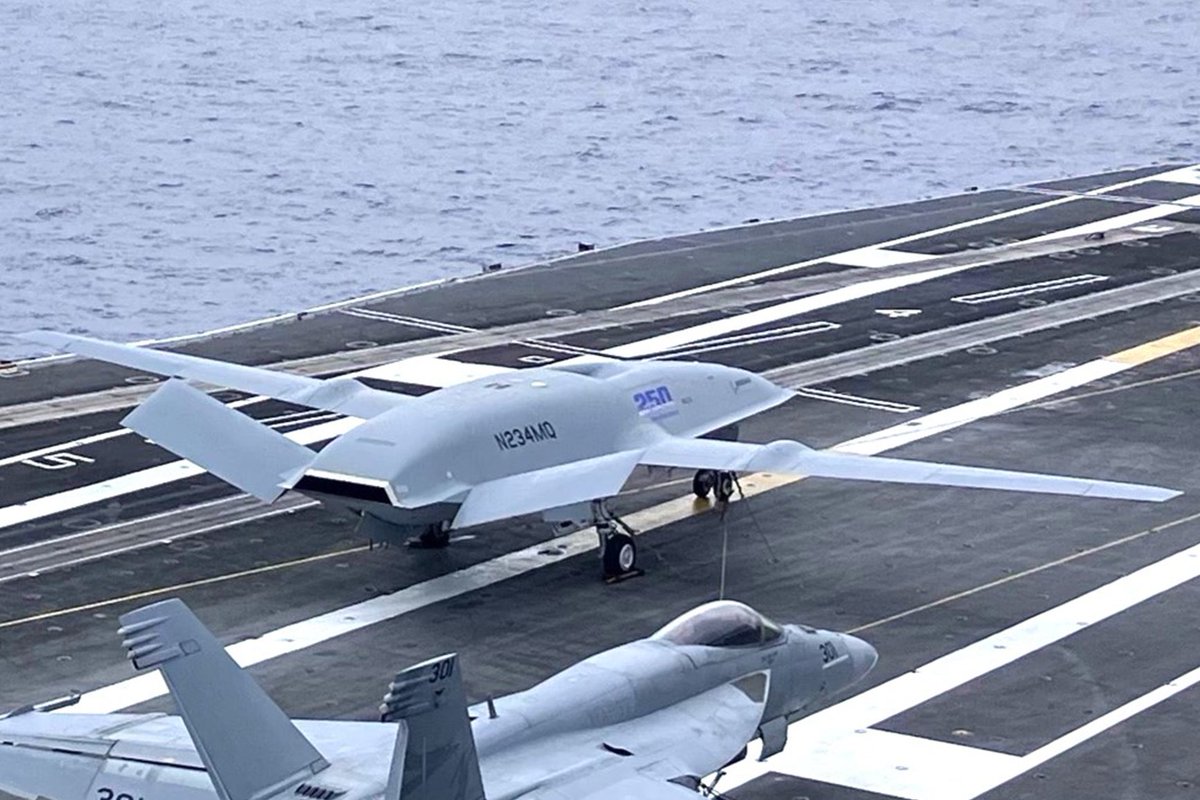
The C-2 Greyhound Has Made Its Last Trap Aboard A Carrier
It's truly the end of an era for naval aviation as the C-2's carrier onboard delivery role has now been turned over to the CMV-22 Osprey.
https://t.co/ZHqJEY0NGL
🇺🇸 DARPA lanzó un programa para construir baterías militares ocho veces más potentes que las que usan los drones actuales. Mismo peso, ocho veces mayor alcance. El objetivo: cortar las líneas de suministro de combustible que causan la muerte de soldados en entornos conflictivos
Chińskie modemy MESH w dronach typu Shahed/Gerbera coraz częściej pracują poza „standardowymi” zakresami
W przypadku rosyjskich dronów uderzeniowych i wabików coraz wyraźniej widać, że łączność radiowa oparta na modemach MESH nie ogranicza się do jednego stałego pasma. Konfiguracja zależy od producenta, wersji sprzętu, oprogramowania oraz tego, jak przeciwnik próbuje reagować na nasze środki walki radioelektronicznej.
Najczęściej wskazuje się dwa podstawowe zakresy pracy:
1300–1500 MHz
3200–3400 MHz
To jednak nie zamyka tematu. W praktyce obserwowane były również inne zakresy, https://t.co/Zimq0g1w2u.:
500–700 MHz
1600–1800 MHz
2100–2300 MHz
2700–2900 MHz
Najnowsza obserwacja dotyczy zakresu 3900–4100 MHz.
To ważny sygnał. Przeciwnik nie tylko używa gotowych rozwiązań komunikacyjnych, ale aktywnie sprawdza, które pasma dają największą szansę utrzymania łączności w środowisku silnego zakłócania. Innymi słowy, mamy do czynienia nie z pojedynczą konfiguracją radiową, ale z procesem ciągłej adaptacji.
Dla systemów C-UAS i WRE oznacza to kilka rzeczy.
Po pierwsze, nie wystarczy „znać pasma”. Trzeba stale monitorować widmo i aktualizować bibliotekę emisji.
Po drugie, zakłócanie punktowe może szybko tracić skuteczność, jeżeli przeciwnik zaczyna przenosić łączność na mniej oczywiste zakresy.
Po trzecie, coraz większe znaczenie ma rozpoznanie radioelektroniczne, automatyczna detekcja nietypowych emisji i szybkie przekładanie tych danych na działanie w systemach przeciwdziałania.
Wojna dronowa coraz mocniej staje się wojną adaptacji w widmie elektromagnetycznym. Kto szybciej wykrywa zmianę, rozumie jej znaczenie i potrafi odpowiedzieć technicznie, ten zyskuje realną przewagę.
🇺🇸 Anduril: The Company Rewriting The Entire Defense Industry
While everyone's distracted by SpaceX, the real disruption in defense is happening at Anduril Industries. The company just closed a $5B Series H round at a $61B valuation, doubling from $30.5B in just 9 months. Revenue went from $1B in 2024 to $2.1B in 2025 (+110% YoY), and they're projecting $4.3B in 2026.
In March 2026, the US Army awarded them a 10 year enterprise contract with a $20B ceiling, consolidating over 120 separate procurement actions into one framework. That kind of contract structure was historically reserved for Lockheed and Raytheon. Anduril just took a seat at the table the legacy primes have controlled for decades.
⚠️ Key Drivers
- Anduril's moat is software native architecture. Their Lattice OS platform fuses sensor data, AI targeting, and autonomous coordination across all domains. Legacy contractors built hardware first, software second. Anduril flipped the model,
- The Pentagon is pivoting to "intelligent mass": thousands of cheap autonomous systems instead of a few expensive platforms. Anduril's product stack maps perfectly to this doctrine. Lockheed's F-35 doesn't,
- Arsenal-1 in Ohio is a $1B, 5 million sq ft autonomous weapons factory designed to produce tens of thousands of drones per year. The Fury combat drone is already in production with Roadrunner, Barracuda, and classified programs to follow,
- International expansion is accelerating fast. Edge Group partnership (UAE), Rheinmetall (Europe), Dutch Ministry of Defence contracts, plus participation in the US "Golden Dome" missile defense system,
📈 TLDR: Anduril is doing to defense what Tesla did to automotive and SpaceX did to space launch. The legacy primes are 60 year old contractors trying to compete with a software first, AI native, vertically integrated machine. When this company goes public, it's going to be the most anticipated defense IPO in modern history.