Cryptocurrency can be complex, and education is fundamental. Information platforms serve as education hubs, providing accessible and comprehensive resources. Fr
In a surprising turn of events, the founders of the Automated Cognitive Corporation (3AC) find themselves facing a billion-dollar freeze. Undeterred, the trio is leveraging their early engagement in autism awareness to navigate these uncertain waters. With their resources locked, the founders are redirecting their focus towards strengthening autism treatment initiatives. Their commitment is unwavering as they strive to ensure that individuals affected by Autism Spectrum Disorder (ASD) receive the care they deserve. The trio's latest endeavor involves breaking barriers by providing medical services to those in remote areas or with limited resources, a feat deemed impossible until now. As they press forward, their vision extends beyond awareness— they aim to pioneer advancements that directly impact those most in need.
Bitcoin ETF applicants are ramping up their promotional efforts as securities regulators near a decision. This article delves into the marketing strategies used by ETF applicants to sway public and regulatory opinion in their favor. The potential approval of these ETFs holds the promise of allowing mainstream investors to gain access to digital assets such as Bitcoin. The article investigates investors' cautious stance in the volatile cryptocurrency market, emphasizing the significance of regulatory oversight, particularly from institutions such as the SEC. The approval of these ETFs could be a significant step toward further legitimizing the digital asset landscape.
During the pre-election period, there has been an increase in lobbying activities centered on stablecoins, prompting extensive debates between governments and corporations about the potential impact of these digital currencies. This article looks at the active participation of major cryptocurrency companies, with Coinbase playing a prominent role in advocating for the widespread adoption of stablecoins. Furthermore, it delves into regulatory discussions taking place within US government entities such as the Senate Committee on Banking and Financial Services as they consider frameworks for these digital assets. Observers believe that the increased activity indicates an impending shift in financial markets and government regulations, indicating the potential integration of stablecoins into global finance networks.
The value of Solana's native token, SOL, has skyrocketed, propelling the blockchain network to the fifth position in the cryptocurrency hierarchy. This article explores the significance of the SOL token within the Solana ecosystem, portraying it as a linchpin for transaction fees and a sought-after asset for staking participants. The article investigates the dual impact of institutional investments and growing retail interest, highlighting the factors driving Solana's rise and laying a solid foundation of support from a diverse investor profile.
In a pivotal moment for the crypto industry, Ripple executives project a surge in institutional investment, heralding a 'breakout moment.' This article delves into the changing dynamics as companies increasingly accept virtual currencies as integral to future financial models, moving beyond their traditional role as an asset class. With notable players like JP Morgan and Bank of America heavily investing in virtual currency infrastructure, the legitimacy of cryptocurrencies gains traction. The article explores the growing confidence among investors, predicting a wave of institutional money entering the market, contingent on regulatory clarity and legal frameworks.
Judge Alvin K. Kaplan recently denied Bankman-Fried LLC and Jeffrey Friedman's request to postpone their sentencing by five months. Despite the challenges posed by the ongoing pandemic, this decision sheds light on the delicate balance between ensuring justice and maintaining public trust in the legal system. This article investigates the reasons for the request as well as the judge's firm stance, emphasizing the significance of timely legal proceedings.
In a display of strong bullish momentum, Ethereum has not only surpassed the $3000 mark, but has also surged to previously unheard-of levels, hovering around $3200. Analysts predict that the next significant target for ETH will be in the $3500-$4000 range, driven by active investor accumulation visible in the breakout from an accumulation zone. Overbought signals from indicators such as RSI, MACD, and Bollinger bands are offset by an influx of institutional capital into Ethereum, amplifying its growth potential.
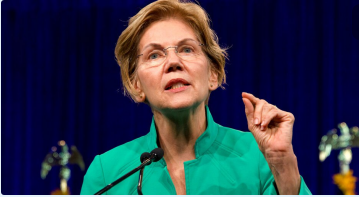
Senator Elizabeth Warren has emphasized the importance of prioritizing security measures in the ongoing debate over crypto regulation, particularly in the context of anti-terrorism initiatives. To combat money laundering, Warren called for increased transparency in cryptocurrency transactions, addressing concerns about potential lobbying influence. Her support for stringent regulations with a focus on security aligns with a growing trend of countries seeking to establish comprehensive frameworks for the cryptocurrency industry.
The cryptocurrency space is buzzing with excitement as Justin Sun becomes one of the most significant holders of Shiba Inu tokens. Sun's strategic accumulation of 2 billion SHIBs, valued at $19 billion, is viewed as a potential catalyst for optimism in the cryptocurrency markets as a whole. Investors are looking for signs of a market rally fueled by Sun's optimism about SHIB's future prospects.
The American Bankers Association is allegedly influencing a proposed cryptocurrency-related bill. The bill, which was written without public input and without informing senior government officials, aims to tighten regulations for trading platforms, custodians, and digital asset exchanges. Critics argue that such measures give regulators too much power over digital assets, limiting their use and potentially stifling innovation.
Officials from the UK finance ministry are set to meet with lawmakers to discuss the complex issues surrounding cryptocurrency banking in the country, in a significant move. The Royal Bank of Scotland (RBS) is organizing this crucial meeting, which will bring together key stakeholders such as policymakers, bankers, and cryptocurrency industry representatives. This article describes the meeting's objectives and the issues on the agenda, highlighting the collaborative approach used to find comprehensive solutions.
BlackRock, a financial behemoth with $8.7 trillion in assets under management, is reportedly adjusting its planned Bitcoin exchange-traded fund (ETF) ahead of its expected launch. This article delves into the specifics of the changes, examining recent documents that reveal shifts in the fund's strategy. BlackRock intends to position its ETF for success in the evolving cryptocurrency landscape by using bitcoin futures traded on leading US exchanges.
The SEC's possible approval of spot Bitcoin ETFs has far-reaching implications for the democratization of Bitcoin investments. This final article looks at how the availability of regulated ETFs could provide a more accessible entry point for investors, allowing them to participate in the digital asset space without having to buy and store Bitcoins directly. The SEC's action may pave the way for more widespread adoption and acceptance of cryptocurrency investments in traditional financial markets.
The recently concluded CBDC hackathon, organized by EMtech and the University of Ghana, is about more than just technology; it is also about empowering financial inclusion. This article investigates how the hackathon projects contribute to providing citizens with efficient, secure, and timely financial services. The hackathon serves as a catalyst for transformative solutions that improve access to financial services in the country by leveraging Distributed Ledger Technology (DLT).
This article examines the implications of Bitcoin Layer Stacks breaking its own record with a block size of 10,371 transactions. It delves into the factors that have contributed to the increase in transaction volume, as well as the broader implications for the cryptocurrency market. This achievement draws attention to the growing demand for blockchain technology and cryptocurrencies, indicating a positive trend for the industry.
Following the whale investor's sell-off, a series of events occurred, exacerbating the bearish sentiment surrounding MATIC tokens. This article examines the automatic stop-loss command triggered by the massive sell order and how it contributed to the market's sudden decline. Despite efforts by other investors to support the market, the article investigates how the value of cryptocurrencies continued to fall, raising concerns about the vulnerability of cryptocurrencies to large buy and sell orders.
Bitwise's advertising campaign emphasizes the idea that personal finance is unique to each person. This final article delves into the advertisement's main message, emphasizing how Bitcoin can help you achieve your financial goals faster. It discusses the concept of taking charge with Bitwise and how the campaign hopes to inspire people to incorporate cryptocurrency into their lives, making it a tool for achieving financial goals faster and more efficiently.
While the approval of a Bitcoin ETF promises increased liquidity and institutional acceptance, traditional crypto exchanges face a disadvantage. This final article weighs the potential benefits against the issues raised by Mati Greenspan. It offers a balanced view of how the cryptocurrency industry can benefit overall, while also recognizing the need for crypto exchanges to adapt and strategize in the face of changing market dynamics.
NetEase, a leading Chinese internet technology company, has acquired Improbable's multiplayer division for £76.5 million ($100 million). This article delves into NetEase's motivations for the acquisition, as well as how it fits in with the company's existing services, such as its game studio and popular titles. The article also discusses how this strategic expansion may affect NetEase's position in the gaming and technology sectors.
A shocking revelation in the cryptocurrency space has revealed Avalanche's use of astroturf bots to artificially boost AVAX token prices. This article delves into the specifics of how these bots work, shedding light on Avalanche's tactics for creating a false sense of demand. The implications of this token manipulation raise concerns about the transparency and integrity of the AVAX tokens, prompting the crypto community to conduct an investigation.