💔 I am very sad... Donations have stopped, and we were very close to reaching our goal.
Only £1,675 remains to reach the goal and complete the construction of a safe home for Mustafa's family in Yemen. 🏠
The campaign started to fund Mustafa's heart treatment, but he passed away before his treatment could be completed. Now, we hope to provide his family with a safe home that preserves their dignity.
We ask you to donate or share. May God reward you. 🤍🙏🏼
[https://t.co/eFLW9oCYqf]
Only one step left...
Thanks to God and the support of generous donors, we've reached 93% of our goal.
We only need £1,846 to provide a home for Mustafa's impoverished family after they lost their child.
If everyone who reads this tweet donates just £5, we could reach our goal very soon, God willing.
🤲 O God, make this a continuous act of charity for everyone who donates or shares this tweet, and a reason for them to enter Paradise and attain Your pleasure. Amen.
❤️ Donate or share; your contribution might be the final step that completes this good deed.
[https://t.co/HahghWAnGX]
Do we ascribe a body, length, width, and height to Allāh?
The accusation commonly made by the mutakallimīn is that we believe Allāh is a body that has a length, width, and height. First of all, we must establish that these terms to Allāh سبحانه وتعالى is something explicitly condemned by Shaykh al-Islām Ibn Taymiyyah, as he said:
“It may be said that discussion of this is from several angles. The first is to say: this very expression—that God is a body possessing length, width, and depth—the first known to have articulated it in Islam were the shaykhs of the Imāmiyyah, such as Hishām b. al-Ḥakam and Hishām b. Sālim… This is something upon which the transmitters of doctrines in the works on sects and creeds (al-milal wa’l-niḥal) from all groups are agreed… People have transmitted from the Rāfiḍah these statements and even worse than them. Thus they quote what al-Ashʿarī and others mentioned in the books of sects regarding Bayān b. Samʿān al-Tamīmī—after whom the Bayāniyyah among the extremist Shīʿah are named—that he used to say: ‘God is in the form of a human being, and He perishes entirely except for His Face.’”
Now to begin, Ibn Taymiyyah explains in Darʾ Taʿāruḍ al-ʿAql wa-l-Naql and other works like Bayān Talbīs al-Jahmiyyah that the word body is ambiguous. Originally, the term applied to the corpse and the physical body and implied density and thickness. However, the mutakallimin expanded the definition to include everything that is spatially extended, to the point where even the air, the sky, water, fire, light, and so on are described as bodies, even though they were not originally described as such by the Arabs. The word body also has other definitions, such as something that consists of blood, bones, and flesh.
The ruling on ascribing the term “body” to Allāh is that it’s a bidʿah, since the term can have true or false meanings and isn’t mentioned in the Qurʾān and Sunnah. If someone asks whether Allāh is a body, it must be asked in return, “What do you mean by this term body?” If he gives a false meaning, we reject it. If he gives a true meaning, we would say, “The meaning you have given is correct to ascribe to Allāh. However, usage of the term is an innovation.”
Shaykh al-Islām says in Bayān Talbīs al-Jahmiyyah (1/550):
“The word ‘body’ is very general. It could refer to something that was put together, of which the parts were separate then they were put together; or something that can be divided and separated into parts; or something that consists of physical material and an image; or something that consists of single particles that are put together, but Allāh, may He be exalted, is far above all that; or something that was separate then came together; or something that can be divided and separated, meaning that one part of the thing separates from another part; or it may indicate some other meaning that refers to something that is put together – which is impossible in the case of Allāh.
It may be that what is meant by body is something that can be indicated or pointed out, or seen, or something in which attributes could exist. Allāh, may He be exalted, will be seen in the hereafter, attributes exist in Him, and people point or gesture towards Him with their hands, hearts, faces and eyes when they offer supplication (duʿāʾ). If what a person means when he says that He is not a body is this meaning, it may be said to him: The idea that you are denying when you say this is something that is confirmed by sound reports and sound reasoning, and you have no evidence for denying it. However the wording itself is an innovation, whether you deny it or affirm it. This term – ‘body’ – is not found in the Qurʾān or Sunnah, or in the wording of any of the early generations of this ummah or their leading scholars when speaking of the attributes of Allāh, may He be exalted, either by way of denying or affirming.”
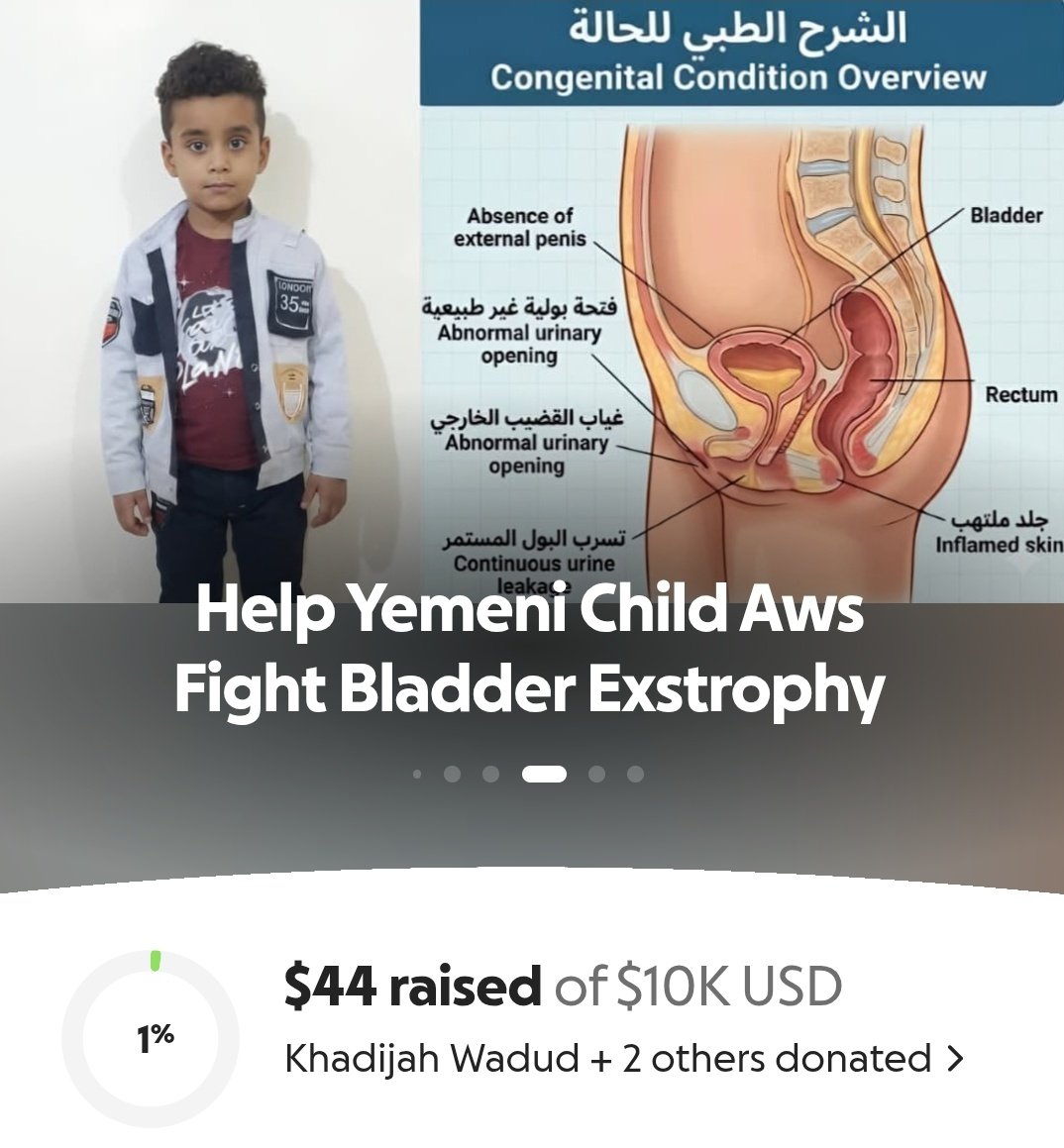
💔 Don't let this Yemeni child fight alone.
Aws needs your help to reach his first goal of $500. So far, only $167 has been raised in 23 days.
Every dollar. Every share. Every prayer matters.
🙏🏻🔄🇾🇪💔
https://t.co/OMS32hxY3W
Assalamu alaikom ❤���
A few people have messaged me saying that people were asking what happened to my account, so I briefly reactivated to explain.
I’ve temporarily stepped away from everything because I need to sort out some important things in my life and work properly. I’ll be deactivating again after this (probably by tomorrow), but I’ll be back again once things are sorted out, insha’Allah.
MAJOR ANNOUNCEMENT:
US DAWAH CAMPAIGN — SUMMER 2026
Bismillah,
I'm honored to announce my upcoming US Dawah Campaign: a series of public debates and speaking engagements across three American cities this summer, dedicated to Islamic outreach.
Signed copies of my book will be available for purchase at every stop, in shaa Allah.
BOOKINGS — If you'd like to book me for a talk, event, or appearance in any of these cities, please email: [email protected]
MEET-UPS — If you'll be in the same city at the same time and would like to connect, DM me or email me at the same address. I'd love to meet.
— SCHEDULE —
DALLAS, TX | July 24–27
July 25 — Debate vs. Michael Jones (InspiringPhilosophy): "The Islamic Dilemma"
July 25 — Debate vs. Jay Dyer: "Which Is Better for Society: Christianity or Islam?"
LAS VEGAS, NV | July 27 – August 1
July 31 — 10 vs. 1 debate against 10 Christians on Sean Kelly's Podcast DEBATE PROMPTS: 1) The Trinity Is False 2) Islamic Monotheism (Tawhid) Is True 3) The Bible Is Evil
CLEVELAND, OH | August 1–3
August 2 — Two debates vs. David Wood 1) Is the Bible Immoral? 2) Is the Qur'an Immoral?
I will return to Morocco on August 3, in shaa Allah. Please keep this effort in your du'as — and I hope to see many of you there.
A correction regarding my recent comments:
One of my teachers reached out to me and pointed out that I made a serious mistake in my weakening of the report of ʿImrān al-Qaṣṣāb concerning a narration related to Amīr Muʿāwiyah رضي الله عنه.
After reviewing the matter and benefiting from his advice, I have come to recognize my error and retract my previous comments on this issue.
Part of my mistake was applying a general principle in a situation where it should not have been applied, without adequately considering the specific circumstances of the narration and the methodology of the scholars regarding it.
I ask Allah to forgive my mistake.
May Allah reward those who sincerely advise others for His sake.
💔 It has been 20 days since the launch of Yemeni child Aws's fundraising campaign, and only $84 has been raised out of the short-term goal of $500 so the baby can undergo the necessary test and review the doctors.
Aws needs several complex surgeries to have a chance at living a normal life.
Every delay means the continuation of his suffering.
If you are unable to donate, please share the campaign—it may reach someone who can help save him. 🤲🇾🇪
https://t.co/fpvmTCXkuC
@TaymiFawaid Takhsis argument also sufficiently applies to the finite number of attributes.
Idk why it is used against magnitude or anything else for that matter.
Malik al-Ashtar is often presented in later narratives as a knight of loyalty and principle. Yet history records a far darker role for him, among the agitators present during the siege of ʿUthmān ibn ʿAffān (رضي الله عنه), the third rightly guided Caliph, whose blood was unjustly spilled in Madīnah.
Among the most disturbing reports concerning Malik al-Ashtar is his confrontation with our mothers, Safiyyah bint Huyayy and Ramla bint Abī Sufyān, two of the wives of the Messenger of Allah ﷺ.
Reports preserved in early historical works state that al-Ashtar struck the face of their mules with a whip, forcing them to turn back, preventing them from reaching the house.
This incident was not a clash between combatants on a battlefield; it involved the wives of the Prophet ﷺ attempting to intervene in defense of a besieged Companion.
This incident is not preserved in a single isolated report. Rather, it appears in multiple early sources.
Imām Aḥmad narrated in Faḍāʾil al-Ṣaḥābah with an authentic chain from al-Ḥasan al-Baṣrī, who said:
“When the matter intensified against him on the Day of the House (i.e., during the siege), they said: ‘Who then? Who then?’ He said: So, they sent for Umm Ḥabībah. She was brought on a white mule, covered with a cloak that concealed her. When she approached the door, they said: ‘What is this?’ They were told: ‘Umm Ḥabībah.’ They said: ‘By Allah, she will not enter,’ so they turned her back.”
Al-Bukhārī narrated in his Tārīkh:
“Abū ʿĀṣim narrated to us, he said: Saʿdān ibn Bishr narrated to us, he said: Abū Muḥammad al-Anṣārī narrated to us: Ṣafiyyah came while ʿUthmān (may Allah be pleased with him) was under siege. She said: ‘What grievance do you have against the Commander of the Believers? I will guarantee on his behalf.’ Then al-Ashtar came and said: ‘Who is this?’ They said: ‘Ṣafiyyah.’ So, he began striking the face of her mule with a whip until she turned back.”
Abū ʿĀṣim said when he narrated this ḥadīth:
“I wished that she had supplicated against him, by Allah, she would have destroyed him, when he treated lightly the sanctity of the Messenger of Allah.”
Ibn Shabbah narrated in Tārīkh al-Madīnah:
“ʿAlī ibn al-Jaʿd narrated to us, he said: Zuhayr ibn Muʿāwiyah narrated to us, he said: Kinānah, the freedman of Ṣafiyyah, narrated to us: I was leading Ṣafiyyah bint Ḥuyayy so that she could go and defend ʿUthmān (may Allah be pleased with him). She encountered al-Ashtar, who struck the face of her mule until it swerved. She then said: ‘Take me back! Let this dog not disgrace me!’”
Malik al-Ashtar was not a marginal figure in Kūfah, he was the chief military power within the state. As the dominant force behind the Kūfan movement, he exercised enormous influence, to the extent that some reports suggest his authority in practical affairs often surpassed that of ʿAlī himself within the city. He was regarded by his faction as the most dependable and decisive figure in the state.
Yet the historical sources also indicate that his loyalty was not absolute; there were moments in which he contemplated defying ʿAlī’s directives and pressing his own course of action. This raises serious questions about the nature of his political ambitions and the degree to which he operated independently rather than as a subordinate executor of policy.
Reports indicate that he contemplated revolting against ʿAlī on two separate occasions.
The first was during the Battle of Jamal, when he observed that the people of Basra were not fully supporting ʿAlī.
The second instance occurred after the event of Taḥkīm (arbitration). In the aftermath of the agreement between Abū Mūsā al-Ashʿarī and ʿAmr ibn al-ʿĀṣ — which involved the declaration of deposition (khalʿ) of ʿAlī, he reacted with anger, similar to those who later formed the Khārijite movement.
When unrest erupted in Egypt against ʿAlī (رضي الله عنه), he faced a serious political dilemma. Reports suggest that his confidence in Malik al-Ashtar had already been strained. The Egyptian rebellion presented both a challenge and an opportunity.
It is narrated:
“It remained in my heart against him until the turmoil of Egypt arose. ʿAlī said: ‘Who will take charge of it?’
He consulted Ibn ʿAbbās.
He said: ‘Al-Ashtar.’
ʿAlī replied: ‘How can it be him after what has already occurred?’
Ibn ʿAbbās said: ‘Mount the servant upon the horse, if he perishes, he perishes; and if he gains authority, he gains authority.’
So, he sent him on that mission. When news of his death reached him, he said: ‘By the nose, not by the mouth.’”
This report suggests a calculated decision. Egypt was volatile. Sending al-Ashtar there could achieve one of two outcomes: either he would successfully suppress the rebellion and secure the province, or he would be removed from the political center in Kūfah, possibly even perish in the attempt.
Another narration states:
When ʿAlī was informed of al-Ashtar’s death, he said: “To the hands and to the mouth.”
And in another chain from ʿAbdullāh ibn Jaʿfar:
“I entered upon ʿAlī and informed him of al-Ashtar’s death. He said: ‘To the hands and to the mouth.’”
Sufyān ibn ʿUyaynah commented regarding this:
“Al-Ashtar had become heavy upon him; he disliked him and had grown weary of him.”
Taken together, these reports portray a relationship that had become politically strained. By appointing al-Ashtar over Egypt, ʿAlī appears to have made a pragmatic decision: either al-Ashtar would prove his usefulness on a distant and dangerous front, or circumstances would resolve the tension in another way.
In fact, Ibn Shabbah narrates with his chain from Ṣāliḥ ibn Kaysān that the wife of Malik al-Ashtar herself came to ʿAlī (رضي الله عنه) and said:
“O Commander of the Believers, I heard from the enemy of Allah a statement that I could not bear to remain silent about.”
ʿAlī asked her, “What did you hear?”
She replied:
“I heard him say: ‘Yesterday we killed the best of Allah’s creation, and today we have appointed the worst of Allah’s creation’, meaning you, O Commander of the Believers.”
This report presents a striking claim: that al-Ashtar allegedly described the slain ʿUthmān as “the best of Allah’s creation” and referred to ʿAlī as “the worst,” a statement that would indicate extreme hypocrisy on his behalf.
May Allah be pleased with ʿUthmān and ʿAlī, two noble Companions of Allah’s Messenger ﷺ, and may He unite us with them in goodness.
A common misconception is that every narration singularly reported (tafarrud) by a narrator graded ṣadūq (truthful) is automatically accepted.
This is not the methodology of the hadith critics.
Al-Dhahabī stated:
“The solitary report of a ṣadūq may at times be considered munkar (denounced).”
This statement surprises many people because they assume that once a narrator is graded ṣadūq, his solitary reports are automatically acceptable.
However, the critics recognized that ṣadūq is a broad category and not all narrators within it possess the same level of precision.
The term ṣadūq can include narrators who are reliable and precise, but it can also include narrators who are truthful yet possess noticeable weakness in retention, make mistakes, have awhām (errors), suffer from ikhtilāṭ (confusion in old age), or whose reports require corroboration.
For this reason, the early critics did not judge a narrator merely by the label ṣadūq. They examined the narrator’s actual level of precision and the nature of the report itself.
If a narrator is described as:
- Ṣadūq lahu awhām (truthful but prone to errors)
- Ṣadūq yukhtiʾ (truthful but makes mistakes)
- Laysa bi’l-qawī (not strong in hadith)
- Fī ḥifẓihi shayʾ (there is weakness in his memory)
- Yaḥimu (he falls into error)
- Mukhtaliṭ (he became confused in old age)
then his solitary reports are not treated in the same manner as the solitary reports of an imām, ḥāfiẓ, or firmly established thiqah narrator.
Indeed, the critics would sometimes explicitly state regarding such narrators:
“If he narrates something alone, his report is not used as proof.”
The reason is straightforward: truthfulness alone does not guarantee precision.
When a narrator’s precision falls below the level required for independent proof, his tafarrud becomes a point of scrutiny. If corroboration is found, the report may rise to the level of ḥasan. If corroboration is absent, especially in matters where stronger transmitters would ordinarily be expected to preserve the report, the narration may be judged weak or even munkar.
💔 Every child deserves a chance to live with dignity.
Little Aws from Yemen is suffering from a rare congenital condition and urgently needs life-changing surgery.
Please donate or share. 🙏
#SaveAws#Yemen#Donate
👇🏻🙏🏻🇾🇪💔😔
https://t.co/I5evJmcj7N
Did Muʿāwiyah رض�� الله عنه Order the Cursing of ʿAlī رضي الله عنه?
One of the most commonly cited reports from the fitnah is Muʿāwiyah’s statement to Saʿd ibn Abī Waqqāṣ رضي الله عنه:
“What prevented you from criticizing Abū Turāb?”
[Ṣaḥīḥ Muslim 2404]
Many assume this proves that Muʿāwiyah ordered the cursing of Sayyidunā ʿAlī رضي الله عنه. However, this conclusion rests upon several assumptions.
First, the Arabic word sabb does not exclusively mean “to curse.” Its primary meaning is to revile, disparage, criticize, or speak negatively about someone.
Thus, translating the report as “What prevented you from cursing ʿAlī?” adopts one possible interpretation rather than the only interpretation.
Second, we do not concede that Muʿāwiyah was issuing an order. The narration contains a question, not a command. Given the divisions caused by the fitnah, it is hardly surprising that members of one camp criticized the other. The wording is therefore consistent with Muʿāwiyah asking why Saʿd refrained from doing something that others were already doing.
Third, we do not even have to concede that the discussion concerned personal abuse. Saʿd remained neutral during the fitnah and disagreed with both camps.
While sabb can refer to reviling a person, it can also refer to criticizing their conduct.
Thus, even if Muʿāwiyah was asking why Saʿd did not engage in sabb, it does not necessarily follow that he was asking why Saʿd did not personally insult ʿAlī.
Rather, it is possible that Muʿāwiyah was asking why Saʿd did not criticize ʿAlī’s political position or ijtihād as others had done.
Saʿd’s response is noteworthy. Rather than debating the political dispute itself, he cited the virtues of ʿAlī. This may indicate that, despite any disagreements over ijtihād, he would not speak against a man of such immense merit.
A weaker narration supports this context. It reports that Muʿāwiyah once asked Saʿd:
“Why did you not fight at our side?”
[al-Bidāyah 8/83–84]
This suggests that discussions between them revolved around Saʿd’s neutrality.
This understanding is not without precedent.
Al-Qurṭubī writes in al-Mufhim (6/278):
“It is farfetched that Muʿāwiyah would openly curse and abuse him on account of what Muʿāwiyah had been described with in terms of intelligence, religiousness, forbearance, and good manners. As for what has been narrated of him in this regard, most of it is a lie and unfounded.”
Likewise, Ibn Kathīr states in al-Bidāyah (10/576):
“None of it is reliable regarding them.”
The relationship between Muʿāwiyah and the family of ʿAlī does not resemble one marked by hatred.
Muḥammad ibn al-Ḥanafiyyah, the son of ʿAlī, narrates hadith from Muʿāwiyah in Musnad Aḥmad (4/9).
It is also reported that Muʿāwiyah granted annual stipends of one million dirhams each to al-Ḥasan, al-Ḥusayn, Ibn ʿAbbās, and ʿAbdullāh ibn Jaʿfar
[Latāʾif al-Maʿārif, pp. 21–22)]
This is corroborated by the Shīʿī historian Ibn Abī al-Ḥadīd in Sharḥ Nahj al-Balāghah (15/2).
Furthermore, Saʿd is reported to have said:
“I have not seen anyone after ʿUthmān more fulfilling of rights than the owner of this door,” referring to Muʿāwiyah.
[al-Bidāyah 8/133]
Would the son of ʿAlī narrate hadith from Muʿāwiyah, and would the family of ʿAlī maintain such relations with him, if he were known for openly cursing and reviling their father?
Would Muʿāwiyah bestow such generosity upon the family of ʿAlī if his policy was one of personal hatred and vilification?
Would Saʿd speak in such terms about a man whom he believed had ordered him to commit a sin by cursing one of the greatest Companions of the Messenger of Allah ﷺ?
Allah knows best.
The Weak Reports Against Sayyidunā Ṭalḥah (ra)
An allegation is sometimes made that Sayyidunā Ṭalḥah ibn ʿUbayd Allāh (ra) intended to marry Sayyidah ʿĀʾishah (ra) after the passing of the Prophet ﷺ, and that Sūrat al-Aḥzāb 33:53 was revealed concerning him. However, the reports cited for this claim are not authentically established.
The first route is:
Muḥammad ibn Ḥumayd al-Rāzī → Mihrān ibn Abī ʿUmar → Sufyān al-Thawrī → Dāwūd ibn Abī Hind → ʿIkrimah → Ibn ʿAbbās
The report states that a man from the Companions said, “If the Messenger of Allah ﷺ dies, I will marry ʿĀʾishah or Umm Salamah.”
This route is weak. Muḥammad ibn Ḥumayd was accused of lying by numerous critics, while Mihrān ibn Abī ʿUmar was criticized for errors in his transmission from Sufyān al-Thawrī. As such, the report cannot be relied upon.
The second route is:
Muḥammad ibn Marwān al-Suddī al-Ṣaghīr → al-Kalbī → Abū Ṣāliḥ → Ibn ʿAbbās
This report explicitly names Ṭalḥah ibn ʿUbayd Allāh.
However, the chain is fabricated. Al-Kalbī and Muḥammad ibn Marwān were both abandoned by the hadith critics, and this route is among those famously referred to as silsilat al-kadhib.
The third route is:
Juwaybir ibn Saʿīd → Ibn ʿAbbās
This report mentions a man who spoke to one of the wives of the Prophet ﷺ and then allegedly said, “He prevents me from speaking to my cousin? I will marry her after him.”
This report suffers from an incomplete chain in some sources, and Juwaybir himself is matrūk according to the hadith critics. It is therefore unsuitable as evidence.
The remaining reports are the marāsīl of various Tābiʿīn and are likewise deficient. The reports of Abū Umāmah ibn Sahl and Abū Bakr ibn Muḥammad ibn ʿAmr ibn Ḥazm come through al-Wāqidī.
While the narrations of al-Wāqidī transmitted by Ibn Saʿd are generally considered among his strongest, the critics were especially severe regarding his reports of disputed historical incidents and controversial allegations.
The report of ʿAbd al-Raḥmān ibn Zayd ibn Aslam contains Ibn Zayd, who is weak. As for the report of Qatādah, it comes through ʿAbd al-Razzāq, whose narrations in such matters have been criticized.
Moreover, Qatādah primarily narrates from senior Tābiʿīn in reports of this nature, rendering the report disconnected from the event in question. As such, none of these reports are capable of independently establishing the allegation.
Even if one were to assume some basis for the story, it remains disputed whether the individual involved was the famous Companion Ṭalḥah ibn ʿUbayd Allāh (ra).
A number of scholars identified the individual in question as Ṭalḥah ibn ʿUbayd Allāh ibn Musāfiʿ, not the well-known Companion.
This distinction was mentioned by Ibn al-Athīr, and al-Suyūṭī likewise cited it, noting that it resolved the difficulty of attributing such a statement to one of the foremost Companions of the Messenger of Allah ﷺ.
Accordingly, the allegation against Sayyidunā Ṭalḥah ibn ʿUbayd Allāh (ra) is not established. The reports are either weak, disconnected, or fabricated, while the identification of Ṭalḥah himself is disputed. Such evidence is insufficient to impugn one of the Ten Promised Paradise and the foremost Companions of the Messenger of Allah ﷺ.
Allah knows best.






![BilqisYeme6i's tweet photo. 💔 I am very sad... Donations have stopped, and we were very close to reaching our goal.
Only £1,675 remains to reach the goal and complete the construction of a safe home for Mustafa's family in Yemen. 🏠
The campaign started to fund Mustafa's heart treatment, but he passed away before his treatment could be completed. Now, we hope to provide his family with a safe home that preserves their dignity.
We ask you to donate or share. May God reward you. 🤍🙏🏼
[https://t.co/eFLW9oCYqf]](https://pbs.twimg.com/media/HPyvJEcbAAAViTn.jpg)
![hashimiyy_'s tweet photo. Only one step left...
Thanks to God and the support of generous donors, we've reached 93% of our goal.
We only need £1,846 to provide a home for Mustafa's impoverished family after they lost their child.
If everyone who reads this tweet donates just £5, we could reach our goal very soon, God willing.
🤲 O God, make this a continuous act of charity for everyone who donates or shares this tweet, and a reason for them to enter Paradise and attain Your pleasure. Amen.
❤️ Donate or share; your contribution might be the final step that completes this good deed.
[https://t.co/HahghWAnGX]](https://pbs.twimg.com/media/HPJiDTkbkAAoMDu.jpg)


