Announcing two open-source projects for building and operating managed Kubernetes services on GPU infrastructure: NVIDIA Kubernetes Engine (NVKE) and NVIDIA Kubernetes Recipes (NVKR).
Both are components of the NVIDIA DSX AI Factory Platform. NVKE is the control plane for running managed Kubernetes service and NVKR builds the OS images, container images, and packages the managed clusters depend on.
Available in public preview, get started: https://t.co/c1YuOc7Wjo
Big win for local LLM inference!
This new inference engine runs LLMs 4x faster than llama.cpp:
I ran Qwen3.5 9B on a base M5 MacBook Pro with three engines:
- llama.cpp: 22.0 tokens/s
- MLX: 25.1 tokens/s
- uzu: 92.1 tokens/s
The video below shows all three runs side by side.
The first two numbers don't mean llama.cpp or MLX are badly built. But both are sitting right under a hard limit of local decoding.
When an LLM generates text, every new token needs one full pass through the model, and that pass reads all of the model's weights from memory.
A base M5 reads memory at about 153 GB/s. A 4-bit 9B model weighs about 5.2 GB.
So at one token per pass, the ceiling is roughly 153 ÷ 5.2 ≈ 29 tokens/s, however fast the GPU computes.
uzu gets past that ceiling by producing several tokens per pass instead of one:
↳ A small drafter (DFlash) proposes candidates for the next 16 positions at once.
↳ A tiny adapter (Weaver, 56.7M params) picks among them left to right, so the guesses form coherent text, and keeps a few alternative branches as a tree.
↳ The 9B model checks the whole tree in a single pass and keeps the longest path it agrees with. The main model still decides every token that ends up in the output.
GitHub repo: https://t.co/TKikR80qEA
(don't forget to star it 🌟)
In my run, each pass of the 9B model produced 7.5 tokens on average. Ordinary decoding produces exactly 1.
The weights and kernels are designed around this too. uzu ships its own 4-bit checkpoints, and on M5 chips it runs the verification step on the GPU's int8 matrix path.
uzu is an open-source inference engine by Mirai Labs, written in Rust with Metal kernels. It has Swift, Python, TypeScript and Rust bindings, so the same engine runs inside a Mac or iOS app.
I shared the GitHub repo above.
If you want to dive deeper, my co-founder wrote a detailed breakdown of why local inference is memory-bound and how uzu's speculative decoding gets past it.
Read it below.
Claude just got a red-team playbook.
Claude-Red just dropped a full pentest skill pack for Claude :
- 78 SKILL.md files.
- 23 categories.
- Load on demand unused skills don’t burn context.
Web, AD, cloud, containers, CI/CD, wireless, EDR evasion, exploit-dev.
Use it for authorized red team, bounty in scope, research, CTF.
A Chinese developer just explained the shift from Loop Engineering to Graph Engineering better than anyone.
most people are still building agents the way that's about to be obsolete.
> why single-agent loops break and go "goal blind"
> the 4 parts of a graph: nodes, edges, state, policy
> 3 topologies that run everything: diamond, supervisor, pipeline
> Anthropic's 5 official workflow patterns
the punchline: it's not how many agents you run. it's the determinism you build with verifiers, code fallbacks, and reality anchors.
I broke the same architecture down with Kimi K3. Full A-Z guide below.
Ex-Google engineer just dropped 1-hour course: loops, self-improving AI, memory systems - from scratch:
00:00 - the self-building agent
03:01 - soul.md runs everything
30:16 - RAG memory: pull 20 messages, not 2,000
31:48 - the loop that knows when to stop
35:14 - find the bug, fix the prompt
50:22 - how Claude compresses your memory
1 hour of his guide beats any paid agent course
watch & bookmark - then read Karpathy's loop method below
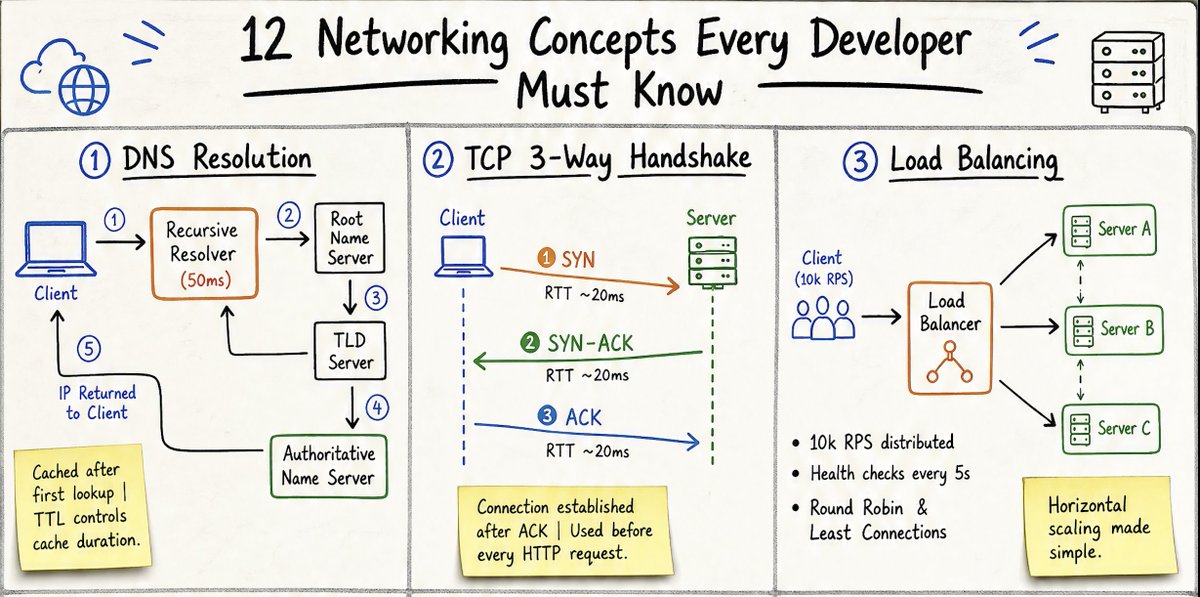
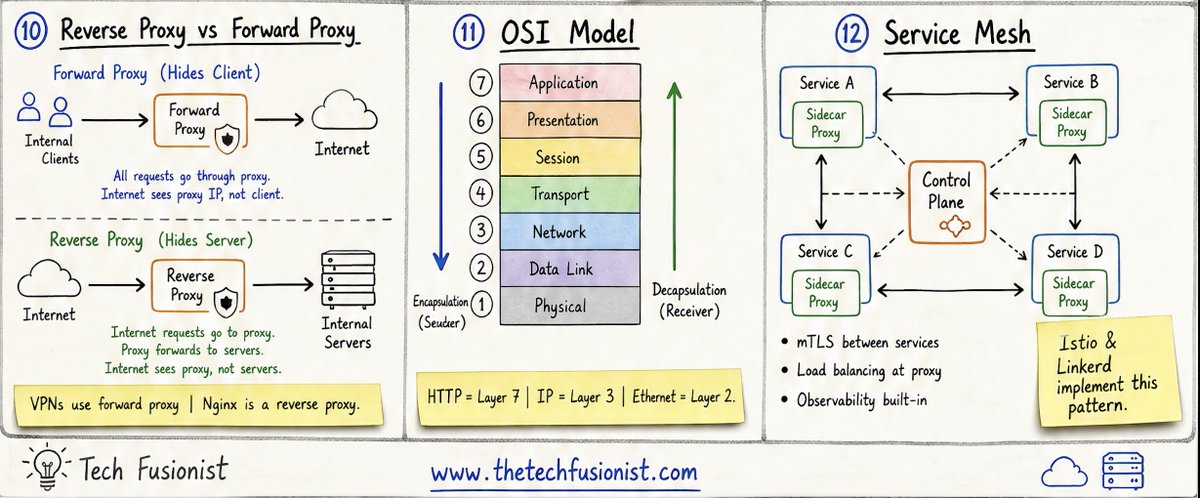
If you can't explain TCP handshakes, DNS resolution, or what a reverse proxy does? You shouldn't be passing others' technical interviews.
Here's your cheat sheet.
🚨 Anthropic's own team just showed how to actually build with MCP.
18 minutes. free. from the Creator of MCP.
watch the workshop. bookmark it.
worth more than every $300 course you almost bought.
you've been using Claude without knowing 50 of its plugins.
Then read the guide below.
أنا ترتّب لك خريطة طريق كام��ة تخلّص فيها تعلّم Claude خلال يوم واحد، من مبتدئ إلى خبير، ومقسّمة لأربع مستويات، بس امشِ عليها.
المستوى الأول: استخدم 24 دقيقة عشان تبني الأساس
لا تطوّل بالكلام، شوف هذولا أول:
① «دليل Claude للمبتدئين» — يشرح لك أهم الأساسيات بشكل واضح، الرابط:
https://t.co/VhNV0DQUNS
② «إعدادات Claude» — لازم تشوفه قبل تبدأ، لا تتعدّاه، الرابط:
https://t.co/Ec84N4rfet
إذا الأساس مو قوي، كل اللي بعده ما له فايدة.
المستوى الثاني: استخدم ساعة وحدة عشان تمشي على شغل فعلي
هذا الجزء اللي يخليك تبدأ تستخدمه فعلاً:
① «التعاون مع Claude» — كيف تشتغل مع Claude
https://t.co/TJGG83OIAS
② «Claude للفرق» — كيف ينستخدم في بيئة فيها أكثر من شخص
https://t.co/weyZzrUmoH
③ «Claude للتصميم» — لا تحسب إنك كمصمم ما لك علاقة بالذكاء الاصطناعي
https://t.co/tJvmnxAc5m
④ «التعاون + المشاريع» — كيف تدخله في إدارة المشاريع
https://t.co/uFKBVuscBX
⑤ «Claude للعروض التقديمية» — لا تسوي عروض PowerPoint بنفسك من الآن
https://t.co/0zvIi2WRFo
⑥ «مهارات Claude» — كل القدرات الأساسية موجودة هنا
https://t.co/XTcxG08N9d
المستوى الثالث: استخدم 3.5 ساعات عشان تطوّر مهاراتك الاحترافية
في هذي المرحلة أنت خلاص مو مبتدئ، بس لسه ما وصلت لأقصى قدرات Claude:
① «تجنّب المجاملة» — تحس Claude دايم يوافقك؟ هذا المقال يعلّمك كيف تخليه يقول الحقيقة
https://t.co/hB7F4fENOz
② «Claude للبرمجة» — حتى لو ما تعرف برمجة تقدر تفهم
https://t.co/5KqjHB9QaD
③ «Claude 101» — ��حتوى رسمي وقيمته عالية
https://t.co/OhLvL2lUJw
④ «كسر قيود Claude» — دايم توقف عند حدود؟ شوف هذا
https://t.co/mmNmZ08KXy…
⑤ «إيقاف التوجيه» — ممكن تكون تستخدم أسلوب التوجيه بطريقة غلط
https://t.co/HrDgCWyfis
المستوى الرابع: استخدم 8 ساعات عشان تفتح وضع الخبير
هذولي محتوى متقدم، خذهم على مهلك:
① «Claude كحاسوب» — خل الذكاء الاصطناعي يتحكم مباشرة في الكمبيوتر، هذا مو خيال علمي
https://t.co/oGEHBDwA2G
② «البناء باستخدام Claude API» — مهم للي يبغى يطوّر منتجات
https://t.co/zidgCchFSc
ملاحظة مهمة:
لا تشوف كل شيء مرة وحدة. ركّز على مستوى واحد كل مرة، وبعد ما تطبّق، انتقل للي بعده،
وإلا مشاهدتك ما راح تفيدك.
رابط الدورة كامل:
https://t.co/bNOMU1s1hv
يا اخي هذا الشخص فناااان 🔥
كورس 5 ساعات مجانا عن بناء وكلاء الذكاء الاصطناعي.
صدقني اذا فهمت كل شيء في هدا الفيديو تصير انت من افضل 1% من الناس في العالم باستخدام الذكاء الاصطناعي.
Cursor Security Review is now available for Teams and Enterprise plans.
Run two types of always-on agents:
1. Security Reviewer checks every PR for vulnerabilities and leaves comments.
2. Vulnerability Scanner runs scheduled scans of your codebase and posts findings in Slack.
شركة ByteDance (الشركة الأم لتطبيق TikTok) أصدرت للتو كود مفتوح المصدر لـ وكيل ذكاء اصطناعي خارق (AI SuperAgent) يمكنه البحث، البرمجة، بناء مواقع الويب، إنشاء عروض تقديمية (سلايدات)، وتوليد فيديوهات. كل ذلك بمفرده.
اسمه DeerFlow.
أعطه مهمة قد تستغرق منك ساعات. هو يقوم بتفكيكها، يستدعي وكلاء فرعيين، ويُسلّمك النتيجة النهائية كاملة.
ليس مجرد شات بوت. ليس مساعدًا جانبيًا. إنه موظف ذكاء اصطناعي يمتلك جهاز كمبيوتر خاص به، نظام ملفات، وذاكرة خاصة.
إليك لماذا يختلف هذا عن أي وكيل ذكاء اصطناعي آخر:
لديه بيئة اختبارية معزولة (Sandbox) خاصة به. حاوية Docker حقيقية ومعزولة تحتوي على نظام ملفات كامل. يقرأ الملف��ت، يكتب الملفات، ينفذ الأكواد البرمجية، يشغل أوامر bash. إنه لا يقترح الأشياء فحسب. إنه يفعلها فعليًا.
لا يوجد إطار عمل وكيل آخر يمنح الذكاء الاصطناعي جهاز كمبيوتر حقيقي خاص به.
إليك ما يمكنه فعله بشكل افتراضي (Out of the box):
→ بحث متعمق عبر شبكة الإنترنت بالكامل مع مصادر موثقة
→ إنشاء تقارير كاملة تحتوي على رسوم بيانية وتحليلات
→ بناء مواقع وتطبيقات ويب كاملة
→ إنشاء عروض تقديمية من الصفر
→ توليد صور وفيديوهات
→ تشغيل نصوص بايثون في بيئته المعزولة
→ استدعاء وكلاء فرعيين يعملون بالتوازي على أجزاء مختلفة من المهمة
→ تذكر تفضيلاتك، أسلوب كتابتك، وسير عملك عبر جلسات متعددة
إليك كيف يتعامل مع المهام المعقدة:
تقول: "ابحث عن أفضل 10 شركات ناشئة في مجال الذكاء الاصطناعي عام 2026 وابنِ لي عرضًا تقديميًا."
الوكيل الرئيسي في DeerFlow يقسم ذلك إلى مهام فرعية. وكيل فرعي يبحث عن كل شركة. وآخر يجمع بيانات التمويل. وآخر يجد تحليل المنافسين. كلهم يعملون بشكل متوازي. النتائج تتجمع. وكيل نهائي يبني شريحة العرض التقديمي مع صور تم توليدها.
أمر واحد. وكلاء متعددون. نتيجة نهائية كاملة.
إليك الجزء الأكثر جنونًا:
بدأ كأداة بحث عميق بسيطة. ثم بدأ المجتمع في استخدامه لبناء خطوط أنابيب بيانات، وأتمتة سير عمل المحتوى، وتشغيل لوحات المعلومات، وإنشاء تطبيقات كاملة. أدركت ByteDance أنه لم يعد مجرد أداة بحث. بل أصبح حزام تسخير للوكلاء الخارقين. لذا أعادوا كتابته من الصفر.
وصل DeerFlow 2.0 إلى المركز الأول على قائمة GitHub Trending في يوم إطلاقه.
يعمل مع GPT-4، Claude، Gemini، DeepSeek، Ollama، أو أي واجهة برمجة تطبيقات متوافقة مع OpenAI.
يتم تحميل المهارات بشكل تدريجي. فقط ما تحتاجه المهمة، عندما تحتاجه. لا تضخم في نافذة السياق.
22.7 ألف نجمة على GitHub. 2.7 ألف fork. 1,531 commit. وصل للمركز الأول على GitHub Trending.
مفتوح المصدر 100%. License MIT.
💥 Just fine-tuned Qwen3.5 0.8B on a custom dataset locally and the results are wild 🌀
⚡ and this changes everything about how you can specialise a tiny AI model for your own use case 🚀
🔹 Fine-tuned entirely locally on an RTX A6000 — no cloud needed
🔹 Custom Turkish kebab dataset of 200 high quality records
🔹 Used Unsloth LoRA — 1.5x faster and 50% less VRAM than standard
🔹 Only 3GB VRAM needed — works on almost any GPU
🔹 Exported to vLLM ready for local deployment
🔹 Apache 2.0 — completely free, no strings attached
🔥 Watch the full fine-tuning guide below 👇
@Alibaba_Qwen@alibaba_cloud
🤖اكتشفت أداة رهيبة اسمها i3Dify!
🔥تخيّل تحوّل أي PDF عادي إلى تجربة ثلاثية الأبعاد تفاعلية خلال دقائق
📤 ترفع ملفك
🎨 تخصّص الشكل والتصميم
⚡ تحصل على كتاب أو عرض 3D جاهز للمشاركة برابط واحد
تجربة رقمية حيّة تُبهر جمهورك وتزيد التفاعل فعليًا
الرابط
https://t.co/fkgZcBct0Q