❄️ Every day in December, we’ll be sharing a different entry from the latest @HaggardHawks book, A WINTER DICTIONARY—a collection of obscure words for the festive season—which is OUT NOW!
👉 https://t.co/saqhmnJV29
🧵 Follow the thread below to collect all the words...
It’s that time again—the @HaggardHawks Word of the Year 2025 is ...
🧠 BRAIN-SUCKER (n.) someone who undeservedly profits off the ideas and creativity of others
More here: https://t.co/XMuSQ1cXZF
It’s that time again—the @HaggardHawks Word of the Year 2025 is ...
🧠 BRAIN-SUCKER (n.) someone who undeservedly profits off the ideas and creativity of others
More here: https://t.co/XMuSQ1cXZF
@SALAHABDIRASHI9 @eandtbooks Hi Cimraan, do you mean the article in this month’s MentalFloss? The study is nothing to do with me I’m afraid, I was only asked to comment on it for the magazine. As it says in the article, the study was by WordTips (https://t.co/9IfDAPZ0eg), so best to contact the authors there
❄️ Every day in December, we’ll be sharing a different entry from the latest @HaggardHawks book, A WINTER DICTIONARY—a collection of obscure words for the festive season—which is OUT NOW!
👉 https://t.co/saqhmnJV29
🧵 Follow the thread below to collect all the words...
‘You can’t keep from getting soiled if you fight with a skunk’ is a 19th century proverb warning that associating with unpleasant characters will eventually have disastrous consequences.
6. English did not have the words EDIT and CURATE until after it had adopted the nouns EDITOR and CURATOR from Latin. There was no verb SULK until after the adjective SULKY had emerged. And the verb ESCALATE only became commonplace after the escalator was invented in 1892.
“I didn’t go, not after what he said” is an example of RESUMPTIVE NEGATION—the use of one negative statement immediately after another to emphasise the negation of the whole. The second clause here could just be “after what he said”, but the extra ‘not’ reinforces the first.
1. Our zigzagging letter N looks the way it does because it comes via the Phoenician letter nun and the Greek letter nu from an Egyptian hieroglyph of a snake.
3. The Inuktitut writing system, used to write the languages of the Inuit, is directional—so the shape of each letter represents its consonant sound, while its direction indicates the following vowel. So ᕴ is ‘hai’, but ᕵ is ‘hi’, ᕷ is ‘hu’, and ᕹ is ‘ha’.
🧵 15. Derived from PEEL-THE-BONES—a 19th century word for especially cold weather—to PEEL is to travel or go outdoors in wintertime wearing unsuitable or insufficient clothing.
2. The human capacity to talk about the past and things not actually present at the moment of communication is called DISPLACED REFERENCE. In 2018, a team of researchers in Sumatra proved we share this very human trait with the communication system of orangutans.
The word DRAB was originally the name of a kind of undyed fabric (and as such is related to the word DRAPE). Because the fabric’s undyed colour was so dull, in the 1800s the word came to be used more broadly of anything that was equally dreary-looking or uninteresting.
The Y at the end of words like BABY or PUPPY is a suffix long used in English to make pet forms or diminutives of existing words (in this case, ‘babe’ and ‘pup’). It is this Y too that’s found at the end of names like JOHNNY, and surname-based nicknames, like SMITHY or JONESY.
Etymologically, the word FANCY is just a contraction of the older word FANTASY. The two had developed their separate meanings by the late 1500s, and have remained distinct words ever since.
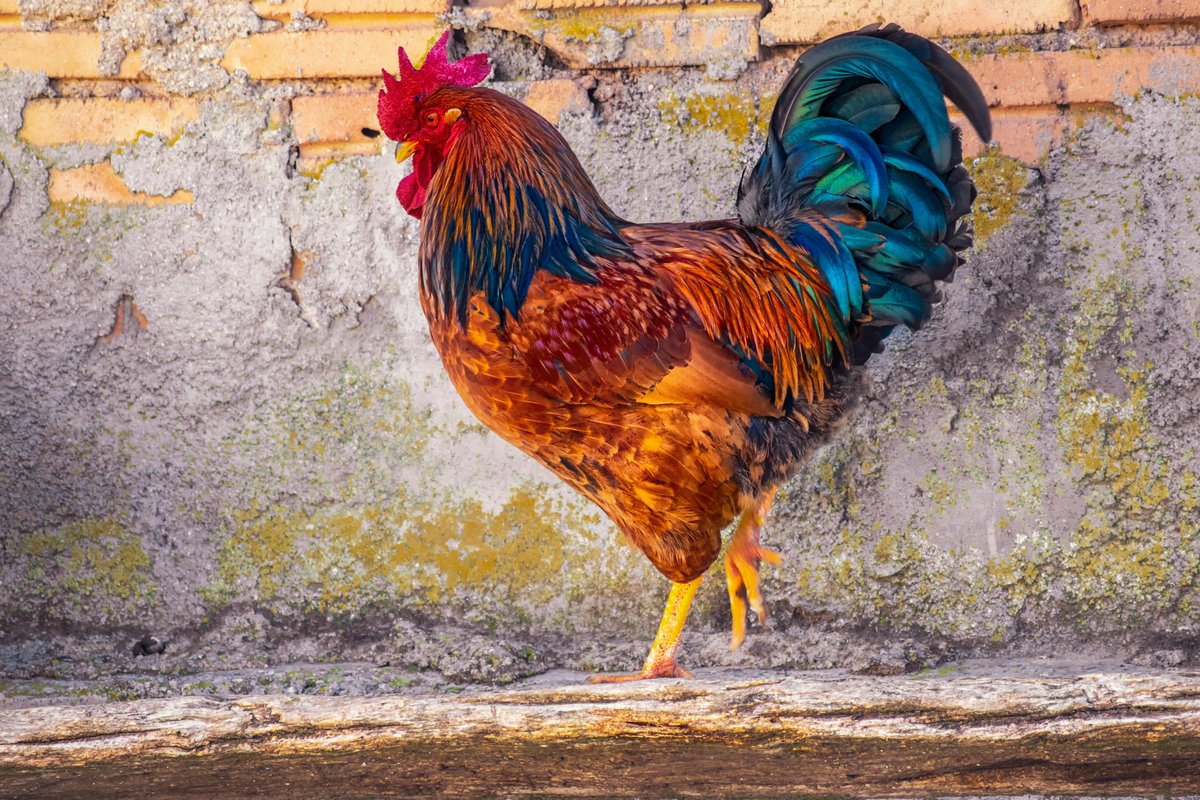
🧵 30. According to a 17th century proverb, a COCKSTRIDE—literally, one step of a cockerel—is the amount by which the days seem to lengthen after the New Year.
Coined in the late 1990s, CYBERPESSIMISM is the belief that the internet has, or will eventually have, a more negative influence on human society than a positive one.
The word ANSWER has a W in it because it derives from the same root as SWEAR, and probably originally referred to an official response or sworn rebuttal to a statement.