I am excited to join @CaltechCCE@Caltech as an Assistant Professor this November!
The Fianu Lab will be a welcoming space for anyone interested in gene activity and genome stability. https://t.co/k8yDZZwsCT
We are looking for team members at all levels—please reach out!
@isaac_fianu@CaltechCCE@Caltech Congratulations Isaac! Your lab will be a kind and inspiring space for science. I look forward to all the exciting findings to come :)
I’ve been in many diaspora conversations where the topic quickly becomes ‘how can we help Africa?’, and always I remind them to help themselves first. Africans in the diaspora often underestimate how politically disorganized, weak and vulnerable they are.
Very excited to share the first preprint "Reconstitution of chromatin reorganization during mammalian oocyte development" from our lab🤞 Most of the experiments were done by my first PhD student Jing, who joined our lab at the second year of his PhD 😆 https://t.co/Sjw2ZT3eWq
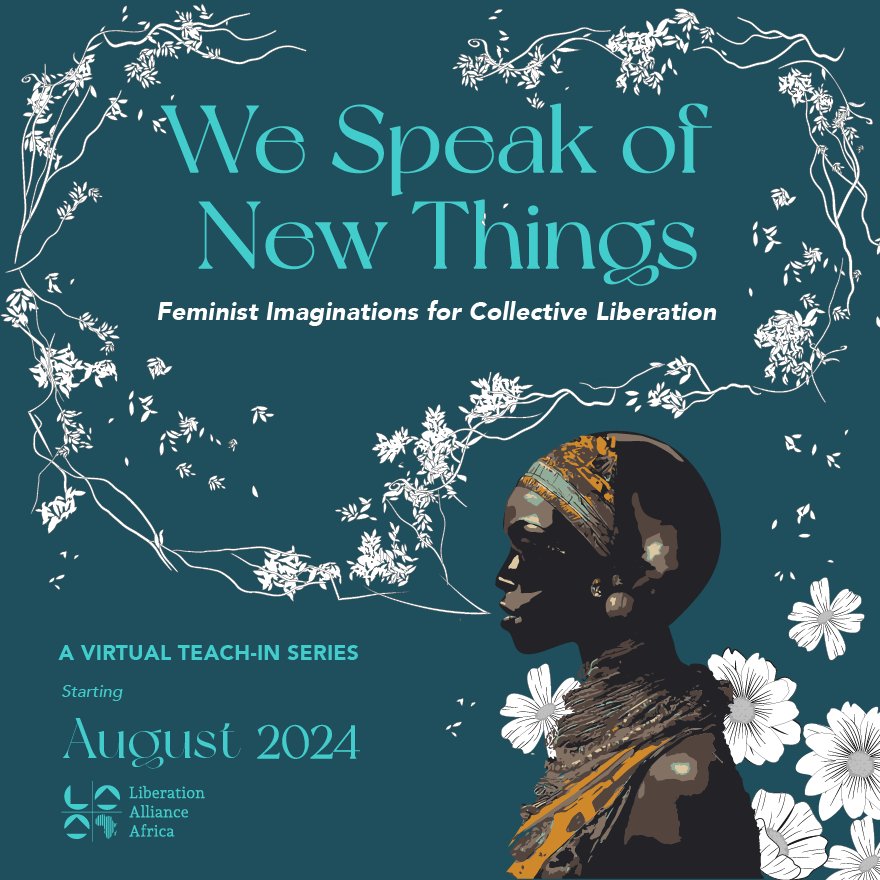
Sit in curiosity with us.
Our new virtual teach-in series will engage feminist and critical theory in democratising knowledge and epistemic exploration for liberation.
Starting in August. Stay connected for more details👇🏾
https://t.co/B2Ri8Uxa5T
#SpeakofNewThings
'I used to give away food, now I'm being assisted with food.'
In northern Nigeria, 4.4 million children under five are acutely malnourished, more than double last year’s figure according to the World Food Programme.
The BBC’s @Mss_Deeynah met with affected families in Katsina.
Historic news from #CotedIvoire. We welcome the government's leadership and commitment to protect children from #malaria. Now countries have two vaccine options: the new R21 vaccine as well as RTS,S.
https://t.co/thRJSTTYgw
Today the UK approved a gene therapy to treat sickle cell disease and thalassemia. It’s the first treatment ever to be licensed using the gene editing tool Crispr and will have huge implications for people living with these conditions.
https://t.co/Ty4qauNT2d
As a region that has experienced genocides, apartheid, occupation and exploitation, Africans have a historical and moral obligation to affirm Palestine’s right to self-determination.
Here are four things to know about Palestine’s struggle for freedom. https://t.co/vf6VJVJkp8
This version of Bach’s first cello suite was recorded live in the Great Smoky Mountains. I’ve always thought of Suite No. 1 as “Nature at Play,” so it was a dream to play it with the birds, the trees, and the rushing brook. ���️ https://t.co/AQn2pIuZQM
📣 Our fun journey continues - latest lab preprint is now out in @Nature
Check out in great detail how we derive Complete and Structured human day 14 post-implantation embryo models (SEMs) solely from unmodified HENSM naïve ESCs
@Beroldak@EmilieWildschu1@vlad_bndk@noashefi
https://t.co/NTGdYvsCKb
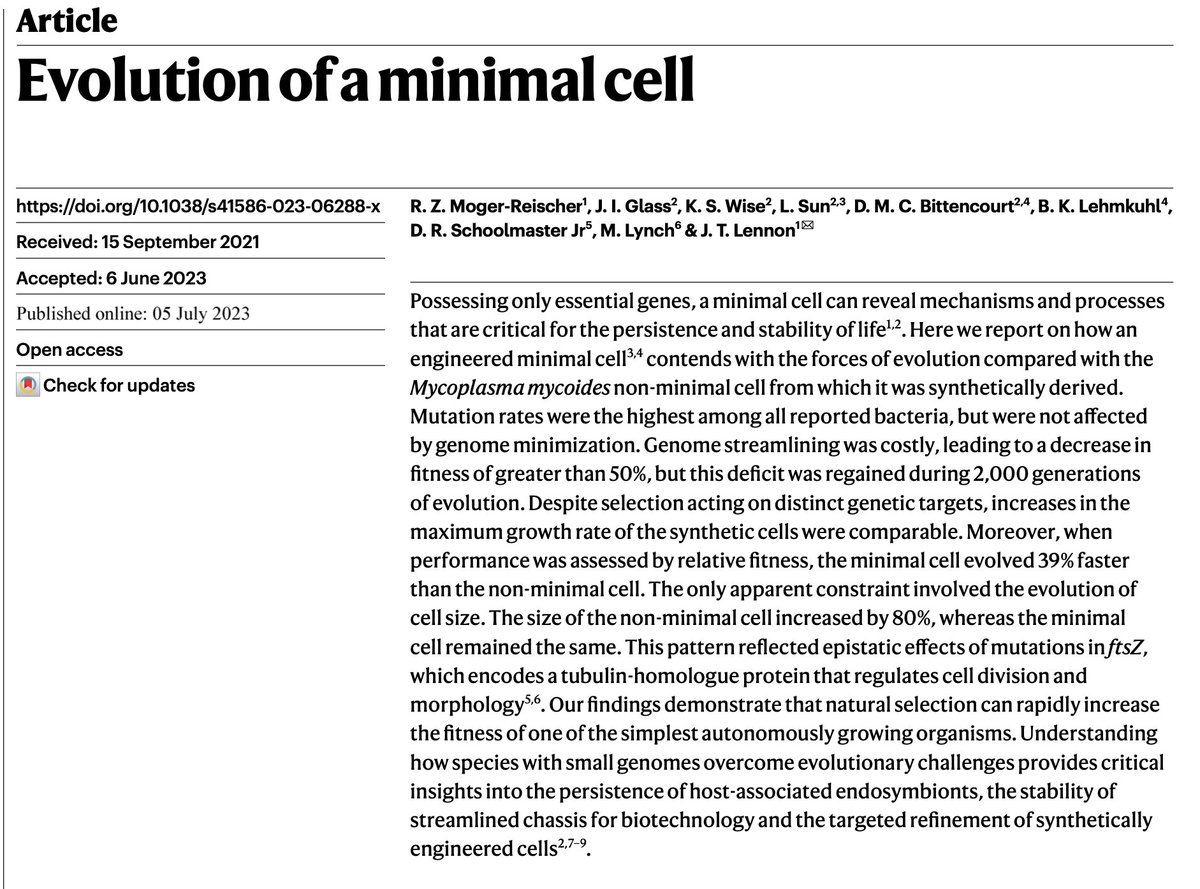
A mind-blowing paper has come out today in @Nature
In 2016, JC Venter Institute scientists trimmed a bacterial genome to its barest minimum required for life to synthesize what they called a "minimal genome" (https://t.co/Rk8oZJ0bUj).
Today, a group of scientists from Indiana University reports how that minimal genome evolved over 2000 generations in comparison to the non-minimal genome.
The authors found that even when you reduce a bacterial genome to its absolute minimum where every nucleotide matters, the genome undergoes mutational events generation after generation as much as the non-minimal genome. One simply cannot stop the evolution.
Just over 300 days of evolution (equivalent to 40,000 years in humans) the minimal cell has gained everything it lacked in fitness on day one in comparison to the non-minimal cell.
When comparing the evolved traits between the minimal and non-minimal cells, the scientists found something striking. The evolutionary process increased the cell size of non-minimal cells but not that of the minimal cell. But that is not the striking part.
The scientists were able to identify the key mutation that resulted in cell size evolution. And it turned out that the mutation that helped the non-minimal cells to grow bigger is the same that helped the minimal cells to stay smaller. Growing bigger had a survival advantage for non-minimal cells and not growing bigger had a survival advantage for minimal cells. So, the mutation had a context-dependent effect. This just demonstrates that the evolutionary effects on traits have no absolute direction. All that matter is what is beneficial for the organism's survival.
The conclusion of the paper is metaphorically a quote from the Jurassic Park movie:
“Listen, if there’s one thing the history of evolution has taught us is that life will not be contained. Life breaks free. It expands to new territories, and it crashes through barriers painfully, maybe even dangerously, but . . . life finds a way". (https://t.co/UlxRlb86CT)
https://t.co/zA9OAqSoAu
Today in 1994, the Rwandan genocide ended.
The genocide, which lasted for 100 days, started in April 1994 and over 800,000 Tutsis and Tutsi-sympathizers were killed. In Rwanda, today is known as Liberation Day. 🧵
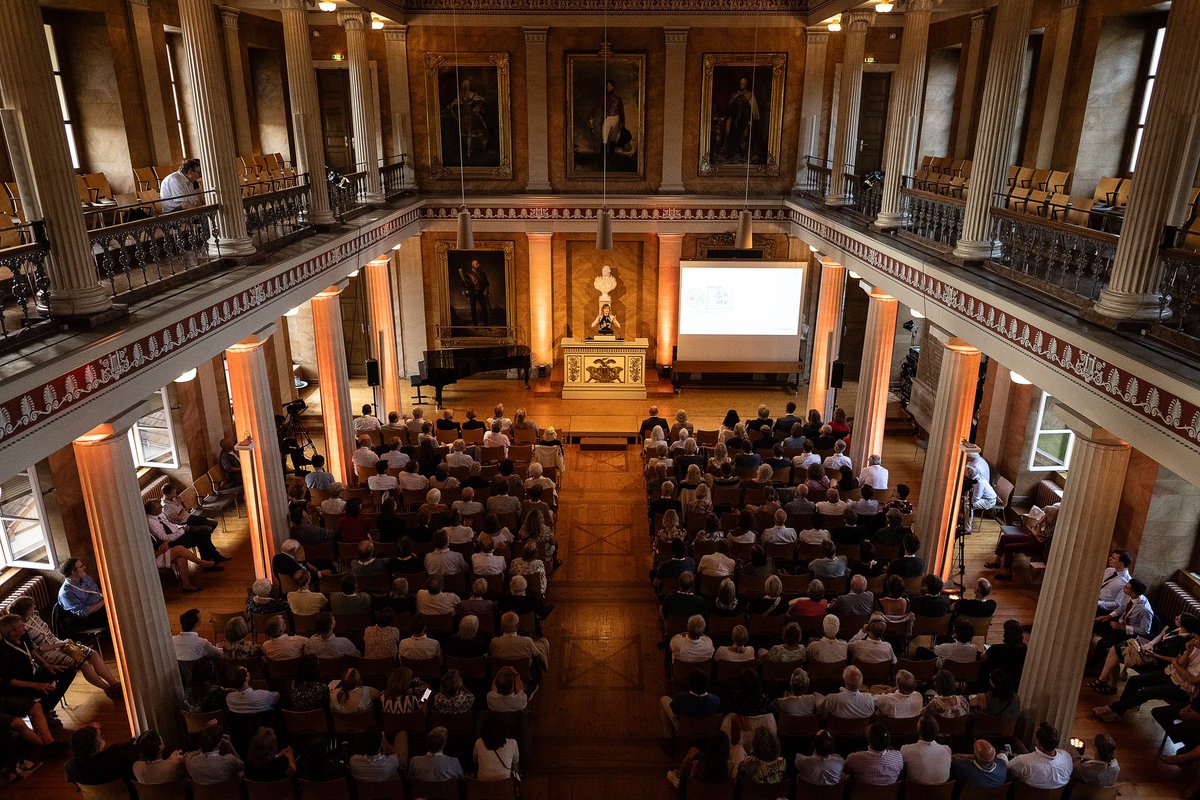
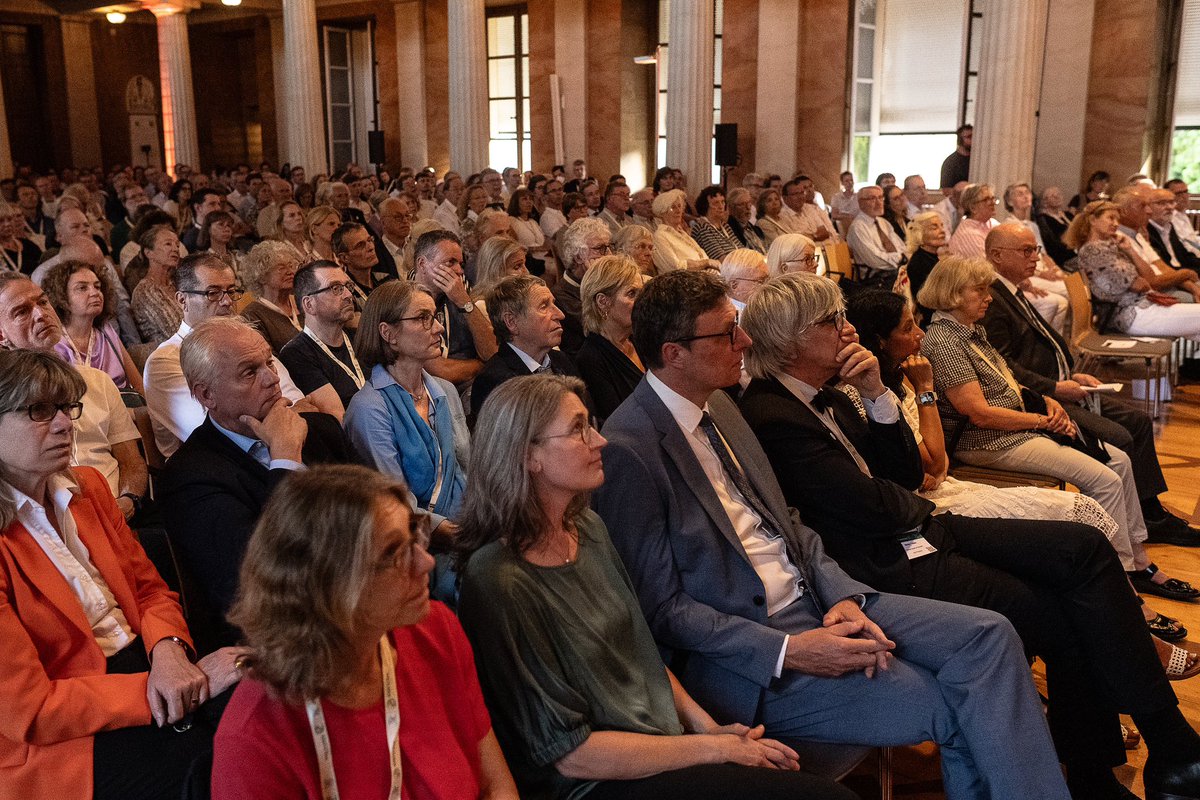
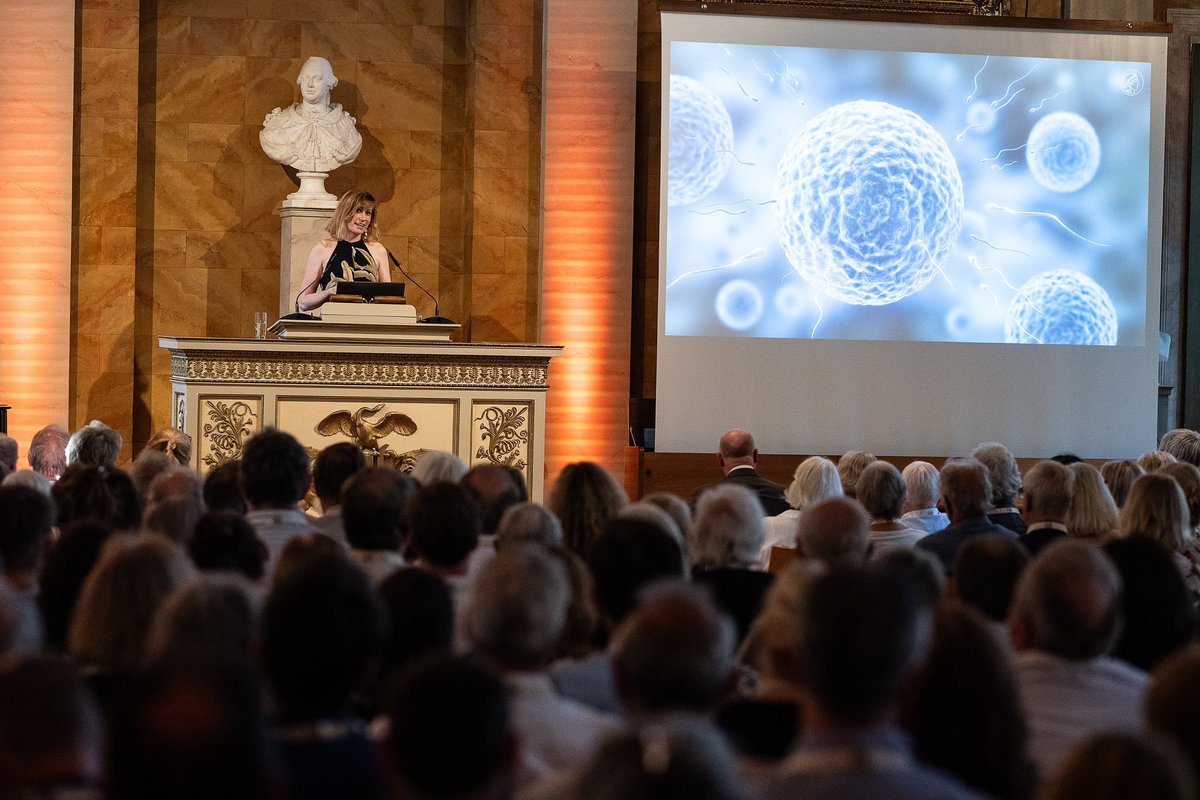
Kick-off of the 74th Annual Meeting of @maxplanckpress in #Goettingen – our director Melina Schuh @SchuhLab opens the three-day internal event with her scientific lecture “From studies of eggs to fertility treatment”. #MaxPlanck75
In case you missed it, here's my article in @sciencefocus about Schrödinger's Cat https://t.co/xO1fmhjyM3
* No cats were harmed in the writing of this article!
15 bookmark-worthy tools for researchers that cost you nothing and will save you time (& nerves) when researching, writing and publishing.
A thread. 🧵
#AcademicTwitter#AcademicChatter