Celebrating the start of the 3rd year of the Hallou Lab @KirOxford@UniofOxford🍾🥳!
The lab is growing & I am grateful everyday to be working with these amazing young scientists!
Watch this space in the next few weeks for:
- Exciting new science ⚙️🧬💻🔬
- Job openings 😉
In 1 week, I will start a new series of lectures at College de France on Bioenergetics & Metabolism. Energetics is arguably as much a «secret of life» as heredity. It has puzzled many for eons.
Stay tuned. I will post videos (en francais) and links to pdfs in English as usual 😊
As we begin a new academic year, it’s the perfect time to celebrate the achievements of the past year and look back on our lab’s summer social by the River Cherwell ! ☀️
Congratulations to Dom Buxton, Aaron Syme & Sami Cassaigne, who all graduated with 1st-class honours! 👏🎓
As we head into autumn, a throwback to ISMB 26 in sunny Glasgow☀️!
It was a great pleasure to deliver an invited talk and share our latest work on #SpatialMechanomics.
An highlight was seeing my talk transformed into a beautiful visual abstract by Dr Mathis Riehle! 🙏🎨
📣 Our latest paper!
Delighted to have contributed, alongside my postdoc Dr Raphaël Blain, to this timely review in JACC exploring the exciting applications of spatial transcriptomics to understanding the human heart in health and disease! ❤️🧬👇
https://t.co/JLXQhH5jX1
🚨Applications are open for the British Council’s #StudyUKAlumniAwards, celebrating international UK alumni making a positive impact in their professions and communities
Closing 15th October
https://t.co/XyZd22loGd
Revisiting the development of human head arteries with 3D imaging and VR. The most precise description since 1948! Kudos to Eimad Shotar, the vascular wizard, & to the whole team. https://t.co/sNaWVtNJ4X
This feels like one of those moments when the future arrives all at once.
OpenAI has published a solution to the Navier–Stokes existence and smoothness problem. This is one of seven Millennium Prize Problems selected by the Clay Mathematics Institute in 2000, carrying a $1 million prize and more importantly representing one of mathematics’ deepest unresolved questions.
The Navier–Stokes equations describe how fluids move: air over an aircraft wing, ocean currents, weather systems, and blood flowing through our bodies. For almost 90 years, mathematicians have asked: if a three-dimensional fluid begins in a smooth state, must it remain smooth forever, or can the equations “blow up in finite time"?
OpenAI’s answer is that such a breakdown can happen. Its AI system constructed a finite-time singularity and produced both an analytical proof and a formalization in Lean (a mathematical programming language if you want, to make sure proofs are correct). Obviously independent experts must still confirm that the formalization precisely matches the official problem. The mathematical significance would be enormous, even though the construction itself is highly engineered.
But this goes far beyond an unchecked AI-generated argument. The impact is primarily foundational, ie doesnt suddenly better aircraft or weather forecasts. But it does/would settle a central question about the limits of one of physics’ most important models while demonstrating that AI can produce genuinely new, formally verified research mathematics.
I believe also Google DeepMind has pursued AI-assisted mathematical reasoning and related work on fluid-dynamics singularities, but who would have imagined, when AI mainly meant prediction, classification, and data analysis, that pure mathematics would become such an extraordinary playground?
Perhaps a broader pattern is emerging: AI appears particularly powerful at searching vast spaces for strange constructions that overturn universal claims. Earlier this year, an OpenAI model disproved Erdős’s 80-year-old unit-distance conjecture by finding an unexpected infinite family; more recently, an AI-assisted counterexample refuted the 87-year-old Jacobian conjecture in dimensions three and higher.
We may be entering an era in which mathematicians and AI explore the deepest frontiers of knowledge together. Crazy & incredibly exciting times!
[OpenAI announcement](https://t.co/En4JM2zVSg)
[Navier–Stokes proof paper](https://t.co/IxAeVDgc3I)
[Related Euler proof paper](https://t.co/6b1bveCBBf)
#AIforScience #Math #NavierStokes
A developmental biologist's guide to mechanics
Read this Primer from our special issue #DevSIextracellular by Jialing Cao, Raphaël Clément, Pierre-François Lenne and colleagues.
https://t.co/32eRqPeLHi
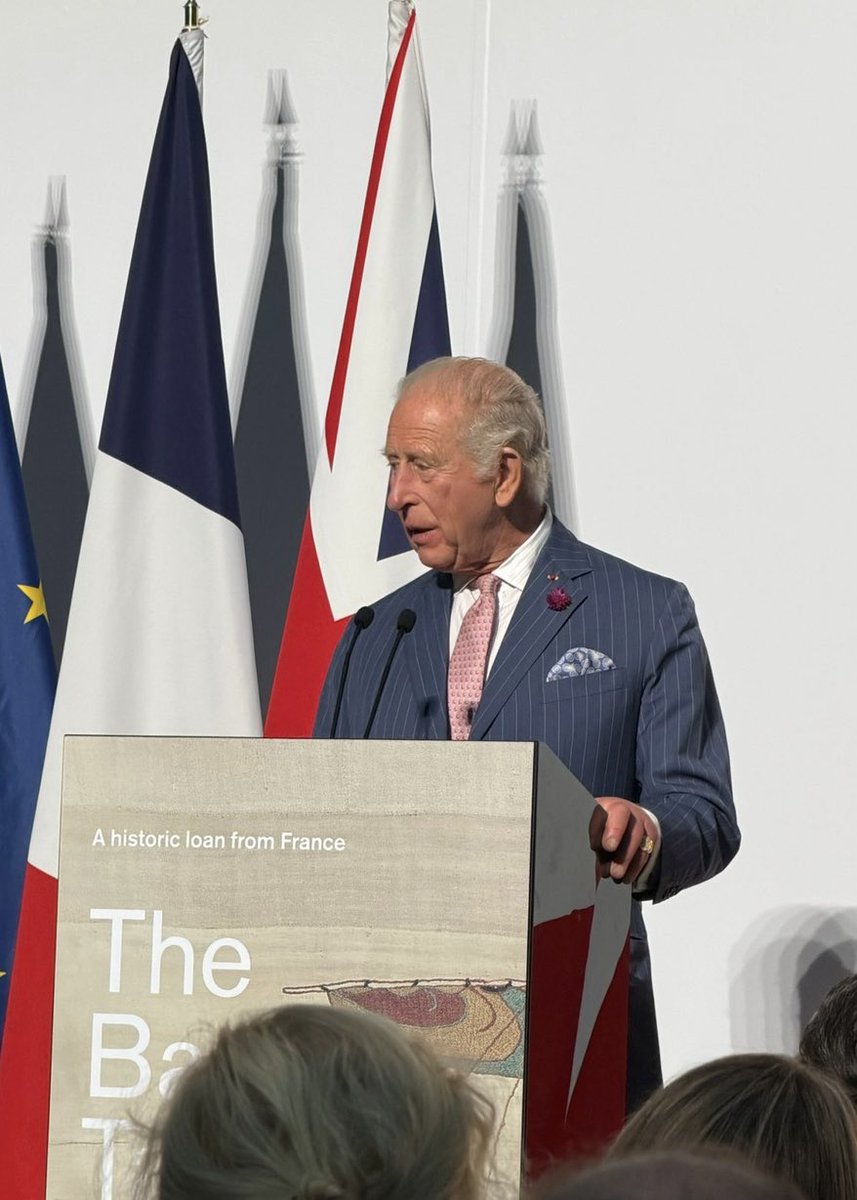
Do listen to this absorbing documentary by @GeorgeWParker on the politics of the Bayeux Tapestry down the centuries. He has woven together many voices to tell some fascinating stories. Thanks for including me! https://t.co/FbUlJAsKRZ
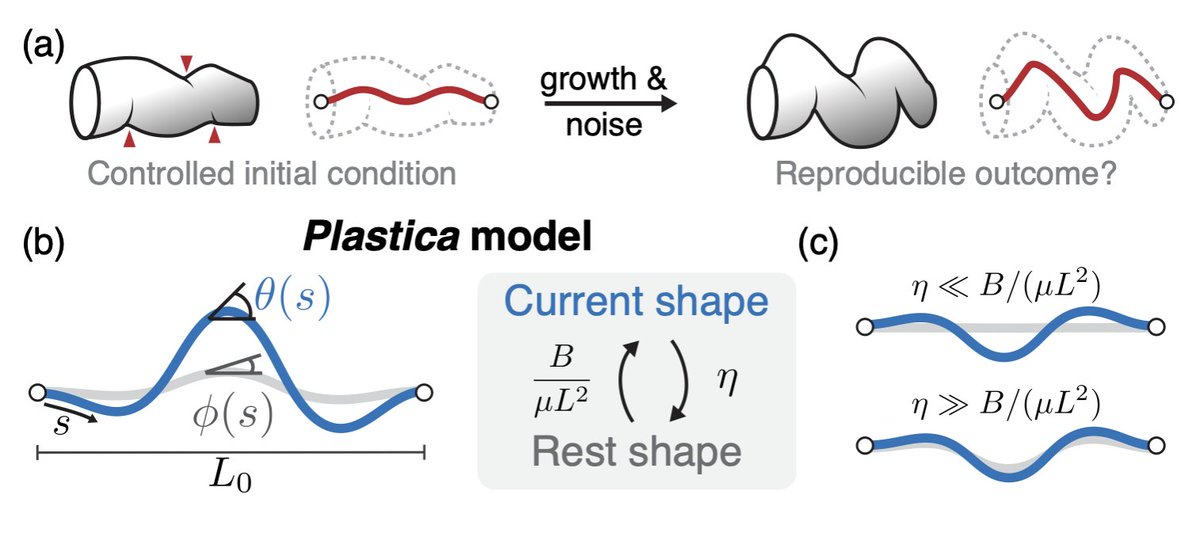
Morphogenesis has a memory problem. Embryonic tissues must reproducibly change shape while remaining robust to noise arising across scales. How does the target geometry survive?
New work led by fantastic pdoc @_nromeo, with @d_brueckner:
https://t.co/nTyJph4Byh
Very happy to have this work finally published! How do embryos sculpt their shape? We map the contractile & adhesive forces shaping early C. elegans embryos.
With K. Yamamoto @Kazu_YAMAMOTO4 G. Charras' lab and my team
https://t.co/E0elDbt3Ly
Our weirdly fresh 4D map of hair follicle genesis is finally out in @CellCellPress. It'll make you see spatial more temporally! Brilliant tour-de-force by PhD student Soichiro Asami, with great support from @JEFworks and Luis Garza #devbio#spatialomics
https://t.co/smPWMxm3FV
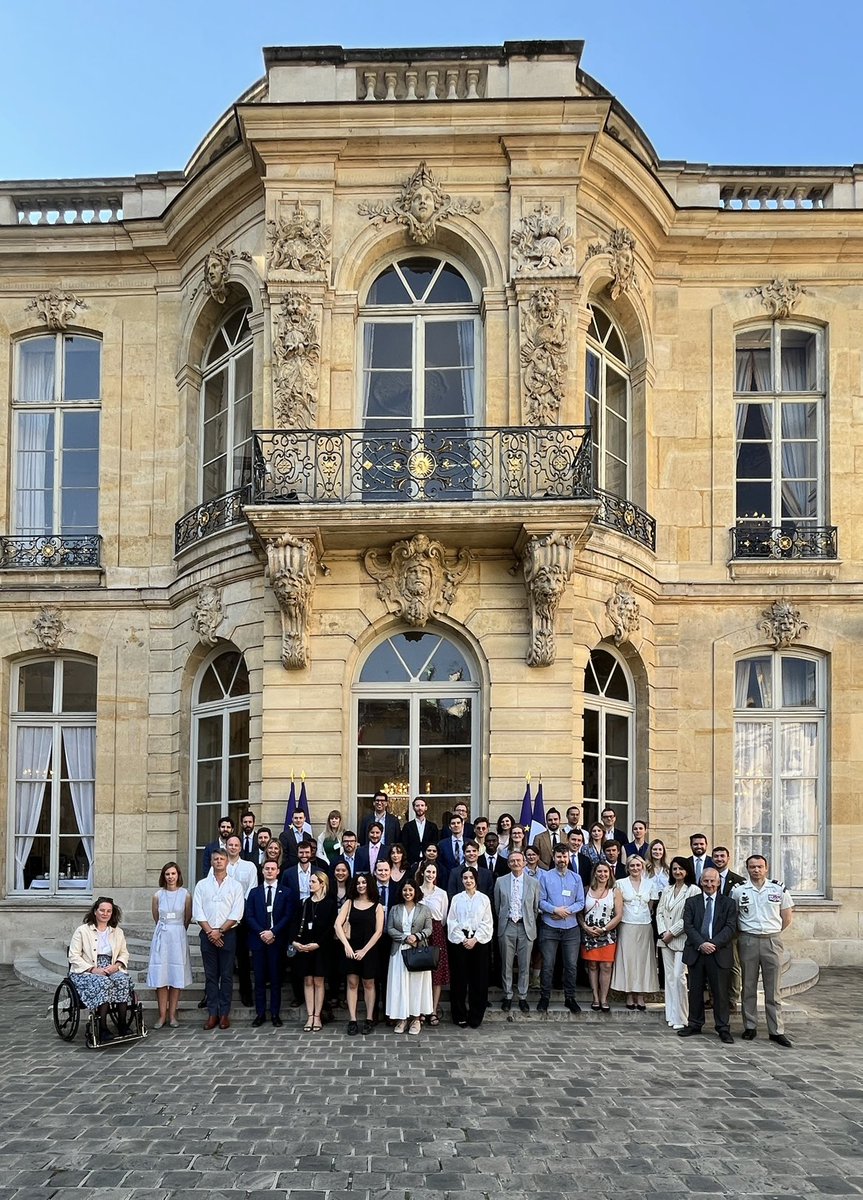
L'année prochaine marquera le 10 anniversaire du Programme des Young et Local Leaders franco-britanniques. Nous prévoyons une année 2027 riche en événements pour les anciens participants. Si vous souhaitez parrainer/organiser événements en France ou au R-U [email protected]
Our new paper is out in @JNeurosci and featured on the cover!
Long-term live imaging in mice showed that superficial corneal axons are continuously remodeled, while deep ones remain stable.
Great work by @BizzarriElena Quentin Rappeneau & the whole team
https://t.co/0MTeX0wnas
The Franco-British Young Leaders for 2026 have been announced 🇫🇷🇬🇧
La cohorte 2026 des Young Leaders franco-britanniques a été annoncée 🇫🇷🇬🇧
https://t.co/whRsI3GhGG
A new partnership including Oxford University will unite expertise, infrastructure and data across borders to accelerate diagnosis, treatment and ultimately prevention of major diseases - starting with women’s health, infectious diseases and pandemic preparedness ⬇️
https://t.co/9hEkJBbLcQ






[Navier–Stokes proof paper](https://t.co/IxAeVDgc3I)
[Related Euler proof paper](https://t.co/6b1bveCBBf)
#AIforScience #Math #NavierStokes](https://pbs.twimg.com/media/HRw6_uYXAAA8e1x.jpg)