Coping with the systematic collapse of our institutions.
When the controversy surrounding the removal of former Chief Justice of Nigeria, Walter Onnoghen, unfolded, I expressed a concern to a friend: that the greatest damage might not be immediate, but the message it sends about the sanctity and independence of our institutions to the world.
Strong economies are built on trust. Investors can manage security risks, policy risks, and even market risks. What they fear most is uncertainty in the rule of law and a judiciary that is perceived to be vulnerable to political pressure.
Today, many Nigerians have lost confidence in systems that should protect them. Businesses increasingly request that their contracts be governed by foreign jurisdictions because they have greater confidence in those institutions than in our own. That should concern every patriot.
We must never sacrifice our sacred institutions on the altar of politics. Nations rise when institutions are stronger than individuals. "The federal High Court Judgement ordering the de-registration of the ADC and other political parties is just one of those activities that further reduces the common man's trust in our legal systems" it should be reversed.
I pledge that we will restore the dignity, independence, and integrity of the Judiciary. The common man must have a voice. The business community must be protected from legal uncertainty and intimidation. Justice must be impartial, accessible, and respected by all.
To our judges, legal luminaries, senior advocates, and lawyers: this is your moment. Rise, defend the rule of law, take back your country!
A New Nigeria is POssible. -PO
Sustainable Success Is Built on Competence, Integrity, Discipline and hardworking.
On Saturday, I had the privilege of interacting with young entrepreneurs, professionals, business leaders, and members of the emerging generation at the This Generation Conference hosted by Summit Bible Church in Abuja.
Our discussion focused on what it takes to thrive in the marketplace despite prevailing economic challenges. I shared insights from my years in business and public service, emphasizing that sustainable success is built on integrity, competence, discipline, and a commitment to creating value for society.
I reminded participants that no nation develops by consumption alone. Nations progress when their citizens are productive, innovative, and committed to excellence. Our young people must resist the temptation of shortcuts and instead embrace education, skills acquisition, entrepreneurship, and ethical leadership.
The future of Nigeria depends largely on the quality of leadership and enterprise this generation is willing to build. We must move from a culture of sharing poverty to one of creating prosperity through production, innovation, and responsible governance.
I left encouraged by the energy, intelligence, and determination of the young people I met. Their questions, ideas, and aspirations reaffirmed my belief that Nigeria’s greatest resource remains her people.
Together, through hard work, integrity, and purposeful leadership, we can build the New Nigeria that is POssible. -PO
Dear beloved sports-loving Nigerian youths,
After watching the performances of Davido, Burna Boy, and Rema at the opening of the 2026 World Cup—at a time when Nigeria, the giant of Africa, is absent—I felt a measure of consolation. This was reinforced by the fact that many Nigerians playing for clubs worldwide are representing other countries. Felix Nmecha, for instance, set a record by scoring the fastest goal at six minutes for Germany. I write to you therefore, knowing that this country belongs to you, the youth.
You are more of stakeholders in Nigeria’s future than I am. I am 64 years old; by God’s grace, much of my journey is behind me, while yours lies ahead.
It is therefore imperative that you rise to the challenge by obtaining your PVC, your most powerful tool for driving the change you desire.
In the last three years alone, over 15 million Nigerians have turned 18—enough to decide who becomes President, Governor, Senator, Member of the House, or Local Government Chairman. Indeed, enough to shape the nation’s future.
I know many of you are sceptical about politics and political parties. I understand why, but scepticism must not become surrender.
You do not need to belong to any party or wait for anyone to organise you. Organise yourselves in your streets, campuses, communities, workplaces, churches, mosques, and social groups. Mobilise, debate, demand accountability, and take part in choosing those you wish to entrust with leadership.
If you are organised and wish to hear directly from me, invite me. I will come and share my plans for you and our nation.
Do not sit on the sidelines while others decide your future.
I appeal to you to register and vote. Your vote can shape who becomes the next President of our country.
My young friends, this is your country. Take it back.
A New Nigeria is POssible. -PO
Insecurity: Nigeria Cannot Continue Like This
I received with deep shock and sadness the tragic death of retired Major General Rabe Abubakar, who reportedly died while in the custody of kidnappers. Earlier, before this heartbreaking news, I also received disturbing reports of renewed bandit attacks in Sokoto and Kwara States.
The armed bandits reportedly blocked a market route in Sokoto and abducted traders, while terrorists invaded communities in Kwara State, kidnapping scores of citizens and killing innocent people, are heartbreaking and alarming. These incidents are not isolated tragedies; they are clear manifestations of the deepening security crisis confronting our nation.
But particularly painful is the reported death of Major General Rabe Abubakar, a distinguished military officer who dedicated a significant part of his life to defending Nigeria and protecting its citizens. It is tragic that a man who served his fatherland with honour, rose through the ranks of the Nigerian Armed Forces, and retired after years of meritorious service, would meet such a heartbreaking end at the hands of criminal elements. His death is a national tragedy and a sobering indictment of the insecurity that has engulfed our country.
When traders can no longer travel safely to markets, farmers cannot access their farms, communities live under constant fear, and even retired senior military officers are not spared from the menace of kidnapping and violent crime, it becomes evident that our nation is facing a grave security emergency.
Security remains the foremost responsibility of any government. Every life lost, every citizen abducted, and every community displaced represent a painful failure of our collective duty to protect the Nigerian people. The recurring attacks in Sokoto, Kwara, and many other parts of the country demonstrate that insecurity is not only persisting but spreading in both scope and intensity.
I once again urge the Federal Government and our security agencies to move beyond rhetoric and adopt a more proactive, intelligence-driven, technology-based, and coordinated approach to tackling insecurity. We must strengthen our security architecture, improve intelligence gathering, secure our borders, equip and motivate our security personnel, and ensure that those responsible for these heinous crimes are apprehended and brought to justice.
A nation where citizens live in fear cannot prosper. A nation where economic activities are disrupted daily by criminal elements cannot attract investment, create jobs, or guarantee a better future for its people. We must urgently reclaim every part of our country from terrorists, bandits, kidnappers, and all criminal gangs threatening our collective existence.
My heartfelt condolences go to the family of Major General Rabe Abubakar, his former colleagues in the Armed Forces, and all Nigerians who have lost loved ones to insecurity. I also sympathise with the families of those killed, those abducted, and the affected communities in Sokoto, Kwara, and across the nation.
The recurring tragedies and embarrassing security failures we continue to witness make the quest for a New Nigeria not only necessary but inevitable. We must build a nation where every citizen can live, work, travel, and pursue legitimate economic activities without fear.
A New Nigeria is POssible. -PO
Together Towards the New Nigeria That Is Possible
On this June 12, Democracy Day, I had useful meetings with my partners in the building of the New Nigeria that is Possible: our great party’s National Leader, H.E. Senator Seriake Dickson, and our party’s Vice Presidential candidate, H.E. Senator Rabiu Kwankwaso. The NDC, as a party that is barely four months old, despite the challenges, remains the party of the future, and the fruitful discussions at the meetings clearly underscore this fact.
The leaders and members of a committed political family must be willing to make sacrifices and show tolerance and accommodation, even in difficult circumstances. This shared understanding is essential for building trust, strengthening unity, and sustaining the vision we collectively hold for national transformation.
We are all committed to this goal. The NDC remains the vehicle that will convey Nigeria through purposeful, compassionate leadership, with firm commitment to productivity and democratic ideals towards the New Nigeria that is POssible. -PO
As the World Cup Begins Without Nigeria
As the World Cup begins today across three nations, I identify with our teeming football followers and urge them not to be despondent that Nigeria is not participating, despite the abundant talent in our land.
Our failure to participate on the global stage is not due to a deficit of talent; it is a direct consequence of a deficit in leadership, planning, and institutional support.
The task of building a better Nigeria rests primarily on the shoulders of the younger generation. Do not watch the World Cup with despair; rather, see it as a reminder of where Nigeria ought to be. We must move our country from being a nation of mere consumers of global entertainment to a nation of proud producers and competitors.
A new Nigeria is POssible. -PO
Despite Three Years of Tinubu's Food Emergency, Nigeria hungriest ranking index declined to among the worst nations globally.
In celebrating his supposed successful three years in office, President Bola Ahmed Tinubu listed some achievements in the agricultural sector, firstly, his declaration of emergency on food security in July 2023, followed by the acquisition of 2,000 tractors and 9,000 farming implements, stated as Nigeria's largest agricultural mechanisation programme.
Yet the outcome of this has been the opposite. Nigeria's hunger index has worsened significantly. Nigeria's hunger index ranking was 103rd out of 123 countries surveyed in 2022/2023, and this figure had since worsened to 115th out of 123 countries surveyed in 2025/2026. Consequently, Nigeria is now classified among the world's most hungry or food-insecure nations in the world, with the World Bank forecasting that 33 million Nigerians could experience severe hunger.
In fact, Nigeria has the highest number of hungry people in the world.
I have always maintained that Nigeria have no reason to be seen among the hungriest nations in the world when we have fast, uncultivated land in the north, which is our greatest asset today.
We must transparently invest in Agricultural production, which will guarantee food security, but create huge employment.
A new Nigeria is POssible. -PO
@BignameNur@bigbagchief@ejire001media My bro it does oo.. Everything you captured in one picture can be ordered on Amazon and have them delivered next day
In continuation of my quest to deepen knowledge and impact positively on our society, yesterday June 10th, in London, I held a series of important engagements, including a fruitful meeting with Alex Vines, Director of the Africa Programme at the European Council on Foreign Relations (ECFR).
Our discussions focused on strengthening strategic relationships and fostering a deeper understanding of Africa’s evolving role in global affairs. It was emphasized that Africa must no longer be viewed merely through the prism of statistics or humanitarian concern, but as a serious and equal partner in shaping the future global order, much like India, Indonesia, and other emerging centres of influence.
During our engagement, it became increasingly clear that Africa, and Nigeria in particular, must be placed at the centre of international conversations on partnership, trade, governance, innovation, and sustainable development.
Constructive dialogue and mutual respect remain essential to building meaningful cooperation between Africa and the international community.
A New Nigeria is POssible. -PO
I write this with pain in my heart.
On April 23, 2026, I bought a car on loan after trading in my former car, which had become a constant source of problems. I still had an outstanding balance of ₦4.5 million to pay.
On April 28, 2026, I was taken away by the Nigerian Army under the guise of DSS officials. For three days in their custody, I was subjected to treatment that left deep scars on me physically, emotionally, and mentally.
Throughout those three days, I remained handcuffed and blindfolded. During the day, I was left under the scorching sun for hours without water. I begged and cried for water, but nobody gave me any. At night, I was kept in an extremely cold room where I would cry and plead for help, but no one responded. I also received random slaps from unidentified individuals.
Even after the court granted me bail, the trauma did not end. I still wake up suddenly at night, struggling to sleep as memories of those days continue to haunt me.
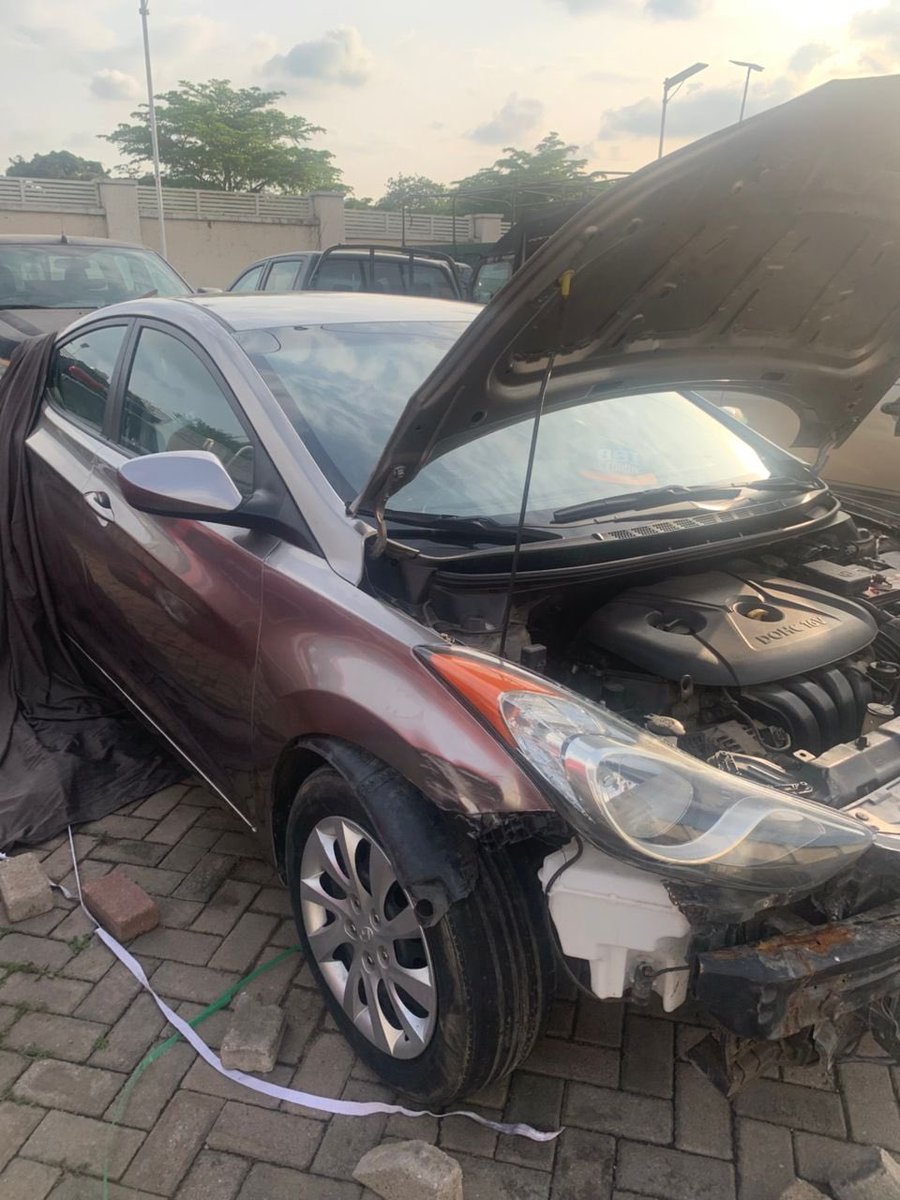
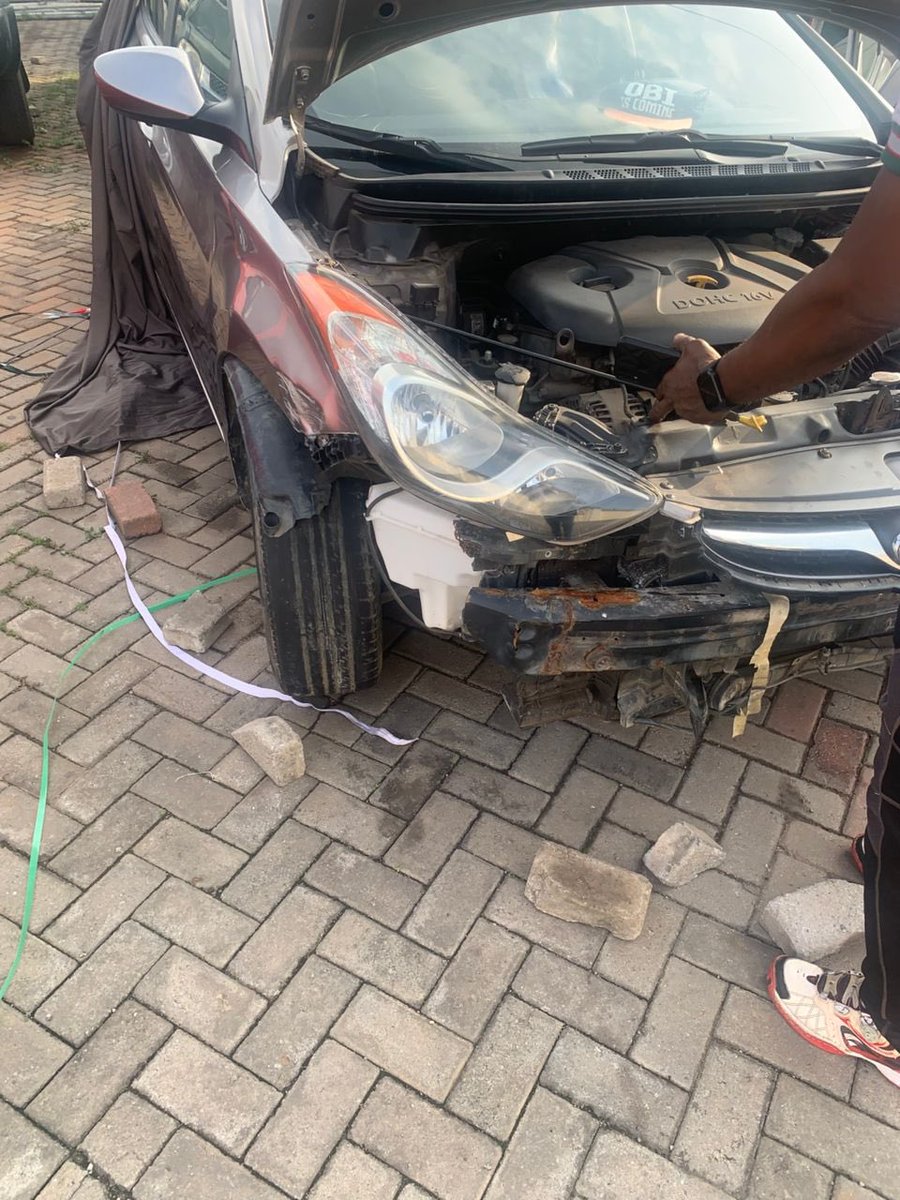
What breaks my heart even more is that the car I bought on loan was damaged. Sometimes I ask myself: what exactly did I do to deserve such treatment?
My only “offence” was speaking up and asking that my brothers and sisters serving in the military should be properly fed and cared for.
Today, I can truly say that Nigeria happened to me.
But despite everything, one thing remains certain:
Justice can never be cracked.
Sad: Our Children Are Now Pawns in a Deadly Ransom Economy
It’s heartbreaking to report yet another bandit attack on a school, barely three weeks after over 40 schoolchildren and their teachers were abducted and are still languishing in the forest.
The security situation in Kogi State has taken another tragic turn with a brutal bandit attack on Government Secondary School, Iluke, in Kabba-Bunu LGA. Armed bandits disguised in military uniforms invaded the school during an ongoing WAEC examination, killed the Vice Principal, Mr. Gani Anifowose, and attempted a mass abduction of students.
Reports from the scene indicate that local security personnel and vigilantes actively resisted the attackers and frustrated their abduction attempt.
Making educational institutions soft targets is a direct assault on the nation’s future. It creates a psychological barrier to school enrolment and worsens Nigeria’s out-of-school children crisis, disproportionately forcing young girls out of formal education due to fear. There is nothing more heartbreaking for a nation than being unable to protect its children.
My heartfelt condolences go to the family of the Vice Principal, who lost his life while gallantly defending the children entrusted to his care. May God grant his soul eternal repose.-PO
@TokunboAnthony@BelovedDauta@Madridghost1 Wait.. You think NHS would recruit into band 8 non UK resident or internationally trained staff with no prior recent NHS experience?
Excessive Borrowing Without Accountability: Further Affirmation of Imprudent Governance.
President Bola Tinubu's administration has engaged in remarkably imprudent borrowing, escalating Nigeria's total debt to approximately N200 trillion. This represents an increase of over N100 trillion within a mere three years, a stark contrast to the roughly N49 trillion accumulated during President Muhammadu Buhari's eight-year tenure, which would have projected to around N80 trillion. As millions of Nigerians grapple with the shock of this unsustainable debt accumulation, the situation is exacerbated by the government's reckless approach to borrowing and a profound absence of accountability and transparency in the utilisation of these funds.
For instance, data from the Federation's Budget Office reveals that the Bola Tinubu government borrowed N11.89 trillion in the first three quarters of 2025 (January to September), exceeding the planned borrowing target of N10.34 trillion by approximately N1.54 trillion. Under a responsible and accountable government, such an overshoot would necessitate rigorous scrutiny and explanation from relevant governmental bodies. Regrettably, this is not the reality under the current administration.
Compounding this issue, only N3.10 trillion of the borrowed funds was allocated to capital expenditure during the same January-September 2025 period. This constitutes a mere 17.66% of the N17.58 trillion earmarked for capital projects, leaving a deficit of roughly N14.48 trillion, or 82.34% of planned capital expenditure unfunded.
The most disturbing aspect of the financial management fiasco under Bola Tinubu is that there is no explanation or information regarding how the balance was utilised or deployed. The question that Nigerians are rightly asking and deserve an answer to is what happened to the balance? Was it deployed for recurrent expenditure/ consumption, for the entertainment of guests to Aso Rock or transferred to the Renewed Hope Agenda 2027 Election Campaign Fund? Nigerians deserve an answer on how our economy and resources are most unpatriotically managed.
A New and Productive Nigeria is POssible, and Nigeria will be OK!
-PO
@balogun_onome@dammiedammie35@Jesurukky1 You don't even need to be on social to hear about the demand for 1b, sharia law and weapon.. The ridiculousness of the said demand made it viral
Media Framing of Crime Along Ethnic Lines: Divisive.
As an Igbo man, I have endured stereotypes, judgment, and labelling solely based on my ethnic origins. This is not an isolated Igbo experience. Most Nigerians have, at some point, been reduced to their ethnicity rather than recognised for their true character.
I understand the pain of the ordinary Fulani man today, often unfairly judged by the actions of criminals he does not support, has never met, and who are not representative of his people.
Even in America, such unjust labelling fueled the civil rights movement and prompted Martin Luther King Jr. to declare that people should be judged by the content of their character, not the colour of their skin.
Every Nigerian ethnic group is known for its unique traditions, occupations, skills, and strengths. Crime, however, has no ethnicity. A thief is a thief. A terrorist is a terrorist. A kidnapper is a kidnapper. They are bad actors, not representatives of any people. They must be identified, arrested, and punished according to the law.
We must decisively abandon the dangerous practice of blaming entire ethnic groups for the actions of a few criminals. It is unjust, it breeds hatred, and it damages our national unity.
Let us proudly celebrate our diverse cultures, talents, and contributions, rather than falling prey to stereotypes and prejudices that politicians and divisive interests exploit for their gain.
A new Nigeria must emerge—one where no citizen is condemned because of tribe, religion, or birthplace. We can cherish our cultural roots while standing united by justice, mutual respect, and hope for a better future. We are capable of this.
A new Nigeria is within our reach. -PO
What Our Pervasive Insecurity Requires: A Holistic not Reactive Approach.
In a hasty effort to be perceived as attentive and courageous, it is reported that President Bola Tinubu has approved the recruitment of about 1000 forest guards for Oyo State. This is a further demonstration of poor leadership and attending to very serious governance and security issues with a reactive approach. It is the same reactive approach that led to the sudden removal of fuel subsidy and floating of the Naira that has caused irreparable damage to ordinary Nigerians and the economy.
While recruiting more security personnel for Oyo state and the country is important, it should be done in a more organised and well-thought-out manner. Presently, almost all the 36 states in Nigeria are experiencing different forms of insecurity, with Oyo, Plateau, Kwara, Kogi, Borno, Katsina, Anambra, Niger, Imo, and Sokoto being very alarming.
The question, such as the reactive approach of our President, is whether all the states will receive the same approval to recruit 1000 forest guards per state, that is 37, 000 forest guards for the 36 states and Abuja or is the recruitment approval based on the mood of the President? Moreover, with the approval for Oyo, what will happen to the Amotekun Corps that is trying its best to secure South-West Nigeria?. Will they be disbanded in Oyo state?
The pervasive insecurity we currently have is directly related to the failure of our ecosystem, particularly leadership. It is only failure in leadership that can lead to the death of over 10,000 innocent Nigerians since 2023, and Nigeria is ranked among the top-most terror-affected countries in the world.
Addressing our insecurity situation requires a holistic or what can be described as an ecosystem approach. With failure in leadership, there is failure in unifying our dear nation, failure in industrialisation, failure in harnessing our abundant resources in agriculture, minerals, tourism, water, sports and even oil and gas to effectively generate required revenue, growth and particularly jobs for our exponentially growing youth population.
A New and Productive Nigeria will be POssible, and we will be OK! -P0
The abduction of the Chibok girls in 2014 triggered a global movement. One school abduction was enough to unite Nigerians, attract international attention, and place enormous pressure on the government through the #BringBackOurGirls campaign.
Yet, what has happened since then should trouble every Nigerian.
Under President Buhari's eight years in office, Nigeria witnessed about ten school abductions. Under President Tinubu's administration, in just three years, we have already recorded over ten school abductions.
Despite these repeated tragedies, there has been neither sustained national outrage nor significant international attention comparable to what followed Chibok.
This raises an important question: have we become so accustomed to insecurity that what once shocked our national conscience is now treated as normal?
At a time when millions of Nigerians are grappling with insecurity, poverty, and hardship, it is deeply troubling that those in power appear more focused on political calculations and preparations for the next election than on addressing the urgent challenges confronting our people.
It is, therefore, no surprise that some observers have labelled us a "Now Disgraced Nation". While we do not agree with any attempt to define our great country by its present difficulties, we must acknowledge that persistent insecurity, economic hardship, and leadership failure have damaged our reputation and standing among nations.
The answer is not denial, propaganda, or political distraction. The answer is leadership that is competent, compassionate, accountable, and genuinely committed to the welfare and security of the Nigerian people.
The Nigerian youth must not become indifferent. We must all refuse to normalise failure.
Young Nigerians - Take back your country!
A New Nigeria is Possible. -PO