"Freedom of speech is a principal pillar of a free government; when this support is taken away, the constitution of a free society is dissolved, and tyranny is erected on its ruins. Republics and limited monarchies derive their strength and vigor from a popular examination into the action of the magistrates."
--from "On Freedom of Speech and the Press", Pennsylvania Gazette, 17 November 1737.
Testing grok build with an optimized Julia fractal set, i’ve rebuilt it with an assembly kernel, it is still a little buggy if you set orbit above .70 https://t.co/6b0HockTTl
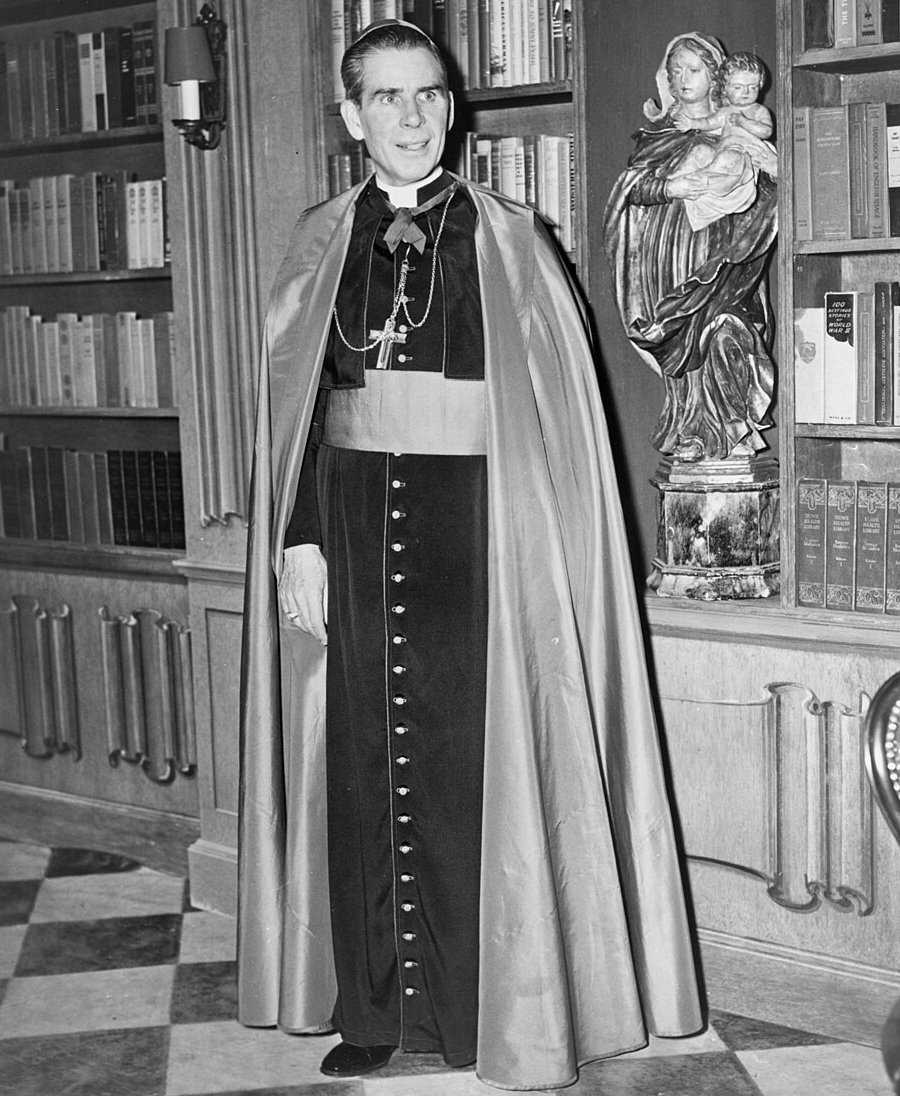
Today, the Church in the United States rejoices in the beatification of Archbishop Fulton J. Sheen, a brilliant teacher and evangelist who understood that faith is more than intellectual knowledge and great oratory. It is a matter of the heart as well.
Archbishop Sheen was remarkably prescient. What he said about the secularizing trends in society, the dehumanization of materialism, and the threats of Communism and Marxism applies today just as much or more so than it did in the 1950s and 1960s. These threats continue, sometimes in different guises. We still stand to learn much from his great discourses and writings.
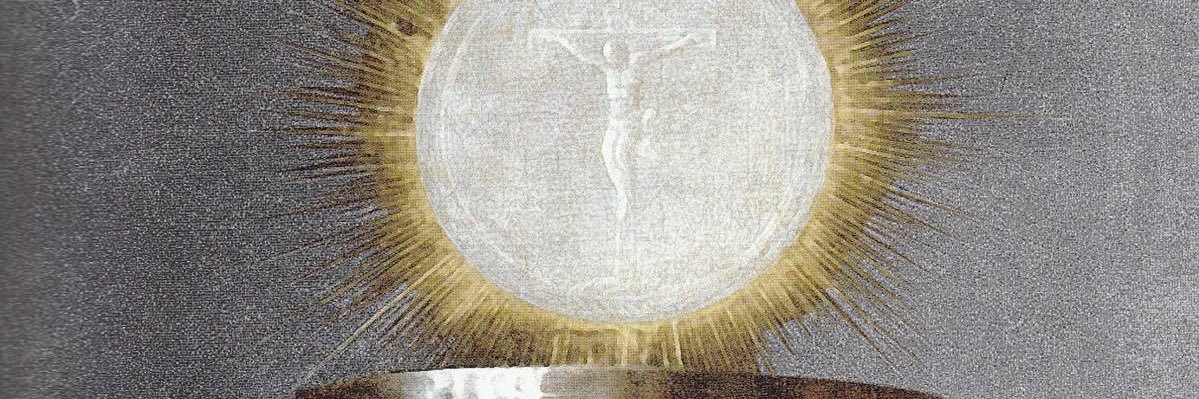
Archbishop Sheen is also an inspiration to us priests through his commitment to a daily Holy Hour. He has personally inspired me to maintain that daily Holy Hour before the Blessed Sacrament.
Blessed Fulton Sheen, pray for us!
Thanks for the reply, your reply post is wrong on the point that matters. The Donation of Constantine and the Pseudo-Isidorian Decretals are forgeries. That is settled history. It does not follow that they created Roman Catholicism, the papacy, apostolic succession, or Hadrian I’s authority, and it does not wipe out Nicaea II.
Those documents are too late to do the work the post assigns them. Hadrian I was pope from 772 to 795. His letters and legates were received at Nicaea II in 787. The False Decretals were compiled around 847-852.
The Donation, even if written in the mid eighth century, was not used by a pope as an official authority until Leo IX in 1054. A ninth-century legal forgery cannot be the foundation of an eighth-century council, and a document unused by Rome for centuries cannot be what “established the Papacy.”
Catholic doctrine does not rest those claims on either text. The Catechism and Vatican I locate Petrine primacy and apostolic succession in Matthew 16:18-19, John 21:15-17, and the succession of bishops from the apostles. Those arguments were already being made by Clement of Rome, Irenaeus, Ignatius of Antioch, and Leo I, hundreds of years before either forgery existed. Official Catholic reference works call the Donation a fabrication. Baronius admitted it. No current magisterial definition treats Pseudo-Isidore as a source of dogma. Using a forged decretal in medieval canon law is not the same thing as deriving the office from it.
The Donation was a tool for temporal claims over land and rulers, not the origin of the Roman claim to succeed Peter. The False Decretals were compiled in Francia mainly to shield bishops from metropolitans and secular courts; they mixed genuine material with invented early papal letters. That is a serious medieval fraud. It is not proof that Hadrian “stole” authority from Scripture, and it is not a reason to ignore the acts of 787.
Your post therefore commits a category error: it takes two later forgeries, treats them as the founding charters of the Catholic system, and then declares every papal act irrelevant. The historical record does not support that chain. The forgeries are real. The conclusion drawn from them is not.
@SteelKing4Ever Incorrect, you twist scripture with your unbiblical opinion, Authority comes directly from Jesus who gave only Peter the Keys to bind and loose, fulfilling prophecy in Daniel.
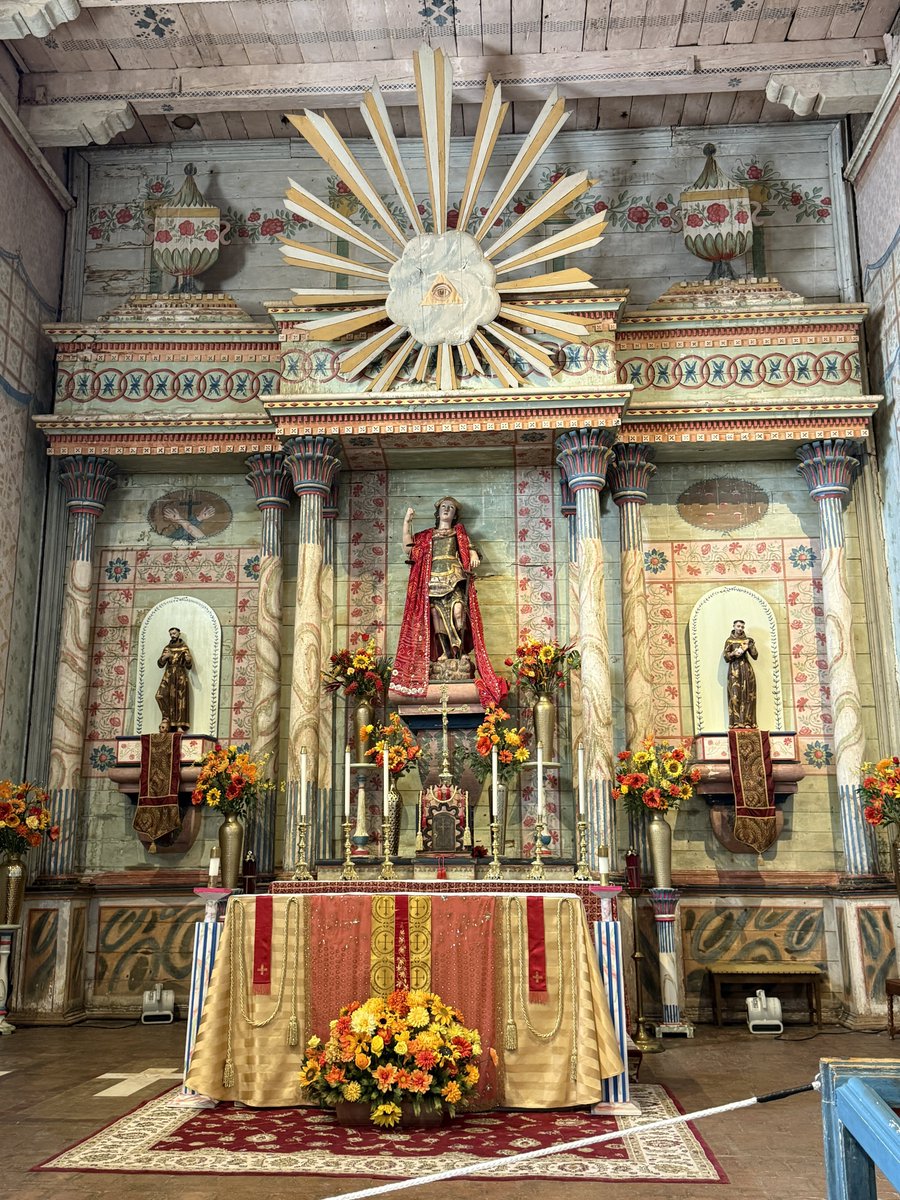
@fsspna@TLMPhotograper I travel 300+ miles to fresno (holy cross chaplaincy) and Camarillo (st.vitus) apostolates, this sunday i will be visiting another St Vitus apostolate location
Your argument has already collapsed, bet let’s spell it out again .
The same Scriptures you cited against a ministerial priesthood actually presuppose it. Peter’s “royal priesthood” language in 1 Peter 2:9 quotes Exodus 19:6, which described all Israel as a priestly nation while a distinct Aaronic priesthood still existed. Romans 15:16 uses the verb for priestly service (ἱερουργοῦντα) of Paul’s own apostolic ministry. John 20:23 confers the power to forgive and retain sins on the apostles, not the crowd. The churches already had appointed elders distinct from the rest of the congregation who received the laying on of hands. These are not interchangeable with every baptized person.
Historically the threefold ministry of bishop, presbyter, and deacon is already explicit in the letters of Ignatius of Antioch, written around 107–110 while he was being taken to martyrdom. He insists that nothing in the Church be done without the bishop, that a valid Eucharist requires the bishop or one he authorizes, and that the presbyters stand in the place of the apostles. He treats this structure as the institution of God, not later invention. By the third century writers such as Cyprian and Tertullian apply sacerdotal language to the bishops and presbyters precisely because they offer the Eucharistic sacrifice. The English word “priest” itself derives from presbyteros.
The demand that every doctrine appear in isolated proof-texts under the principle of sola Scriptura is itself unbiblical and unknown to the early Church. 2 Thessalonians 2:15 commands believers to “stand firm and hold to the traditions which you were taught by us, either by word of mouth or by letter.” St. John Chrysostom comments that the apostles “did not deliver all things by Epistle, but many things also unwritten, and in like manner both the one and the other are worthy of credit.” St. Basil and St. Irenaeus likewise treat apostolic Tradition as coequal with Scripture. The canon of Scripture itself was recognized by the Church through Tradition, not by a verse listing the books. Sola Scriptura therefore cannot be the sole rule of faith because Scripture never teaches it and the first Christians never practiced it.
The Aaronic priesthood is fulfilled, not simply cancelled. Hebrews presents Christ as priest forever according to the order of Melchizedek. The Church teaches that the unique sacrifice of Calvary is made present, not repeated, through the ministerial priesthood. Direct access to the Father through Christ does not abolish the means Christ Himself instituted for governing and sanctifying His Church. The poster’s assertion of “ZERO scripture” therefore rests on a selective reading that the apostolic Church, the Fathers, the Councils, and the Catechism uniformly reject.