The simplicity of accessing high quality GPUs through a dashboard should not be underestimated. Better user experience means broader adoption, especially among non crypto developers.
The next wave of AI needs compute that’s efficient, flexible, and ready to scale ⚡️
Find the Ocean Network team at Pragma Cannes to talk pay-per-use GPU compute, Ocean Nodes, and how to access high-quality @nvidia GPUs through the Ocean Network dashboard
See you in Cannes 🇫🇷👇
@bitget Every failed run is wasted money and time. By reducing retries and improving success rates, @oceanprotocol directly improves efficiency for users.
Ocean Network Beta is officially ON ⚡️
This is the moment we've been building toward: Run AI workloads on pay-per-use NVIDIA H200s as low as $2.16/GPU hour, straight from your IDE with a one-click code-to-node workflow.
Head on to https://t.co/89UziJyWMt to claim your $100 complimentary credits in Beta and turn your first job ON!
(1/8)
AIOZ DePIN lets anyone contribute storage, bandwidth, and AI compute to the AIOZ Network.
It offers two pathways to get started, depending on your preference:
→ AIOZ DePIN GUI: An intuitive app with fast setup and simple control.
→ AIOZ DePIN CLI: A terminal built for automation and batch workflows.
With CLI v1.2.6, native AI compute is now integrated into the DePIN runtime.
Choose the path that fits your workflow and start contributing to AIOZ Network, the people-powered internet!
💥BREAKING:
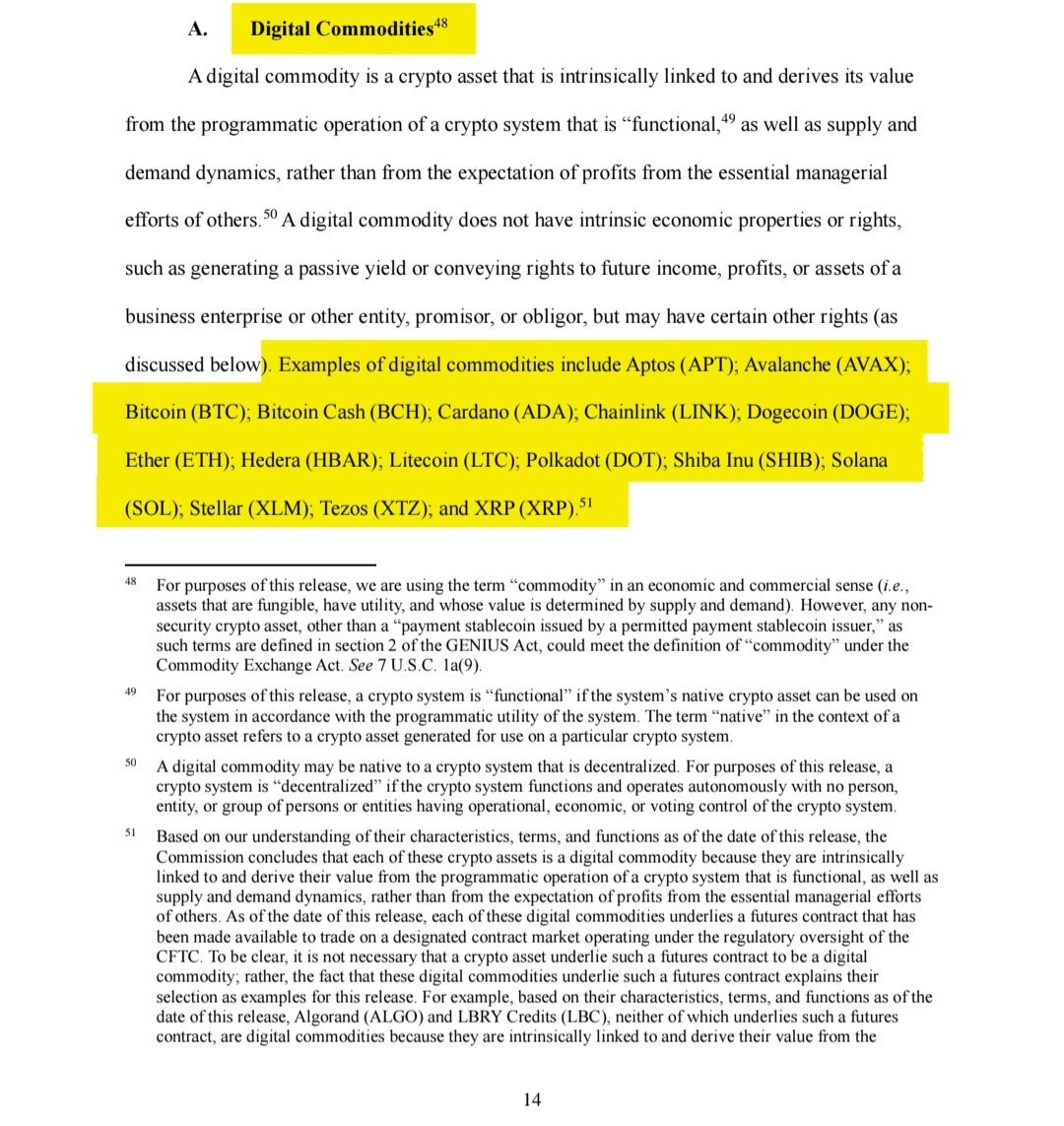
🇺🇸 The SEC has officially classified 16 assets as digital commodities, rather than securities, in its new Crypto Asset Taxonomy.
Assets Include: $XRP, $APT, $AVAX, $DOGE, $SOL, $ADA, $BCH, $ETH, $HBAR, $ALGO, $LTC, $DOT, $SHIB, $XLM, $XTZ and $LINK
This is HUGE! 🚀
Instead of letting GPUs sit idle in data centers, Ocean Network turns them into productive resources. That is an efficiency upgrade for the entire AI industry.
The real cost of AI is not always the model.
It is the idle GPU capacity teams keep around just in case.
That is exactly what Ocean Network is built to change⚡️
Right now, Alpha users are putting the network through real workloads:
1. Pay-per-use compute jobs tied to real execution
2. Flexible CPU + GPU selection based on workload and budget, with no forced bundles
3. Ocean Orchestrator, so jobs start from your IDE, and results get pulled back locally
In just a few days, these capabilities will open up in Public Beta.
See what’s coming 👇
https://t.co/IWRigorcZe
GPU sprawl slowing down your AI workflow?
AI doesn’t scale if your compute sits idle. And managing infrastructure shouldn’t feel like a second job.
Ocean Network (@ONcompute) fixes this:
1. Tap into a global pool of GPUs straight from your IDE via Ocean Orchestrator.
2. Pay only for what you use, debug, iterate, and experiment, without wasting budget on idle hardware.
Our Alpha cohort is already running real workloads to stress-test the network. Public Beta goes live March 16, so your next AI experiment can roll out flawlessly.
Explore the docs: https://t.co/YDQtbqfrik
A new AIOZ AI Getting Started Challenge drops soon…
This time we’re looking into:
→ Real medical imaging
→ Life-changing decisions.
→ Computer vision built to save lives.
Same hands-on spirit. Bigger purpose.
Who’s ready to make a difference?
Stay tuned!
A new AIOZ AI Getting Started Challenge drops soon…
This time we’re looking into:
→ Real medical imaging
→ Life-changing decisions.
→ Computer vision built to save lives.
Same hands-on spirit. Bigger purpose.
Who’s ready to make a difference?
Stay tuned!
@itsFoxCrypto@AIOZNetwork!
They are building what long term projects should look like. AIOZ is not duct-taping audio onto a video stack, they built a dedicated workflow.
That is architectural maturity and that’s bullish.
@oceanprotocol is also simplifying developer workflows, from CLI tools for publishing and computing to integrations with scalable networks like Optimism, making it easier to build decentralized apps that rely on data exchange, privacy, and tokenized access rights.
Ocean Protocol’s stack continues evolving with Ocean Nodes, a decentralized compute and AI infrastructure where developers and data owners can run models, contribute computing power, and earn in a privacy-preserving network.
This moves Web3 data usage toward real workloads, not just talk.
Ecosystem tools like the Annotators Hub encourage community-driven dataset labeling to improve AI quality, and Ocean Predictoor shows tangible activity in decentralized prediction markets powered by the network’s data and compute capabilities.