The first paper from https://t.co/FFCDnmPBch is now available on the arXiV, check-out https://t.co/iQM4mNZJQm our work! This work contains the compiler architecture and a compilation of a Clifford+T 128-qubit QFT! More benchmarks coming soon
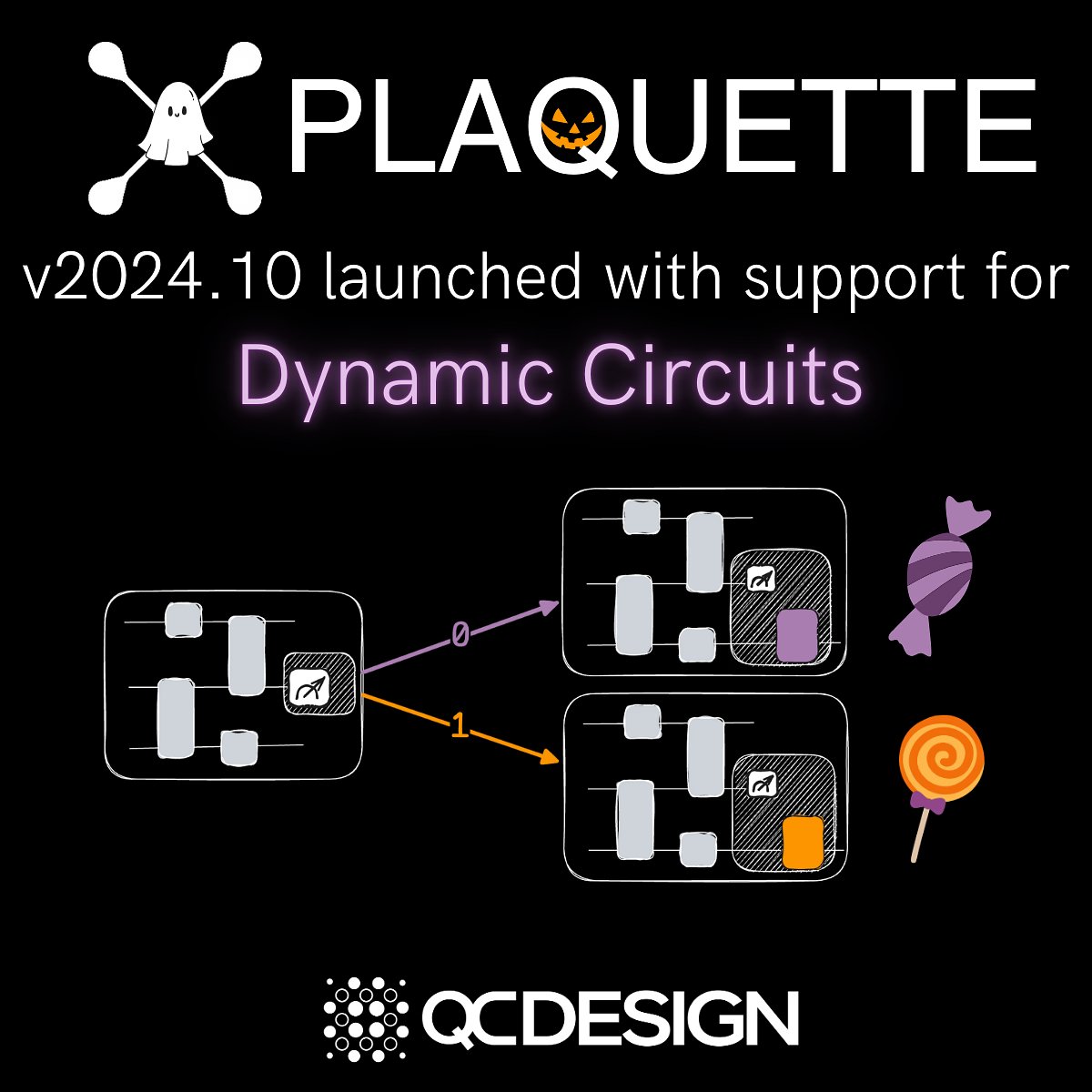
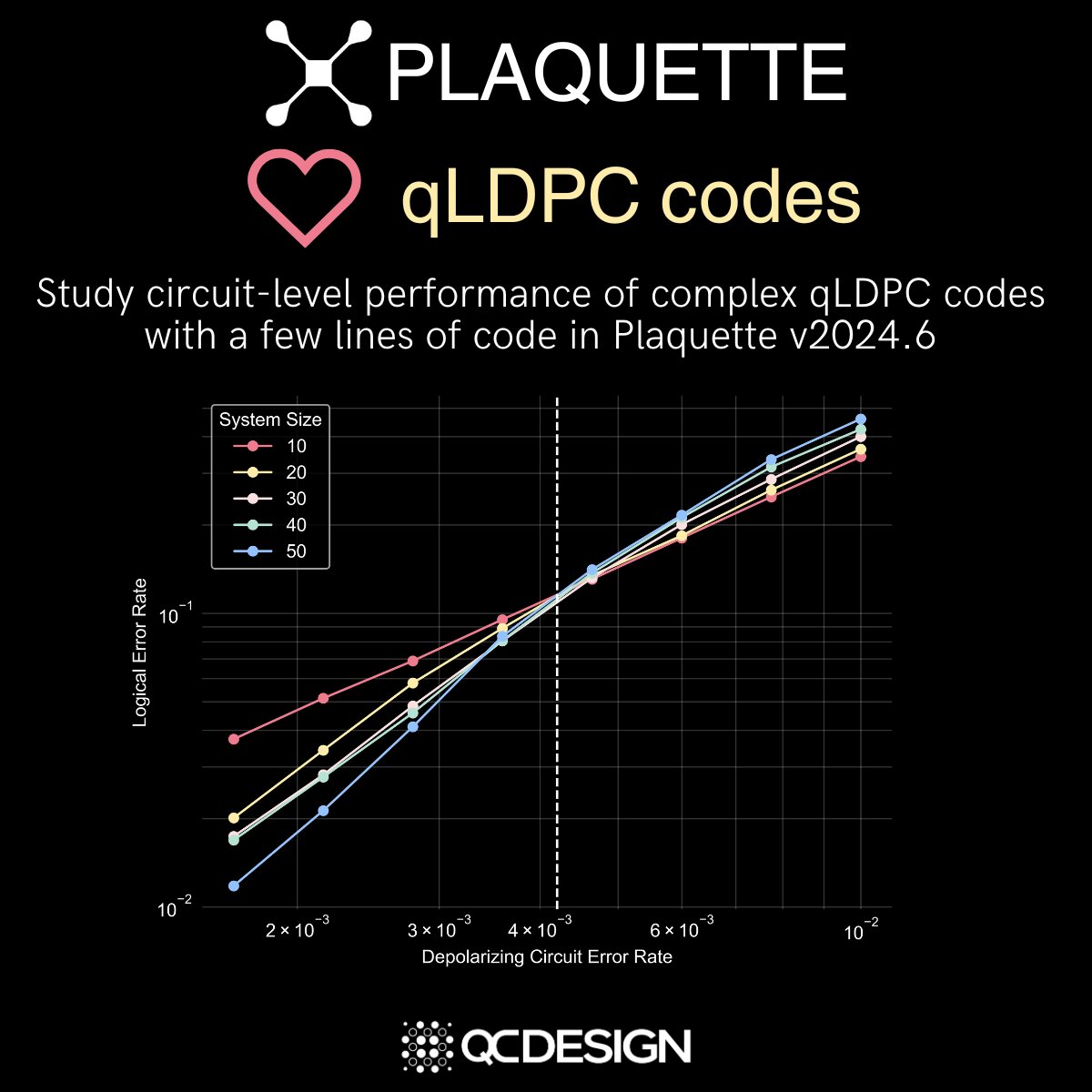
Check out the new version of Plaquette, v2024.11 with comprehensive support for transmon-based fault-tolerant quantum computing, new qLDPC codes and the possibility to work with arbitrary hardware imperfections across all hardware platforms.
Do reach out, if interested :)
I am very happy to announce a new paper with Inbal Livni Navon and @mkwoot. arXiv: https://t.co/A1JCnE5MLj
In this blog post, I talk about developments in classical error correction that inspired this paper:
https://t.co/Wx19Pp8Q3Z
1/8 🎉@qcdsgn is thrilled to unveil #Plaquette🎂, a complete package for studying quantum error correction & fault tolerance (QEC/FT). Our objective is to make plaquette a fully featured package that enables you to study QEC/FT comprehensively from start to finish.🚀
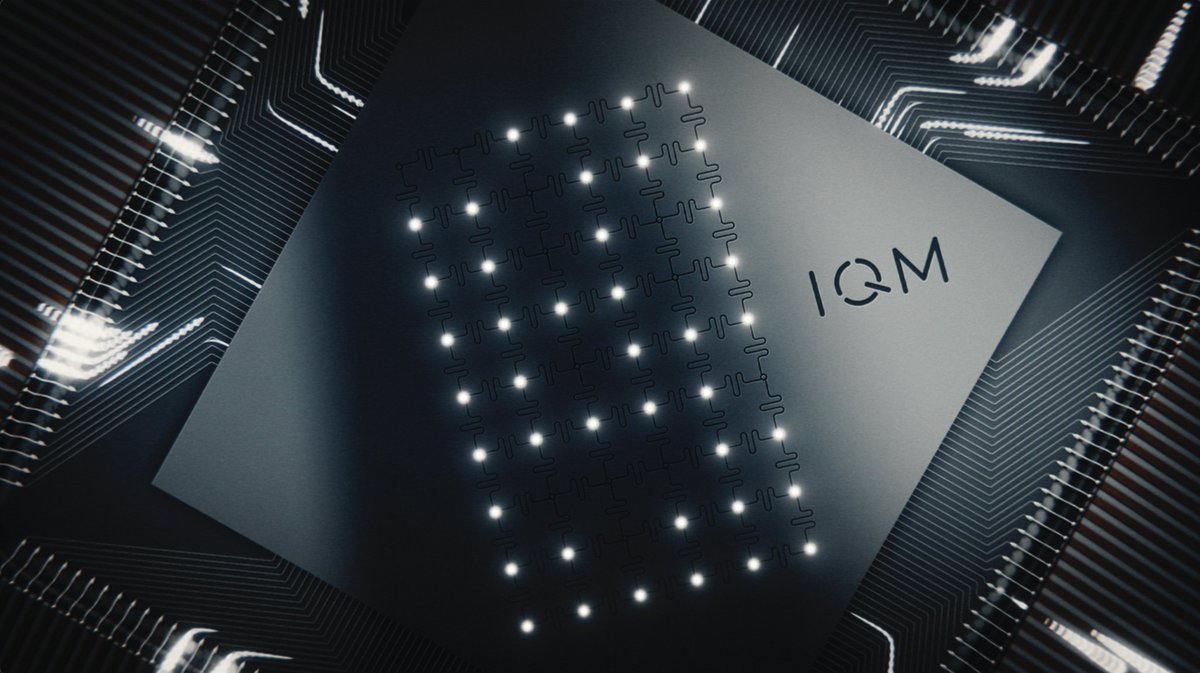
We've partnered with @meetIQM Quantum Computers to make learning fault-tolerant quantum computing accessible and fun for anyone!
This partnership led to a new module for learning ‘fault-tolerance and quantum error correction’ on IQM Academy. More here: https://t.co/M9ARYkhjqB
We’ve partnered with QC Design to introduce a new training module dubbed “Fault Tolerance and Quantum Error Correction” to IQM Academy to broaden the learning opportunities for university students, educators, and quantum enthusiasts.
Read more here: https://t.co/iesNrCG4xJ
I’m still of the mind that AI-assisted programming is more like streamlining the typical Google or StackOverflow searches we all do throughout the day.
I don’t see it as a paradigm shift that fundamentally changes how code is created.
Yet.
if anyone is looking for QEC or atomic physics researcher roles and want to join the core team of an exciting QC startup (I'm not the founder xD), feel free to DM me.
#qec#quantum#QuantumComputing