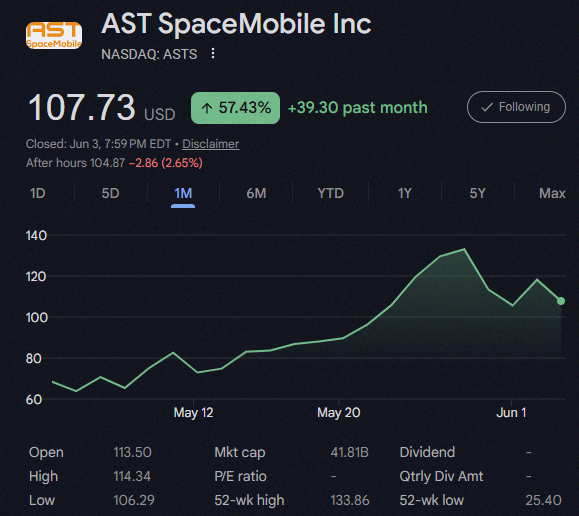
$ASTS $SPCX:🚨 SPACEX CFO BRET JOHNSEN DISCUSSES PLAN TO ROLL OUT STARLINK MOBILE GLOBALLY TO COMPETE WITH MNOS OVER THE NEXT 2 YEARS
+ Starlink is focused on "attacking terrestrial markets" from space
+ Starlink Mobile will become "table stakes" and “others (MNOs)” will have to come up with comparable solutions to compete
+ Connectivity overall is a $1.6 trillion a year TAM
Early Practice Team Offense Vitamins
Game Action Shots
- Flex Cut to Pin Down 3
- Cross Screen to Pin Down 3
- Stagger 3 w/Inside Slip
- Pin Down 3/Inside Slip
- Inside Slip/Stagger 3
@ACSLions_BB
$DGXX scores a massive win by securing $NVDA highly anticipated, next-gen Vera Rubin platform early.
This $35 million deal is a phenomenal move for three major reasons:
Future-Proof Monopoly: They bypass current Blackwell limits to offer unmatched 288GB HBM4 power by Q1 2027.
Massive Margin Growth: Booking this ultra-premium capacity via NeoCloudz will drive skyrocketing, high-margin AI revenue.
Flawless Financial Health: Funding this entire next-gen revolution purely from cash on hand proves incredible liquidity and zero debt risk.
$ASTS --- The U.S. Federal Communications Commission (FCC) has formally granted AST SpaceMobile a commercial operating license, clearing the firm to roll out direct-to-device (D2D) cellular broadband service across the U.S. that connects regular smartphones straight to its satellites. This ruling removes the biggest regulatory roadblock standing in the way of full commercialization.
The company maintains deep strategic partnerships with U.S. telecom heavyweights AT&T and Verizon, and inked a collaboration deal with Canada’s industry leader TELUS back in March this year. Its global roster of partnered mobile network operators (MNOs) now unlocks access to billions of prospective end users, with management guiding full-year 2026 revenue between $150 million and $200 million, driven primarily by U.S. government contracts and monetization from finalized commercial trials.
1. Disruptive Core Technology: True Direct-to-Cell Connectivity
Unlike SpaceX’s Starlink, which mandates proprietary ground dish receivers for signal access, ASTS’s proprietary technology turns orbiting satellites into floating cell towers in space. End users require no upgraded 5G handsets or supplementary external hardware to tap into satellite-powered broadband, even in dead-zone locales including remote deserts, open oceans and rugged mountain terrain. The solution seamlessly fills critical coverage gaps plaguing conventional terrestrial cellular networks.
2. One-of-a-Kind B2B2C Business Model
ASTS bypasses direct-to-consumer subscription sales entirely, instead partnering with established carrier operators such as AT&T and Vodafone. These telecom providers package AST’s satellite coverage as a seamless add-on premium service for their existing billions of subscribers and split resulting revenue with ASTS. This framework keeps customer acquisition costs (CAC) at a bare minimum; once the full satellite constellation reaches operational completion, marginal production costs trend near zero, paving the path for robust gross profit margins.
3. First-Mover Moat via Space Infrastructure Timing Barriers
Orbital spectrum allotments and viable orbital slots are finite global resources, paired with extreme engineering hurdles surrounding the production of its oversized deployable antenna arrays. ASTS has successfully completed voice and high-speed broadband validation testing with its BW3 prototype satellite and secured groundbreaking FCC commercial approval ahead of competitors. In this capital-intensive deep tech vertical that demands billions in funding and multi-year development cycles, the firm boasts an insurmountable early-entry competitive edge.
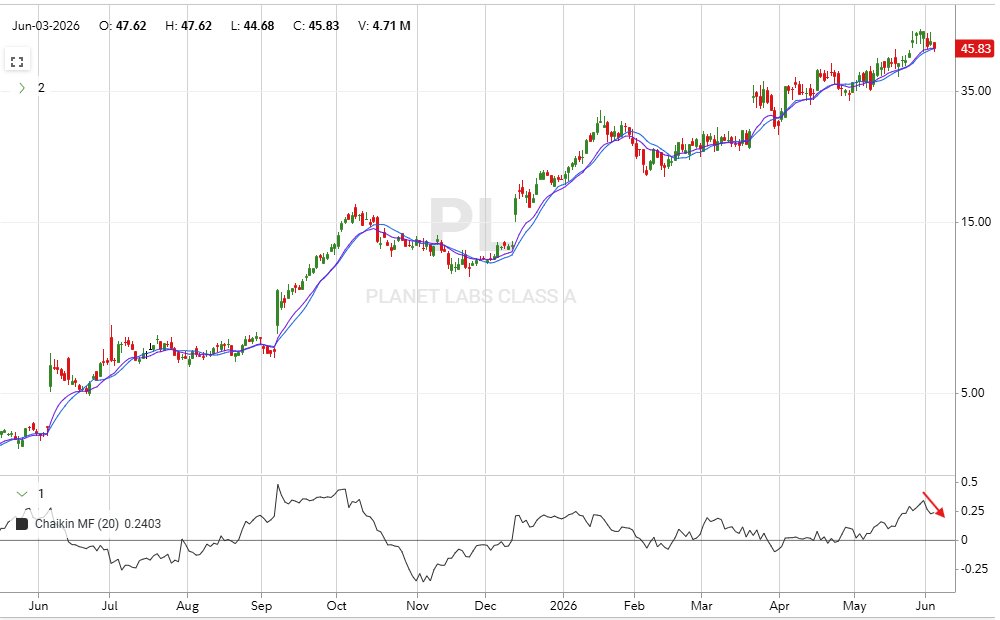
That's a great question. $RKLB $PL $LUNR are the best examples imo since they are other main space leaders. Unlike $ASTS the CMF has dipped modestly on RKLB PL and LUNR instead of continuing to rise.
This really makes $ASTS standout. The CMF isn't only rising but rising at a faster pace during this dip in price
FCC just kicked off its first spectrum auction in 4 years. 200 licenses. All mid-band AWS-3. Proceeds go to ripping Chinese tech out of American networks.
Here's why this matters for the D2D race.
@SpaceX 's 65 MHz? Mid-band. AWS-3 and H-Block. Today's auction? More mid-band hitting the market. Mid-band is getting crowded. That's SpaceX's lane.
Know what wasn't auctioned? Low-band. 700/800 MHz. Because @ATT, @Verizon , and @TMobile own all of it and they spent decades and tens of billions locking it up. Nobody else is getting it. Ever.
That's $ASTS 's lane. And it's a closed lane.
@SpaceX has 650 D2D satellites flying and their own VP said at MWC it's "not meant to replace terrestrial infrastructure." V2 broadband satellites don't launch until mid-2027. Current phones don't support their new spectrum yet. And analysts say it would likely need an in-home repeater to work indoors.
$ASTS operates on carrier low-band. 98.9 Mbps to an unmodified phone. Works indoors. No repeater. No new hardware.
Same FCC chairman running today's auction named $ASTS alongside SpaceX as America's D2D leaders two weeks ago. All 3 carriers just formed a JV around ASTS tech. Auction proceeds are literally funding the removal of Chinese infrastructure from US networks.
Mid-band is getting more competitive. Low-band is locked. The carriers chose their partner.
$ASTS 🛰️
$ASTS In regards to the William Blair comments from @scottwisniews, a 3 to 6 month delay was expected by myself and many others. I for one was vocal about it last week post the Blue Origin anomaly.
So to me that’s priced in already. The company will still accrue value as they launch a few times this year and get to around 15-21 satellites in orbit by year end and start beta testing.
The market can discount up to 2 years in advance so the stock should still work as these milestones get hit.
Maybe the price doesn’t hockey stick as quick as we thought it could in 2027, but downside is very limited as they’ll continue building satellites and be well ahead of their launch cadence from here on out.
There’s value being created every day as they produce more and I think we should be able to land 1 ULA and 1 Ariane 6 launch in Q1 to get 10 more satellites up.
So, 3 to 5 Space X and possibly ISRO launches from here to year end getting us to 15-21 satellites.
Then 10 in Q1 from ULA (5) and Ariane 6 (5), then need some combination of 1 to 3 more launches from Space X and Blue origin back online late Q1 to get 1-3 launches from them by the end of Q2 2027.
This means we have a 45 satellite constellation by June 2027.
To me that’s worth at least 100b 9 months in advance so I still expect the stock to hit ~$260 this year. Reason being, the upside with a constellation like that is north of 1 trillion as per the revenue we see Starlink already doing, so the market can assume that and pull forward 10% of that value to get us to 100b in market cap, even if the expectation is only for ~1-2b in revenue by 2028.
I said this a year ago, this will never be a cheap stock because of how much upside there is combined with a 90% margin profile, and let’s not forget how crowded of a short it is.
GL to all. 🅰️🚀
$ASTS the CMF never dipped during that 24% two day drawdown. This is something that has never happened in ASTS' history. Even during the rally in the summer of 2024 it dipped on pullbacks
*NFA
The Blue Origin explosion scared people off $ASTS. 😬
But two huge catalysts are right around the corner and nobody's talking about it.
Catalyst 1. First-ever batch launch.
BlueBirds 8, 9, and 10 going up together on a SpaceX Falcon 9 mid-June. The hardware is already on
The Blue Origin explosion scared people off $ASTS.
The two biggest catalysts in this company's history are now both right around the corner and barely anyone is talking about it.
Catalyst one. The first ever batch launch.
BlueBirds 8, 9, and 10 going up together on a SpaceX Falcon 9 in mid-June. And the satellites are already there. BlueBirds 8 and 10 have arrived at Cape Canaveral. BlueBird 9 is en route from Texas. This is not a promise. The hardware is on the ground waiting for the pad.
Why this is the biggest launch catalyst in the story. Up to now the constellation went up one satellite at a time. A batch changes the entire trajectory. Three at once, then monthly launches behind it.
BlueBirds 11 through 33 already in advanced production with phased arrays done through 28. Manufacturing running at up to six satellites per month.
That is the path from 6 satellites today toward 45 to 60 by year end. And the multi provider strategy means SpaceX carries this batch regardless of the Blue Origin setback.
Catalyst two. The SpaceX IPO.
SpaceX filed its IPO prospectus on May 20 and is heading toward a listing at a $1.75 trillion target valuation. That single event reprices the entire space sector.
Every analyst and every retail investor is about to pour into space stocks for the first time. And $ASTS is the highest quality pure play space connectivity name on the public market.
When the SpaceX IPO dominates every headline the money that cannot get allocated shares looks for the next best thing. That trail leads directly here.
Two catalysts. Both within weeks. A batch launch that proves the constellation can scale and an IPO that floods the entire sector with capital and attention.
While everyone fixates on the rocket that exploded, the two events that actually move $ASTS are both right around the corner.
The Spurs are giving up to 1,000 tickets during the Finals to local nonprofits serving youth across San Antonio. It allows opportunities for young people and families who may not otherwise have the chance to attend a Spurs game. This is not new. this season alone they gave away 22,000 tickets to community organizations.