@JazzTheJourno@theJagmeetSingh I have been noticing these ads for almost a month now and i am reporting these accounts but there are too many and people are spending money on these ads
@DeanAllisonMP Be careful boss these people are working for Indian gov as part of there ongoing transnational repression to Canada CSIS has warned Canadian politicians many time
@DeanAllisonMP Be careful boss these people are working for Indian gov as part of there ongoing transnational repression to Canada CSIS has warned Canadian politicians many time
David Vigneault flew to New Delhi before any of this became public. The CSIS Director and then-National Security Adviser Jody Thomas made the trip specifically to brief Indian counterparts on what Canadian intelligence had collected about Indian government activities on Canadian soil. That is the standard play: show a state what you know, give them a chance to stop, avoid the formal rupture. It almost never works when the operations are senior-directed, but you try anyway.
India didn't stop.
What followed is by now reasonably well-documented in the headlines, but the underlying CSIS assessment is worth sitting with seriously, because the headlines have a way of collapsing into the Nijjar killing and staying there. The killing of Hardeep Singh Nijjar in Surrey in June 2023 was the public flashpoint, and Trudeau's parliamentary statement alleging Indian government agent involvement was the moment the diplomatic relationship cracked open. But CSIS's assessment of Indian interference in Canada was not constructed around a single assassination. It described a systematic architecture.
The documented methods included cultivation of assets inside Indo-Canadian political organisations and community associations. Covert support for candidates in federal and provincial elections who were assessed as sympathetic to Indian government positions on Khalistan. Surveillance of Sikh separatist activists and their associates. And a transnational repression component: operations designed to monitor, intimidate, and in some cases threaten individuals engaged in Khalistan advocacy, which is legal activity in Canada regardless of how New Delhi categorizes it.
The operational structure for that last piece is the part that tends to get underreported. CSIS assessed that it involved both Indian consular staff and proxies drawn from community organisations. That combination is deliberate. Consular staff provide direction and resources; community proxies provide deniability and local access. You get intelligence collection and coercive pressure through a network that, on the surface, looks like ordinary diaspora civic life. It is not a novel approach. China has been running variations of it in Canada and Australia for years. The fact that India had built comparable infrastructure says something about how seriously Indian intelligence takes diaspora-based political activity it considers threatening.
Canadian officials assessed these operations as senior-directed. That distinction matters. The alternative framing that surfaces in diplomatic pushback from target states is usually some version of "rogue operatives" or "consular staff exceeding their mandate." The senior-directed finding forecloses that exit. It places India in the same analytic category as China for purposes of foreign interference assessment: deliberate, policy-level, sustained.
The Five Eyes dimension here is genuinely uncomfortable and has not really been resolved. India is not a Five Eyes member, but it has become an increasingly valued partner for Western intelligence services in the context of Indo-Pacific competition with China. There is a real strategic logic to that partnership. There is also now a formally documented CSIS assessment that India was running covert political operations and transnational repression campaigns inside a Five Eyes nation. Those two facts sit in the same room and do not get along. Intelligence agencies are accustomed to managing tensions between collection relationships and counterintelligence concerns, but this one is harder to paper over when the target state's activities have produced public diplomatic expulsions.
The expulsions happened. India expelled Canadian diplomats. Canada recalled consular staff from India. The Indian High Commission's footprint in Canada was reduced significantly under pressure from Ottawa. These are not trivial events in a relationship between two democracies, and they were a direct consequence of CSIS's unwillingness, ultimately, to keep its assessments confined to classified channels.
The legislative aftermath has moved in predictable directions. The Nijjar killing and the broader interference documentation accelerated Canadian work on a foreign agent registry, expanded consular expulsion authorities, and enhanced monitoring frameworks for foreign government activity in diaspora communities. Whether those tools will be deployed with enough consistency to matter is a separate question. Registries are only as useful as the political will to enforce them, and diaspora community politics in Canada are complicated enough that enforcement against any specific community's foreign government patrons carries domestic cost.
Australia and Britain have assessed comparable South Asian state intelligence activity targeting diaspora communities in their jurisdictions. That parallel suggests what Canadian officials apparently concluded: this is not a Canada-specific problem generated by Canada-specific political dynamics. It is a regional pattern across Five Eyes nations, during a period when states like India have decided that diaspora communities represent both an asset to cultivate and a threat to manage, sometimes simultaneously, and that Western legal frameworks are obstacles to work around rather than constraints to respect.
The Hindustan Times reporting on the CSIS assessments is worth noting as a publication choice. An Indian outlet covering CSIS accusations against the Indian government with enough specificity to lay out the documented methodology is the kind of coverage that reaches audiences in India who might otherwise only encounter the Indian government's categorical denials. Whether it changes anything is another matter. But the fact that the CSIS intelligence picture is now circulating in that information environment is not nothing.
Vigneault made the trip. Thomas made the trip. They showed India what Canada had. India did not change its behaviour. Then it got public, then it got messy, and here we are.
https://t.co/PgKOtIR8Bv
#foreigninterference #TransnationalRepression #DiasporaSurveillance #PoliticalInfiltration #AssetRecruitment #InfluenceOperations #CrossBorderIntimidation #CounterintelligenceOperations
🚨 BREAKING — CBS EXCLUSIVE
“The Govt of India is trying to kill me because we are outspoken”
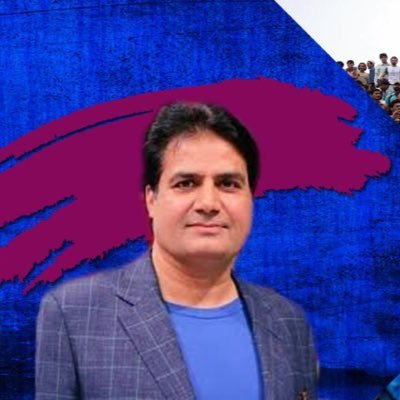
Sabi Singh, a Sacramento-based Khalistan Referendum organizer, said in a CBS News interview that the FBI warned him of a threat to his life from Goldy Brar & the Bishnoi gang in India
@sk07846_6 This is part of Indian transnational repression they put their people even some of them with fake nale like rahul gill and i am in Winnipeg there is one name stan parag running for mayor of Winnipeg
@PrimeAsiaTV These orders are coming from Indian consulate today its jaydeep tomorrow someone as it won’t stop until all Indian consulate are closed and modi regime should be behind jail
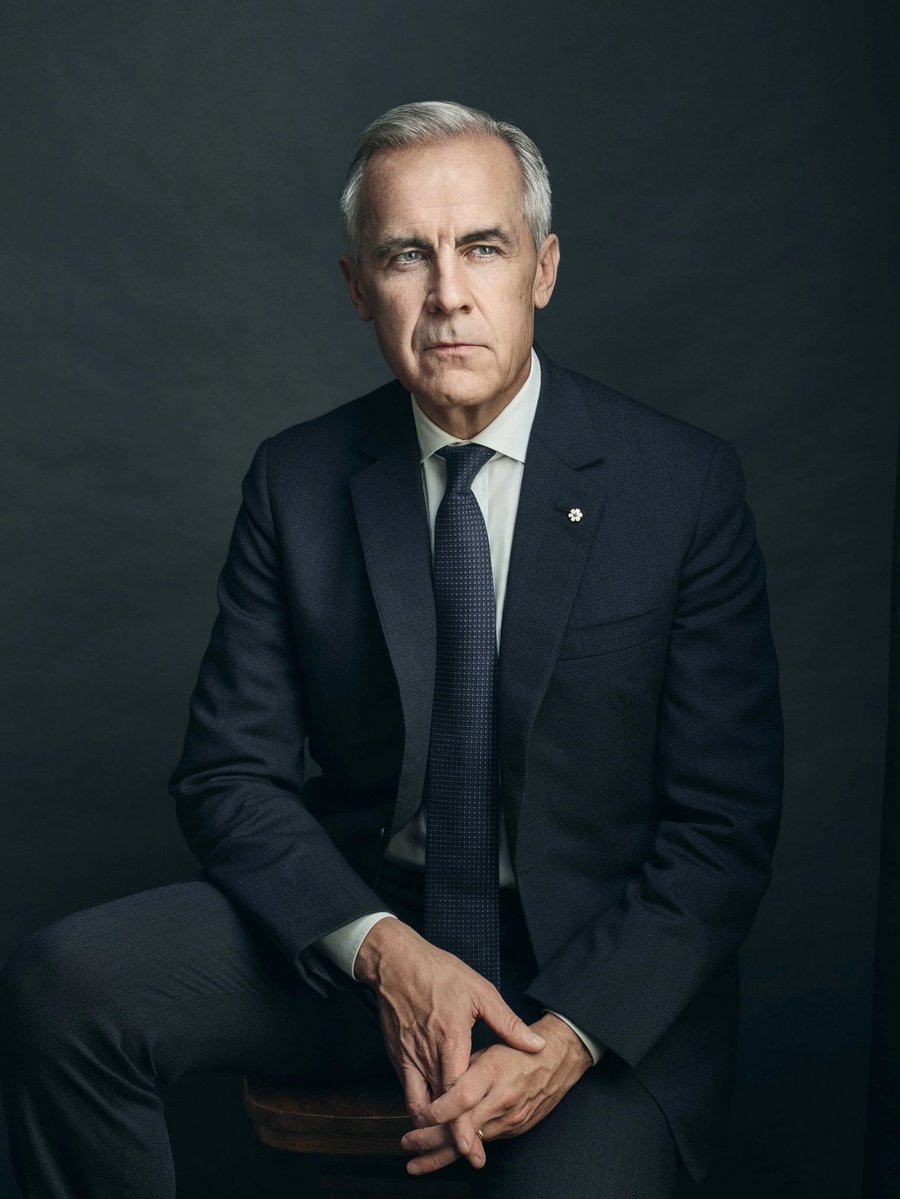
Carney says he “cannot guarantee” India will no longer be involved in crimes in Canada as his govt moves to rebuild ties with New Delhi.
This comes as Sikh groups continue to raise concerns about the lack of accountability for ongoing Indian transnational repression in Canada.
Kanwar, Indian 🇮🇳 immigration consultant for the Indian Bishnoi gang. He allegedly helped more than 400 Bishnoi gang members obtain Canadian visas.
He is involved in providing information about Canadian businesses to the Indian Bishnoi gang.
@mchmr96 Canadian authorities alleged Indian government involvement in the murder of Sikh Canadian activist Hardeep Singh Nijjar. U.S. prosecutors uncovered an Indian government-directed plot to assassinate a Sikh American on American soil. Criminal charges followed in both countries. Yet @HinduAmerican defended India and cast doubt on the allegations.
When our community approached lawmakers in Sacramento and Washington, D.C., seeking stronger protections, HAF opposed those efforts. In California, it fought SB 509, a bill to develop law-enforcement training on recognizing and responding to transnational repression, and celebrated Governor Newsom’s veto despite overwhelming bipartisan support for the legislation.
That opposition extended beyond California. HAF’s published policy agenda explicitly challenged both state and federal transnational-repression legislation—measures intended to protect people here from foreign governments’ intimidation and violence.
HAF also urged Newsom to veto SB 403, which would have explicitly included caste in California’s anti-discrimination protections. He vetoed that bill too, despite its passage 55–3 in the Assembly and 31–5 in the Senate.
Americans deserve protection from foreign intimidation and equal treatment under the law. HAF should explain why it fought these safeguards.
Read my op-ed here: https://t.co/CWKIet9bur
@HinduAmerican: What ties, if any, does Rishi Bhutada currently have to HSS/RSS? Where does HAF stand on caste discrimination(varna ashram), and cow-vigilante violence? No one should be killed for riding a horse or eating a hamburger. Equality and liberty apply to all.
@sshergil190 Sikh should be aware gov india could do same thing as deep sidhu a fake driving accident, atiq ahmid type of incident or they could make it as a unknown gun man kind of thing when he came outside
Sikh should be aware gov india could do same thing as deep sidhu a fake driving accident, atiq ahmid type of incident or they could make it as a unknown gun man kind of thing when he came outside