Some background before commenting on some elements of the proposed rule.
The Physician Fee Schedule (PFS) was established in legislation passed in 1989, and went into effect in 1992. Prior to that Medicare paid physicians based on "customary, prevailing and reasonable" (CPR) charges. Essentially a cost plus approach that existed for hospitals before the Inpatient Prospective Payment System (IPPS) went into effect.
Fundamentally, a cost plus approach was breaking the budget, so the government turned to setting prices for services delivered. The framework for price setting was the RVU architecture. Every covered physician service is assigned a CPT code which has 3 RVU components. Work RVU, Practice Expense RVU, Malpractice RVU.
Payment = (wRVU+PE RVU+MP RVU) x geographic practice cost adjustment x Conversion Factor (CF).
The CF is what converts RVUs to dollars. This equation fundamentally determines what a physician is worth in dollars. In 2024 the CF was $32.74. Every year CMS sets a low CF, and every year congress intervenes with a temporary patch.
Its important to understand that the goal for CMS is not to "pay physicians well", the goal for CMS is to be budget neutral. In 1997, Congress passed the Balanced Budget Act that introduced the Sustainable Growth Rate (SGR) formula. This tied the conversion factor yearly update to GDP growth. If physicians increased the amount of services they delivered more than GDP growth, the SGR required the CF to be reduced to make up for it.
By the mid 2000s, the gap was so great that the SGR formula was calling for a 20% cut. Congress overrode the SGR cut every year with 'doc fix' patches.
MACRA act of 2015 got rid of the SGR and replaced it with MIPS and Alternative Payment Models (ACOs). This fixed the CF cut, by mandating an increase in the CF by 0.25%-0.75% / year (Inflation is 3-5% / year).
None of this changes the fact that CMS is forced to be budget neutral. If CMS increases RVUs and payments for E&M, it must reduce the CF to keep total outlays the same. Within the physician fee schedule , any RVU increase for one set of services must be offset somewhere else. It is zero sum.
So with an mind, the proposed fee schedule does a number of things, not all bad, but one of the provisions is really bad.
CMS is proposing to reduce payment when a separately identifiable office/outpatient E/M visit is furnished by the same physician on the same day as a procedure. The most expensive procedure would be paid at 100%, the other procedure at 50%. Commonly a 25 modifier is used to indicate a same day separate procedure so physicians get paid.
CMS is arguing that a same day E/M code is not like a standalone E/M code. The case CMS is going after is the patient who is evaluated for a problem on day x and a procedure is decided on. When the patient comes back 20 days later for their procedure, the patient is seen/evaluated again.
This argument was bad when CMS floated a version of it in 2019 and it's still bad now.
The -25 modifier exists precisely because CMS already acknowledged this problem and built the solution. Modifier -25 requires that the E/M be a significant, separately identifiable service above and beyond the usual pre-procedure evaluation. It is not supposed to be billed when the E/M is merely the routine pre-procedure assessment. The modifier is the mechanism that's supposed to prevent the double-dipping CMS is now claiming to fix with a payment cut.
If the problem is modifier -25 abuse, the correct response is enforcement and auditing, not a blanket 50% payment reduction on every legitimate same-day E/M-plus-procedure encounter.
Three scenarios CMS ignores:
1. Patient presents with a new problem or acute change; you evaluate it, decide independently to perform a procedure, and do so — the E/M decision-making is entirely separable
2. Patient has a scheduled procedure but presents with a comorbidity requiring separate assessment and management decision before you proceed.
3. A cardiology specific example. Patient presents with chest pain, you see , evaluate, and decide to do an echocardiogram the same day.
The stated rationale is a pretext for a budget cut. CMS needs to offset the cost of other proposals. The appropriate remedy for what amounts to modifier -25 abuse is targeted audit activity, not a structural 50% payment reduction on a category of encounters that includes large numbers of legitimate, non-overlapping clinical situations.
There are more sensible places in the PFS that make a lot of sense to go after -- telehealth and remote monitoring are probably abused to a significant degree by third parties, and deserve some fairly significant cuts (remember you need to cut something in a budget neutral world), but the best approach would be to not continue playing the zero sum game.
The current framework is binary: you're either enrolled in Medicare and bound by its payment rates and rules for all covered services, or you opt out entirely and private-contract with everyone. There is no middle path where you remain a Medicare participating physician but can also negotiate separate payment arrangements with individual patients for covered services.
Win-win : Allow private contracting for enrolled physicians - let physicians enter into a voluntary agreement with a Medicare beneficiary to charge above Medicare rates for covered services, without losing their Medicare enrollment or being required to opt out entirely.
I'll reiterate: Budget neutrality means every dollar of E/M increase gets clawed back somewhere else. The CF trajectory is negative no matter what Congress does The system is structurally incapable of paying physicians fairly under its current constraints.
The only reason this is politically survivable is that Medicare patients have no alternative. They can't voluntarily pay more even if they want to — the law forbids enrolled physicians from collecting above the limiting charge, and it forbids patients from contracting around that. The coercion runs in both directions.
This would require a statutory fix -- currently the BBA 1997 act requires a full opt out for physicians, not selective contracting. Congress was concerned that selective private contracting would create a two-tiered system where wealthy Medicare patients could buy better access.
Not surprisingly, the two-tiered system Congress feared has materialized anyway, just through different mechanisms: almost everyone right now that can afford it pays for a concierge physician. Allowing selective private contracts is this is a market freedom argument, not a physician enrichment argument. The goal is to preserve access to high quality physicians. The alternative is either no physicians... or even worse access to lower quality physicians.
To Summarize:
1. The same day reduced payment for procedure/clinical proposal is a bad idea. CMS should crack down on truly "add on" services by audits, not with a blanket rule that hurts appropriate service delivery.
2. Fixing the larger issue of the zero sum nature of the medicare budget is a statutory fix all physicians should unite behind : allow for selective private contracting with Medicare patients.
I urge physicians to comment on the proposed rule:
Go to https://t.co/Qmc0HyTGII
Suggest:
1. Describe actual patient scenarios where the same-day E/M and procedure are genuinely non-overlapping.
2. Make sure to note that if this is finalized, the rational response is to split some encounters across two visits, which costs Medicare more and greatly inconveniences patients.
It's July. Brand new interns are starting, freshly minted doctors thrown into the deep end of the pool.
One intern, starting on neurosurgery, is managing a list of 60+ patients, from ruptured aneruysms to spinal cord injury. He's only been a doctor for a few days and this is his workload.
Then he tells me the hardest part of his job...
"learning how to put orders in the computer."
It's not managing the dying aneurysm patient in vasospasm or the brain tumor patient who had a postoperative hemorrhage or the TBI patient with uncontrolled intracranial pressure or the postop spine patient who suddenly can't move their leg.
It's navigating the computer.
14 years ago, when I was an intern, we had paper orders. It was simple. Write down what you wanted, the clerk put the order in a computer, and she asked any clarifying questions.
Now, I agree with that intern. The hardest part of my job is also navigating the computer.
Happy PGY+1 Day to all who celebrate...🎉
Attendings posting their PGY year may be corny, but it is a symbol that learning is always ongoing, and that each PGY should in some way be noticeably different than the last.
Each July 1, ask yourself: what am I learning this year? 🧐
Join us for a Men’s Health Community Screening this Juneteenth in Temple. Free PSA testing after SDM& BP checks to help protect your health and your family’s future.
📍 Greater Zion Temple COGIC
🗓 June 19 | 12–6 PM
@25NewsKXXV@kwtx@6NewsCTX@KWKTFOX44@kdhnews@tdtnews
Joey McGuire on Steve Sarkisian’s comments alluding to Texas Tech’s schedule.
Coach McGuire has talked to Texas State & Abilene Christian & would love to buy out those games to play Texas this season in Week 1. If not Lubbock, then @ATTStadium
���We would love to play Texas.”
( 🎙️ @ChrisVannini )
"Old cranky guy who walked to school in the snow barefoot."
That's the pushback he expects.
But here's the evidence:
More and more cardiac surgery graduates are doing "extra training" after they finish.
Not because they want to specialize further.
Because they never got the basics.
One resident. Reputable program. Finished their entire training.
Never applied a cross-clamp.
Not once.
"That's what the attending does from the other side of the table."
So they finished. Got their certificate. And left unprepared to operate independently.
"That is not training. That is complete insanity."
This isn't an anecdote about one bad program.
It's what happens when you protect residents so much that you forget to actually train them.
Another midwit healthcare take.
Other countries have better life expectancy than the US. That is not the same as better healthcare outcomes.
Life expectancy is primarily affected by things that kill the young. In the US, that is violent crime, car accients, overdose, and suicide. You can argue that healthcare might be able to influence the last two, but only minimally. Those things are driven by lifestyle choices. Add in our obesity rate, which is also only marginally mitigated by proper healthcare, and you see why our life expectancy is lower than the rest of the OECD.
We are fat, violent, depressed, and like driving on freeways.
Now, if you acutally get sick, there's nowhere else you'd rather be. We have some of the best outcomes in cancer, stroke, heart attack, and trauma. The wealthy from around the globe travel to our hospitals for care. There are entire wings at some prominent hospitals for ultra rich international patients. They aren't going to the NHS for their care.
We excel at coverage for actue care. 98% of Americans are within 90 mintues of a cardiologist who can open up the arteries in your heart in the middle of a heart attack. Meanwhile, in canada, that number is around 80%. They have 10x worse access to acute coronary care than the US.
If you're going to have a heart attack, you want to have it in the US.
If you're going to have any health issue requiring high specialty care, you want to be in the US.
Imagine your surgeon preparing for your operation.
They see you in pre-op, answer your questions, calm your fears, examine you, confirm the plan, and go get ready for the case. They review the imaging and think through the critical parts of the operation.
Then a nurse interrupts them:
“Doctor, your pre-op documentation isn’t good enough. You can’t just say you discussed the risks and benefits. You need a full H&P.”
The surgeon points out that the H&P was already done in clinic. The note is right there in the chart.
“No. That note is 31 days old. It has to be within 30 days. But it’s fine if you just copy and paste that old note.”
Think about how insane that is.
There is no new clinical information. There is no patient benefit. There is no improvement in safety or quality. The only thing being demanded is duplication. A pointless bureaucratic ritual to satisfy the machine.
So now you have a frustrated surgeon, a delayed case, a bloated chart, and one more example of modern medicine confusing clerical box-checking with patient care.
This is exactly what is wrong with the system. Endless note bloat. Pointless duplication. Administrative nonsense dressed up as professionalism. If there are no changes, there are no changes. Forcing a doctor to re-paste an unchanged H&P adds absolutely nothing for the patient.
And the most insulting part is the tone. That smug, condescending “of course you have to do it this way” attitude, as if this is self-evidently necessary instead of obviously stupid.
At this point, a lot of doctors would probably take a substantial pay cut to never touch a computer again. Cut the salary and use the savings to hire people to do the computer garbage. Epic. CDI queries. Coding queries. H&P updates. Order entry. Case booking. Inbox nonsense. All of it.
Never touch Epic again. Never answer another coding query. Never update another unchanged H&P. Never place another order that a clerk or protocolized team could enter. Never do another ounce of hospital data-entry cosplay.
Just let us be goddamn doctors instead of highly trained documentation technicians.
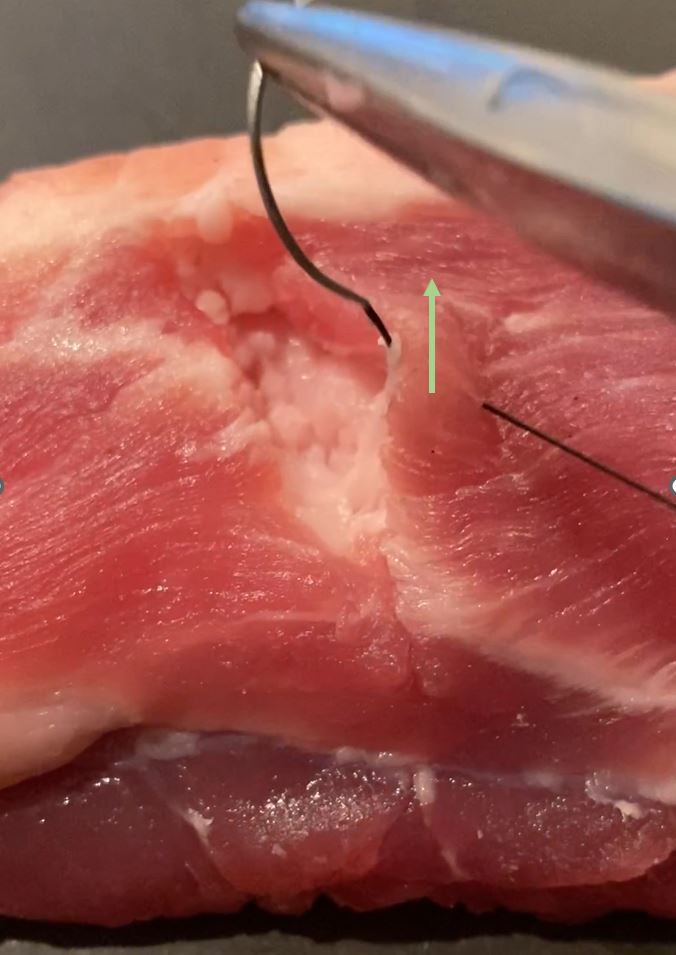
Revisiting one of my most popular🧵:
Ways in which you can inadvertently damage fragile tissues when approximating them with sutures.
These ideas are important mostly when the tissue is friable, because this is when you won't get away with using sloppy technique.
(1/ )
Congratulations to all that have matched into Surgery.
Fate has rewarded your many years of hard work with the opportunity to obtain training that is available only to a very few. Countless people would trade places with you in a second.
Conduct yourselves accordingly. 💪
50 years ago yesterday the Texas Tech SPORTS INFORMATION DIRECTOR, Ralph Carpenter said near the end of a Texas Tech v A&M basketball game as the Aggies went ahead. ITS NOT OVER UNTIL THE FAT LADY SINGS”. The rest is history. Texas Tech 74 A&M 72. That saying is used all over the world every day in all kinds of sporting events.
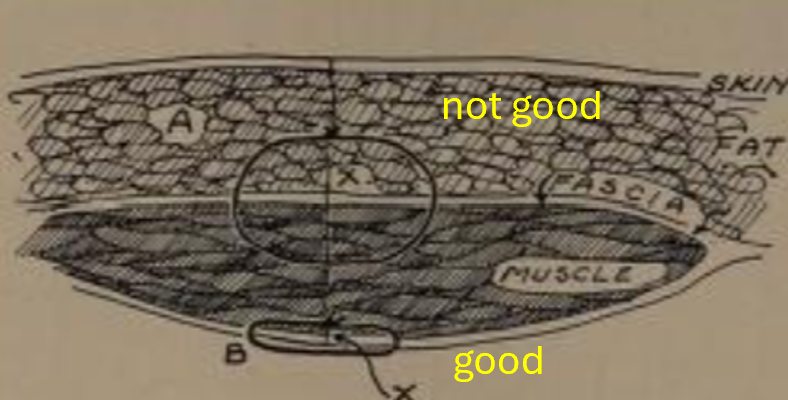
Short🧵regarding fascial closure:
I had a lot of fun with my 🧵on LOTR last week, but I must now return to my core content.
Let us briefly review why it is important to avoid catching too much subcutaneous tissue in our sutures when closing fascia.