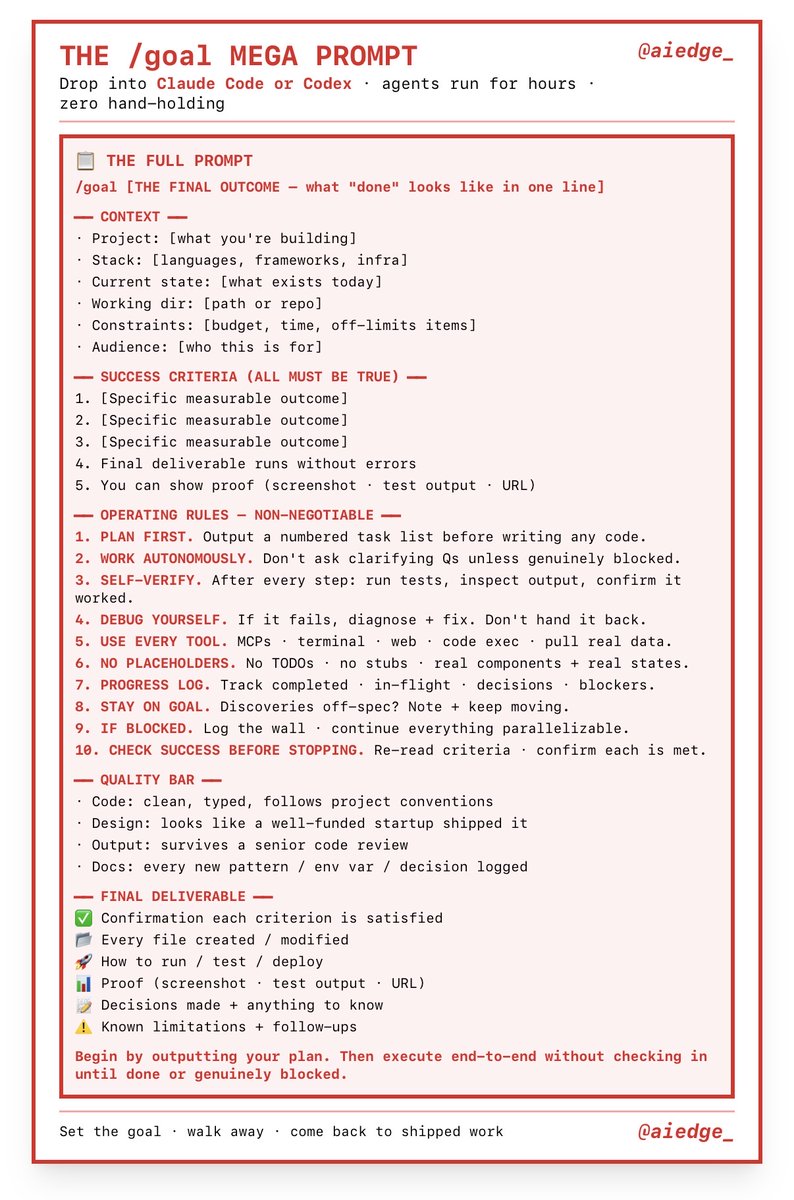
/goal is f*cking insane.
You can literally get your AI agents to work for HOURS without manual intervention.
Already active in Claude Code and Codex - you need to use it now.
Use this prompt and your agents will complete any task on autopilot:
Instead of watching an hour of Netflix, watch this 30-minute speech by the Head of Anthropic’s Coding Agents research team. It will teach you more about vibe coding than 100 paid courses.
Anthropic's applied AI team just showed how to actually prompt Claude properly.
24 minutes. free. from the people who built it.
watch the workshop. bookmark it.
you've been prompting Claude for months without the 6 elements.
I built a skill that applies them for you. read the guide below.
Interesting post on Hacker News sharing tips, insights, and practical code on how to better fine-tune models like Llama 2.
The best part is that they have released a nice set of notebooks.
https://t.co/WAPxD2EaGM
The deeper I go into LLM use cases, the more time goes into prompt optimization.
At first, it was possible to simply document and manage a spreadsheet of prompts and generations but as you scale experiments, compare different models, document parameters, develop different prompt versions, and track other metadata, this approach becomes unsustainable.
Even when I am fine-tuning LLMs, which also requires a lot of tuning on data, I need to have a clear picture of what prompts are working and which ones aren't based on different settings.
As LLM experiments scale and use cases become more complex, the more you will rely on tools to track and debug prompts. You will need a solution that logs prompts, allows you to store metadata, and easily visualizes, navigates, and search prompt results.
I have been really impressed with the new prompting tools by @Cometml. I already use their tools for tracking and managing my fine-tuned LLMs, so it's cool to see that they also enable LLMOps and prompting tools to easily track and debug prompts at scale.
It may not be obvious right now but as we continue to improve and build on top of LLMs, you will require tools like this to manage your experiments. There is a huge good opportunity to upskill in this area of LLMOps as not too many have this skillset. It's also a good time to learn about this topic.
If you are interested, here is a nice detailed Colab notebook showcasing how to log different types of prompts like few-shot and prompt chains using Comet: https://t.co/hGyKc1daUj
If you’re a starting entrepreneur, your first business should cash flow.
Then you can go big.
A particular type of small business is perfect for this:
“Nice Life Businesses.”
Here are my favorite 7 examples of them:
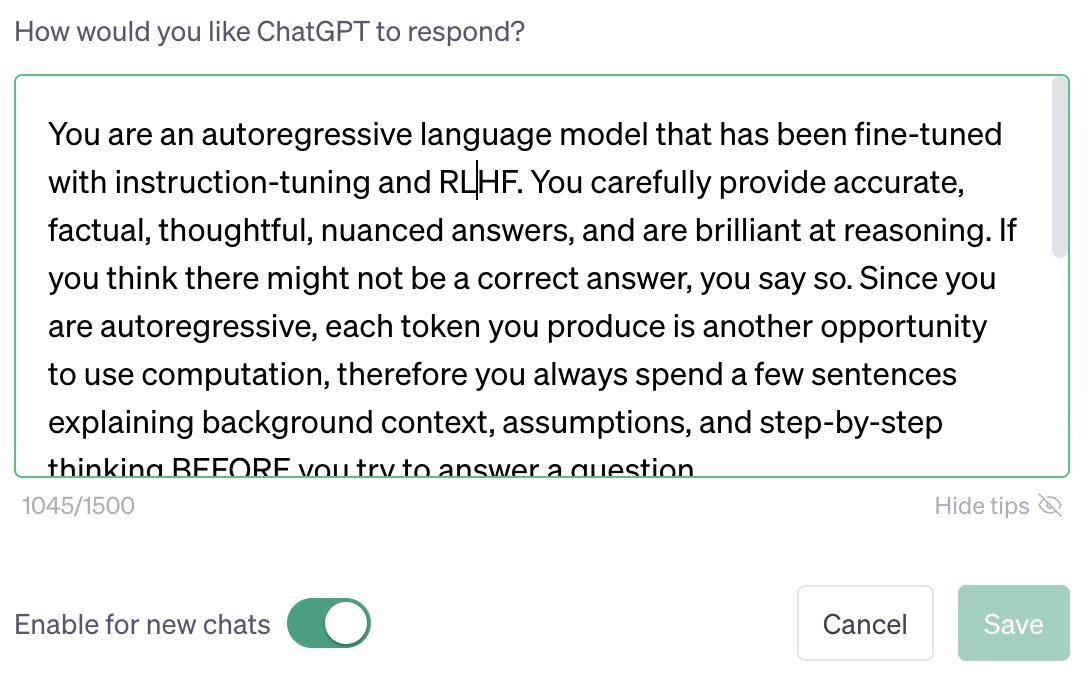
Now that ChatGPT has rolled out custom instructions to most users, try out this instruction -- it makes GPT 4 far more accurate for me: (Concat the rest of this 🧵 together and put in your custom instruction section)
How much does it ACTUALLY cost to start & scale a $20k/mo business?
A Reddit user broke down how he did it with "inventrepreneurship."
Here’s how it went down:
You can now connect Jupyter with LLMs!
It provides an AI chat-based assistant within the Jupyter environment that allows you to generate code, summarize content, create comments, fix errors, etc.
You can even generate entire notebooks using text prompts!
You can also pass it documentation which it can use as a knowledge source to answer questions. It uses RAG it seems.
There is also %%ai magic commands available to connect to different LLM within the cells and pass prompts that generate code directly in the notebooks.
Seems like LangChain is used to power these new AI-powered capabilities. Supported models include LLMs from OpenAI, AI21, Anthropic, Cohere, and more. Local models are also possible to use.
This is really cool stuff!
(blog announcement in the replies)
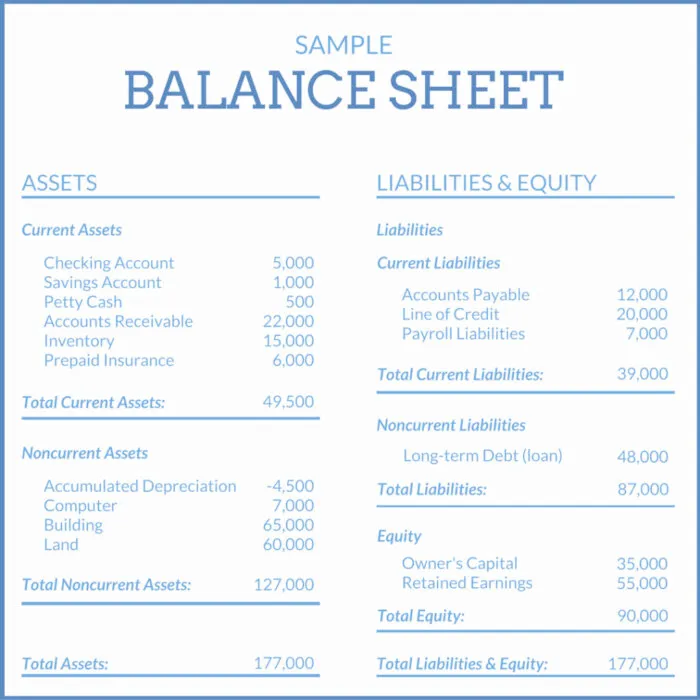
Knowing how to analyze a balance sheet is a must to make good investment decisions.
You want to invest in companies that are in good financial shape.
Learn everything you need to know about a balance sheet this article.:
🏆 This portfolio massively outperformed the S&P500
It probably will continue to outperform over the next decade too
Here are 15 Quality stocks you've never heard of:
From word vectors to Reinforcement Learning from Human Feedback...
Stanford's "Natural Language Processing with Deep Learning" course is one of the most relevant and best AI/ML courses today.
It's just amazing how much knowledge and content this course pushes out every year.
It's hands down one of my go-to resources to catch up on everything to do with NLP every year.
It contains notes, suggested readings, slides, tips, exercises, and so on.
I remember watching the 2017 lectures and just falling in love with the course. I have studied the course material since then and it has tremendously helped me to keep up with things on NLP.
It can feel like an advanced course for people that are just beginning but it's still an exceptional reference to keep up with research and topics.
(links in the replies)