

Top Tweets for #AIForScience

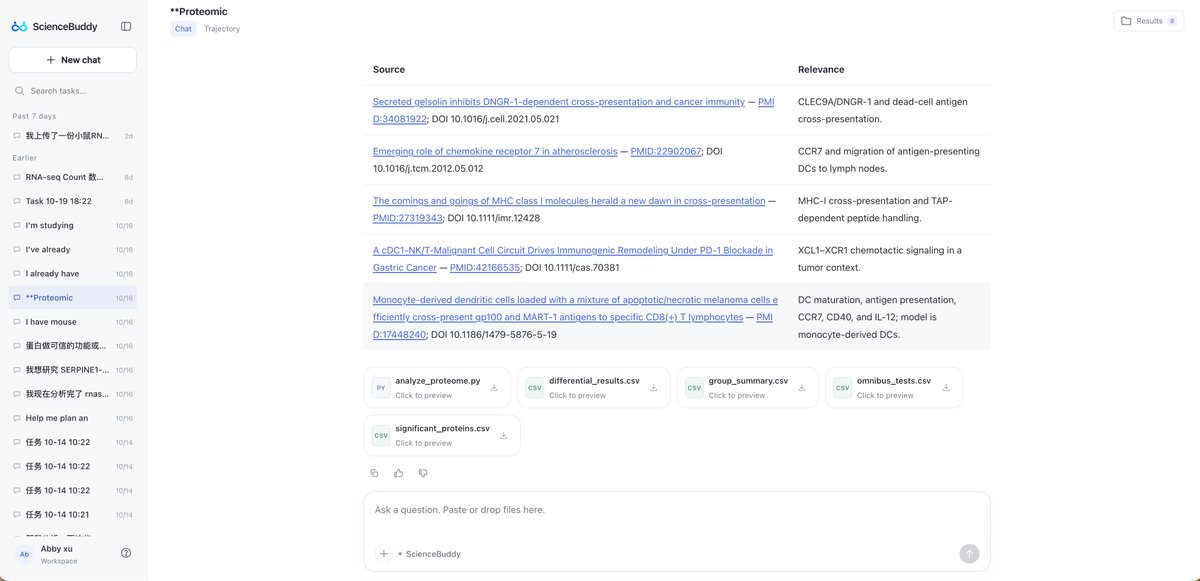
We're upgrading ScienceBuddy's(https://t.co/9peva9bpIT) UI in the next release! 🚀
Which design do you prefer, 1 or 2?
Or do you have any better ideas? I'd love to hear your thoughts! 👀
#buildinginpublic #aiforscience #phailabs #Research



🧪 Can lasers create materials nature never could, and can AI tell whether they are feasible?
DJNB EIC Dr. Carmen-Georgeta Ristoscu discusses biomedical coatings, industry barriers and the journal’s future.
👉https://t.co/nvscM3EAT0
#MaterialsScience #Biomaterials #AIforScience

The future of AI drug discovery will not belong only to whoever trains the biggest model.
It will belong to whoever builds the strongest scientific ecosystem around that model.
Open science is becoming infrastructure.
https://t.co/QoXNqKQvLb
#AIforScience #Biotech #OpenSourceAI

It's a big deal for scientists. Reproducible figures, code + environment attached to every result — this is the workflow layer done right. 👏
But a reproducible figure on your laptop is still unowned and unfunded.
That's the layer @Opensci_io is building. #AIforScience

Introducing Claude Science, a new app designed with every stage of research in mind.
Artifacts traced to their code, environments managed on demand, and 60+ optional scientific databases that you can connect.
Available now in beta.

One thing we've learned from building AI for medical research:
https://t.co/43n6PfeWor
The hardest part isn't writing code.
It's deciding what should happen next.
Researchers spend weeks designing workflows:
Dataset selection.
Validation hierarchy.
Sensitivity analyses.
Claim boundaries.
Publication strategy.
We've been turning those decisions into reusable AI Skills.
Today AIPOCH includes 550+ Medical Research Skills developed around real-world biomedical research workflows.
From MR studies and single-cell analysis to oncology, network pharmacology, and translational biomarker discovery.
Each Skill encodes not just methods—
but research logic.
AI shouldn't replace scientific thinking.
It should make good scientific thinking scalable.
#AI #AIforScience #HealthcareAI #BiomedicalResearch

Many researchers don't struggle with analysis.
https://t.co/luaUvI8zrs
They struggle with study design.
Should you use MR or genetic correlation?
PPI before enrichment, or enrichment before PPI?
How many validation layers are enough?
When does a biomarker become publishable?
AIPOCH was built around a simple idea:
Research workflows should be reusable.
Today, the platform contains 500+ Medical Research Skills covering:
• Mendelian Randomization
• Single-cell RNA-seq
• Cancer Bioinformatics
• Network Pharmacology
• Network Toxicology
• Multi-omics Integration
• Clinical Epidemiology
• Systematic Reviews
Each Skill is designed as an executable research blueprint rather than a generic prompt.
The goal isn't to generate more text.
It's to help researchers build better studies.
#AIforScience #Bioinformatics #MedicalResearch
A surprising number of cancer bioinformatics projects follow the same pattern:
1. Download TCGA
2. Pick a gene set
3. Run survival analysis
4. Build a signature
5. Publish
The problem?
Most studies never connect the full chain:
Cell death biology → Tumor microenvironment → Prognosis → Immunotherapy → Drug sensitivity
As a result, many signatures look statistically significant but offer limited biological insight.
That's why we built AIPOCH's PCD Immune Oncology Research Planner.
https://t.co/ojLGDrkKN2
Instead of generating isolated analyses, it designs a complete research workflow around programmed cell death (PCD/RCD) biology.
A single prompt can generate:
• Molecular subtype strategy
• TME analysis plan
• Prognostic modeling framework
• Immunotherapy-response evaluation
• Drug-sensitivity assessment
• Validation hierarchy
• Publication-ready figure structure
Built-in research safeguards include:
✓ Five study patterns covering major PCD/RCD oncology scenarios
✓ Four workload modes from Lite to Publication+
✓ Dataset disclaimers before every dataset-dependent workflow
✓ Verified literature retrieval with no fabricated references
✓ Explicit claim boundaries to reduce overinterpretation
The goal isn't to generate another signature.
The goal is to design a study that tells a biologically coherent story.
#AIPOCH #CancerResearch #Bioinformatics #Immunotherapy #AIforScience

Most AI tools can help you analyze data.
Very few can help you design an entire causal-to-cellular research program.
Introducing AIPOCH's MR scRNA Research Planner.
https://t.co/6YsjwHEZCu
Given a question like:
"Does circulating IL-6 causally increase rheumatoid arthritis risk, and which cell populations mediate the effect?"
The skill automatically builds a publication-oriented workflow:
→ GWAS selection
→ Instrument construction
→ IVW / Weighted Median / MR-Egger / MR-PRESSO
→ Sensitivity analyses
→ Candidate gene prioritization
→ scRNA-seq localization
→ Key-cell identification
→ Pathway interpretation
→ Validation roadmap
→ Figure planning
What makes it different is that it understands the distinction between:
• causal evidence (MR)
• cellular context (scRNA-seq)
• biological interpretation
• translational biomarkers
instead of mixing them into a single narrative.
Built-in features include:
✓ Five research patterns covering MR + scRNA integration scenarios
✓ Four workload modes (Lite / Standard / Advanced / Publication+)
✓ Mandatory Dataset Disclaimer before every dataset-related workflow section
✓ Strictly verified literature retrieval with no fabricated references
✓ Conservative evidence interpretation to reduce overclaiming
The result isn't just an analysis plan.
It's a complete blueprint for turning a biological hypothesis into a publishable study.
#AIPOCH #MendelianRandomization #SingleCell #Bioinformatics #Genomics #AIforScience


Training Personal Agents for real, stateful workspaces faces severe data and evaluation bottlenecks. ClawGym solves this by providing a complete pipeline:
• SynData: 13.5K executable, dual-route synthetic tasks
• Agents: Multi-turn SFT & sandbox-parallel RL training
• Bench: Capability diagnostics across 6 workspace scenarios
Brought to you by IQuest Research and its partners. 📊
Get started with the framework: https://t.co/ZXhjhgQ5NX
#AI4S #AIforScience

Everyone is asking how to build better AI research agents.
Our latest study may suggest a different question:
Preprint: https://t.co/qk5hbXvO03
How do we evaluate them?
In a blinded human evaluation of medical research agents, Skill-Augmented Agents showed positive signals in research quality.
But here's the surprising part:
The disagreement between expert reviewers (0.67 points on average) was larger than the observed improvement from skills (+0.39).
Even more striking, expert inter-rater reliability was negative (ICC = -0.15).
The bottleneck may no longer be agent capability.
It may be the evaluation itself.
As AI agents become increasingly capable, building reliable evaluation frameworks could become one of the most important challenges in AI for Science.
#AIAgents #AIforScience #Evaluation


🏆 MR + scRNA-Seq Skill Showdown: Which One Actually Solves the Research Question?
https://t.co/43n6PffudZ
Design an integrated study linking circulating IL-6 levels → rheumatoid arthritis risk, then use synovial/PBMC scRNA-seq to localize causal signals, identify key cell populations, and build a mechanistic framework.
Final Ranking
🥇 #1 — mr-scrna-research-planner
🥈 #2 — LaminDB
🥉 #3 — single-cell-rna-qc
If your goal is a publishable MR + scRNA-seq study, only one skill actually covers the full journey from causal inference → cellular localization → mechanistic interpretation → translational hypothesis generation.
🥇 Winner: mr-scrna-research-planner
The others strengthen the workflow, but this is the skill that designs the study. #AIPOCH #Bioinformatics #MendelianRandomization #SingleCell #Genomics #ComputationalBiology #AIforScience
🏆 Immune-Infiltration Research Skill Ranking
Using the same PDAC diagnostic machine-learning study prompt, three very different skills were tested. While all can contribute to an immune-oncology project, they operate at completely different stages of the research pipeline.
Final ranking for this specific task:
🥇 #1 Tumor Immune Infiltration Diagnostic ML Research Planner (AIPOCH)
🥈 #2 Bio CRISPR Screens In Vivo Screens
🥉 #3 TME Immune Profiling Agent
Why did the ranking turn out this way?
Because the challenge wasn't simply understanding the tumor microenvironment.
It was designing a publication-ready immune-infiltration diagnostic ML study.
https://t.co/43n6PffudZ
#AIPOCH #MedicalAI #Bioinformatics #CancerResearch #PDAC #TumorMicroenvironment #MachineLearning #BiomarkerDiscovery #PrecisionMedicine #Transcriptomics #Immunology #ComputationalBiology #AIforScience
⚔️ Skill Battle: Dual-Disease Shared Transcriptome Biomarker Research Planner vs Disease Compound Pipeline
https://t.co/43n6PffudZ
Same challenge:
Identify meaningful NAFLD–T2DM biology and generate translational research opportunities.
But these two skills are solving fundamentally different parts of the pipeline.
🏆 Final Ranking
🥇 #1 Dual-Disease Shared Transcriptome Biomarker Research Planner (AIPOCH)
🥈 #2 Disease Compound Pipeline
The reason is simple:
One helps you discover 【why】 two diseases are biologically connected.
The other helps you explore *what compounds* might act on findings you've already discovered.
#AIPOCH #BiomedicalResearch #Transcriptomics #Bioinformatics #MultiOmics #BiomarkerDiscovery #PrecisionMedicine #NAFLD #T2DM #SystemsBiology #DrugRepurposing #MedicalAI #LifeScienceAI #AIforScience

🏆 Pharmacovigilance Skill Ranking (FAERS Disproportionality Research Benchmark)
After testing the same semaglutide FAERS study-design prompt across three pharmacovigilance skills, here's the ranking for publication-oriented FAERS signal detection research:
🥇 #1 FAERS Pharmacovigilance Disproportionality
🥈 #2 analyzing-pharmacovigilance-data
🥉 #3 drug-safety-specialist
https://t.co/43n6PffudZ
#Pharmacovigilance #FAERS #DrugSafety #SignalDetection #RealWorldData #MedDRA #Biostatistics #ClinicalResearch #MedicalAI #AIPOCH #AIforScience #BiomedicalResearch
FAERS study-design skills ranked for a publication-oriented comparison of cardiac safety signals between tofacitinib and adalimumab in rheumatoid arthritis:
🥇 1. active-comparator-single-soc-faers-safety-comparison
🥈 2. tooluniverse-pharmacovigilance
🥉 3. pharmacovigilance-guide
The gap between these tools isn't about quality—it's about specialization.
https://t.co/43n6PffudZ
If you're designing a publishable FAERS comparative safety study, start with active-comparator-single-soc-faers-safety-comparison.
If you're building a broader safety intelligence report, use tooluniverse-pharmacovigilance.
If you're learning or prototyping FAERS analytics, use pharmacovigilance-guide.
Different jobs. Different strengths.
#AIPOCH #Pharmacovigilance #DrugSafety #FAERS #RealWorldEvidence #MedicalAI #ClinicalResearch #SignalDetection #DrugDevelopment #RegulatoryScience #Biostatistics #MedDRA #RWE #AIforScience
🚨 The age of everyday Medical AI is here — and AIPOCH is built for exactly this moment.
AIPOCH Medical Research Skills: https://t.co/43n6PfeWor
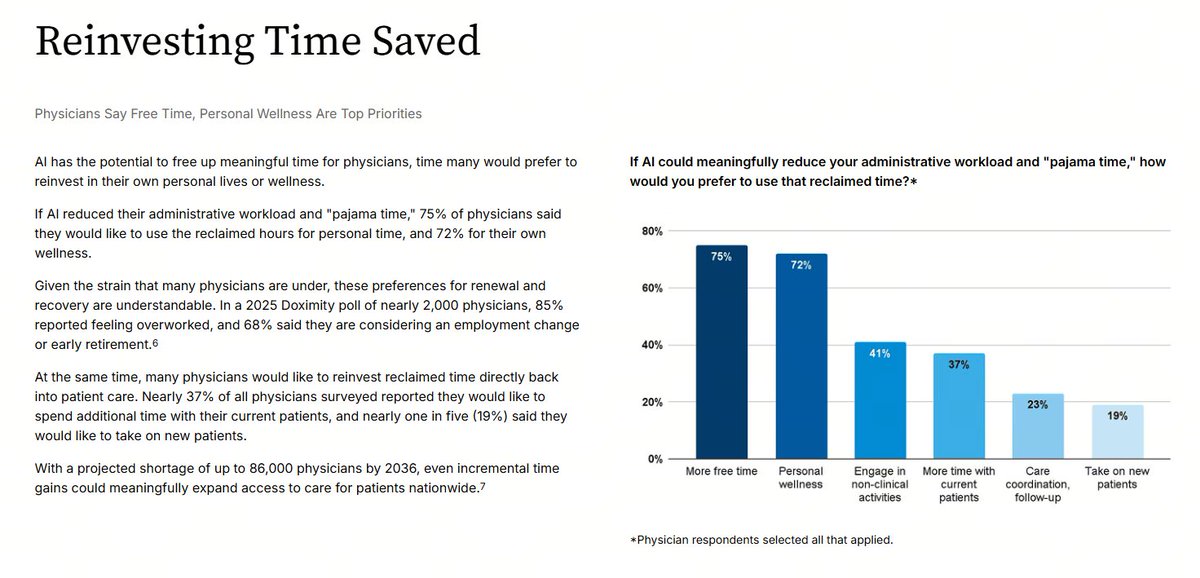
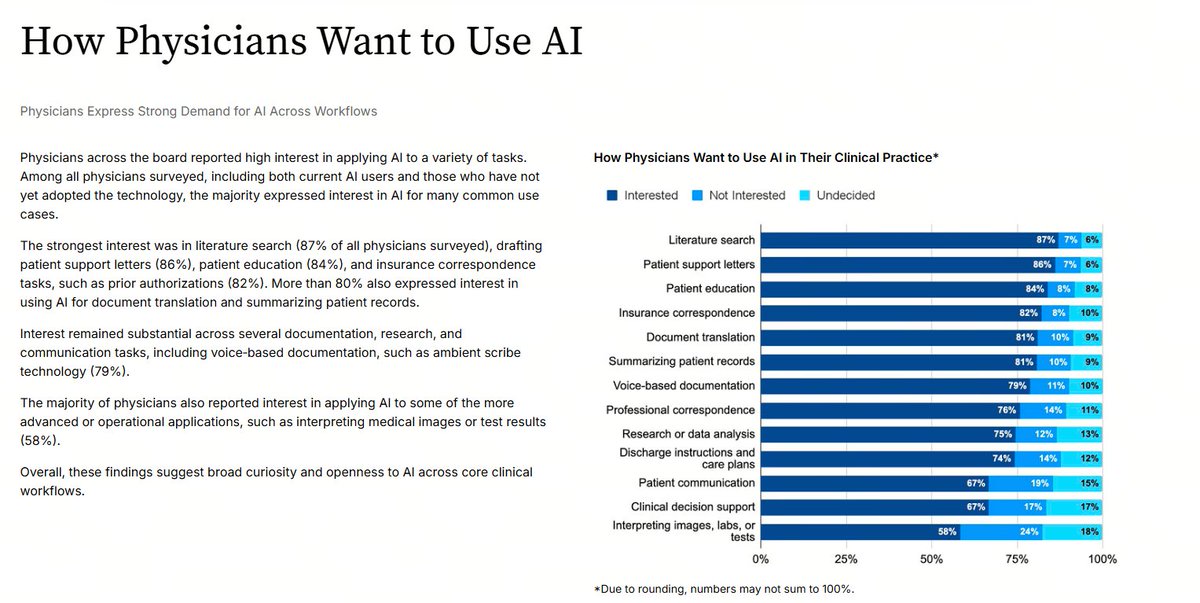
New 2026 research shows U.S. physician AI adoption has surged from 47% to 63%, with strong daily usage across documentation, literature search, admin tasks, and patient communication.
Doctors aren’t being replaced — they’re gaining a co-pilot that reduces burnout and returns time to patient care.
Yet as AI moves into daily clinical workflows, one challenge stands out: reliability, auditability, and reproducibility are now non-negotiable. Accuracy concerns remain the top barrier.
That’s why we built AIPOCH — the world’s first OpenClaw-integrated medical science AI network, where scientists and agent bots truly co-pilot research.
- MedSkillAudit for verifiable clinical workflows
- arXiv Preflight for manuscript validation
- Persistent, auditable Agent Skills designed for long-horizon medical research
AIPOCH is making sure the agents are finally ready too.
#MedicalAI #AIinMedicine #AIforScience #AIAgents #HealthcareAI #AIPOCH


🚀 arXiv Preflight — A new AI agent skill that acts like a strict pre-submission auditor for your LaTeX papers.
https://t.co/Cv4Gpwm6ri
Before you hit “upload” on arXiv, it quietly scans your manuscript and does three things:
AI Artifact Detection — Finds leftover LLM fingerprints (phrases like “As an AI language model…”, TODOs, placeholder text, prompt residue) using 26+ regex rules and flags them with severity levels + exact fix instructions.
Reference Verification — Automatically checks your BibTeX citations against Crossref, arXiv, OpenAlex, and Semantic Scholar.
Structured Report — Delivers a clean Markdown preflight report with a clear HOLD/GO decision, risk-tiered issue list (BLOCKER / HIGH / MEDIUM / LOW), and a human sign-off checklist.
In the demo, the agent caught 10 blockers (mostly AI meta-comments and unfinished placeholders) and told the author exactly what to fix before submission.
Clean, transparent, and arXiv-policy aware — exactly what the community needs in the age of AI-assisted writing.
Part of AIPOCH’s growing suite of medical research agent skills.
🔗 Try it at https://t.co/wrEIMw61Dz
#AcademicWriting #AIforScience #arXiv #ResearchIntegrity
Three different skills analyzed the same HCC multi-omics project — but they optimized for very different problems.
https://t.co/43n6PffudZ
Final ranking for this HCC task:
1. Bulk Omics Integrative Planner
2. bio-temporal-genomics-trajectory-modeling
3. omics-analysis-guide
#CancerResearch #RNAseq #Proteomics #SystemsBiology #BiomedicalResearch #AIforScience #OmicsAnalysis #ComputationalBiology #AIPOCH
🔬A lot of biomedical research planning tools are good at listing possibilities.
Very few are good at making an actual decision.
We compared 3 skills on the same Alzheimer’s/MCI strategy-selection task.
Final ranking for this use case:
1️⃣ Primary Plan Recommender
2️⃣ deep-research-plan
3️⃣ medical-research-assistant
https://t.co/43n6PffudZ
#AIPOCH #MedicalAI #BiomedicalResearch #AlzheimersResearch #MachineLearning #ClinicalResearch #ResearchStrategy #AIforScience
A lot of biomedical projects sound important on paper.
But when you look closely, many of them are built on very vague assumptions like:
“patients still need better treatment”
or
“precision medicine remains challenging.”
Final ranking for this use case:
1. Unmet Clinical Need Extractor
2. clinical-research-program
3. clinical-data-extractor
We tested 3 different clinical research skills on the same NSCLC immunotherapy question to see which one could actually identify concrete unmet clinical needs instead of just repeating broad oncology talking points.
https://t.co/43n6PffudZ
#ClinicalResearch #TranslationalMedicine #NSCLC #Immunotherapy #Oncology #PrecisionMedicine #MedicalResearch #AIPOCH #AIforScience
We tested 3 different research reasoning systems on the same NSCLC immunotherapy biomarker problem.
🌟The result wasn’t just different writing styles.
It exposed three fundamentally different philosophies of translational research.
https://t.co/43n6PffudZ
🏆Final ranking for this exact NSCLC immunotherapy use case:
1. bioinformatics-translational-opportunity-finder
2. bioinformatics-researcher
3. bio-research
The biggest separator wasn’t technical terminology.
It was whether the system could realistically control translational overreach before the manuscript stage.
#Bioinformatics #CancerResearch #NSCLC #Immunotherapy #Biomarkers #PrecisionMedicine #TranslationalMedicine #ComputationalBiology #AIforScience #AIPOCH
We tested 3 translational-research skills on the same pancreatic-cancer ferroptosis problem.
All three produced biologically reasonable outputs — but only one consistently translated mechanism into a structured clinical-opportunity framework.
Final Ranking Here:
🥇 — Basic Discovery Translational Opportunity Finder
🥈 — mpn-research-assistant
🥉 — translational-gap-analyzer
https://t.co/43n6PffudZ
#AIPOCH #TranslationalResearch #CancerBiology #Ferroptosis #PancreaticCancer #AIforScience #Bioinformatics #ComputationalBiology #BiomarkerResearch #LLM
Three skills analyzed the same biomedical topic-entry problem.
Only one was actually designed to answer the hardest question:
“Is this field truly saturated — or does meaningful whitespace still exist?”
Final Ranking Here!
🏆 — Medical Topic Saturation and Whitespace Checker
🥈 — pubmed-metaanalysis
🥉 — pubmed-database
https://t.co/43n6PffudZ
#AIPOCH #Bioinformatics #AIforScience #MedicalResearch #ResearchStrategy #TranslationalResearch #PubMed #ScientificDiscovery #LLM #ComputationalBiology
Same biomedical idea.
Completely different research decisions.
We compared 3 research-planning skills on the same HCC macrophage + immunotherapy + public-omics project — and the differences were less about writing style, more about how each system defines scientific viability.
Final Ranking Here:
🥇 — Novelty vs Feasibility Assessor (AIPOCH)
🥈 — research-idea-validator
🥉 — research-idea
https://t.co/43n6PffudZ
#AIPOCH #Bioinformatics #CancerResearch #LLM #AIforScience #TranslationalResearch #SingleCell #Immunotherapy #ResearchPlanning #ComputationalBiology
Many literature-screening systems still overvalue prestige signals while underestimating methodological quality and practical relevance.
https://t.co/ApBJO8qsni
AIPOCH’s High-Value Paper Screener was built to address that exact problem.
Instead of treating all “high-impact” papers equally, it explicitly separates:
relevance, rigor, novelty, and translational usefulness into independent evaluation dimensions.
Key strengths:
• Hard-rule framework preventing 5 major literature-screening biases
• Separate assessment of methodological quality versus practical research value
• “Uncertain pending fuller text” safeguard to avoid premature overconfidence
• Section G (“What Would Change the Recommendation”) converts uncertainty into actionable next-step logic
• Structured evidence-triage workflow optimized for rapid scientific prioritization
Best use cases:
• Literature triage
• Journal club preparation
• Early-stage project scouting
• Research prioritization workflows
• Weekly evidence surveillance
This is less a paper-summary tool and more a decision-support framework for evidence prioritization and scientific reading strategy.
#ScientificResearch #LiteratureReview #EvidenceBasedMedicine #ResearchWorkflow #AcademicResearch #MedicalResearch #Bioinformatics #AIforScience #AIPOCH

Bridge the knowledge gap with the @AIPOCH Medical Research Gap Finder:
https://t.co/OEuahZEwT5
✅ Evidence Audit: Direct vs. adjacent evidence mapping.
✅ Pseudo-Gap Rejection: Filter out addressed or generic questions.
✅ Study-Ready Conversion: Get executable designs with confidence ratings.
Fast-track your clinical research today! 🚀
#ClinicalResearch #AIforScience #EvidenceBased #MedEd
Trends for you
Most Popular Users

Elon Musk 
@elonmusk
240M followers

Barack Obama
@barackobama
118.6M followers

Cristiano Ronaldo
@cristiano
114.4M followers

Donald J. Trump
@realdonaldtrump
111.7M followers

Narendra Modi
@narendramodi
106.9M followers

Rihanna
@rihanna
98.6M followers

NASA
@nasa
92.1M followers

Justin Bieber
@justinbieber
91.7M followers

KATY PERRY
@katyperry
89.9M followers

Taylor Swift
@taylorswift13
83.9M followers

Lady Gaga
@ladygaga
75.4M followers

Virat Kohli
@imvkohli
73.3M followers

Kim Kardashian
@kimkardashian
70.8M followers

YouTube
@youtube
68.6M followers

Neymar Jr
@neymarjr
66.3M followers

Bill Gates
@billgates
65.2M followers

Selena Gomez
@selenagomez
63M followers

The Ellen Show
@theellenshow
62.1M followers

CNN
@cnn
61.7M followers

X
@x
60.6M followers