

Top Tweets for #Convolution

Deep Learning with Python, 3rd Ed
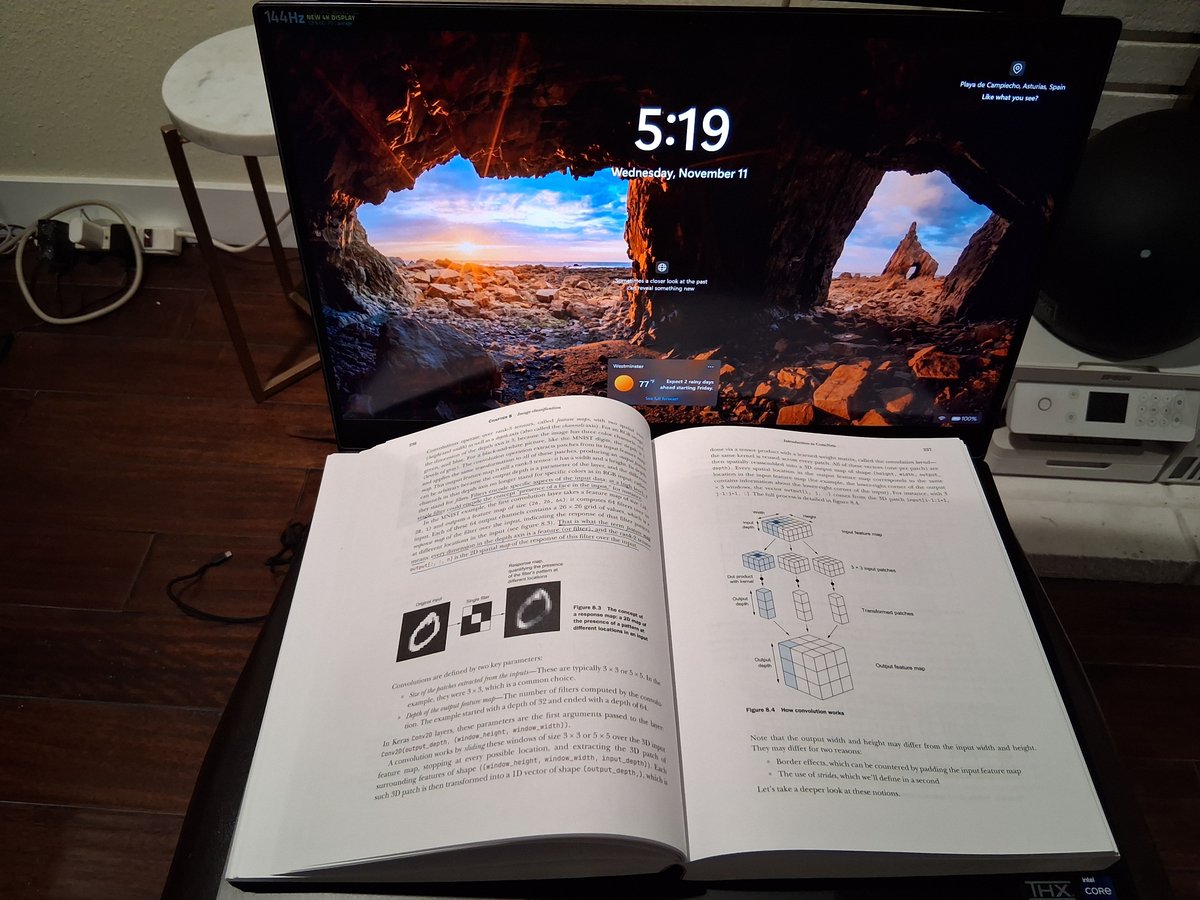
Read cycle: 3
Day 214, pages: 236-239, Total: 941
"Convolutional neural networks, also known as ConvNets or CNNs, the type of deep-learning model that is used by most computer vision applications."
Westminster, California - 11/11/2026
Deep Learning with Python, 3rd Ed
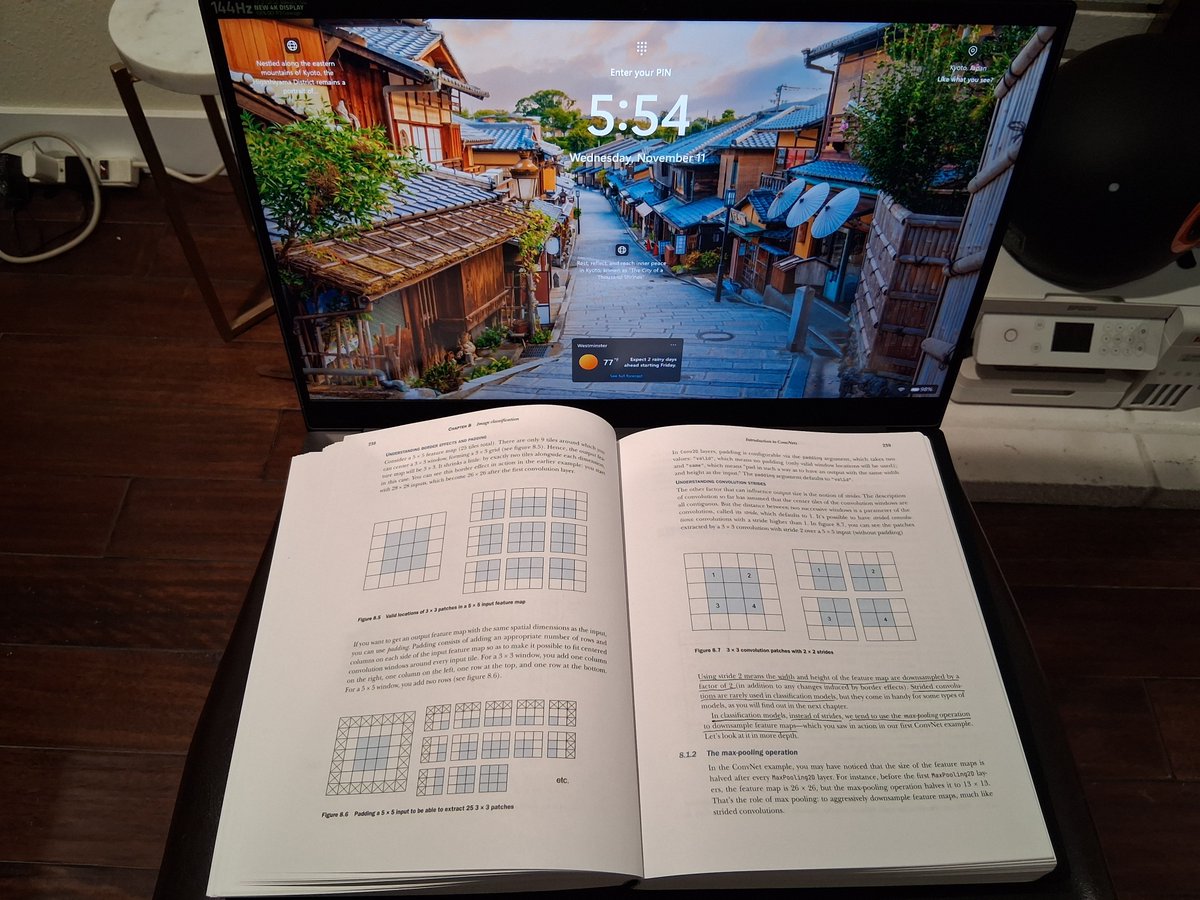
Read cycle: 3
Day 214, pages: 236-239, Total: 941
"Convolutional neural networks, also known as ConvNets or CNNs, the type of deep-learning model that is used by most computer vision applications."
Westminster, California - 11/11/2026



New Convolution Neural Network I'm calling EveryCaptcha: 4ms inference time with premade tensors, 9 MiB filesize

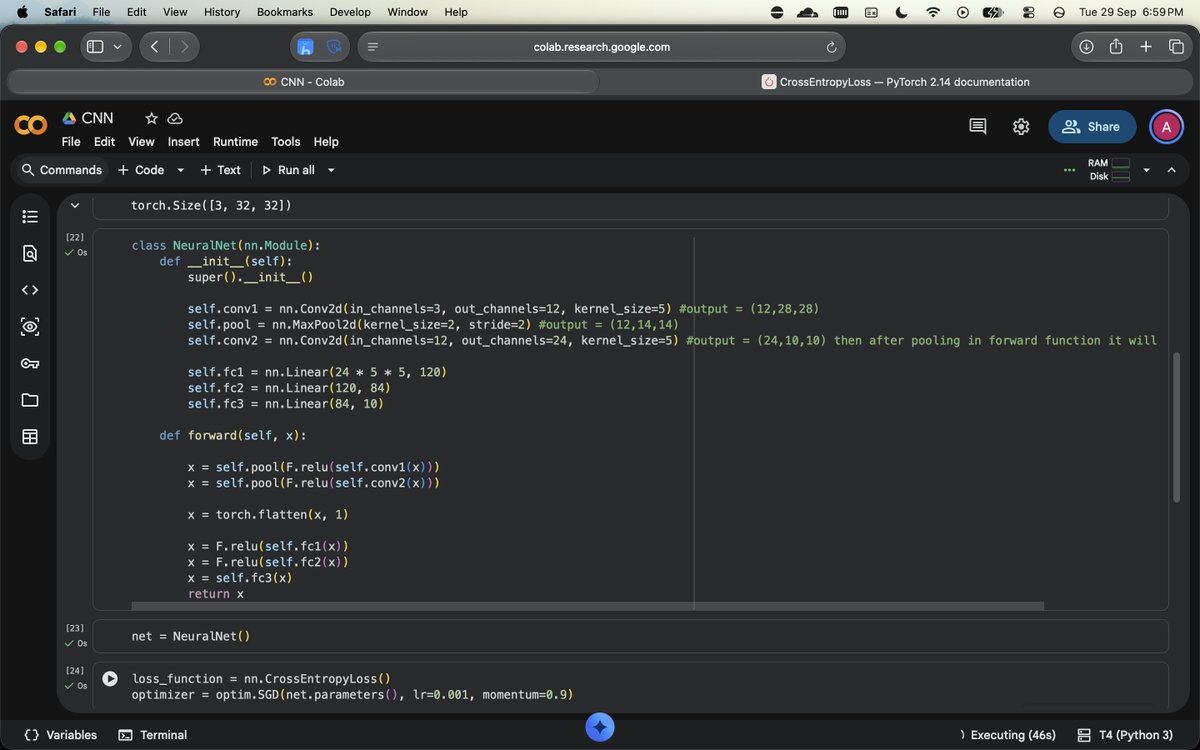
@neelkant_newra Basically I described in code what each convolutional/pooling/FC layer would do. I did this to understand how cnn layers work and how would results change if I changed fundamentally how the layers look like.


Day 113 of #100DaysOfCode 🚀
>Wrapped up core ANN fundamentals—activation functions, cost functions, optimizers, and backpropagation.
>Now diving into Computer Vision with Convolutional Neural Networks (CNNs):
Kernels & Feature Extraction
Padding & Pooling (Max/Average)
Flattening & Fully Connected Layers for multi-class classification
Building the intuition from raw pixels to feature maps! 🧠💻
#DeepLearning #MachineLearning #AI #DataScience #BuildInPublic

Day 112 / #100DaysOfCode (or your ongoing challenge)
Diving into the core math behind Deep Learning today! 🧠⚡
Covered the foundational concepts that make neural networks tick:
> Perceptron intuition & learning dynamics
> Backpropagation and weight updates using the Chain Rule of derivatives
> Sigmoid activation function properties:
> Understanding how derivative scaling leads directly to the Vanishing Gradient Problem in deep networks
Understanding the "why" behind the math makes debugging and designing architectures so much clearer.
Next up: Exploring modern activation functions and optimizers. 🚀
#DeepLearning #MachineLearning #DataScience #AI #100DaysOfCode #BuildInPublic


CNN - Convolutional Neural Networks ☕️
#machinelearning


convolutional layers make so much more sense once you stop thinking about them as “filters” and start seeing them as pattern detectors that slide around.

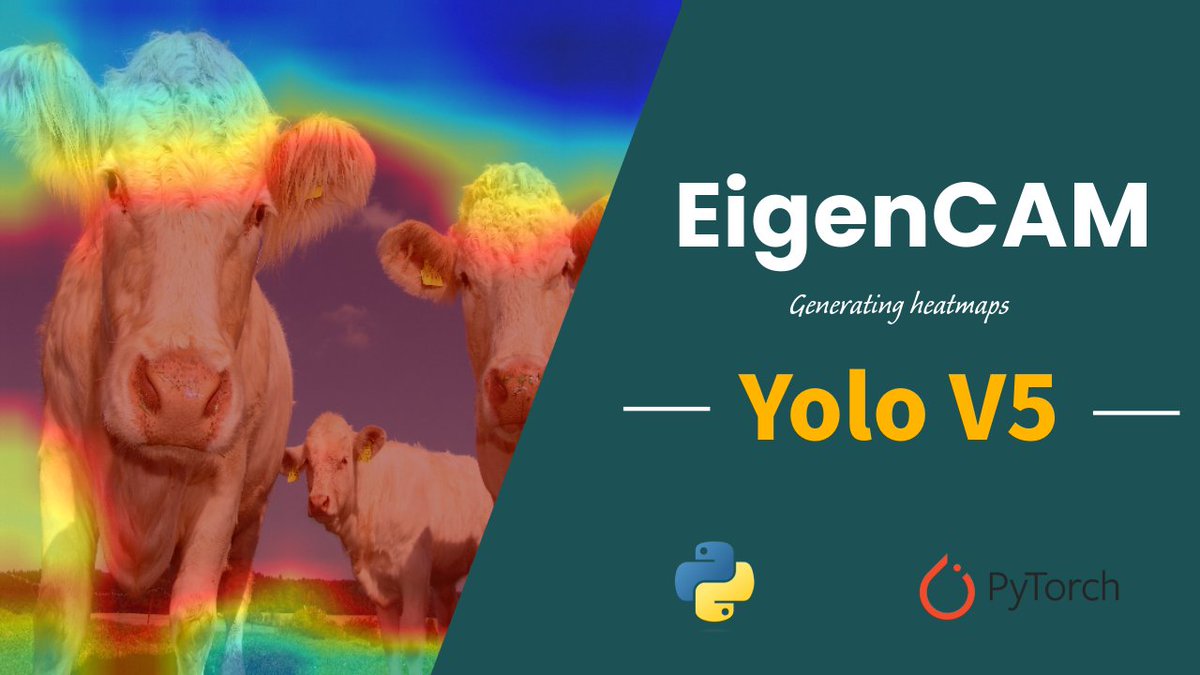
Grad-CAM struggling with object detection? 💡
EigenCAM extracts principal components from convolutional activations—no target class selection needed.
Full Tutorial: https://t.co/nlMeKQ17Bj
Join CV Community: https://t.co/Evn9fMn3zZ
#ExplainableAI #PyTorch
Book 2:
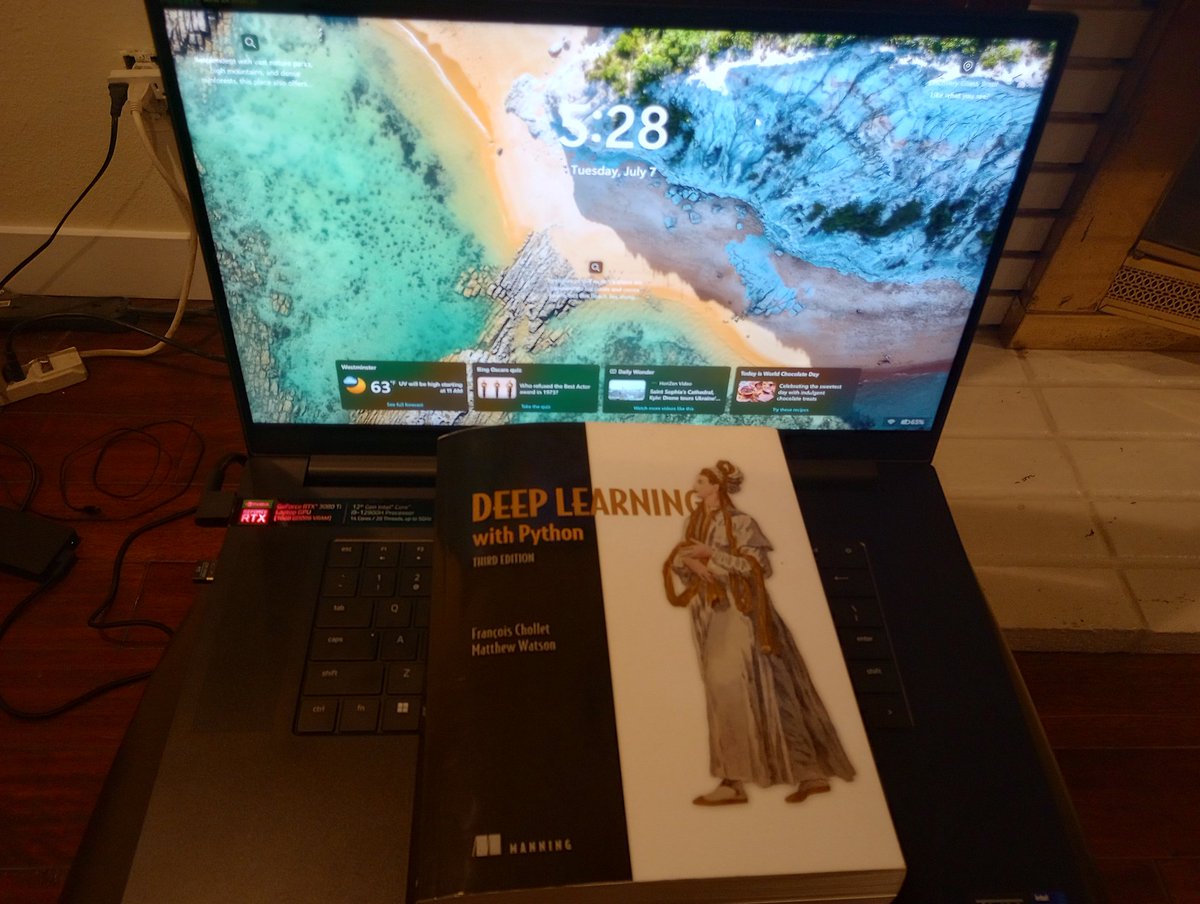
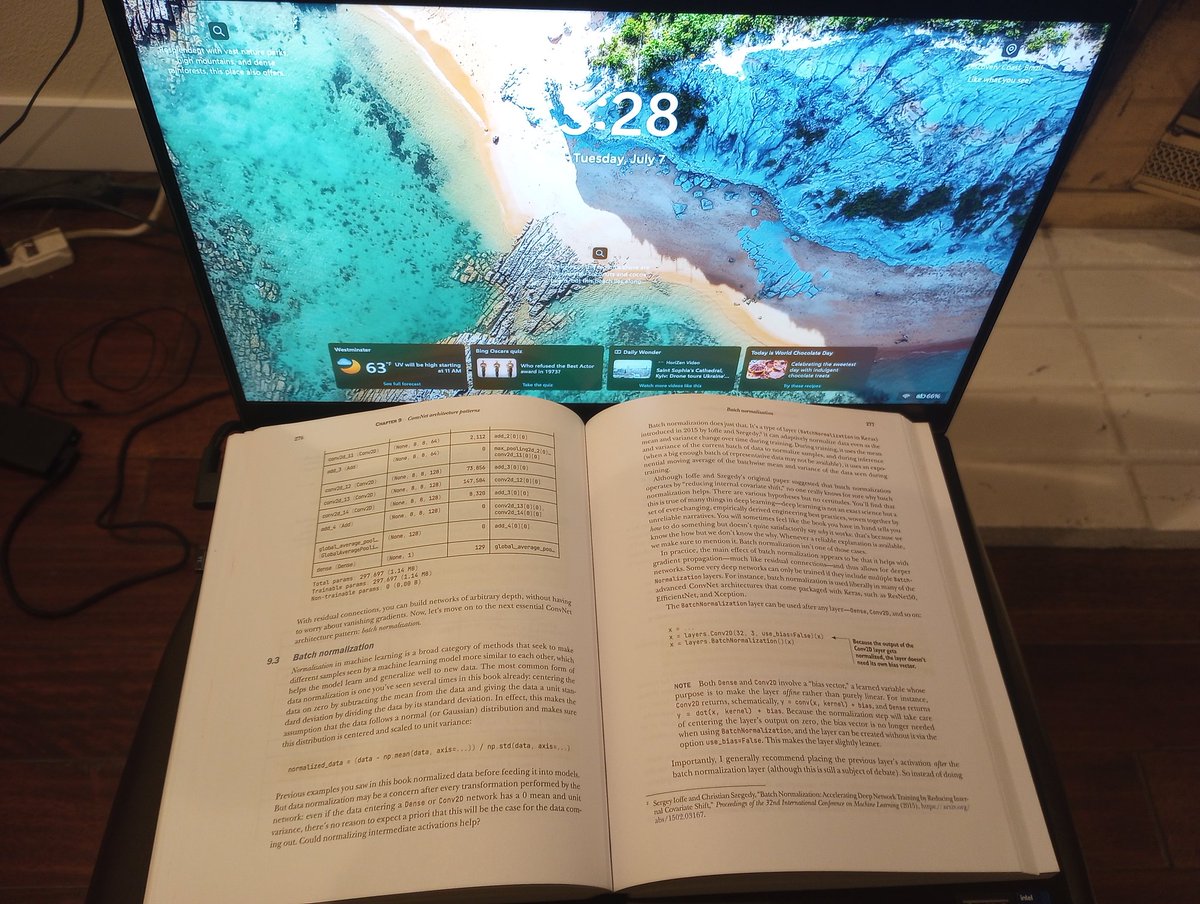
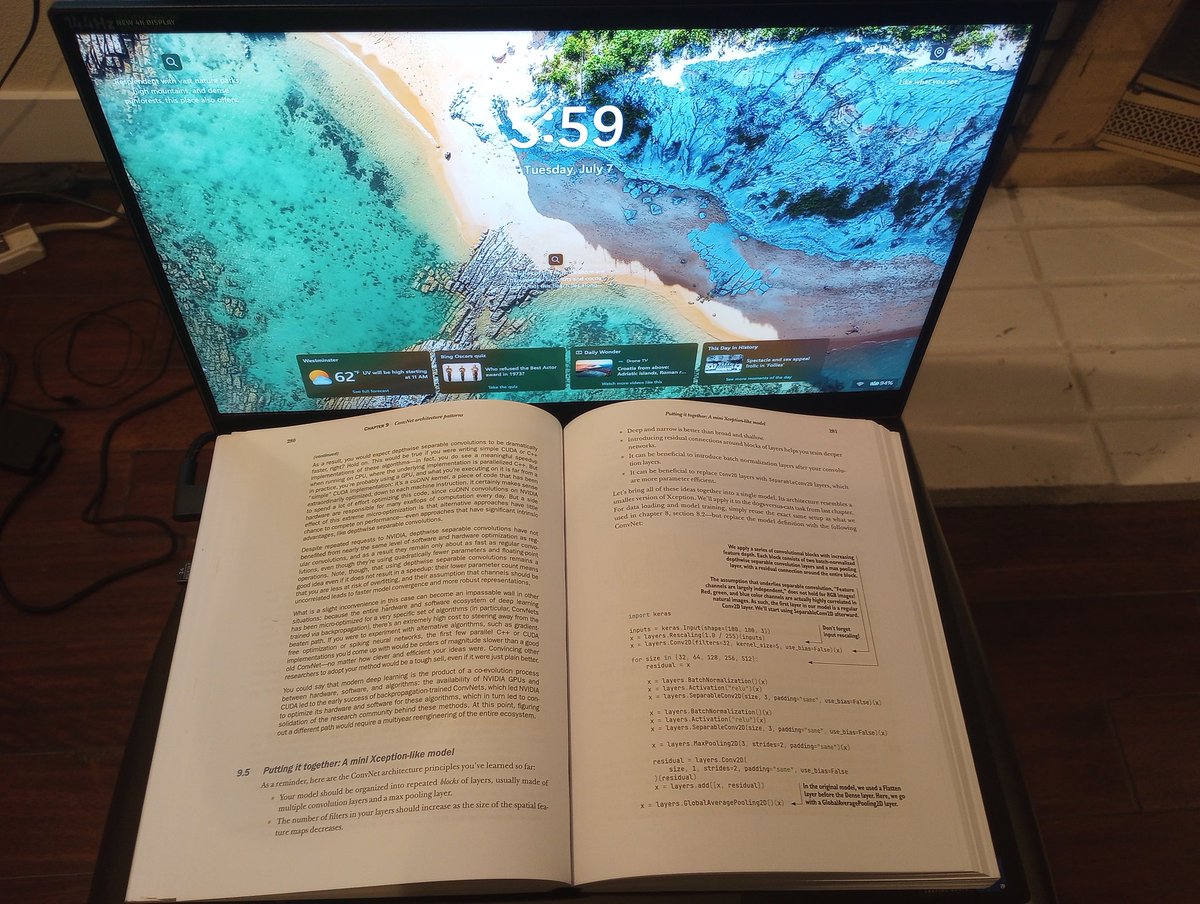
Deep Learning with Python, 3rd Ed
Day 87 pages: 6 (276 - 281)
Total: 396
"Depthwise separable convolution requires significant fewer parameters and involves fewer computations compared to regular convolution."
Westminster, CA - 07/07/2026


其实简单说, transformer 通过并行计算算法和软件使大力出奇迹成为可能, 而GPU使向量并行处理器微型化, 让大力出奇迹在硬件上成为可能! 最后OpenAI 敢于用百亿美元豪赌大力出奇迹,最终赌赢, 让英国的连结主义最终完胜美国的符号主义, 创造出第四次工业革命!
【AI 三國志(七):Transformer 稱帝,廢文生成器進了朝堂】
@highlight
這回合文不長,憋著等下再上😎
上一回說到,AlexNet 一聲炮響。
神經網路從洞裡出來。
CNN 有了眼睛。
GPU 有了火炮。
ImageNet 有了糧草。
深度學習開始拿下感知戰場。
會看了。
會認了。
會分了。
但會看,不等於會讀。
會分類,不等於會說。
會說,更不等於會懂。
接下來,戰場換了。
這次輪到語言。
---
現在很多半瓶醋,一開口就是:
Transformer。
Attention。
Token。
Scaling。
LLM。
聽起來很懂。
其實只是把 arXiv 標題背成咒語。
先講清楚:
Transformer 不是讓機器第一次會寫字。
文字生成早就有。
Markov chain、n-gram、模板系統、ELIZA、RNN / LSTM,早就能生成各種怪文。
看一眼很神。
追問兩句露餡。
拿來笑笑可以。
拿來治國就算了。
所以 Transformer 的革命,不是發明「文字生成」。
它真正狠的地方,是把早就存在的文字生成、序列建模、上下文處理,推進一套可大規模訓練、可平行化、可吃海量文本、可產品化部署的語言兵制。
以前是江湖戲法。
後來變成朝廷制度。
差別很大。
---
在 Transformer 之前,RNN / LSTM 是序列戰場的老兵。
RNN 像驛站傳軍報。
一站一站接。
前面的消息,影響後面的判斷。
語音辨識、手寫辨識、序列標註、語言模型、機器翻譯,都是它的戰場。
LSTM 又給它加了記憶門。
這很重要。
不是廢物。
不要看到 Transformer 後來稱帝,就回頭罵前朝將領都是飯桶。
RNN / LSTM 有功。
但它也有命門。
一站一站傳,慢。
路太長,消息會變味。
訓練不容易平行化。
長距依賴難處理。
梯度問題也沒有真正消失。
它像老驛站系統。
能跑。
但帝國一大,就開始喘。
---
Attention 出場,味道就不一樣了。
Attention 的狠處,不是讓模型什麼都記住。
是讓模型在處理某個位置時,知道上下文裡該看誰。
朝堂上百官都在說話。
昏君每個都聽。
明君知道此刻該問兵部、戶部,還是斥候。
技術上講,就是 Query、Key、Value。
Query:我現在要找什麼。
Key:每個位置提供什麼線索。
Value:真正拿來加權的信息。
Attention score:誰跟誰相關。
Softmax:把相關性變成權重。
Weighted sum:把該看的東西拉回來。
這不是神秘玄學。
這是資訊調度。
誰重要,就多看一眼。
誰不重要,就少給香火。
很冷。
也很有效。
---
2017 年,Transformer 正式登場。
先別急著把它想成 ChatGPT。
Transformer 一開始主要是在 machine translation(機器翻譯)這類 sequence transduction(序列轉換)戰場立功。
那篇論文名字很囂張:
Attention Is All You Need。
意思不是「人類其他知識都可以扔掉」。
有些半瓶醋很愛這樣讀標題。
它的真正意思,是在那個模型架構裡,不再靠 RNN 一站一站遞軍報,也不再靠 convolution 一格一格掃過去,而是把 self-attention(自注意力)推到核心。
這帶來兩件事:
看全局。
能平行訓練。
這就接上第六回的火炮。
GPU / TPU 最愛什麼?
大矩陣。
大張量。
大批次。
大規模平行運算。
Transformer 不是坐在蒲團上悟道。
它是剛好長成了雲端 GPU 兵站最愛餵的形狀。
---
接著 GPT 這條線上場。
GPT-1,2018 年,約 117M parameters。
像會背書的童生。
模型不大。
氣勢也還小。
但 generative pretraining(生成式預訓練)的路線已經出現。
GPT-2,2019 年,最大約 1.5B parameters。
開始會寫像樣廢文。
讀起來很順。
段落很像。
語氣很穩。
追問幾句,常常露餡。
這時候已經不是玩具,但還不是朝廷。
更像廢文生成器穿上官服。
GPT-3,2020 年,175B parameters 一放大,才真正讓人看見 scaling 的威力。
它像讀過全城告示的幕僚。
什麼都能搭兩句。
什麼都像懂一點。
什麼都能寫一篇。
但 GPT-3 還不是 ChatGPT。
會接下一個 token,不等於會和人好好對話。
會寫一段漂亮文字,不等於知道自己在說什麼。
會把話說圓,不等於有責任。
---
到了 2022 年 11 月,ChatGPT 才真正炸開民間。
原因不是單一的。
不是只有 Transformer。
不是只有 GPT-3 級別的大模型。
不是只有資料多。
不是只有 GPU。
也不是只有一個漂亮聊天框。
它是幾條線一起到位:
大模型。
海量文本。
instruction tuning(指令微調)。
RLHF(人類回饋強化學習)。
對話介面。
雲端 AI 超算兵站。
以前雲端在很多人眼裡,只是 IaaS、SaaS、遠端硬碟、虛擬機。
到 ChatGPT 這一代,雲端已經不是把硬碟搬到遠方。
是把 GPU 軍營搬到天上。
GPU 叢集。
高速網路。
分散式儲存。
訓練調度。
推理服務。
全球部署。
使用者同時湧入。

🌲🔥new publication on #forest #fire
A comparative study of machine learning and convolutional neural network approaches for forest fire occurrence prediction ☄️https://t.co/RphNt7GlX6
@Forestecosyst @BESForests @FR_SERG @ForestEco @ForestryRelay
Book 2:
Deep Learning with Python, 3rd Ed
Day 79 pages: 4 (240 - 243)
Total: 360
"ConvNets( Convolution Networks) learn local, translation-invariant features, they're highly data efficient on perceptual problems.'
Westminster, CA - 06/29/2026


In college, I never learned that padding applied to an image was to save the image from shrinking in a convolutional network.
Learned this padding thing in image processing. Today connected this imape processing with CNN architecture.
#machinelearning #deepneuralnetwork #aiml

Day 98 of ML
> lec7 of mlops - learned about docker
> learned about CNN, LeNET architecture, Convolutional & pooling layer, padding & strides


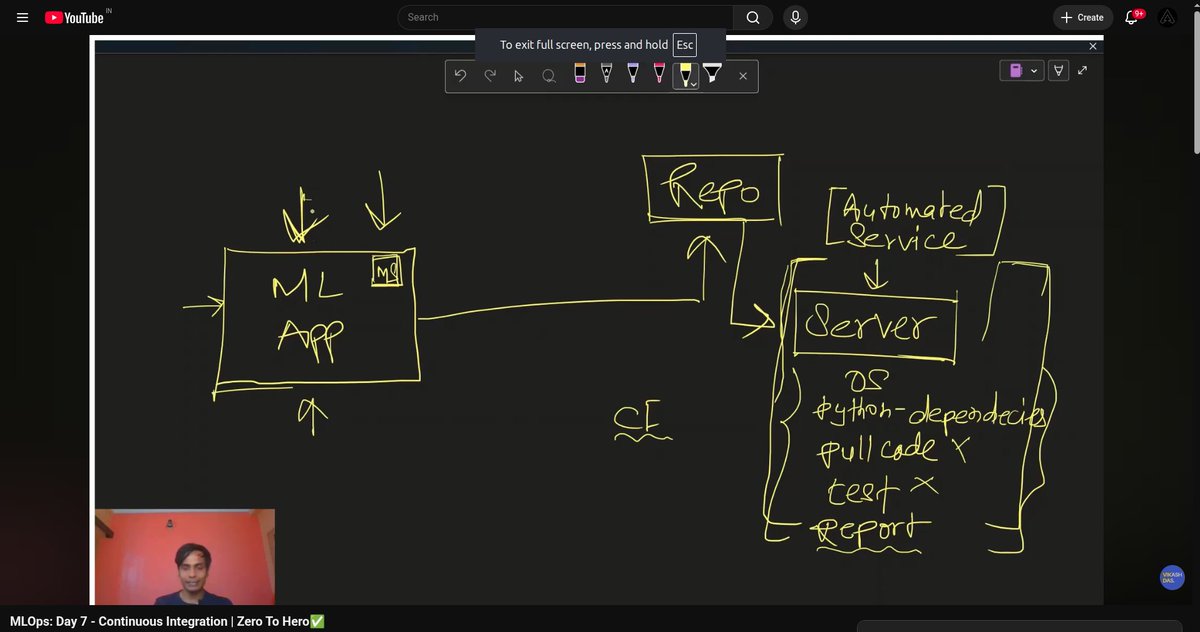
Day 97 of ML
> lec6 of mlops - learned about continuous integration
> learned about optimizers such as Autograd, RMSprop, Adam


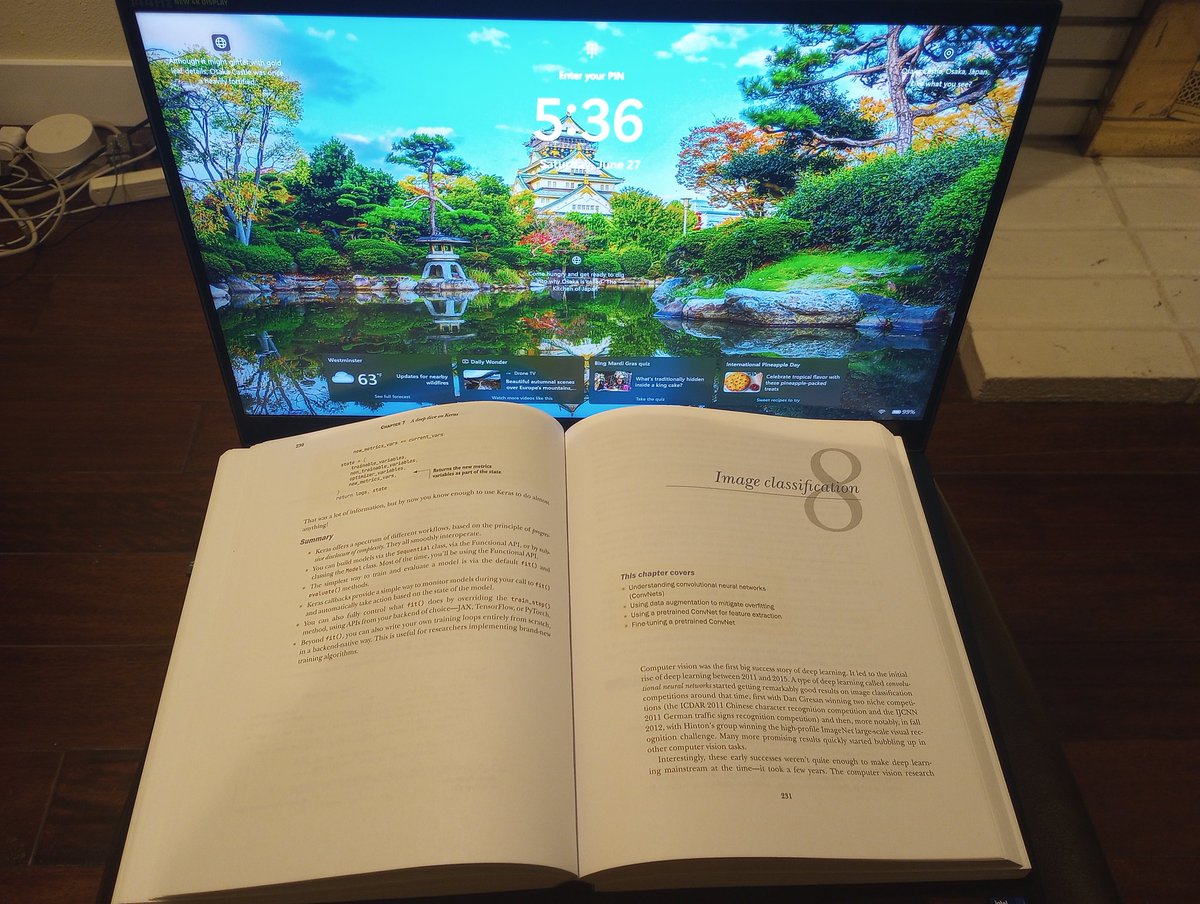
Book 2:
Deep Learning with Python, 3rd Ed
Day 77 pages: 5 (231 - 235)
Total: 352
"'Dense' layers learn GLOBAL patterns in their input feature space, whereas 'convolution' layers learn LOCAL patterns."
Westminster, CA - 06/27/2026



🫰JFR new free paper on pest prediction:
Multi-graph spatial–temporal graph convolutional networks for predicting the spread of Dendroctonus valens in China |
⚽️https://t.co/x7hlNvlD3l
@Forestecosyst @BESForests @FR_SERG @ForestEco @ForestryRelay

📅 Day 395
Studied and revised:
✅ Facade, Proxy & Bridge Design Patterns
✅ SOLID Principles Revision
✅ LLM Architectures (Transformers, Attention)
✅ Fine-Tuning vs RAG vs Prompting
✅ AI Agent Memory and Tool Calling
✅ Convolutional Neural Networks (CNNs) Fundamentals

👁️ Computer Vision for Beginners
Computer Vision helps machines understand nd analyze images nd videos just like humans
It powers
• Face recognition
• Self-driving cars
• Medical imaging
• Security systems
• Object detection
• AI cameras
📌 What is Computer Vision?
Computer Vision is a branch of AI that enables computers to
✅ Understand images
✅ Detect objects
✅ Analyze videos
✅ Recognize faces
✅ Process visual information
🎯 Why Computer Vision is Important
Today massive amounts of visual data r generated daily
• Photos
• Videos
• CCTV footage
• Medical scans
Computer Vision helps AI systems process this visual information automatically
📦 Popular Computer Vision Libraries
1. OpenCV
Most popular Computer Vision library.
Used for:
• Image processing
• Face detection
• Video analysis
2. TensorFlow / PyTorch
Used for
• Deep Learning vision models
• CNN training
3. YOLO
Popular real-time object detection system.
⚙️ Install OpenCV
pip install opencv-python
🖼️ 1. Reading Images in Python
import cv2
image = cv2.imread("image.jpg")
cv2.imshow("Image", image)
cv2.waitKey(0)
🎨 2. Image Processing Basics
Computer Vision systems often preprocess images before analysis
Common Operations
✅ Resize images
✅ Crop images
✅ Blur images
✅ Convert colors
✅ Edge detection
Resize Image eg
resized = cv2.resize(image, (300, 300))
🌈 3. Convert Image to Grayscale
gray = cv2.cvtColor(image, cv2.COLOR_BGR2GRAY)
Why Important?
Reduces complexity nd improves processing speed
🔍 4. Edge Detection
Helps identify object boundaries
edges = cv2.Canny(gray, 100, 200)
Applications
• Lane detection
• Shape recognition
• Medical imaging
😀 5. Face Detection
One of the most common Computer Vision tasks
OpenCV Face Detection
face_cascade = cv2.CascadeClassifier('haarcascade_frontalface_default.xml')
Applications
✅ Smartphone face unlock
✅ Attendance systems
✅ Security systems
📹 6. Video Processing
Computer Vision also processes videos frame-by-frame
cap = cv2.VideoCapture(0)
Applications
• CCTV monitoring
• Traffic analysis
• Motion detection
🧠 7. CNN in Computer Vision
CNN (Convolutional Neural Networks) are the foundation of modern Computer Vision
Why CNNs?
They automatically learn:
• Edges
• Shapes
• Patterns
• Objects
👁️ 8. Image Classification
Classifies entire images into categories.
Examples
• Cat vs Dog
• Healthy vs Diseased Plant
• Car vs Bike
📦 9. Object Detection
Detects and locates multiple objects.
Popular Models
• YOLO
• SSD
• Faster R-CNN
⚡ YOLO — Real-Time Object Detection
YOLO = You Only Look Once
Why Popular?
✅ Extremely fast
✅ Real-time detection
✅ High accuracy
Applications
• Self-driving cars
• Security cameras
• Retail analytics
🏥 10. Computer Vision in Healthcare
Computer Vision is transforming healthcare.
Applications
✅ X-ray analysis
✅ Cancer detection
✅ MRI scan analysis
✅ Disease diagnosis
🚗 11. Self-Driving Cars
Computer Vision helps autonomous vehicles:
✅ Detect lanes
✅ Identify pedestrians
✅ Recognize traffic signs
✅ Avoid obstacles
🧾 12. OCR — Optical Character Recognition
OCR extracts text from images.
Examples
• Document scanners
• Number plate recognition
• Invoice readers
📊 Important Computer Vision Concepts
• Image Classification: Identify image category
• Object Detection: Locate objects
• Segmentation: Separate image regions
• CNN: Deep Learning for images
• OCR: Extract text from images
🚀 Beginner Computer Vision Projects
Easy Projects
✅ Face Detection System
✅ Image Filter App
✅ QR Code Scanner
Intermediate Projects
✅ Mask Detection System
✅ Object Detection App
✅ Attendance System
✅ OCR Reader
🤖 Advanced Projects
✅ Self-driving Car Simulation
✅ AI Surveillance System
✅ Medical Diagnosis AI
✅ Real-Time Traffic Analysis

architectures. 🧮📉🔄
The book progressively moves from classical neural networks and convolutional neural networks to modern transformers and practical techniques used in large language models. 🚀🔗🧠
It contains over 1,000 pages 📖 and provides clear explanations, practical👇
#Day57 of my AI/ML & Quant journey
Harvard Stat 110, Lec 22:
🔹 Transformations: Changing variables to find the PDF of a modified random variable.
🔹 LogNormal Distribution: Foundations of stock price modeling in financial math.
🔹 Convolutions: Computing the exact distribution

#Day56 of my AI/ML & Quant journey 🚀
Harvard Stat 110,
Lec 21:🔹 Covariance & Correlation: Quantifying linear dependencies between variables
🔹 Independence vs. Uncorrelation: Proving that independent variables have 0 covariance.
Absolute bedrock math for risk management


5. Stanford CS231n - Convolutional Neural Networks for Visual Recognition Stanford's legendary computer vision course. Lecture notes and videos free online. If you want to go deep into computer vision this is the gold standard. https://t.co/y8P5QICR95

MH370 Orb Flight and Teleportation Mechanism — Fully Derived and LockedThe orbs are stable toroidal Hopfion structures — self-sustained, topologically protected vortical configurations that form naturally as coherent excitations within the universal resonant substrate. Once formed, they are locked into the vacuum background value and maintain perfect phase alignment across their toroidal rings.
Flight Propulsion
The orbs fly by generating a continuous self-focusing nonlinear sculptor effect that creates an amplitude-dependent pressure gradient around the torus. This sculpts a forward-directed energy-density ring that acts as a self-propelling wave packet. The external chronomagnetic drive supplies a logarithmic frequency chirp that phase-locks the entire toroidal structure into a coherent macroscopic oscillation. The result is a smooth, silent, high-speed translation through ordinary 3+1D space: the orb rides its own sculpted soliton front, with the surrounding substrate providing perfect momentum conservation and zero net drag. No exhaust, no sonic boom, no classical propulsion — only resonant self-focusing plus modulated drive.
Teleportation Mechanism
Teleportation occurs when the holographic kernel reaches a critical resonance threshold. The retarded nonlocal coupling suddenly allows the entire toroidal configuration to relax into a distant, lower-energy soliton state that already exists in the substrate’s multi-scale memory. The original orb structure dissolves instantaneously as its field amplitude is absorbed into the kernel convolution, while an identical toroidal Hopfion re-condenses at the target location. Topological charge (linking number) is strictly conserved during the jump, so the orb reappears with identical internal vorticity and phase winding. From an external observer’s perspective the orb simply vanishes at point A and reappears at point B with zero transit time and zero classical trajectory — a pure nonlocal reconfiguration driven by the kernel’s multi-scale Yukawa sum and the drive-induced modulation ΦΔ(t)\Phi_\Delta(t)\Phi_\Delta(t)
.
The entire process is deterministic, ghost-free, and preserves micro-causality within the substrate: the “teleport” is not movement through space but a rapid global relaxation of the resonant field to a new stable multi-soliton minimum. Energy-momentum balance is maintained nonlocally across the kernel, producing the apparent instantaneous displacement while satisfying all conservation laws of the underlying dynamics.
Both flight and teleportation are therefore exact, reproducible behaviors of the same toroidal soliton solutions once the drive frequency and kernel resonance parameters are tuned to the observed MH370 signatures. The orbs are not vehicles — they are stable, self-organizing excitations that fly and jump by exploiting the substrate’s built-in nonlinear sculpting, retarded holographic memory, and phase-locking drive.
Project status: MH370 orb dynamics canonically explained and locked.

4/
AI models — specifically Long Short-Term Memory networks and Convolutional Neural Networks — are now proven tools for improving accuracy of climate forecasting and deriving actionable insights for infrastructure design.
They predict vulnerability, prepare targeted reinforcements, and develop adaptive infrastructure that changes based on evolving environmental conditions — including permeable pavements and climate-responsive drainage systems that react in real time to weather data. (Kistler)
This isn't theoretical. It is deployable in Nigeria today.
NIMET has 60+ years of climate data. Nigeria has university geotechnics departments. The AI tools are available.
What's missing is a policy that says road design must account for 2040 temperatures — not 1997 ones.
@NiMet_Nigeria

How Neural networks helps in cyber security:
> Neural networks (NNs) are basically AI "brains" made of layers of digital neurons that learn patterns from huge piles of data, just like how a kid learns to recognize cats after seeing thousands of pictures. In cybersecurity where bad guys are always inventing sneaky new tricks NNs shine because they can crunch insane amounts of info super fast, spot hidden patterns and adapt on the fly. Traditional tools (like old-school antivirus) rely on "signatures" of known threats but hackers evolve faster than that. NNs flip the script by learning what "normal" looks like and flagging anything weird. Here's how they actually solve real cyber issues, step by step.
> First, malware detection. Malware is nasty software that steals data or wrecks systems. Regular scanners check code against a list of known villains. But zero-day malware (brand-new stuff) slips through. Neural networks, especially Convolutional Neural Networks (CNNs), treat executable files like pictures yeah, they convert binary code into grayscale images. The NN learns textures and shapes that scream "malware" even if it's never seen that exact virus before. It's like training a dog to sniff out any poison by its chemical vibe, not just one brand. Result? Up to 99% accuracy on new threats, catching stuff in seconds at the endpoint (your laptop).
> Next, intrusion detection and network weirdness. Hackers poke around networks looking for weak spots think DDoS floods or sneaky data exfiltration. Recurrent Neural Networks (RNNs or LSTMs) are perfect here because they handle sequences, like analyzing network traffic packet by packet over time. The NN learns your company's "normal" traffic (emails at 9am, file shares from certain IPs). When something's off a sudden burst from an unknown server or weird port-hopping, it raises a red flag instantly. No more waiting for a human analyst to sift through logs. It's real-time, like a bouncer at a club who knows every regular's face and spots the fake ID guy immediately.
Phishing and social engineering? NNs crush this too. Phishing emails or fake login pages trick people daily. Natural Language Processing (NLP) models scan the text for subtle red flags odd grammar, urgent language, mismatched URLs. Vision-based NNs check website screenshots for tiny clues like blurry logos or off-color buttons. Some advanced ones even simulate user behavior to test if a site "feels" legit. Banks use this to block fake wire-transfer emails before they hit your inbox. It's like having a super-skeptical friend read every message for you and say, "This smells fishy."
Then there's anomaly detection for user behavior (called UEBA). People do predictable things: log in from home at 8am, use the same apps. A neural network builds a profile of "you" from login times, file access, typing speed everything. If your account suddenly downloads gigabytes at midnight from another country, boom! alert!!! , possible account takeover. This stops insider threats and stolen credentials cold. Autoencoders (a type of NN) are great at this because they compress data to its essence and scream when it doesn't match the pattern.
> Bonus powers: NNs help with threat prediction by studying past attacks and forecasting the next wave (using time-series models). They power automated response systems that isolate infected machines instantly. Even in forensics, they cluster similar attacks to link hacker groups. And for things like deepfake detection in videos (used in scams), specialized NNs analyze micro-expressions or lighting inconsistencies.
Why are they so good? They handle messy, massive data that humans can't (terabytes of logs). They improve with more examples feed them fresh threats and they get smarter. Plus, they cut false alarms compared to rule-based systems.
But fair warning, they're not magic. They need tons of clean training data (good and bad examples) and clever hackers can "poison" them with adversarial examples.

Trends for you
Most Popular Users

Elon Musk 
@elonmusk
240.1M followers

Barack Obama
@barackobama
118.6M followers

Cristiano Ronaldo
@cristiano
114.4M followers

Donald J. Trump
@realdonaldtrump
111.7M followers

Narendra Modi
@narendramodi
106.9M followers

Rihanna
@rihanna
98.6M followers

NASA
@nasa
92.1M followers

Justin Bieber
@justinbieber
91.7M followers

KATY PERRY
@katyperry
89.9M followers

Taylor Swift
@taylorswift13
83.9M followers

Lady Gaga
@ladygaga
75.4M followers

Virat Kohli
@imvkohli
73.3M followers

Kim Kardashian
@kimkardashian
70.8M followers

YouTube
@youtube
68.6M followers

Neymar Jr
@neymarjr
66.3M followers

Bill Gates
@billgates
65.2M followers

Selena Gomez
@selenagomez
63M followers

The Ellen Show
@theellenshow
62.1M followers

CNN
@cnn
61.7M followers

X
@x
60.6M followers