

Top Tweets for #Fallopia

📻ON AIR W/ @LatifahIdrees x @Thabel26
A lady calls out her ex online for making her take out her womb after 4 abortions.
She said he pressured her into multiple abortions during their relationship. The last one went bad and doctors had to remove one of her fallopian tubes.
📻ON AIR W/ @LatifahIdrees x @Thabel26
A lady calls out her ex online for making her take out her womb after 4 abortions.
She said he pressured her into multiple abortions during their relationship. The last one went bad and doctors had to remove one of her fallopian tubes.

A complete uterus flooding. Her fallopian tubes and ovaries must be almost bursting. A horse would have no problem inseminating her directly in her uterus.

i’m panties bra fallopian tubes blood Yum Yum Yum Yum I am a lesbian, but I also black men. They have big dicks and boy. Can I park with the Bluetooth?

This man is a Minister at a real church in San Francisco, California
The male LGBTQ Minster says he’s a woman and has renamed himself after a female Fallopian tube
The church is throwing a Pizza Party and wants specifically gay and queer guests🙍♀️🙍♀️

Infertility after meeting P2 kwa fallopian tube💀😂


"Doctor, can an acidic vagina prevent pregnancy?"
This is a question many couples trying to conceive often ask.
The vagina naturally maintains an acidic environment, usually with a pH of about 3.8 to 4.5. Think of it as the body's natural security system. This acidity helps protect women from harmful bacteria and infections.
However, sperm prefer a more alkaline environment. When sperm are deposited in the vagina, they begin a challenging journey. Fortunately, semen itself is slightly alkaline and acts like a protective shield, helping sperm survive the acidic vaginal environment long enough to reach the cervix and continue their journey toward the egg.
So, does an acidic vagina automatically mean you cannot get pregnant?
Not at all. A normal acidic vaginal environment is actually healthy and necessary. Millions of pregnancies occur every day despite the vagina being naturally acidic.
The problem may arise when the vaginal environment becomes excessively acidic or when infections, hormonal changes, certain medications, vaginal douching, or other conditions alter the normal balance. In such situations, sperm survival may be reduced, potentially lowering the chances of fertilization.
Think of sperm as visitors trying to reach an important meeting. A normal acidic vagina is like a security checkpoint that lets legitimate visitors pass through. But if the security becomes too strict, fewer visitors may make it to their destination.
For couples trying to conceive:
✅ Avoid unnecessary vaginal douching.
✅ Treat vaginal infections promptly.
✅ Maintain good reproductive health.
✅ Have regular intercourse during the fertile window.
The key message is this: A healthy vagina is naturally acidic, and this alone does not prevent pregnancy. Nature has already provided sperm with their own "protective transport system" in the form of semen to help them navigate this environment.
Sometimes, when pregnancy takes longer than expected, the issue may not be the vaginal pH at all. Factors such as ovulation, sperm quality, fallopian tube health, and timing of intercourse often play a much bigger role.
Nature is fascinating—while the vagina protects against harmful germs with its acidity, it still allows the tiny sperm cells carrying the gift of life to complete their remarkable journey. ❤️🍼


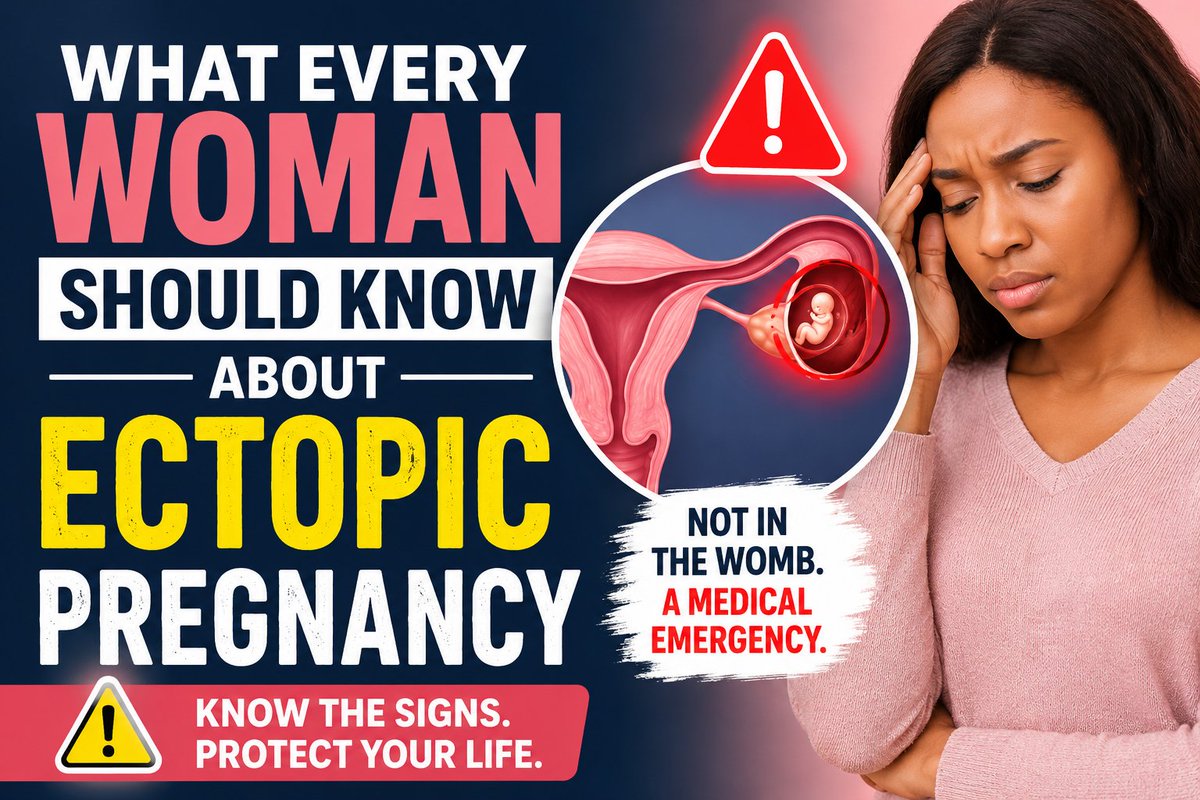
⚠️ WHAT EVERY WOMAN SHOULD KNOW ABOUT ECTOPIC PREGNANCY ⚠️
Ectopic pregnancy is a medical emergency that every woman should be aware of.
It happens when a pregnancy grows outside the womb, most commonly inside the fallopian tube.
Let's see more 👇 👇

@skrootimburg My $sperm counted in her fallopian tube
ECTOPIC PREGNANCY ( PREGNANCY OUTSIDE THE UTERUS)
You’ve just found out you’re pregnant. There’s excitement, maybe a little fear… but then something feels off. The pain isn’t normal. The bleeding doesn’t look right. Deep down, your body is trying to tell you something.
That could be an ectopic pregnancy — a condition where the pregnancy implants outside the uterus, most commonly in the fallopian tubes.
💡 What really happens?
Instead of the fertilized egg settling safely inside the uterus, it gets “stuck” along the way — often in the tube.
The problem? That space is too small to support a growing pregnancy.
⚠️ Who is at risk?
Some women are more likely to experience it, especially if they have:
-Previous ectopic pregnancy
-History of pelvic infections (like untreated STIs)
-Blocked or damaged fallopian tubes
-Previous abdominal or pelvic surgery
-Use of IUCD (coil) and still get pregnant
-Smoking
-Fertility treatments (like IVF)
🚨 Signs and symptoms to watch out for
This is where many women get confused — because early on, it can look like a normal pregnancy.
Be alert if you notice:
-Lower abdominal or one-sided pelvic pain
-Vaginal bleeding (usually lighter or darker than normal periods)
-Shoulder tip pain (a dangerous sign of internal bleeding)
-Dizziness, weakness, or even fainting
👉 That sudden severe pain + feeling faint is an emergency!
🏥 How is it managed?
It depends on how early it’s detected:
Early cases → medication (to stop the pregnancy from growing)
Advanced cases or rupture → surgery to remove the pregnancy
Early diagnosis can save the fallopian tube… and your life.
⚡ Possible complications
If not treated in time, ectopic pregnancy can be life-threatening:
Rupture of the fallopian tube
Severe internal bleeding
Shock
Future fertility challenges
❤️ Real talk
Not every pregnancy pain is normal.
Not every bleeding is “just spotting.”
If you ever feel like something isn’t right — don’t ignore it.
Early hospital visits can be the difference between a simple treatment… and a life-threatening emergency.
📌 Final message
Listen to your body. Act early. Save a life — maybe your own.

PELVIC INFLAMMATORY DISEASE (PID) IS ONE OF THE MAIN CAUSES OF FALLOPIAN TUBE(S) BLOCKAGE
“Umeshawahi kujaribu kupata mtoto but things are not working?” 💔
Sometimes the problem is not what many think… it could be something silent called Pelvic Inflammatory Disease (PID).
What is PID? 🤔
PID is an infection of a woman’s reproductive organs — the uterus, fallopian tubes, and ovaries.
Most times, it starts from untreated sexually transmitted infections (STIs) and slowly moves upward.
Why should women be concerned? 🚨
Because PID can quietly damage the fallopian tubes…
👉 Tubes get scarred or blocked
👉 The egg and sperm can’t meet
👉 Pregnancy becomes difficult or impossible
This is how PID leads to infertility 😢
The tricky part 😟
Many women with PID:
Have mild symptoms or none at all
Ignore the signs thinking it’s “normal discharge”
Only discover the problem when trying to conceive
Common signs to watch out for 👇
♀️Lower abdominal pain
♀️Unusual vaginal discharge (bad smell)
♀️Pain during sex
♀️Fever sometimes
Irregular periods
Relatable reality 💡
That “small infection” you keep postponing treatment for…
That discharge you’re self-medicating from the chemist…
👉 It could be slowly affecting your fertility.
Prevention is key 🔐
♀️Treat STIs early (both partners)
♀️Avoid self-medication
♀️Go for regular check-ups
♀️Practice safe sex
Good news 🙌
PID is treatable if caught early
Early treatment = prevents long-term damage
Final message ❤️
Dear women, don’t ignore your body.
Not every infection is “just kawaida.”
Protect your reproductive health today, so you don’t struggle tomorrow.
#HealthisWealth 💙


그록에게 물어보니.
특히 췌장암, 난소암, 식도암, 간암처럼 기존 검진으로 조기 발견이 어려운 치명적인 암들의 신호를 잘 잡아내는 것으로 알려져 있어요.Galleri가 신호를 검출하도록 설계된 주요 암 종류(공식 목록을 기반으로 알파벳 순으로 정리, 한국어 번역 포함. 전체 50+종):부신 피질 암종 (Adrenal Cortical Carcinoma)
항문암 (Anus)
충수 암종 (Appendix, Carcinoma)
방광암 (Bladder, Urinary)
유방암 (Breast)
자궁경부암 (Cervix)
대장암 및 직장암 (Colon and Rectum)
식도암 (Esophagus)
간암 (Liver)
폐암 (Lung)
림프종 (Lymphoma)
흑색종 (Melanoma of the Skin)
구강암 (Oral Cavity)
난소암 / 난관암 / 복막암 (Ovary, Fallopian Tube and Primary Peritoneum)
췌장암 (Pancreas, exocrine)
전립선암 (Prostate)
위암 (Stomach)
고환암 (Testis)
자궁암 (Uterus, Carcinoma and Carcinosarcoma)
기타: 담관암, ��장암, 백혈병, 두경부암, 신경내분비종양 등

@herheartisfull Me and my twin before i beat him out the fallopian tubes

I'M KNACKERED! HOW MUCH FURTHER TO THE FALLOPIAN TUBES?
IT'S A LONG WAY YET MATE, WE'VE ONLY JUST PASSED THE TONSILS!

@elizaego 1. Uterus
2. Fallopian tube
3. Cervix
4. Vagina orifice
5. Vagina canal
6. Ovary

@elizaego 1 uterus
2 fallopian tube
3 cervix
4 vaginal opening
5 vagina
6 ovary

For a long time, we were taught a simple story: millions of sperm race toward the egg, and the fastest one wins.
Science now tells a very different—and more fascinating—story.
Sperm don’t actually “win” by speed alone. In fact, most sperm never even reach the egg. The female reproductive system is not a passive road; it actively filters, guides, and selects.
The egg and the female tract release chemical signals that attract certain sperm more than others. This process, called chemotaxis, helps guide compatible sperm forward. At the same time, the uterus and fallopian tubes create barriers that remove weaker or damaged sperm.
When sperm finally reach the egg, the egg still has the final say. The egg’s outer layer only allows sperm with the right molecular “keys” to bind and enter. If the match isn’t right—even if the sperm arrives first—it is blocked.
So fertilization is not a chaotic race. It’s more like a carefully controlled selection process, where the egg chooses the sperm most compatible with it.
In simple terms:
Sperm may swim, but the egg decides who gets in—a quiet but powerful reminder that life begins with cooperation, not competition.


Top 25 Vitamin D papers in 2020 - Grant
by William B. Grant, Ph.D @wbgrant2
Even stronger are studies of vitamin D supplementation and COVID-19 outcomes. Two "quasi-experimental" studies from France found that elderly nursing home residents given high-dose vitamin D supplements within one month prior to or within one week after a COVID-19 outbreak in a nursing home [10] or given high-dose vitamin D supplements in a hospital, [11] resulted in significantly lower mortality rates. Since the participants were not randomized for vitamin D supplementation, these studies are still considered not strong evidence. For stronger evidence, results of randomized controlled trials (RCTs) of vitamin D supplementation of COVID-19 patients are required. The first vitamin D-COVID-19 trial reported came from Cordoba, Spain. [12] It was described as a "parallel pilot randomized open label, double-masked clinical trial", so was not a true RCT. This trial involved 76 consecutive COVID-19 patients. Fifty patients received high-dose calcifediol [25(OH)D3] in addition to hydroxychloroquine plus azithromycin, while 26 received only hydroxychloroquine plus azithromycin. Of the 50 patients treated with calcidediol, only one required admission to the intensive care unit and none died; of the 26 patients not treated with calcifediol, 13 required admission to the intensive care unit and two others died. More recently, a randomized controlled trial of vitamin D supplementation in SARS-CoV-2 positive individuals was reported from India. [13] Baseline serum 25(OH)D was near 10 ng/ml (25 nmol/L). Participants were randomized to receive daily 60,000 IU of cholecalciferol for 7 days with therapeutic target 25(OH)D > 50 ng/ml or placebo. Ten (63%) participants in the intervention group and five (21%) participants in the control arm (p < 0.02) became SARS-CoV-2 RNA negative. Fibrinogen levels significantly decreased with cholecalciferol supplementation. It should be noted that to be effective, vitamin D supplementation has to be initiated before COVID-19 advances to the severe stage.
Cancer
The role of vitamin D in reducing risk of breast cancer incidence, progression and death is generally not recognized by the medical establishment despite having been suggested thirty years ago based on a geographical ecological study of breast cancer mortality rates. [14] There are two primary reasons for this state of affairs: (1), most prospective observational studies do not find a significant correlation between serum 25(OH)D levels and incidence of breast cancer; and (2), that RCTs have not demonstrated that vitamin D supplementation reduces incidence of breast cancer. As I have noted in several publications, the primary reason for the failure of prospective studies is that breast cancer can develop very rapidly so that changes in 25(OH)D levels during the observation period can affect breast cancer incidence. Thus, case-control studies with serum 25(OH)D levels measured shortly prior or at time of diagnosis are more appropriate and report significant inverse correlations between 25(OH)D and breast cancer incidence. [15] An important review regarding triple-negative breast cancer regarding those with the BRCA1 gene that causes loss of function of the DNA repair was published in 2020. [16] The authors pointed out that calcitriol has at least two mechanisms by which it could reduce risk of DNA damage.
A related review noted that vitamin D biosynthesis and signaling via VDR in the ovarian and fallopian tube epithelium are impaired in BRCA1 mut women. Vitamin D treatment may limit BRCA1 mut epithelial cell proliferation without affecting cell viability, providing a rationale for exploring the potential for VD in ovarian cancer prevention in BRCA1 mut carriers. [17]
https://t.co/SuRVJlEII4


Alexander the Great had to first conquer the fallopian tube before the world
I find immense alpha in there.
Willy to a Milly.

got through the fallopian labyrinth in under an hour
how fast can we send $ww to 1M?


babe how's your fallopian tubes exploration going


Here is the whole map.


Ectopic pregnancy, which occurs when a developing blastocyst implants in an extrauterine location (e.g. fallopian tube), can present with nausea/vomiting, pelvic pain, and vaginal bleeding. Therefore, all reproductive-age women with these symptoms require pregnancy testing.
Ectopic pregnancy (EP) (i.e. pregnancy implanted in an extrauterine location) can be diagnosed by a persistent rise in β-hCG level following diagnostic dilation and curettage (D&C). Medical therapy is with methotrexate (MTX) [Otrexup], a folate (B9) antagonist that inhibits DNA synthesis in rapidly dividing cells (e.g. trophoblasts).
Patients with an ectopic pregnancy require surgical management when they have medical contraindications to methotrexate (e.g. breastfeeding) or are hemodynamically unstable.
The triad of vaginal bleeding, lower abdominal pain, and adnexal tenderness is suspicious for an ectopic pregnancy. Diagnosis is made by a positive pregnancy test and a transvaginal ultrasound showing a gestational sac at an ectopic site, most commonly the fallopian tube.
Ruptured ectopic pregnancy typically presents with amenorrhea, diffuse abdominal pain, and hemodynamic instability. Management involves urgent surgical evaluation.
A hemodynamically unstable patient with hemoperitoneum due to ruptured ectopic pregnancy requires emergency surgical exploration. Diagnosis of a cornual ectopic pregnancy is made by ultrasound showing a gestational sac at the upper outer corner of the uterine fundus.
Ectopic pregnancies can cause Rh(D) alloimmunization in Rh(D)-negative women due to fetomaternal blood mixing and maternal anti-D antibody production. Therefore, Rh(D)-negative women require anti-D immunoglobulin after an ectopic pregnancy.

@Nella28184257 @MattCas04807118 @thecarolemalone He is going to use hypnosis to make them grow wombs and fallopian tubes I expect

@JahknowsEmma @JosemamaJ Fallopian tube na di pair of tubes inside woman body wey connect ovary to uterus. Dem dey carry egg from ovary go uterus, and na mostly there sperm meet egg for fertilization happen. E be important for reproduction.
Last Seen Hashtags on Sotwe
Trends for you
Most Popular Users

Elon Musk 
@elonmusk
239.6M followers

Barack Obama
@barackobama
118.6M followers

Cristiano Ronaldo
@cristiano
114.3M followers

Donald J. Trump
@realdonaldtrump
111.7M followers

Narendra Modi
@narendramodi
106.9M followers

Rihanna
@rihanna
98.6M followers

NASA
@nasa
92.1M followers

Justin Bieber
@justinbieber
91.7M followers

KATY PERRY
@katyperry
89.9M followers

Taylor Swift
@taylorswift13
83.9M followers

Lady Gaga
@ladygaga
75.4M followers

Virat Kohli
@imvkohli
73.3M followers

Kim Kardashian
@kimkardashian
70.8M followers

YouTube
@youtube
68.6M followers

Neymar Jr
@neymarjr
66.3M followers

Bill Gates
@billgates
65.1M followers

Selena Gomez
@selenagomez
63M followers

The Ellen Show
@theellenshow
62.1M followers

CNN
@cnn
61.7M followers

X
@x
60.6M followers