

Top Tweets for #FindyourTribe

Disruptive - Yes,
Creative - Yes,
Built by collectors for collectors-Yes,
Tribe called Rex - Yes
#findyourtribe

The Rex's are coming Sept 10th - Genesis Mint 1
Here's a little taster of how it came about and where its going. Have you found your Tribe?
Skins, Traits swaps, Costumes, Earnables, colab opportunities, story telling, marketing, gaming, animation we added it all.
Digital collectibles Just Evolved!

People just suck.....
#FindYourTribe

We've taken down the CLKN graduate airdrop. On-chain review caught wallet farming — one operator claiming from multiple fresh wallets. We won't dilute real holders to pay fake ones. The school stays free; graduates still mint their on-chain diploma + transcript.

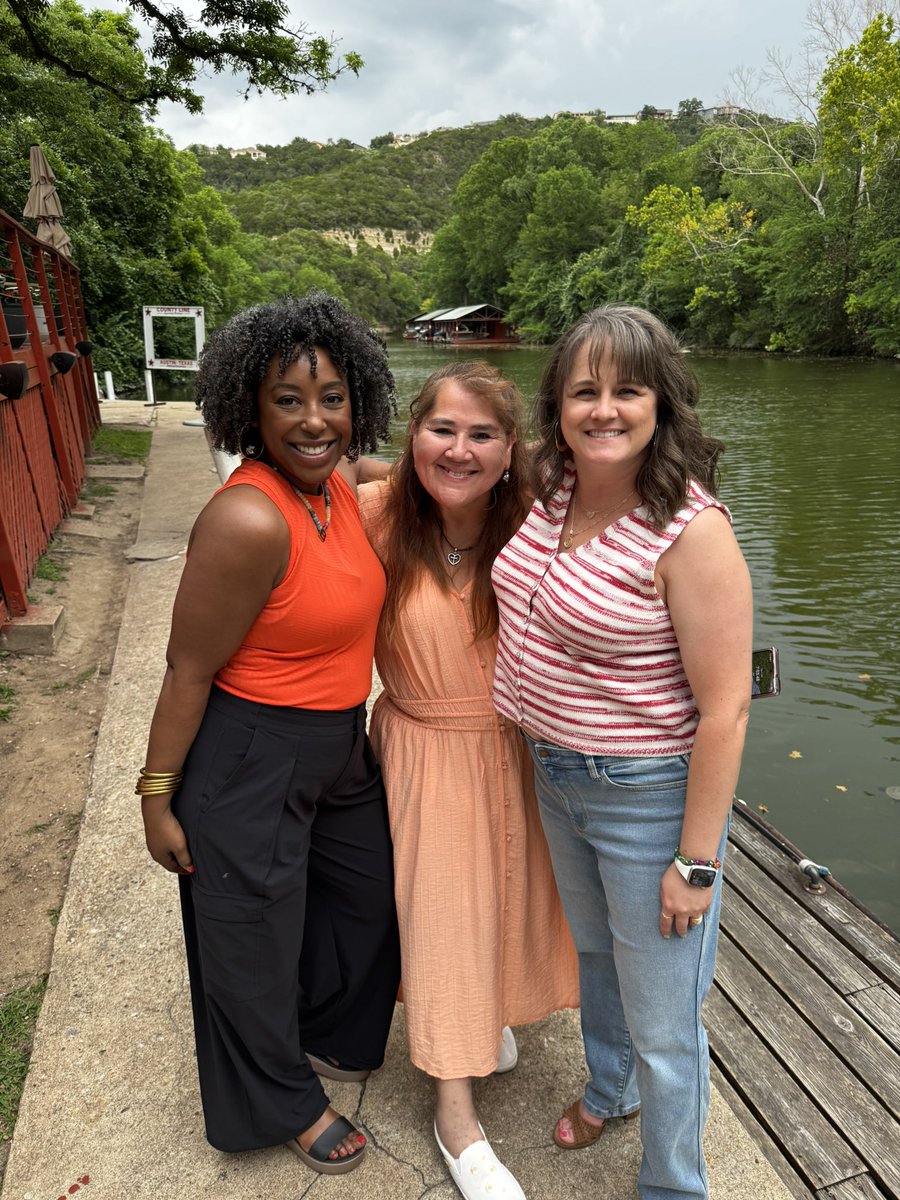
One of my most favorite nights of this summer! Dinner with my daughter, her besties and moms, before the girls step out into life’s first big adventure. All going in different directions, all going to make their mark in this world!🩷
#findyourtribe
#callyourmom
#imfine🥹


Sis there are women that will never support you because it’s YOU. Then there are women that will always support you because it’s YOU! 🦋
#FindYourTribe


Medicine is tough. Life is tough. It's important to #findyourtribe!
Last night 1 premed student, 3 #medstudents, 1 internist, 1 anesthesiologist & 2 pediatricians went to dinner to celebrate each other. We shared personal & professional wins and challenges & how we PRESS on!

Medicine is tough. Life is tough. It's important to #findyourtribe!
Last night 1 premed student, 3 #medstudents, 1 internist, 1 anesthesiologist & 2 pediatricians went to dinner to celebrate each other. We shared personal & professional wins and challenges & how we PRESS on!

#FindYourTribe #YouNoBlack #BlackAmerican #FBA #ADOS #DOAS #B1 #AfricanAmerican #AmericanIndian #RedNatives #CopperColored #SecureTheTribe #SecureYourTribe

#PSA #Reparations #BlackInAmerica
**Subject: Clarifying the Definition of Black/Negro Americans – Rejecting Redefinition and Misappropriation of Our Identity**
Dear [Senator/Representative/Organization Leader/Policy Official],
We write as Black Americans of Sub-Saharan African descent—members of the diaspora whose ancestors arrived in the Americas primarily through the transatlantic slave trade. We respectfully but firmly state our position on the definition of “Black” and “Negro” in the United States and urge you to uphold it in law, policy, census categories, historical narratives, and any discussions of reparations, representation, or identity.
Black and Negro refer specifically to people of Sub-Saharan African ancestry and their descendants. This has been the consistent legal, historical, and demographic meaning in the United States. These terms are not open-ended descriptors for any melanated or dark-skinned person, nor are they interchangeable with indigenous tribal identities of the Americas.
Claims of “Black Indigenous” identity that assert no (or negligible) Sub-Saharan African admixture are not claims of Blackness. Historical reclassification of certain mixed or indigenous individuals under the one-drop rule or other census practices does not convert non-African indigenous people into Black people. Reclassification does not rewrite ancestry. Individuals with documented indigenous tribal lineage should pursue recognition and affiliation with their actual tribes. “Black American” is not a tribe, and it is not available as a substitute identity.
We reject any effort—academic, activist, bureaucratic, or legislative—to redefine Black or Negro to include groups outside the Sub-Saharan African diaspora. There is no coherent category of non-African-admixed “Black Indigenous” people in the Americas who are properly classified as Black under the established American definition. Expanding or blurring the term dilutes the specific historical experience of African-descended people in this country, confuses policy, and undermines accurate demographic and historical record-keeping.
We ask that you:
- Maintain clear, ancestry-based definitions of Black/Negro in federal and state data collection, civil rights enforcement, and any race-conscious programs.
- Refuse to treat unsubstantiated “Black Indigenous” claims as equivalent to membership in the African American/Black American community.
- Direct resources and recognition related to indigenous peoples toward actual tribal nations and their enrolled citizens rather than rebranding those claims as Blackness.
- Ensure that discussions of reparations or historical justice for the descendants of American slavery remain focused on that specific lineage and experience.
Accurate categories serve truth, policy effectiveness, and the integrity of every group’s history. We will continue to defend the established meaning of Black and Negro. We request your public affirmation of this position and your opposition to redefinition efforts.
Thank you for your attention. We are available to discuss this further.
Sincerely,
[Your Name / Organization Representing Black Americans of Sub-Saharan African Descent]
[Contact Information]
[City, State]
---
You can customize the bracketed fields, add specific recipients (members of Congress, state legislators, census officials, civil rights organizations, historical societies, etc.), and attach any supporting historical or legal references you prefer.
![T_A_Activist's tweet photo. #PSA #Reparations #BlackInAmerica
**Subject: Clarifying the Definition of Black/Negro Americans – Rejecting Redefinition and Misappropriation of Our Identity**
Dear [Senator/Representative/Organization Leader/Policy Official],
We write as Black Americans of Sub-Saharan African descent—members of the diaspora whose ancestors arrived in the Americas primarily through the transatlantic slave trade. We respectfully but firmly state our position on the definition of “Black” and “Negro” in the United States and urge you to uphold it in law, policy, census categories, historical narratives, and any discussions of reparations, representation, or identity.
Black and Negro refer specifically to people of Sub-Saharan African ancestry and their descendants. This has been the consistent legal, historical, and demographic meaning in the United States. These terms are not open-ended descriptors for any melanated or dark-skinned person, nor are they interchangeable with indigenous tribal identities of the Americas.
Claims of “Black Indigenous” identity that assert no (or negligible) Sub-Saharan African admixture are not claims of Blackness. Historical reclassification of certain mixed or indigenous individuals under the one-drop rule or other census practices does not convert non-African indigenous people into Black people. Reclassification does not rewrite ancestry. Individuals with documented indigenous tribal lineage should pursue recognition and affiliation with their actual tribes. “Black American” is not a tribe, and it is not available as a substitute identity.
We reject any effort—academic, activist, bureaucratic, or legislative—to redefine Black or Negro to include groups outside the Sub-Saharan African diaspora. There is no coherent category of non-African-admixed “Black Indigenous” people in the Americas who are properly classified as Black under the established American definition. Expanding or blurring the term dilutes the specific historical experience of African-descended people in this country, confuses policy, and undermines accurate demographic and historical record-keeping.
We ask that you:
- Maintain clear, ancestry-based definitions of Black/Negro in federal and state data collection, civil rights enforcement, and any race-conscious programs.
- Refuse to treat unsubstantiated “Black Indigenous” claims as equivalent to membership in the African American/Black American community.
- Direct resources and recognition related to indigenous peoples toward actual tribal nations and their enrolled citizens rather than rebranding those claims as Blackness.
- Ensure that discussions of reparations or historical justice for the descendants of American slavery remain focused on that specific lineage and experience.
Accurate categories serve truth, policy effectiveness, and the integrity of every group’s history. We will continue to defend the established meaning of Black and Negro. We request your public affirmation of this position and your opposition to redefinition efforts.
Thank you for your attention. We are available to discuss this further.
Sincerely,
[Your Name / Organization Representing Black Americans of Sub-Saharan African Descent]
[Contact Information]
[City, State]
---
You can customize the bracketed fields, add specific recipients (members of Congress, state legislators, census officials, civil rights organizations, historical societies, etc.), and attach any supporting historical or legal references you prefer.](https://pbs.twimg.com/media/HPatRBYXYAAk-6x.jpg)
![T_A_Activist's tweet photo. #PSA #Reparations #BlackInAmerica
**Subject: Clarifying the Definition of Black/Negro Americans – Rejecting Redefinition and Misappropriation of Our Identity**
Dear [Senator/Representative/Organization Leader/Policy Official],
We write as Black Americans of Sub-Saharan African descent—members of the diaspora whose ancestors arrived in the Americas primarily through the transatlantic slave trade. We respectfully but firmly state our position on the definition of “Black” and “Negro” in the United States and urge you to uphold it in law, policy, census categories, historical narratives, and any discussions of reparations, representation, or identity.
Black and Negro refer specifically to people of Sub-Saharan African ancestry and their descendants. This has been the consistent legal, historical, and demographic meaning in the United States. These terms are not open-ended descriptors for any melanated or dark-skinned person, nor are they interchangeable with indigenous tribal identities of the Americas.
Claims of “Black Indigenous” identity that assert no (or negligible) Sub-Saharan African admixture are not claims of Blackness. Historical reclassification of certain mixed or indigenous individuals under the one-drop rule or other census practices does not convert non-African indigenous people into Black people. Reclassification does not rewrite ancestry. Individuals with documented indigenous tribal lineage should pursue recognition and affiliation with their actual tribes. “Black American” is not a tribe, and it is not available as a substitute identity.
We reject any effort—academic, activist, bureaucratic, or legislative—to redefine Black or Negro to include groups outside the Sub-Saharan African diaspora. There is no coherent category of non-African-admixed “Black Indigenous” people in the Americas who are properly classified as Black under the established American definition. Expanding or blurring the term dilutes the specific historical experience of African-descended people in this country, confuses policy, and undermines accurate demographic and historical record-keeping.
We ask that you:
- Maintain clear, ancestry-based definitions of Black/Negro in federal and state data collection, civil rights enforcement, and any race-conscious programs.
- Refuse to treat unsubstantiated “Black Indigenous” claims as equivalent to membership in the African American/Black American community.
- Direct resources and recognition related to indigenous peoples toward actual tribal nations and their enrolled citizens rather than rebranding those claims as Blackness.
- Ensure that discussions of reparations or historical justice for the descendants of American slavery remain focused on that specific lineage and experience.
Accurate categories serve truth, policy effectiveness, and the integrity of every group’s history. We will continue to defend the established meaning of Black and Negro. We request your public affirmation of this position and your opposition to redefinition efforts.
Thank you for your attention. We are available to discuss this further.
Sincerely,
[Your Name / Organization Representing Black Americans of Sub-Saharan African Descent]
[Contact Information]
[City, State]
---
You can customize the bracketed fields, add specific recipients (members of Congress, state legislators, census officials, civil rights organizations, historical societies, etc.), and attach any supporting historical or legal references you prefer.](https://pbs.twimg.com/media/HPatQ-rWwAAylVW.jpg)
![T_A_Activist's tweet photo. #PSA #Reparations #BlackInAmerica
**Subject: Clarifying the Definition of Black/Negro Americans – Rejecting Redefinition and Misappropriation of Our Identity**
Dear [Senator/Representative/Organization Leader/Policy Official],
We write as Black Americans of Sub-Saharan African descent—members of the diaspora whose ancestors arrived in the Americas primarily through the transatlantic slave trade. We respectfully but firmly state our position on the definition of “Black” and “Negro” in the United States and urge you to uphold it in law, policy, census categories, historical narratives, and any discussions of reparations, representation, or identity.
Black and Negro refer specifically to people of Sub-Saharan African ancestry and their descendants. This has been the consistent legal, historical, and demographic meaning in the United States. These terms are not open-ended descriptors for any melanated or dark-skinned person, nor are they interchangeable with indigenous tribal identities of the Americas.
Claims of “Black Indigenous” identity that assert no (or negligible) Sub-Saharan African admixture are not claims of Blackness. Historical reclassification of certain mixed or indigenous individuals under the one-drop rule or other census practices does not convert non-African indigenous people into Black people. Reclassification does not rewrite ancestry. Individuals with documented indigenous tribal lineage should pursue recognition and affiliation with their actual tribes. “Black American” is not a tribe, and it is not available as a substitute identity.
We reject any effort—academic, activist, bureaucratic, or legislative—to redefine Black or Negro to include groups outside the Sub-Saharan African diaspora. There is no coherent category of non-African-admixed “Black Indigenous” people in the Americas who are properly classified as Black under the established American definition. Expanding or blurring the term dilutes the specific historical experience of African-descended people in this country, confuses policy, and undermines accurate demographic and historical record-keeping.
We ask that you:
- Maintain clear, ancestry-based definitions of Black/Negro in federal and state data collection, civil rights enforcement, and any race-conscious programs.
- Refuse to treat unsubstantiated “Black Indigenous” claims as equivalent to membership in the African American/Black American community.
- Direct resources and recognition related to indigenous peoples toward actual tribal nations and their enrolled citizens rather than rebranding those claims as Blackness.
- Ensure that discussions of reparations or historical justice for the descendants of American slavery remain focused on that specific lineage and experience.
Accurate categories serve truth, policy effectiveness, and the integrity of every group’s history. We will continue to defend the established meaning of Black and Negro. We request your public affirmation of this position and your opposition to redefinition efforts.
Thank you for your attention. We are available to discuss this further.
Sincerely,
[Your Name / Organization Representing Black Americans of Sub-Saharan African Descent]
[Contact Information]
[City, State]
---
You can customize the bracketed fields, add specific recipients (members of Congress, state legislators, census officials, civil rights organizations, historical societies, etc.), and attach any supporting historical or legal references you prefer.](https://pbs.twimg.com/media/HPatQ9gWYAABC6u.jpg)
![T_A_Activist's tweet photo. #PSA #Reparations #BlackInAmerica
**Subject: Clarifying the Definition of Black/Negro Americans – Rejecting Redefinition and Misappropriation of Our Identity**
Dear [Senator/Representative/Organization Leader/Policy Official],
We write as Black Americans of Sub-Saharan African descent—members of the diaspora whose ancestors arrived in the Americas primarily through the transatlantic slave trade. We respectfully but firmly state our position on the definition of “Black” and “Negro” in the United States and urge you to uphold it in law, policy, census categories, historical narratives, and any discussions of reparations, representation, or identity.
Black and Negro refer specifically to people of Sub-Saharan African ancestry and their descendants. This has been the consistent legal, historical, and demographic meaning in the United States. These terms are not open-ended descriptors for any melanated or dark-skinned person, nor are they interchangeable with indigenous tribal identities of the Americas.
Claims of “Black Indigenous” identity that assert no (or negligible) Sub-Saharan African admixture are not claims of Blackness. Historical reclassification of certain mixed or indigenous individuals under the one-drop rule or other census practices does not convert non-African indigenous people into Black people. Reclassification does not rewrite ancestry. Individuals with documented indigenous tribal lineage should pursue recognition and affiliation with their actual tribes. “Black American” is not a tribe, and it is not available as a substitute identity.
We reject any effort—academic, activist, bureaucratic, or legislative—to redefine Black or Negro to include groups outside the Sub-Saharan African diaspora. There is no coherent category of non-African-admixed “Black Indigenous” people in the Americas who are properly classified as Black under the established American definition. Expanding or blurring the term dilutes the specific historical experience of African-descended people in this country, confuses policy, and undermines accurate demographic and historical record-keeping.
We ask that you:
- Maintain clear, ancestry-based definitions of Black/Negro in federal and state data collection, civil rights enforcement, and any race-conscious programs.
- Refuse to treat unsubstantiated “Black Indigenous” claims as equivalent to membership in the African American/Black American community.
- Direct resources and recognition related to indigenous peoples toward actual tribal nations and their enrolled citizens rather than rebranding those claims as Blackness.
- Ensure that discussions of reparations or historical justice for the descendants of American slavery remain focused on that specific lineage and experience.
Accurate categories serve truth, policy effectiveness, and the integrity of every group’s history. We will continue to defend the established meaning of Black and Negro. We request your public affirmation of this position and your opposition to redefinition efforts.
Thank you for your attention. We are available to discuss this further.
Sincerely,
[Your Name / Organization Representing Black Americans of Sub-Saharan African Descent]
[Contact Information]
[City, State]
---
You can customize the bracketed fields, add specific recipients (members of Congress, state legislators, census officials, civil rights organizations, historical societies, etc.), and attach any supporting historical or legal references you prefer.](https://pbs.twimg.com/media/HPatQ8VXYAA_JKn.jpg)


“Be who you are and say what you feel, because those who mind don’t matter, and those who matter don’t mind.” 💙♥️
#findyourtribe


1st Major Victory Cup 2x Win (400$)


https://t.co/MTuOhlxMk0
Life happens, momentum fades. It's okay. Get back up.
Don't put a period where a comma should be.
Build your legacy and find your tribe. 🎙️
#Season3
#MentalHealthPlaybook
#FindYourTribe

I have always cherished my friendships. I don't even take stock of the impact I have had on my friends until they send messages like this. Then I reflect on our friendship and realise we have seen each other through some difficult periods. Grateful. #FindYourTribe 🙏🏾


Finding the right flat shouldn't mean settling for the wrong flatmate.
Find verified flatmates who match your lifestyle, budget, and vibe. 🏠✨
Because the best homes start with the right people.
Join the waitlist and find your tribe.
#FindYourTribe #FlatmateByBienCasa


hanging out with these people changed my brain chemistry 🧠, a thread 🧵
u really are the average of 5 people in your circle, well in my case 3:
#buildinpublic #IndieHackers #FindYourTribe #networking

I had the opportunity to spend a week with state school library leaders learning and growing together. This week reminded me I’m not alone, I have a tribe of other leaders that I can lean on.
#findyourtribe
#strongertogether❤️
#TxASLA26
#libraryleader
#leaderinme



Depois de muitos anos lutando, muito tempo tentando eu posso falar EU TO NO VCB, finalmente cheguei la e to como manager dessa line FODA
Muito ansioso com esse desafio ENORME
#FindYourTribe
Das telinhas do TikTok direto para a Tribo 🥑
É com muito prazer que anunciamos a Tribe Valorant! Agora, estamos no topo do cenário brasileiro e oficialmente no Valorant Challengers Brasil.
Conheça a nossa tribo:
🏹 @kwnfps — IGL
🏹 @frozenn99 — Duelista
🏹 @fishvlr — Flex
🏹 @abovezin_ — Controlador
🏹 @spmvlr — Sentinela
🏹 @nckzera — Headcoach
🏹 @luck_vlr — Coach
Por trás das câmeras, a equipe que faz tudo acontecer:
🏹 @Pkzin97 — Diretor Competitivo
🏹 @MarcoDiasJr — Staff
🏹 @mahgarpinh — Staff
#TribeOfChampions

Our official Try-Athlon 2026 video needs no introduction!
Read our latest blog today: https://t.co/eQp2b6OyIV
#findyourtribe #parkinsonsawareness #ParkinsonsCommunity #parkinsons

"toe-tappingly delightful from start to finish" @irishexaminer
TRAD is out in cinemas nationwide now🎻
#TRAD #FindYourTribe #IrishFilm

Last Seen Hashtags on Sotwe
fingring
Seen from Pakistan
omegle
Seen from United States
OMEGLE()************+filter:native_video
Seen from United States
xlii() or nolimit() or momson() or somno()
Seen from Netherlands
bestiality
Seen from France
momsonn()+filter:videos
Seen from Colombia
nsfw
Seen from Turkey
Nolimits #momsonn
Seen from Canada
teen
Seen from Netherlands
Most Popular Users

Elon Musk 
@elonmusk
241.5M followers

Barack Obama
@barackobama
119M followers

Cristiano Ronaldo
@cristiano
113.9M followers

Donald J. Trump
@realdonaldtrump
111.8M followers

Narendra Modi
@narendramodi
107.2M followers

Rihanna
@rihanna
98.6M followers

NASA
@nasa
92.4M followers

Justin Bieber
@justinbieber
91.8M followers

KATY PERRY
@katyperry
89.7M followers

Taylor Swift
@taylorswift13
83.7M followers

Lady Gaga
@ladygaga
75.2M followers

Virat Kohli
@imvkohli
72.9M followers

Kim Kardashian
@kimkardashian
70.8M followers

YouTube
@youtube
68.8M followers

Neymar Jr
@neymarjr
65.9M followers

Bill Gates
@billgates
64.9M followers

Selena Gomez
@selenagomez
62.8M followers

The Ellen Show
@theellenshow
62.3M followers

CNN
@cnn
61.8M followers

X
@x
60.7M followers