

Top Tweets for #HenryVi

#WarsoftheRoses
OTD in 1460 - Richard Neville, Earl of Warwick (the Kingmaker) & Edward, Earl of March (later #EdwardIV) won the Battle of Northampton against the Lancastrians & captured #HenryVI.
This battle was notable for being one of the more decisive encounters in the Wars of the Roses & the first to involve widespread use of artillery on both sides.
Warwick attempted to negotiate with Henry multiple times in the lead up to the battle, but was rebuffed by the Duke of Buckingham, who declared ‘the Earl of Warwick shall not come to the King’s presence & if he comes he shall die.’ As Warwick advanced he sent a final message to the King saying ‘at two hours after noon he would speak with him or else die in the field.’
The battle was short, likely lasting only 30 minutes. The driving rain limited the effectiveness of the Lancastrian defensive artillery barrage & their fate was sealed by the defection of Lord Grey of Ruthin. Lord Grey had agreed with March that his men would put down their arms as the Yorkists approached in return for a property dispute with the Duke of Exeter being resolved in his favour.
The Duke of Buckingham, Earl of Shrewsbury, Lord Egremont & Lord Beaumont all died in a final last ditch attempt to prevent Warwick & March reaching the King’s tent.
Warwick & March’s victory at Northampton paved the way for Richard, 3rd Duke of York’s eventual return to England & his attempt to claim the crown in autumn 1460.
However, it is also surprising that York took so long to return after Northampton, only landing on 9 September & reaching London on 10 October after a slow stately progress across the country. In retrospect this slowness may have been a mistake, as it allowed a new normal to develop where his own allies (& potentially his own son March as well) grew comfortable with ruling through Henry & didn’t feel the need to replace him as king. Hence the lack of enthusiasm with which York’s attempt to assert his dynastic claim in Parliament was greeted & the fudge of making him Henry’s heir instead through the Act of Accord.

Queen Margaret and Eleanor Duchess of Gloucester clash
"Could I come near your beauty with my nails, I'd set my ten commandments in your face." 👑🔥⚔️🌹
- Henry VI, Part 2, Act 1, Scene 3
🎥 https://t.co/kiqkdfqlyG
#ShakespeareSunday #TheHollowCrown
#HenryVI
#QueenMargaret
King Edward IV's courtship of Lady Elizabeth Grey 🫴💍
"To tell thee plain, I aim to lie with thee." 🌹❤️👑🌹
- Henry VI, Part 3, Act 3, Scene 2
🎥 https://t.co/n9a7rKhtcQ
#ShakespeareSunday #TheHollowCrown
#HenryVI
#ElizabethWoodville
"Why, I can smile, and murder whiles I smile." 👑🖤🐍🎭
-Henry VI, Part 3, Act 3, Scene 2
🎥 https://t.co/mzNTaeKth9
#ShakespeareSunday #TheHollowCrown
#HenryVI

#OTD 28 June 1449
King Henry VI granted Nottingham a Royal Charter that elevated the borough to a county corporate (an independent county) with its own sheriffs and greater self-governance rights.
(Link to 1949 quincentenary celebrations in reply)
#Nottingham #Notts #HenryVI

"I'll drown more sailors than the mermaid shall"
~ Henry VI - Part 3 - Act 3. Sc. II
#ShakespeareSunday #HenryVI
#peterpan
#WarsoftheRoses
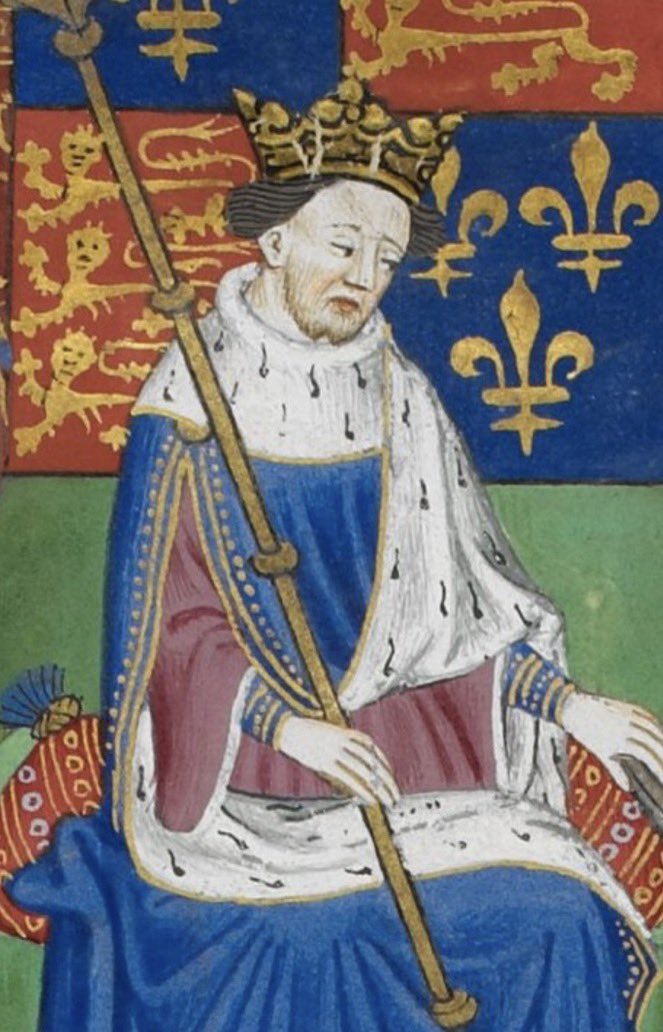
When did the Lancastrian King #HenryVI lose his wits? Many of you will be familiar with his mental collapse in summer 1453 after England’s defeat at the Battle of Castillon. But could he have been struggling before then? An allegation recorded OTD in 1450 as part of the launch of the judicial inquiry which followed Cade’s rebellion certainly suggests this.
The purpose of the inquiry was to hunt down & punish leaders & participants in Cade’s rebellion by investigating allegations witnesses had made against suspected individuals. One of these allegations read as follows:
‘It is to be enquired for our Sovereign Lord the King that if John Merfeld of Brightling in the shire of Sussex husbandman & William Merfeld of Brightling the shire foresaid husbandman at Brightling in the open market the Sunday in the feast of St Anne in the 28th year of our said Sovereign Lord falsely said that the King was a natural fool & would oft times hold a staff in his hands with a bird on the end playing therewith as a fool & that another king must be ordained to rule the land saying that the King was no person able to rule the land.’
The accused men were peasant farmers (husbandmen) & weren’t courtiers with personal access or knowledge of Henry. We have records of slanderous remarks being made about other English medieval Kings, but as far as I’m aware none of these ever questioned their sanity. It therefore seems likely to me that the Merfelds may simply have been articulating a commonly held perception among their contemporaries.
#WarsoftheRoses
OTD in 1445 - Margaret of Anjou was crowned Queen of England, 37 days after her marriage to the Lancastrian King #HenryVI.
The union was not an advantageous match for Henry as King of England. Margaret brought a small dowry of 20,000 Francs & Henry ended up ceding the province of Maine.
However, Margaret was initially welcomed & widely accepted by the English, including by those who would later become her husband’s enemies. Henry’s cousin & later dynastic rival, Richard, 3rd Duke of York in his capacity as Lieutenant of France had greeted Margaret before her marriage & escorted her to England. York’s wife Cecily Neville also helped to advise Margaret on her wardrobe.

OTD in 1445 - The Lancastrian King #HenryVI married Margaret of Anjou. Margaret would later become the warrior Queen of the #WarsoftheRoses & be immortalised by Shakespeare as a ‘she-wolf.’
Margaret was the daughter of Rene of Anjou & Isabella of Lorraine. She was a niece of Charles VII of France through his marriage to her aunt Marie of Anjou. Charles was instrumental in Margaret’s 1444 betrothal to Henry VI, which was part of a truce in the #HundredYearsWar. The lead English negotiator was Henry’s favourite & chief minister the Duke of Suffolk.
The couple appear to have been happy, but the marriage was not an advantageous match for Henry as King of England. Margaret brought a small dowry of 20,000 Francs & Henry ended up ceding the province of Maine. The marriage became a symbol of the unpopular peace policy & contributed to Suffolk’s downfall in 1450.
Margaret was 15 when she wed Henry, who was 23. We have no evidence of any pregnancies for 8 years until Margaret fell pregnant with her only child, Edward of Westminster, born in October 1453. This combined with Henry’s religious fervour & seeming disinterest in sexual intimacy prompted speculation at the time & since that Edward was not his son.
1453 was the watershed year in Margaret’s life. The English lost the Battle of Castillon on 17 July 1453 & their last remaining territories in France, apart from Calais. The Hundred Years War was over & England had lost. News of this disaster prompted Henry’s mental collapse in August 1453. He would remain unable or unwilling to speak or otherwise communicate until Christmas 1454.
Margaret stepped into the political vacuum created by her husband’s incapacity & attempted unsuccessfully to become regent. She would subsequently become locked in a struggle for power & eventually the crown of England itself with Henry’s cousin Richard, 3rd Duke of York & his descendants, in the conflict we refer to as the Wars of the Roses.

#WarsoftheRoses
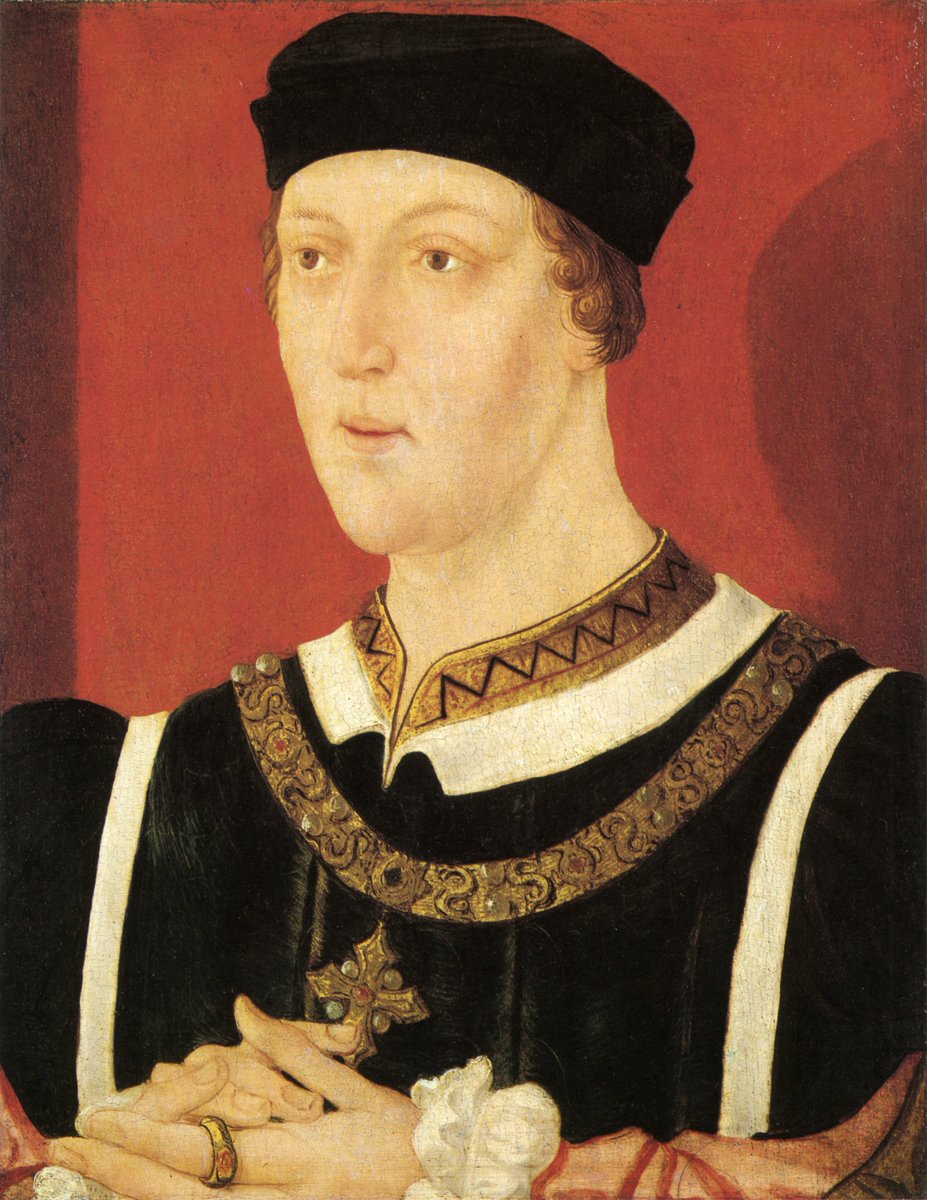
OTD in 1455 - #HenryVI undertook a ritual crown wearing at St Paul’s on Whitsun Sunday. The idea was to project royal authority & stability after the fighting at St Albans three days before.
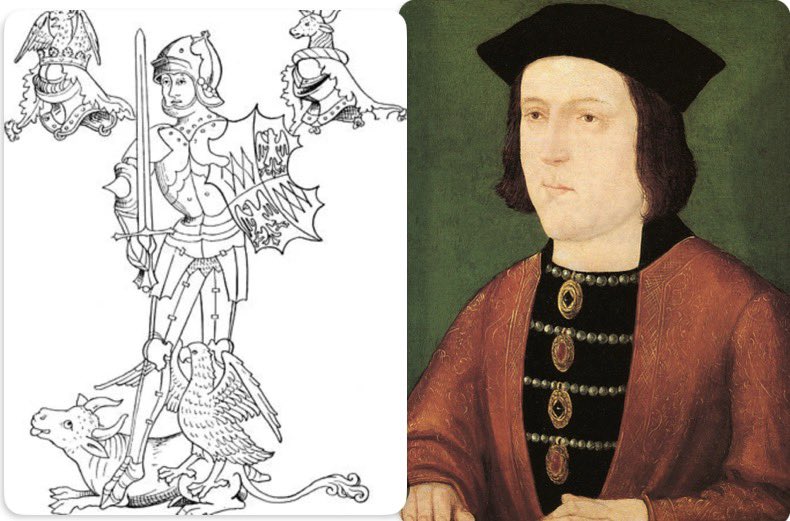
Not that true power was Henry’s to exercise of course. His cousin Richard, 3rd Duke of York (centre image) was back ruling England after the Yorkist victory & regained his former position of Lord Protector. The main difference now though was that Henry hadn’t had a repeat of his previous mental collapse & at least in theory remained an adult male in command of his mental faculties.
York also had himself appointed Constable of England OTD. This gave him responsibility for the King’s safety & dealing with those suspected of treason. Holding this office was an important safeguard which York used to help protect himself & his allies from reprisals for their actions at St Albans.
The main gain made by the Earl of Salisbury was supremacy in the north east. This included a favourable resolution of the dispute he & his sons had been engaged with the Percies, following the Earl of Northumberland’s elimination at St Albans. Salisbury’s younger son George Neville was also elevated to the bishopric of Exeter following the removal of the King’s previous nominee.
The most significant change from the Yorkist victory at St Albans (apart from the creation of a blood feud described in a previous post) was the emergence of Salisbury’s eldest son, Richard Neville, Earl of Warwick (the Kingmaker - right image) as an increasingly powerful political & military force who would hold the balance of power in England for the next fifteen years.
Following his actions at St Albans, Warwick was eclipsing his father as York’s primary lieutenant. He gained the captainship of Calais, which would provide him with a lucrative overseas haven & springboard for invasion. Somerset’s elimination ensured that Warwick & his wife could now enjoy full possession of her rich inheritance in the Midlands & Wales unchallenged. Warwick’s appointment as steward of Monmouth & keeper of the three castles of Grosmont, Skenfrith & White Castle further enhanced his dominant position in South Wales.

#WarsoftheRoses
OTD in 1455 - the Yorkist lords escorted #HenryVI to London after their victory at the First Battle of St Albans.
Richard, 3rd Duke of York & his brother-in-law the Earl of Salisbury rode either side of the King. Salisbury’s son (& the main victor of St Albans) Richard Neville, Earl of Warwick (the Kingmaker) rode at the head of the procession with his sword held aloft.
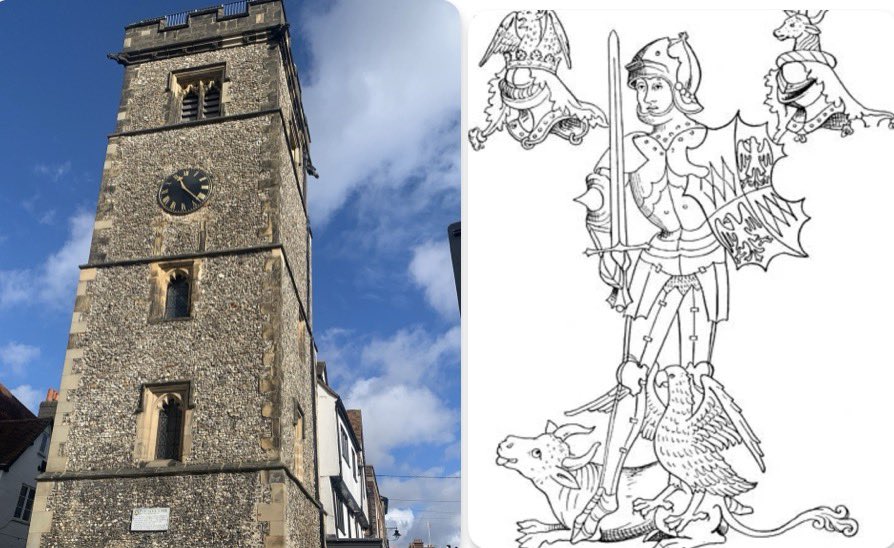
They left St Albans Abbey in the morning & rode down the old Roman road of Watling Street to London, processing through the city & arriving in the early evening. Henry was taken to the Bishop of London’s Palace next to St Paul’s (image) where he would reside ahead of a ritual crown wearing on Whitsun Sunday.

#WarsoftheRoses
OTD in 1455 - the Yorkist lords escorted #HenryVI to London after their victory at the First Battle of St Albans.
Richard, 3rd Duke of York & his brother-in-law the Earl of Salisbury rode either side of the King. Salisbury’s son (& the main victor of St Albans) Richard Neville, Earl of Warwick (the Kingmaker) rode at the head of the procession with his sword held aloft.
They left St Albans Abbey in the morning & rode down the old Roman road of Watling Street to London, processing through the city & arriving in the early evening. Henry was taken to the Bishop of London’s Palace next to St Paul’s (image) where he would reside ahead of a ritual crown wearing on Whitsun Sunday.
OTD in 1455 - The #WarsoftheRoses began with a Yorkist victory over the Lancastrians at the First Battle of St Albans.
Increasingly marginalised since #HenryVI’s recovery at Christmas 1454 & having been forced to resign as Lord Protector in February 1455, the King’s cousin Richard, 3rd Duke of York had gathered an army with his allies the Neville Earls of Salisbury & Warwick (right image) in an attempt to regain power.
The King & his favourite Edmund Beaufort, Duke of Somerset assumed that York would negotiate, as he had on the previous occasion when he had brought an army to Dartford in 1452. It seems likely that this was indeed what York & his brother-in-law Salisbury intended & this was how proceedings
at St Albans began. However, Salisbury’s son, Richard Neville, Earl of Warwick (the Kingmaker) had other ideas.
With or without York’s agreement (& I suspect without) Warwick launched a surprise attack on the Lancastrians, entering the town through the gardens of Holywell Street & reaching his opponents before they had time to fully don their own armour.
Warwick’s primary target was York’s rival, Somerset, who was killed as he attempted to mount a defensive sally from the Castle Inn.
An often overlooked element is that Warwick had his own reasons for wanting Somerset eliminated. He derived his title & rich lands from his wife the heiress Anne Beauchamp. Somerset was married to Warwick’s wife’s half-sister Eleanor Beauchamp & opposed the award of the full inheritance to Warwick’s wife Anne by reason of ‘the exclusion of the half blood.’ Warwick had been involved in armed skirmishes with Somerset’s men over his wife’s Welsh lands in 1453, with the fighting only being brought to an abrupt halt by Henry VI’s mental collapse in August 1453.
Henry VI himself was wounded with an arrow in the neck from Warwick’s archers at the First Battle of St Albans, before he was ‘rescued’ or ‘captured’ by York & York’s son Edward, Earl of March (later #EdwardIV.)
The fatalities at St Albans have been estimated to be fewer than 200, but crucially they also included other prominent opponents of the Nevilles in the north of England - Henry Percy, Earl of Northumberland & Thomas, Lord Clifford. This would prove to have long lasting consequences. While York & the Nevilles succeeded in their objective of regaining possession of the King & control of government, they also created a blood feud, with the sons of Somerset, Northumberland & Clifford all now bent on revenge.

Naming of the #WarsoftheRoses was popularized in 19thC. In #Shakespeare's #HenryVI P1 2.4 Richard Plantagenet, Duke of #York & Edmund Beaufort, Duke of #Somerset say:
"Richard: Let him that is a true born gentleman
And stands upon the honour of his birth,"
1st Battle of St Albans, #May 22 1455, beginning of the #WarsoftheRoses. In its time called The Cousins' War, in #Shakespeare's #HenryVI Part 1 1591-2 making a claim for the iconic naming, #scene 2.4 in the Temple #Gardens, the plucking of red & white #roses.



OTD in 1455 - The #WarsoftheRoses began with a Yorkist victory over the Lancastrians at the First Battle of St Albans.
Increasingly marginalised since #HenryVI’s recovery at Christmas 1454 & having been forced to resign as Lord Protector in February 1455, the King’s cousin Richard, 3rd Duke of York had gathered an army with his allies the Neville Earls of Salisbury & Warwick (right image) in an attempt to regain power.
The King & his favourite Edmund Beaufort, Duke of Somerset assumed that York would negotiate, as he had on the previous occasion when he had brought an army to Dartford in 1452. It seems likely that this was indeed what York & his brother-in-law Salisbury intended & this was how proceedings
at St Albans began. However, Salisbury’s son, Richard Neville, Earl of Warwick (the Kingmaker) had other ideas.
With or without York’s agreement (& I suspect without) Warwick launched a surprise attack on the Lancastrians, entering the town through the gardens of Holywell Street & reaching his opponents before they had time to fully don their own armour.
Warwick’s primary target was York’s rival, Somerset, who was killed as he attempted to mount a defensive sally from the Castle Inn.
An often overlooked element is that Warwick had his own reasons for wanting Somerset eliminated. He derived his title & rich lands from his wife the heiress Anne Beauchamp. Somerset was married to Warwick’s wife’s half-sister Eleanor Beauchamp & opposed the award of the full inheritance to Warwick’s wife Anne by reason of ‘the exclusion of the half blood.’ Warwick had been involved in armed skirmishes with Somerset’s men over his wife’s Welsh lands in 1453, with the fighting only being brought to an abrupt halt by Henry VI’s mental collapse in August 1453.
Henry VI himself was wounded with an arrow in the neck from Warwick’s archers at the First Battle of St Albans, before he was ‘rescued’ or ‘captured’ by York & York’s son Edward, Earl of March (later #EdwardIV.)
The fatalities at St Albans have been estimated to be fewer than 200, but crucially they also included other prominent opponents of the Nevilles in the north of England - Henry Percy, Earl of Northumberland & Thomas, Lord Clifford. This would prove to have long lasting consequences. While York & the Nevilles succeeded in their objective of regaining possession of the King & control of government, they also created a blood feud, with the sons of Somerset, Northumberland & Clifford all now bent on revenge.
#WarsoftheRoses
OTD in 1471 - the deposed Lancastrian King #HenryVI reportedly died of ‘pure displeasure & melancholy’ at his defeat, or so the Yorkists claimed. The idea that Henry was helped on his way to God (i.e, put to death) is widely accepted, not least because he conveniently died on the very night when the Yorkist King #EdwardIV & his younger
brother, Richard, Duke of Gloucester (later #RichardIII) returned to London after their victory at Tewkesbury.
Richard was present in the Tower that night & was accused in multiple sources as being responsible for Henry’s death. This seems likely to me, but does not make Richard into the ‘murdering monster’ of Tudor propaganda.
Richard’s role as Constable of England is crucial for understanding his actions in 1471 when some of the ‘crimes’ he is accused of in the traditional narrative took place. Seen in their full context these actions weren’t so much ‘crimes’ as him discharging the office of Constable in line with Edward’s expectations. Being responsible for protecting the King from traitors & threats to his life in such an unstable period was necessarily going to involve an unsavoury element.
The events of 1470 when Henry had been brought out of the Tower & restored as King, demonstrated the threat he posed. While he lived it remained possible that this could happen again if further discontent arose with Edward’s rule. Understandably, Edward didn’t want to risk this.
After he became King, Richard ordered Henry’s re-internment in St George’s Chapel, Windsor from his original modest tomb in Chertsey Abbey. Was this motivated by a desire to show respect to a deceased fellow monarch; or intended to disrupt the cult centred on Henry’s Chertsey tomb; or an act of atonement? Most likely it was all three.

#WarsoftheRoses #MedievalMonday
OTD In 1471 - #EdwardIV appointed his brother, Richard, Duke of Gloucester (later #RichardIII) as Lord High Admiral & Great Chamberlain.
This followed the earlier appointment of Richard as Lord Constable in 1469 & extended Edward’s growing habit of entrusting difficult jobs to his younger sibling. Dominic Mancini would later write of Richard ‘ such was his renown in warfare that whenever anything difficult & dangerous had to be done on behalf of the realm it would be entrusted to his judgement & his leadership.’
The May 1471 appointments were not empty titles or rewards for past service. Edward had an urgent naval situation, which he needed Richard to resolve. Following the failure of the siege of London (described in the linked post) Thomas Neville, the Bastard of Fauconberg, had retreated to Sandwich, but he still had command of the Calais fleet of circa 40 ships & the threat he posed was far from over, especially with other Lancastrians such as the Earl of Oxford remaining at large.
Edward wanted the Calais fleet returned to Yorkist hands & judged Richard to be best placed to negotiate with Neville to achieve this. Not least because Richard had spent his adolescence in the household of Neville’s cousin, Richard Neville, Earl of Warwick (the Kingmaker) & had close links to the family.
This calculation proved to be correct. Neville surrendered control of the Calais fleet to Richard on 27 May & received a full pardon from the King on 10 June. He then accompanied Richard to Yorkshire, to support him in his next task reasserting Yorkist control over the north.
Unfortunately, after a few weeks Neville decided to turn his coat again. He left Richard’s service & returned south, likely intending to join up with Oxford & launch another naval attack. This led to his recapture, the cancelling of his pardon on 11 September & eventual execution at Middleham on 22 September.
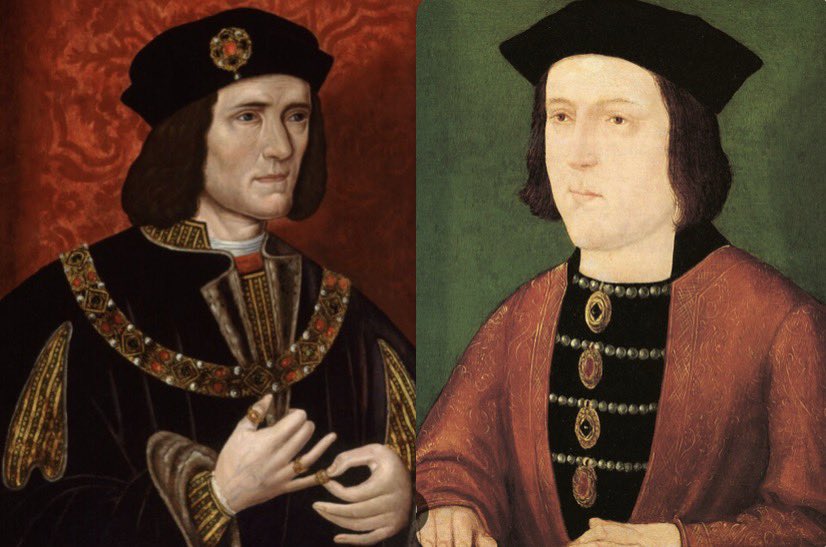

‘I would Your Highness would depart the field, the Queen hath best success when you are absent.’ - #HenryVI 2:2
#ShakespeareSunday

"Is this government of Britain's Isle, and this the royalty of Albion's King?"
#ShakespeareSunday #Shakespeare @HollowCrownFans #HenryVI
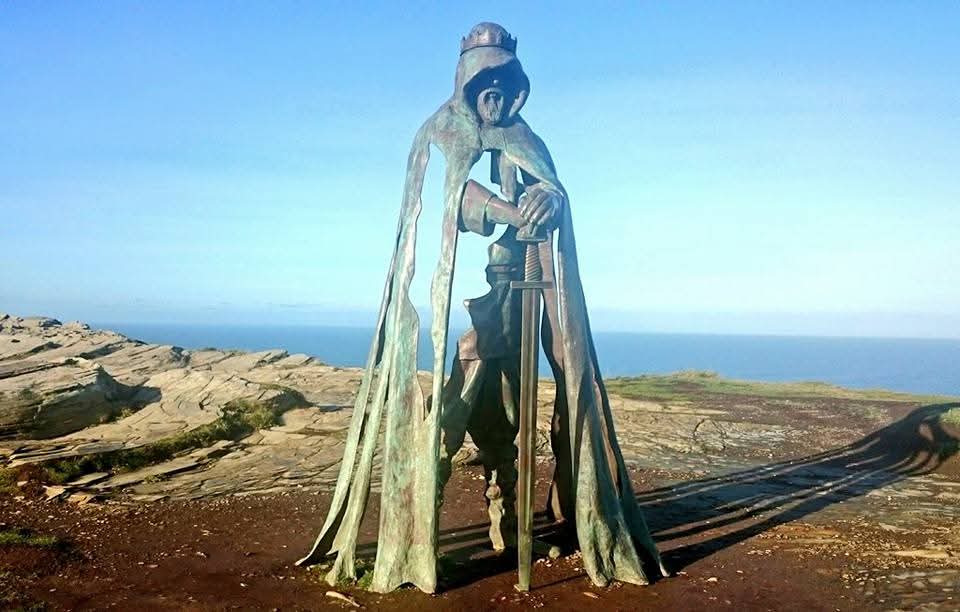
#WarsoftheRoses
OTD in 1450 - The prediction of the alchemist & sorcerer John Stacy came true, when #HenryVI’s favourite William de la Pole, Duke of Suffolk was captured & executed in the English Channel on board the Nicholas of the Tower.
Parliament had Suffolk sent to the Tower charged with treason on 29 January 1450. England was close to defeat in the #HundredYearsWar & Suffolk was widely blamed. This was due to his previous advocacy of a peace policy (he had brokered the King’s 1445 marriage to Margaret of Anjou) & the difficulty for the Lords & Commons of being seen to attack the King directly.
The murder of Suffolk’s ally & fellow royal favourite Bishop Moleyns at the hands of disgruntled sailors in early January 1450 had put Suffolk on his guard. He attempted to mount a proactive defence of his actions in Parliament, but to no avail. All he succeeded in doing was inciting his opponents to pursue a treason charge & secure his imprisonment.
According to the charges recorded in the Parliament Roll, Suffolk’s ‘misdeeds’ extended far beyond negligence in the pursuit of the war in France, with ‘the realm of England is about to be sold to the King’s enemy of France... where he would be assisted by Suffolk, who had fortified the castle of Wallingford to act as a place where the French invaders might remain until the time they might achieve their evil purpose.’
William Lomner wrote to John Paston, that Stacy had warned Suffolk that ‘if he might escape the danger of the Tower, he should be safe.’ The Duke had not unreasonably assumed this meant the Tower of London & must have been greatly relieved on his release in mid-March 1450.
Ironically, while Suffolk had been imprisoned in the Tower he was kept safe & protected from direct retribution from his enemies. Having been released & granted royal clemency he was in grave danger & would never reach the safety of the overseas exile he & Henry had envisioned. Instead his ship was pursued by the pirate vessel the Nicholas of the Tower. Suffolk was captured & taken on board the privateer, where he was subjected to a treason trial & executed, before his body was abandoned near Dover.
There were also contemporary whispers of a possible link between those who had murdered Moleyns & Suffolk, & the King’s cousin & later dynastic rival Richard, 3rd Duke of York. Henry himself may well have believed these rumours & seemed to have become increasingly suspicious of his cousin as 1450 progressed.


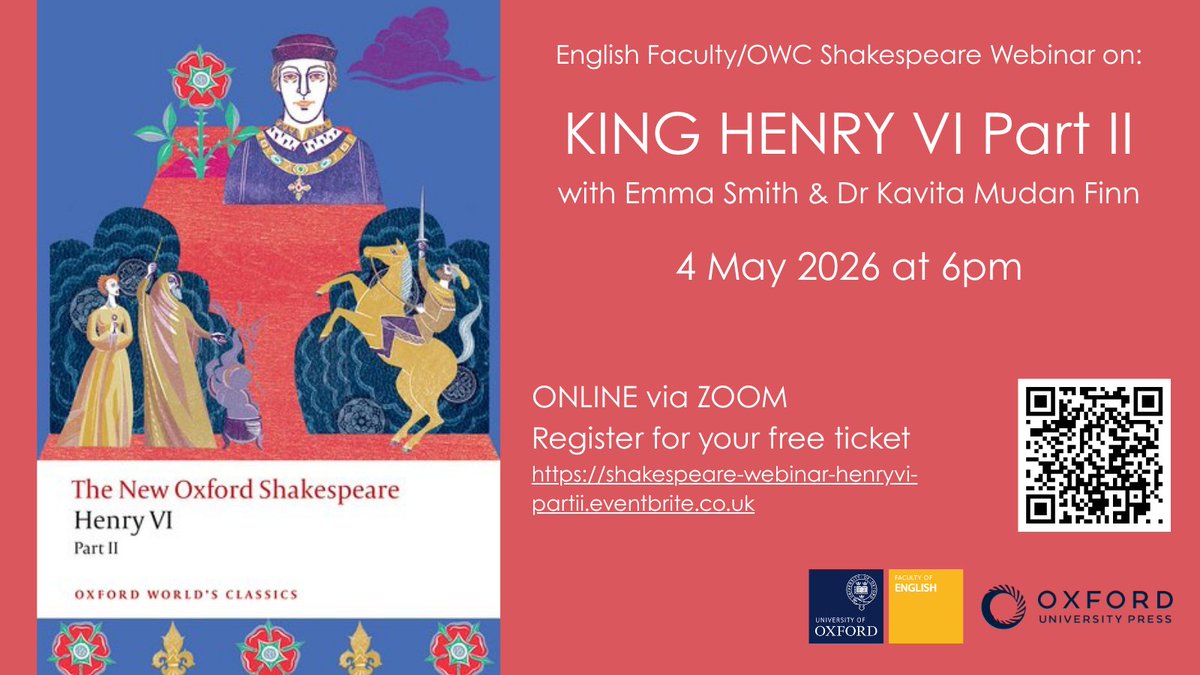
Explore Henry VI, Part II with Prof Emma Smith & Dr Kavita Mudan Finn in our next OWC #Shakespeare webinar!
Shakespeare webinar on Henry VI, Part II
🗓️4 May
🕐6-7.15pm
📍Online via Zoom
All welcome! #HenryVI
https://t.co/lWNPdITXTl
OTD in 1445 - The Lancastrian King #HenryVI married Margaret of Anjou. Margaret would later become the warrior Queen of the #WarsoftheRoses & be immortalised by Shakespeare as a ‘she-wolf.’
Margaret was the daughter of Rene of Anjou & Isabella of Lorraine. She was a niece of Charles VII of France through his marriage to her aunt Marie of Anjou. Charles was instrumental in Margaret’s 1444 betrothal to Henry VI, which was part of a truce in the #HundredYearsWar. The lead English negotiator was Henry’s favourite & chief minister the Duke of Suffolk.
The couple appear to have been happy, but the marriage was not an advantageous match for Henry as King of England. Margaret brought a small dowry of 20,000 Francs & Henry ended up ceding the province of Maine. The marriage became a symbol of the unpopular peace policy & contributed to Suffolk’s downfall in 1450.
Margaret was 15 when she wed Henry, who was 23. We have no evidence of any pregnancies for 8 years until Margaret fell pregnant with her only child, Edward of Westminster, born in October 1453. This combined with Henry’s religious fervour & seeming disinterest in sexual intimacy prompted speculation at the time & since that Edward was not his son.
1453 was the watershed year in Margaret’s life. The English lost the Battle of Castillon on 17 July 1453 & their last remaining territories in France, apart from Calais. The Hundred Years War was over & England had lost. News of this disaster prompted Henry’s mental collapse in August 1453. He would remain unable or unwilling to speak or otherwise communicate until Christmas 1454.
Margaret stepped into the political vacuum created by her husband’s incapacity & attempted unsuccessfully to become regent. She would subsequently become locked in a struggle for power & eventually the crown of England itself with Henry’s cousin Richard, 3rd Duke of York & his descendants, in the conflict we refer to as the Wars of the Roses.


show me a fictional character you wish you could comfort
Most Popular Users

Elon Musk 
@elonmusk
240.8M followers

Barack Obama
@barackobama
119.2M followers

Donald J. Trump
@realdonaldtrump
111.7M followers

Cristiano Ronaldo
@cristiano
111.1M followers

Narendra Modi
@narendramodi
107M followers

Rihanna
@rihanna
97.8M followers

NASA
@nasa
92.2M followers

Justin Bieber
@justinbieber
91M followers

KATY PERRY
@katyperry
87.9M followers

Taylor Swift
@taylorswift13
81.8M followers

Lady Gaga
@ladygaga
73.3M followers

Virat Kohli
@imvkohli
70.3M followers

Kim Kardashian
@kimkardashian
69.9M followers

YouTube
@youtube
68.7M followers

Bill Gates
@billgates
64M followers

Neymar Jr
@neymarjr
63.1M followers

The Ellen Show
@theellenshow
62.4M followers

CNN
@cnn
61.9M followers

Selena Gomez
@selenagomez
61M followers

X
@x
60.8M followers