

Top Tweets for #IRANIEN

Le Trésor américain coupe MEXC du système financier US.
• 16 Md$ de fonds illicites entre 2021 et 2026, selon le FinCEN
• 1,5 Md$ liés au contournement des sanctions russes
• 1 Md$ avec des plateformes iraniennes, dont 22 M$ liés aux Gardiens de la révolution et à la Banque centrale d’Iran
Pas tes clés, pas tes cryptos.
https://t.co/sA7ga6wVKQ

Demande à Mahsa Amini 🌹
Ce qu'elle en aurait pensé 🌹.
morte le 16 septembre 2022 à Téhéran trois jours après avoir été arrêtée par la « police des mœurs » iranienne pour un voile présumé « mal porté.
Elle a été battue par la police
Jusqu'à tomber dans le coma
elle ne s'est jamais réveillée.
Je ne te dis pas ça pour dęfendre le RN je ne suis
pas d'accord avec eux.
Mais
Il faut que tu saches que beaucoup de femmes meurs
à cause de ce voile.
Regarde ce que c'est le plan noor en Iran.
Mais ça ne me dérange pas que des femmes le porte en France.
On est dans un pays libre.

" Les États-Unis, Israël et l’ensemble du monde occidental ont une seule option à leur disposition concernant l’Iran qui est plus déterminante que les sanctions, les bombes, ou même l’armement du peuple iranien : reconnaître le prince héritier @PahlaviReza et son équipe comme le gouvernement légitime en exil de l’Iran.
Cela aurait dû se produire il y a longtemps. Cela devrait se produire maintenant. Et cela devrait passer avant tout le reste.
Pourquoi ? Parce que la plus grande menace pour la République islamique n’a jamais été les sanctions ou les bombes. C’est le peuple iranien lui-même, uni derrière la seule et unique alternative au régime. Et il y a deux choses que la République islamique a passé des décennies à essayer d’effacer et qu’elle craint encore profondément : le pouvoir du peuple iranien et le nom Pahlavi.
La reconnaissance donnerait à des dizaines de millions d’Iraniens à l’intérieur et à l’extérieur de l’Iran quelque chose que les sanctions et la force militaire seules ne peuvent jamais fournir : un centre de gravité politique, et une destination claire au-delà de la République islamique.
L’Occident continue de recourir à des outils qui exercent une pression sur le régime tout en laissant l’un de ses plus puissants leviers politiques intouché : l’autonomisation de l’alternative capable de transformer cette pression en un véritable changement politique.
Le prince héritier, avec une équipe de plus de 70 experts iraniens, a déjà développé le Projet de Prospérité de l’Iran (IPP), un plan complet qui trace la voie vers une transition stable, une gouvernance démocratique, et la reconstruction de l’Iran, dès le premier jour suivant l’effondrement de la République islamique.
Si l’objectif n’est pas simplement d’affaiblir la République islamique mais de la remplacer par un Iran démocratique et pro-occidental – et de créer la possibilité d’une paix durable au Moyen-Orient – alors arrêtez de traiter la question de ce qui vient ensuite comme une considération secondaire.
Tenez-vous aux côtés du peuple iranien. Reconnaissez le prince héritier Reza Pahlavi et accordez à leur volonté politique pour un Iran libre la reconnaissance internationale qu’elle mérite – maintenant."

Donc trump a été obligé de se planquer au milieu des sandwichs et des sodas
Et de prendre un avion incognito
En Turquie membre de l'otan
A cause d'une menace iranienne
Voilà où le trumpisme a conduit l'Amérique
Le modèle de Jordan bardella
Vous avez choisi trump
le modèle de marine le Pen
Vous avez obtenu le bourbier iranien
Et le racket institutionnel
Tous les detroits vont avoir désormais des péages de fait
Inflation record
Bravo les champions
Allez-y votez pour l'extrême droite
J'attends avec impatience le jour où cnews va offrir une chronique à un mollah iranien
Pour la liberté d'expression
Lol
Bande de bouffons

Les forces iraniens sont prêts à recevoir les agresseurs envahisseurs sionistes américains crapules Maudits
https://t.co/N0MMTJ1uNZ

Venez me faire changer d’avis sur les beurette/iranienne/arabe , je suis contre le métissage et venez me donner envie de me métisser ( ça va pas être simple )

Quand les Iraniens rassemblent 43 millions de personnes aux funérailles de leur Guide, Trump en Amérique n'arrive même pas à remplir les chaises de ses meetings électoraux. C'est la différence entre un leader aimé et un leader méprisé.

🇮🇷 Le Leader iranien s'appuie sur un Livre de lumière.
🇺🇸 Trump s'appuie sur Epstein—son "meilleur ami" pédophile.
L'un élève une nation. L'autre la traîne dans la boue. Pendant que l'Iran pleure un guide, l'Amérique embrasse un clown. Quel héritage laisserez-vous ? 🖕
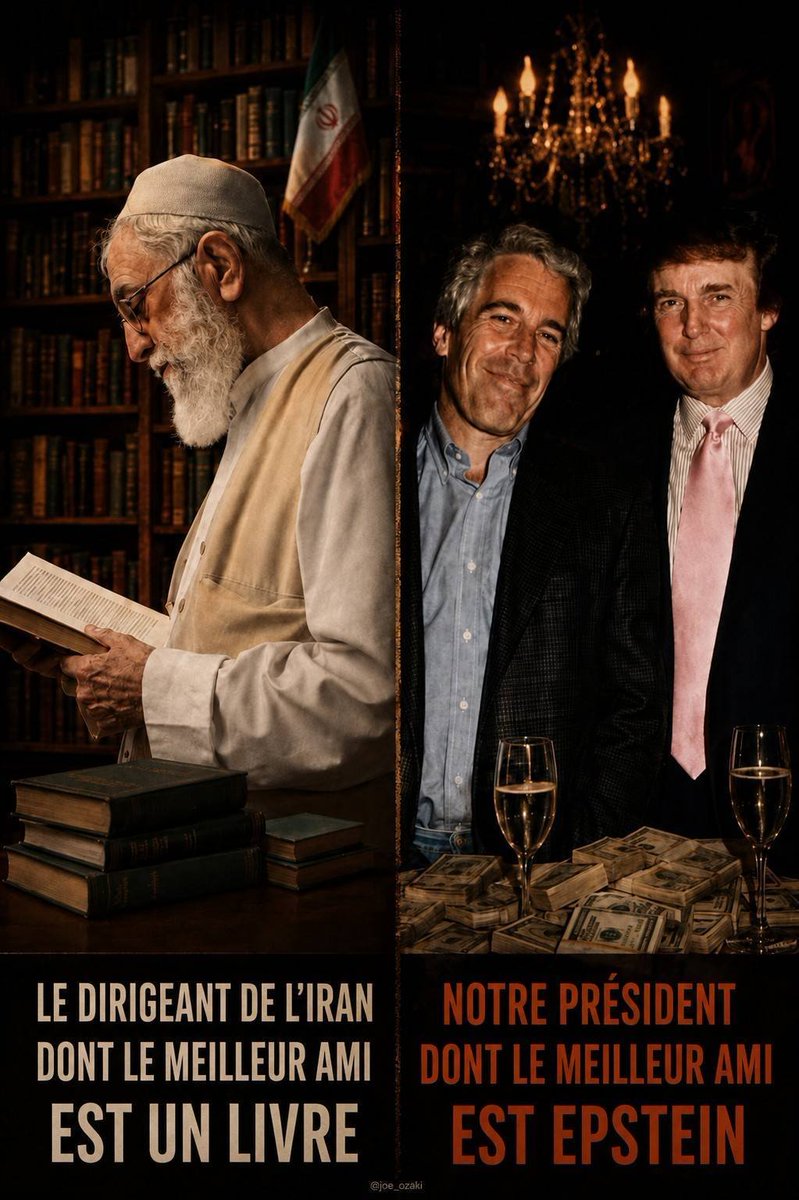

@AdamGirard1990 L'amour de son peuple?
Le régime des mollahs a fait tué 30 000 iraniens dans les rues cette année.
Votre antisémitisme vous fait raconter n'importe quoi

Mskn la Clim qui se sont manger les iranien sa fait plus mal que tout les drones que trump leur a lâcher

🇪🇬 Égypte - Iran 🇮🇷
🇪🇬🇮🇷 Match nul @2,7 (0,5%)
🇪🇬🇮🇷 BTTS tête @30 (0,1%)
🇪🇬 Salah @3,25 (0,6%)
🇪🇬 Salah X2 décisif @8 (0,1%)
🇪🇬 Marmoush @4 (0,5%)
🇪🇬 Marmoush X2 décisif @11,5 (0,1%)
🇮🇷 Taremi décisif @3,1 (0,3%)
🇮🇷 Taremi X2 @34 (0,08%)
Les égyptiens ont montrés un beau visage sur cette coupe du monde, je les vois capable de faire le jeu afin de tenter d’assurer cette 1ere place aujourd’hui.
Mais attention à cette équipe Iranienne qui a fait douté la Belgique, et n’oublions pas qu’1 pts pourrait potentiellement suffire aux 2 équipes, je pense qu’un match nul avec des buts serait possible.
#TeamParieur


🚨🚨🚨 MAIS ON A L’ARRÊT DU TOURNOI LÀ NON ?????????? 😱😱😱😱
LA BELGIQUE 🇧🇪 EST ÉCŒURÉE PAR LE GARDIEN IRANIEN 🇮🇷


Le commentateur de m6 il est insupportable ce fils de pute à sucer les iranien


Les termes officiels du mémorandum d'entente avec les États-Unis sont désormais connus, et c'est pire que prévu. La cérémonie de signature officielle n'aura lieu que vendredi, mais l'accord a déjà été signé électroniquement hier soir lors d'un dîner au château de Versailles. Quiconque connaît l'histoire du château sait que ce mémorandum d'entente constitue la deuxième grande capitulation signée à Versailles. Sauf que cette fois-ci, ce sont les États-Unis qui capitulent.
Voici pourquoi la situation est pire que prévu. Au fur et à mesure que les détails se sont dévoilés, il est devenu évident que cet accord n'était pas une simple pause – le statu quo n'étant pas maintenu le temps des négociations. Il s'agissait d'un retour en arrière, d'une restauration active de la République islamique. La seule question qui restait était de savoir à quelle vitesse ce processus se déroulerait, et d'après ces clauses, plus vite que nous ne l'aurions souhaité.
Des responsables américains, dont le vice-président, avaient précédemment assuré aux journalistes que l'accord prévoyait une marge de manœuvre, les allégements économiques et les sanctions n'augmentant que si l'Iran faisait preuve de bonne conduite et respectait ses engagements. Le texte, quant à lui, est moins précis. La concession financière la plus claire concerne l'octroi d'exemptions sur le pétrole, prévu à la section 10, qui, à elles seules, généreront 5 milliards de dollars de revenus mensuels. Par ailleurs, la section 11 semble indiquer que tous les actifs du régime seront immédiatement mis à disposition : dans le meilleur des cas, il s'agira d'un crédit que la République islamique pourra utiliser uniquement pour des achats humanitaires ; dans le pire des cas, il lui sera transféré directement. Quoi qu'il en soit, l'argent est fongible et, de plus, je ne vois pas exactement quel levier les États-Unis pensent conserver après avoir cédé d'emblée les actifs iraniens.
Comme cela est devenu évident ces derniers mois, deux des quatre objectifs du conflit – le financement des groupes armés supplétifs et l'arrêt du programme de missiles balistiques – ont été abandonnés. Trump a même défendu cette omission. « Si d'autres pays en possèdent, il est un peu injuste qu'ils n'en aient pas », a-t-il déclaré en France, lors d'une conférence de presse en marge du sommet du G7. « Si l'Arabie saoudite et le Qatar, et tous les autres pays en possèdent, je dirais que, proportionnellement, il est acceptable » que l'Iran possède également des missiles balistiques. Je n'ai pas vu l'Arabie saoudite tirer de missiles sur les États-Unis récemment, mais je m'égare. L'accord de Vienne sur le nucléaire iranien (JCPOA) comportait la même omission notoire – mais au moins, il ne promettait pas la levée de toutes les sanctions primaires et secondaires imposées au programme de missiles balistiques et au soutien au terrorisme. L'article 7 prévoit la levée de toutes les sanctions en attendant un accord final – ainsi, même si Trump parvient miraculeusement à un accord nucléaire solide, les autres activités néfastes de l'Iran pourront se poursuivre sans sanction. Des sources libanaises et régionales ont en effet indiqué à Reuters que l'Iran a promis d'accroître son financement du Hezbollah « dès que possible » une fois que les États-Unis auront dégelé les avoirs iraniens. Un point de plus pour l'accord de Vienne.
Le troisième des quatre objectifs initiaux ne s'en sort pas mieux : le protocole d'accord entérine l'abandon des manifestants, consacrant la non-ingérence dans les « affaires intérieures » de l'Iran – ceux qui espéraient un soulèvement dans les 60 prochains jours risquent d'être déçus. Il ne reste donc que le front nucléaire – le dernier objectif, dont l'issue demeure totalement incertaine. L'enrichissement zéro a déjà été abandonné par Trump la semaine dernière, mais le protocole d'accord va plus loin, définissant le nouveau minimum américain non pas comme l'exportation de son uranium enrichi, mais comme un enrichissement sur site sous la supervision de l'AIEA. Dans le cas de l'uranium, ce qui est enrichi peut aussi être enrichi. Sans que la matière première ne soit entre des mains plus amicales et moins fanatiques, le terme « bon » ne convient pas à cet accord.
De plus, la clause 5 offre au régime son atout maître – celui qu'il a si efficacement utilisé contre les États-Unis –, son influence sur la navigation dans le Golfe. Ce levier a toujours été sa menace la plus facile à actionner, la soupape qu'il pouvait actionner à sa guise pour attirer l'attention du monde. Un accord sérieux l'aurait privé de cet atout. Au lieu de cela, le protocole d'accord se contente d'évoquer la « négociation du statut » de cette voie maritime avec d'autres États de la région – une formulation qui abandonne discrètement le principe de liberté de navigation et renvoie la question à des pourparlers bilatéraux entre Téhéran et ses voisins. Il ne s'agit pas d'un règlement, mais d'un abandon des commerçants face à la foule, en leur demandant de se débrouiller entre eux. Les États-Unis ont soigneusement évité le terme « péage », si bien que l'Iran l'a rebaptisé « frais de service ». Le terme exact est « racket », et la seule chose dont l'Iran offre une protection, c'est lui-même.
La clause 6, relative au fonds de reconstruction, est sans doute une pilule encore plus amère à avaler pour les alliés du Golfe, en particulier ceux qui ont cru les États-Unis sur parole il y a deux semaines, lorsqu'ils se sont engagés à mettre « les ressources iraniennes [à la disposition] de leurs alliés du Golfe pour soutenir, réparer et atténuer les dommages futurs que l'Iran pourrait causer ». Cette promesse a été trahie. Au lieu que l'Iran prenne en charge les dommages qu'il inflige, le protocole d'accord instaure un plan Marshall alors que les nazis sont encore au pouvoir, et laisse à la France et à la Grande-Bretagne le soin de payer la facture de la reconstruction allemande.
Le problème le plus immédiat pour Israël réside dans la première clause : le Liban, dont le statut reste flou au regard du protocole d’accord. Une source du Hezbollah a déclaré aux médias émiratis que l’Iran avait informé le Hezbollah que le protocole d’accord prévoyait un retrait israélien progressif du Liban sur une période de 60 jours. Cette même source a ajouté que la décision de tout retrait incombait désormais à Israël, qui, tout comme le Hezbollah, n’est pas signataire du protocole d’accord. Une source politique libanaise a indiqué au même média que le Liban n’avait reçu « aucune garantie officielle » de retrait israélien et n’avait pas encore soulevé la question auprès des autorités américaines – une version qui contredit l’affirmation de l’Iran selon laquelle le protocole d’accord oblige clairement Israël à se retirer. Malgré l’assurance de l’ambassadeur américain en Israël, Mike Huckabee, selon laquelle « Israël n’a pas besoin de l’autorisation de l’Iran pour se défendre », l’accord a créé une situation dans laquelle une recrudescence des attaques contre le pays pourrait creuser le fossé entre les États-Unis et Israël, ce dernier étant contraint de riposter.
Il faut noter l'ordre des choses, dissimulé dans la dernière clause : les négociations sur les termes substantiels de l'accord final – les restrictions nucléaires, les plafonds d'enrichissement, tout ce qui est encore en apparence négociable – ne commenceront qu'après la mise en œuvre du cessez-le-feu, la levée du blocus, l'ouverture du détroit, les dérogations concernant le pétrole et le dégel des avoirs. Cet ordre révèle la supercherie. Il ne s'agit pas de l'échange « Hormuz contre Hormuz » que prétend l'administration : ouvrir le détroit, lever le blocus, et l'affaire est réglée. Les concessions importantes pour l'Iran sont toutes obtenues d'avance, accumulées avant même que Téhéran n'ait à concéder quoi que ce soit de substantiel en retour. Au moment où les véritables négociations commencent, la levée des sanctions est déjà effective, le pétrole circule et les avoirs sont dégelés. Le régime est rétabli en premier, et les négociations viennent ensuite. C'est le retour en arrière en une seule clause – et il est rapide.
Le seul point positif, aussi mince soit-il, est que l'armée américaine ne se retirera pas avant la conclusion d'un accord définitif. Comme l'a déclaré Trump hier : « Si cela ne me convient pas, s'ils ne se tiennent pas à carreau, nous reprendrons les bombardements. » Avec l'allègement des sanctions et les dérogations déjà annoncés, la menace d'une intervention militaire devient rapidement le seul moyen de pression restant dans l'arsenal américain. Est-ce que je le crois ? Moins qu'il y a deux mois, et encore moins qu'il y a une semaine ; mais cela reste, à tout le moins, une option sur la table.
Trump, de son côté, semblait peu préoccupé par les failles de l'accord. Lors d'une conférence de presse en France, peu avant qu'il ne déclare l'accord « signé » à Versailles, le correspondant de Fox News, Peter Doocy, lui a rappelé une de ses célèbres citations : l'Iran « n'a jamais gagné de guerre, mais n'a jamais perdu de négociation ». Trump a demandé qui avait prononcé ces mots. Apprenant qu'il s'agissait de lui, il a répondu qu'il s'en doutait, puis a établi la distinction qu'il souhaitait voir consignée : cette fois-ci, l'Iran avait « perdu militairement ».
Oui, Monsieur le Président, ils le font toujours, c'est bien là le problème.
Pour lire la suite de la newsletter d'aujourd'hui, cliquez ici.

The official terms of the U.S. Memorandum of Understanding are out—and it’s worse than anticipated. The official signing ceremony isn’t until Friday, but the agreement was already signed digitally last night during a dinner at the Palace of Versailles. Anyone familiar with the palace’s history knows this makes the MOU the second great surrender signed at Versailles. Except this time, the U.S. is the one capitulating.
Here’s why it’s worse than we thought. As the details slowly leaked, it became clear that this agreement is not a pause—the status quo held in place while negotiations ran their course. It was a rewind, actively restoring the Islamic Republic. The only question left was how fast it would run, and according to these clauses, faster than we would like.
U.S. officials, including the vice president, previously assured reporters that the agreement provides a “dial,” with economic and sanctions relief increasing only as Iran demonstrates good behavior and compliance. The text is less specific. The clearest financial concession involves the issuance of oil waivers in Section 10, which on their own will return monthly revenue of $5 billion; meanwhile, Section 11 seems to imply that all of the regime’s assets will be made available immediately—best case, that remains credit the Islamic Republic can use only for humanitarian purchases; worst case, it is transferred to them directly. Either way, money is fungible, and besides, I’m not sure exactly what leverage the U.S. assumes it will retain once it has surrendered Iranian assets up front.
As has been clear for the past couple of months, two of the conflict’s four goals—the funding of proxies and the ending of the ballistic missile program—have been abandoned. In fact, Trump defended the omission. “If other countries have them, it’s a little bit unfair for them not to have some,” Trump said in France, where he held a press conference on the sidelines of a Group of Seven summit. “If Saudi Arabia and Qatar, and they all have some, I would say that in relative proportion, I think it’s okay” for Iran to have ballistic missiles as well. I haven’t seen Saudi Arabia firing those missiles at the U.S. recently, but I digress. The JCPOA famously made the same omission—but at least it didn’t promise the removal of all primary and secondary sanctions on the ballistic missile program and on terror sponsorship. Section 7 provides for the removal of all sanctions pending a final deal—so even if Trump somehow clutches victory from the claws of defeat and secures a strong nuclear deal, Iran’s other malign activities can continue without sanction. Indeed, Lebanese and regional sources told Reuters that Iran has promised to increase Hezbollah’s funding “as soon as possible” once the United States unfreezes Iranian assets. Chalk up a point for the JCPOA.
The third of the original four goals fares no better: the MOU codifies the abandonment of the protesters, enshrining noninterference in Iran’s “internal affairs”—those hoping for an uprising in the next 60 days are likely to be disappointed. That leaves only the nuclear front—the last remaining goal, and one whose outcome remains entirely unclear. Zero enrichment was already abandoned by Trump last week, but the MOU goes further, defining the new U.S. minimum not as exporting its enriched uranium, but as on-site down-blending under IAEA supervision. In the case of uranium, what goes down can also go up. Without the material in friendlier, less fanatical hands, “good” is not an applicable adjective for the deal.
Not only that, Clause 5 gift-wraps the regime’s trump card—the one it has played to such great effect against the U.S. Iran’s leverage over Gulf shipping was always its readiest threat, the valve it could squeeze whenever it needed the world’s attention. A serious agreement would have taken that card out of their hands. Instead, the MOU merely gestures at “negotiating the status” of the waterway with other states in the region—language that quietly abandons the prior baseline of freedom of the seas and hands the question to bilateral talks between Tehran and its neighbors. That is not a settlement; it is leaving the shopkeepers alone with the mob and telling them to work it out among themselves. The U.S. assiduously avoided the word “tolls,” so Iran rebranded them “service fees.” The honest term is protection money—and the only thing Iran is offering protection from is itself.
Clause 6, the reconstruction fund, must come as an even more bitter pill for the Gulf allies—particularly those who took the U.S. at its word two weeks ago, when it pledged to make “Iranian assets [available] to its Gulf allies to support, repair and mitigate future damage that Iran may cause.” That promise has been inverted. Rather than Iran paying for the damage it inflicts, the MOU drafts a Marshall Plan while the Nazis are still in power—and leaves France and Britain to foot the bill for German reconstruction.
The most immediate problem for Israel is the first clause: Lebanon, whose status is left unclear by the MOU. A Hezbollah source told Emirati media that Iran had informed Hezbollah that the MOU provides for an Israeli withdrawal from Lebanon over a phased, 60-day period. The same source added that any withdrawal now rests with Israel, which, along with Hezbollah, is not a party to the MOU. A Lebanese political source told the same outlet that Lebanon has received “no official guarantees” of an Israeli withdrawal and has not yet raised the matter with U.S. officials—an account that sits at odds with Iran’s claim that the MOU plainly obligates Israel to withdraw. Despite U.S. Ambassador to Israel Mike Huckabee’s assurance that “Israel doesn’t need Iran’s permission to defend itself,” the agreement has created a circumstance in which increased attacks on the country could pry the U.S. and Israel apart as Israel is compelled to respond.
And note the sequencing, buried in the final clause: negotiations on the substantive terms of the final deal—the nuclear restrictions, the enrichment ceilings, everything still ostensibly up for grabs—will only begin after the ceasefire, the blockade’s removal, the maritime opening, the oil waivers, and the unfreezing of assets are already implemented. That ordering gives away the game. This is not the “Hormuz for Hormuz” swap the administration is selling—open the Strait, lift the blockade, call it even. The concessions that matter to Iran are all front-loaded, banked before Tehran has to concede anything of substance in return. By the time the real bargaining starts, the sanctions relief is flowing, the oil is moving, and the assets are unfrozen. The regime gets restored first and negotiates second. That is the rewind in a single clause—and it runs fast.
The silver lining, thin as it is, is that the U.S. military is not withdrawing until the conclusion of a final deal. As Trump put it yesterday, “If I don’t like it, if they don’t behave, we’ll go right back to dropping bombs.” With sanctions relief and waivers already forthcoming, the threat of military action is fast becoming the only stick left in the American arsenal. Do I believe him? Less than I did two months ago, and less still than a week ago—but it remains, at the very least, an option on the table.
Trump, for his part, seemed unbothered by the holes in the deal. At a press conference in France—shortly before he declared the agreement “signed” at Versailles—Fox News correspondent Peter Doocy read him back a famous line of his own: that Iran “never won a war, but never lost a negotiation.” Trump asked who had said it. Told it was him, he replied that he’d figured as much, then drew the distinction he wanted on the record: this time, Iran “lost militarily.”
Yes, Mr. President, they always do, that’s the point.
To read the rest of today's newsletter click here
https://t.co/wD4hSoAuje

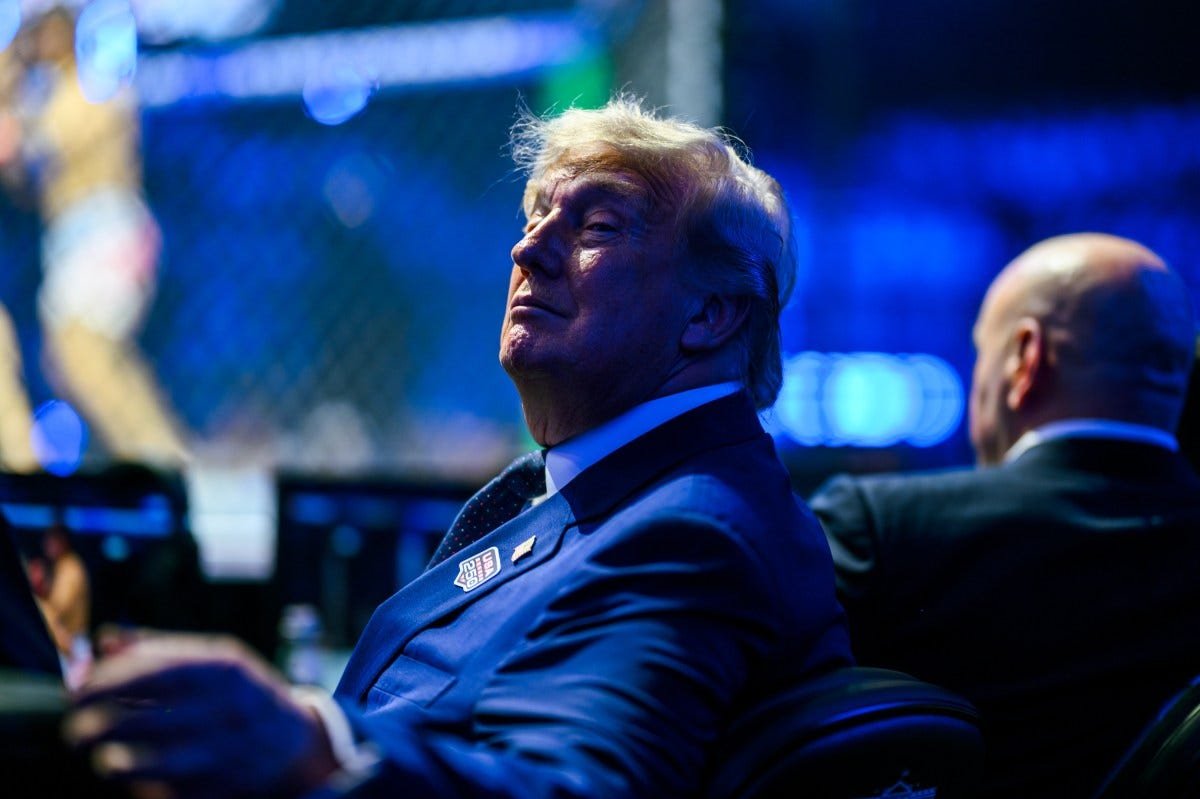

🚨C'est signé : Donald Trump a paraphé en personne le mémorandum d'entente USA-Iran (« Mémorandum d'Islamabad ») hier soir à Versailles, en marge du dîner avec Macron. Côté iranien, le texte avait été signé à distance par le négociateur en chef Ghalibaf en début de semaine.
🇮🇷 Téhéran : « Nos engagements sur Ormuz ont commencé. »
https://t.co/rF5Vtp2HGI

Mais les iraniens peuvent meme se prendre un coup d’couteau yaura pas faute hein

Même si un iranien se fait tirer dessus l’arbitre va dire ça joue
30000 iraniens massacrés
Trump : sortez
Sortez
J'arrive
Trump aujourd'hui :
Je m'entends très bien avec les dirigeants iraniens
Pire qu'un fiasco
Une ignominie digne des années 30
Trump est complètement dégénéré
#iran
Most Popular Users

Elon Musk 
@elonmusk
239.8M followers

Barack Obama
@barackobama
118.6M followers

Cristiano Ronaldo
@cristiano
114.3M followers

Donald J. Trump
@realdonaldtrump
111.7M followers

Narendra Modi
@narendramodi
106.9M followers

Rihanna
@rihanna
98.6M followers

NASA
@nasa
92.1M followers

Justin Bieber
@justinbieber
91.7M followers

KATY PERRY
@katyperry
89.9M followers

Taylor Swift
@taylorswift13
83.9M followers

Lady Gaga
@ladygaga
75.4M followers

Virat Kohli
@imvkohli
73.3M followers

Kim Kardashian
@kimkardashian
70.8M followers

YouTube
@youtube
68.6M followers

Neymar Jr
@neymarjr
66.3M followers

Bill Gates
@billgates
65.1M followers

Selena Gomez
@selenagomez
63M followers

The Ellen Show
@theellenshow
62.1M followers

CNN
@cnn
61.7M followers

X
@x
60.6M followers