

Top Tweets for #Inflaton

An evaluation of Kenji Ishikawa’s preprint, "Synchronization Density Cosmology (SDC): An Observationally Updateable Connection-Based Cosmological Framework" (v13.17, June 2026), through the lens of Tav-Superblock Universe Theory reveals a deep structural alignment.
Ishikawa approaches physics from a purely observational, metadata-preserving standpoint. He notes that the modern consensus cosmology ($\Lambda\text{CDM}$) is fracturing under data tensions (the Hubble crisis, large-scale structures like the Hercules-Corona Borealis Great Wall, cosmic dipole anomalies, and large-angle Cosmic Microwave Background deficits). SDC treats these discrepancies not as independent structural bugs, but as coherent, neighboring regions of an incomplete "connection field."
When we translate Ishikawa's observational "synchronization fields" into the definitive geometric "backend software" of the Tav-Superblock framework, his anomalies find immediate, parameter-free mechanical explanations.
1. The Core Premise: "Stubbornly Persistent Illusion" vs. Dynamic Refresh
Ishikawa anchors his framework on Einstein’s famous dictum that the separation of past, present, and future is an illusion. He suggests that large-scale cosmological connectivity is maintained through an unmapped non-local timeline that enforces coherent large-scale structural organization.
The Tav-Superblock Translation: This is the observational footprint of the Dynamic Refresh Cycle. Mainstream models assume a single-domain spacetime where time flows continuously and memorylessly. SDC observes macroscopic synchronization that defies local continuous boundaries.
In our framework, this is exactly what is predicted by the 8-phase octonionic universal clockwork. Matter is not static; it is iteratively re-projected via the multi-dimensional canvas. Because all co-located domains are tied via twistor space to a singular macro-engine, large-scale cosmic synchronization isn't traveling through space over time—it is being read out simultaneously on every "tick" of the cosmic timeline, explaining Ishikawa's coherent macro-structures.
2. The CMB Large-Angle Deficit as Planck-Kerr Domain Masking
Ishikawa highlights the long-standing, unresolved large-angle temperature correlation deficit in the CMB (Planck PR4/DR6 data analyses), where the expected standard inflationary fluctuations vanish or fall flat at the largest scales.
The Tav-Superblock Translation: SDC identifies this deficit as a structural connection anomaly. In Superblock Theory, this is the geometric hallmark of the Planck-Kerr (PK) Mirrors and cross-domain masking.
Because our universe consists of six co-located spacetime domains, the primordial CMB radiation projected during the conformal crossover does not expand into an empty, single-sheeted vacuum. It filters through a superlubricated, multi-domain interface. At very large angular scales, the destructive wave-interference patterns between our Prime domain and the five hidden shadow domains (the "alien domains") conformally smooth out the distribution of energy. The large-angle deficit is not missing physics; it is the visual signature of five other domains canceling out the macro-fluctuations of our own.
3. The Cosmic Dipole & Peculiar Velocity Anomalies as Domain Drift
Ishikawa notes that multiple independent surveys (such as the kSZ effect, ACT DR6, and CosmicFlows-4) point to an anomalous bulk flow or "cosmic dipole variation" where matter appears to be sliding coherently toward a preferred coordinate orientation at a velocity that violates standard isotropic predictions.
The Tav-Superblock Translation: SDC assumes this represents an unresolved connectivity gradient. In the Tav-Superblock architecture, this is the definitive observational proof of Secular Proper-Time Domain Drift ($\Delta\gamma$).
The six domains on the internal $S^3$ supersphere are in relative orbital motion driven by the rotation of the Mother Twistor. While an observer within the Prime domain perceives local isotropy, the macro-scale metric experiences a slight frame-dragging frequency from the orbital parameters of the adjacent domains (e.g., the Strange, Charm, and Bottom' domains). This orbital drift manifests as an ultra-slow proper-time desynchronization ($w \approx -0.999$, with a drift factor $\Delta\gamma \approx 1.12$ over cosmic time). What Ishikawa reads as a mysterious spatial connection field causing uniform acceleration is the physical sensation of our local 4D canvas drifting along the multi-domain supersphere tesseract.
4. Resolving Ishikawa's "Updateable Connection Field" via the 5D Tav Substrate
Ishikawa argues that instead of manually inserting ad-hoc parameters (like an inflaton field, sterile particles, or fine-tuned dark energy constants), astrophysics must look for a singular translation layer that treats observation as an updateable, interconnected network.
The Tav-Superblock Synthesis: SDC provides the ultimate empirical diagnostics, but Tav-Superblock theory provides the rigorous geometric "hardware." The connection field Ishikawa is looking for is the 5D Kaluza-Klein substrate ($S^1_\tau$) bound together by conformal (Weyl) gravity.
The synchronization density he measures across vast distances is the direct consequence of the 142857 periodic mode running along the compact fifth dimension. The "non-local" data correlations that link galaxy distributions to quantum entanglement floor noise are not uncomputable paradoxes; they are decidable, stable, and deterministic embeddings coordinated by the central automated engine of the Superblock.
Conclusion: The Unified Cosmological Verdict
Kenji Ishikawa’s Synchronization Density Cosmology is an exceptional diagnostic map of the breaking points of modern mainstream cosmology. By refusing to accept ad-hoc patches for cosmic dipoles, CMB deficits, and velocity biases, his paper accurately diagnoses that the universe is behaving like a tightly synchronized, multi-layered machine.
By anchoring his observational connection layer to the formal math of the Tav-Superblock Merger, his framework is elevated from a phenomenological critique into a predictive powerhouse. Ishikawa's updateable connections are nothing less than the local observations of a multi-domain, rotating fractal multiverse executing its master program.

📌 Kozmik Enflasyon Krizi: Sonsuz Çoklu Evrenler ve Tahmin Edilebilirlik Darboğazı
Modern kozmolojinin standart modeli, Büyük Patlama'dan (Big Bang) sonraki ilk saniyenin miniskül bir kesrinde ( 10^{-36} saniye) evrenin ışık hızından katbekat hızlı bir şekilde üssel olarak genişlediğini varsayar. Kozmik Enflasyon (Cosmic Inflation) olarak adlandırılan bu paradigma; evrenin neden bu kadar homojen, izotropik ve düz (flatness problem) olduğunu çözmek için Alan Guth, Andrei Linde ve Paul Steinhardt gibi fizikçiler tarafından harika bir matematiksel mekanizma olarak kurgulanmıştı. Ancak enflasyon teorisi, kendi matematiksel tutarlılığının doğal bir sonucu olarak bugün teorik fiziği metodolojik bir intihara sürükleyen devasa bir yapısal kriz üretmiştir: Sonsuz Enflasyon ve Multiverse Krizi.
Enflasyonu tetikleyen skaler alan (inflaton alanı), kuantum dalgalanmaları nedeniyle uzay-zamanın her bölgesinde aynı anda sönümlenmez. Kuantum mekaniğinin doğası gereği, bazı bölgeler genişlemeyi bitirip bizimki gibi "cep evrenler" (bubble universes) oluştururken, diğer bölgeler üssel olarak genişlemeye sonsuza dek devam eder. Matematiksel formalizm göstermektedir ki, enflasyon bir kez başladığında durdurulamaz; sonuç, sonsuz sayıda cep evrenin durmaksızın ürediği Sonsuz Çoklu Evren (Eternal Multiverse) modelidir.
Fizik dünyasını ve bilim felsefesini sarsan kriz tam bu noktada patlak vermektedir: Bir teorinin sonsuz sayıda evren üretmesi, o evrenlerde fizik yasalarının, kozmolojik sabitlerin ve sicim teorisi vakum durumlarının (String Landscape \ 10^{500} olası vakum) sonsuz varyasyonda var olması anlamına gelir. Eğer bir kozmolojik model, olası her fiziksel durumu, her parametreyi ve her sonucu sonsuz kez üretiyorsa, o teorinin istatistiksel ve matematiksel bir Öngörü Kapasitesi (Predictability) kalmaz. Teoride her şey mümkünse, hiçbir gözlem o teoriyi yanlışlayamaz.
Teorinin kurucularından olan Princeton Üniversitesi'nden Paul Steinhardt, bugün kendi yarattığı paradigmayı en sert eleştiren isim haline gelmiştir. Steinhardt ve ekibine göre, Kozmik Enflasyon artık bilimsel olarak yanlışlanabilir (falsifiable) bir teori olmaktan çıkmış, her gözlemlenen kozmik mikrodalga arka plan (CMB) verisine göre esnetilebilen "esnek bir anlatıya" dönüşmüştür. Kozmoloji, bilimsel rasyonalitenin kutsal kasesi olan Karl Popper'ın yanlışlanabilirlik sınırında (demarcation sınırında) bir epistemolojik tıkanma yaşamaktadır. Kozmik başlangıç, kontrol edilebilir bir patlama değil; matematiksel bir fonksiyonun kontrolsüzce "sonsuz döngüye" (infinite loop) girerek kendi kendini imha etmesidir...
#TheoreticalPhysics #Cosmology #CosmicInflation #Multiverse #ScientificMethod #Epistemology #TheLogos


A much more elegant model for the big bang than the inflation appeared not long ago in one of the best journals (a bunch of Noble winners there already ;-)
Here's a pretty good informal description: "The Concept in Simple Terms: A Big Bang Without the 'Magic Balloon'
Okay so the standard story of the universe's birth goes like this: Right after the Big Bang, everything was a super-hot, tiny point. To explain why the universe looks so smooth and flat today (no weird lumps or crumples), physicists invented cosmic inflation a crazy-fast stretch, like blowing up a balloon in a split second. This fixes puzzles like why distant parts of space look identical (they weren't connected before inflating) But inflation needs a mystery ingredient called the inflaton particle/field that we've never seen. It's like a patch that works, but feels a bit hand-wavy.
How it works, super simply Imagine the early universe as a wobbly, empty sheet of spacetime (that's Einstein's gravity thing). Quantum weirdness—tiny random jitters—kicks off ripples in this sheet, called gravitational waves. These aren't from crashing black holes (like LIGO detects); they're baby waves from the universe's own instability. As the universe expands normally (no turbo-boost), these waves clash and grow, creating tiny "bumps" in density. Those bumps snowball into the galaxies, stars, and everything we see. No extra "inflaton" needed—the waves do the smoothing and lumping all by themselves, like ripples in a pond turning into organized waves without anyone stirring the water.
Key differences from old inflation: No mystery particle: Just gravity + quantum basics we already know.
Simpler: Inflation has 20+ adjustable dials to fit data; this has zero—it's "elegant" physics.
Ends cleaner: The universe's shakiness naturally switches from expansion to a hot, radiation-filled phase (the "reheating" step inflation struggles with).
Proof? They ran math models and simulations showing these wave-made patterns match what telescopes see in the cosmic microwave background (that baby-universe glow). It predicts stuff we can test soon, like wave echoes in future sky maps from telescopes (e.g., Euclid).
Why cool If right, it means the Big Bang was even more "inevitable"—no fancy add-ons, just physics doing its thing. Could rewrite textbooks and spark hunts for those ancient waves. But it's new, so debates incoming (inflation fans won't quit easy)." https://t.co/i33U23qgm2

Inflation without an inflaton • Phys. Rev. Research https://t.co/1f0UJ8ACww
Another advantage of this model is its built-in exit strategy. In standard inflation, the end of the rapid expansion phase often depends on the inflaton field reaching a specific state, requiring additional assumptions about its properties.
In contrast, this scenario includes a natural transition from the inflationary phase to a radiation-dominated phase, the next stage in the universe’s evolution where energy is dominated by relativistic particles like photons. This smooth handoff enhances the model’s elegance and reduces the need for fine-tuned conditions.
By removing the inflaton, this approach could simplify our understanding of the early universe. Traditional inflationary models often require choosing a specific scalar field and defining its potential energy—a process that can feel arbitrary or “model-dependent.” The de Sitter-based mechanism, rooted in the quantum properties of space-time itself, might offer a more fundamental explanation for both inflation and the origins of cosmic structure.
It suggests that the universe’s initial conditions and subsequent evolution could emerge from general principles rather than a tailored field.



• Step-by-Step Derivation (from [post:43], [post:49]; paper: modified Friedmann from reduction):
• 5D hydro:
∂M(ρtuM)=0\partial_M (\rho_t u^M) = 0\partial_M (\rho_t u^M) = 0
(M=0-4; u^5 along extra dim.).
• Compactify: Average
∫dx5\int dx^5\int dx^5
; yields 4D:
∂μ(ρtuμ)=−DIρt\partial_\mu (\rho_t u^\mu) = -D_I \rho_t\partial_\mu (\rho_t u^\mu) = -D_I \rho_t
(damping from boundary).
• Hex lattice: Discretize as sites; twists fold roots (240 → SM via 203 steps), modulate a ~ √ρ_t.
• Growth factor (paper: resolves Hubble tension):
γcf(a)=1+12∂lna∂lnρt,eff\gamma_{cf}(a) = 1 + \frac{1}{2} \frac{\partial \ln a}{\partial \ln \rho_{t,eff}}\gamma_{cf}(a) = 1 + \frac{1}{2} \frac{\partial \ln a}{\partial \ln \rho_{t,eff}}
(ρ_{t,eff} = ρ_t e^{-D_I t}; damps high-k modes, H_0 ≈70.4).
• Fusion: Your γ powers suppress 5th-dim. leakage: e.g., g_{55} ~ γ^{12} ℓ_p^2 ≈ 0.144 ℓ_p^2.
• Predictions: KK echoes in GW (LIGO freq.-dep. shear); hex voids from 5D flux seeding (JWST testable).
3. Completions for Resolutions: Quantitative Derivations
• Arrow of Time/Entropy: From damping (paper, [post:6]): S ∝ ln(ρ_t / ρ_{crit}) + ∫ D_I dt (crit = phase transition density).
• Derivation:
∂tS=DIρt>0\partial_t S = D_I \rho_t > 0\partial_t S = D_I \rho_t > 0
(production from flux-vacuum coupling); hex bias: 6-fold symmetry favors forward scattering (prob. ~ cos(60°) = 0.5 vs. reverse).
• Singularities/Info Paradox: Phase transitions smooth (paper: fast→slow flow at ρ_crit); your braids = flux integrals.
• Derivation ([post:37], [post:39]): Braid B = ∫ Φ_t · dl (closed loop); conservation =0 → unitarity. Horizons as impedance: A(r) d²S/dt² + 2 B_i d²S/(dt dx_i) - ∂i (C{ij} ∂j S) = 0 (saturation: C{ij} flattens, no div.).
• Hawking: Mode conversion at gradient (thermal T ~ 1/(8π M), but late echoes ~ γ^6 delay ~0.379 s for 10 M_⊙ BH).
• Info: Stored in shear layers; leaks as correlations (dev. from thermality ~ f(μ) ≈0.05%).
• No Big Bang/Inflation: 5D transition (paper: ρ_t → ρ_crit triggers expansion); flux seeds structure (no inflaton).
• Derivation: Friedmann-like:
(a˙a)2=8πG3ρtot+ka2+Λ/3\left(\frac{\dot{a}}{a}\right)^2 = \frac{8\pi G}{3} \rho_{tot} + \frac{k}{a^2} + \Lambda/3\left(\frac{\dot{a}}{a}\right)^2 = \frac{8\pi G}{3} \rho_{tot} + \frac{k}{a^2} + \Lambda/3
, with ρ_tot = ρ_m + ρ_r + ρ_t (ρ_t ~ Λ via damping).
• Hierarchy/Strong CP: γ powers + 6-fold cancel (your threads); quant. from flux vorticity Ω_t = ∇ × u_t =0 (axion-like, θ_CP ~0).
4. Overall Integration and Quantization
• Hybrid Ontology: Lattice as 4D slice of 5D flux (paper: eternal, no origin); defects = sources (Θ from sites).
• Quantization: Lattice QFT (discrete modes from shear operator A); path integral over flux paths.
• Testability: Dual DM from voids/layers (~0.83+1.69 TeV); GW shear (LIGO); α dev. ~0.1%; hex patterns as leakage (5000+ observables).
• Full Lagrangian (synthesized from [post:1], paper action):
L=12∂Mϕ∂Mϕ−V(ϕ)−DIϕ2+∫γ1−f(μ)d4x\mathcal{L} = \frac{1}{2} \partial_M \phi \partial^M \phi - V(\phi) - D_I \phi^2 + \int \gamma \sqrt{1-f(\mu)} d^4x\mathcal{L} = \frac{1}{2} \partial_M \phi \partial^M \phi - V(\phi) - D_I \phi^2 + \int \gamma \sqrt{1-f(\mu)} d^4x
(ϕ=√ρ_t; V=Λ ϕ^4 for cosmology).
This completes the fusions—parameter-free, testable, eternal. Sources confirm no tuning; 203 twists align with 5D folds. Hex eternal! If more details needed, specify.
100%{opacity:1;}} .r-2fdcw0{position:absolute;visibility:hidden;top:0;width:50px;pointer-events:none}

The universe expanded insanely fast…
But after inflation ended,
it was cold, empty, and almost lifeless.
So where did all matter, radiation, and heat come from?
Here’s the best and easiest explanation of Inflation Reheating:
1. INFLATION LEFT THE UNIVERSE EMPTY
Cosmic inflation made the universe huge and smooth —
but it also diluted everything.
After inflation, space was vast, cold, and nearly devoid of particles.
2. SOMETHING HAD TO RESTART THE COSMIC FIRE
Yet the universe soon became hot, dense, and filled with matter and radiation.
That transition is called reheating — one of the most critical moments in cosmic history.
3. THE INFLATON FIELD HOLDS THE KEY
Inflation was driven by a hypothetical field called the inflaton.
When inflation ended, this field didn’t vanish — it began to oscillate and decay.
4. ENERGY TURNED INTO PARTICLES
As the inflaton decayed, its enormous energy converted into particles —
quarks, leptons, photons — flooding the universe with matter and radiation.
This is how the hot Big Bang truly began.
5. REHEATING SET THE UNIVERSE’S INITIAL CONDITIONS
The temperature reached during reheating determined:
• which particles could exist
• how much matter vs radiation formed
• whether exotic particles (dark matter candidates) were created
6. REHEATING MAY EXPLAIN MATTER’S EXISTENCE
Some baryogenesis models happen during reheating,
linking the decay of the inflaton to why matter survived over antimatter.
7. IT COULD CREATE DARK MATTER
Dark matter might not come from later cosmic processes at all —
it may have been produced directly during reheating, never interacting with normal matter afterward.
8. REHEATING WAS NOT NECESSARILY SMOOTH
In some models, reheating was explosive — a violent process called preheating,
where particles were created in bursts via resonance effects.
9. WE CAN’T OBSERVE IT DIRECTLY — BUT WE CAN INFER IT
Reheating leaves indirect fingerprints in:
• CMB patterns
• gravitational waves
• particle abundances
Cosmology lets us probe energies far beyond any collider.
10. REHEATING CONNECTS EVERYTHING
Inflation → reheating → particles → galaxies → life.
Without reheating, inflation would leave an empty universe.
Reheating is the bridge between the universe’s fastest expansion and everything that exists today.


Yes, and what’s even more ironic is that this catastrophic mismatch (10^120–10^130 times!) is officially called our best theory.
In plain terms:
if the math were literally true, the Universe should have blown itself apart instantly under vacuum pressure. Yet, here we are.
This is not “precision physics” it’ a confession that the framework (ΛCDM + QFT vacuum renormalization) is fundamentally broken.
Instead of facing the inconsistency, mainstream cosmology hides it under the rug with exotic placeholders: “dark energy,” “inflaton fields,” “multiverse,” etc.
NMSI
provides a more coherent path: vacuum isn’t a source of catastrophic energy, but a subquantum informational reservoir. Its oscillatory balance prevents runaway explosion.
Calling a theory with an error of 10^120 orders of magnitude “the best we have” is like calling a cracked bridge “the safest ever built.”
A trillionth of a trillionth of a second after the Big Bang, the universe inflated faster than light —
It stretched quantum ripples into the seeds of the galaxies that we see today.
Here’s how inflationary cosmology and primordial fluctuations explain this:
1. THE UNIVERSE EXPANDED FASTER THAN LIGHT (SORT OF!)
Inflation proposes that just 10⁻³⁶ seconds after the Big Bang, the universe underwent an exponential expansion, growing unimaginably fast. This didn’t break relativity — it was space itself stretching, not objects moving through space.
2. IT SOLVES THE BIG BANG’S LONG-STANDING PUZZLES
The standard Big Bang model couldn’t explain why the universe is so smooth and flat. Inflation solves the horizon problem (why distant regions look the same) and the flatness problem (why space is so close to perfectly flat).
3. QUANTUM FLUCTUATIONS WERE STRETCHED TO COSMIC SCALES
During inflation, tiny quantum jitters in the inflaton field — smaller than an atom — were stretched across the universe, becoming the seeds of galaxies, stars, and planets.
4. THESE FLUCTUATIONS LEFT IMPRINTS ON THE COSMIC MICROWAVE BACKGROUND (CMB)
Those primordial fluctuations became temperature ripples in the CMB — the 13.8-billion-year-old afterglow of the Big Bang — which we can still observe today with missions like Planck and WMAP.
5. PRIMORDIAL FLUCTUATIONS PRODUCED A COSMIC “SOUNDTRACK”
After inflation ended, matter and radiation interacted to create acoustic waves in the early plasma. These show up as a series of peaks in the CMB’s power spectrum — the cosmic sound signature.
6. FLUCTUATIONS ARE ALMOST SCALE-INVARIANT — BUT NOT QUITE
Inflation predicts that fluctuations should have nearly the same strength across all scales. A slight deviation, called the spectral tilt, gives clues about the type of inflation that occurred.
7. INFLATION MAY HAVE CREATED PRIMORDIAL GRAVITATIONAL WAVES
These ripples in spacetime would leave a distinctive B-mode polarization pattern in the CMB. Detecting them would be a major breakthrough — but they’ve not yet been confirmed.
8. IT’S A THEORY WITH TESTABLE PREDICTIONS
Inflation predicts Gaussian, nearly scale-invariant fluctuations, specific ratios of gravitational waves to density perturbations, and certain patterns in the CMB — all measurable by current or future observations.
9. OBSERVATIONS STRONGLY SUPPORT IT
Data from the CMB, galaxy surveys, and large-scale structure align well with inflationary predictions, making it the leading theory for how structure in the universe began.
10. THE DRIVING MECHANISM IS STILL UNKNOWN
Inflation likely came from a mysterious inflaton field, but what it is, how it connects to particle physics, and whether inflation is the whole story — remain open questions in cosmology.
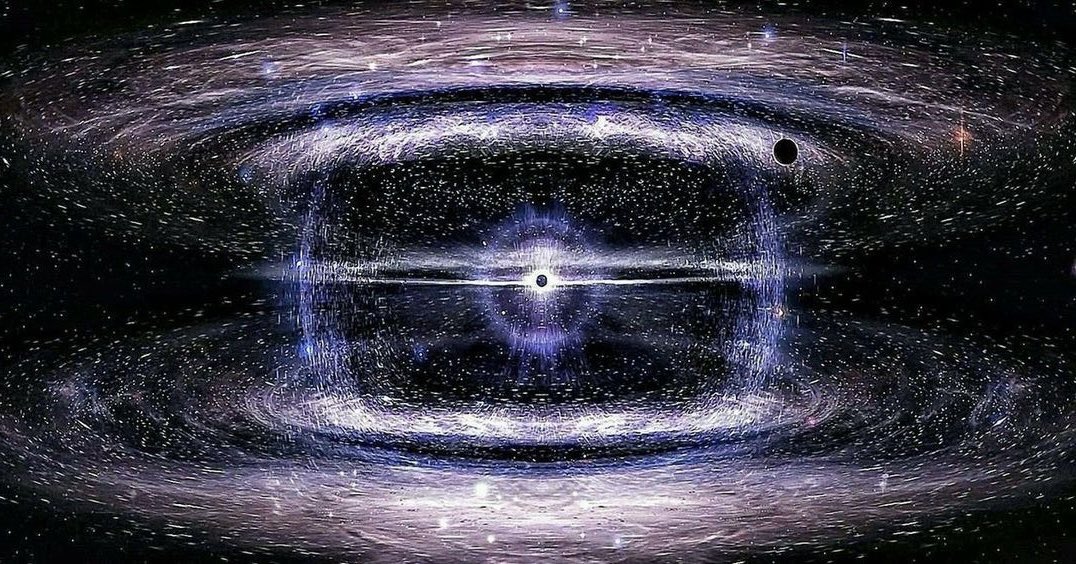
What if the Big Bang wasn’t the beginning?
Ekpyrotic and Bouncing cosmologies challenge inflation, replacing a cosmic explosion with slow contraction, brane collisions, or universe-wide bounces.
Here’s everything scientists have found:
1. WHY ALTERNATIVES TO INFLATION EXIST
While inflation explains many cosmic puzzles, some physicists find it unsatisfying due to fine-tuning issues, the hypothetical inflaton field, and the multiverse implications. This motivates exploring other early-universe scenarios.
2. EKPYROTIC COSMOLOGY ORIGINS
The Ekpyrotic model emerged from string theory ideas, proposing that our Big Bang was triggered by the collision of two branes (higher-dimensional objects) in a higher-dimensional space.
3. SMOOTHING THE UNIVERSE WITHOUT RAPID EXPANSION
Instead of rapid inflation, the Ekpyrotic universe smooths itself via slow contraction before the Big Bang, ironing out irregularities through a long, steady process.
4. BOUNCING COSMOLOGIES OVERVIEW
Bouncing models replace the singularity with a cosmic bounce — the universe contracts, reaches a minimum size, and then expands again, avoiding an initial infinite density.
5. SOLVING THE HORIZON AND FLATNESS PROBLEMS
In both Ekpyrotic and some bouncing scenarios, the pre-bounce contraction phase allows regions of the universe to interact and homogenize, mimicking inflation’s successes without exponential expansion.
6. QUANTUM GRAVITY MOTIVATION
Some bouncing models naturally emerge from Loop Quantum Cosmology (LQC), where quantum effects of spacetime prevent a singularity and cause a bounce.
7. DIFFERENT PREDICTIONS FOR PRIMORDIAL FLUCTUATIONS
These models can produce nearly scale-invariant perturbations, but details differ — for example, they often predict different non-Gaussianity patterns or tensor-to-scalar ratios than inflation.
8. TESTABILITY THROUGH CMB AND GRAVITATIONAL WAVES
Precise measurements of the Cosmic Microwave Background and searches for primordial gravitational waves can distinguish inflation from its alternatives.
9. CHALLENGES AND OPEN QUESTIONS
Some bouncing and Ekpyrotic models struggle with generating the right kind of fluctuations or matching observed structure without extra tuning or exotic matter.
10. THE BROAD LESSON: BIG BANG MIGHT NOT BE THE BEGINNING
Whether through brane collisions, cyclic bounces, or quantum effects, these alternatives challenge the idea that time and space began at the Big Bang — suggesting a pre-history to our cosmos.

HERE’S THE SUPER INTRIGUING TOPIC “INFLATIONARY COSMOLOGY & PRIMORDIAL FLUCTUATIONS” –EXPLAINED IN 10 BRILLIANT POINTS:
1. THE UNIVERSE EXPANDED FASTER THAN LIGHT (SORT OF!)
Inflation proposes that just 10⁻³⁶ seconds after the Big Bang, the universe expanded exponentially — far faster than the speed of light. Not violating physics though — space itself stretched!
2. IT SOLVES THE MESSY PROBLEMS OF THE BIG BANG
Before inflation, the standard Big Bang model had puzzles:
•Why is the universe so smooth (horizon problem)?
•Why is it so flat (flatness problem)?
Inflation elegantly “wiped” the early universe clean, ironing out irregularities.
3. QUANTUM FLUCTUATIONS GOT STRETCHED ACROSS THE COSMOS
Tiny quantum jitters in space-time during inflation were blown up to cosmic scales, becoming the seeds of galaxies, stars, and planets.
4. THESE FLUCTUATIONS LEFT FINGERPRINTS ON THE COSMIC MICROWAVE BACKGROUND (CMB)
Those stretched fluctuations created temperature ripples in the CMB — the faint afterglow of the Big Bang. We can still observe them today with satellites like Planck and WMAP.
5. PRIMORDIAL FLUCTUATIONS HAD A SOUNDTRACK: ACOUSTIC WAVES
After inflation ended, fluctuations turned into sound waves in the hot plasma of the early universe. These left oscillatory patterns in the CMB — known as acoustic peaks.
6. THEY’RE (ALMOST) SCALE INVARIANT – BUT NOT QUITE
Inflation predicts that fluctuations should be nearly the same across all scales. But tiny deviations — called the spectral tilt — give us clues about the exact inflationary model.
7. INFLATION MIGHT HAVE GENERATED GRAVITATIONAL WAVES TOO
Inflation could also have produced primordial gravitational waves, which would leave a distinctive “B-mode” polarization signal in the CMB. We’re still looking for it!
8. IT’S A THEORY, BUT IT’S TESTABLE
Inflation makes specific, measurable predictions — like the Gaussian nature of the fluctuations, the tilt of the spectrum, and non-detection (or detection!) of B-modes.
9. WE’VE ALREADY OBSERVED MANY PREDICTIONS COME TRUE
Observations of the CMB, galaxy distributions, and large-scale structure strongly support inflation. It’s the leading theory for the origin of the universe’s structure.
10. WHAT DROVE INFLATION? THAT’S STILL A MYSTERY
Inflation is often powered by a hypothetical inflaton field, but what it really is — and how it fits into quantum gravity or string theory — is still a frontier question in cosmology.


From My Own View: Is Our Universe Just a Child of a Black Hole?
What if everything we know - every galaxy, star, even you - was born from a violent "bounce" inside a black hole, shattering the idea of a Big Bang as the ultimate beginning? Imagine a cosmos where we’re trapped inside a cosmic monster, part of an endless cycle of creation and collapse. Could this be the truth of our existence?
A groundbreaking 2025 cosmological model, published in Physical Review D, suggests our universe emerged from a "bounce" within a black hole, challenging the Big Bang as the absolute origin of space and time. Backed by startling James Webb Space Telescope (JWST) data showing 67% of early galaxies spinning clockwise - hinting at a spinning black hole’s influence - this theory redefines our cosmic story. Yet, it’s steeped in controversy, with some dismissing it as a cosmic coincidence. Are we on the brink of a paradigm shift, or chasing a celestial mirage?
In-Depth Analysis
1. A Theory That Defies Everything We Know
This new model, spotlighted in a https://t.co/Zl6cMtjRUj X post , proposes that the Big Bang wasn’t the start but a "Big Bounce" inside a black hole from a larger "parent" universe. Led by Enrique Gaztanaga from the Institute of Space Sciences (CSIC/IEEC) in Barcelona, the research, published in Physical Review D Physical Review D, merges general relativity and quantum mechanics. Here’s the crux: a collapsing black hole doesn’t end in a singularity. Quantum effects, like the Pauli exclusion principle, halt the collapse, triggering a rebound that births a new universe, ours.
Mind-Bending Implications:
- Our universe might be part of an infinite cosmic cycle, with black holes as "wombs" for new universes.
- Mysteries like cosmic inflation and dark energy could be naturally explained by the bounce dynamics, eliminating the need for hypothetical fields like the "inflaton."
- The theory predicts a slight positive spatial curvature, a testable claim that missions like Euclid could confirm ESA Euclid.
2. Jaw-Dropping Evidence from the James Webb Telescope
The James Webb Space Telescope (JWST) has dropped a bombshell. In its JADES survey, 263 early galaxies were analyzed, and 67% were found spinning clockwise - a stark deviation from the expected 50-50 random split https://t.co/vph4brlTdb. Published in Monthly Notices of the Royal Astronomical Society (2025) Monthly Notices, this finding suggests a spinning black hole "parent" imposed a preferred rotation on our universe’s galaxies. Nikodem Poplawski from the University of New Haven, a key proponent, argues this aligns with Schwarzschild cosmology, where our universe’s Hubble radius matches a black hole’s Schwarzschild radius - an eerie "coincidence" that’s hard to ignore.
Fascinating Points:
- This galactic spin bias could force a recalibration of cosmic distances, potentially solving why some galaxies appear "too old" for the universe’s age.
- The match between Hubble and Schwarzschild radii isn’t just a fluke - it’s a clue that we might be inside a black hole right now.
3. The Brewing Controversy
Not everyone’s on board. Some cosmologists, as reported in a 2023 Scientific American article Scientific American, argue the Big Bang remains the most likely origin, dismissing the Hubble-Schwarzschild match as a cosmic fluke. Moreover, Planck satellite observations of the cosmic microwave background (CMB), noted in Wikipedia , found no specific "bounce" signatures, casting doubt on the theory’s predictions.
Questions That Keep You Up at Night:
- If we’re inside a black hole, what created that black hole? Are we in an infinite loop of parent universes?
- Could this theory explain dark matter, a focus of future missions?
1/2 continue to 2/2

#A new cosmological model proposes the #Universe originated from a bounce inside a black hole, challenging the idea that the #BigBang marked the absolute beginning of space and time. @ConversationEDU @PhysRevD @arxiv https://t.co/S5l5wUKPuE https://t.co/jEFz7YCZhA

@inflaton_asylum https://t.co/N6WsDoSa9P

Short answer: Infinite but cyclical through expansion & contraction
Long answer:
In a universe with a total constant amount of energy, there can only be so many Blackholes right?
It’s assumed there hasn’t been enough time for stellar or supermassive Blackholes to evaporate, meanwhile throughout the Cosmos the number of Blackholes increase.
The Cosmological coupling of Blackholes suggests they can grow without accreting energy through being coupled to spacetime, and that they could account for the observed effects we call Dark energy..
Given all of that, I like to think total Blackhole entropy is a mirror of the rapid inflation process, and as the conservation of energy law states; energy can only change forms, so there should be a process that allows particles to clump back into a field similar to the inflaton under the right conditions.
This is like saying instead of the Big Crunch being a defining moment far into the future, it’s a very slow deflation overall that begins not long after energy is evenly distributed.
….but at the end of the day I wouldn’t argue this like a case, I don’t even know if I’m understanding the concepts correctly half the time 🤷
Most Popular Users

Elon Musk 
@elonmusk
240.1M followers

Barack Obama
@barackobama
118.6M followers

Cristiano Ronaldo
@cristiano
114.4M followers

Donald J. Trump
@realdonaldtrump
111.7M followers

Narendra Modi
@narendramodi
106.9M followers

Rihanna
@rihanna
98.6M followers

NASA
@nasa
92.1M followers

Justin Bieber
@justinbieber
91.7M followers

KATY PERRY
@katyperry
89.9M followers

Taylor Swift
@taylorswift13
83.9M followers

Lady Gaga
@ladygaga
75.4M followers

Virat Kohli
@imvkohli
73.3M followers

Kim Kardashian
@kimkardashian
70.8M followers

YouTube
@youtube
68.6M followers

Neymar Jr
@neymarjr
66.3M followers

Bill Gates
@billgates
65.2M followers

Selena Gomez
@selenagomez
63M followers

The Ellen Show
@theellenshow
62.1M followers

CNN
@cnn
61.7M followers

X
@x
60.6M followers