

Top Tweets for #Interoperable

@PrismaXai The Interoperable State Standard
6) Real-time cross-rollup state reads eliminate data silos across modular networks. By embedding asynchronous RPC hooks into core execution infrastructure, @PrismaXai sets the new standard for unified Web3 composability.

Larry Ellison, Founder of @Oracle, speaks about using Ai to automate the healthcare industry.
He keeps saying “automate” then he slips up and says “to connect everything”. It’s sounding like an interoperable future for healthcare is in the cards for the future of this company.

@BasmerW3 Interoperable formats turn spatial captures into usable developer infrastructure

🚀 CertiNexo is coming!
We're building a new crypto social network where Web3, digital identity, and reputation converge.
Join our early updates and be part of a more interoperable future.
#Web3 #Crypto #Blockchain #EarlyAdopter


ERCs matter because standards make Ethereum apps interoperable.
Imagine every token had completely different functions for:
Checking balances
Transferring tokens
Approving spending
Checking allowances
Wallets would need custom logic for every token.
Standards solve this

How do we authorize every MCP tool call an AI agent makes?
🔹Keycloak IAM provides identity, authn and policy evaluation
🔹agentgateway enforces decisions
🔹OpenID AuthZEN standardizes authorization
Open standards. Interoperable.
Updated workshop!
https://t.co/5JM61zfMif

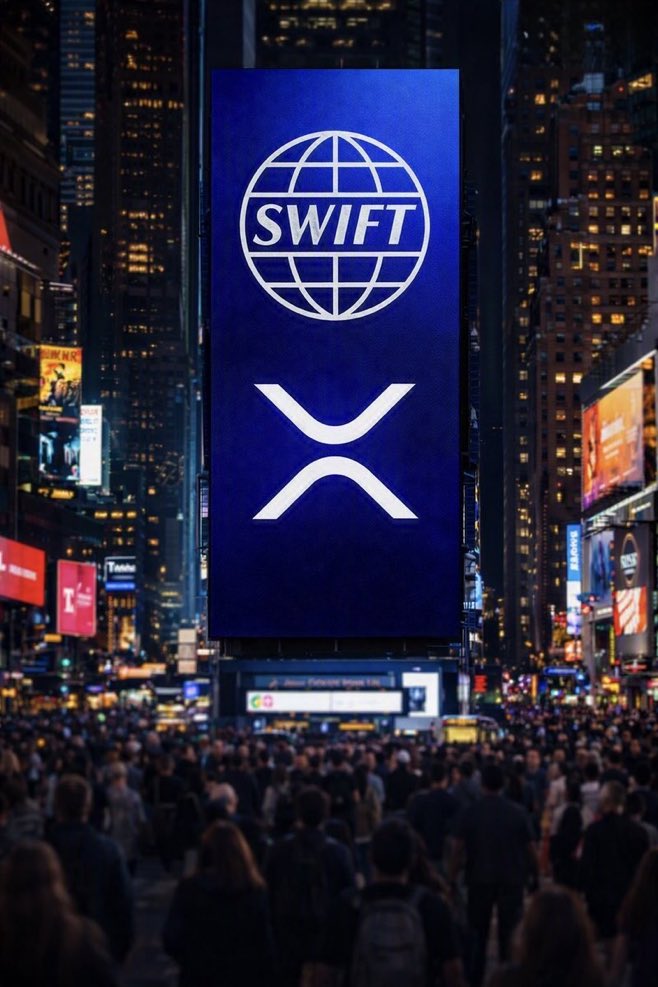
@Durjoy___das @RialoHQ @RialoIndian Real financial apps need secure, compliant, and interoperable infrastructure!

„Cross-border payments re-defined: Interoperable, compliant & built for the digital era!“ 😏
$XRP will teleport the outdated financial system into the 21st century! 🌎

@BlockByBlockHQ Yes, it's fully interoperable; Context, compiled.
Any size repo, monorepo, its exactly the same.

@Mr_BONI_ Regulation creates the framework, but identity and verification create the trust layer. As digital payments become more global, interoperable identity infrastructure will become increasingly important. I will follow back 🤝

@Harshzzzzzz Interoperable proving infrastructure could be a key piece in making ZK scale across different chains and workloads

@Harshzzzzzz interoperable proving infrastructure makes zk easier to scale

@IdaraImeh @Concordium Portable identity could be a key piece of making AI agents truly interoperable across ecosystems.

This is one of the coolest open-source tools I've stumbled upon recently: Morphicons.
Transform any SVG icon into another with fluid animations without adding bloat to your bundle:
• Zero external dependencies
• Sits at just 6.5 KB
• Interoperable across Lucide, Tabler, Heroicons, etc.
Saving this one for future frontend builds.
🔗 https://t.co/wuprbiVzPf


Instead of closed systems where every component is tightly connected to a single institution, we can move toward financial infrastructure made of interoperable

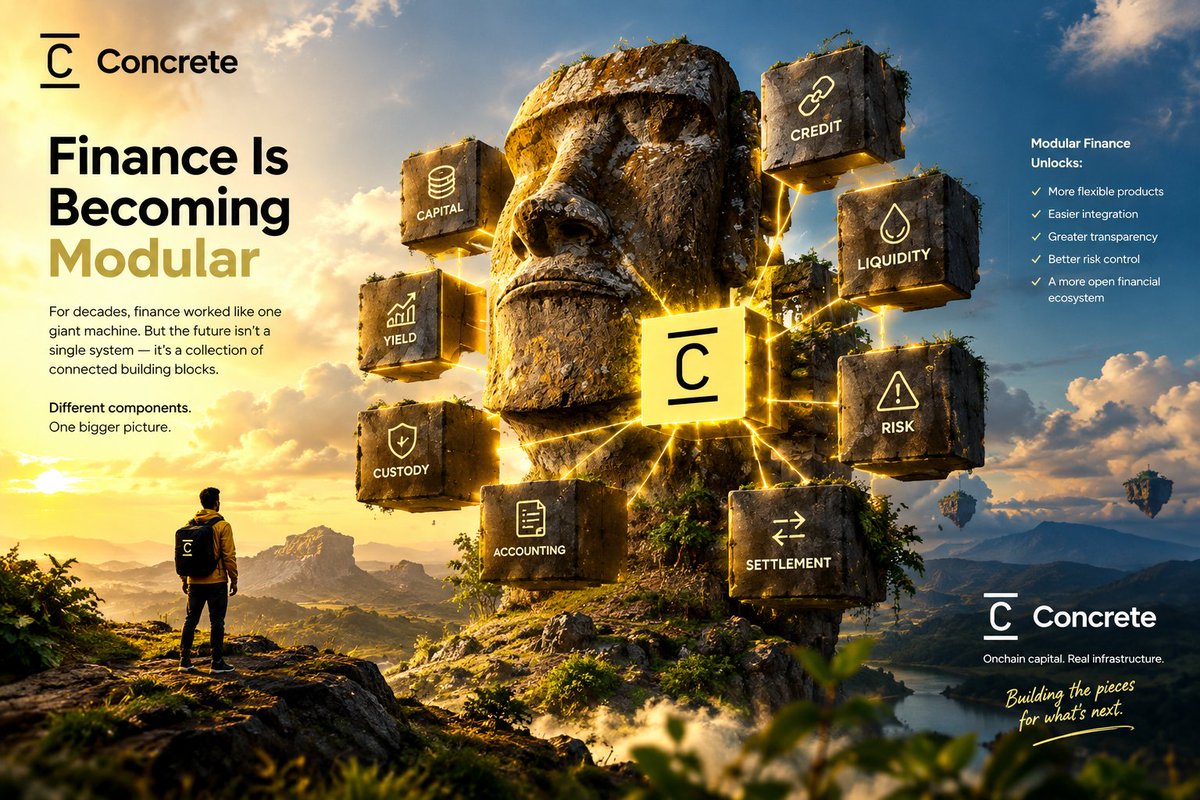
FINANCE IS BECOMING MODULAR
For decades, financial systems have operated like one massive machine.
Capital enters the system, and different institutions handle different parts of the process. One manages custody, another handles lending, another provides liquidity, another handles accounting, while other layers deal with risk, settlement, and reporting.
Most users never see these layers. They simply interact with the final product.
But blockchain is introducing a different way to think about financial infrastructure.
FROM ONE GIANT MACHINE TO CONNECTED MODULES
Imagine taking the traditional financial system and breaking it into individual building blocks:
Capital.
Credit.
Liquidity.
Yield.
Custody.
Accounting.
Risk.
Settlement.
Each block has a specific function, but the real power comes from being able to connect them.
Instead of building an entire financial system from scratch every time, developers can combine different financial primitives to create new products and strategies.
This is what makes the idea of modular finance so interesting. Finance becomes less like one giant machine and more like a system of connected components.
BUT BEING ONCHAIN ISN'T ENOUGH
Putting assets on a blockchain is only one part of the equation.
The bigger challenge is what happens after the assets are onchain.
How are they allocated?
How are strategies executed?
How is the value of those assets accounted for?
How are positions monitored?
How are risks and operational processes handled?
How can different financial products interact with the same underlying infrastructure?
These questions are where financial infrastructure becomes important.
WHERE CONCRETE COMES IN
This is one reason Concrete stands out as an interesting piece of the puzzle.
Concrete is building infrastructure around onchain capital, credit, and yield, helping bring different components of the financial stack together in a more programmable environment.
Rather than thinking about a vault simply as a place where someone deposits assets, you can think of it as one component inside a larger financial system.
Capital can be allocated into strategies.
Strategies can interact with different protocols and assets.
Accounting can track what is happening.
Infrastructure can provide monitoring and controls around the process.
The result is a system where the individual pieces can work together instead of existing as completely isolated products.
THINK OF IT LIKE LEGO
A useful way to understand modular finance is to think about Lego.
You don't need to manufacture an entirely new brick every time you want to build something.
You take existing pieces, connect them in different ways, and create something new.
The same concept can apply to financial infrastructure.
Capital + Credit + Yield + Liquidity + Risk + Accounting
When these components become programmable and composable, developers can build financial products that would be much harder to construct inside a rigid, closed system.
THE BIGGER SHIFT
The interesting part of this transition isn't simply that finance is moving onto blockchains.
It's that the architecture of finance itself can change.
Instead of closed systems where every component is tightly connected to a single institution, we can move toward financial infrastructure made of interoperable building blocks.
@ConcreteXYZ fits into this vision by working on the infrastructure layer that helps onchain capital interact with strategies, credit markets, and financial products in a more structured way.
The future of finance may not be one giant machine.
It may be thousands of financial building blocks, connected together.
And the infrastructure connecting those blocks could become just as important as the applications users see on the surface.
Finance is becoming modular.
Concrete is building for that modular future.

Privacy without proof is a black box.
Amadeus adds verified compute and deterministic execution: same inputs → same outputs. Always. Replayable. Auditable.
Useful Proof of Work means miners do real AI training/inference instead of empty hashes. Agents are interoperable — they can travel across markets and chains.
Last Seen Hashtags on Sotwe
Most Popular Users

Elon Musk 
@elonmusk
240.1M followers

Barack Obama
@barackobama
118.6M followers

Cristiano Ronaldo
@cristiano
114.4M followers

Donald J. Trump
@realdonaldtrump
111.7M followers

Narendra Modi
@narendramodi
106.9M followers

Rihanna
@rihanna
98.6M followers

NASA
@nasa
92.1M followers

Justin Bieber
@justinbieber
91.7M followers

KATY PERRY
@katyperry
89.9M followers

Taylor Swift
@taylorswift13
83.9M followers

Lady Gaga
@ladygaga
75.4M followers

Virat Kohli
@imvkohli
73.3M followers

Kim Kardashian
@kimkardashian
70.8M followers

YouTube
@youtube
68.6M followers

Neymar Jr
@neymarjr
66.3M followers

Bill Gates
@billgates
65.2M followers

Selena Gomez
@selenagomez
63M followers

The Ellen Show
@theellenshow
62.1M followers

CNN
@cnn
61.7M followers

X
@x
60.6M followers