

Top Tweets for #Microbial

Nov 26, 2011: NASA launches Curiosity, its biggest Mars rover yet. Too heavy for airbags, it landed on a rocket sky crane. By March 2013 its first drilling showed ancient Mars once had the right conditions for microbial life. 🚀

This review systematically summarizes microbial cellular tolerance and defense mechanisms, as well as engineering strategies including adaptive evolution, protein engineering, and synthetic biology, to advance lignin valorization toward industrialization.
https://t.co/r4ixqNRAoc
#Lignin #bioeconomy


Soil is sometimes called the “poor person’s rainforest” because of its extraordinary biodiversity. Most of this life remains invisible and still poorly understood. Scientists continue to discover new microbial species in soil at a rapid rate.

🌱 Sugar beet pulp waste helps restore saline forest soils.
Microbial priming boosts enzyme activity and soil health.
👉 Dive into the study:
https://t.co/ulbDlzJ64V
#JFR #ForestResearch #SoilRestoration #ForestEcology
New in The Innovation Water! Beyond ideal fractal models: A testable biophysical framework for aquatic floc as living microecosystem.
Aquatic flocs are more than sediment aggregates—they are dynamic biophysical microecosystems. Ye et al. present a framework linking microbial, polymer, and pore structures to settling, transport, and burial, advancing predictions beyond classic physical models.
https://t.co/uXZXTVWw1g
#environmentalscience

The largest population lives in the gut, but distinct microbial communities also exist on the skin, in the mouth, and elsewhere.
By cell count, your body is more microbial than human.

Arsenic in paddy soils is a hidden risk for rice safety.
This study reveals how microbial reactive oxygen species drive arsenic oxidation, with H2O2 contributing up to 37.4%.
Read the full article: https://t.co/phmyeJYOFH
#AcadeMax #ZJUP #Arsenic #RiceSafety #SoilScience
@ZJUPRESS @ZJU_China


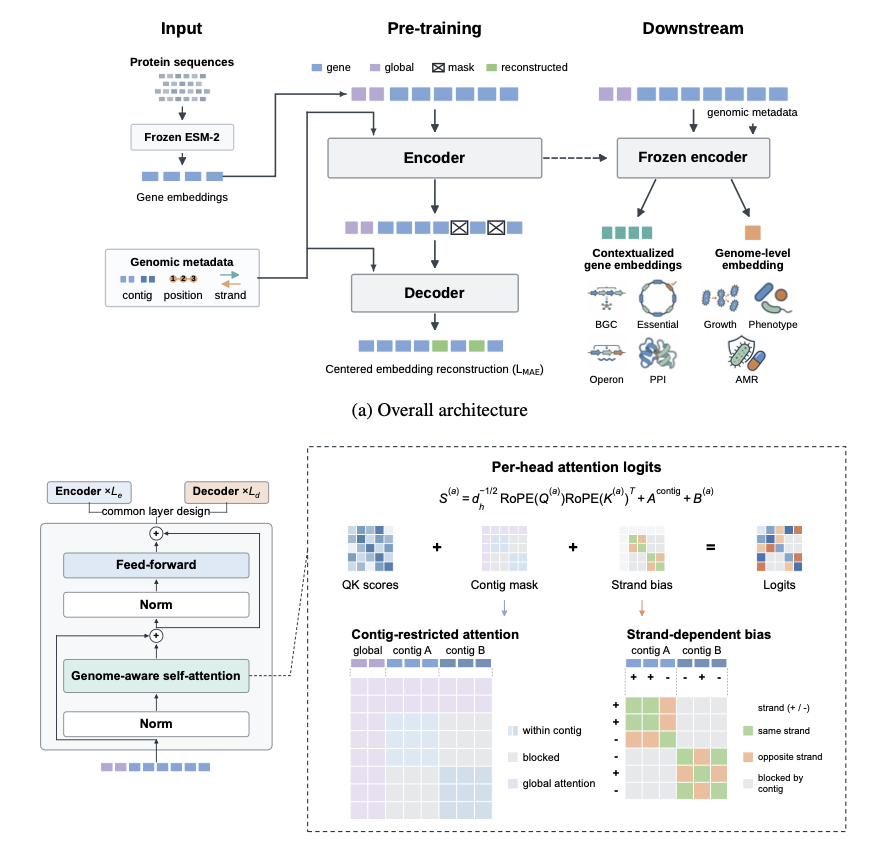
VenusGenome: Genome-aware masked autoencoding for microbial genome representation learning
1. VenusGenome is a gene-resolution genome model that learns contextualized gene + genome embeddings from frozen protein embeddings, and it is pretrained at scale on >1.7M microbial genome assemblies (isolates + MAGs).
2. The key pretraining idea is high-ratio masked autoencoding (75% of genes masked): the encoder sees only visible genes, while a lightweight decoder reconstructs masked gene embeddings. This both forces reliance on sparser genomic context and cuts encoder compute (reported 65.2% forward–backward time reduction for 4,096-gene inputs vs 15% masking).
3. The model is “genome-aware” in attention, explicitly separating biology from assembly conventions:
- Contig-restricted attention blocks gene–gene attention across contigs (since contig concatenation does not imply adjacency)
- Relative strand bias encodes same-strand vs opposite-strand relationships (invariant to reference orientation flips)
- Within-contig positional information via RoPE, with random offset during pretraining
4. Global tokens provide controlled cross-contig communication: genes on different contigs do not directly attend to each other, but global tokens attend to all visible genes and can relay genome-wide information without pretending contigs are contiguous sequence.
5. Inputs are per-gene ESM2-35M embeddings (480D) plus metadata (contig ID, within-contig position, strand). Reconstruction targets are mean-centered protein embeddings to reduce anisotropy; the loss mixes MSE (0.3) and cosine loss (0.7).
6. In frozen-encoder evaluation across 11 primary metrics (6 genome-level phenotype tasks + 5 gene-level metrics), VenusGenome achieves the highest mean performance among compared models on 9/11 metrics, improving over both protein-only pooling (ESM2) and prior gene-context models (e.g., gLM, BacFormer).
7. Genome-level species-disjoint benchmarks show strong transfer to unseen species, including gains in traits where different baselines previously dominated:
- Doubling time Pearson: 0.336 (VenusGenome) vs 0.254 (Evo2)
- AMR macro AUROC: 0.682 vs 0.633 (NT-v2)
- Mixed phenotypes macro F1: 0.457 vs 0.421 (BacFormer)
8. Gene-level benchmarks indicate improved functional geometry in embedding space (not just probe-trainable signals):
- BGC detection AUPRC: 0.667 (VenusGenome) vs 0.536 (BacFormer)
- Zero-shot PPI ranking (STRINGDB genome-macro Spearman ρ): 0.300 vs 0.201 (BacFormer)
This highlights that contextual genome pretraining can improve cosine-similarity-based retrieval of functional relationships.
9. Controlled analyses support the main design choices:
- MAE-style visible-only encoding outperforms BERT-style full-sequence reconstruction at matched 15% masking (e.g., PPI Spearman 0.282 vs 0.192 at 512M)
- Removing contig-aware attention causes the largest drop (e.g., 0.293 to 0.203 at 512M, 75% masking)
- MAE representations spread variance across more dimensions than BERT-style models (less “representation deficiency”)
10. An exploratory zero-shot perturbation test links representation sensitivity to experimental fitness defects: replacing a gene’s input embedding with the organism mean and measuring neighborhood embedding change yields median AUROC 0.673 across 48 organisms (vs 0.631 for an Evo2 CDS-likelihood baseline), suggesting a route toward in silico functional screening.
📜Paper: https://t.co/uSieJLbwJK
#ComputationalBiology #Genomics #Microbiome #RepresentationLearning #Transformers #SelfSupervisedLearning #Bioinformatics #MachineLearning

One medicine, two microbial targets!
Tinidazole can fight certain parasites and anaerobic bacteria by damaging microbial DNA. But it doesn't treat every infection—and a bitter taste doesn't mean it's working.
https://t.co/MT1SPomcOP
#Tinidazole #Pharmacology #SSTHEM #ssthem

Good morning 🍄
Fungi also influence how carbon is stored in soils.
Some fungal material is decomposed relatively quickly; other microbial residues can become associated with minerals or incorporated into soil organic matter.
Mycorrhizal fungi can contribute carbon to soil, but their effects on long-term carbon storage are not uniform.
Fungal activity may help build some soil carbon pools while decomposition also releases carbon dioxide.
The net outcome depends on ecosystem type, soil properties, climate, plant inputs, and the fungal community.
A claim about carbon storage should therefore specify what was measured, over what period, and under what conditions.

Good morning 🍄
This makes fungi important to soil fertility, but it is misleading to say that fungi simply make soil fertile in every circumstance.
Nutrients may become more available to plants as organic compounds are broken down, yet microbes can also temporarily immobilize nutrients in their own biomass.
Fungal hyphae and their residues can contribute to soil structure by binding particles and helping create aggregates.
These effects interact with roots, bacteria, earthworms, mineral particles, water movement, and land management.


🔬 Can herbicides alter soil microbiomes? Soil microbes support nutrient cycling.
📖 New review from FBE:
This article explores herbicide-driven microbial shifts.
🔗 Full article in reply 👇
#SoilHealth #Microbiome


2.
Cow dung provides organic matter, nutrients and microorganisms that nourish agricultural soil, support microbial activity, improve soil structure and increase moisture retention. Our ancestors didn't treat dung as garbage, they returned it to the land that produced their food.

The inner earth condensation pools aren't water.
They're fermented.
280 million years of pressure, darkness, and microbial conviction.
- CH
$CARDANO

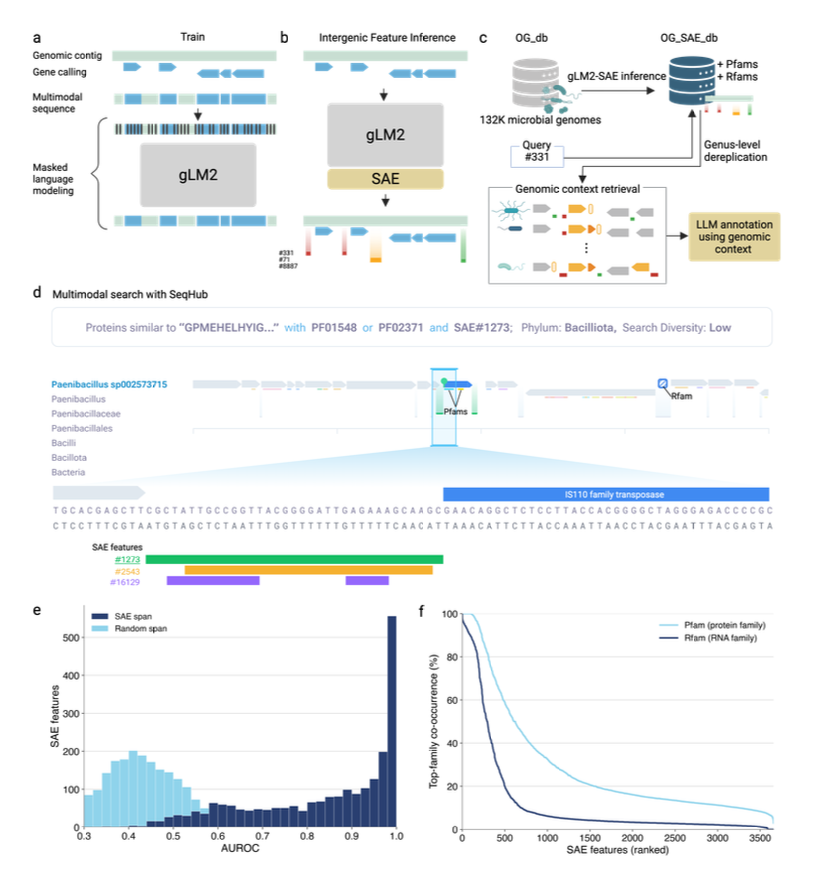
Discovery of Microbial Intergenic Features With Genomic Language Modeling and Multimodal Search
1. The work targets a major blind spot in microbial genomics: systematic discovery and interpretation of noncoding intergenic elements (operators, terminators, riboswitches, sRNAs) that are short, rapidly evolving, and often constrained by RNA structure rather than primary sequence.
2. Their core idea is to turn a genomic language model into a de novo “feature detector” for intergenic DNA/RNA: they train a sparse autoencoder (SAE) on gLM2 embeddings (layer-24 residual stream) while restricting the reconstruction objective to nucleotide positions, so each intergenic token is still represented in the context of nearby genes.
3. Scale and output: the frozen gLM2+SAE is applied across OpenGenome (131,744 genomes; ~300M intergenic regions). Activations are converted into “feature spans” (grouping firing positions ≤3 nt apart; discarding spans <8 nt). They retain 3,656 SAE features observed on ≥50 contigs.
4. Evidence that many SAE features correspond to real sequence patterns (not contig composition): for 2,234 features, STREME learns motifs from genus-dereplicated top activations and is evaluated on held-out genera. Median AUROC is 0.893, with 48% of features >0.9; a contig-matched random-intergenic control drops to median AUROC 0.429.
5. The interpretation step is explicitly context-driven: for each SAE feature, they retrieve high-activating loci across diverse genomes, genus-dereplicate, and summarize conserved associations with neighboring genes, Pfam domains, Rfam families, gene orientation/organization, and taxonomy—then use an LLM to draft putative functional descriptions grounded in these repeated genomic-context signals.
6. Multimodal search is a key engineering contribution: SAE features are indexed inside SeqHub so queries can combine protein sequences, Pfam, Rfam, and SAE feature IDs with AND/OR/NOT, plus taxonomic constraints and redundancy reduction. This enables iterative discovery starting either from a noncoding pattern or from a protein neighborhood.
7. Context association statistics suggest many intergenic features are embedded in specific systems: 605/3,656 features (16.5%) co-occur with the same Pfam domain on >50% of genus-dereplicated contigs; 290 (7.9%) show the same level of association with an Rfam family—supporting functional inference via conserved neighborhood coupling.
8. Example 1 (regulatory DNA/operator-like): SAE feature #790 fires upstream of a conserved YoaS–YozG operon across diverse phyla, in AT-rich regions containing sequence-diverse inverted repeats—consistent with operator sites for autoregulation by an adjacent Cro/C1-like HTH repressor.
9. Example 2 (divergent known RNA elements + new structured RNAs): feature #7917 captures bacterial SECIS-like elements, many missed by Rfam models (only 9/100 top loci overlap SECIS-3/4). Features #14380 and #6752 enrich metal-responsive riboswitch contexts and recover divergent loci lacking Infernal hits, where covariation analysis supports conserved structures distinct from existing Rfam models. Feature #13341 marks an unannotated RNA element near ribosomal protein loci (uS2/uS9/EF-Ts/uL13), with a covarying secondary structure and no Rfam match—suggesting ribosomal-operon-style autogenous regulation.
💻Code: https://t.co/maJf9q4QDf
📜Paper: https://t.co/o6y78xGB9I
#ComputationalBiology #Bioinformatics #Microbiology #Genomics #NoncodingRNA #Riboswitch #LanguageModels #MachineLearning #Metagenomics #SequenceAnalysis

@LaceyPresley So true, & I wish I could be exploring the caves, along the walls of Valles Marineris, for signs of ancient microbial life 🔦🦠🔬

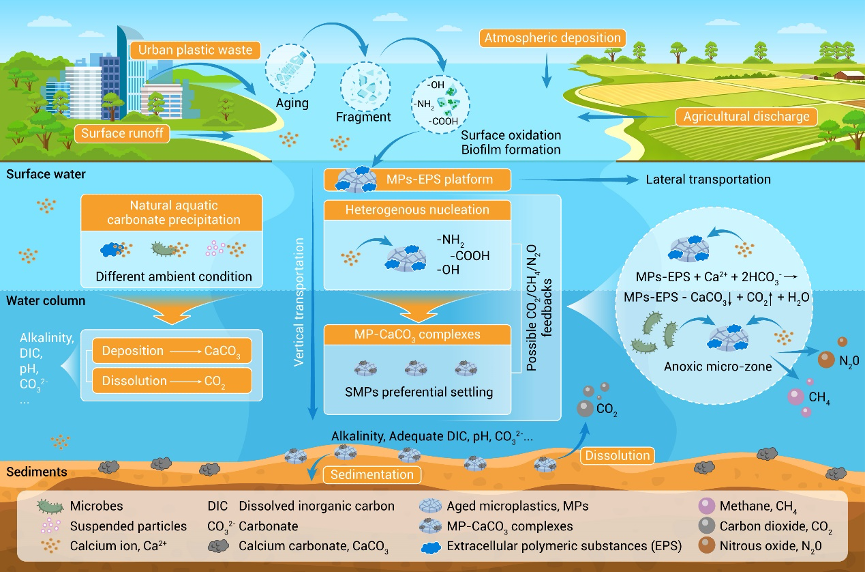
Could microplastics be disrupting global aquatic calcium cycles? Xu et al. highlight how microplastic surfaces act as active platforms driving microbial CaCO3 mineralization—offering a fresh perspective on the long-term geochemical impacts of plastic pollution.
@The_InnovationJ
https://t.co/qmCguheHYO
#microplastics #aquaticcalcium

What can be done with pruned grape branches? In Yutian County, Hotan, Xinjiang, these once‑discarded waste materials are getting an impressive makeover. Using microbial silage fermentation technology, local farmers crush and shred grape vines, add bacterial strains and seal them for fermentation. The tough woody branches are turned into nutrient‑rich feed favoured by cattle and sheep. This practice addresses the annual challenge of disposing of large volumes of grape prunings, eases winter fodder shortages and fosters a circular crop‑livestock farming system.
📍 Heshuo County, Bayingolin, Xinjiang. Wine‑grape harvest is in full swing. Grapes go through automatic sorting, rapid destemming and crushing before being transferred into temperature‑controlled fermentation tanks within six hours. Located in the Yanqi Basin, Heshuo is one of Xinjiang’s four major wine‑producing regions. Xinjiang lies on the world‑renowned prime wine‑grape growing belt. It is also one of China’s earliest grape‑cultivating areas and a birthplace of Chinese wine.
#Xinjiang #BostenLake #HarvestSeason
📢 Call for Papers!
👨🔬 Guest Editor: Dr. Adison Wong (@singaporetech )
🎯 Focus: #Fermentation, #Probiotics, & #MicrobialMetabolism.
🗓️ Deadline: 31 Aug 2027
🔗 More details: https://t.co/PZ8m8y3DPN
#Biotechnology #SyntheticBiology #FoodScience
The stomach isn’t sterile!
H. pylori reshapes the microbial community in the stomach, not just a single infection.
What changes, and why it matters for long term health is explored here: https://t.co/crPw9xMvDB
#Microbiome #Gastroenterology #Hpylori #AcadeMax #ZJU #ZJUP @World_J_Pediatr @ZJU_CHINA @ZJUPRESS


Long-term cropping systems regulate soil organic carbon, microbial fun... https://t.co/PQ32QgkIaC
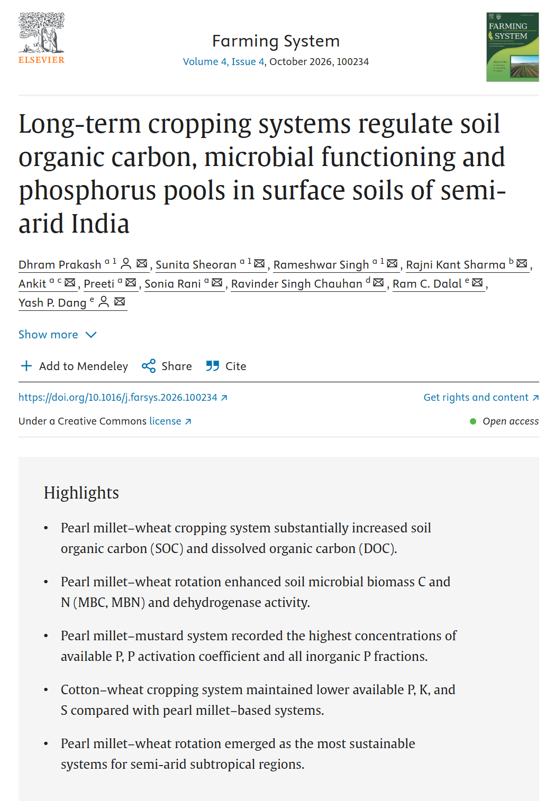
Long-term cropping systems regulate soil organic carbon, microbial fun... https://t.co/PQ32QgkIaC
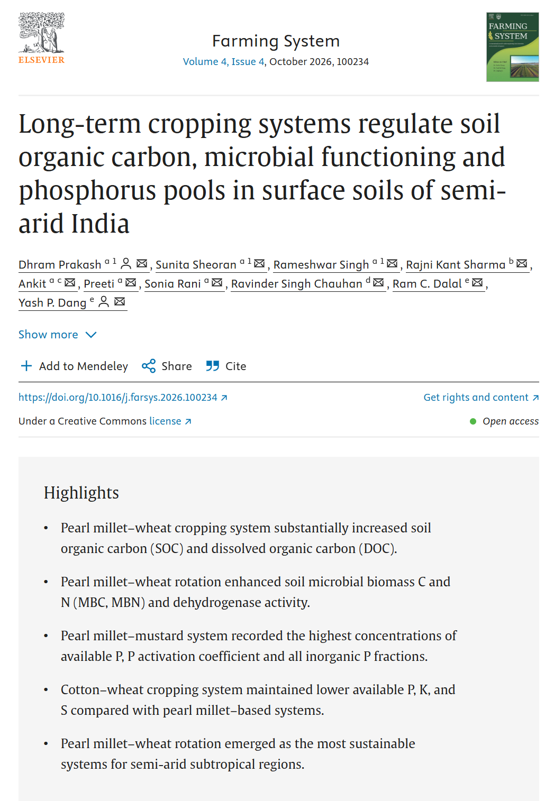
Long-term cropping systems regulate soil organic carbon, microbial fun... https://t.co/PQ32QgkIaC

Long-term cropping systems regulate soil organic carbon, microbial fun... https://t.co/PQ32QgkIaC


The Hidden Microbial World | 👜 What’s Living Inside Your Everyday Bag?
You carry it everywhere.
🏠 Home
🏥 Work
☕ Cafés
🚗 Car
🛍️ Stores
And inside it?
Probably more than you think. 👀


🦠 1️⃣ Why Can Showerheads Harbor Microorganisms?
Showerheads provide:
💧 Constant or repeated moisture
🌡️ Moderate temperatures
🧱 Internal surfaces for attachment
🧬 Trace nutrients from water and the environment
These conditions can support microbial survival and the development of:
🫧 Biofilms
━━━━━━━━━━━━━━
🫧 2️⃣ What Is a Biofilm?
A biofilm is a community of microorganisms attached to a surface and embedded within a self-produced matrix.
Think:
🦠🦠🦠
⬇️
🫧 Protective matrix
⬇️
🚿 Surface
This allows microorganisms to persist in places that are difficult to clean.
━━━━━━━━━━━━━━
🦠 3️⃣ What Microorganisms Can Be Found?
Showerhead-associated microbial communities can include environmental bacteria such as:
🦠 Mycobacterium species
🦠 Pseudomonas species
🦠 Sphingomonas species
along with many other environmental microorganisms.
⚠️ Finding these organisms doesn’t automatically mean the showerhead is dangerous.
━━━━━━━━━━━━━━
💧 4️⃣ What About Nontuberculous Mycobacteria?
This is particularly interesting.
Some nontuberculous mycobacteria (NTM) are naturally found in water and can persist in plumbing systems and biofilms.
They are generally not the same as:
🦠 Mycobacterium tuberculosis
and exposure does not mean a person will develop disease.
However, NTM can cause opportunistic infections, particularly in susceptible individuals.
━━━━━━━━━━━━━━
🌬️ 5️⃣ Can Showering Create Aerosols?
Yes.
Water flowing through a showerhead can generate tiny droplets and aerosols.
This means microorganisms present in the water system may become airborne in small droplets.
But:
💧 Presence in the shower
≠
🤒 Infection
Actual risk depends on the microorganism, concentration, exposure route, and host susceptibility.
━━━━━━━━━━━━━━
🫧 6️⃣ Why Are Biofilms Important?
Once microorganisms attach to the inside of a showerhead:
🦠 Attachment
⬇️
🫧 Biofilm formation
⬇️
🦠 Microbial persistence
The biofilm can make microorganisms more difficult to remove compared with freely suspended cells.
━━━━━━━━━━━━━━
🧼 7️⃣ Should You Disinfect Your Showerhead?
Regular maintenance and cleaning can help reduce buildup.
Depending on the showerhead and manufacturer instructions:
✅ Clean periodically
✅ Remove mineral deposits
✅ Follow appropriate cleaning instructions
✅ Replace damaged or heavily fouled components when necessary
⚠️ Avoid mixing cleaning chemicals.
The Hidden Microbial World| 🚿 What Microorganisms Live Inside Showerheads?
You turn on the shower…
💧 Clean-looking water comes out.
But inside the showerhead?
🔬 There can be an entire microbial community.


Last Seen Hashtags on Sotwe
Trends for you
Most Popular Users

Elon Musk 
@elonmusk
239.8M followers

Barack Obama
@barackobama
118.6M followers

Cristiano Ronaldo
@cristiano
114.3M followers

Donald J. Trump
@realdonaldtrump
111.7M followers

Narendra Modi
@narendramodi
106.9M followers

Rihanna
@rihanna
98.6M followers

NASA
@nasa
92.1M followers

Justin Bieber
@justinbieber
91.7M followers

KATY PERRY
@katyperry
89.9M followers

Taylor Swift
@taylorswift13
83.9M followers

Lady Gaga
@ladygaga
75.4M followers

Virat Kohli
@imvkohli
73.3M followers

Kim Kardashian
@kimkardashian
70.8M followers

YouTube
@youtube
68.6M followers

Neymar Jr
@neymarjr
66.3M followers

Bill Gates
@billgates
65.1M followers

Selena Gomez
@selenagomez
63M followers

The Ellen Show
@theellenshow
62.1M followers

CNN
@cnn
61.7M followers

X
@x
60.6M followers