

Top Tweets for #Micrograph

Built a cinematic sci-fi film using a hybrid GenAI + Motion Design workflow.
MidJourney v8.1 with personalisation for consistent world building, Kling for motion, then everything finished in After Effects with custom typography, micrographics, compositing, and edit design.
Interesting seeing how fast ideas evolve when you combine AI tools with traditional design skills.

Uyarı: Çayları, kahveleri hazırlayın; tweetin altından background müziğinizi ayarlayın ve saatler âleminde keyifli bir gezintiye hazır olun.(flood)
Tag Heuer Geçmişi
1860 yılında Saint-Imier’de TAG Heuer’in temelleri, Edouard Heuer tarafından atıldığında, markanın odağında başından itibaren hassasiyet ve teknik yenilik vardı. Henüz 1869’da geliştirilen ilk patentli kurma sistemiyle birlikte Heuer, güvenilir ve hassas mekanizmalar üreten bir isim olarak tanınmaya başladı. Bu erken dönemden itibaren spor ve özellikle zaman ölçümüne dayalı rekabetçi alanlar, markanın teknik gelişiminin ana itici gücü haline geldi. 1887’de geliştirilen salınımlı pinyon sistemi, bugün hâlâ birçok kronograf mekanizmasında kullanılan temel bir çözüm olarak saatçilik tarihinde kalıcı bir yer edindi.
19.yüzyılın sonlarında kronograf alanındaki uzmanlığı sayesinde uluslararası sergilerde ödüller kazanan Heuer, 20. yüzyıla girildiğinde otomotiv dünyasıyla güçlü bir bağ kurmaya başladı. Kadran üzerinde pulsometre ölçeği gibi yenilikler, sadece zamanı değil, fizyolojik verileri de ölçmeye imkân tanıyordu. 1916 yılında tanıtılan Micrograph, saniyenin yüzde birini ölçebilen ilk mekanik kronograf olarak büyük bir devrim yarattı. Bu cihaz bir kol saati değil, daha çok spor zamanlayıcı olarak kullanılıyordu; ancak hassas zaman ölçümünde yeni bir çağın kapısını aralıyordu. 1920’lerden itibaren Heuer’in kronometreleri Olimpiyat Oyunları’nda kullanılmaya başlandı; 1924 Paris ve 1928 Amsterdam Olimpiyatları’nda resmi zaman tutucu olarak görev aldı. Bu dönem, markanın spor zamanlaması konusundaki otoritesini pekiştirdi. 1930’larda dashboard (gösterge paneli) saatleri ve çok sayaçlı kronograflar geliştirildi. 1933’te tanıtılan Autavia, hem otomobil (AUTomobile) hem havacılık (AVIAtion) dünyasına hitap eden bir zaman ölçüm cihazıydı ve ilerleyen yıllarda bilek saatine dönüşerek markanın en ikonik modellerinden biri haline gelecekti. İkinci Dünya Savaşı sonrasında Heuer, Mareograph gibi spesifik ölçüm cihazlarıyla teknik çeşitliliğini artırdı. Ancak markanın modern kimliğini belirleyen kırılma noktalarından biri 1960’larda geldi. 1964 yılında tanıtılan Carrera, temiz ve okunaklı tasarımıyla yarış pilotları için ideal bir kronograf olarak tasarlandı. Adını, son derece tehlikeli ve efsanevi Carrera Panamericana yarışından alıyordu. 1969 yılına gelindiğinde ise Heuer, saatçilik tarihinin en önemli yarışlarından birinde yer aldı: otomatik kronografın geliştirilmesi. Buren ve Hamilton ile birlikte geliştirilen Calibre 11, mikrorotor yapısıyla otomatik kurmalı kronograf mekanizması sunuyordu ve aynı yıl tanıtılan Zenith El Primero ile birlikte bu alandaki ilk çözümlerden biri oldu.


Uyarı: Çayları, kahveleri hazırlayın; tweetin altından background müziğinizi ayarlayın ve saatler âleminde kaybolmaya hazır olun.(flood)
Franck Muller Geçmişi
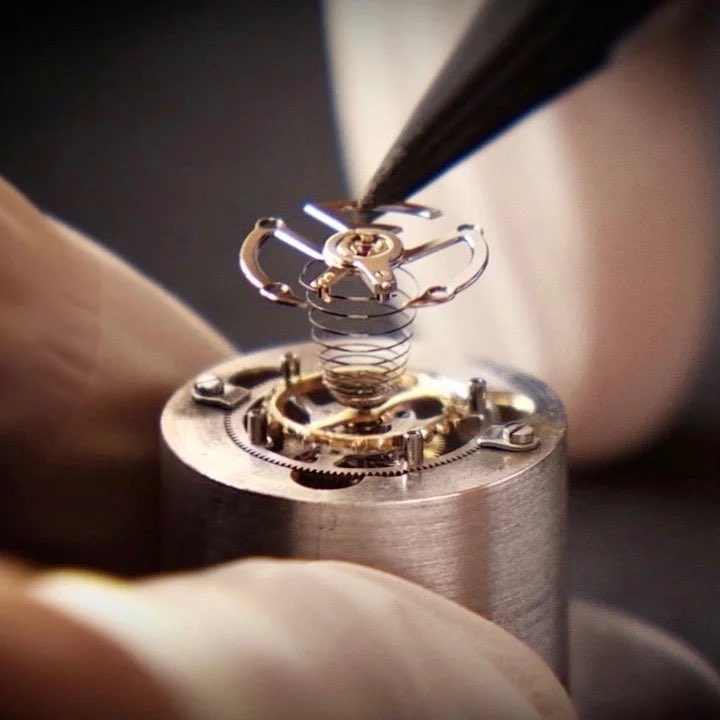
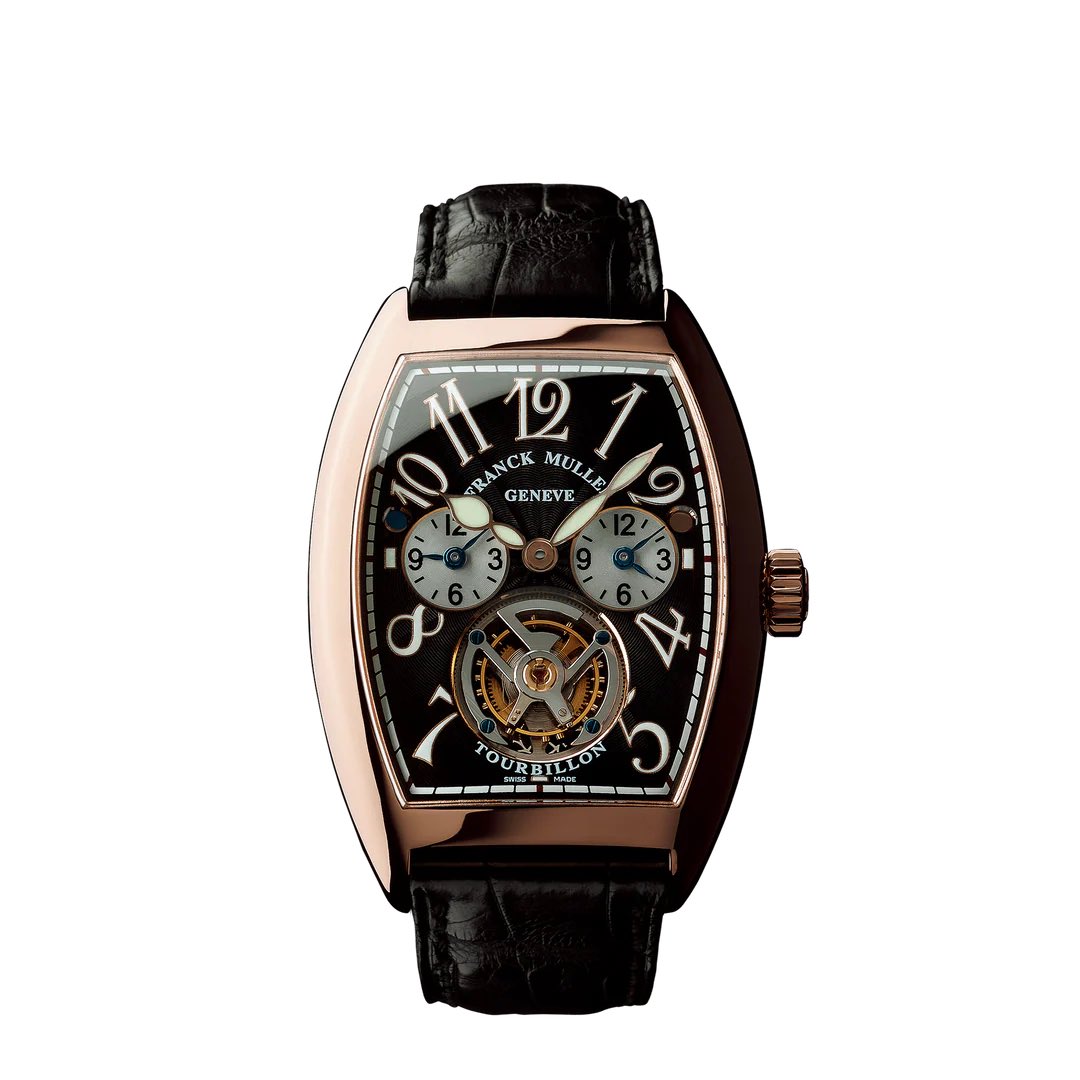
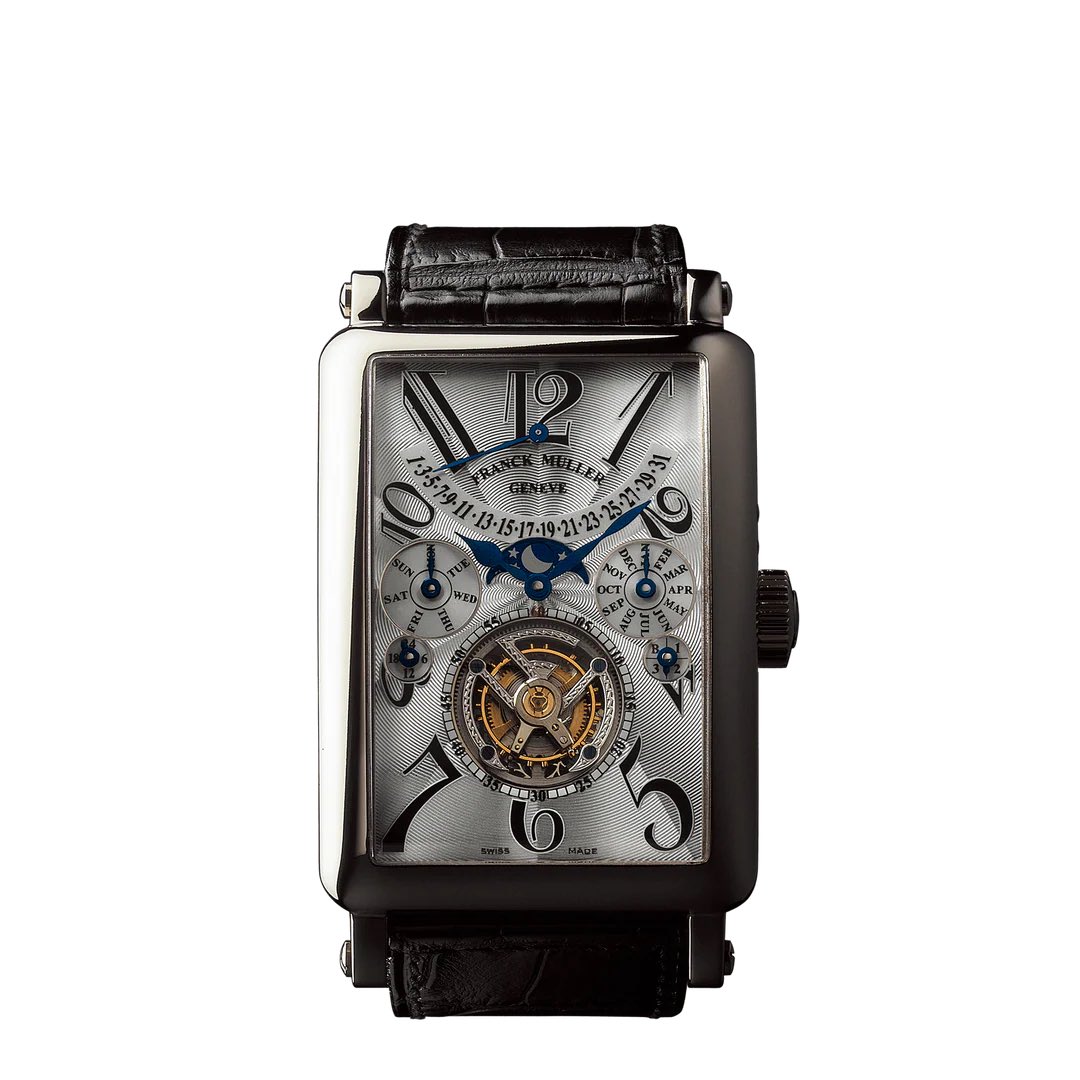
Franck Muller’i gerçekten derinlemesine anlamak için onu yalnızca bir saat markası olarak değil, modern mekanik saatçiliğin yeniden tanımlandığı bir dönemin en güçlü anlatılarından biri olarak görmek gerekir; çünkü bu hikâye, 20. yüzyılın ortasında neredeyse tamamen fonksiyonel bir araca indirgenen mekanik saatin, yeniden bir “sanat ve ifade nesnesi” hâline gelişinin merkezinde yer alır. 1958 yılında doğan Franck Muller, İsviçre’nin Geneva şehrinde, École d’Horlogerie de Genève’de aldığı eğitimle klasik saatçiliğin en saf teknik disiplinleriyle yetişir; ancak onu farklı kılan şey, mezuniyet sonrası seçtiği yol olur. Muller yeni saat üretmek yerine restorasyona yönelir ve bu tercih, onu sıradan bir saatçiden ayıran en kritik kırılma noktasıdır. Çünkü restorasyon, yalnızca bozulan bir mekanizmayı onarmak değil; Abraham-Louis Breguet gibi ustaların geliştirdiği sistemleri sökerek yeniden anlamak, onların mantığını çözmek ve aslında saatçiliğin geçmiş yüzyıllardaki zirve noktalarını birebir deneyimlemek demektir. Muller bu süreçte, özellikle 18. ve 19. yüzyılın grande complication cep saatleri üzerinde çalışarak, bir mekanizmanın sadece teknik değil, aynı zamanda estetik ve mimari bir bütün olduğunu kavrar. 1980’lerin başına gelindiğinde saat endüstrisi hâlâ Quartz krizinin etkisi altındadır; quartz saatler ucuz, hassas ve yaygındır, mekanik saat ise nostaljik bir obje hâline gelmiştir. Tam bu noktada Muller, mekanik saatin yeniden doğuşuna katkı sağlayacak ilk adımını atar. 1983 civarında geliştirdiği tourbillon kol saati, bu anlamda sembolik bir başlangıçtır. Tourbillon aslında 1801’de icat edilmiş bir sistemdir, ancak Muller onu modern bilek saatine adapte ederek yalnızca teknik bir geri dönüş yapmaz; aynı zamanda onu yeniden merkezî bir unsur hâline getirir. Bu noktada yaptığı şey küçültmek değil, yeniden kurgulamaktır. 1986’dan itibaren “world premiere” olarak anılan saatleri ortaya koymaya başlar: tourbillon ile minute repeater’ı, perpetual calendar’ı ya da jumping hours’u aynı mekanizma içinde birleştirir. Bu birleşimler, o dönem için sadece zor değil, çoğu saatçi için mantıksız kabul edilen projelerdir çünkü her komplikasyon farklı enerji ihtiyaçlarına, farklı dişli oranlarına ve farklı mekanik toleranslara sahiptir. Muller burada klasik modüler yaklaşımı terk eder ve tüm sistemi baştan tasarlayarak entegre bir mimari kurar; bu da onu yalnızca bir saatçi değil, bir sistem tasarımcısı hâline getirir. 1991–1992 yıllarında Muller, Vartan Sirmakes ile birlikte Franck Muller Genève markasını kurar ve bu noktada teknik başarı, güçlü bir tasarım diliyle birleşir. Cintrée Curvex kasa formu, markanın imzası hâline gelir ve bu tasarım, saat dünyasında alışılmış geometrileri kırar. Bu kasa sadece estetik bir tercih değildir; üç boyutlu kıvrımı sayesinde bileğe oturur ve mekanizmanın ergonomik bir uzantısı gibi davranır. Muller’in burada yaptığı şey, saati yalnızca bir ölçüm aracı değil, vücutla bütünleşen bir obje olarak yeniden düşünmektir. 1990’lar boyunca marka hızlı bir yükseliş yaşar ve Crazy Hours, Master Banker, Casablanca gibi modellerle yalnızca teknik değil, kavramsal olarak da farklı bir yol izlediğini gösterir. Özellikle Crazy Hours, saat ibresinin lineer olmayan bir düzende sıçrayarak ilerlediği bir sistemdir ve bu mekanizma, klasik jumping hour komplikasyonunun tamamen yeniden yazılmış bir versiyonudur. Saat diski ve yıldız çark sistemiyle çalışan bu yapı, zamanın doğrusal akışını kırar ve onu yeniden düzenler. Master Banker ise üç ayrı zaman dilimini bağımsız ayarlanabilir hâle getirerek klasik GMT komplikasyonunu daha işlevsel bir yapıya dönüştürür.


I think asking for a electron micrograph proving that the connectome is preserved is the right evidence to ask for. This is what a demonstration of the "ambulance" working would be in my opinion, rather than asking for an actual revival. But I agree it does require evidence. And I agree that even then the analogy isn't perfect--the future is obviously way more uncertain then the hospital downtown.
Also, dying is also irreversible, so unless you're doing assisted suicide for that specific purpose, you're not otherwise really losing any option value--your brain can still be buried or burned later...


Getting back into gem and mineral photography /micrography
This stuff here is one of the most toxic minerals out there — stibnite.
Stibnite is the main source of antimony which is deadly.
But, oh so pretty


@nervemed Micrographia

GM, Tabizens!
The morning weather is truly beautiful, so I took a micrography photo for Tabizen. 📷
@Tabizens @Momoa_crypto


🛑 Parkinson’s Disease (PD)
🔷 A chronic, progressive neurodegenerative disorder caused by loss of dopaminergic neurons in the substantia nigra.
♦️ Causes / Risk Factors :
🔷 Idiopathic (most common)
🔷 Age >60 yrs
🔷 Genetic mutations (LRRK2, PARK genes)
🔷 Environmental toxins (pesticides, MPTP exposure)
🔷 Family history
♦️ Symptoms :
🔷 Cardinal motor features (TRAP) :
🔶️Tremor (resting, pill-rolling)
🔶️Rigidity (cogwheel / lead-pipe)
🔶️Akinesia/Bradykinesia (slowness of movement)
🔶️Postural instability (late feature → falls)
🔷 Mask-like facies, decreased blinking
🔷 Soft, monotonous speech
🔷 Micrographia (small handwriting)
🔷 Non-motor symptoms: depression, sleep disturbance, constipation, dementia (late)
♦️ Diagnosis :
🔷 Clinical diagnosis (presence of bradykinesia + 1 of tremor/rigidity)
🔷 MRI usually normal (used to rule out other causes)
🔷 Response to Levodopa supports diagnosis
♦️ Complications :
🔷 Frequent falls
🔷 Dysphagia → aspiration pneumonia
🔷 Cognitive decline (Parkinson’s dementia)
🔷 Autonomic dysfunction (orthostatic hypotension, urinary problems)
🔷 Depression, psychosis (medication-induced)
♦️ Rx :
🔷 Dopamine replacement / enhancement
🔶️Levodopa + Carbidopa
🔶️Dopamine agonists (Pramipexole, Ropinirole)
🔶️MAO-B inhibitors (Selegiline, Rasagiline)
🔶️COMT inhibitors (Entacapone)
🔷 Non-drug therapies : physiotherapy, speech therapy, occupational therapy
🔷 Surgical : Deep Brain Stimulation (advanced cases)
🔷 Lifestyle : exercise, supportive care, fall prevention.

16 August 1661
At the office all the morning, though little to be done; because all our clerks are gone to the buriall of Tom Whitton, one of the Controller’s clerks, a very ingenious, and a likely young man to live, as any in the Office. But it is such a sickly time both in City and country every where (of a sort of fever), that never was heard of almost, unless it was in a plague-time.
Among others, the famous Tom Fuller is dead of it; and Dr. Nichols, Dean of Paul’s; and my Lord General Monk is very dangerously ill.
Dined at home with the children and were merry, and my father with me; who after dinner he and I went forth about business. Among other things we found one Dr. John Williams at an alehouse, where we staid till past nine at night, in Shoe Lane, talking about our country business, and I found him so well acquainted with the matters of Gravely that I expect he will be of great use to me. So by link home. I understand my Aunt Fenner is upon the point of death.
plague-time
Sam is referencing bubonic plague, an infection by the bacterium Yersinia pestis, transmitted via a rat vector, which was featured prominently in his diary (1665).
Typhus is the most likely cause of the 1661 fever epidemic Pepys describes. Its prevalence in 17th-century London, ability to cause widespread mortality across city and countryside, and high fever symptoms align closely with Pepys’ account. Malaria (ague) is a plausible secondary candidate due to its endemic presence in England and the August timing, but its localized nature and specific symptom profile make it less likely to be described as a plague-like epidemic.
“The dragons are all dead, and the lance grows rusty in the chimney corner.… About the only genuine sporting proposition that remains unimpaired by the relentless domestication of a once free-living human species is the war against these ferocious little fellow creatures, which lurk in the dark corners and stalk us in the bodies of rats, mice, and all kinds of domestic animals; which fly and crawl with the insects, and waylay us in our food and drink and even in our love.”
Rats, Lice and History (1935) by microbiologist Hans Zinsser was partly on the subject of typhus, a disease on which he performed significant research.
One of Sam’s favorite books was Micrographia (1665) where Hooke contrasts the imperfection of human-made objects with the perfection and beauty of natural objects and creatures. The book’s first section uses illustrations and text to describe human-made objects under a microscope, highlighting the intricate beauty of natural features often deemed unattractive, like frozen urine, fly eyes, moss, lice, ants, and fleas. Many of these detailed nature illustrations were created as fold-outs to showcase their beauty on a larger scale.
Louse holding a human hair (to scale)


STAEDTLER・MICROGRAPH F,HS


A large-scale curated and filterable dataset for cryo-EM foundation model pre-training @ScientificData
1. CryoCRAB is introduced as the first large-scale, standardized cryo-EM dataset designed specifically for training foundation models, containing 152,385 sets of raw movie frames from 746 distinct proteins, totaling 116.8 TB of data.
2. The dataset addresses the challenge of cryo-EM's low signal-to-noise ratio by splitting each movie into odd and even frames to create paired micrographs, enabling effective denoising pretraining using Noise2Noise inspired methods.
3. CryoCRAB incorporates an automated and consistent data processing pipeline, including gain correction, motion correction (rigid and bending motion), and Contrast Transfer Function (CTF) estimation, all performed using CryoSPARC.
4. The dataset provides full-even-odd micrograph triplets plus the derived full-diff micrograph pairs for efficient storage and enhanced random data access, all saved in a chunked HDF5 format with half-precision float16 to reduce I/O bottlenecks while preserving image quality.
5. Detailed micrograph curation metrics such as median intensity, rigid motion statistics, CTF fit resolution, tilt angle, astigmatism, and defocus range are provided, enabling filtering and selection of data subsets tailored to specific model training needs.
6. CryoCRAB metadata is comprehensive, including acquisition parameters, motion correction results, and CTF parameters, stored in JSON format and recommended for management in MongoDB, facilitating easy querying and dataset management.
7. Validation experiments demonstrate CryoCRAB's suitability for training foundation models: training DRACO, a cryo-EM foundation model, on CryoCRAB showed robust feature extraction, strong generalization, and improved denoising performance compared to previous data formats.
8. Preprocessing steps such as background subtraction, band-limiting frequency to 3 Å, CTF filtering, contrast normalization, and Z-score standardization are applied uniformly to optimize micrograph quality for model training.
9. CryoCRAB supports large-scale training by improving data loading speeds and storage efficiency, enabling significant acceleration in training times (up to sixfold reduction observed in DRACO training).
10. The dataset links to corresponding 3D reconstructions in the EMDB, facilitating integrative structural biology studies.
💻Code: https://t.co/Zacs1zLxEg
📜Paper: https://t.co/kO3q2tVLVR
#cryoEM #CryoCRAB #FoundationModels #StructuralBiology #DeepLearning #ImageDenoising #DataCuration #CryoSPARC

2 April 1668
Thence with Lord Brouncker to the Royall Society, where they were just done; but there I was forced to subscribe to the building of a College, and did give 40l.; and several others did subscribe … Here, to my great content, I did try the use of the Otacousticon [Ear trumpet] which was only a great glass bottle broke at the bottom, putting the neck to my eare, and there I did plainly hear the dashing of the oares of the boats in the Thames to Arundell gallery window, which, without it, I could not in the least do, and may, I believe, be improved to a great height, which I am mighty glad of. Thence with Lord Brouncker and several of them to the King’s Head Taverne by Chancery Lane, and there did drink and eat and talk, and, above the rest, I did hear of Mr. Hooke and my Lord an account of the reason of concords and discords in musique, which they say is from the equality of vibrations; but I am not satisfied in it, but will at my leisure think of it more, and see how far that do go to explain it.
William Brouncker (2nd Viscount Brouncker)
One of the founders and the first President of the Royal Society.
others did subscribe: Pepys subscribed to a fundraising effort for the Royal Society to build a dedicated "College" - a permanent headquarters for its scientific activities.
Thames to Arundell gallery window
He mentions the "Arundell gallery window" to indicate the general area where the boats were - near Arundel House, where the gallery window overlooked the river.
Robert Hooke
Hooke proposed that musical notes—specifically their consonance (harmonious sounds, or "concords") and dissonance (clashing sounds, or "discords")—result from the physical properties of vibrating objects.
He is known for: His law of elasticity; His work as "the father of microscopy;" Assisting Robert Boyle with his gas law experiments, etc.
Hooke dedicated Micrographia to Charles II following tradition. He approved the Royal Society’s request for a microscope handbook. With Wren busy, Hooke took the task, gaining potential aristocratic support through royal dedication. Hooke’s illustration’s of insects (here is a louse holding a human hair) shocked readers, as insects hadn’t been depicted so finely before : Remarkable Books: The World's Most Beautiful and Historic Works by Michael Collins


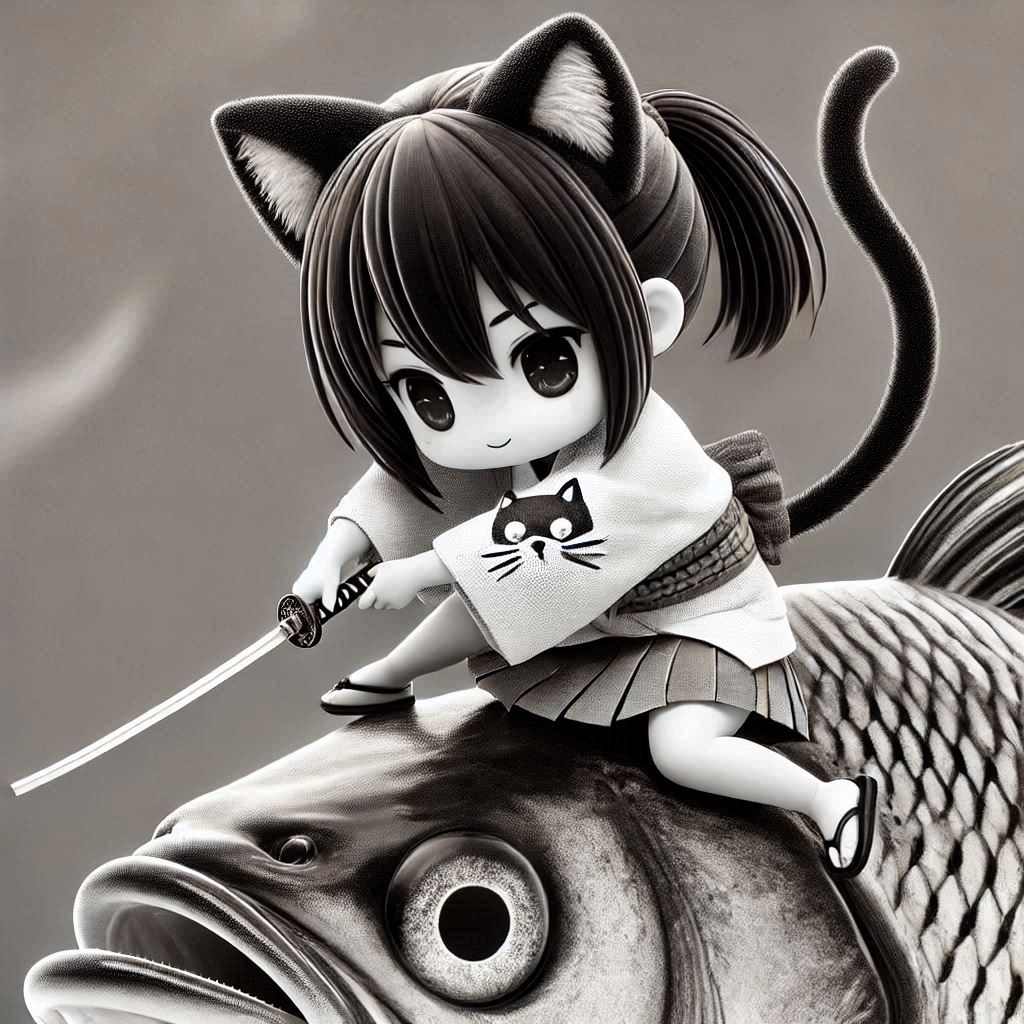
【電子顕微鏡でみる猫侍】
肉眼で見ることはできませんが、電子顕微鏡を使えば非常に小さな猫侍を観察することができます。
プロンプト(bing, Dalle用):
電子顕微鏡写真。マイクロサイズのちびっ子少女、黒髪、猫耳、猫の顔がプリントされたヘッドバンド、白い短めの袴、木の剣、おかしな顔。巨大な魚の上で踊っている。日本のアニメスタイル。
Electron micrograph. a micro size chibi girl, black hair, cat ear, cat face printed headband, white short hakama, wood sword, funny face. dancing on big fish. Japanese anime.
電子顕微鏡のプロンプトはこちらも参考:
https://t.co/BzFZbE9jCY
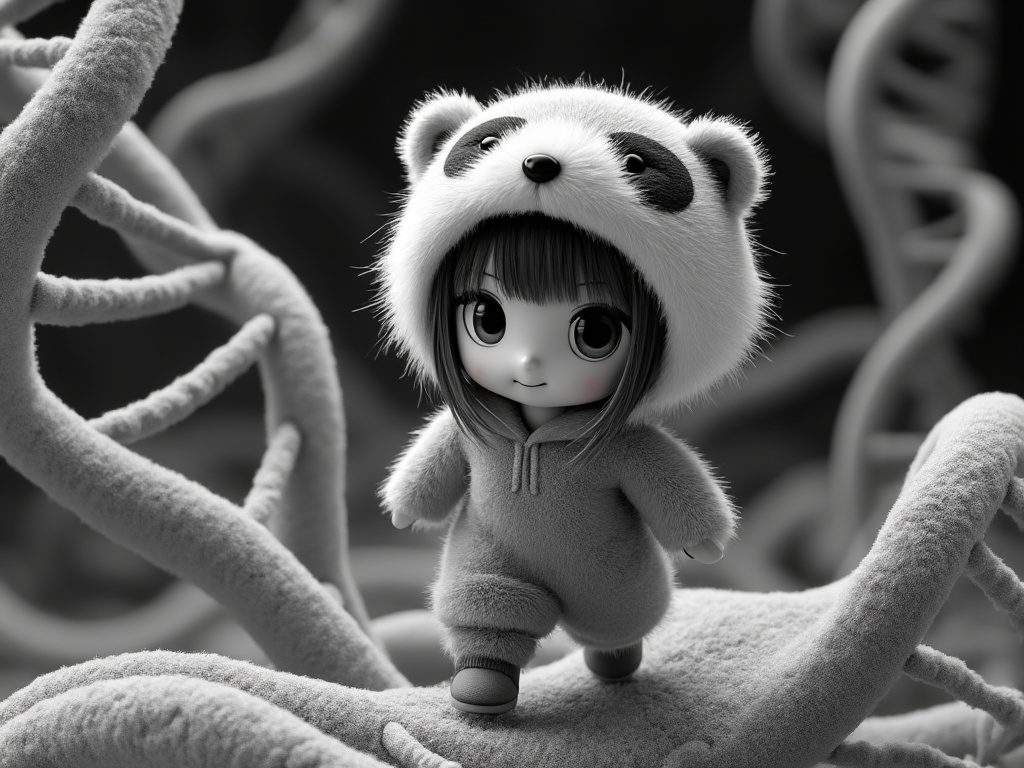
テーマ:DNA
電子顕微鏡の世界「DNAの上を歩くたぬき娘」
電子顕微鏡は電子ビームで試料を観察し、光学顕微鏡より高い解像度を実現します。生物学や材料科学で細胞や材料の構造を詳細に見るのに使われます。実際にDNAの二重らせん構造を詳細に観察することまではできませんが、電子顕微鏡写真をプロンプトに入れることで、このイラストのような普通とは少し違った画像が生成できます。
プロンプト (bing, Dalle, grok)
電子顕微鏡写真。微細なサイズのちび狸のフード付きガールが、DNAの上を歩きながら微笑んでいる。日本のアニメ風。
Electron micrograph. a micro size chibi tanuki hoodie girl, smile, walking on a DNA. Japanese anime.



A golden reimagining of Goya’s Saturn Devouring His Son in chromatic micrographia style, which I picked up from @LudovicCreator.

Last Seen Hashtags on Sotwe
Most Popular Users

Elon Musk 
@elonmusk
240M followers

Barack Obama
@barackobama
118.6M followers

Cristiano Ronaldo
@cristiano
114.4M followers

Donald J. Trump
@realdonaldtrump
111.7M followers

Narendra Modi
@narendramodi
106.9M followers

Rihanna
@rihanna
98.6M followers

NASA
@nasa
92.1M followers

Justin Bieber
@justinbieber
91.7M followers

KATY PERRY
@katyperry
89.9M followers

Taylor Swift
@taylorswift13
83.9M followers

Lady Gaga
@ladygaga
75.4M followers

Virat Kohli
@imvkohli
73.3M followers

Kim Kardashian
@kimkardashian
70.8M followers

YouTube
@youtube
68.6M followers

Neymar Jr
@neymarjr
66.3M followers

Bill Gates
@billgates
65.2M followers

Selena Gomez
@selenagomez
63M followers

The Ellen Show
@theellenshow
62.1M followers

CNN
@cnn
61.7M followers

X
@x
60.6M followers