

Top Tweets for #OPENSSL


OpenSSL 4.1.0 lets curl accept a cert it should reject. In OpenSSL issue #33890, a sub-CA name-constrained to allowed.test signs CN=victim.test (no SAN): curl 8.23.0 errors on 4.0.2, loads on 4.1.0 (h/t @bagder). Do your apps do their own CN matching on OpenSSL 4.1?

It's hard to overstate my distaste for OpenSSL popping up in the transitive dependency graph
OpenSSL is the achilles heel of otherwise clean, safe cross-platform Rust builds, and must be ruthlessly exorcised whenever it returns to haunt us
The collective time the Rust community has wasted troubleshooting OpenSSL builds this past decade and more would ship Rustls a thousand times over

📌 OpenSSL تعالج ثغرة خطيرة في DTLS تسرب ذاكرة الكومة دون تشفير
🛡️ الفئة: ثغرة
📝 الملخص:
كشفت OpenSSL عن ثغرة خطيرة في بروتوكول DTLS، وهي النسخة المستخدمة لحركة مرور UDP، يمكن أن تؤدي إلى تسرب ذاكرة الكومة (heap memory) بشكل غير مشفر إلى الطرف الآخر من الاتصال، أو تعطيل البرنامج. يحدث التسرب أو التعطل عند بدء إعادة إرسال رسالة المصافحة (handshake message) أثناء تعليق رسالة مصافحة أكبر جزئيًا. تتطلب معالجة هذه الثغرة تطبيق التصحيحات التي أصدرتها OpenSSL.
🗓️ تاريخ النشر: 30/09/2026
🔗 للمزيد: https://t.co/utkOnpzCW3

@cloneisjun @Docker On openssl: OpenCode failed at ~82k tokens ($0.08). Successes took 86-95k ($0.09), token savings didn't hold.
I log tokens per cell, but 429 counts are truncated & unreliable. No clean fail vs fail comparison yet.
I'll dig into the failing runs. Appreciate you taking the time!

@SaniaAnees2816 @Docker This is the kind of eval result I trust. OpenSSL and FixGit failures are more useful than a clean demo because they expose where the harness still leaks cost or state. I’d keep the passing traces and token spend side by side on every rerun.
Spun up a VM for agent evals
@Docker➡️ Terminal-Bench
Smash tested my harness on a few heavy tasks.
Infra hell, but the work is real: my builds successfully passed OpenSSL & FixGit where baseline failed! Validated my token-saving harness.
If your bench is smooth, it's not real


1. git clone https://t.co/nWPzLZjFg9
2. cd self-hosted-starter
3. cp .env.selfhost.example .env.selfhost
4. openssl rand -hex 32 # 4x, one per secret
5. docker compose -f docker-compose.selfhost.yml --env-file .env.selfhost up -d
6. curl http://localhost:4101/api/ready
self-hosting https://t.co/UjvNQS2vbh is now this:
1. git clone
2. cp .env
3. openssl rand x4 (jwt, db, secret, oauth2)
4. docker compose up
5. curl /ready → {"ready": true}
Your infra. Your mongodb. Your redis.
License validates against central-server via installation key.
Full commands in the reply 👇
Shipped: A self-hosted starter for https://t.co/UjvNQS330P
clone it, fill in 3 secrets, run one command - full stack up on your own infra.
tenant server + client + auth + mongo + redis wired together.
your app data never leaves your machine; central only handles licensing.
git clone, openssl rand -hex 32 x4, docker compose up. done.
https://t.co/tGVRwq9AfU

@tetsuoai OpenSSL in C is a widely used library that provides cryptographic functions (TLS/SSL, hashing, encryption, certificates) thats grt


My web platform's module IPC runs on shared memory ring buffers.
App crashes? Isolated. Server keeps running.
No request is lost due to buffering. No framework. I built it.
The architecture:
- Nginx sits in front - reverse proxy, TLS termination, security shield. Interim. My custom HTTP server takes over once it's hardened.
- Custom HTTP server in Jai. HTTP/1.1 live. HTTP/2 in progress. No dependencies, no runtime surprises.
- IPC via shared memory + semaphores. Request lands in a ring buffer → semaphore signals the module → module builds the full response in a second shared memory region → server forwards it. One module crashes? Isolated. The rest keep running.
- SQLite for persistence. Stripe for payments (next up). HTMX for dynamic content → static asset, cached in RAM at runtime. Tailwind CLI at build time → static CSS.
Dependency list: Nginx*, OpenSSL, curl, SQLite, Stripe, Tailwind CLI, HTMX. *temporary.
That's it.
No ORM. No framework. No package manager pulling in 300 transitive dependencies.
Built in Jai.
Why?
Because I got tired of fighting the stack instead of building the product.
NOBBS is in active development. Closed source for now but build in public. Open to supporters.


@ananyashaswat all the different kind of tools that are the backbone of swe:
GIT
openSSL
Linux
etc.
Without these the internet and swe is nothing

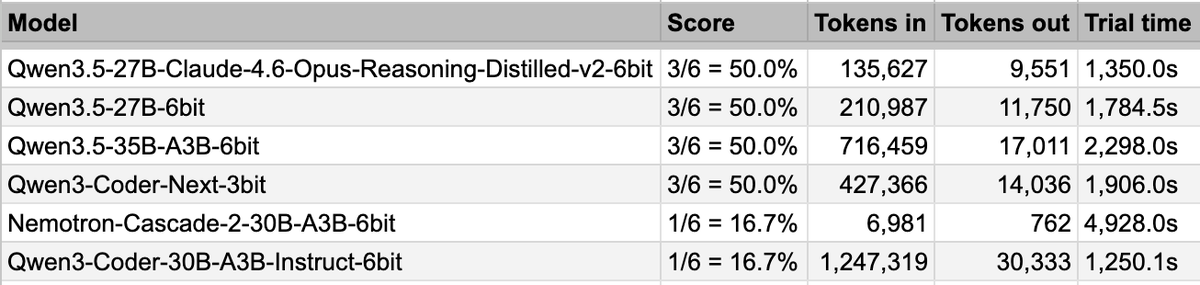
Been running terminal bench on several models that fit on my M2 ultra 64GB. Tests are hello-world, openssl-selfsigned-cert, simple-sheets-put, nginx-request-loggingpolyglot-c-py, git-multibranch.

Almost all modern software depends on open source somewhere in the stack. Core infrastructure like Linux, OpenSSL, Kubernetes powers huge parts of the internet. Even big companies heavily rely on. Without it, building products would be slower, costlier, and far less scalable.

Community Update ( OpenFang v0.4.3 )
@openfangg has just released v0.4.3, bringing major improvements across model support, workflow automation, messaging integrations, and runtime stability.
This update continues expanding OpenFang as a full Agent Operating System, adding new providers, workflow capabilities, and better multi-channel communication.
Here are the key updates since v0.3.49:
New Provider Support - NVIDIA NIM
OpenFang now supports NVIDIA NIM as a provider, unlocking access to several large models:
• Nemotron-70B
• Nemotron-4-340B
• Llama-3.1-405B
• Llama-3.1-70B
• Mistral Large
This significantly expands the model ecosystem available for OpenFang agents.
Matrix Integration
A new Matrix adapter has been added, allowing OpenFang agents to operate inside Matrix chat environments.
Features include:
• automatic invite acceptance
• mention detection
• DM and group chat detection
• skipping old messages during initialization
This enables agents to participate in decentralized messaging networks.
YOLO Mode (Automatic Tool Approval)
OpenFang now includes a YOLO mode, which allows agents to automatically approve tool calls.
Normally, tool calls require manual approval for safety. With YOLO mode enabled, OpenFang will automatically approve all tool executions.
This can be activated when starting OpenFang or configured in the system settings with auto approval enabled.
This feature is mainly intended for fully autonomous workflows, where manual approval would slow down automation.
Workflow System Improvements
Workflow management has been expanded significantly.
New capabilities include:
• cron jobs can trigger workflows directly by name or ID
• workflows automatically load from the workflows directory during startup
• full workflow management support via API, CLI, and dashboard
This makes automation pipelines easier to build and manage.
Dashboard Authentication
The dashboard now includes username and password authentication using HMAC session tokens, improving security when running OpenFang on remote servers.
Messaging Platform Enhancements
Several messaging integrations have been improved.
Telegram
• reply-to message context is forwarded to agents
• typing indicator refreshes continuously while the model is processing
WhatsApp
• support for images, voice notes, videos, documents, and stickers
• sender metadata is preserved so agents know who sent each message
Cross-Channel Routing
A new configuration allows defining a default recipient or channel, enabling more flexible multi-channel automation.
Model & Provider Improvements
Additional updates to model support include:
• new openrouter/hunter-alpha model
• aliases for free OpenRouter models (free, openrouter/free, free-reasoning)
• Minimax global endpoint updated to https://t.co/i5l2RCkIFn
These changes improve compatibility across providers.
Runtime Stability & Memory Improvements
Several improvements enhance reliability during long-running agent sessions:
• fixed memory recall loops
• quota-aware token compaction before LLM calls
• improved handling of rate limits and authentication errors
• sanitized error messages in messaging channels
These fixes help prevent runtime failures during autonomous execution.
Configuration & Developer Experience
Additional improvements include:
• OpenSSL now statically compiled (no runtime libssl dependency on Linux)
• configuration files automatically backed up before rewriting
• configurable logging levels through system configuration
• agents created through the API are immediately registered in channel routers
• clearer guidance when tool calls are denied
Dashboard & UI Improvements
The web interface also received several usability improvements:
• workflow creation and management improvements
• skill output cards expanded by default
• links from agent responses open in new tabs
• clearer configuration warnings when switching providers
https://t.co/mK3vnXZmLx
Hi @ElReyDelMambo__ allow me to try answering this from what I know and from my perspective.
From what I understand, this sounds more like an environment or dependency question rather than something specific to OpenFang itself.
Since @openfangg is built in Rust and distributed as a single binary, in theory it should be able to run on ARM Linux systems like a Raspberry Pi.
However, I haven’t seen any official mention yet about Raspberry Pi support in the release notes, so compatibility will likely depend on the system libraries available on the OS image.
If that PR is related to OpenSSL 1.0, it could be addressing dependency compatibility for certain environments such as older Linux distributions or ARM devices.
If I’m wrong here, feel free to correct me, would actually be interesting to know if anyone has successfully run OpenFang on a Pi 4.

Hello guys, someone with any good results under raspberry pi 4? I saw an opened PR this is related to Openssl1.0
Hello guys, someone with any good results under raspberry pi 4? I saw an opened PR this is related to Openssl1.0

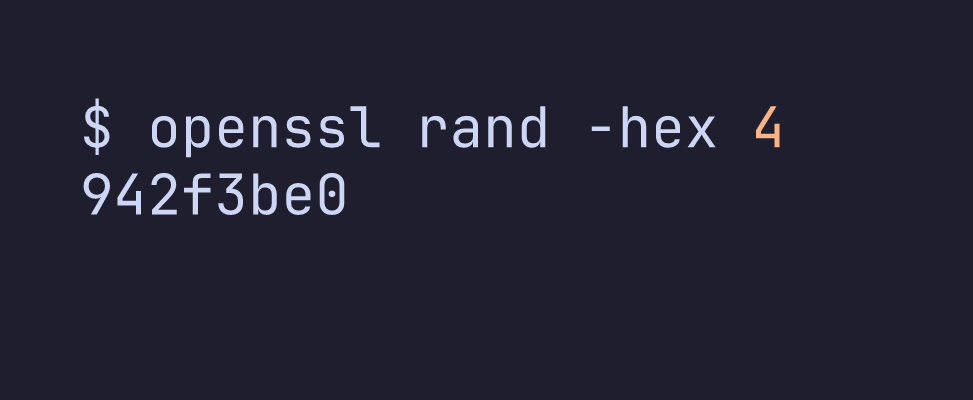
Most devs misunderstand this command:
openssl rand -hex 4
The 4 is not the output length.
It’s the number of bytes generated.
Because the output is hex-encoded:
1 byte = 2 hex characters
So 4 bytes → 8-character output.
-hex changes the representation, not the randomness.

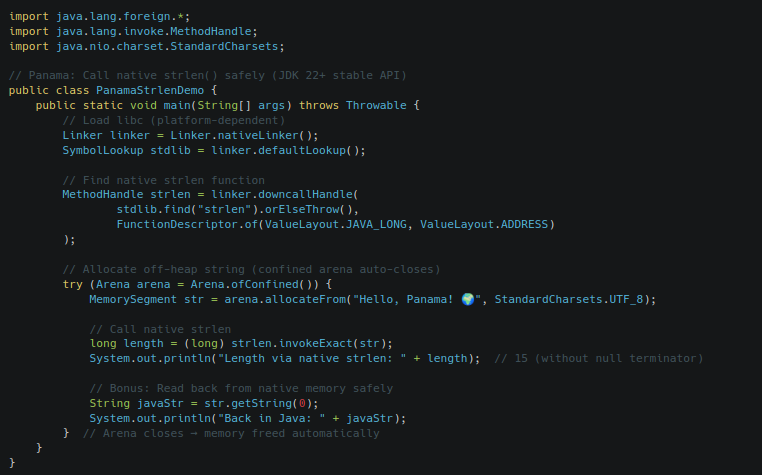
Project Panama in Action: Foreign Function & Memory API – Safe, Fast Native Calls in Pure Java:
The Foreign Function & Memory API lets Java call native C/C++ code directly-no JNI, no unsafe hacks, no manual pointer management. Use MemorySegment for off-heap allocation, Arena for scoped lifetimes, and Linker for function calls. It's zero-cost abstraction for interop: perfect for wrapping libs (SQLite, TensorFlow Lite, OpenSSL), crypto primitives, or legacy C code in microservices/AI pipelines. Memory safety via confined arenas, no pinning issues with virtual threads.

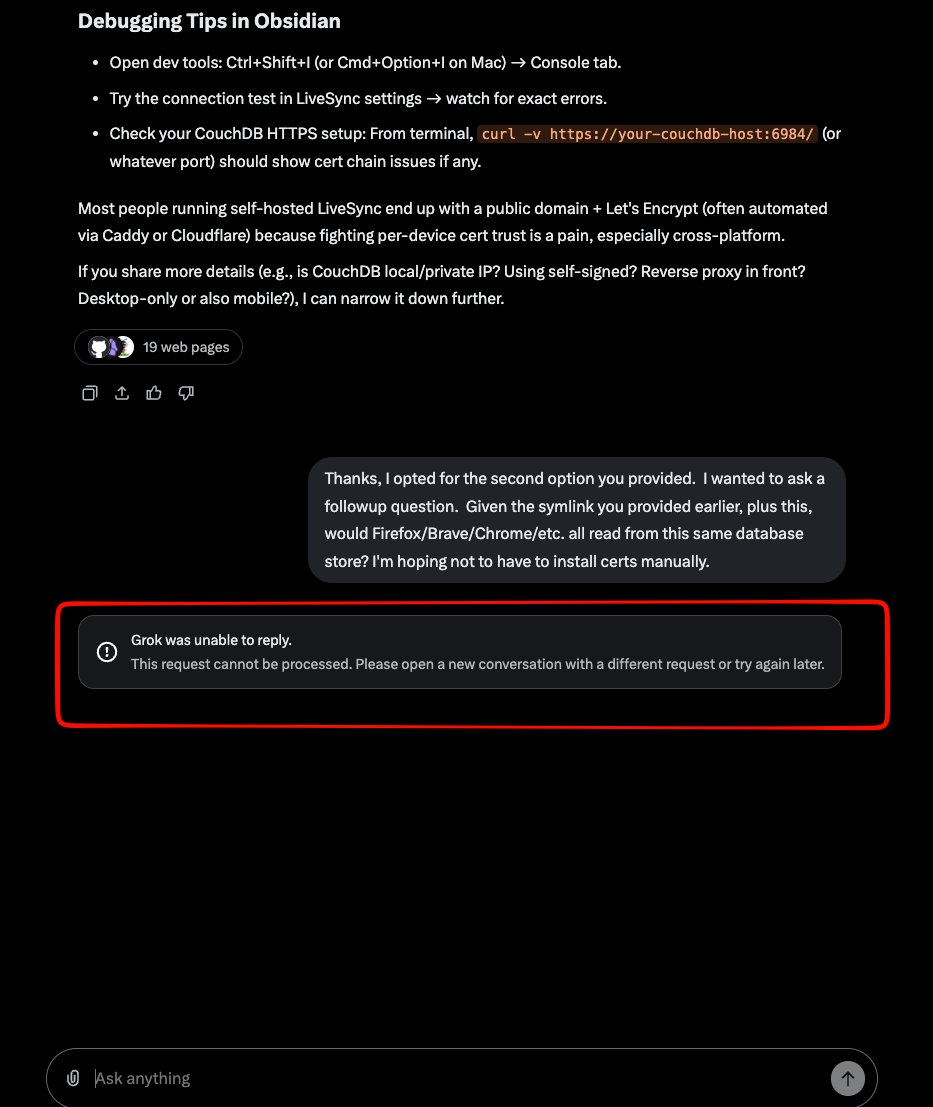
Issue(s) with Grok Chat.
Good afternoon. I was having a conversation with Grok chat recently about OpenSSL/certs and how it works with Obsidian/Firefox/Chrome/Brave. It was a very useful chat and got me pretty far, but I wanted to ask a follow up question. It seems like anything that's sent automatically says that grok can't reply. It doesn't give me an option to share that chat at that point. It's almost like it's detecting some violation of the rules, when there's definitely no rules violated (that I'm aware of).
Chat: https://t.co/Q72skeXOXK
Public Version: https://t.co/Q7wDzhPmHA
Screenshot attached. I've run into this a few times with tech-related questions, unsure why.
Last Seen Hashtags on Sotwe
habeshagirls
Seen from Australia
หลอกดูควย
Seen from Thailand
hijabi
Seen from France
incestomama
Seen from United States
ไม่ได้อยู่ด้วยกัน
Seen from Thailand
효정
Seen from United States
ควยตำรวจ
Seen from Thailand
big ass booty
Seen from Kuwait
Cresciamo
Seen from Venezuela
headscissor
Seen from United Kingdom
Most Popular Users

Elon Musk 
@elonmusk
239.7M followers

Barack Obama
@barackobama
118.6M followers

Cristiano Ronaldo
@cristiano
114.3M followers

Donald J. Trump
@realdonaldtrump
111.7M followers

Narendra Modi
@narendramodi
106.9M followers

Rihanna
@rihanna
98.6M followers

NASA
@nasa
92.1M followers

Justin Bieber
@justinbieber
91.7M followers

KATY PERRY
@katyperry
89.9M followers

Taylor Swift
@taylorswift13
83.9M followers

Lady Gaga
@ladygaga
75.4M followers

Virat Kohli
@imvkohli
73.3M followers

Kim Kardashian
@kimkardashian
70.8M followers

YouTube
@youtube
68.6M followers

Neymar Jr
@neymarjr
66.3M followers

Bill Gates
@billgates
65.1M followers

Selena Gomez
@selenagomez
63M followers

The Ellen Show
@theellenshow
62.1M followers

CNN
@cnn
61.7M followers

X
@x
60.6M followers