

Top Tweets for #Op_Ed

#Op_ed: From Backlash to Verdict: Why #TPLF faces growing diplomatic scrutiny as #Pretoria framework strains #Tigray’s fragile peace
Renewed fighting in Tigray has triggered sharper international scrutiny of actions attributed to the TPLF, while governments continue to support the Pretoria peace framework, writes Mebratu Kelecha.
He explains that the #AU, #Britain, #France, and the #EU have specifically criticized airport seizures and attacks while also raising concerns about federal drone strikes and the protection of civilians.
The author notes that "backlash" does not amount to a unified judgment over who started the fighting, nor does it absolve either side of its obligations. Instead, he argues that the latest escalation has exposed unresolved disputes over security, federal authority, contested territories, and political administration.
https://t.co/jeJ6Lcz0IL

#Op_ed: Eight Years After the Promise: Why #Somali region’s turning point stalled, historic opportunity largely squandered
Eight years after Mustafa Mohammed Omer assumed office in #Ethiopia’s Somali region, the transformative political renewal promised in 2018 remains largely unfulfilled, writes Muktar Ismail Issack.
He contends that despite achieving relative stability, institutional governance has given way to patronage, political inclusion has stalled, and press freedom remains under threat. Furthermore, key public investments in infrastructure, water access, and education have failed to yield meaningful results, leaving young people trapped in unemployment.
The author underscores that “A weak Somali region is not simply a regional problem. It is an Ethiopian problem."
https://t.co/nNCqznvrcM

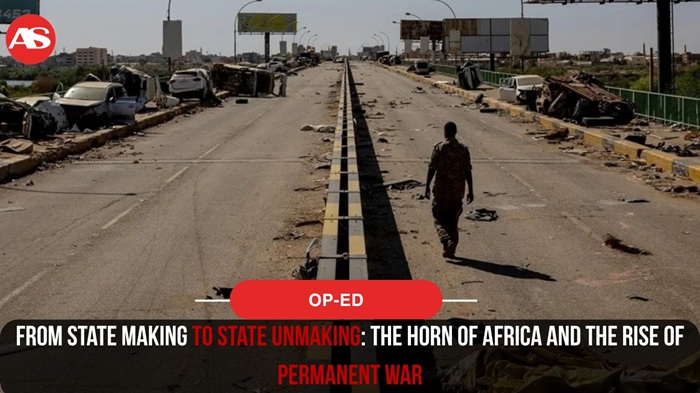
#Op_ed: From State Making to State Unmaking: The Horn of #Africa and the rise of permanent war
The Horn of Africa is being drawn deeper into the strategic fallout of the #Iran war as the Gulf, Gulf of Aden, and #Red_Sea increasingly function as a single theater, writes Abdul Mohammed. He emphasizes that #Houthi leverage at Bab el-Mandeb, pressure at #Hormuz, and growing competition over ports and military access are exposing fragile states to wider geopolitical rivalries.
The author notes that #Sudan, #Ethiopia, #Eritrea, and #Somalia face different forms of state fragmentation as external alliances, proxy forces, and militarization reshape domestic politics.
Mohammed argues that lasting security requires “peacemaking as statecraft,” stronger African mediation, regional coordination, and the rebuilding of legitimate institutions rather than reliance on external patrons.
https://t.co/RHTW1YKkgx
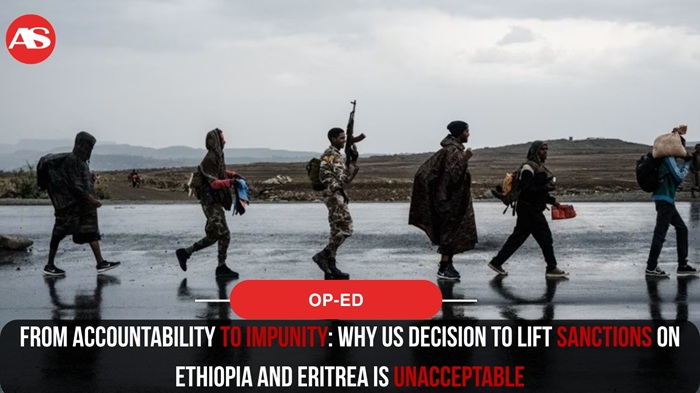
#Op_ed: From Accountability to Impunity: Why #US decision to lift sanctions on #Ethiopia and #Eritrea is unacceptable
The expiration of U.S. Executive Order 14046 and removal of key Ethiopian and Eritrean actors from the sanctions list raise concerns about accountability and renewed instability in the Horn of #Africa, writes Yemane Zeray Mesfin.
He argues that the 2022 #Pretoria Agreement halted major fighting but left justice, reconstruction and displacement unresolved, while tensions between Ethiopia and Eritrea have since deepened.
Yemane warns that lifting sanctions without human rights benchmarks, transitional justice, or troop withdrawals could weaken an important deterrent.
https://t.co/Bj1lQsTnGb
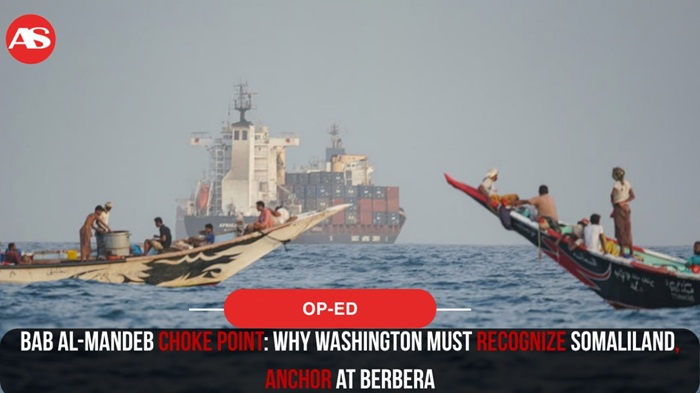
#Op_ed: Bab al-Mandeb Choke Point: Why #Washington must recognize #Somaliland, anchor at #Berbera
The capture of #Mokha and #Perim_Island by Iranian-backed #Houthi forces has altered the security landscape around the Bab al-Mandeb, posing risks to global trade and critical maritime infrastructure, writes Adam Daud Ahmed. He notes that “This development is not merely an extension of #Yemen’s internal civil conflict”; rather, it presents a broader strategic challenge to the Horn of #Africa and Western powers.
The author argues that Somaliland’s southern coastline and Berbera Port are becoming increasingly important to regional maritime security, offering strategic redundancy beyond #Djibouti.
He calls for stronger coastal defence, enhanced maritime surveillance and greater international security cooperation.
https://t.co/JCkTVlzfsp
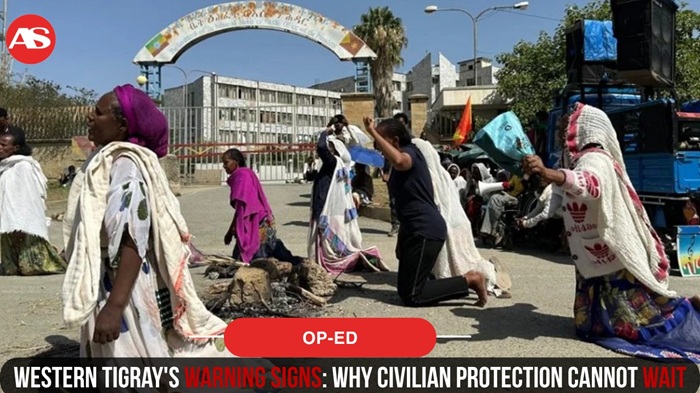
#Op_ed: #Western_Tigray's Warning Signs: Why civilian protection cannot wait
Western Tigray’s current tensions cannot be separated from the atrocities documented during the war in #Tigray, including killings, sexual violence, forced displacement, and arbitrary detention, writes Shushay Tewelemedhn Gebremariam.
He emphasises that Human Rights Watch (#HRW) continues to report discrimination and arbitrary detention of Tigrayans, while more than 740,000 people remain displaced. Moreover, renewed fighting and the absence of effective international oversight are heightening the risks.
Shushay underscores that “warning signs must be taken seriously while there is still time to act,” noting that "prevention is not an accusation. It is a responsibility.”
https://t.co/BLbuZ9gD2v
#Op_ed: Projecting Rule of Law, Retaining Autocratic Roots: Democracy-Speak in #Ethiopia’s National Dialogue
In this op-ed, Hilina Berhanu Degefa and Abadir M. Ibrahim argue that Ethiopia’s #National_Dialogue unfolded against a long backdrop of democratic rhetoric largely devoid of meaningful democratic reform.
They contend that despite the National Dialogue Commission’s promises of political renewal, major political factions, women’s groups, and armed actors continue to be marginalised or excluded altogether. In the authors’ view, this exclusion echoes previous democratic experiments that ultimately served to entrench state control rather than facilitate meaningful power-sharing.
The article cautions that unless the current process confronts these structural omissions directly, it risks repeating Ethiopia’s long-standing pattern of “democracy-speak: projecting democratic process and legitimacy, while the autocratic roots remain deep and far from being uprooted.”
https://t.co/WvQC92NRJL

#Op_ed: Unity by Choice, Not Fear: Lessons from #Eritrea’s independence for future #Ethiopia–#Tigray relations
Eritrea’s independence was not simply the result of a decision by the #TPLF or E#PRDF but the outcome of decades of foreign intervention, political marginalisation, coercion, and failed attempts to resolve the question of self-determination through force, writes Gebremichael Negash. He contends that this history offers an important warning for Ethiopia’s relationship with Tigray, where political exclusion, insecurity, displacement, and unresolved constitutional and political grievances persist.
The author further argues that durable national unity depends on justice, equal citizenship, accountability, political inclusion, and respect for constitutional rights.
Gebremichael notes, “When justice disappears and force replaces consent, unity becomes increasingly fragile.”
https://t.co/7aOY7omXxi

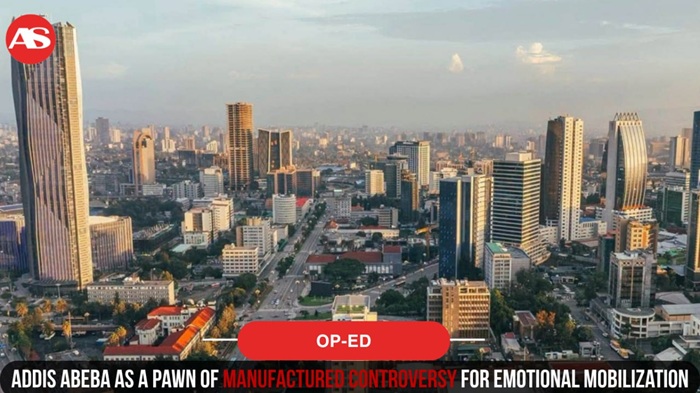
#Op_ed: #Addis_Abeba as a pawn of manufactured controversy for emotional mobilization
Addis Abeba’s administrative status became a national flashpoint during Ethiopia’s 40-day #National_Dialogue Conference, despite wars, displacement, and federal-regional tensions presenting far more urgent challenges, writes Ezekiel Gebissa.
He argues that the ruling party deliberately transformed a constitutional question into an ethnic controversy to divert attention, mobilise public emotion, and create a pretext for centralisation and constitutional revision.
The author further contends that, by weaponising cultural productions and inflammatory media to turn a manageable administrative question into an existential ethnic confrontation, the regime sought to deepen public polarisation.
https://t.co/Ac8pQXlIBs
#Op_ed: National Emergency Hiding in Plain Sight: Confronting #Ethiopia’s education crisis, saving generation behind failed exams
Ethiopia’s recent national examination results—showing that the vast majority of Grade 12 students failed to meet the passing mark—reveal a systemic crisis rather than an isolated failure, writes Mistella Mekonnen Zewede.
She notes, "When massive cohorts of high school seniors reach the end of their schooling academically unprepared for higher education, the public debate must shift."
Mistella underscores that addressing this emergency requires looking beyond examination scores to strengthen teacher support, address the effects of conflict and trauma, and expand vocational pathways.
https://t.co/BWZnEZFc9W

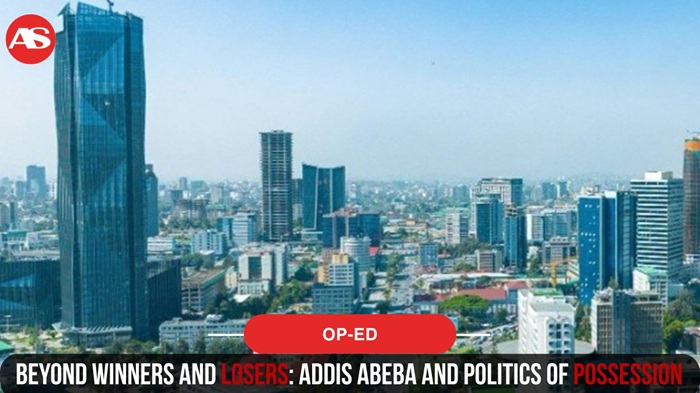
#Op_ed: Beyond Winners and Losers: #Addis_Abeba and politics of possession
As #Ethiopia’s four-year #National_Dialogue concludes, a fierce debate over Addis Abeba has exposed deep historical and material divisions, argues Eyob Yohannes.
He explains that while #Oromo representatives seek recognition of Addis Abeba as Oromia’s capital, citing historical dispossession and concerns over institutional security, others emphasise the city’s role as a shared national capital.
Eyob contends that resolving the dispute should not be about determining who owns the city but about moving beyond winner-take-all politics.
https://t.co/0AeJkDOWfm

https://t.co/fZrcLkKIiL Dear @AsstSecStateAF @AfricaUnions @africanews @StateDept @EU_Commission @UN @IGADsecretariat @UN_HRC #Op_ed: From Red Sea to #Sudan: Why #Ethiopia’s instability risks destabilizing Horn of #Africa
The region of #Tigray is again facing a dangerous political and military confrontation, with unresolved issues from the 2022 #Pretoria peace agreement raising fears of renewed conflict, argues Gebremichael Negash.
He emphasises that disputes over #Western_Tigray, displacement, political authority, and growing mistrust between #Addis_Abeba and Tigray’s leadership remain unresolved.
Gebremichael cautions that the crisis also threatens to widen amid instability in Sudan, tensions with #Eritrea, and growing competition over the #Red_Sea.
@berhanuasres #peaceforAllhornofAfrica
https://t.co/1t17UYprU4 Dear @FAO @IrlEmbEthiopia @AgriculturaSV #Op_ed: Delayed Rains, Broken Promises: Why political choices could turn #Tigray’s drought into famine yet again
Tigray’s worsening drought threatens an already fragile population whose economic and humanitarian safeguards were severely eroded by war, writes Emnet Negash. He explains that while farmers continued planting despite soaring input costs and scarce cash, delayed rains have already shortened the growing season.
The author emphasises that with hundreds of thousands of people remaining displaced, military escalation renewing, and a massive humanitarian funding gap, the region risks severe catastrophe.
According to Negash, preventative action—such as restoring basic services, opening trade corridors, and ending forced recruitment—is urgently needed before the drought triggers mass starvation, because "the rain cannot be negotiated, but nearly everything that determines whether drought becomes famine is political."
@BerhanuAsres
#Tigrayfamine
#Op_ed: #Türkiye’s #Somalia Gamble: How #Ankara’s strategic bet on #Mogadishu could deepen crisis
Türkiye’s expanding role in Somalia has evolved beyond security cooperation into a broader strategic partnership encompassing defence, maritime resources, and hydrocarbons, argues Adam Daud Ahmed.
While acknowledging Ankara’s contribution to strengthening Somali institutions, he contends that its close relationship with Mogadishu has raised concerns among some Federal Member States that Turkish-backed security and economic initiatives could further deepen existing political divisions.
The author notes, “The question is whether Ankara is strengthening Somalia as a federal state or strengthening the federal executive at the expense of the political balance that keeps the federation together.”
https://t.co/vacW8eMltp

#Op_ed: Delayed Rains, Broken Promises: Why political choices could turn #Tigray’s drought into famine yet again
Tigray’s worsening drought threatens an already fragile population whose economic and humanitarian safeguards were severely eroded by war, writes Emnet Negash. He explains that while farmers continued planting despite soaring input costs and scarce cash, delayed rains have already shortened the growing season.
The author emphasises that with hundreds of thousands of people remaining displaced, military escalation renewing, and a massive humanitarian funding gap, the region risks severe catastrophe.
According to Negash, preventative action—such as restoring basic services, opening trade corridors, and ending forced recruitment—is urgently needed before the drought triggers mass starvation, because "the rain cannot be negotiated, but nearly everything that determines whether drought becomes famine is political."
https://t.co/VLiSSPlx3t

#Op_ed: From Red Sea to #Sudan: Why #Ethiopia’s instability risks destabilizing Horn of #Africa
The region of #Tigray is again facing a dangerous political and military confrontation, with unresolved issues from the 2022 #Pretoria peace agreement raising fears of renewed conflict, argues Gebremichael Negash.
He emphasises that disputes over #Western_Tigray, displacement, political authority, and growing mistrust between #Addis_Abeba and Tigray’s leadership remain unresolved.
Gebremichael cautions that the crisis also threatens to widen amid instability in Sudan, tensions with #Eritrea, and growing competition over the #Red_Sea.
https://t.co/sc58vixbE4

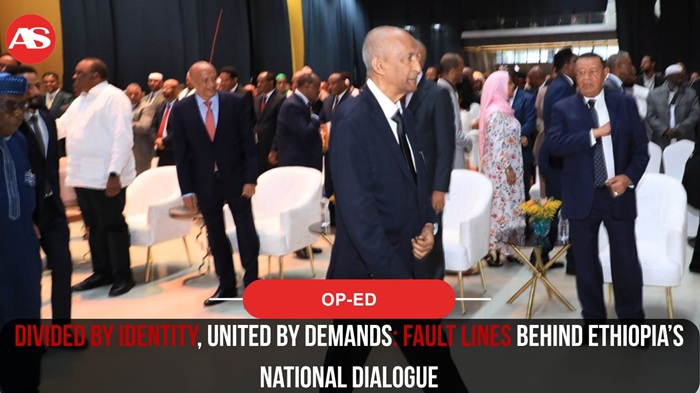
#Op_ed: Divided by Identity, United by Demands: #Ethiopia’s national dialogue amid deep-seated fault lines
Ethiopia’s #National_Dialogue has exposed four major political fault lines—ethnicity, religion, locality, and class—that continue to shape competing demands for power, recognition, and inclusion, writes Kamil Abdu Oumer.
He argues that “ethnicity remains the most dominant political fault line shaping Ethiopia’s national dialogue,” while acknowledging that other identities and interests also play a significant role in shaping political positions.
According to Kamil, the process has revealed a wide range of aspirations, from demands for recognition by historically overlooked communities and greater inclusion in state structures to efforts to preserve historical legacies and, in some cases, secure political dominance.
https://t.co/RladIyrxxX
#Op_ed: Receipts and Resistance: Modernising #Jigjiga’s tax system amid VAT compliance, data privacy challenges
In this op-ed, Adan Hussein examines the ongoing dispute between Jigjiga's city administration and the city's high-volume traders over the proposed linkage of point-of-sale (POS) systems to #VAT collection.
He explains that while the city's effort to connect POS records with VAT reporting is intended to improve transparency, traders have raised legitimate concerns about the protection of their commercial data. Adan argues that the standoff should not be understood as a simple contest between government authority and private enterprise.
As he puts it, “The issue is not whether VAT should be paid, but how it can be collected through a fair, transparent, and accountable system.”
https://t.co/wSi77HOc2h

https://t.co/ZKTbN1zl4h Dear @AsstSecStateAF @AfricaUnions @USEmbassyAddis @UKinEthiopia @AJENews @BBCAfrica @StateDept @RefugeesIntl @Refugees @Europeancommition #Op_ed: Western #Tigray’s Crisis: How federal backing of extra-constitutional committees undermines #Pretoria accord
Nearly six years after the outbreak of the war in Tigray, the dispute over #Western_Tigray remains a significant test of Ethiopia’s constitutional order, writes Merih Welay Welesilassie.
He argues that the continued presence of a federally supported administration and militia in the area undermines the Pretoria Agreement and raises concerns about constitutional neutrality.
The author emphasises that "political legitimacy cannot be built through force or exclusion" and calls for a lawful process grounded in the participation of all affected communities.
@berhanuasres #Justice4Tigray
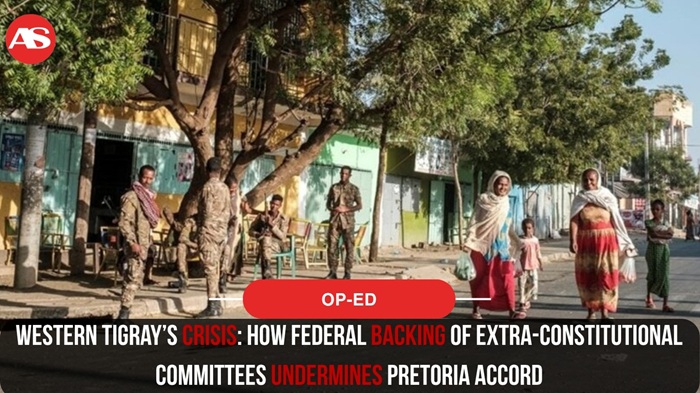
#Op_ed: Western #Tigray’s Crisis: How federal backing of extra-constitutional committees undermines #Pretoria accord
Nearly six years after the outbreak of the war in Tigray, the dispute over #Western_Tigray remains a significant test of Ethiopia’s constitutional order, writes Merih Welay Welesilassie.
He argues that the continued presence of a federally supported administration and militia in the area undermines the Pretoria Agreement and raises concerns about constitutional neutrality.
The author emphasises that "political legitimacy cannot be built through force or exclusion" and calls for a lawful process grounded in the participation of all affected communities.
https://t.co/JuDZgksI31
Last Seen Hashtags on Sotwe
Futa #Balls
Seen from United States
istanbultravesti
Seen from Turkey
OwensKinder
Seen from United States
นัดเย็ดแจ้งวัฒนะ
Seen from Thailand
bursatravesti
Seen from Turkey
iprayforhim
Seen from United States
snapchat
Seen from United States
waria
Seen from Indonesia
nipslip celeb
Seen from Norway
gasmask
Trends for you
Most Popular Users

Elon Musk 
@elonmusk
241.7M followers

Barack Obama
@barackobama
119M followers

Cristiano Ronaldo
@cristiano
114.4M followers

Donald J. Trump
@realdonaldtrump
111.9M followers

Narendra Modi
@narendramodi
107.2M followers

Rihanna
@rihanna
98.7M followers

NASA
@nasa
92.4M followers

Justin Bieber
@justinbieber
91.8M followers

KATY PERRY
@katyperry
90M followers

Taylor Swift
@taylorswift13
83.9M followers

Lady Gaga
@ladygaga
75.4M followers

Virat Kohli
@imvkohli
73.4M followers

Kim Kardashian
@kimkardashian
70.9M followers

YouTube
@youtube
68.8M followers

Neymar Jr
@neymarjr
66.4M followers

Bill Gates
@billgates
65.2M followers

Selena Gomez
@selenagomez
63.1M followers

The Ellen Show
@theellenshow
62.3M followers

CNN
@cnn
61.8M followers

X
@x
60.7M followers