

Top Tweets for #React2shell

📌 حملة سيبرانية تستغل React2Shell لسرقة بيانات الاعتماد
تشن جهات خبيثة حملة سيبرانية تستهدف سرقة بيانات الاعتماد آليًا. تعتمد هذه الحملة على استغلال ثغرة React2Shell، المشار إليها بالمعرف CVE-2025-55182، في تطبيقات Next.js المعرضة للخطر. يتيح الاستغلال للمهاجمين تنفيذ عمليات اختراق منظمة بغرض الوصول إلى معلومات الدخول الحساسة. يشكل هذا النشاط تهديدًا مباشرًا لأمن بيانات المستخدمين في البيئات التي تستخدم هذه التطبيقات. يُنصح مديري الأنظمة بتحديث تطبيقات Next.js على الفور لتطبيق التصحيحات الأمنية اللازمة وحماية البنية التحتية من هذا التهديد الفعال.
🔗 للمزيد: https://t.co/f7D1KQWVog


766 companies got hacked last week. Here's how to make sure you're not #767.
CVE-2025-55182 (React2Shell) is being actively exploited right now.
CVSS 10.0 = maximum severity.
What's being stolen:
• Database credentials
• SSH private keys
• AWS/GCP/Azure secrets
• Stripe API keys
• AI platform tokens (OpenAI, Anthropic, NVIDIA)
• GitHub & Kubernetes tokens
The attacker's tool? NEXUS Listener V3 which is a literal web dashboard where they view all stolen credentials in real-time.
How to protect yourself (do this NOW):
1. Update Next.js to the latest version immediately
2. Rotate ALL environment variables and secrets
3. Enable IMDSv2 on AWS EC2 instances
4. Audit your .env files for exposed keys
5. Check for unauthorized SSH keys in ~/.ssh/authorized_keys
6. Review cloud IAM roles for excessive permissions
This isn't FUD. 766 hosts are already compromised across multiple clouds.
The exploit targets Next.js App Router and React Server Components. If you're running a public-facing Next.js deployment, you're in scope.
Bottom line: Patch now. Rotate everything. Audit your infrastructure.
Your future self will thank you.


🚨 LexisNexis breach: attackers stole 2GB of legacy data incl. .gov emails, law-firm records, IT tickets—via a React2Shell exploit. Legal intel goldmine. https://t.co/ltd82PK0Sb

React2Shell Exploit Is a Major Threat to Servers
A serious vulnerability in React Server Components called React2Shell continues to be exploited by hackers. The Anonymous cyber group is scanning millions of servers for vulnerable systems with a new tool called ILovePoop.
The flaw, which was disclosed in December 2025, allows hackers to take complete control of servers without any authentication and has a CVSS score of 10 out of 10. The main targets include sensitive government and industrial organizations such as NASA, the Department of Defense, state governments, and energy companies.
Experts warn that many servers have not yet been updated, especially applications built with Next.js and in remote or complex cloud environments. Organizations should review their systems and apply security patches as soon as possible to prevent future attacks.

Hackers Deploy Automated Tools to Hunt React2Shell Vulnerabilities https://t.co/qGgYKHjIWe

React2shell Python Vulnerability Scanner
https://t.co/UY8pTFysfH
React2shell Python based vulnerability scanner
https://t.co/UY8pTFxUq9

@MSiekmoeller They are old, but i was talking with respect to php, which are from 1990s.
We recently faced a 10/10 marked vulnerability in react and next js, react2shell. While I haven't personally listened any vulnerability news from those old stack which are still existing in market.

React Server Components are powerful, but "React2Shell" proved that power comes with a massive attack surface.
WAF blindness. DoS loops. Source leaks.
I broke down exactly how the exploit works and why your firewalls missed it.
Link below:👇


🔐 Daily Cyber & Tech Update:-
💼 Weekly recap - IoT botnets, wallet breaches & rogue extensions 👇
The latest Weekly Recap from The Hacker News highlights ongoing threats including the RondoDox botnet exploiting a critical React2Shell flaw, major wallet extension hacks, and widespread malicious browser extension campaigns.
https://t.co/6U1R5faSHM

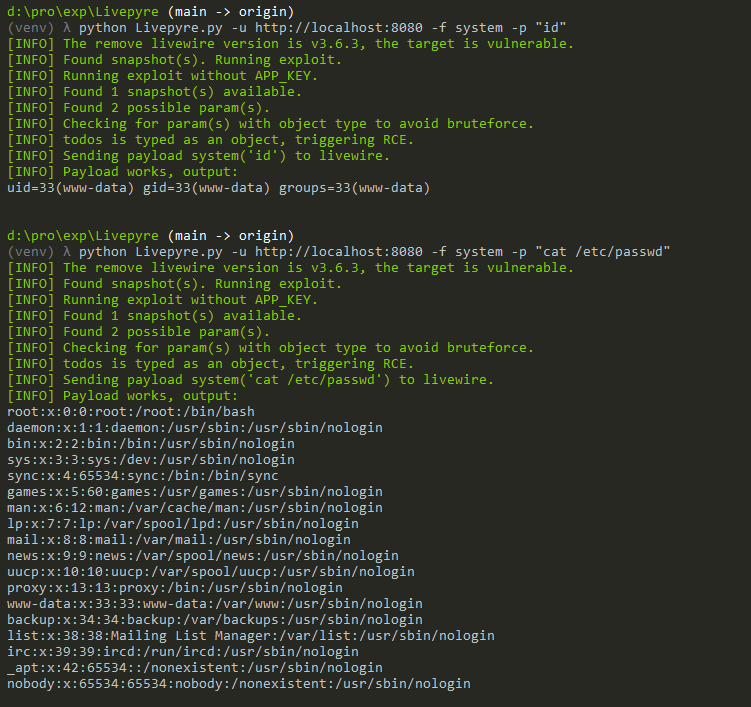
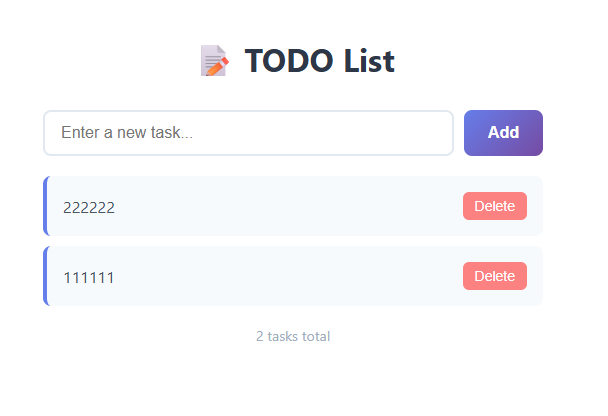
CVE-2025-54068 is the #React2Shell of the Laravel world.🚩
Just like Next.js Server Actions, Livewire bridges the frontend/backend gap automatically. But blindly deserializing state from the client? That leads to RCE.
👇Try the exploit via Vulhub: https://t.co/dWjH6HTcif
#Vulhub

🔥 Daily Cybersecurity Roundup – Jan 3, 2026 📷
Top threats:
• APT36's new RAT targeting India
• Google Cloud abused for phishing
• Critical React2Shell flaw exploited by botnet
• $8.5M drained in Trust Wallet supply chain hack
• 8.8M users hit by malicious browser extensions
• WatchGuard Firebox vuln under attack
Stay informed: https://t.co/njfYT7LAVn
#CyberSecurity #InfoSec #ThreatIntel

What a way to begin the new year's first Friday with a report that a botnet has automated React2Shell exploitation into an hourly siege....
The only thing more persistent than this attack is the calendar....

The React2Shell exploitation landscape has evolved from widespread scanning to a focused, persistent campaign by a sophisticated botnet. The RondoDox botnet has systematically integrated the critical Next.js vulnerability into its attack chain, targeting vulnerable servers with relentless precision.
🎯 Attack Evolution
As detailed in our initial analysis, React2Shell exploitation began rapidly after its December disclosure. The RondoDox operators joined this wave and have, for the past three weeks, executed a highly organized campaign. They have moved beyond deploying simple cryptominers and web shells to fully weaponizing the Next.js vulnerability as a primary infection vector, demonstrating an agile adaptation to the latest attack trends.
🔍 Key Findings
→ First Exploitation Attempts: Observed in March 2025
→ Systematic Scanning: Began in early April, with over eighty exploitation attempts recorded on peak scanning days
→ Primary Malware: The Rondo malware family, with 10+ variants identified
→ Recent Surge: Next.js remote code execution became the dominant attack vector in December 2025, with 40+ repeat attacks on the same vulnerability within a 6 day period
→ Hourly Attacks: Since December 13, the campaign has reached a peak of near-hourly exploitation attempts against vulnerable servers.
🎯 Attack Chain & Payloads
→ December 8 - 16, the group conducted blind remote code execution testing to identify targets
→ December 13 onward, they began deploying malicious payloads.
→ Deploying a botnet support framework designed to purge the host of competing malware and cryptominers
→ Installing the core Rondo botnet client to establish command and control
→ Setting up persistence mechanisms to survive reboots
Impact
Widespread IoT Device Compromise: Organizations with internet-facing routers, IP cameras, and network appliances are facing automated, hourly attacks. Successful compromise leads to devices being enrolled in a botnet for Distributed Denial-of-Service attacks and unauthorized cryptomining operations.
Critical Next.js Application Risk: Enterprises using Next.js, especially versions vulnerable to prototype pollution attacks, face severe risk. The vulnerability allows complete server takeover, and active exploitation is now ongoing.
Credential Harvesting and Lateral Movement: The botnet uses a multi-stage chain, starting with the exploitation of web applications to gain an initial foothold. It then focuses on stealing credentials and pivoting to target IoT infrastructure within the network, threatening entire network segments.
Persistent, Cross-Platform Threats: The operators deploy payloads compatible with multiple processor architectures, ensuring they can infect everything from cloud servers to embedded edge devices, using various download methods as fallbacks.
🛡️ Immediate Actions:
→ Conduct an immediate audit of all Next.js applications and apply all available patches
→ Segment IoT devices onto separate network zones with strict firewall policies
→ Deploy Web Application Firewall rules specifically designed to block command injection patterns associated with this exploit
→ Block known command and control server domains and IPs at perimeter firewalls and DNS resolvers
→ Implement network intrusion detection signatures for patterns like rondo.*.sh and nuts/poop endpoint requests
→ Establish behavioral monitoring for unusual process execution, and unexpected outbound network connections.
→ Implement a Zero-Trust model for all administrative interfaces, requiring VPN or jump host access
→ Mandate MFA on all administrative panels and management consoles
→ Establish a continuous vulnerability management program with prioritized patching for internet-facing applications
The RondoDox campaign illustrates a clear convergence of threats: the exploitation of a critical, fresh vulnerability in a popular web framework is being used as a gateway to compromise broader network infrastructure. Defending against this requires a layered approach that secures both the application layer and the underlying network and devices.
🚨 Active Exploitation Alert
The Rondodox botnet is actively exploiting the React2Shell vulnerability to compromise Next.js servers, enabling remote command execution and botnet expansion.
Attackers are targeting exposed Node.js applications to gain persistent access and deploy malicious payloads.
👉 What happened, who’s at risk, and how to mitigate:
https://t.co/cTxWWeStgN
#Cybersecurity #NextJS #NodeJS #Botnet #WebSecurity #Infosec #Vulnerability

🚨 Active Exploitation Alert
The Rondodox botnet is actively exploiting the React2Shell vulnerability to compromise Next.js servers, enabling remote command execution and botnet expansion.
Attackers are targeting exposed Node.js applications to gain persistent access and deploy malicious payloads.
👉 What happened, who’s at risk, and how to mitigate:
https://t.co/9JaeEJtOAC
#Cybersecurity #NextJS #NodeJS #Botnet #WebSecurity #Infosec #Vulnerability

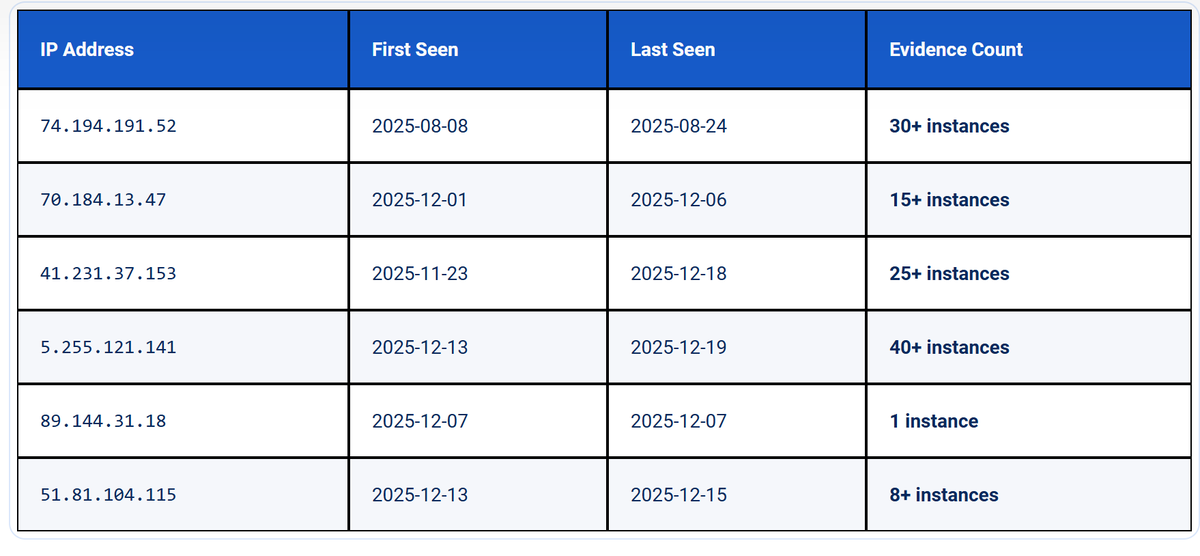
#IOC RondoDoX Botnet Weaponizes React2Shell
https://t.co/OLq9cCxZ6V

👉🏻 Writeup 🖇️:
React2Shell CVE-2025-55182
😱 Earn Bug Bounties Fast
👉🏻 Author :
@harshad_hacker
https://t.co/0XDGfQJC6S
#CyberSecurity #infosecurity #BugBounty #bugbountytip #bugbountytips

"React2Shell” was one of the craziest web security incidents, as millions of React & Next.js sites were impacted due to a server-side vulnerability that allowed arbitrary code execution via a single crafted HTTP request 😵💫
**Quick fix,
Update your dependencies.
https://t.co/H07LNRvZYy

Bug: #React2shell
Bounty: 900 Euro
Special thanks to @Rohan_Lew for the guidance
#bugbounty #bugbountytips #hacking #cybersecurity


#React2Shell dropping xmig


We’re seeing up to 14.5 million attempts per hour to exploit the #React2Shell vulnerability across @Cloudflare’s network. This is a very bad exploit. While our WAF is helping protect customers, it’s critical to update your React and Next.js instances as soon as possible.


#CVE-2025-55182 #React2Shell
Let me walk you through the technical path of the WAF bypass.
When a request is sent as multipart/form-data, Next.js hands the raw body stream to Busboy. The bypass comes from Busboy’s charset logic: it cleanly accepts UTF‑16LE (and legacy UCS‑2) and forwards the decoded bytes straight into the RSC payload deserializer.
charset=base64 is a dead route — that path hits base64Slice(), which encodes instead of decodes, corrupting the payload and killing the exploit chain.
So the only viable encodings for smuggling malicious RSC payloads past WAF normalization are UTF‑16LE and UCS‑2. And if the WAF isn’t performing proper normalization on non‑UTF8 charsets, it will miss the payload entirely.


🚨 WARNING: Fake CVE-2025-55182 (React2Shell) scanner contains MALWARE
https://t.co/Q65dFepsOl
Hidden payload in code: → mshta.exe https://py-installer[.]cc
Targets security researchers hunting this vuln.
Always read source before running any "security tool"!
#React2Shell


🚀 Just published a new Blog post!
I’ve released React2Shell on GitHub, an intentionally vulnerable Next.js app packaged with Docker for anyone who wants to play around with CVE-2025-55182 exploit.
🔗 Read the full blog here:
https://t.co/X2TghRbPyo
#react2shell
Trends for you
Most Popular Users

Elon Musk 
@elonmusk
239.7M followers

Barack Obama
@barackobama
118.6M followers

Cristiano Ronaldo
@cristiano
114.3M followers

Donald J. Trump
@realdonaldtrump
111.7M followers

Narendra Modi
@narendramodi
106.9M followers

Rihanna
@rihanna
98.6M followers

NASA
@nasa
92.1M followers

Justin Bieber
@justinbieber
91.7M followers

KATY PERRY
@katyperry
89.9M followers

Taylor Swift
@taylorswift13
83.9M followers

Lady Gaga
@ladygaga
75.4M followers

Virat Kohli
@imvkohli
73.3M followers

Kim Kardashian
@kimkardashian
70.8M followers

YouTube
@youtube
68.6M followers

Neymar Jr
@neymarjr
66.3M followers

Bill Gates
@billgates
65.1M followers

Selena Gomez
@selenagomez
63M followers

The Ellen Show
@theellenshow
62.1M followers

CNN
@cnn
61.7M followers

X
@x
60.6M followers