

Top Tweets for #SELFINTEREST


You can only go through puberty. There is no 'wrong' puberty. Disrupting the emotional, intellectual and physical development of children is wrong though.

A Moment of DIVINE Significance
#DANGEROUSMinds
#SELFInterest
#PersonalSTAKES
#QuestionEveryoneAndEverythingAlways
https://t.co/VzlCuJp3Xp

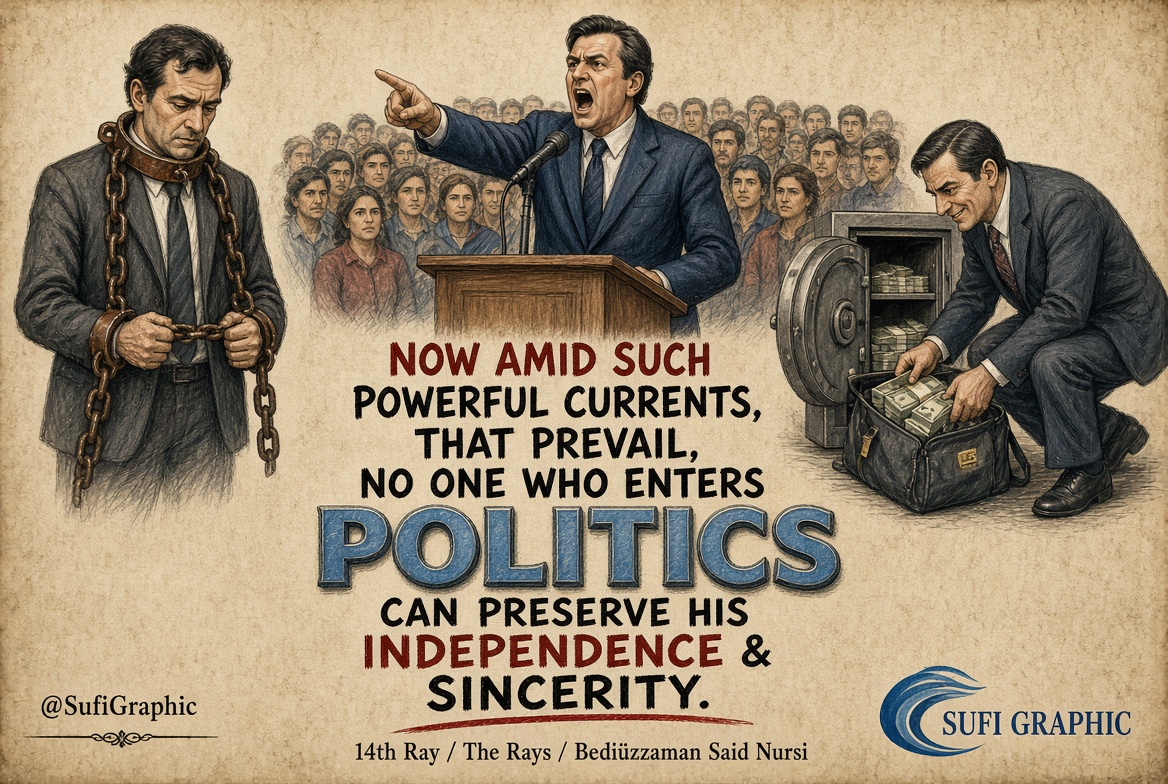
My1rst AI poster made wth my pic.I didn't add nything by me #AI choose wht it feels.May b except human rest all n things loves me more pure🌈Bt AI must b in hands of good humanbeing responsible controls.Othrwise bad #IntellectualTerrorsBrains will hurm manupulate4r #SelfInterest


🎥#TrumpRise and the majority’s accommodation of #TrumpianFascism were the product of a #MoralCollapse and of an ideology that treats #SelfInterest as the only real motive: the evil of the #Trump era is a vacancy of empathy and shame👇👇
👈Chris Hedges @ChrisLynnHedges interviews #SusanNeiman, director emerita of the Einstein Forum and former professor of philosophy at Yale and Tel Aviv, on her latest book, Call It Evil: Understanding the Trump Era.
✅ 1 – Claims
🔺1.1 Evil marks a limit, not a crime. A crime can be fitted into procedures of punishment; evil threatens the trust we need in order to live in the world. The worst form of it in this era is not malice but vacancy: the emptying out of empathy, shame, and every motive except one’s own advantage.
🔺1.2 Trump and his circle could not have come to power without a moral collapse. Its source is an ideology that has installed self-interest as the only real motive.
🔺1.3 The “iron law of force” and colonialism are not facts; they are philosophical claims. A constitution cannot preserve itself without a moral commitment to law.
🔺1.4 Refusing to name fascism, and the kneeling of institutions, normalizes the regime. The main danger is not the sadist; it is the unnamed complicity of the majority.
🔺1.5 The absence of social rights in America has put privilege where a right should be, and has left people without a vocabulary for their insecurity. Once the moral language of their rivals was discredited, stating one’s motive in the open came to look like authenticity.
✅ 2 – Arguments
🔺2.1 If an act can be fitted into the apparatus of punishment, it is still connected to ordinary experience. Once that connection is cut, the question is no longer how to punish, but whether one can still trust the world. That is why Neiman treats the difference between evil and crime as one of kind, not of degree.
🔺2.2 The sadist causes pain. But if the only motive counted as real is one’s own advantage, empathy and shame become not just naive but suspect, and no intention to harm is required. She writes that the most common forms of evil arise from the view that only fools believe in anything but their own advantage. Explaining this era by the psychology of a few people is therefore too short.
🔺2.3 Smith’s remark about the butcher, the baker, and the brewer says only that they produce from self-interest, not from charity. To conclude that everything we ever do is done from self-interest is a leap. The eighteenth and nineteenth centuries did not make it. Popular culture took it from a digest and from journalists, not from the text.
🔺2.4 If force were an iron law, the critique of colonialism would be pointless. The Enlightenment put that claim in question, and its political effect came two centuries later. The age of a claim is not proof of its truth; Thucydides and Carl Schmitt show age, not necessity.
🔺2.5 Madison ties law to virtue: the best constitution cannot guarantee itself if people obey the law only when it does not go against them. Political books have explained how Americans could elect Trump; without that commitment, acceptance of the second term remains unexplained.
🔺2.6 Neiman holds that morality comes before religion. In most cultures religion has been a language for moral intuition, and has made provision for widows, orphans, and the sick. If a branch ties obedience only to wealth and power in this life, it loses the function of restraining the rapacious side of our nature. The support of some evangelicals for leaving the weak behind is strange for that reason, not because it is the essence of Christianity as such.
🔺2.7 “Authoritarian” fits certain German professors and the softer sort of Latin American military regime. Where the instances are masked deportations, combat troops in major cities shooting peaceful protesters, coercion of media and universities, and a war of aggression, the word lowers the alarm and makes it easy to sit the term out. The Nazis did not confront people with Auschwitz in 1933, 1934, or 1935.
🔺2.8 Great wealth ought to confer the power to say no, because it removes material dependence. Kneeling when one is not dependent is therefore not coercion; it is complicity. Kehlmann’s novel shows people who began as opponents of the Nazis crossing one red line after another until they were complicit.
🔺2.9 The Argentina tapes show that Eichmann knew what he was doing, so Arendt was wrong about the man. One Eichmann, or a thousand, still could not have carried out the Holocaust. The banality thesis concerns systemic and often thoughtless evil, not one defendant’s ignorance. A sociopathic 2 percent does not carry this weight.
🔺2.10 A death toll and a face, or an interview with someone who has lost family, are not the same report. The second humanizes one side. Distortion is not only lying about one’s own society; it is the choice of what is reported and how. Neiman applies this to victims’ stories on both sides in Israel and Palestine.
🔺2.11 If health care, housing, and leisure are benefits, they are privileges an employer may or may not grant. If they are rights, a threat to them provokes outrage, as a threat to a free press does. Free speech without social rights behind it is not an equal right: Rupert Murdoch’s right to free speech is not the author’s. This is not the reduction of everything to economics; it is the condition under which a political right becomes real.
🔺2.12 People who do not know that elsewhere these things are rights call their insecurity inflation. Democrats kept saying inflation was not so bad. Neither side had the vocabulary.
🔺2.13 If the justification of a war keeps changing, there was no genuine justification. After “moral clarity” and “axis of evil,” moral language in politics came to sound like hype covering real motives. Stating the spoils aloud then sounds like honesty, even if the speaker lies a great deal. Authenticity of motive is not truthfulness of speech.
🔺2.14 Affordability is not the only engine of a campaign. If a politician joins the injustice of livelihood to a refusal to yield on a costly question, part of the vote does not come from the pocket. Neiman places the stance on Gaza in exactly that role.
✅ 3 – Evidence
🔺3.1 Neiman is the author of Learning from the Germans: Race and the Memory of Evil (Persian translation by Mohammad Mustafa Bayat, Borj) and Left Is Not Woke (Persian translation by Shirin Karimi, Borj, 2025). In the interview she cites the second by its English title. The book under discussion, Call It Evil, has not yet appeared in Persian. Evil in Modern Thought is among her earlier books.
🔺3.2 Hedges calls himself an ordained Presbyterian minister, which he does not advertise, and the author of American Fascists: The Christian Right and the War on America. He calls prosperity-gospel preachers heretics. Neiman says he may call them heretics; she calls them fascists. The Trump family most admired Norman Vincent Peale. Neiman calls that branch the fastest-growing in world Christianity: follow these commandments and you will be rewarded with wealth and power in your lifetime.
🔺3.3 The National Association of Manufacturers produced the digest of Smith and is still the biggest business lobby in the United States. The sentence always emphasized is that the butcher, the baker, and the brewer do not produce out of charity but out of self-interest. On Neiman’s account, Foucault is the most cited writer in the social sciences and humanities in the world; the idea entered circulation through journalists who had read some version of it in college, not necessarily Smith, Darwin, or Foucault. It accelerated after 1991.
🔺3.4 Stephen Miller told Jake Tapper to forget the niceties: the iron laws of the world are that the world is governed by strength and force, and everything else is etiquette. Neiman calls this a very old philosophical claim, used by the Athenians in Thucydides to justify the first recorded genocide, and found again in Carl Schmitt. A day or two before the interview, Trump told the General Assembly that to the victor belong the spoils. The United Nations was formed in the wake of the Second World War, in the middle of the anti-colonial struggles, to enforce a rule of law. Indian independence is dated 1948 in the interview. Madison said that without virtue no set of laws will protect our liberty and happiness.
🔺3.5 Mark Milley, former chairman of the Joint Chiefs of Staff, called Trump fascist to the core in October 2024, not during the first administration. Neiman notes that the military normally takes its duty to remain apolitical seriously, and reads the remark as a warning meant to influence the election. The passage Hedges read describes masked men deporting people to wastelands they have never seen, combat troops occupying major cities and shooting peacefully protesting citizens, a government coercing media, universities, and other countries, and a military blowing fishermen to bits on the meagerest justification, then beginning the kind of wars condemned by the International Military Tribunal at Nuremberg. As it wrote in 1946, to ignite a war of aggression is not only an international crime; it is the supreme international crime, differing from other war crimes in that it contains within itself the accumulated evil of the whole.
🔺3.6 Hedges says Trump went before the United Nations and talked about annihilating Iran, and calls that genocide. He adds that it was not the first time, and that repetition builds acquiescence or at least indifference. Neiman separately takes Venezuela as an instance of stating the motive aloud: we are taking the oil, and to the victor belong the spoils. She also cites his saying that he would no longer stop wars because Norway did not give him the Nobel Peace Prize.
🔺3.7 Hedges says he is probably not going to get into the Gaza chapter, which is very good. Neiman says she would be happy to, having been involved in the public debates in Berlin and in Germany. She says American reporting on Israel and Palestine has changed markedly over the past year, and earlier than that. In 2021 the New York Times printed pictures of 67 children killed in Gaza under the heading “Say their names.” Bringing that into German public discourse, which was not even discussing that war, was considered extremely controversial. Neiman says she is Jewish and has repeatedly been called antisemitic by Germans; she had just received another such letter.
🔺3.8 Bush used “moral clarity” for a war that was neither moral nor clear, and whose justification kept changing, and he spoke of an “axis of evil.” Clinton later said that if she had known then what she knew later, she would not have voted for the war against Iraq. Neiman says she has never had a security clearance, and that a single genuine justification would not have had to be replaced again and again. In his last question Hedges also cites the Clinton administration on NAFTA, the deregulation of the FCC, the destruction of Glass-Steagall, and the rise of the carceral state. The Washington Post stopped counting Trump’s recorded lies in the first term at 30,000.
🔺3.9 Arendt had no access to about a thousand hours of tapes made in Argentina. Hedges sums them up as Eichmann wishing he had killed them all. Neiman calls Eichmann in Jerusalem one of the great books of the twentieth century, and says she does not worship Arendt and disagrees with her on a number of points. On the equation of communism and fascism, she says Arendt does not quite do what people think she did. Philip Zimbardo’s studies put the sociopathic share of the population at about 2 percent. She mentions a book that appeared the previous year, The Cruelty Is the Point.
🔺3.10 In Berlin in 1982–83, while learning German, she listened to East and West German broadcasts. It was not simply that the East lied about its own society; each side reported some things and not others. The East reported Reagan’s wars in Central America, which the West largely did not; the West reported the war in Afghanistan. She has lived in Berlin for more than thirty years. That is the background of Learning from the Germans, though the title is not spoken in this interview. Daniel Kehlmann’s novel The Director, one of the New York Times ten best of the previous year, shows people who were by no means Nazis becoming complicit. The American instance is Google changing its maps so that Lake Ontario was called Lake America.
🔺3.11 At the beginning of his final term, Roosevelt argued for a second Bill of Rights: health care, fair labor practices, education, housing, and leisure. He was ill in the final year and trying to help win a war. Eleanor Roosevelt chaired the UN committee that drafted the Universal Declaration of Human Rights, which includes those social rights as well as political ones. In Germany everyone receives more than thirty days of paid vacation a year, not counting Christmas, New Year’s, and a few other public holidays. A German editor would not print her article about an American employer allowing six weeks at half-time after the birth of a child, because no one in Germany would believe it.
🔺3.12 In 2024 the Supreme Court criminalized homelessness, allowing states to jail the unhoused even when no shelter was available. Even before that ruling, countless employed people who slept in their cars lived in fear. Losing a job is tantamount to losing one’s health insurance. Obama’s reform was an improvement, but insurance lobbyists and their Republican allies forced compromises that left millions without adequate care. In many cities one is eligible for care only if one earns so little that one cannot pay the rent. About half the country would be distraught at an unexpected bill of $400. Neiman was in that category until she was about fifty.
🔺3.13 Sanders, whom she respects for putting on the table questions that were not there ten years ago, focuses on health care. She says he is to the right of Angela Merkel, then head of a center-right party. In 2016 he talked about Denmark, and Clinton said, “Well, we’re not Denmark.” Neiman says they could have talked about all of Europe, and about Brazil and South Africa, both of which guarantee health care to everyone. In Johannesburg, as a non-South African, she paid a very small amount for a broken bone; any South African can walk in and walk out without a bill.
🔺3.14 After Trump barred CNN, Politico, and another organization — Hedges says MSNBC; Neiman says it is no longer MSNBC — the others finally stood together in solidarity. She had been waiting more than a year for the same from universities, law firms, and media companies. She has been impressed by Zohran Mamdani’s campaign and by the first few months of his administration, and by what moved 100,000 volunteers to work for a cause that had seemed hopeless a year, or a little more, earlier. Affordability, she says, was talk of justice: the nurses, bus drivers, and street cleaners who keep New York running, as the pandemic showed, cannot afford to live in the city. His stand on Gaza, which people thought would lose him the election, gave him moral weight. She closes from Atlanta, where she is giving talks on the book, with a call to turn out for the midterms.
✅ 4 – Conclusions
🔺4.1 Without attention to the moral background of this administration and of the public’s acceptance of it, there is no way out of the moral morass. A list of crimes is not enough. The limit that threatens trust in the world has to be named, and its mark is not malice but vacancy.
🔺4.2 Until it is understood how these ideas entered circulation, they cannot be rejected. Americans are used to thinking that theirs is no ideology, and that ideology is something communists have.
🔺4.3 The iron law is a philosophical claim, not a fact, and it has been called into question before, from the Enlightenment critique of colonialism to the middle of the twentieth century. “To the victor belong the spoils” brings a straightforward idea of colonialism back to the General Assembly.
🔺4.4 “Authoritarian,” “anti-democratic,” and “illiberal” make it easy to sit the term out and hope the next one will be a little better. Without language that rings alarm bells, complicity is easier. That is, in some ways, the main point of the book.
🔺4.5 Arendt’s error about Eichmann does not invalidate the thesis. The most dangerous forms of evil are systemic and often thoughtless. Most Americans do not enjoy cruelty. What allows the regime to be accepted is the ability to go along with evil without recognizing it as such.
🔺4.6 Supporters call him authentic not because the recorded lies are in doubt, but because he is straightforward about his motives. After the ideas poured into the culture since the end of the Cold War, that feels like a relief. It is not truth-telling.
🔺4.7 Americans do not know what they are missing, and their situation is not normal. Fear of losing a job is tied to fear of losing a home and health insurance. Until social rights stand behind political rights, a vote described as a vote about inflation has no vocabulary for its cause, and people are pushed toward a demagogue.
🔺4.8 The way out has three parts: understand what we are up against and stop prettifying it; build the solidarity that institutions finally showed; and practice a politics that joins self-interest to a sense of justice, of the kind visible in Mamdani. His stand on Gaza belongs inside that politics, as a sign that he will not yield on a question of principle.
🎥 Trump: #Very_soon you will see things happen in #Iran👇👇
👈 #Mossad is the #most_powerful_terrorist_organization_in_the_world, the headquarters of the world’s #terrorists, and the #center_of_global_terrorism.
✅ In Netanyahu’s body dwell the #evil_spirits of #Hitler, #Mussolini, #Franco, #Pol_Pot, #Abu_Bakr_al_Baghdadi, and #Bin_Laden. #Netanyahu is the congregation of the unclean spirits of demons, and the blood-drinking Dracula, the #serial_killer of #25000_children_in_Gaza.
🔺 #Mossad and #Netanyahu have probably put forward a new plan to stage an #uprising, a #massacre, and #terror in #Iran.


#Cause #Ideology #Religion #Faith #Politics #Office #Money #Ambition #SezaiKarakoç #Bediüzzaman #SelfInterest #Advantage #World #Sincerity #Independence #Freedom POLITICS / IDEOLOGY and RELIGION
“None of the men who set out to earn money for the CAUSE ever returned home.” / Sezai Karakoç
===========================
Regarding the CAUSE / IDEOLOGY and RELIGION: It is not only those who went solely to earn money who failed to return home—or could not return, or will not return (with very few exceptions)—but also many of those who went to secure positions of power, believing they would serve through politics and partisanship; they, too, did not return. One can consult Google or AI regarding the Quranic verses that speak of “the multitude” or “the many.” There are indeed numerous verses that offer warnings on this subject.

@TheRickyDavila @JaredKushner and @SteveWitkoff are #selfserving #selfaggrandizing #WHORES! Their only interest is #selfinterest. They have no place in any government capacity. They need to be side lined, investigated, indicted, incarcerated for crimes against humanity.

@DHughesy Man complaining against tax deductions because he believes his tax deductions were taken away. #selfinterest

@PrideOfjenni My fav moment was getting $3 in the ring for her to beat Scheelite and Pounding at Caulfield in the winter #selfinterest

Pretty sure Triple M won the lot at some stage in the 90s #selfinterest


@Justabogan The same reasons that in the US this same demographic flocked to #ToxicTrump. Remember to add the billionaires to the list, too. Basically ...#SelfInterest comes first.Just change #Trump to #Hanson & him/his to she/her in quote below.😑


@Dr_Bekka_UK MP Pensions also need a big cut in contributions and benefits. If they had to survive on the #statepension I am sure they wouldnt want to cut it! #selfinterest

Did you know that WW2 Minister of Economic Warfare Hugh Dalton wanted the Indian Raj to back the Radical Democratic Party to counter Congress and the Muslim League? #Empire #SelfInterest #India #WW2
#Discord #Hypocrite #Enemy #Cunning #Deception #Politics #SelfInterest #Sedition #Bediuzzaman #RisaleiNur #IsharatulIjaz #Quran
ANALYSIS OF THE PHENOMENON OF THE HYPOCRITE AND HYPOCRISY (NIFAQ) THROUGH VARIOUS DIMENSIONS
"When the enemy is unknown, they become more harmful. If they are deceptive, they become more malignant. If they are deceitful, their corruption becomes more severe. If they are internal, their harm becomes far greater. For the internal enemy dissipates strength and diminishes courage. The external enemy, on the contrary, intensifies group solidarity (asabiyyah) and increases fortitude (salabah). The crime of hypocrisy (nifaq) against Islam is exceptionally great. It is hypocrisy that subjects the Islamic world to severe tremors. It is for this reason that the Magnificently Great Qur'an has subjected the people of hypocrisy to extensive censure and condemnation."
Ishārāt al-I‘jāz – Bediüzzaman
====================
This concise passage from Bediüzzaman Said Nursi’s work Ishārāt al-I‘jāz is a psycho-sociological and theological analysis that deeply examines the social and spiritual devastation wrought by the concept of "hypocrisy" (nifaq) in Islamic theology (scholastic theology/kalam and Qur'anic exegesis/tafsir).
When the texts of the Holy Qur'an are examined, it is evident that these statements align precisely with the essence of the verses, the occasions of revelation (asbab al-nuzul), and the stylistic structure of the Qur'an.
📌1. The Enemy Being Unknown, Deceptive, and Internal: The Characteristics of the Hypocrite
"When the enemy is unknown, they become more harmful... If they are internal, their harm becomes far greater."
In Islamic theology, the external disbeliever (the external enemy) is clear; their stance, faction, and intentions are manifest. By contrast, the hypocrite is the hidden danger within. The Qur'an describes this capacity of hypocrites to "conceal" and "deceive" as follows:
🖌️Being Concealed and Deceitful:
"And of the people are some who say, 'We believe in Allah and the Last Day,' but they are not believers. They seek to deceive Allah and those who believe..." (Surah Al-Baqarah, 8-9)
🖌️The Threat of the Internal Enemy:
"And when you see them, their forms please you, and if they speak, you listen to their speech. They are as if they were blocks of wood propped up—they think that every shout is against them. They are the enemy, so beware of them. May Allah destroy them; how are they deluded?" (Surah Al-Munafiqun, 4)
The restrictive phrasing (tahsīs) in the Quranic expression "They are the enemy" (focusing singularly on them) paper-stamps the theological truth that the internal enemy is far more dangerous than the external one.
📌2. The Internal Enemy Dissipating Strength vs. The External Enemy Intensifying Solidarity
"For the internal enemy dissipates strength and diminishes courage. The external enemy, on the contrary, intensifies group solidarity and increases fortitude..."
From theological and historical standpoints, external threats (Pagan Idolaters, Crusaders, etc.) stimulate feelings of "Asabiyyah" (spirit of unity, solidarity) and "Salabah" (religious fortitude/resilience) within the Muslim society. The Qur'an praises the believers for standing shoulder-to-shoulder in the face of external pressure (Surah As-Saff, 4).
However, internal hypocrisy rots society from within and breaks resistance directly on the front line. The Holy Qur'an conveys the demoralizing role played by hypocrites within the Muslim army during the expeditions of Uhud and Tabuk:
🖌️Attempts to Diminish Courage and Strength:
"Had they gone forth with you, they would not have increased you except in confusion, and they would have hurried about in your midst seeking [to cause] fitnah among you..." (Surah At-Tawbah, 47)
🖌️Dividing the Army from Within: During the Battle of Uhud, Abdullah b. Ubayy b. Salul deserted the army with 300 of his followers just before battle to collapse the morale of the Muslims—a concrete example of this reality of "dissipating strength."
📌3. The Crime of Hypocrisy and "Subjecting the World of Islam to Tremors"
"The crime of hypocrisy against Islam is exceptionally great. It is hypocrisy that subjects the Islamic world to severe tremors."
At the root of the first major schisms, seditions (fitnah—such as the Battles of the Camel and Siffin), and sectarian divisions in Islamic history lay the seeds of hypocrisy infiltrated into the body politic, rather than external armies. Hypocrisy served as a "theological and political earthquake" that shook the seemingly unbreakable pillars of the Ummah.
The Holy Qur'an draws attention to this destructive power of fitnah caused by hypocrisy with the following verse:
"Fitnah (sedition/oppression) is worse than killing / greater than killing." (Surah Al-Baqarah, 191 & 217)
📌4. The Magnificently Great Qur'an's Extensive "Censure and Condemnation" of the Hypocrites
"It is for this reason that the Magnificently Great Qur'an has subjected the people of hypocrisy to extensive censure and condemnation."
Bediüzzaman's observation is in complete harmony with the structural and volumetric analysis of the Qur'an:
🖌️Volumetric Proportion: At the beginning of the Holy Qur'an (in the initial verses of Surah Al-Baqarah), believers are described in 2 verses and disbelievers in 2 verses, whereas hypocrites are depicted in detail across 13 full verses. Furthermore, there is a distinct, dedicated chapter: Surah Al-Munafiqun.
🖌️Their Status in the Hereafter: While Quranic theology notes that disbelievers will be in Hellfire, it explicitly affirms that hypocrites will reside in the lowest depth of Hell:
"Indeed, the hypocrites will be in the lowest depths of the Fire (al-dark al-asfal)—and never will you find for them a helper." (Surah An-Nisa, 145)
= Summary / Conclusion =
Said Nursi’s text is a socio-theological analysis rooted in the Quranic worldview. While the Holy Qur'an frames the stance against the open disbeliever as "Be clear and struggle," it warns against the hypocrite: "Be vigilant, danger lurks within."
The theological essence of the passage is this: Because the external enemy attacks the physical body, it forces the organism to strengthen itself; whereas internal hypocrisy destroys the organism's immune system, driving the body to complete breakdown.
This passage taken from Bediüzzaman Said Nursi’s Ishārāt al-I‘jāz is not merely a religious-theological text; it is also a remarkably profound political philosophy analysis concerning state theory, political stability, social security, and threat perception.
The analysis of the text in light of classical political philosophy literature (Niccolò Machiavelli, Thomas Hobbes, Carl Schmitt, and Ibn Khaldun) can be gathered under the following main headings:
📌1. Threat Asymmetry and Information Politics (Epistemological Threat)
"When the enemy is unknown, they become more harmful. If they are deceptive, they become more malignant. If they are deceitful, their corruption becomes more severe."
In political philosophy, the greatest defense mechanism of a state and society is the capacity to "correctly identify the source of the threat."
🖌️Invisibility and Information Deficit: The enemy’s identity being unknown (meçhul) paralyzes the security apparatus of the state. Because the political authority cannot determine whom to defend against, it faces an "asymmetric threat."
🖌️Disinformation and Theft of Legitimacy: The enemy being "deceptive" and "deceitful" is the ultimate poison of the political realm. Legitimacy in politics rests on trust. In an environment where words, commitments, and intentions are fake, the "social contract" (Hobbes, Rousseau) begins to decay.
📌2. The Internal vs. External Enemy Equation: The Collapse of the Political Body
"If they are internal, their harm becomes far greater. For the internal enemy dissipates strength and diminishes courage. The external enemy, on the contrary, intensifies group solidarity and increases fortitude."
This section contains the most striking observation of the text regarding political sociology and philosophy:
🔍A. The External Enemy and the Unifying Power of External Threats (Carl Schmitt & Ibn Khaldun)
🖌️Carl Schmitt’s "Friend-Enemy" Theory: According to Schmitt, the essence of the political is the ability to distinguish between friend and enemy. The presence of a clear external enemy makes a society forget its internal tribal or ideological divisions; it unites the group as a single body.
🖌️Ibn Khaldun and "Asabiyyah": The concept of asabiyyah (group solidarity), explicitly used in the text, lies at the center of Ibn Khaldun's social theory. An external threat stimulates the spirit of solidarity (asabiyyah) and elevates the society's capacity for resilience (salabah). Because society clarifies the distinction between "us and them," it achieves internal integration.
🔍B. The Internal Enemy and Social Entropy
An enemy within (a traitor, an infiltrated element, or hypocrisy) does not merely weaken the structure's resilience; it destroys the overall "climate of trust."
While the power of the state or society ought to focus outward, energy is consumed internally due to domestic conflict ("dissipates strength"). When individuals begin to suspect those standing beside them, the collective desire to act together vanishes ("diminishes courage").
📌3. "Trust" and "Fitnah/Fasad" as the Foundation of Social Order
"The crime of hypocrisy... It is hypocrisy that subjects the Islamic world to severe tremors."
In political philosophy, the opposition between "order" and "chaos/fitnah" is fundamental.
🖌️Corruption (Fasad) and Earthquake (Zelzele—Political Instability): The metaphor of "earthquake" in the text expresses the shaking of the state and social architecture to its very foundations. A state rarely collapses solely from external wars; it collapses through internal dissolution (as seen in the historical examples of the Byzantine Empire, the Ottoman Empire, or Al-Andalus).
🖌️The Political Devastation of Hypocrisy: In political terminology, hypocrisy corresponds to institutional corruption and civil war (fitnah/terrorism). While warfare with an external enemy operates under rules (laws of war) and limits, internal hypocrisy knows no rules or bounds. This condition drags society into what Hobbes termed the "war of all against all" (bellum omnium contra omnes).
📌4. Rhetorical and Ideological Defense Mechanism
"It is for this reason that the Magnificently Great Qur'an has subjected the people of hypocrisy to extensive censure and condemnation."
From a political philosophy perspective, a text, constitution, or sacred scripture placing "extra emphasis" on a concept is directly proportional to that concept's potential to dismantle the system.
The Qur'an’s intense condemnation of hypocrites/hypocrisy (teşniat ve takbihat) serves as an "early warning and ideological immunity mechanism" aimed at protecting the social organism. It aims to keep society continuously vigilant against its greatest existential threat.
When read alongside concrete events from Islamic history, this passage from Bediüzzaman Said Nursi’s Ishārāt al-I‘jāz gains the character of a historical map. The points emphasized in the text—"The internal enemy dissipates strength" and "It is hypocrisy that subjects the Islamic world to severe tremors"—align precisely with the most painful experiences Muslims have endured since the Era of Bliss (Asr al-Sa'adah).
Here is an analysis of the principles in the text backed by grave, practical examples from Islamic history:
📌1. "When the Enemy is Unknown and Internal, They Dissipate Strength"
-Practical Example: The Battle of Uhud and Abdullah b. Ubayy b. Salul
"The internal enemy dissipates strength and diminishes courage."
The first and most concrete example of hypocrisy in Islamic history occurred during the Battle of Uhud. While the army was marching against the Meccan idolaters (the external enemy), the leader of the hypocrites, Abdullah b. Ubayy b. Salul, deserted the army with 300 of his followers right as they approached the battlefield.
🖌️Historical Analysis: While the presence of the external enemy (the Meccan Idolaters) had united the Muslims, this "internal and deceptive" move instantly stripped away one-third of the Muslim army, severely shaking the morale and courage of the remaining soldiers. The Qur'an confirms the psychological devastation of this event: "When two factions among you were about to lose courage..." (Surah Ali 'Imran, 122).
📌2. "It is Hypocrisy That Subjects the World of Islam to Tremors"
-Practical Example: The Martyrdom of Caliph Uthman and the First Great Fitnah (Internal Dissolution)
"The crime of hypocrisy against Islam is exceptionally great. It is hypocrisy that subjects the Islamic world to severe tremors."
The greatest movement of hypocrisy that subjected the Islamic world to a literal "earthquake" was the period of the 3rd Caliph, Uthman (R.A.), and the events that unfolded thereafter. The propaganda carried out in the provinces by hidden, unknown factions (such as Abdullah b. Saba) targeted the internal body of the state.
🖌️Historical Analysis: Although Muslims had defeated the two giant superpowers of the age—the Byzantine and Sasanian Empires (external enemies)—an internal, covert hypocrisy campaign culminated in the storming of Caliph Uthman's house and his martyrdom. This event marked the first major step of an irreversible fragmentation and crisis of trust (the tremor) within Islamic society.
📌3. "The External Enemy Intensifies Solidarity vs. Internal Hypocrisy Turns Brother Against Brother"
-Practical Example: The Battles of the Camel and Siffin
"The external enemy, on the contrary, intensifies group solidarity and increases fortitude."
When Muslim armies fought against external enemies at Yarmouk or Al-Qadisiyyah, they displayed complete solidarity (asabiyyah), standing in the same ranks without regard to tribe or clan. However, during the Battles of the Camel and Siffin, the exact opposite occurred.
🖌️Historical Analysis: Hypocrites infiltrated the ranks of both armies and carried out provocative midnight raids (while peace negotiations were ongoing before the Battle of the Camel), pitting eminent Companions such as Aisha, Ali, Talha, and Zubayr (May Allah be pleased with them all) against one another. The Ummah, which was unified when facing an overt enemy, lost tens of thousands of its most elite Companions in a civil war due to the deceitful maneuvers of hypocrisy.
📌4. "If They Are Deceptive, Their Corruption Becomes More Severe"
-Practical Example: Al-Masjid al-Dirar (The Mosque of Harm)
"If they are deceptive, they become more malignant. If they are deceitful, their corruption becomes more severe."
The most prominent characteristic of hypocrites is presenting evil under a "religious and sacred guise." During the lifetime of the Prophet (PBUH), hypocrites in Medina built a mosque—Al-Masjid al-Dirar—to divide the Muslims and covertly collaborate with the Byzantine Empire.
🖌️Historical Analysis: From the outside, it appeared to be a place of worship; in reality, it was a center of hypocrisy designed to shatter the unity of the army and society. Because they attempted to deceive the public using religious symbols, the Qur'an harshly condemned this structure, and the Prophet (PBUH) was commanded to have it demolished (Surah At-Tawbah, 107-108).
📌5. The Role of Hypocrisy in the Collapse of Civilizations
-Practical Example: The Fall of Baghdad and the Demise of Al-Andalus
The practical consequences of hypocrisy are evident in two of the greatest catastrophes in Islamic history:
🖌️The Mongol Invasion of Baghdad (1258): The covert acts of hypocrisy and treason carried out by the Abbasid Vizier Ibn al-Alqami (slashing the military budget, reducing troop counts, and making secret pacts with the Mongols) paved the way for the fall of Baghdad and the massacre of hundreds of thousands.
🖌️The Fall of Al-Andalus: While fighting external Christian kingdoms, internal Muslim emirates—driven by political ambition—dug graves for one another and forged secret alliances with the enemy, resulting in the total erasure of a magnificent 800-year-old civilization.
The principles expressed by Bediüzzaman Said Nursi in Ishārāt al-I‘jāz are not confined to the Era of Bliss or medieval Islamic history. Parameters such as "internal enemy," "unknowability," "deceitfulness," and "the strengthening of external solidarity vs. the dissipation of internal strength" find even more complex and acute expressions in 21st-century politics, sociology, and psychology.
The concrete modern manifestations and projections of the text can be analyzed under the following topics:
📌1. Asymmetric and Hybrid Warfare (Unknown and Covert Threat)
"When the enemy is unknown, they become more harmful... If they are internal, their harm becomes far greater."
In traditional warfare doctrines, frontlines were clear: two armies faced each other, distinguished by uniforms and flags (external enemy). In the modern world, however, the concept of warfare has evolved into Hybrid Warfare and Asymmetric Warfare.
🖌️Modern Projection: Today, states or societies are rarely invaded openly from the outside with tanks and artillery; instead, they are undermined from within through cyberattacks, infiltrated terrorist networks, proxy organizations masked as civil society groups, and agents of influence.
Because the enemy does not declare war openly and operates under the guise of a friend or as an "internal citizen/institution" (unknown and internal), security apparatuses struggle to identify the target. This elevates the threat to catastrophic proportions.
📌2. Information Warfare, Disinformation, and Social Media (Deceptive and Deceitful Corruption)
"If they are deceptive, they become more malignant. If they are deceitful, their corruption becomes more severe."
In the contemporary world, the most effective weapon of "hypocrisy" is social media manipulation, fake news, and psychological operations.
🖌️Modern Projection: Bot accounts, perception management operations, and disinformation utilizing deepfakes and artificial intelligence—used to trigger societal fault lines (ethnic, sectarian, or political divisions)—are the exact modern equivalents of the "deceitful and deceptive corruption" mentioned in the text.
While societies exhibit strong resistance to overt external propaganda, they can easily fall prey to deceitful content presented as if it originated "from within their own community." This cripples society's sense of security and truth.
📌3. Social Polarization and Crisis of Trust (Dissipation of Strength)
"For the internal enemy dissipates strength and diminishes courage."
In modern sociology, a society’s greatest asset is its Social Capital—that is, the trust citizens place in one another and in state institutions.
🖌️Modern Projection: Hypocritical and sedition-driven discourses orchestrated from within sever the bonds of neighborhood, brotherhood, and citizenship.
When a society begins to villainize and brand one another as "traitors/enemies" internally, its capacity (strength) to unite around a common national or spiritual vision dissipates. Society becomes incapable of taking firm and courageous steps against the outside world, consuming its energy in internal friction.
📌4. Exploitation of Sacred Discourse and Parallel Structures (The Modern Form of Masjid al-Dirar)
"The crime of hypocrisy... It is hypocrisy that subjects the Islamic world to severe tremors."
The emphasis on "deceptive and deceitful" in the text reflects modern covert organizations that use religious or humanitarian rhetoric as a mask.
When such structures emerge, the damage they inflict is not merely political; it is a seismic shock to public trust (zelzele). People become hesitant to do good, lose trust in religious institutions, and fear coming together.
📌5. Global External Threats vs. Internal Dissolution (The Balance of Solidarity and Fortitude)
"The external enemy, on the contrary, intensifies group solidarity and increases fortitude."
Practical examples of this principle are clear in modern political history:
🖌️The Unifying Effect of External Threats: When a country faces an explicit external military threat or economic embargo (for instance, during national wars of independence or severe external sieges), political factions and diverse masses unite as one under the principle of national survival (increasing asabiyyah and salabah).
🖌️The Destructive Impact of Internal Hypocrisy: Conversely, without any external military intervention, vast superpowers like the Soviet Union can collapse internally in a single day solely through economic manipulations, internal incitement, and the erosion of institutions from within (zelzele).
= Summary Conclusion =
The analysis presented by Bediüzzaman offers the following warning for contemporary security strategies and social sociology:
In the modern world, a nation's or civilization's ultimate line of defense is not the physical walls built along its borders or the weaponry it possesses, but rather its internal justice, its climate of trust, and its collective alertness against centers of hypocrisy.
=== @SufiGraphic ===


4 Competition is rooted not only in our #Institutions, but also in #HumanNature.
In my theory of #EmotionalAmoralEgoism, I argue that human beings are driven by #Emotions, #MorallyFlexible, and fundamentally motivated by #Perceived-#SelfInterest.
Much of our behaviour is MOTIVATED by what I call the #NeuroP5, processed at the #Brain-#MesoLimbicSystem: the pursuit of #Power, #Profit, #Pleasure, #Pride, and #Permanency (survival, longevity, and legacy).
Competition is therefore not simply a feature of markets or politics, it is embedded in our #neurobiology.
Since these powerful drives cannot be eliminated, the real challenge is to channel them toward #Constructive rather than destructive ends.
For more on Emotional Amoral Egoism and the NeuroP5, read my book: https://t.co/D48rJ5EA6b

'Not for the People, But for Themselves' :People's Tomorrow Hits Out at Opposition
Watch: https://t.co/K3mzkvhhOs
#News1st #NewsFirst #NewsFirstEnglish #LKA #PeoplesTomorrow #OppositionCritique #SelfInterest #PoliticalReform

@antoniosteve @Banned_Reunion @wesstreeting @Ed_Miliband The only reason is #selfinterest nothing to do with Sir Keir Starmer leadership.

क्या करूँ, क्या ना करूँ, उसमें ही फँसते हैं
क्या बोलूं, क्या खामोश रहूँ, सबसे बड़ी लड़ाई है
हर इंसान अपने अस्तित्व में ही जीता है
हर इंसान अपने फायदे की ही सोचता है
#MyInnerKarma #SpiritualWisdom #HindiWisdom #HumanNature #SelfInterest #BrutalTruth


In a 2014 X post, another London Labour exec. committee member, Dean Gilligan, wrote:
“Aha , now I understand, Conservative Friends of Israel donated £1417 #greed #hypocrisy #nastyparty #selfinterest #HarrowEast Tory MP”.
Labour Friends of Israel refuse to reveal their donors.


Last Seen Hashtags on Sotwe
edit hijab porn
Seen from Turkey
MommaJ
Seen from United States
minichat((())) filter:native_video
Seen from United States
MGAI
Seen from Argentina
transgirll
orgasm
Seen from Canada
Maharashtra Strike
Seen from Norway
hotelnights
Seen from Turkey
pottachi
Seen from Netherlands
anxiouspandaa
Seen from United States
Most Popular Users

Elon Musk 
@elonmusk
241.5M followers

Barack Obama
@barackobama
118.8M followers

Cristiano Ronaldo
@cristiano
114.5M followers

Donald J. Trump
@realdonaldtrump
111.8M followers

Narendra Modi
@narendramodi
107.1M followers

Rihanna
@rihanna
98.7M followers

NASA
@nasa
92.3M followers

Justin Bieber
@justinbieber
91.8M followers

KATY PERRY
@katyperry
90M followers

Taylor Swift
@taylorswift13
84M followers

Lady Gaga
@ladygaga
75.5M followers

Virat Kohli
@imvkohli
73.5M followers

Kim Kardashian
@kimkardashian
70.9M followers

YouTube
@youtube
68.8M followers

Neymar Jr
@neymarjr
66.5M followers

Bill Gates
@billgates
65.3M followers

Selena Gomez
@selenagomez
63.1M followers

The Ellen Show
@theellenshow
62.2M followers

CNN
@cnn
61.7M followers

X
@x
60.7M followers