

Top Tweets for #SHIRK


Stop arguing over categories and focus on the core of Tawheed. Are we missing the point of Shirk in Hakimiyya? Watch this deep dive into the reality of true devotion.
Action: Watch the full breakdown here [Link]
#Tawheed #Islam #Hakimiyya #Shirk #Faith

Surah An-Nisa Ayat 117 | Worship Allah Alone
#SurahAnNisa #AnNisa #Quran #QuranPak #QuranRecitation #Ayat117 #Tawheed #Shirk #Islam #IslamicReminder #Allah #Deen #IslamicShorts #QuranShorts #Muslim #Reminder #Hidayah


@MPatriotten @lewinskylou2 Een moslim patriot in Nederland? Haha 😂 hoe verzin je het.
"Als vloeken in de kerk of met schoenen aan in de moskee"
#Shirk
Allah Does Not Forgive Shirk Without Repentance | Surah An-Nisa Ayat 116
#SurahAnNisa #SurahNisa #Ayat116 #Quran #QuranKareem #QuranReminder #IslamicReminder #Tawheed #Shirk #IslamicShorts #QuranShorts #Islam #Muslim #Deen #Allah #UrduQuran #QuranRecitation #DailyQuran

Guard yourself against hidden forms of shirk.
True belief in the Unity of Allah requires more than words. We must examine what our hearts truly rely upon and ensure that nothing competes with our dependence upon Allah.
#JalsaSalana #Tawheed #Shirk #Islam #Ahmadiyya #JalsaUK


If #VandeMataram is #Hindu, so be it. India is a Hindu country. #Muslims who believe that #Durga violates #tawhid do not know what Shakti stands for, which is why they find acknowledging her #shirk.
Full explanation: https://t.co/AceECPW8C2
Congress has followed the 1937 decision on #Vandemataram for nearly 90 years. But what exactly did Nehru, Tagore and the Congress Working Committee say in 1937?
I went back to the original documents.
Watch: https://t.co/DUjxFCzIhZ
#IndianHistory

Excuse of ignorance in #Shirk Akbar — a matter of disagreement??
Shaykh Salih al Luhaydan
#al_luhaydan #الشيخ_صالح_اللحيدان #الشيخ_اللحيدان
https://t.co/BhENOxVunJ
👆
الرد على الشبهات العشر للمرجئة الغلاة الذين يعذرون أهل الشرك والكفر ويحكمون لهم بالإسلام
Refutation of the 10 Doubts of the #Murjiah who excuse the People of #Shirk & Kufr & Judge them with #Islam | Shaykh Ayman bin Su’ūd al ‘Anqarī
#fawaidalanqari


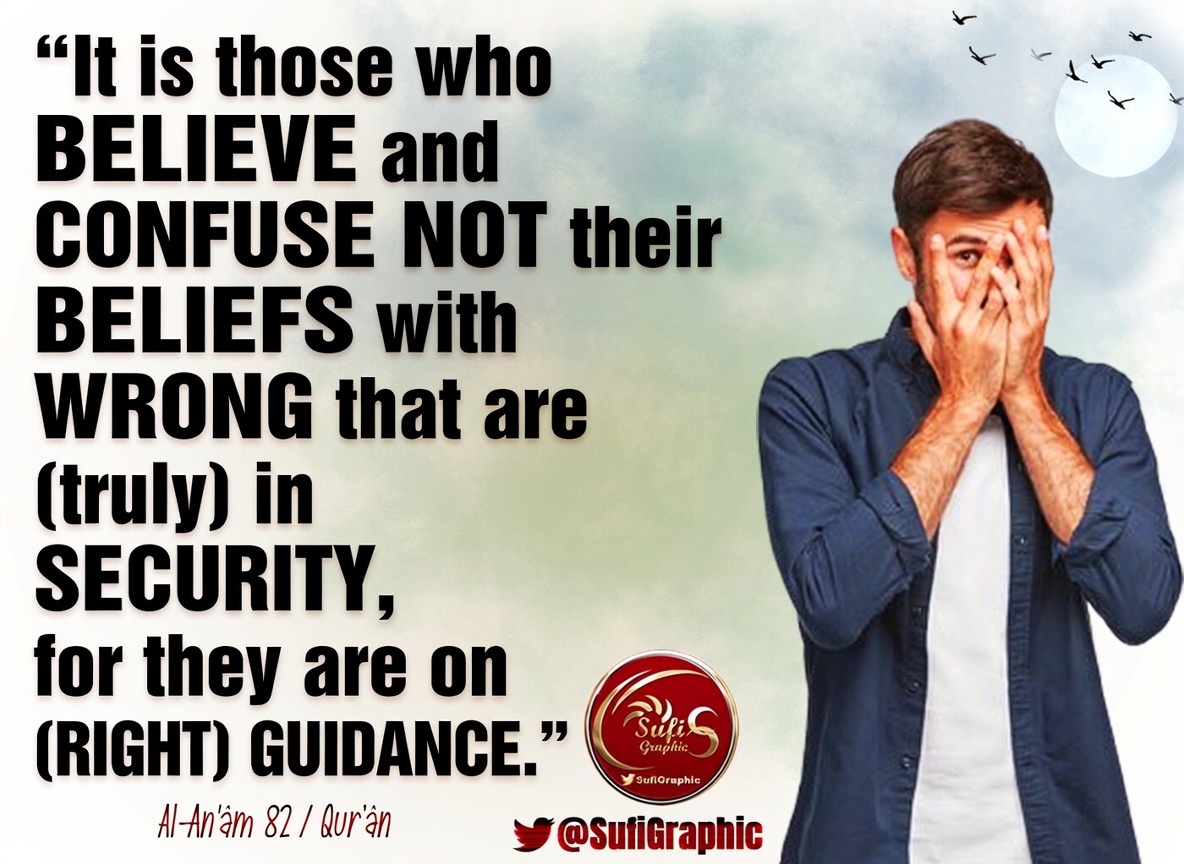
#faith #oppression #oppressor #oppressed #shirk #trust #security #RightPath #StraightPath #peace #Sufi #Sufism #Islam #faith #Quran #AlAnam Those who taint their faith with oppression, those who support oppression, and those who are complicit in oppression will end up in Hell.
Can You Commit #Shirk and Still Be a #Muslim? | Shaykh Abdul Razzaq al Badr
https://t.co/Cw8Ma3CMF4
#الشيخ_عبدالرزاق_البدر
#Hell #Punishment #Human #Jinn #Goodness #Evil #Denial #Shirk #Oppression #Lies #Slander #Murder #Theft #Sin #Quran #Gospel #Torah
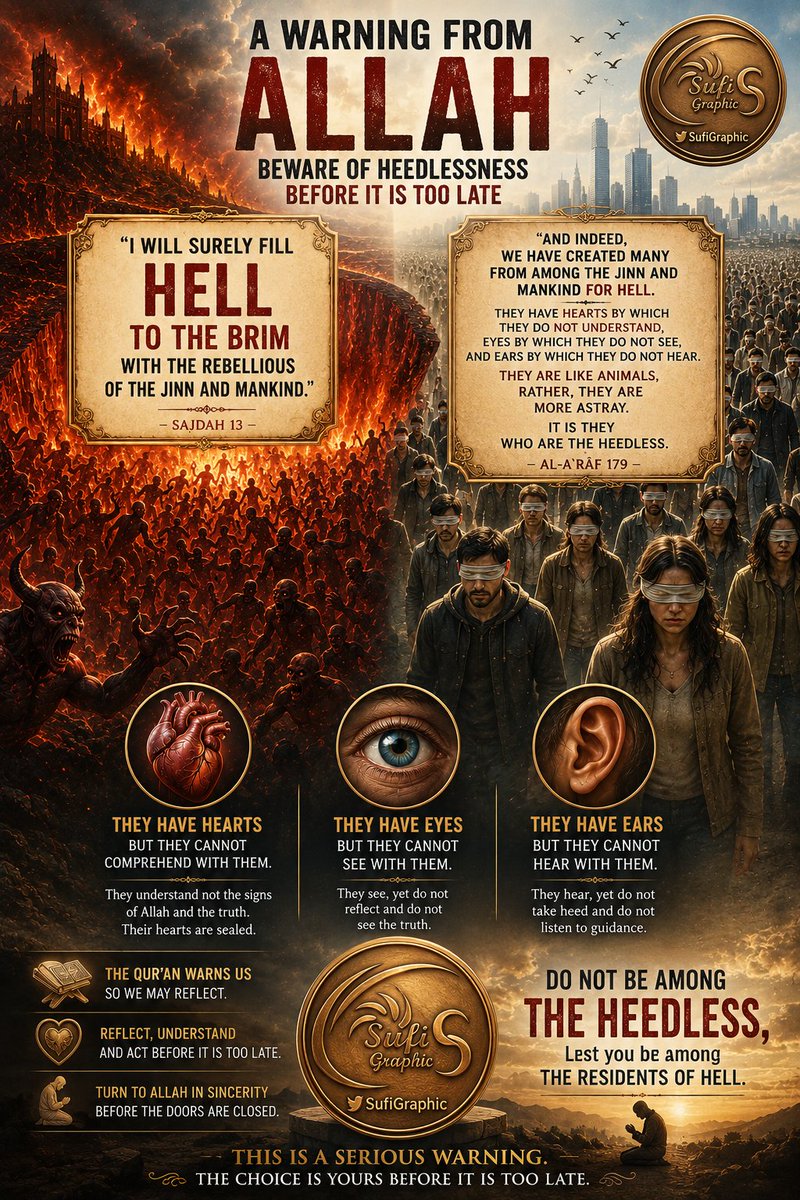
CHARACTERISTICS OF HUMANS AND JINN WHO DESERVE HELL
"My word: 'I will surely fill Hell with the rebellious among jinn and humans all together' shall inevitably come to pass." (Sajdah 13)
"And We have certainly created for Hell many of the jinn and mankind. They have hearts with which they do not understand, eyes with which they do not see, and ears with which they do not hear. They are like livestock; nay, they are even more astray. It is they who are the heedless." (A'raf 179)
When examined within the holistic framework of the Noble Qur'an, Surah As-Sajdah 13 and Surah Al-A'raf 179 reveal the root cause of ending up in Hell (closing one's sensory organs and intellect to the truth, and allowing free will to become transgressing in pursuit of desires). Other verses detail the theological, moral, and practical outcomes of this heedlessness and lack of comprehension.
The reasons for humans and jinn being driven to Hell can be summarized in the following core points based on Quranic verses:
1. Root Cause: Blindness, Deafness, and Heedlessness Toward Truth
As stated in Al-A'raf 179, the fundamental mechanism of becoming destined for Hell is failing to utilize the faculties of perception granted to one:
Closing the Intellect and Senses to Truth: Hearts not comprehending the truth, eyes not looking with insight, ears not listening to the truth (Al-A'raf 179; Al-Mulk 9–10).
Conscious Heedlessness and Worldliness: Losing the awareness of the Hereafter and being satisfied solely with the life of this world (Yunus 7–8).
2. Theological Reasons (Shirk, Disbelief, and Arrogance)
Shirk (Associating Partners with Allah): Paradise is forbidden to anyone who associates partners with Allah (Al-Ma'idah 72; An-Nisa 48).
Disbelief (Kufr) and Denying the Verses: Denying Allah's verses and disrespectfully turning away from them (Al-A'raf 36; Al-Mulk 6).
Arrogance and Pride: Being unable to stomach the truth due to pride, despite knowing it (Az-Zumar 60; Ghafir/Mu'min 76).
Following Satan and Transgressors: Following the "rebellious among jinn and humans" mentioned in Sajdah 13 (Al-Hijr 42–43; Ash-Shu'ara 94–95).
3. Violating Human Rights and Social Injustices
Oppression and Injustice (Zulm): Oppressing people, violating rights, and wronging one's own soul (Al-Kahf 29; Ibrahim 22).
Unlawful Killing (Murder): Intentionally killing a believer (An-Nisa 93).
Usurping Orphans' Property / Public Wealth / Theft: Misappropriating the property of orphans unjustly is like filling one's stomach with fire (An-Nisa 10; Ali 'Imran 161).
Fraud in Weights and Measures: Defrauding people of their rights and engaging in dishonest trade (Al-Mutaffifin 1–3).
4. Moral Corruption and Sins of the Tongue
Slander and Defamation: Slandering chaste women with false accusations (An-Nur 23; Al-Ahzab 58).
Backbiting, Defamation, and Mockery (Humazah-Lumazah): Belittling people, spreading gossip, accumulating wealth, and boasting about it (Al-Humazah 1–3; Al-Hujurat 12).
False Testimony and Lying: Swearing false oaths and concealing the truth (Al-Mu'minun 8; Al-Furqan 72).
Envy and Jealousy: Envy—the first sin committed by Iblis—which drives humans toward oppression (Al-Falaq 5; An-Nisa 54).
5. Abandoning Acts of Worship and Irresponsibility
When those in Hell are asked, "What drove you into the Burning Fire?", their response encapsulates their lack of good deeds (Al-Muddaththir 42–46):
Abandoning Prayer (Salah): Failing to fulfill the duty of servitude to Allah.
Not Feeding the Poor (Failing to Give Zakat/Charity): Rejecting social solidarity and mercy.
Engaging in Vain/Sinful Talk: Carelessly joining those who indulge in sin and trivialities.
Denying the Day of Recompense: Completely losing the consciousness of accountability.
Summary: Sajdah 13 announces that divine justice will be realized, while Al-A'raf 179 details the internal blindness that leads to Hell. When this internal blindness manifests in action—such as shirk, oppression, arrogance, violation of rights, and neglect of worship—it becomes the justification for the punishment of Hell.
PSYCHO-SOCIOLOGICAL ANALYSIS OF THE VERSES
The processes of the "dysfunction of perceptual organs" (heedlessness) and "transgressing into Hell," depicted in Al-A'raf 179 and Sajdah 13, align directly with modern psychological and sociological theories regarding the production, spread, and normalization of evil.
The expression "They have hearts with which they do not understand, eyes with which they do not see" provides a profound psycho-social foundation explaining how individuals and societies rationalize, become desensitized to, and systematize evil.
1. Psychological Analysis of Evil
Psychology primarily examines evil through an individual's internal mechanisms, cognitive distortions, and lack of empathy:
A. Cognitive Distortion and "Moral Disengagement"
Theory (Albert Bandura): People develop mental mechanisms to avoid feeling remorse while committing evil. The state of "having hearts they do not understand" corresponds to Bandura's concept of moral disengagement.
Mechanism: An individual convinces themselves that their oppression serves a "higher cause," dehumanizes the victim, and minimizes their own responsibility. By shutting their eyes and ears to the truth, the voice of conscience is suppressed.
B. Desensitization and Heedlessness (Ghafrah)
Context of Al-A'raf 179: The emphasis that "They are like livestock; nay, they are even more astray (heedless)" highlights the process of evil becoming normalized and desensitized over time.
Psychological Equivalent: A mind continuously exposed to or engaged in evil loses its emotional reactivity over time. The capacity for empathy atrophies. The eye that sees and the ear that hears the truth become dysfunctional because they have turned "numb."
C. Narcissism, Arrogance, and "Othering"
The psychological engine of evil is arrogance (as symbolized by Iblis).
Extreme narcissism and ego lead individuals to place themselves at the center of the universe and view others merely as "tools" (objects) for their own desires. This completely eradicates empathy.
2. Sociological Analysis of Evil
Sociology treats evil not merely as an individual deviation, but as a phenomenon produced by social structures, systems, and institutions:
A. The Banality of Evil (Hannah Arendt)
Theory: While observing the trial of Nazi war criminal Adolf Eichmann, Arendt realized that evil is not always committed by "monsters," but often by ordinary people who do not think, do not question, and blindly follow orders.
Relation to the Verse: The description of "it is they who are the heedless" in Al-A'raf 179 precisely mirrors what Arendt termed "thoughtlessness/unquestioning compliance." When a system or majority produces evil, the masses surrender their intellect and conscience to the system, turning evil into a "routine duty."
B. Obedience to Authority and Diffusion of Responsibility (Milgram & Zimbardo)
Milgram & Stanford Prison Experiments: Humans tend to obey authority. Under authoritative or peer pressure, an individual transfers their personal responsibility to the authority ("I was just following orders").
Context of Sajdah 13: The expression "the rebellious among jinn and humans" corresponds to the sociological concept of evil leadership / manipulative authority. The arrogant/transgressors lead society, while the heedless/oppressed follow them blindly.
C. Anomie and Social Decay (Émile Durkheim)
Theory: When societal rules, moral values, and social bonds weaken, society falls into a state of "anomie" (normlessness).
Result: Individuals begin practicing theft, lies, slander, murder, and backbiting as if they were social norms. When corruption becomes widespread, evil ceases to be an isolated crime and transforms into a systemic social climate.
Synthesis: What Does It Mean to Be "More Astray Than Livestock"?
The psycho-sociological summary of why the Qur'an describes such humans as "more astray/lower than livestock" is as follows:
Livestock: Act on instinct, live according to their innate nature (fitrah), and their consumption or destruction is limited to their needs. They lack cognitive free will.
Humans / Jinn: Equipped with intellect, conscience, empathy, and free will.
When a human closes their intellect and conscience to the truth (psychological blindness) and integrates into systems of social evil (sociological normalization), they produce destructiveness (genocides, systemic theft, institutional oppression) at a scale and nature that animals could never reach.
Sajdah 13 and Al-A'raf 179 highlight the ultimate consequence of this psycho-sociological collapse, where individual desensitization merges with collective transgression.
THE PROTECTION OF THE INNOCENT AND THE DECLARATION OF JUSTICE
Verses Al-A'raf 179 and Sajdah 13 do not merely describe the perpetrators and mechanisms of evil; they also serve as a protective shield and a declaration of justice that safeguards the righteous, the innocent, and the oppressed in society.
In the psychology and sociology of evil, the greatest danger is that evil—as it spreads—passivates, silences, or victimizes the innocent. These verses provide a critical analysis along three main axes to defend the rights of the good:
1. The Greatest Enemy of Innocence: "Neutrality" and the Illusion of Heedlessness
Sociologically, evil spreads en masse and consumes the innocent not only because of the transgressors who actively commit it, but because of the heedless majority who adopt a "live and let live" or passive stance.
Complicity Through Silence (Bystander Effect): In psychology, crowds that witness oppression without intervening diffuse responsibility to others. The description in Al-A'raf 179 ("They have eyes with which they do not see, ears with which they do not hear") targets this "bystander crowd" that closes its eyes and ears to the cries of the innocent.
For the Protection of the Innocent: The verse conveys this message to the righteous: Heedlessness is not a neutral or harmless state. Anyone in a society who turns a blind eye to oppression, theft, and slander paves the way for evil to crush the innocent. The rights of the innocent can only be protected by the good who remain mentally and actively vigilant.
2. Defending Human Dignity Against Dehumanization of Victims
The psychological strategy of evil is to dehumanize the victim before attacking. In genocides, systemic corruption, or societal lynchings/slander campaigns, oppressors/transgressors attempt to frame the innocent as "sub-human."
Inverted Hierarchy: The Qur'an re-defines the oppressors who produce evil and those who tolerate it by declaring: "They are like livestock; nay, they are even more astray." This statement resets the moral hierarchy in favor of the innocent.
Dignity of the Innocent: No matter how respectable a tyrant with power, wealth, or authority may appear, the moment they close their eyes to truth, justice, and conscience, they forfeit their human value. Conversely, the innocent and oppressed hold the highest moral standing simply by virtue of being human and standing for truth. This discourse prevents the vulnerable from being psychologically crushed and grants them moral superiority.
3. Shattering the Perception of Impunity and Guaranteeing Divine Justice
For the innocent and the good, the most destructive psychological trial in this world is the perception that evil goes unpunished (impunity). The idea that the oppressor suffers no consequences while the liar and thief win erodes the resilience of the righteous and leads to social despair.
The Guarantee of Sajdah 13: The declaration "I will surely fill Hell..." is not a terrifying threat to the innocent; rather, it is a cosmic guarantee of absolute justice.
Psychological Resilience: This statement assures the victim and the righteous: Oppression is temporary. Slander, stolen rights, spilled blood, or injustice will never go unaccounted for. This faith prevents victims from giving in to helplessness, keeps their belief in justice alive, and protects them from surrendering to evil.
In conclusion: Sajdah 13 and Al-A'raf 179 expose the psycho-sociological mechanisms that attempt to crush the innocent and command the good—rather than remaining passive victims—to become active guardians of justice equipped with intellect and conscience.
QUANTUM PHYSICS AND QUANTUM CONSCIOUSNESS PERSPECTIVE
When the processes of evil, lack of comprehension, and fate/punishment shaped by human choices are evaluated within the framework of Quantum Physics and Quantum Consciousness Theories, they present a striking model through probabilities, the observer effect, entropy, and information theory.
The phenomenon in Al-A'raf 179 and Sajdah 13—"failing to use potentially granted perceptual organs" and "consequently being dragged into deterministic destruction (Hell)"—can be analyzed under four core quantum principles:
1. Superposition and the Potential State of Human BeingsIn quantum mechanics, a particle can exist in multiple states simultaneously until a measurement is made (Superposition). The system is expressed by a wave function , which is a combination of all possibilities.Human and jinn nature (fitrah) operates like a quantum state containing default potentials for both moral elevation and transgression/collapse :
Quantum Analysis: The "heart, eyes, and ears" in Al-A'raf 179 are tools that determine the amplitude coefficients of free will and consciousness. When a human directs their consciousness toward truth, they increase the probability of good outcomes; when they shut down their perception, the system inclines toward collapse.
2. The Observer Effect and Wave Function Collapse (Measurement Problem)
In quantum physics, when a system is observed/measured, the probability wave collapses (Wave Function Collapse) into a single concrete reality.
"Unseeing Eyes, Unhearing Ears": The "heedless" criticized in the verse are systems that, despite being given observing tools (reason and conscience), refuse to make conscious observations.
Analysis: An individual who fails to be a conscious observer (witness) of truth cannot maintain their moral superposition. When an individual refrains from moral measurement, the system—due to "environmental interaction"—naturally collapses to the lowest default energy level: spiritual collapse (the animalistic/base state).
3. Quantum Decoherence and the Mechanism of "Heedlessness"
When quantum systems interact with their environment, they lose their internal coherence; this is called decoherence. As a result of decoherence, quantum sensitivity is lost, and the system becomes bound by standard, mechanical rules of classical physics.
4. Information Theory and the Thermodynamic Equivalent of Hell
In quantum information theory, information is never destroyed; however, as disorder (entropy) increases, information becomes inaccessible.
Quantum Identification of Hell: An individual who renders their senses—designed to process information (truth)—dysfunctional cuts off the flow of information in the system and generates maximum entropy (chaos/punishment).
Result: Hell represents the ultimate "information trash heap / heat death" region for forms of consciousness that reject the information of truth, maximize their entropy, and completely lose their quantum coherence.
Summary
According to quantum analysis, a human being is a potential field that makes observations through free will and selects their reality.
The human who closes their eyes, ears, and heart to the truth (Al-A'raf 179) collapses their wave function to the lowest possible level. When this lack of perception spreads en masse and turns into an entangled network of evil, the ultimate equilibrium point of the system inevitably becomes the plane of absolute justice in Sajdah 13 (Hell).
COMPARATIVE THEOLOGY (ABRAHAMIC TRADITIONS)
The core theme of Sajdah 13 and Al-A'raf 179 in the Qur'an—"humans/jinn shutting their senses to truth, becoming rebellious through free will, and consequently being dragged to Hell/destruction"—is a shared theological heritage across the Abrahamic religions.
When examining the Torah (and Old Testament texts), the Psalms (Zabur), and the Gospel (New Testament), it becomes clear that the motifs of "lack of comprehension," "blind refusal," and "the condemnation of the rebellious to divine justice" are addressed within the exact same conceptual framework.
1. The Torah and the Old Testament
The Torah and related texts conceptualize a person shutting their eyes and ears to truth as the "hardening of the heart."
A. Closure of the Senses and Hardening of the Heart
The most direct textual and semantic parallel to the Quranic phrasing "They have hearts with which they do not understand, eyes with which they do not see" is found in the Book of Isaiah:
"Go and tell this people: 'Be ever hearing, but never understanding; be ever seeing, but never perceiving.' Make the heart of this people calloused; make their ears heavy and close their eyes. Otherwise they might see with their eyes, hear with their ears, understand with their hearts..." (Isaiah 6:9–10)
The Israelites becoming blind despite the warnings of prophets—and subsequently falling into societal ruin—shares the exact same root cause as the definition of "heedlessness" (ghafrah) in Al-A'raf 179.
B. Rebellion and Subsequent Destruction
The judgment issued in the Torah for the rebellious who defy God's commands, oppress, and commit injustice mirrors the emphasis on absolute divine justice in Sajdah 13:
"The eyes of the Lord are everywhere, keeping watch on the wicked and the good." (Proverbs 15:3)
"But all transgressors will be destroyed; the future of the wicked will be cut off." (Psalm 37:38)
2. The Psalms (Zabur)
The Psalms focus on an individual's inner world, conscience, and the spiritual blindness brought about by ignorance, using poetic and wisdom-based expressions.
A. Fools Who Do Not See the Truth and "Animalization"
In the Psalms, there are clear parallels to the comparison in Al-A'raf 179 ("They are like livestock; nay, they are even more astray"), criticizing human lack of understanding:
"People who have wealth but lack understanding are like the beasts that perish." (Psalm 49:12 / 49:20)
Here, too, it is emphasized that if humans fail to use the intellectual and spiritual dignity (comprehension) granted to them, they fall existentially to—or below—the level of animals.
B. The Ultimate End of the Wicked (Sheol / Hell)
In the Psalms, the place destined for the rebellious who violate justice and ignore God is referred to as "Sheol" (the realm of the dead / the pit / place of torment):
"The wicked return to Sheol, all the nations that forget God." (Psalm 9:17)
"...but the way of the ungodly shall perish." (Psalm 1:6)
3. The Gospel (New Testament)
In the New Testament, Jesus criticizes the blindness of heart among religious leaders and the arrogant by directly citing the prophecy of Isaiah from the Old Testament, while deepening the warning of Hell (Gehenna).
A. Blindness of Heart and Teaching Through Parables
Jesus attributes the failure of the crowds and religious leaders to comprehend his message to the closure of their perceptual faculties:
"Do you have eyes but fail to see? Do you have ears but fail to hear?" (Mark 8:18)
"In them is fulfilled the prophecy of Isaiah: 'You will be ever hearing but never understanding... For this people's heart has become calloused; they hardly hear with their ears, and they have closed their eyes.'" (Matthew 13:14–15)
B. Blind Guides Leading the Blind
The metaphor used in the Gospel for those who mindlessly lead others into evil and injustice aligns with the "astray/heedless" profile described in Al-A'raf 179:
"Leave them; they are blind guides. If the blind lead the blind, both will fall into a pit." (Matthew 15:14)
C. Hell (Gehenna) and the Emphasis on Being Filled
In the Gospel, Jesus frequently emphasizes that the rebellious, unyielding trees (those producing evil), and transgressors will be punished with fire:
"Every tree that does not bear good fruit is cut down and thrown into the fire." (Matthew 7:19)
"The Son of Man will send out his angels, and they will weed out of his kingdom everything that causes sin and all who do evil. They will throw them into the blazing furnace, where there will be weeping and gnashing of teeth." (Matthew 13:41–42)
Summary of Comparative Analysis
In the Abrahamic tradition, Hell or divine condemnation is not an arbitrary punishment imposed by God.
Whether in the Torah, Psalms, Gospel, or Qur'an, the common message remains identical: God has endowed human beings with intellect, heart, eyes, and ears (perceptual faculties) to discover the truth. When humans or other accountable beings voluntarily close these senses and turn to transgression, they systematically prepare their own ruin, becoming deserving of Hell/destruction where divine justice manifests.
=== @SufiGraphic ===


This was fun. #shirk

Just debated Sheikh Uthman in-person.
Props to him for showing up and debating all of us, it was fun. Also shoutout to the Muslims who thought they had enough pull to get this cancelled. How embarrassing 😂😂😂



Trends for you
Most Popular Users

Elon Musk 
@elonmusk
241.6M followers

Barack Obama
@barackobama
119M followers

Cristiano Ronaldo
@cristiano
114.2M followers

Donald J. Trump
@realdonaldtrump
111.8M followers

Narendra Modi
@narendramodi
107.2M followers

Rihanna
@rihanna
98.7M followers

NASA
@nasa
92.4M followers

Justin Bieber
@justinbieber
91.8M followers

KATY PERRY
@katyperry
89.9M followers

Taylor Swift
@taylorswift13
83.8M followers

Lady Gaga
@ladygaga
75.3M followers

Virat Kohli
@imvkohli
73.1M followers

Kim Kardashian
@kimkardashian
70.8M followers

YouTube
@youtube
68.8M followers

Neymar Jr
@neymarjr
66.1M followers

Bill Gates
@billgates
65M followers

Selena Gomez
@selenagomez
62.9M followers

The Ellen Show
@theellenshow
62.3M followers

CNN
@cnn
61.8M followers

X
@x
60.7M followers