

Top Tweets for #Sampler

gauging interest a bit. if i were to make a dogman fnf mod would anybody at all want that. song examples/sampler below theyd sound kinda like this but better bc these are old and bad and i do better now. this has been smth ive wanted to do for a while but never got to do so fully

ZEROBASEONE EMP Digital Single 「 𝗢𝗙𝗙 𝘀𝗰𝗿𝗶𝗽𝘁 」 Album Sampler https://t.co/eEgCvuYPhz
WHAAAAT!!?!?🤩
ZEROBASEONE EMP Digital Single 「 𝗢𝗙𝗙 𝘀𝗰𝗿𝗶𝗽𝘁 」 Album Sampler https://t.co/YV7p0t2R87

Scale-Time Theory 12.0: The Geometry of Scale Space
Version 12.0 of Scale-Time Theory asks a deliberately narrow question: could the divide between quantum and classical behavior be relational, so that one underlying structure appears ambiguous to one sampler and stable to another? The paper sets this out as an explicit geometric and sampling model built on eleven stated postulates, and it identifies the status of every claim: a definition, postulate, convention or result within the model; a proposed physical correspondence with a route to test it; or an interpretive statement. Quantum field theory and general relativity remain the tested languages of physics.
The guiding example is a filmed wheel. Whole turns between frames leave no trace, so a wheel can appear still, creep forward or turn backward, depending on its relation to the camera. A faster camera removes some of these ambiguities, while the appearance between frames still depends on how the images are joined. The record belongs to the wheel–camera pair.
In the model, scales are nested circular lanes in a Euclidean reference plane. One shared phasor sweep places the same closed pattern on every lane, a whole number N of phase cycles per circumference, so the wavelength 2πR/N grows with radius and small lanes carry dense patterns. Local duration is lane path divided by a calibration speed c. Compared over equal path lengths from a common sweep event, two lanes count different numbers of cycles, and the ratio of the counts is the relative clock factor R_A/R_B. Sampled at sweep-time intervals of one complete imprint cycle, every lane would give a stationary record, so the nontrivial scale ratio enters through the equal-path comparison.
A lane samples another along equal paths, stepping by the sampler's own wavelength along the sampled lane, from that lane's baseline and against the direction of imprint travel, and keeping only wrapped phase. The record is z_m = exp[i(2πrm + φ)] with r = R_A/R_B. Whole turns between samples are hidden, so one record fits an alias family of radii R_A/(ρ + j), where ρ is the fractional residual of r and j runs from 0, or from 1 when ρ = 0. Under a stated forward-branch convention, a sampler reconstructs every larger, flatter lane exactly, while the true radii of lanes at least as curved as itself occupy hidden rungs of the compatible alias family. An amplitude-only record with an unconstrained initial phase narrows the range to lanes more than twice the sampler's size, the familiar Nyquist boundary in these variables.
Read by the shortest step, a record can appear stationary, drifting forward or drifting backward, and for lanes between one and two times the sampler's size a correct scale reconstruction coexists with apparent reversal. In the exact noiseless model, two consecutive phase samples fix the residual, and a second sampler whose size stands in an irrational ratio to the first leaves exactly one common radius. How the alternatives should be weighted is left open.
Finite records add structure of their own. Over L samples, records whose residuals lie at least 1/L apart on the phase circle overlap by at most one half. That width compares records and stays distinct from an uncertainty relation, since two exact phase samples already fix the residual. Rational ratios recur, and irrational ratios equidistribute as the record grows. Within a finite window, a ratio with |r − p/q| ≤ 1/(2qL) counts as locked at order q, with an order-q coherence of at least 2/π. Applying the low-order cutoff q² ≤ L to the lowest qualifying locking order defines participation in a system relative to one reference lane and one record length, so membership depends on the window. These are kinematic recurrence windows. An attraction toward a lock, or an enduring system, would require coupling or a persistence rule.
Joining consecutive phase samples by straight chords on the record circle is an explicit convention. For a correctly reconstructed lane, with 0 < r < 1, it produces a maximum interpolation error of 1 − cos(πr). At a chosen tolerance of 1 − cos(π/8), about 7.6 percent, the reading settles at eightfold oversampling, so the transition band spans three octaves for phase records and two for amplitude records. A one-percent tolerance moves the threshold to about 22.2 times the sampler's size. The eightfold benchmark was selected to match the onset of stability reported in earlier exploratory simulations, and a simulation using the same rule and tolerance reproduces it by construction, so an independent test needs a separate criterion, such as estimation error under noise. The four resulting regimes (resolved, transitional, locked and diffuse) describe relations to a sampler, and one lane can occupy different regimes for different references.
Scale can also change. If a system's radius grows along its baseline at a constant rate α per sweep cycle, radius and accumulated lane distance S obey the exact kinematic law R² = R_0² + (α/π)S. Written with the stride σ = 2πR and a_σ = 2πα, the same law takes the form σ² = σ_0² + 2a_σ S, a formal identity that stops short of a derivation of Newtonian acceleration. Each successive octave of growth costs four times the lane distance and local duration of the one before, and twice the sweep cycles.
An optional extension displaces a lane by a ripple of amplitude ζ that follows the imprint. For gentle ripples, Nζ/R ≪ 1, the path grows by a factor of about 1 + N²ζ²/(4R²). With two added momentum assumptions and a mode energy E_R, this suggests an assigned rest energy of about E_R Nζ/(R√2), which makes a perfect lane massless within that construction. This is a conjecture. In a competing reading, the invariant mass of a closed system equals its total energy divided by c² in its center-of-momentum frame, where the total momentum vanishes, so a perfect lane carrying energy would have mass as well. A test requires determining E_R and ζ independently and then predicting a mass for a system outside the calibration set.
The physical readings are proposals. The central one associates classical behavior with records that are both correctly reconstructed and stable, and quantum ambiguity with relations whose true scale sits on a hidden alias rung. This goes beyond aliasing alone. Classical signal processing produces alias families too, so a probability law, a Born rule and a measurement theory remain to be supplied, and relating stroboscopic averaging to decoherence requires an environmental interaction model. Within the model, changing the sampler moves the reconstruction boundary and the interpolation threshold in proportion to its scale. That scaling becomes a candidate physical test once the scales of an apparatus and a sampled system are calibrated independently and stability is assessed by a criterion independent of the chosen tolerance.
Lane deflection, c²/R, has a geometric parallel in relativity. Continued to imaginary time, a uniformly accelerated trajectory becomes a circle of radius c²/a and period 2πc/a, and a lane whose deflection equals a has exactly that radius and local period. The associated Unruh thermal response remains to be derived from the model's own assumptions.
An entanglement extension reads entangled particles as positions on one shared scale mode. It needs a joint-mode definition and rules for local readout and for how a measurement changes the mode, since a shared classical phase with local response rules and measurement settings statistically independent of that phase obeys the CHSH bound of 2, while quantum theory allows up to 2√2.
The analytical checks and worked examples establish internal relations only. Five open tasks remain: completing the geometry, including how distance rays would combine into a metric of Lorentzian signature; specifying physical access, meaning the carrier of the imprint, access to wrapped phase and the implementation of equal-path sampling; supplying dynamics for baselines, coupling and persistence; calibrating the model's constants against measured length, time, acceleration and light propagation; and defining quantum and energetic rules. The validation sequence begins with a simulation of the sampling construction itself, continues with readout noise and estimation, tests each extension separately, and only then turns to physical tests with independent calibration. A systematic simulation and validation study is planned for version 12.1.
The project grew from one line: if you find the past in the large scales, you will find the future in the small scales. It stands as an interpretive origin statement, distinct from any derived temporal law. The framework's next step is to make these additions explicit and test them against evidence beyond the sampling construction.
Critical feedback is particularly welcome on the physical implementation of equal-path sampling, the dependence of the results on the reading conventions, and independently calibrated experiments that could distinguish the proposed physical interpretation.
Paper, 57 pages, CC BY 4.0: https://t.co/UcOsLlPubG
Website: https://t.co/B320PdCoxf


@SamplerYTP Purehex will exist...... It's actually beautiful

@SamplerYTP nvm im sorry for ever doubting you girl
@SamplerYTP I hope you lose your shit, i'm praying on ur downfall.


@BlossomBones__ @SamplerYTP I wonder if there's any monster that could possibly bring that number up...
@SamplerYTP i could see ONE more monster to round up the count to a nice 75, but thats never happening

@SamplerYTP The year is 2037. Msm is dead. There are no more spin offs. Dof continent is at 253 monsters. No other dof island got an update

How does continuous microgravity alter "Size-independent Logarithmic Sobolev Inequalities for Quantum Gibbs Samplers"?
https://t.co/3ufrSq3CVE
#QuantumBiotech #SpaceScience #Science #technology

Follow-up on verifying inference from machines you don't control:
Comparing answers across nodes works for greedy decoding. It breaks the moment you sample (temperature > 0), because two honest nodes legitimately disagree.
Options on the table: fix the seed and sampler so sampling is reproducible, check log-probs of the returned tokens on a second node, or only verify a random slice of jobs.
Which would you trust?

▫️Toward Scalable Bayesian Uncertainty for Machine Learning with the Ray Tracing Sampler
▫️OCT-Based Pose Estimation of Surgical Instruments
▫️Mechanistic Analysis of Template-Injection Jailbreaks in Diffusion Language Models
▫️Toward SED Reconstruction of Type la Supernovae With Rubin Observatory Simulation

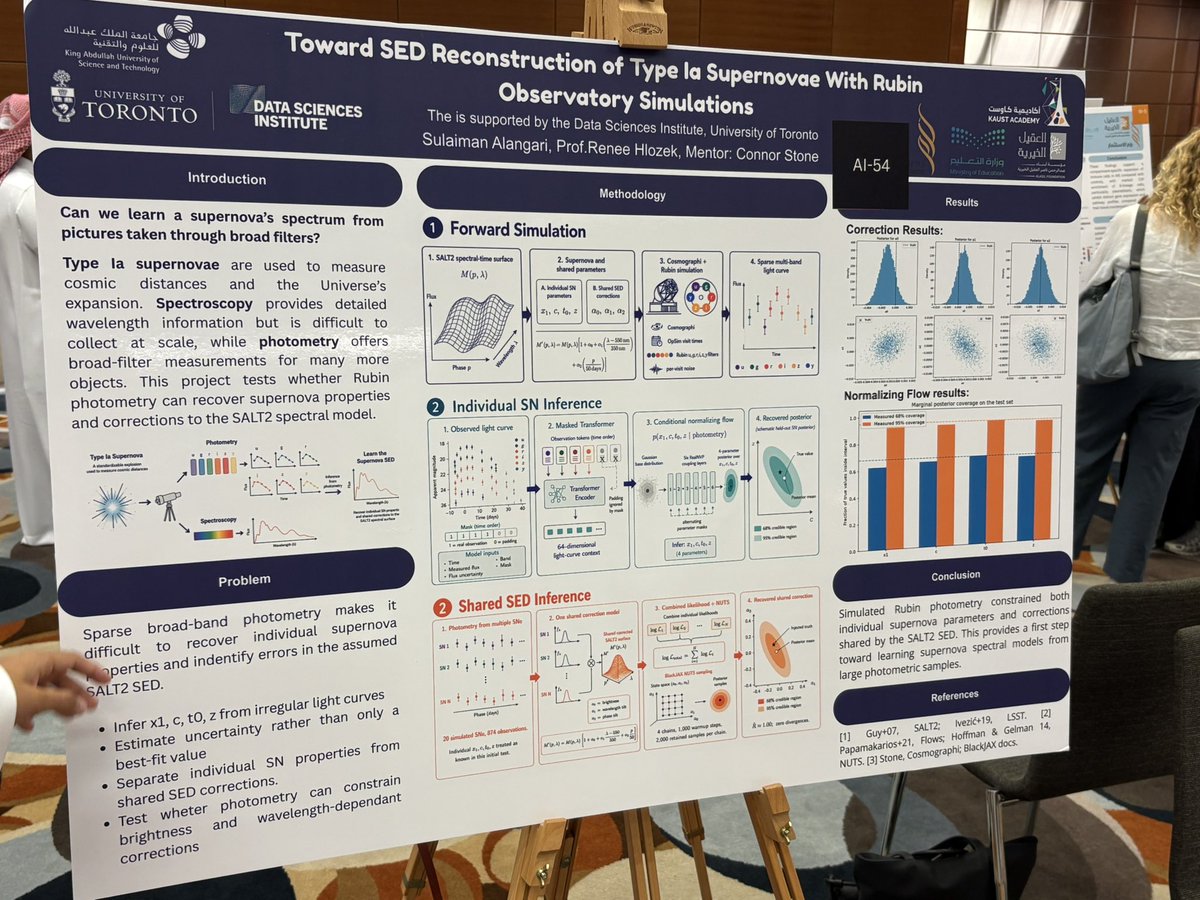

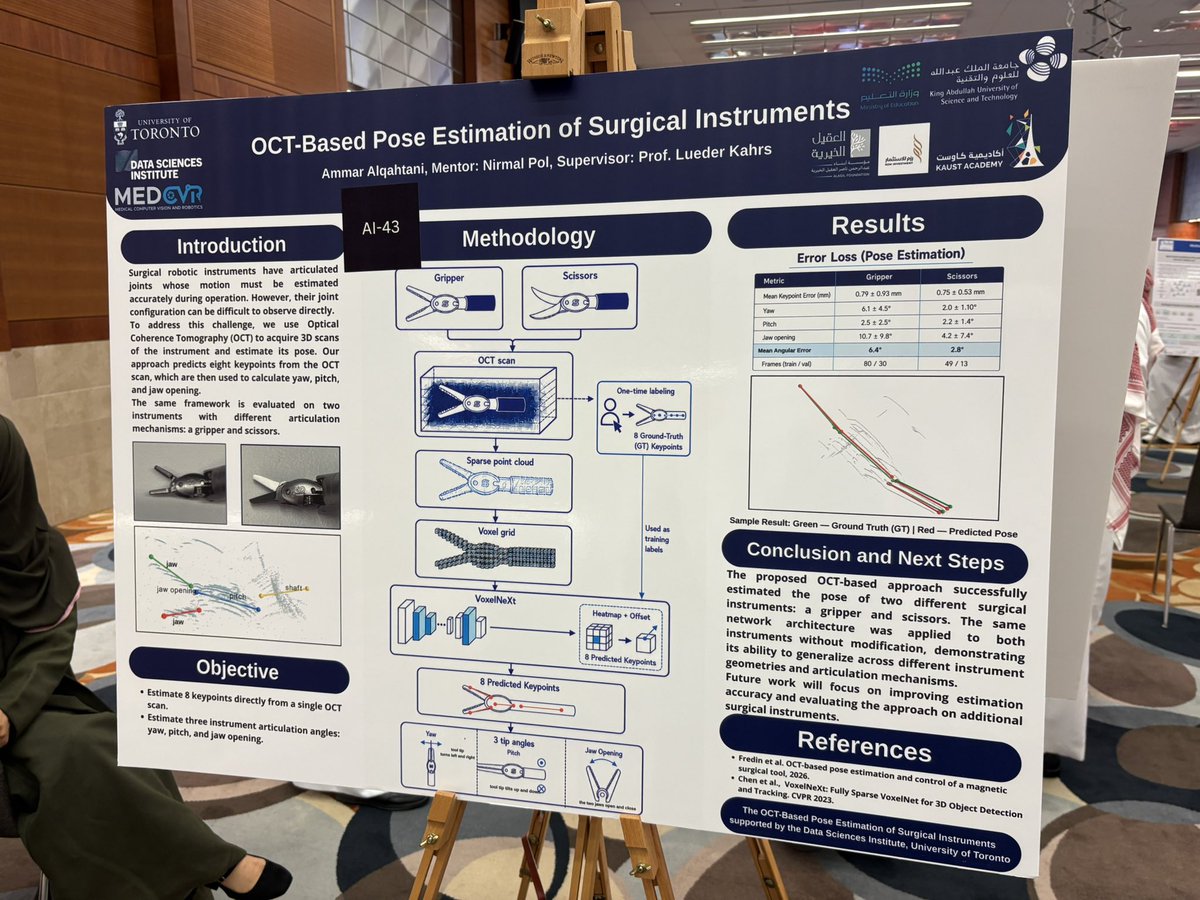

A short video on machine learning:
"Predictor-corrector samplers for denoising diffusion models"
video link: https://t.co/kmGvXJQRVE
channel link: https://t.co/uoZF0wEkIV
A short video on machine learning:
"Predictor-corrector samplers for denoising diffusion models"
video link: https://t.co/kmGvXJRpLc
channel link: https://t.co/uoZF0wESyt
A short video on machine learning:
"Predictor-corrector samplers for denoising diffusion models"
video link: https://t.co/kmGvXJRpLc
channel link: https://t.co/uoZF0wESyt
A short video on machine learning:
"Predictor-corrector samplers for denoising diffusion models"
video link: https://t.co/kmGvXJRpLc
channel link: https://t.co/uoZF0wESyt

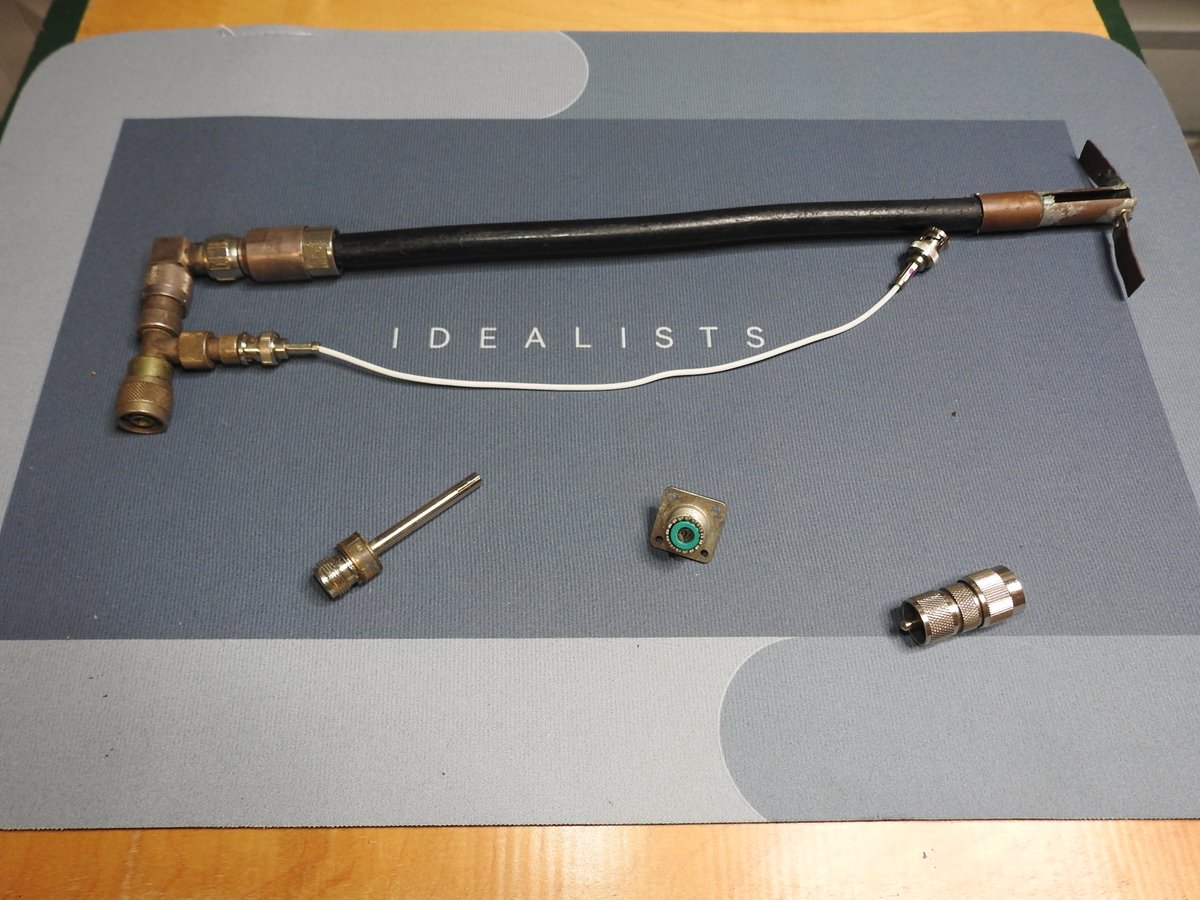
#satcomNorm Another Special Presentation . Here i am doing some elemental straight forward RF sampling of the Signal being fed to the DIY RAPIDLY FABRICATED 1.7 Ghz dipole.
The RF sampler/coupler allows me to 'pick off' a sample of the TX signal and feed it to a frequency counter or Spectrum Analyzer



@SamplerYTP Yeah just act like these things contradict each other at all

@Aeyuri8 It feels really different though it just snippets but even compared to past highlight samplers

Full write-up, plus the gotchas that bite you when you go multi-GPU:
– scale the LR with the global batch size
– call sampler.set_epoch() or every epoch sees the same order
– only rank 0 should log and checkpoint
https://t.co/mnwQZuFL3d

@SamplerYTP nah they're still pretty cheap and bad in alot of places (specifically more recently) its moreso just that they're the least worst of the big mobile game companies from the early 2010's
Trends for you
Most Popular Users

Elon Musk 
@elonmusk
240.1M followers

Barack Obama
@barackobama
118.6M followers

Cristiano Ronaldo
@cristiano
114.4M followers

Donald J. Trump
@realdonaldtrump
111.7M followers

Narendra Modi
@narendramodi
106.9M followers

Rihanna
@rihanna
98.6M followers

NASA
@nasa
92.1M followers

Justin Bieber
@justinbieber
91.7M followers

KATY PERRY
@katyperry
89.9M followers

Taylor Swift
@taylorswift13
83.9M followers

Lady Gaga
@ladygaga
75.4M followers

Virat Kohli
@imvkohli
73.3M followers

Kim Kardashian
@kimkardashian
70.8M followers

YouTube
@youtube
68.6M followers

Neymar Jr
@neymarjr
66.3M followers

Bill Gates
@billgates
65.2M followers

Selena Gomez
@selenagomez
63M followers

The Ellen Show
@theellenshow
62.1M followers

CNN
@cnn
61.7M followers

X
@x
60.6M followers