

Top Tweets for #Stomatal

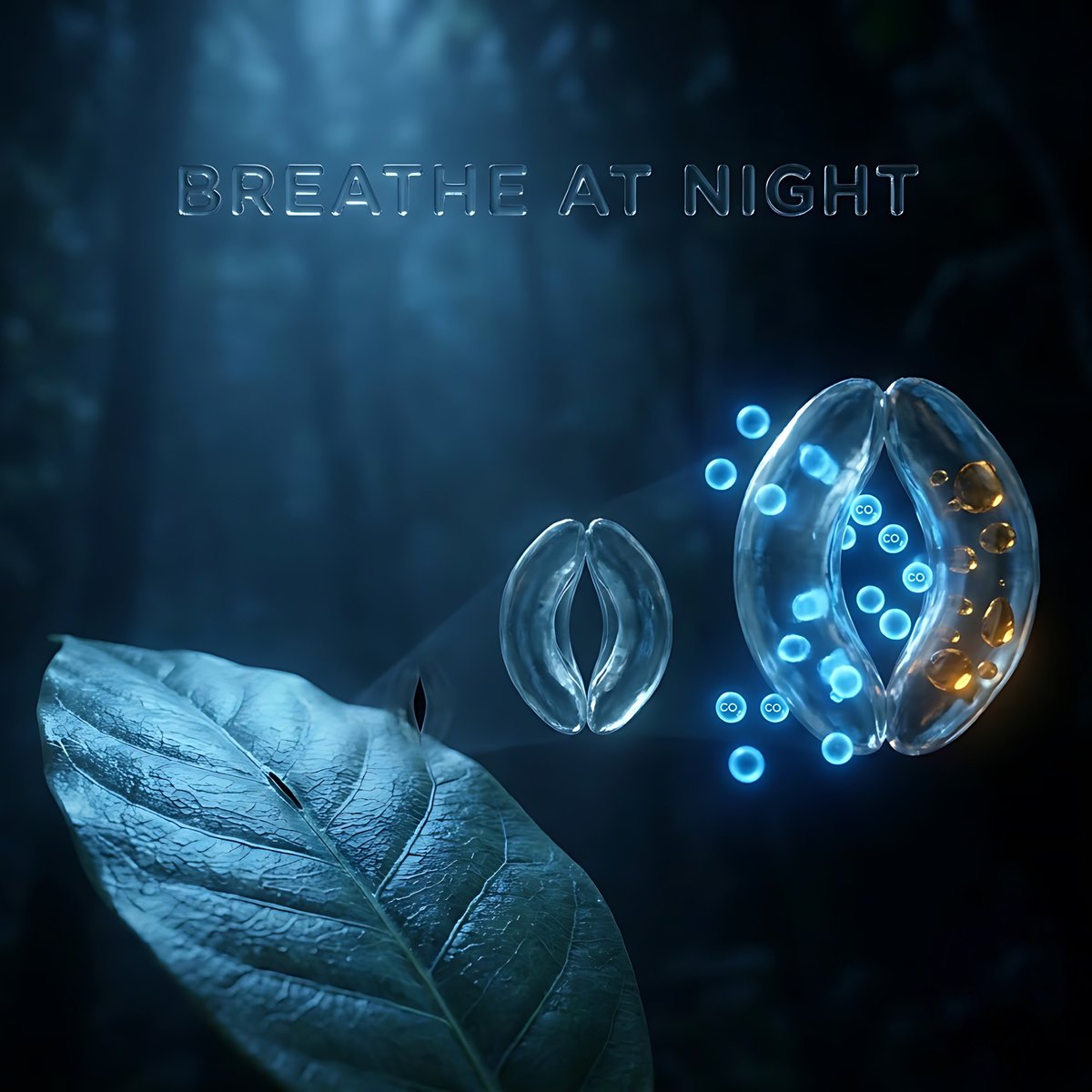
🌿 During droughts, some tropical trees switch to nocturnal stomatal opening—absorbing CO2 at night so they can photosynthesize with sealed pores by day. A drastic metabolic flip to conserve water. 👇
In a drought, some tropical trees only breathe at night.
You picture photosynthesis as a daytime job. But when water runs out, certain trees pull a metabolic flip. They seal their microscopic pores during the day to stop evaporation. At night, they open up to inhale CO2 and store it. When the sun rises, they shut tight and photosynthesize with their mouths closed.
Genius adaptation or just sheer desperation?


Answer A: ABA (Abscisic acid)
Nickname: "Emergency Break"
ABA helps plants respond to stresses like drought, salinity, cold, and other environmental challenges.
It:
Triggers stomatal closure to reduce water loss.
Activates genes for stress-protective proteins.
Helps seeds enter and maintain dormancy during unfavorable conditions.
It’s sometimes nicknamed the plant’s “emergency brake” because it slows growth and conserves resources until conditions improve.

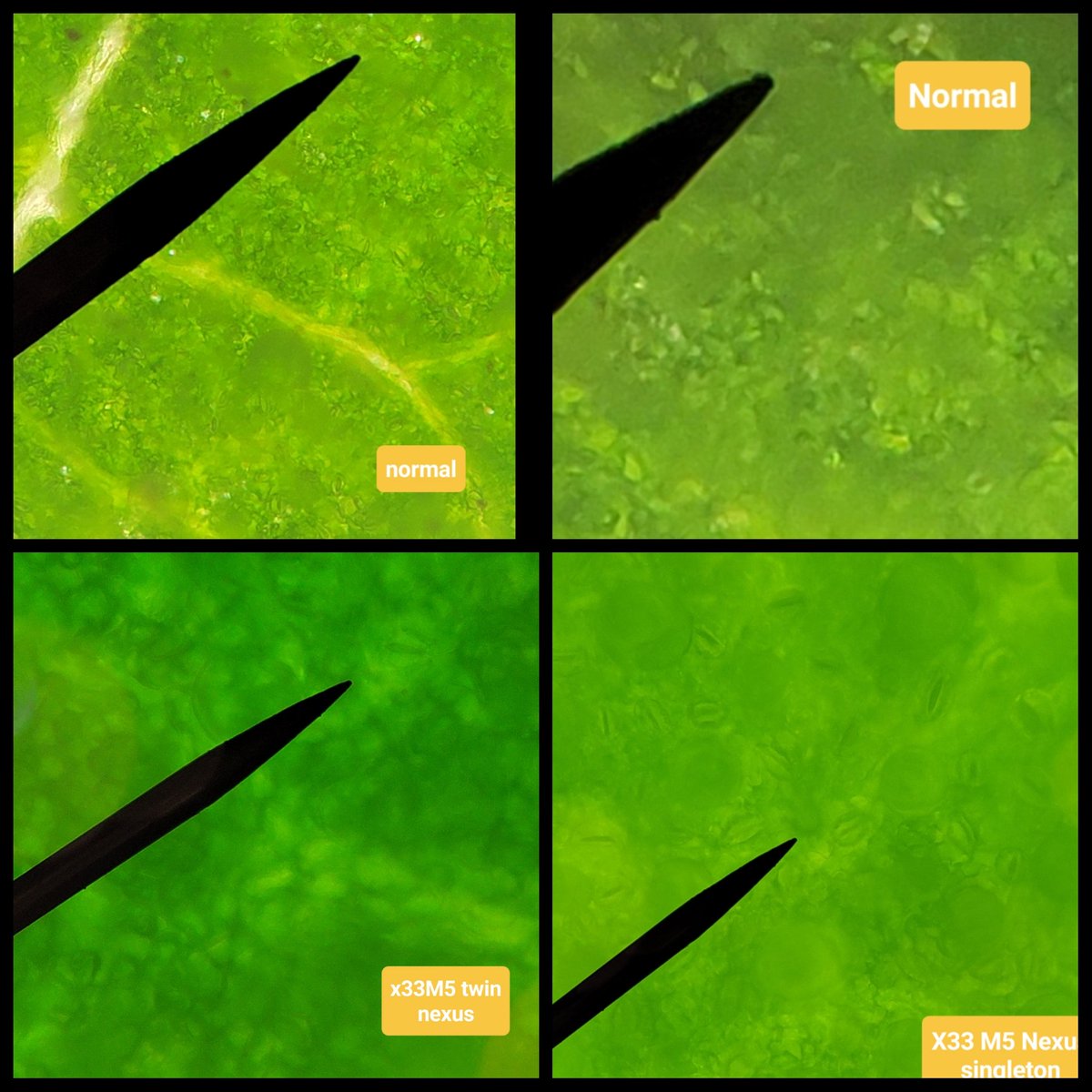
Title: X33 Stomatal Structure Observations 2nd look: A New Anatomical Signature of MPB Mutation
Overview: In two independent microscopy studies comparing stomata in normal cannabis plants to those of the X33 M5 generation (Nexus twin and singleton phenotypes), distinct and consistent anatomical differences have been observed. These findings may mark the first visual anatomical fingerprint of polyembryonic mutants developed through Mutagenic Precision Breeding (MPB).
Observed Differences:
1. Stomatal Shape
X33: Elongated, symmetrical oval or "eye-like" apertures. Defined, structured, and consistent across samples.
Normal: Irregular, variable stomatal shapes with less symmetry. Greater fluctuation in outline and shape.
2. Stomatal Density and Spacing
X33: Appears more evenly spaced, especially in the M5 Nexus twin sample. Consistent across the field of view.
Normal: Clustering and inconsistent spacing. Greater environmental influence suspected.
3. Surrounding Epidermal Cell Morphology
X33: Neighboring cells show smoother contours, fewer jagged edges, and less disruption. Suggests stabilized epidermal development.
Normal: Rugged, irregular epidermal cell outlines with inconsistent architecture.
Experimental Notes:
X33 M5 Nexus twin samples taken during dark cycle (stomata presumed partially or fully closed).
Normal samples and singleton X33 taken during lights-on (stomata more open).
Despite environmental differences, stomatal structure remained visibly distinct in X33 samples.
These differences repeated across two microscope inspection sessions.
Implications:
This may be the first anatomical marker associated with MPB-induced polyembryony in cannabis.
It could serve as a screening tool for breeders to identify X33-derived lines without genetic sequencing.
Traits may correlate with enhanced gas exchange efficiency, disease resistance, or environmental adaptability.
Next Steps:
Perform stomatal density counts using a calibrated grid.
Conduct light/dark cycle response tests in X33 vs normal to observe stomatal kinetics.
Use UV or dye staining to visualize stomatal activity in real-time.
Conclusion: X33 doesn't just grow differently. It breathes differently. The MPB process is yielding more than twins and star-shaped seeds; it's revealing anatomical changes that may reshape our understanding of plant physiology in cannabis. This discovery pushes the frontier further—and gives breeders and scientists a visual clue to track mutant lineage.
#MPB #X33 #StomataMutation #TwinPower #CannabisInnovation




Sorghum tolerates drought through:⤵️
✅Deep roots: reach water deep in soil
✅Leaf rolling: reduces water loss
✅Waxy leaves: limit evaporation
✅Stomatal control: conserves water
✅Osmotic adjustment: keeps cells turgid under stress
@Agronommejean
#LetsFarmTogether


Brahim quand il met de l’intensité dans son pressing c’est sûrement notre offensif qui récupère le + de ballons, endrick on sait pas vraiment mais bon à côté c’est Mbappé mdr et endrick on sens beaucoup + d’envie quand il est sur le terrain

A good read on wind burn and it’s cause
I assume you're referring to "wind burn" on marijuana plants, as your previous question mentioned "wing burn," which might have been a typo or misinterpretation. Wind burn occurs when plants are exposed to excessive airflow, such as from strong fans or outdoor gusts, causing physical and physiological stress. Let me explain why it happens and what’s going on with the leaf cells.
### Why Wind Burn Happens:
1. **Physical Damage**: Strong winds or fan blasts can tear leaf surfaces, strip away the protective cuticle (waxy layer), and damage stomata (pores for gas exchange).
2. **Excessive Transpiration**: High airflow increases water loss through leaves, overwhelming the plant’s ability to replenish moisture from roots, especially if watering is inadequate or humidity is low.
3. **Environmental Stress**: Wind combined with intense light, heat, or low humidity amplifies stress, disrupting nutrient and water balance.
4. **Mechanical Stress**: Constant leaf movement from wind can weaken cell walls and tissues, particularly in younger, tender growth.
### What’s Happening to Leaf Cells:
- **Dehydration**: Rapid transpiration pulls water from cells faster than roots can supply it. This causes cells to collapse, leading to wilting, curling, or crispy leaf edges.
- **Cuticle and Stomatal Damage**: The leaf’s protective cuticle erodes under wind stress, and stomata may close or become dysfunctional, impairing photosynthesis and gas exchange. This results in yellowing (chlorosis) or browning (necrosis).
- **Cell Wall Stress**: Physical abrasion or constant movement weakens cell walls, causing microtears or bruising. Affected cells die, forming burnt-looking patches.
- **Oxidative Stress**: Wind stress triggers reactive oxygen species (ROS) production, which damages cell membranes, proteins, and DNA, accelerating tissue death.
- **Nutrient Imbalance**: Excessive water loss disrupts nutrient transport, leading to localized toxicity or deficiency in leaves, mimicking nutrient burn symptoms.
### Visual Signs of Wind Burn:
- Leaves curl upward or inward, appearing cupped or taco-shaped.
- Edges or tips turn brown, dry, or crispy, resembling burn marks.
- Yellowing or wilting leaves, especially on the side facing the airflow.
- Stunted growth or drooping in severe cases.
- Damage is often uneven, concentrated where wind hits hardest.
### Prevention and Fix:
- **Adjust Airflow**: Position fans to create gentle circulation, not direct blasts. Outdoors, use windbreaks like fences or companion plants.
- **Increase Humidity**: Maintain 40–60% humidity to reduce transpiration stress. Use a humidifier indoors if needed.
- **Strengthen Plants**: Ensure adequate water and nutrients (especially calcium and potassium) to support cell wall resilience.
- **Check Light and Heat**: Wind burn worsens with intense light or heat. Keep temperatures at 70–85°F (21–29°C) and adjust light distance (e.g., 12–24 inches for LEDs, depending on wattage).
- **Support Stems**: Stake or tie plants to reduce excessive movement in windy conditions.
- **Recovery**: Trim severely damaged leaves if limited to a few areas, but avoid over-pruning. Flush with pH-balanced water (6.0–6.5 for soil, 5.5–6.0 for hydro) to reset nutrient balance.
If you meant something else by "wind" or have specific details (e.g., indoor vs. outdoor grow, fan setup, or symptoms), please clarify, and I’ll refine the answer. Would you like me to check X for grower tips on wind burn or analyze any plant photos?

Researchers found SiEPFs enhance #water use efficiency and #drought tolerance by regulating stomatal density in #foxtail #millet (Setaria italica)
🟢doi.org/10.1016/j.jia.2024.0…
#plantscience

Trends for you
Most Popular Users

Elon Musk 
@elonmusk
240.3M followers

Barack Obama
@barackobama
118.6M followers

Cristiano Ronaldo
@cristiano
114.4M followers

Donald J. Trump
@realdonaldtrump
111.8M followers

Narendra Modi
@narendramodi
106.9M followers

Rihanna
@rihanna
98.7M followers

NASA
@nasa
92.2M followers

Justin Bieber
@justinbieber
91.7M followers

KATY PERRY
@katyperry
89.9M followers

Taylor Swift
@taylorswift13
83.9M followers

Lady Gaga
@ladygaga
75.4M followers

Virat Kohli
@imvkohli
73.3M followers

Kim Kardashian
@kimkardashian
70.8M followers

YouTube
@youtube
68.6M followers

Neymar Jr
@neymarjr
66.3M followers

Bill Gates
@billgates
65.2M followers

Selena Gomez
@selenagomez
63M followers

The Ellen Show
@theellenshow
62.1M followers

CNN
@cnn
61.7M followers

X
@x
60.6M followers