

Top Tweets for #T_Cell

$EVAX
🦉 Can Cancer Vaccines Sustain Remission?
All 6 responders continuing EVX-01 alone remained progression-free at 3 years after earlier pembrolizumab combination therapy.
Encouraging durability, but vaccine-specific benefit remains unproven.
#immunotherapy #CAR_T #T_cell
https://t.co/rACnDNGBai
#OSE #France
🦉 Can Cancer Vaccines Reverse Resistance?
In Phase 2 NSCLC, Tedopi combinations achieved 46–47% one-year survival versus 29% with docetaxel.
Encouraging, but superiority remains unconfirmed.
#immunotherapy #CAR_T #T_cell
https://t.co/okcn6R8XIq
🦉 Test the tumor, not just its markers.
Elephas' live-biopsy assay predicted immunotherapy benefit in 26/28 patients. A functional test may reveal responses missed by static biomarkers.
#immunotherapy #CAR_T #T_cell
https://t.co/QBUBvEzM9w
#immunotherapy #T_cell #dendritic_cell
🦉 The virus kills the tumor. cDC1 may decide whether that matters.
Oncolytic viruses are often framed as a two-part therapy: infect cancer cells, trigger immunogenic death, then let the released antigens ignite a T-cell response.
rVSV-NDV exposes a missing step in that logic. In B16 melanoma, viral treatment increased tumor-specific CD8 T cells and prolonged survival—but both effects depended on functional cDC1 dendritic cells.
In BATF3-deficient mice, removing that antigen-presenting bridge largely removed the therapeutic benefit.
The more interesting experiment was adding the bridge back. cDC1s exposed ex vivo to rVSV-NDV-infected tumor cells became activated and antigen-loaded; transferring these cells alongside the virus significantly strengthened therapy.
That reframes oncolytic virotherapy. Immunogenic tumor destruction alone may not be enough—the bottleneck can sit downstream, in converting the debris into productive antigen presentation.
For tumors with weak cDC1 recruitment or function, making the virus more lytic may therefore solve the wrong problem. Pairing virotherapy with strategies that restore or supply competent cDC1s could be the more relevant lever.
For now, that conclusion rests on a B16 mouse model, not patients.
https://t.co/3I21nTbzXv
#immunotherapy #T_cell #oncology
🦉 Metastatic bladder cancer may spread more like a network than a one-way cascade.
The striking part of this autopsy study is that the primary tumour often stopped being the main engine of dissemination.
In 13 of 16 evaluable patients, metastases seeded other metastases, and in 9, a single early metastatic lesion appeared to seed all the others. More complex, polyclonal spread tracked with poorer survival.
That changes the way metastatic progression can be framed.
Once an early lesion establishes itself, controlling the primary may matter less than preventing metastatic sites from becoming new launch points for further disease.
It also helps explain why one biopsy can be misleading: later lesions accumulated private alterations and divergent transcriptional and immune states.
The cohort is small—20 rapid-autopsy patients with end-stage disease—so this is not yet a clinical argument for changing treatment sequencing.
But biologically, it makes oligometastatic disease look less like a count of lesions and more like an evolutionary window before the metastatic network becomes self-propagating.
https://t.co/SH24wAaK3E
#immunotherapy #T_cell #oncology
🦉 The real γδ T-cell target may be the receptor, not the cell.
Most γδ T-cell strategies treat these cells as a population to expand or engineer.
This Nature study points toward a more selective idea: mine the endogenous repertoire for TCRs that already recognize cancer broadly.
Using single-cell CITE/TCR sequencing of multiple-myeloma bone marrow and a machine-learning framework called PreGame, the authors identified tumour-reactive γδ TCRs rather than relying simply on γδ phenotype or abundance.
That distinction matters. γδ TCR recognition is not constrained by classical peptide–MHC presentation in the way conventional αβ TCRs are, one reason these receptors are attractive for more universal cell therapies.
More interestingly, expansion of the PreGame-defined population tracked therapeutic response, connecting receptor specificity with clinical behaviour rather than just ex-vivo cytotoxicity.
The intriguing possibility is that γδ therapy becomes less about manufacturing large numbers of γδ cells and more about finding the rare receptor specificities worth manufacturing.
The current patient dataset is small, however, so how broadly these TCRs generalize across patients—and especially across tumour types—remains the critical test.
https://t.co/hxqnjgajzy
#immunotherapy #T_cell #dendritic_cell #oncology
🦉 Cancer vaccines may need fewer, better targets.
The emerging lesson from personalized neoantigen vaccines is that mutation count alone is a poor compass.
In melanoma, pancreatic cancer and even low-TMB tumors, durable immunity appears tied more closely to neoantigen quality, clonality and effective presentation—and CD4 T cells repeatedly emerge as major players, sometimes despite vaccines designed around MHC-I.
Perhaps the most useful shift is conceptual: a vaccine is not simply adding antigens; it is building a T-cell repertoire that checkpoint blockade can preserve and amplify.
Clinical benefit remains uneven, but V940 and autogene cevumeran suggest this biology may matter most when tumor burden is minimal.
https://t.co/KANyb8w7Dl
#immunotherapy #T_cell #dendritic_cell #oncology
🦉 A passenger alteration can become a target.
MPZL1 is not a classic cancer driver, yet its genomic amplification can create exactly what CAR-T cells need: abundant surface antigen on tumor cells with relatively little expression in normal tissue.
MPZL1-directed CAR-T cells killed positive tumors across several preclinical models.
The broader idea is more interesting than MPZL1 itself—large chromosomal amplifications may hide therapeutically useful “surface flags” that precision oncology has largely ignored because they do not drive cancer.
The catch is familiar for solid-tumor CAR-T: convincing target biology and mouse efficacy still say little about trafficking, persistence and on-target toxicity in patients.
https://t.co/YemcXBerK9
#immunotherapy #T_cell #dendritic_cell #oncology
🦉 This article is of clinical importance because it examines whether potent T-cell stimulation should be used in precancerous lesions.
In high-risk smoldering myeloma, single-agent teclistamab produced CR in 78% and MRD negativity in 82%, versus none with lenalidomide–dexamethasone; 2-year PFS was 92% versus 49%.
The interesting part is not simply that a BCMA×CD3 bispecific worked—it worked far better here than historically in heavily pretreated myeloma.
That supports a compelling idea: T-cell redirection may be most effective before tumor evolution, immune exhaustion and prior therapy erode the system it depends on.
The caution is substantial: only 59 patients and ~2 years of follow-up. Preventing symptomatic myeloma, rather than merely delaying it, remains unproven.
https://t.co/MvBeXktxHl
#immunotherapy #T_cell #dendritic_cell #oncology
🦉 Tumours may recruit the nervous system as an accomplice.
In lung adenocarcinoma models, vagal sensory fibres signal to the brainstem, which increases sympathetic output back into the tumour.
Norepinephrine then acts through β2-adrenergic receptors on alveolar macrophages, pushing them toward an immunosuppressive state and weakening tumour-reactive T cells.
Disrupting this circuit slowed tumour growth. The intriguing part is the architecture: immune escape is not purely local—it can operate as a tumour→brain→tumour feedback loop.
Human LUAD data support the association, but the causal evidence remains predominantly murine.
https://t.co/7j98ADYm7M
#immunotherapy #T_cell #dendritic_cell #oncology
🦉 CAR-T in solid tumors is becoming a systems problem.
This review makes a useful point: gastrointestinal cancers rarely defeat CAR-T through a single mechanism.
Antigen heterogeneity, poor trafficking, dense stroma, suppressive cytokines and on-target/off-tumor toxicity act together, so simply finding a “better antigen” is unlikely to be enough.
The more interesting direction is engineering cells to make decisions—dual targeting, AND/OR/NOT logic gates, armored CARs, CRISPR edits and inducible circuits that combine recognition with resistance to the local tumor environment.
That changes the design philosophy.
A conventional CAR behaves more like a guided missile; these newer constructs are closer to programmable immune devices that sense several inputs before deciding whether, where and how strongly to attack.
The caution is equally important: this is a review of an engineering toolbox, not evidence that the toolbox has solved GI cancers.
Much of the sophistication remains preclinical or early clinical, while durable benefit and safety still lag far behind hematologic CAR-T.
The next real advance may come not from adding another module, but from learning which combination of modules addresses the dominant failure mode in each tumor.
https://t.co/YYka9POM6M
#immunotherapy #T_cell #dendritic_cell #oncology $TAK
🦉 Armoring CAR-T did not solve the solid-tumor problem.
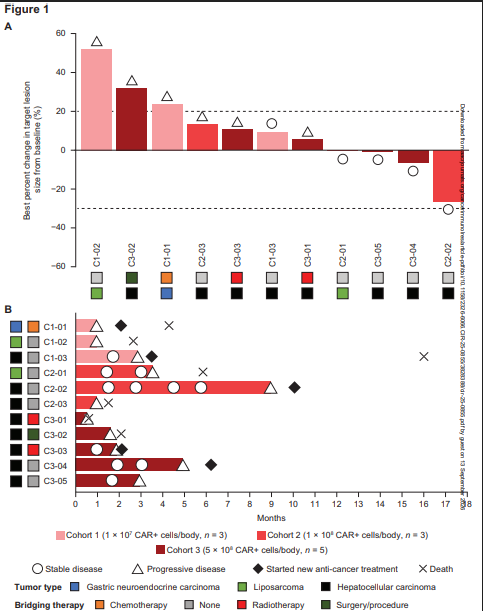
TAK-102 is an unusually ambitious design: GPC3-targeted CAR-T cells engineered to secrete IL-7 and CCL19, essentially trying to bring their own survival signal while calling endogenous T cells and dendritic cells into an immunologically hostile tumor.
The biology worked partly as intended. CAR-T expansion increased with dose, CCL19 and IFN-γ showed pharmacodynamic activity, and one post-treatment biopsy showed more activated, granzyme-B+ CD8 T cells.
But the most informative result is what did not happen. No objective responses occurred among 11 heavily pretreated patients; median PFS was only 1.9 months.
More tellingly, CAR+ cells were undetectable in the available day-28 tumor biopsies and had already fallen below quantifiable levels in peripheral blood.
That makes TAK-102 an interesting lesson in the difference between remodeling the neighborhood and actually occupying it.
IL-7/CCL19 may recruit and activate immune cells, but that advantage means little if the engineered cells themselves cannot establish durable residence in the tumor.
The one patient with 26.1% tumor shrinkage lasting nine months suggests the platform can generate biological pressure, but one near-response cannot establish efficacy.
The next question for armored CAR-T in solid tumors may therefore be less about adding another cytokine or chemokine and more about solving persistence, engraftment and sustained intratumoral function.
💡Autologous Glypican-3-Targeted, Armored CAR T Cells in Patients with Advanced Solid Tumors: A Phase 1 Dose-Escalation Study of TAK-102
👉https://t.co/BzokAGrJfk
#immunotherapy #T_cell #oncology
🦉 CAR-T may be a quality problem before it is a dose problem.
This study gets at an awkward feature of CAR-T manufacturing: patients do not necessarily need the largest possible number of engineered cells if the product contains enough of the right cells.
In the HD-CAR-1 trial, durable lymphoma responses occurred even at limited anti-CD19 CAR-T doses, and response tracked with the absolute number of functional CD27⁻CD39⁻ effector/effector-memory-like CAR-T cells rather than simply total cells infused.
That distinction matters. CD39 is often associated with chronically stimulated, dysfunctional T-cell states, so a CD27⁻CD39⁻ population fits biologically with cells still capable of doing useful work after infusion.
hink of it less as sending a larger army and more as asking how many soldiers are actually combat-ready.
Perhaps more interesting, the signal appears to originate upstream of manufacturing.
T-cell-rich leukapheresis material with supportive myeloid states favored these functional CAR-T cells, whereas regulatory myeloid states were linked to dysfunctional products and treatment failure.
The starting immune ecosystem may therefore place a ceiling on what manufacturing can recover.
The clinical dataset is still relatively small and comes from an early phase I/II basket trial, so CD27⁻CD39⁻ cell counts are not yet a validated dosing rule.
But if this biomarker holds across larger cohorts and different CAR constructs, CAR-T release criteria could eventually shift from “how many cells were made?” toward “how many therapeutically competent cells were made?”
https://t.co/6JIhOxUMSg
#immunotherapy #T_cell #dendritic_cell #oncology
🦉 CAR-T is becoming an immune reset button.
The most interesting part of this review is not that CAR-T cells can be used outside cancer. It is why the same technology can work in diseases that look biologically unrelated — lupus, systemic sclerosis, multiple sclerosis, fibrosis, chronic infection, transplant rejection and even senescence-associated pathology.
Oncology taught CAR-T cells to hunt malignant cells. Outside cancer, the more ambitious idea is to remove or control the cellular population that keeps a disease state alive.
Autoimmunity currently provides the strongest human evidence. CD19-directed CAR-T can produce extraordinarily deep B-cell depletion, reaching tissue compartments that conventional antibodies may not clear efficiently. When B cells subsequently return, the repertoire can be substantially renewed. That makes the intervention conceptually different from chronic immunosuppression: instead of continuously damping the immune response, it attempts to erase part of the pathological immune memory and let the system rebuild.
CAR-Tregs turn the logic around. Rather than destroying a pathogenic population, engineered regulatory T cells could deliver immune tolerance to a defined tissue — for example through HLA-specific recognition in transplantation. It is closer to installing a local immune “peacekeeper” than globally suppressing immunity.
The same platform logic extends further: FAP-CAR-T cells can target pathogenic fibroblasts, BAR-CARs can selectively eliminate B cells producing antibodies against factor VIII or IX, while uPAR- or NKG2D-based approaches are being explored against senescent cells.
The asymmetry in the evidence should not be missed. Autoimmune CAR-T already has striking early clinical observations; much of the infection, fibrosis and senescence story remains preclinical. This is a review, not evidence that all these applications will translate.
Still, the broader shift is worth watching. CAR-T may ultimately be less a “cancer therapy” than a programmable way of editing cellular ecosystems — removing the cell population that perpetuates disease, or placing regulatory cells exactly where tolerance has failed.
https://t.co/eKLybhwo2X
#immunotherapy #T_cell #dendritic_cell #myeloma $JNJ $RHHBY
🦉 Resistance may not kill the target.
That is the particularly interesting point behind this discussion of GPRC5D-directed T-cell engagers in multiple myeloma.
After talquetamab, resistant clones can alter GPRC5D in several ways: delete it, prevent the receptor from reaching the cell surface, silence its expression — or make a much subtler change to the antibody-binding epitope.
The last mechanism changes how treatment sequencing should be viewed.
A GPRC5D Asp239Asn mutation can leave receptor surface expression essentially intact while disrupting a critical interaction with talquetamab. So an assay may say “GPRC5D-positive,” yet the drug effectively sees a different lock. This is antigen escape without antigen disappearance.
Crucially, not every GPRC5D engager reads that lock the same way. Talquetamab has a single GPRC5D-binding arm, whereas forimtamig uses bivalent GPRC5D binding with higher avidity and a different recognition geometry.
Experimental work cited here shows that some mutations impair talquetamab far more than forimtamig; Asp239Asn, for example, can confer talquetamab resistance while retaining sensitivity to forimtamig.
That turns “GPRC5D resistance” from a target-level diagnosis into a molecule-level problem. Two drugs aimed at the same antigen are not necessarily interchangeable once therapy has sculpted that antigen.
The caveat is important: this is a structural framework built around emerging resistance biology, not clinical evidence that mutation-guided switching between GPRC5D engagers improves survival. But it suggests a practical direction.
At relapse, sequencing the GPRC5D gene may eventually be more informative than simply asking whether GPRC5D protein is still present.
Immunotherapy sequencing could become less about switching targets — and more about switching the way the same target is recognized.
https://t.co/j3a8LJUj6T
#immunotherapy #T_cell #dendritic_cell #oncology
🦉 Immunotherapy has changed the question.
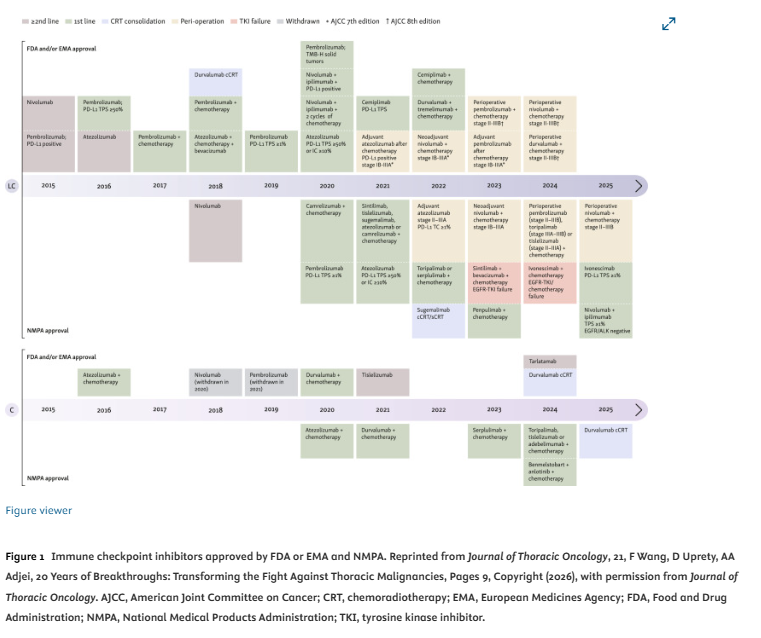
Twenty years of lung-cancer immunotherapy make an interesting point clearer than any single checkpoint trial: the field has moved from asking whether the immune system can control lung cancer to asking why it controls some tumors for years and barely touches others.
That is a much harder problem.
PD-1/PD-L1 blockade proved something genuinely important. Lung cancer is not simply an immunologically inaccessible disease.
Remove the right inhibitory signal and a subset of patients can achieve survival that was extraordinarily difficult to imagine in the chemotherapy era. Immunotherapy has consequently migrated from metastatic NSCLC into locally advanced and resectable disease, while also becoming part of treatment for SCLC.
But expanding checkpoint blockade across stages has exposed its biological ceiling. PD-L1 is useful, yet it is an imperfect proxy for a much more complicated system involving antigen presentation, T-cell infiltration and fitness, tumor mutational landscape, immune suppression and acquired escape. Two tumors carrying the same PD-L1 label can behave very differently because PD-L1 describes one checkpoint, not the entire immune ecosystem.
That may be the most important lesson from this 20-year perspective. The first immunotherapy revolution was pharmacological: release the PD-1/PD-L1 brake. The next one will probably have to be biological — identifying which part of the cancer-immunity cycle is actually broken in each tumor and repairing that specific defect.
Simply adding another immune drug to checkpoint blockade is unlikely to be enough. Better biomarkers, rational combinations and strategies that restore antigen recognition or functional T-cell activity may matter more than another broadly applied “IO + X” regimen.
Checkpoint inhibitors showed that lung cancer can be immunologically controlled. Explaining why that control fails is now the more interesting frontier.
👉https://t.co/Yh5mKFQvbb
#immunotherapy #T_cell #dendritic_cell #oncology $SNY
🦉 The T cells switched on. The tumors didn’t.
That is the uncomfortable but useful result from the first-in-human study of SAR443216, a HER2×CD3×CD28 trispecific antibody.
The design makes biological sense: HER2 anchors the molecule to the cancer cell, CD3 recruits a T cell, and CD28 supplies the costimulatory “second signal” intended to make that attack stronger.
Preclinically, the same architecture produced potent killing even in HER2-low models.
In 40 heavily pretreated patients, the pharmacology clearly did something. SAR443216 triggered circulating pro-inflammatory cytokines and multiple peripheral T-cell activation markers.
CRS occurred in 50%, although no severe CRS was reported, and the maximum tolerated dose was not reached across 18–900 µg.
But the clinically important observation is what did not follow: there were no objective responses. Disease control was roughly 35%, largely reflecting temporary stable disease, while average stabilization lasted about 10.5 weeks.
Even more telling, investigators saw no clear dose-related pattern of increased T-cell abundance or activation inside the tumors.
That disconnect matters beyond this particular molecule.
A blood sample can show that a T-cell engager has pressed the immune system’s accelerator; it does not prove that functional T cells are reaching and controlling a solid tumor.
Adding CD28 costimulation may strengthen the ignition signal without solving trafficking, immune exclusion, suppressive tumor microenvironment or insufficient productive engagement at the tumor site.
So this study reads less like a failure of T-cell activation and more like a warning about where activation is measured.
For solid-tumor engagers, peripheral pharmacodynamics may be the easy part. Getting that biology across the tumor boundary remains the harder problem.
https://t.co/22fpwzrOca
#immunotherapy #T_cell #dendritic_cell #oncology
$NWBO
🦉 What if the tumor became its own vaccine?
This study takes an unusual route around one of glioblastoma’s central immunotherapy problems: poor antigen presentation. Instead of trying to bring better dendritic cells into the tumor, the authors reprogrammed glioblastoma cells themselves into dendritic-cell-like cells.
A CRISPRa screen identified four transcription factors—Znf366, PU.1, IRF8 and BATF3, together called ZPIB—that pushed GBM cells toward a conventional dendritic-cell state. The change was not cosmetic. It involved broad transcriptional and epigenetic remodeling, and the converted cells acquired antigen-presenting features while losing tumorigenic capacity.
That creates an interesting immunological shortcut. The reprogrammed cell already carries the full, patient-specific tumor antigen repertoire, so there is no need to guess which neoantigens should go into a vaccine. In mouse GBM models, these ZPIB-DC-like cells remodeled the local immune environment, generated systemic and durable antitumor immunity, and enhanced checkpoint blockade.
The concept is almost the inverse of immune escape: rather than forcing immune cells to recognize a poorly visible tumor, the tumor is converted into the cell type whose job is to make antigens visible.
The strongest caution is also obvious. This is still a sophisticated preclinical reprogramming strategy, including humanized-model experiments—not evidence that transcription-factor delivery into human brain tumors will be safe, complete or controllable. Partial reprogramming would be a particularly important risk to solve.
Still, the broader idea is unusually elegant: for immunologically “cold” tumors, antigen presentation might be rebuilt from inside the malignant cell itself.
https://t.co/Kz0PTutsI3
#immunotherapy #T_cell #dendritic_cell #oncology
🦉 Cancer can weaponize antioxidants.
The clever part of this Science paper is the reversal of a familiar story: reactive oxygen species are usually cast as cellular damage, yet T cells actually need a controlled ROS pulse to transmit TCR signals. Tumors appear to exploit that dependency.
Tumor interstitial fluid was strongly antioxidant, with extracellular PRDX1 emerging as a key player. By removing ROS, PRDX1 prevents oxidative inhibition of phosphatases that normally has to occur for TCR-driven kinase signaling to proceed. In simple terms, the tumor is not just pressing an inhibitory receptor such as PD-1; it is draining away part of the chemistry that lets the activation circuit switch on at all.
That distinction matters. PRDX1 increased during cancer immunoediting, while deleting it from tumors strengthened antitumor immunity and improved responses to immunotherapy in experimental models. This places redox control alongside checkpoints, antigen loss and metabolic competition as a potentially actionable layer of immune escape.
It also gives an intriguing explanation for an old paradox: indiscriminately suppressing ROS with antioxidants may not always help in cancer, because the same molecules that can damage DNA are also part of productive T-cell signaling.
The important restraint is that this remains preclinical biology. PRDX1 is an interesting target, not yet a validated human immunotherapy. But the broader lesson is unusually clean: in tumors, “oxidative stress” is not simply something to eliminate. Sometimes the immune system needs a little fire to work.
https://t.co/Wsn0IEjSGw
Last Seen Hashtags on Sotwe
Bangladeshihotgirl
Seen from United Kingdom
BiggBossTamil10
Seen from India
แอบถ่ายห้องน้ํา
Seen from Thailand
hieuthu2
Seen from Vietnam
bbw
seduce #dickflash
Seen from Turkey
throatpie
Seen from United States
anxiouspanda
Seen from United States
女尊男卑
Seen from Japan
anxioupanda
Seen from United States
Most Popular Users

Elon Musk 
@elonmusk
241.5M followers

Barack Obama
@barackobama
118.8M followers

Cristiano Ronaldo
@cristiano
114.5M followers

Donald J. Trump
@realdonaldtrump
111.9M followers

Narendra Modi
@narendramodi
107.1M followers

Rihanna
@rihanna
98.7M followers

NASA
@nasa
92.3M followers

Justin Bieber
@justinbieber
91.8M followers

KATY PERRY
@katyperry
90M followers

Taylor Swift
@taylorswift13
84M followers

Lady Gaga
@ladygaga
75.5M followers

Virat Kohli
@imvkohli
73.5M followers

Kim Kardashian
@kimkardashian
70.9M followers

YouTube
@youtube
68.8M followers

Neymar Jr
@neymarjr
66.5M followers

Bill Gates
@billgates
65.3M followers

Selena Gomez
@selenagomez
63.1M followers

The Ellen Show
@theellenshow
62.2M followers

CNN
@cnn
61.7M followers

X
@x
60.7M followers