

Top Tweets for #WashBU

@washburnello 7877888888

@BubbyBlu29353 I went to Washburn

Se rockea muy a gusto con esta Washburn afinada en Drop “D”
@washburnguitar
@Apple
@Xoticusa
@TruetoneFX
@tcelectronic
@EHX
@RolandGlobal
@jhspedals
@NuxPedals
@MythFX
#GarageBand
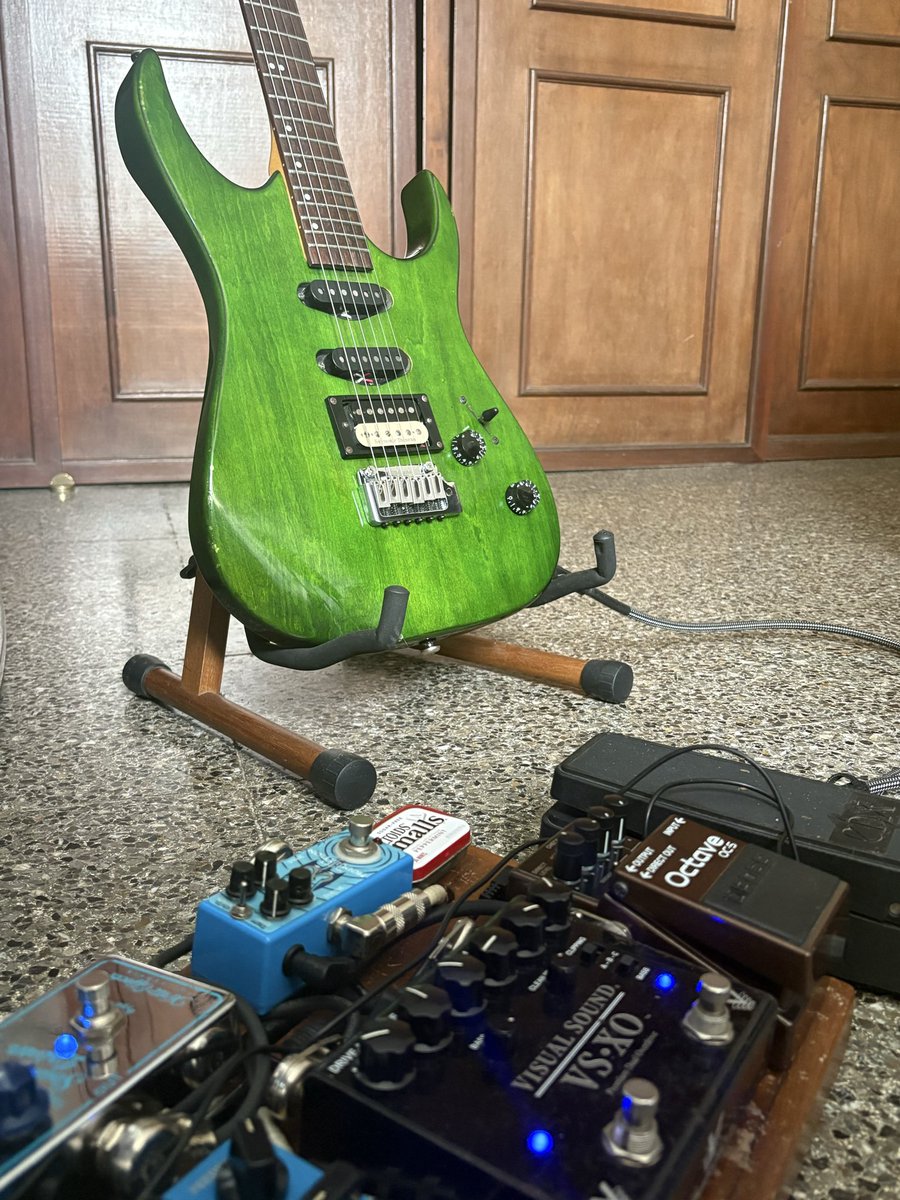

@washburnello Is there any other way to play?

おはようございます☀
#Washburn


I hope I didn't take this too seriously; I asked Grok
MIT Mechanical Engineer Response (Class of '08, now doing R&D on high-speed packaging lines):
Alright, let's treat this like a proper product-validation protocol because that's what the sign says:
"SAMPLE".
1. How are we supposed to sample this?
We don't "taste" it. We test it.
Here's the mechanical-engineer sampling procedure:
Tensile / burst test
Unroll ~3 squares, clamp the ends in a miniature Instron-style fixture (or just use your hands with calibrated finger force), and pull until failure. Record peak load in Newtons. Target: 4–8 N per sheet for premium 3-ply. Anything less is garbage.
Absorbency / wicking rate (Darcy's law application)
Drop 0.5 mL of water (or simulated "fluid") onto the sheet and time how long until full saturation. Measure spread diameter. Good TP follows Washburn's equation for capillary rise in porous media:
t∝μL2γrcosθt \propto \frac{\mu L^2}{\gamma r \cos\theta}t \propto \frac{\mu L^2}{\gamma r \cos\theta}
where faster wicking = better (lower contact angle θ).
Coefficient of friction / "softness" metric
Rub a 500 g sled wrapped in the paper across a forearm or synthetic skin surrogate at 5 cm/s. Measure μ (should be <0.3 for "cloud-like" feel). MIT labs have done actual peer-reviewed studies on this—it's basically tribology.
Perforation shear test
Fold along the perforations and apply shear until clean tear. We want brittle fracture, not ductile stretching. If it rips diagonally like cheap crap, reject the sample.
If the demo lady is handing out pre-torn squares on a tray, she's already failed the protocol. Real sampling requires you to interact with the roll under controlled conditions.

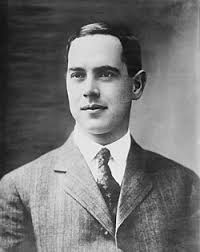
I imagine, as he reaches forth to touch reality in himself, he finds that he himself has gone a little forward, isolated, determined, illusive, untouchable, just out of reach-onward!"
(Pt 2/2)
-Richard Washburn Child, in the forward to 'My Autobiography' by Benito Mussolini.
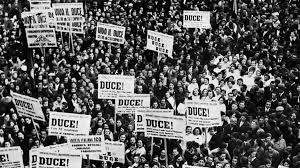
"In terms of fundamental and permanent effect upon the largest number of human beings-whether one approves or detests him-the Duce is now the greatest figure of this sphere and time...
(Pt 1/2)
-Richard Washburn Child, in the forward to 'My Autobiography' by Benito Mussolini.


There's Mt. Washburn again on the horizon, the mountain that stands above Canyon Village in Yellowstone NP. I wasn't trying to do anything fancy in these photographs; it was more like a kind of video diary. The environment, however, frequently made for nice photographs.
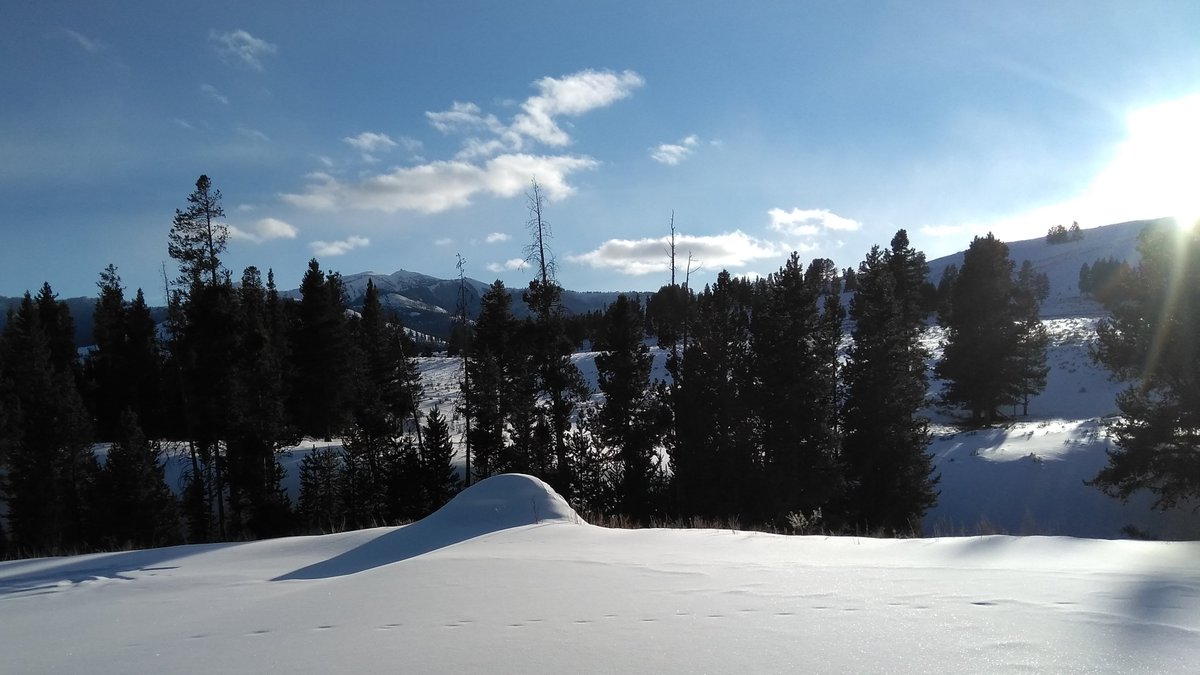
There's Mt. Washburn again, and there's that lenticular cloud.


Mt. Washburn, Yellowstone NP, during a cold spell in winter. I believe that's what they call a lenticular cloud.

Another view of Mt Washburn.

Mt Washburn, in Yellowstone NP.


A January scene in Yellowstone NP, with Mt. Washburn in the distance.
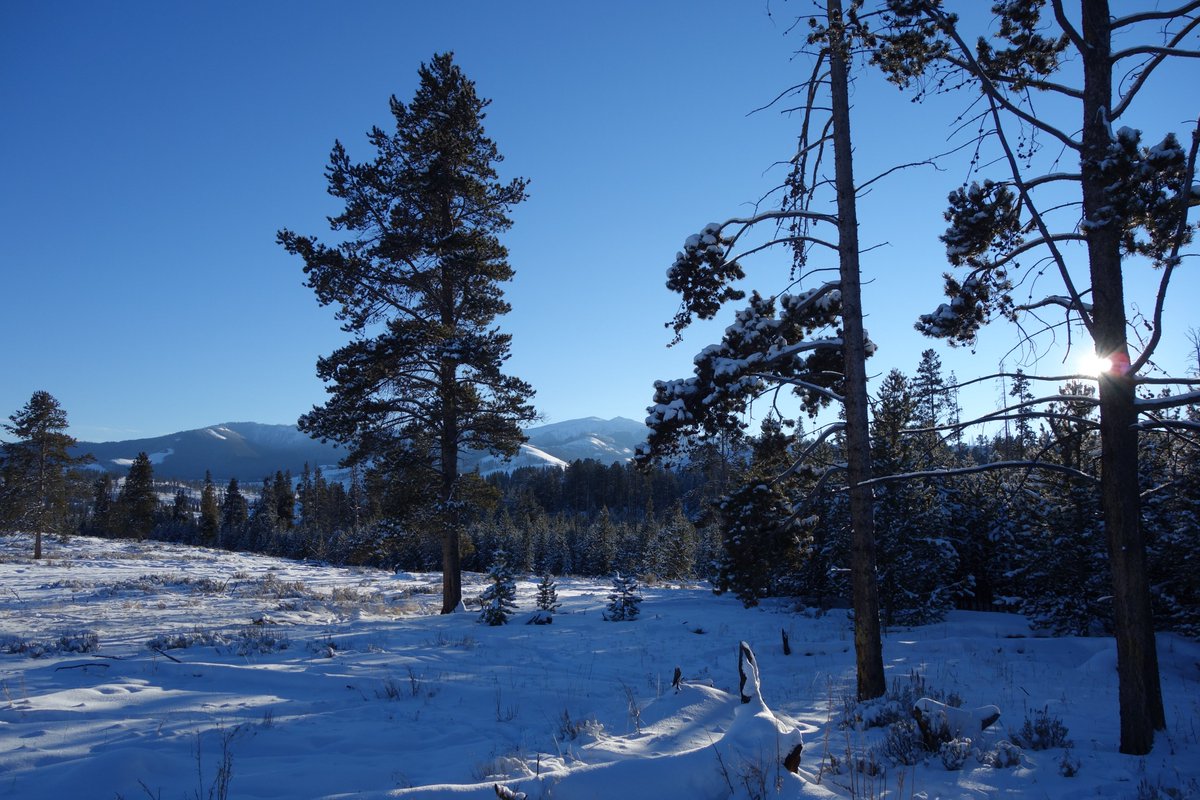
A bright day in deep winter, Yellowstone National Park. The tallest peak, in the background, is Mt. Washburn.


3/1/1872 President Grant signs the bill creating the first national park at Yellowstone. Native Americans had lived and hunted in the area for hundreds of years before the first Anglo explorers arrived. Abundant game and streams teaming with fish is what attracted them to the region, though the awe-inspiring geysers, canyons and boiling mud pots fascinated them. John Colter, the famous mountain man, was the first Anglo to travel through the area. After journeying with Lewis and Clark to the Pacific, Colter joined a party of fur trappers to explore the wilderness. In 1807, he explored part of the Yellowstone plateau and returned with fantastic stories of steaming geysers and bubbling cauldrons. Some doubters accused the mountain man of telling tall tales and jokingly called the area "Colter's He__." Before the Civil War, only a handful of men ventured into the area. In 1869, the Folsom-Cook expedition made the first formal exploration, followed a year later by the much more thorough Washburn-Langford-Doane expedition. The key to it being made a made a national park was the 1871 exploration under government geologist Ferdinand Hayden. Hayden brought along William Jackson, a pioneering photographer, and Thomas Moran, a brilliant landscape artist to make a visual record of the expedition. The images provided the first visual proof of Yellowstone's wonders and caught the attention of the US Congress. Early in 1872, they moved to set aside 2 million acres of public land straddling the future states of Wyoming, Montana, and Idaho as America's first National Park. The Yellowstone Act of 1872, designated the region as a public "pleasuring ground," which would be protected "from injury or spoilation, of all timber, mineral deposits, natural curiosities, or wonders within." The idea to preserve land spread to other nations around the world. 🇺🇲
https://t.co/5d2cdkGif1

Most Popular Users

Elon Musk 
@elonmusk
239.8M followers

Barack Obama
@barackobama
118.6M followers

Cristiano Ronaldo
@cristiano
114.3M followers

Donald J. Trump
@realdonaldtrump
111.7M followers

Narendra Modi
@narendramodi
106.9M followers

Rihanna
@rihanna
98.6M followers

NASA
@nasa
92.1M followers

Justin Bieber
@justinbieber
91.7M followers

KATY PERRY
@katyperry
89.9M followers

Taylor Swift
@taylorswift13
83.9M followers

Lady Gaga
@ladygaga
75.4M followers

Virat Kohli
@imvkohli
73.3M followers

Kim Kardashian
@kimkardashian
70.8M followers

YouTube
@youtube
68.6M followers

Neymar Jr
@neymarjr
66.3M followers

Bill Gates
@billgates
65.1M followers

Selena Gomez
@selenagomez
63M followers

The Ellen Show
@theellenshow
62.1M followers

CNN
@cnn
61.7M followers

X
@x
60.6M followers