

Top Tweets for #WomenInSCIENCE

The Marine Pollution Reserach Way! - With Anjali Tamrakar:
https://t.co/F846MI3fks
#MarinePollution #Microplastics #PlasticPollution #OceanConservation #Sustainability #EnvironmentalScience #ClimateAction #WomenInSTEM #Research #Podcast #WomenInspireAspire #WomenInScience

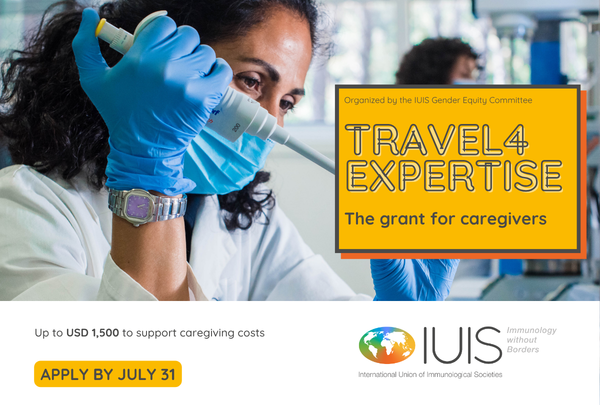
📢 10 days left! The IUIS Travel4Expertise Grant for Caregivers provides up to USD 1,500 to support caregiving costs while attending a training, workshop, or course.
📅 Apply by 31 July 2026
👉 https://t.co/hThx6fat6F
#FAIS #IUIS #WomenInScience #Immunology

Congratulations to Ayesha. S. Aswat on achieving your MSc degree in Medicine (Virology) with Distinction from the University of the Witwatersrand! Well-done!
#WRIM
#MScGraduate #WomenInScience #MalariaResearch


We are delighted to celebrate Joyce Eka NSHOMBO as our Scholar of the Week.
Her findings provide evidence to support improved food safety, and promote sustainable cassava value chains
#IITA #CGIAR #YoungResearcher #AgriculturalResearch #SustainableAgriculture #WomenInScience


We spotlight Dr. Bitumani Borah, whose journey reflects the power of scientific excellence, dedication, and a vision to make science more accessible and meaningful for society.
Read the full story here:
🔗 https://t.co/OjmoP9MOUG
#GlobalWomenLeaders #WomenInScience

Pocket Casts: https://t.co/apDDX9pMuD
#genderequity #womeninSTEM #womeninscience #womenleadership #PinoyScientist #healthcareworker #Philippines

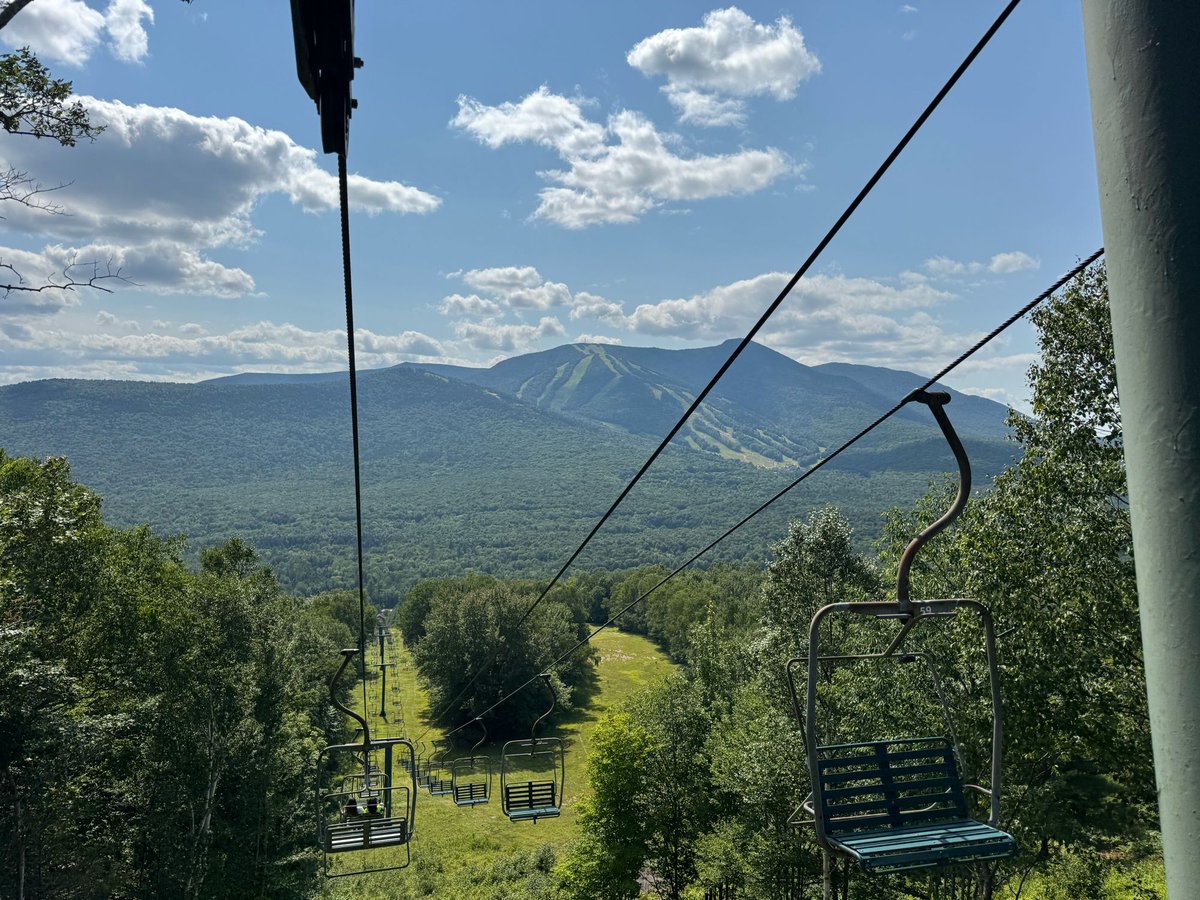
Having an amazing start to the Neurobiology of Cognition Gordon Conference! Took advantage of the beautiful weather to hike with the lab after the first couple of fantastic sessions 🧠🧪👩🔬 #WomenInScience #neuroscience



In the history of the US Senate, we've only elected one PhD scientist, and that was in the 1970s! It's time to change that. Let's help elect the first female PhD scientist to the Senate.
#USSenate #WomenInScience #AnimateChange #GoMeanGo #CreatiVet

'Trading summer comfort for rainforest science'
🖋 Na’Porsha Williams | The St. Louis American
📸 Courtesy photo
#stlamerican #stlnews #stlouis #BlackGirlsDoSTEM #STEMeducation #WomenInScience #FutureEcologists https://t.co/BQPZMF1sD1

عندما تؤمن بفكرتك استمر في العمل عليها حتى لو لم يفهمها الآخرون اليوم.
#Biology #BiologicalSciences #Genetics #Cytogenetics #PlantBiology #LifeSciences #WomenInSTEM #WomenInScience #Research #Innovation #NobelPrize

Throughout her career, Barbara McClintock studied the cytogenetics of maize, making discoveries so far beyond the understanding of the time that other scientists essentially ignored her work for more than a decade. But she persisted.
Read more: https://t.co/eAy415hMU7


Free Summer Movie!
Watch Spacewoman free from July 20-26. Spacewoman explores the life and legacy of Eileen Collins, the first woman to pilot and command a Space Shuttle mission. Register here: https://t.co/KTLbnHaejs #WomenInScience


While women globally—even in the progressive West—faced near-insurmountable societal, institutional, and cultural barriers to entering science and higher education during the late 19th and early 20th centuries, often confined to auxiliary roles or denied access to advanced degrees and laboratories, Bengal stood apart. In colonial Calcutta, a vibrant intellectual ecosystem nurtured by reformist movements like the Brahmo Samaj produced a remarkable lineage of pioneering female scholars and scientists who not only overcame these obstacles but delivered monumental contributions that reshaped medicine, education, and the physical and life sciences.
The very foundation of this legacy was laid by trailblazer Kadambini Ganguly (1861–1923). Born into a progressive family, she became one of the first two women to graduate with Bachelor of Arts degrees from the University of Calcutta in 1882—the first female graduates in British India and the entire British Empire. She shattered further barriers by gaining admission to Calcutta Medical College in 1883, becoming the first Indian woman to study Western medicine there. Despite facing ridicule and institutional resistance, including a controversial exam result that initially denied her the full MB degree, she earned the Graduate of Bengal Medical College qualification, trained further in Scotland to secure additional diplomas, and established a thriving medical practice in Calcutta. Specializing in women’s healthcare, she became India’s first practicing female doctor of Western medicine, delivered groundbreaking care, and championed social reform as the first woman to address the Indian National Congress in 1889. Her work in gynecology and public advocacy for women’s education and rights opened doors not just for female physicians but for scientific participation itself.
Building on this foundation, the wave continued with later trailblazers such as Asima Chatterjee (1917–2006), the first woman in India to earn a Doctor of Science degree from Calcutta University in 1944 for her groundbreaking research in organic chemistry and phytomedicine. Her work isolated biologically active compounds from Indian medicinal plants, yielding anti-epileptic and anti-malarial drugs; most notably, she developed the commercially used anti-epileptic drug Ayush-56 from Marsilia minuta, along with contributions to vinca alkaloids, terpenoids, coumarins, and chemotherapy agents that advanced treatments for cancer and other conditions. She published hundreds of papers and review articles, dedicating decades to natural products chemistry drawn from the subcontinent’s flora.
Purnima Sinha (1927–2015) became the first woman to receive a PhD in physics from Calcutta University in 1956, under the mentorship of Satyendra Nath Bose. Her innovative X-ray diffraction and differential thermal analysis studies of Indian clays classified dozens of clay samples, bridging materials science with biophysics. She even fabricated her own X-ray equipment from wartime surplus scraps, and her later work at Stanford University explored the geometric parallels between clay structures and DNA patterns, contributing insights at the interface of physics and the origins of life. She continued research at institutions like the Geological Survey of India, Bose Institute, and Central Glass and Ceramic Research Institute, while popularizing science through Bengali translations of key works.
Among them shone Bibha Chowdhury (1913–1991), a particle physicist whose pioneering investigations into cosmic rays and subatomic particles were widely regarded as Nobel Prize caliber. Born into a progressive zamindar family in Calcutta, where her Brahmo Samaj-influenced parents championed women’s education, Bibha became the only woman to complete an https://t.co/qfKs5Yaclj. in physics at Rajabazar Science College, University of Calcutta, in 1936. She joined the Bose Institute in 1939, collaborating with Debendra Mohan Bose on cosmic-ray experiments at high-altitude Himalayan stations in Darjeeling and Sandakphu. Using photographic emulsion plates exposed to cosmic rays, the pair observed curved particle tracks indicative of meson (then called mesotron) decay—evidence published in Nature in 1940 that directly supported Hideki Yukawa’s theoretical prediction of mesons. Resource shortages during World War II halted further refinement of their plates, but Cecil Powell’s nearly identical experiments seven years later using improved emulsions earned him the 1950 Nobel Prize in Physics for discovering the pi-meson. Historians and physicists have since highlighted Chowdhury’s earlier detections as a critical precursor, its full credit curtailed largely by colonial-era limitations and gender biases.
Undeterred, Chowdhury earned her PhD from the University of Manchester in 1949 under Nobel laureate Patrick Blackett, focusing on extensive air showers and penetrating particles in cosmic rays. She became the first woman faculty member in Homi Bhabha’s cosmic-ray group at the Tata Institute of Fundamental Research in 1949, later advancing K-meson research in Paris and contributing to high-energy muon studies at the Kolar Gold Fields. Her publications in Nature and Nuovo Cimento, along with her teaching—including French-language physics lectures—left an indelible mark on particle physics. Often called a “forgotten legend,” she received no major Indian scientific academy fellowship or national prize in her lifetime, yet her work exemplified perseverance against systemic odds.
The lineage extended into molecular biology with Maharani Chakravorty (1937–2015), an Indian molecular biologist who made foundational contributions to bacterial genetics, virology, and genetic engineering. Inspired by her maternal grandfather’s stories of scientific discovery, she earned her https://t.co/qH3Cvqe8D5. from Presidency College, Kolkata, https://t.co/qfKs5Yaclj. from Rajabazar Science College, and PhD from Bose Institute, where her thesis demonstrated cell-free protein synthesis in the bacterium Azotobacter vinelandii. After postdoctoral work in enzyme chemistry at New York University, she returned to India and, with her husband Debi Prosad Burma, established the Molecular Biology Unit at Banaras Hindu University. In 1981, she organized the first laboratory course on recombinant DNA techniques in Asia and the Far East. Her research elucidated virus reproduction in infected bacterial cells and identified the membrane complex of Salmonella typhimurium as the site of DNA and RNA synthesis, paving the way for deeper molecular understanding of food-borne pathogens and advances in treating bacterial and viral infections. She balanced rigorous laboratory work with family life, often bringing her young children to the lab, and navigated a male-dominated field with vocal determination.
Their stories—from Ganguly’s pioneering medical practice and advocacy to Chowdhury’s cosmic-ray breakthroughs, Chatterjee’s plant-derived therapeutics, Sinha’s clay crystallography, and Chakravorty’s molecular genetics—exemplify Bengal’s extraordinary legacy: a region that, against the global tide of exclusion, empowered women to probe the universe’s deepest mysteries, from the chemistry of life-saving plants and the practice of modern medicine to the invisible showers of cosmic particles and the molecular machinery of life itself. Their achievements not only enriched science but inspired generations, proving that brilliance thrives where opportunity, however hard-won, is seized.


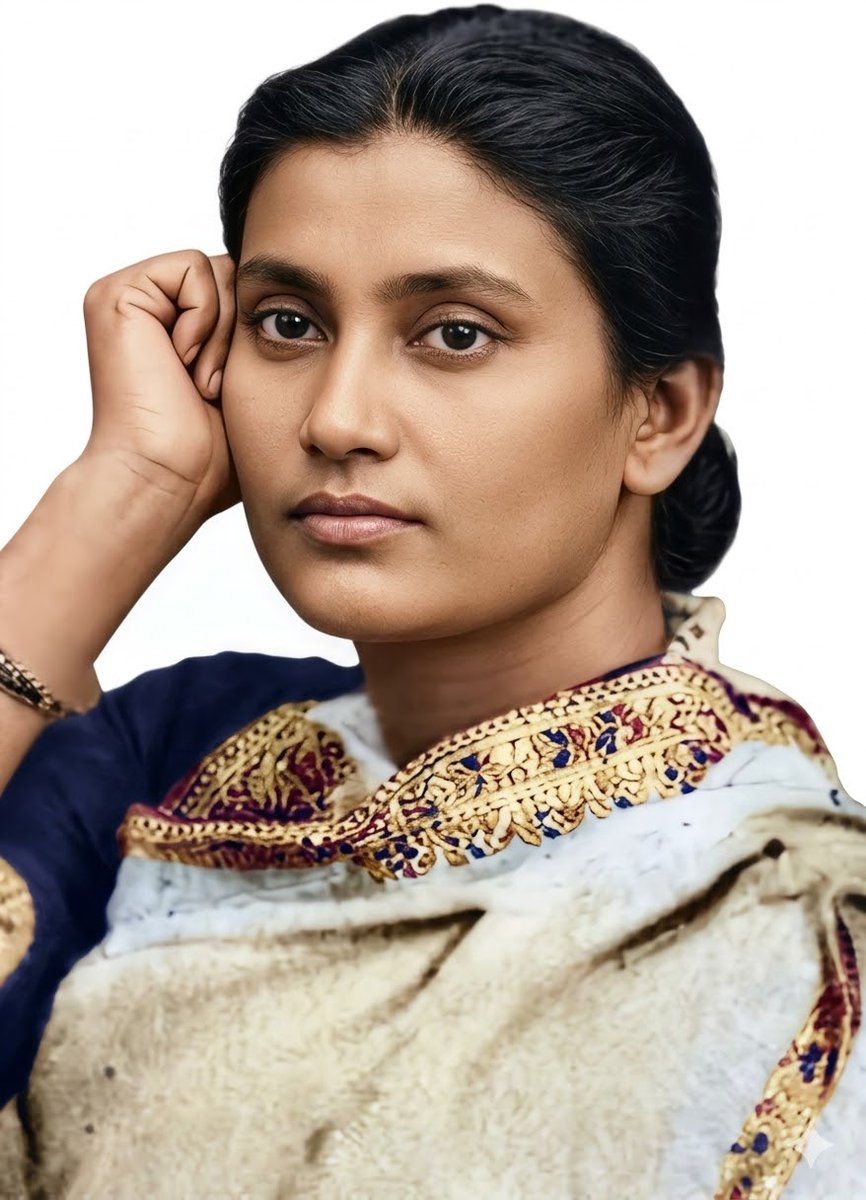
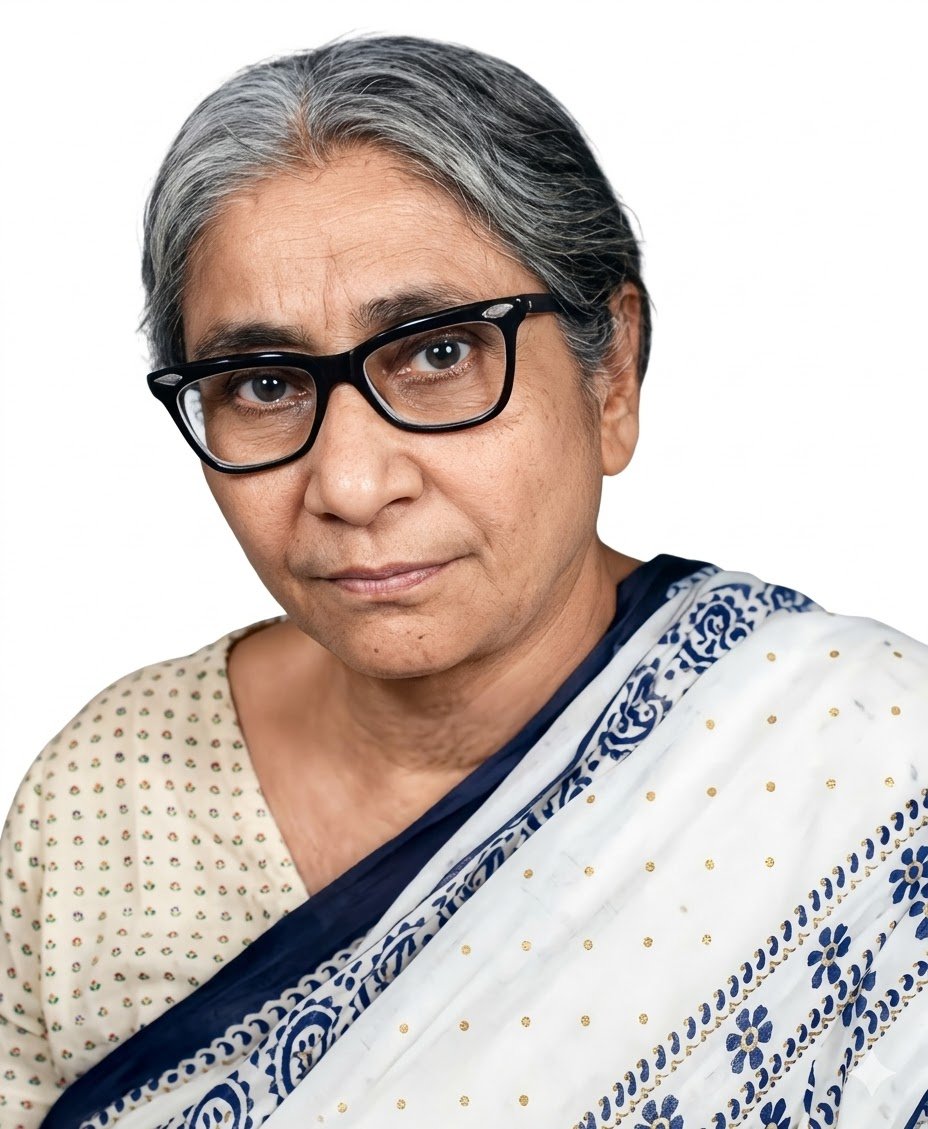


La Red Interamericana de Academias de Ciencias (IANAS), a través de su programa "Mujeres por la Ciencia" (WfS), ha abierto la convocatoria para el Premio IANAS a la Investigación para Jóvenes Científicas 2026. Más información en https://t.co/F2NgusxcoT


Nature’s 2012 “10 who mattered.” 2022 World Food Prize.
“Food needs to be at the table.”
HJIUF celebrates her journey from farm to global food security mission.
#SpotlightSaturday #ClimateScience #FoodSecurity #WomenInScience
Bypassing journals, conferences, or press releases, a growing number of women scientists are using social media to make science more accessible. AWIS member Frances Tietje-Wang speaks with these new science communicators. Read more: https://t.co/ao2lgT3ipf #WomenInScience

Empowering the next generation of innovators! ATME College of Engineering recently hosted an inspiring Technical Talk on "Women in Bio-entrepreneurship: Driving Innovation, Impact & Inclusion" featuring Dr. Shrilakshmi Desiraju.
#WomenInScience #BioEntrepreneurship #ATME

👩🔬Im wyżej w hierarchii, tym mniej kobiet.
💎 Talent jest. Pytanie brzmi: gdzie znika po drodze?
Źródło: She Figures 2024
[5/5]
#EuropeanGenderDataDay #SheFigures2024 #HoryzontEuropa #GenderEquality #WomenInScience #Badania #Innowacje #RównośćDlaInnowacji

"Never underestimate the power of being underestimated."
Professor Quarraisha Abdool Karim's closing message is a reminder that every barrier broken by one woman creates opportunities for generations that follow.
#WomenInScience #BreakTheBias #WomenEmpowerment #Womanity

MPOWER Financing Women in STEM Scholarship
https://t.co/BQnUiiiINi
Last Date : 31.12.2026
#MPOWERWomenInSTEM #MPOWERScholarship #WomenInSTEM #STEMScholarship #InternationalStudents #StudyAbroad #WomenInScience #EngineeringStudents #Scholarship2026 #HigherEducation

Last Seen Hashtags on Sotwe
CovidCareKit
teenager
Seen from United States
deaayu
Seen from Singapore
Deepthroat
Seen from United Kingdom
ديوت_بدوي
Seen from Oman
야노
Seen from Korea
xlii or #exny or #momson or #nolimit() +filter:native_video
FollowMeiwillFollowBack
รับงานหนองฉาง
Seen from Thailand
momson()()
Seen from United States
Trends for you
Most Popular Users

Elon Musk 
@elonmusk
241M followers

Barack Obama
@barackobama
119.2M followers

Cristiano Ronaldo
@cristiano
111.9M followers

Donald J. Trump
@realdonaldtrump
111.8M followers

Narendra Modi
@narendramodi
107M followers

Rihanna
@rihanna
98M followers

NASA
@nasa
92.2M followers

Justin Bieber
@justinbieber
91.2M followers

KATY PERRY
@katyperry
88.4M followers

Taylor Swift
@taylorswift13
82.2M followers

Lady Gaga
@ladygaga
73.8M followers

Virat Kohli
@imvkohli
71M followers

Kim Kardashian
@kimkardashian
70.1M followers

YouTube
@youtube
68.7M followers

Bill Gates
@billgates
64.3M followers

Neymar Jr
@neymarjr
63.9M followers

The Ellen Show
@theellenshow
62.4M followers

CNN
@cnn
61.8M followers

Selena Gomez
@selenagomez
61.4M followers

X
@x
60.8M followers