

Top Tweets for #WorkFlo

Crypto adoption becomes real when businesses can use it without rebuilding their entire financial workflow.
That is the problem RIV X is designed to address: helping merchants receive stablecoins while settling in fiat through a structured exchange process.
$RIV
@abdallah_emad__


AI can build your app, not prove it works. Kryptheon tests workflows, APIs & DB security locally so your data stays safe, showing bugs with evidence & AIready fixes. Nightly DB checks run even with your laptop off, with a morning email https://t.co/RUF7ngh0Ii

@kr4chinin Small fixes can make a huge difference in developer workflows

I have built 2-3 genuinely useful apps using this. Think of this as a beautiful abstraction of an agentic workflow you already use frequently but sitting in your menu bar as its own app.

You can now install Claude artifacts as desktop apps on Mac and Windows.
Ask Claude to build an artifact, click "Install as app", and open it like any other app. It can use your connectors and, if you allow it, send notifications or add a menu bar item.

@ALwith_ai Smart workflow improvements can make a big difference in productivity
AI can build your app, not prove it works. Kryptheon tests workflows, APIs & DB security locally so your data stays safe, showing bugs with evidence & AI-ready fixes. Nightly DB checks run even with your laptop off, with a morning email https://t.co/RUF7ngh0Ii

@akshaj_kasliwal Fix screenshot #1 and the short description first so a cold visitor sees the core workflow in under 2 seconds without tapping into the full listing. At 0.68% store-view-to-install, pricing isn't even evaluated yet—the first visual frame is the bottleneck.

SETTLE update.
The foundation is in place:
- Cloud database connected
- Authentication configured
- Core data structures created
- Reconciliation logic started
Now I'm working through the build errors before moving on to the remaining workspace screens and workflows.
#fintech

APEs: Agentic Prediction of Epitopes to Guide Antibody–Antigen Structure Prediction
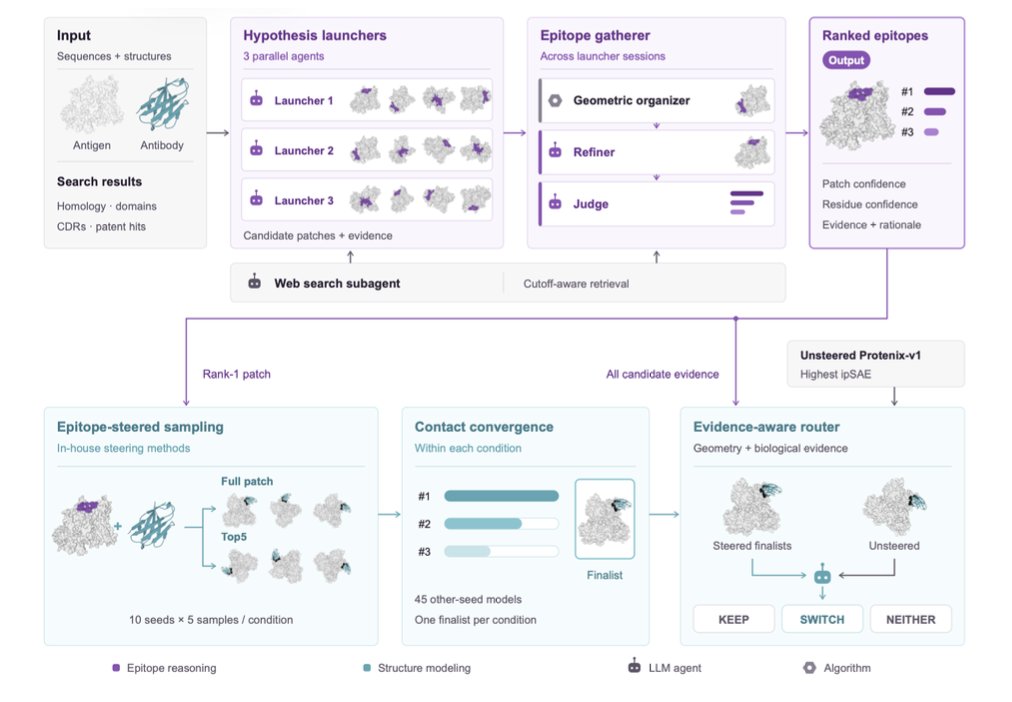
1. APEs is an agentic workflow that turns scattered, target-specific public evidence (papers, patents, homologous complexes, assays) into ranked, residue-level epitope hypotheses, then uses those hypotheses to steer antibody–antigen complex sampling and to help select final models.
2. The core problem it addresses: for antibody–antigen docking, the bound antigen surface is often unknown, and confidence metrics may not reliably separate alternative poses—even when near-native solutions exist in the sample pool.
3. System design: three independent “launcher” agents retrieve and interpret evidence and propose candidate antigen-surface epitope patches with per-residue contact scores (0–1) and heavy/light chain contact assignment; a Geometric Organizer clusters overlapping patches; a Refiner revises residue sets using the full evidence trail; a Judge ranks patches via relative patch-confidence (normalized to sum to 1 per target).
4. Practical output per hypothesis: proposed epitope residues, residue-level contact scores to prioritize likely true contacts within a patch, predicted heavy vs light chain involvement, supporting and conflicting evidence, ruled-out regions, and a written rationale—meant to be auditable rather than a single opaque score.
5. Retrospective CASP evaluation with time control: for each target, web retrieval was restricted to sources released before the CASP entry date. On 8 CASP16 + 6 released CASP17 targets, the top-ranked patch achieved residue precision ≥ 0.5 for 9/14 targets; considering all candidates, at least one patch met that threshold for 10/14 targets.
6. Confidence behaved meaningfully: rank-1 patches with precision ≥ 0.5 had higher mean patch-confidence (0.544) than lower-precision rank-1 patches (0.254). When patch-confidence ≥ 0.4, raising residue-score thresholds generally increased precision, suggesting residue-level scores enrich for true contacts when the correct region is found.
7. Evidence at different resolutions can be mapped onto structures: in H2319 (astrovirus VA1 spike + antibody 7C8), escape substitutions were mapped onto the query sequence to anchor the epitope; APEs separated two symmetry-related candidate regions and ranked them (top patch precision 0.769), with residue-level scoring further enriching true contacts inside a slightly shifted boundary.
8. Domain-level evidence can still be made actionable: in H2338 (FXI + REGN9933), patent evidence localized binding to the A2 apple domain; APEs combined this with related-antibody data (e.g., HDX-MS protected segments) and structural surface analysis to pick a specific surface (precision/recall 0.647). It also connected the predicted site to a mechanistic hypothesis about disrupting HK-mediated contact-pathway activation while sparing thrombin-mediated feedback activation; later cryo-EM and assays were consistent with this site/mechanism.
9. Epitope hypotheses were used to improve structure prediction, not just interpretability: predicted patches (full patch or Top5 residues by contact score) were used as restraints for additional Protenix-v1 sampling; finalists were chosen by contact convergence (not predictor confidence) and compared against the best unsteered ipSAE model by an evidence-aware router.
10. Net effect on docking quality across 14 targets: mean DockQ improved from 0.306 (unsteered baseline) to 0.375 (retrospective best selection across three independent router calls). Large single-target gains were shown, e.g., H2321 DockQ 0.089→0.679 (escape-site-consistent interface) and H2346 DockQ 0.005→0.379 (evidence-corrected Fab pairing and interface placement), while also illustrating limits: correct epitope localization does not guarantee correct orientation (e.g., H1225).
💻Code: https://t.co/D8GnfMIYM8
📜Paper: https://t.co/MebVV6Iof3
#computationalbiology #structuralbioinformatics #antibodies #proteinstructure #CASP #LLM #agents #epitope #docking

30 agents for Claude Code and Copilot CLI, wired into a plan to ship workflow with review and security gates between the steps. Python runs the orchestration, and a plugin marketplace handles distribution so each agent installs as a plugin rather than a hand-copied prompt. Useful when you want the review gate enforced by the pipeline, not by whoever remembers to ask for it.
https://t.co/gKtY8fOCZc


Automation is easy. Just drag and drop
Until you have to handle duplicate customers, conditional logic, data validation, record updates and edge cases.
Still building this workflow
The hard part isn't connecting nodes. It's thinking logically about everything that could happen


My AI bill went from €400 to €200 a month.
Same workflows. I just stopped sending everything to the biggest model.
- lead qualification, high volume: DeepSeek in thinking mode. Costs almost nothing, great results
- writing the actual messages: Claude Sonnet
Small model for volume. Big model where quality shows.
Shipped today in Runbase: pick the model and your own key on every AI step.

Make AI remove a step, not add a feature
The best AI work we see at TechVerge Solutions starts with a boring workflow, then asks where a model can delete a step for the user. The product comes first. AI is how it gets simpler.

@teaqlio Great to connect 🙌 not agentic workflow but working on summonpot to simplify agentic implementation at low level
@gkunwar1 Great to see the product evolving based on real workflow needs
@BlazeGrid Creative workflows are evolving fast

@BlockByBlockHQ thanks a lot! curious which part of it you'd actually use the most in your day to day workflow
@Raymondbuilt AI powered creative workflows keep getting more interesting
@shashwat_06_ Clean approach to solving a real business workflow problem

@Tugrul_Guner Hi Tugrul, followed! Saw ModePot's mix of open-source frameworks and agent workflows. Which agent workflow are you focused on simplifying right now? I'm building TeaQL's generated data API layer for coding agents. Good to connect!

I directed a 15-second paper-puppet short in ONE continuous shot—real hand, ballpoint ink physics, correction tape twist, and tabletop ASMR Foley.
Zero cuts. Zero external audio. Built entirely inside the Gemini ecosystem.
Here’s the exact 3-step workflow and prompts so you can make your own 🧵👇

Curious how your team handles daily Git branch workflows in shared repos. Drop your setup below:
https://t.co/Lfd72onZi2
10 Git commands you’ll use daily- what each one actually does. Which one did you learn last. 👇

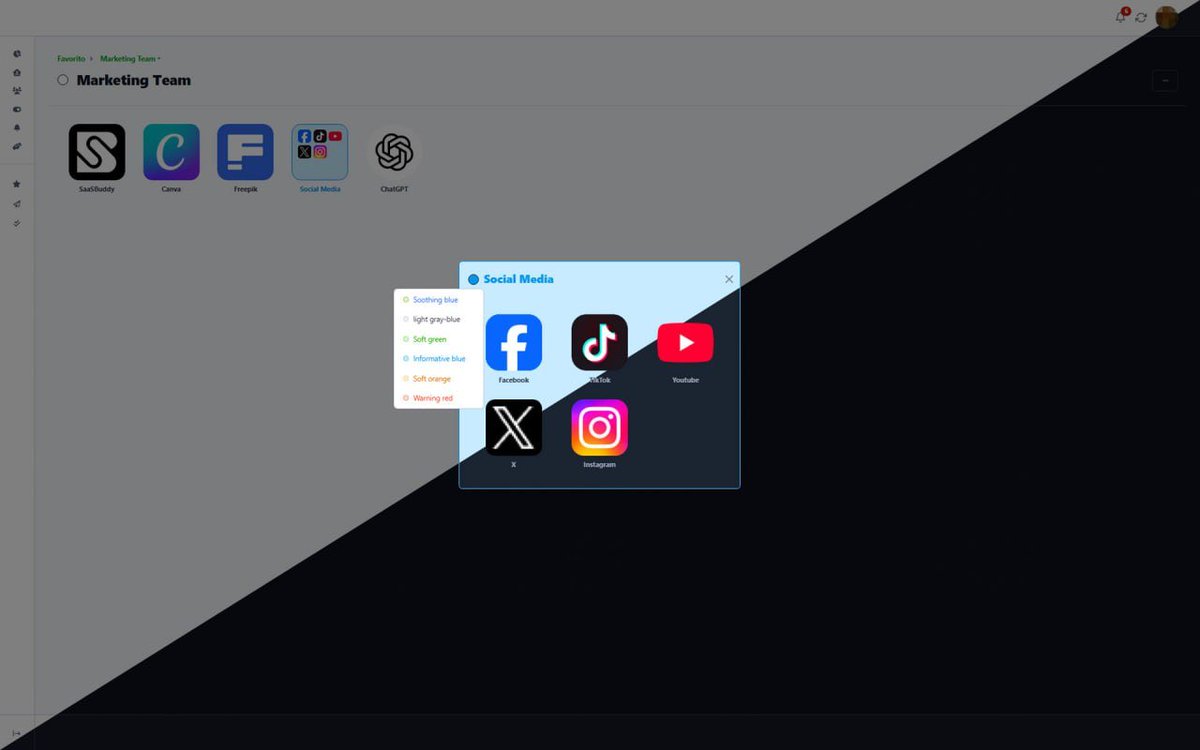
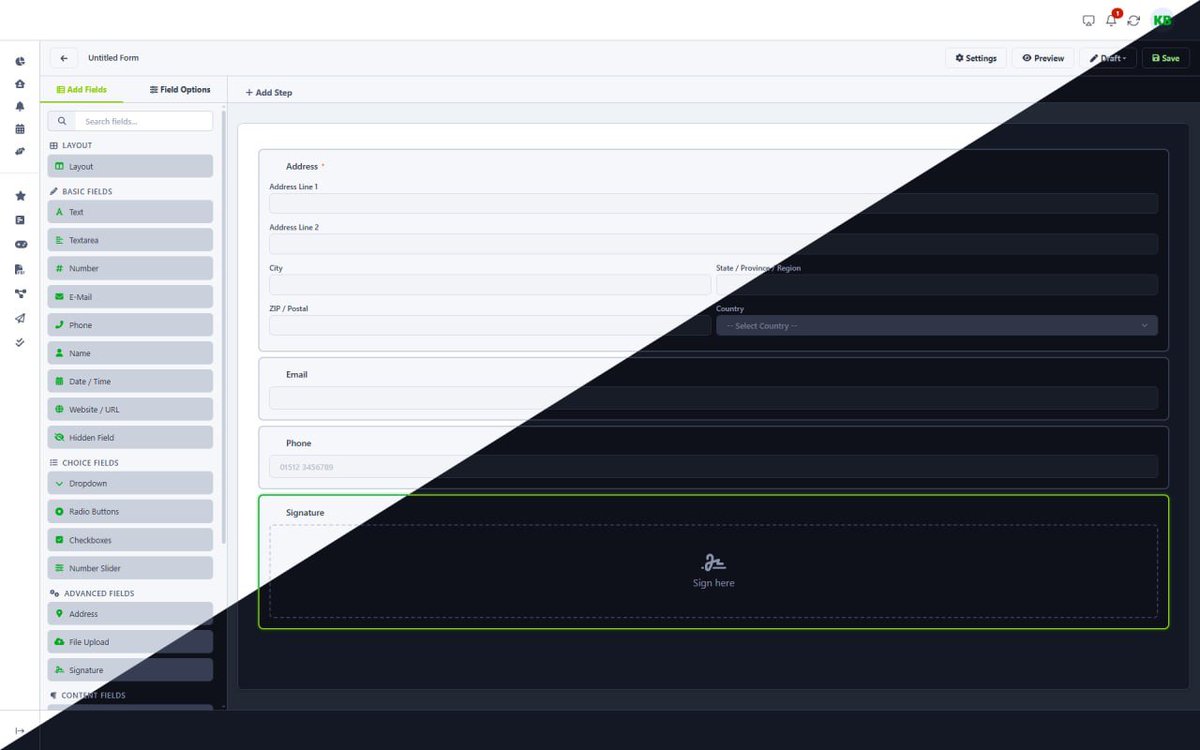
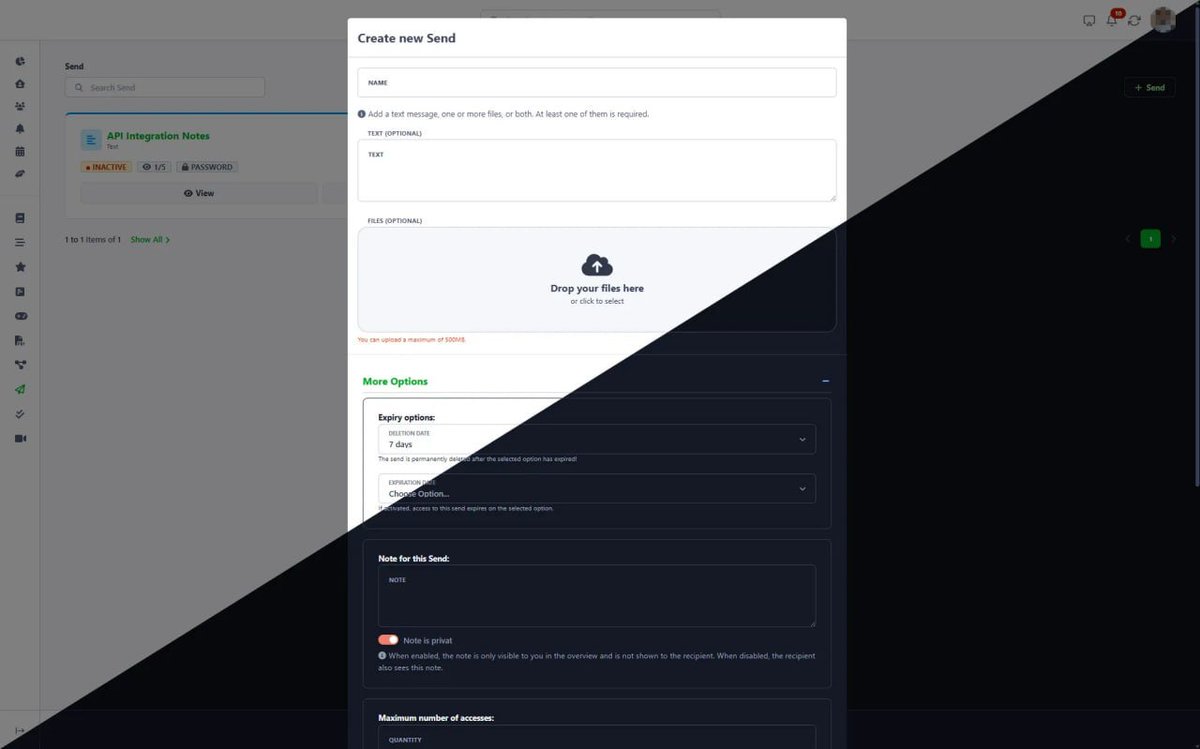
My daily workflow with DailyBuddy: I organize tasks, manage projects, share files, edit PDFs, create forms, save technical knowledge in Books, access my favorite tools and manage WordPress sites with WPBuddy. One platform, less app switching, more productivity. https://t.co/l5guep5l6d




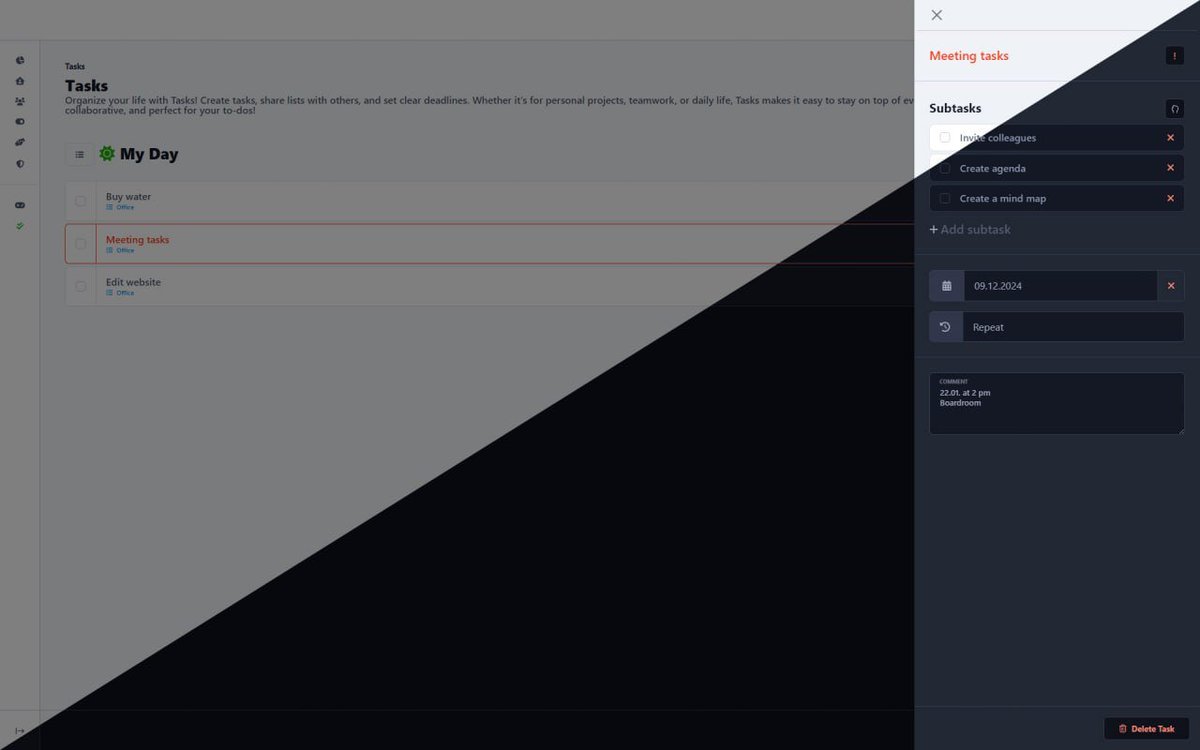

@subin_chella This is such an important part of the workflow. I do the same thing where I commit everything myself so that I specifically keep track of what the agent worked on.

@shawkatkabbara Interesting! I'm building a local AI agent with autonomous skill learning. The 0.6B model looks promising for code retrieval on CPU-only setups. Have you benchmarked retrieval latency and token savings in real-world agentic workflows?
Most Popular Users

Elon Musk 
@elonmusk
239.8M followers

Barack Obama
@barackobama
118.6M followers

Cristiano Ronaldo
@cristiano
114.3M followers

Donald J. Trump
@realdonaldtrump
111.7M followers

Narendra Modi
@narendramodi
106.9M followers

Rihanna
@rihanna
98.6M followers

NASA
@nasa
92.1M followers

Justin Bieber
@justinbieber
91.7M followers

KATY PERRY
@katyperry
89.9M followers

Taylor Swift
@taylorswift13
83.9M followers

Lady Gaga
@ladygaga
75.4M followers

Virat Kohli
@imvkohli
73.3M followers

Kim Kardashian
@kimkardashian
70.8M followers

YouTube
@youtube
68.6M followers

Neymar Jr
@neymarjr
66.3M followers

Bill Gates
@billgates
65.1M followers

Selena Gomez
@selenagomez
63M followers

The Ellen Show
@theellenshow
62.1M followers

CNN
@cnn
61.7M followers

X
@x
60.6M followers