

Top Tweets for #codonoptimization

Direct RNA Sequence Design Under Codon Constraints Using Expressive Tensor-Based Secondary Structure Models
1 This paper presents an exact dynamic-programming framework that directly designs protein-coding mRNA sequences while optimizing a fully detailed secondary-structure free-energy model, rather than relying on simplified stability proxies or heuristic search.
2 The key idea is to define a Boltzmann distribution over (RNA sequence ϕ, secondary structure s, hidden tensor configuration ζ) subject to hard codon constraints (ϕ must encode a target amino acid sequence ψ), then sample sequences exactly from that distribution.
3 A central innovation is combining two tensor viewpoints: (i) tensor-based secondary-structure thermodynamics (from prior tensor-network formulations) and (ii) tensor-train encodings of coding constraints (and optional local soft constraints). This yields a generalized “folding function” that sums over both structures and synonymous sequences inside the same DP recursion.
4 Unlike many codon-optimization pipelines that output a single optimized sequence, the method outputs an ensemble: many synonymous coding sequences drawn from a principled distribution balancing stability (enthalpy) and diversity (entropy), which can then be filtered post hoc for downstream experimental preferences.
5 The algorithms compute the global partition function (free energy) over all coding sequences exactly in O(n^3) time (n = nucleotide length), with a reported practical overhead of about ≤4× versus analyzing a fixed sequence under the same secondary-structure model.
6 Beyond sampling, the framework exactly computes rich distributional summaries: equilibrium base-pairing probabilities averaged over all synonymous sequences, plus per-position nucleotide marginals and per-codon marginals (useful for understanding which codons are favored by stability + constraints).
7 Hard constraints are enforced via tensor trains that encode the genetic code at the nucleotide level; soft constraints (e.g., CAI or codon-pair bias style terms) can be added as additional local energy contributions within the same tensor-train machinery, without changing the overall DP structure.
8 The paper also shows how to switch the same DP “skeleton” into a minimization mode (via evaluation-algebra / semiring substitution) to obtain an MFE state over (ϕ, s, ζ), which serves as a stability-focused design baseline alongside sampling.
9 Performance is a major practical angle: the implementation is designed for parallel hardware, using CPUs and GPUs (including multi-GPU) to accelerate the dominant tensor/matrix operations; they report a 5000 amino-acid design in about 7 minutes and up to ~100× speedups vs serial CPU in benchmarks.
📜Paper: https://t.co/zrtnR6ChDf
#computationalbiology #RNA #mRNA #syntheticbiology #vaccines #dynamicprogramming #tensorNetworks #GPUComputing #codonOptimization #bioinformatics
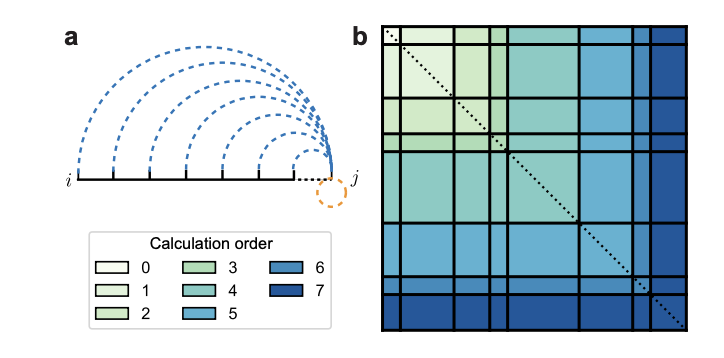
Advancing Codon Language Modeling with Synonymous Codon Constrained Masking
1. A new codon language model, SynCodonLM, was introduced that uses a novel training strategy to disentangle DNA-level from protein-level semantics. By constraining the model to predict only synonymous codons, it is able to focus on the nuances of codon usage.
2. A key finding is that the model’s learned embeddings cluster codons based on nucleotide features like the wobble base and suffix dinucleotides, unlike previous models which grouped them by amino acid identity. This shows that the model is learning biologically meaningful DNA-level patterns.
3. The SynCodonLM model consistently outperformed existing models on six out of seven benchmarks sensitive to DNA-level features, including those related to mRNA and protein expression.
4. The model was trained on the largest and most diverse dataset for codon language modeling to date, comprising over 66 million coding sequences from almost 35,000 species.
5. This research has significant implications for nucleotide-based therapeutics, such as mRNA vaccines and gene therapies, and offers a powerful new tool for codon optimization in synthetic and biotherapeutics.
📜Paper: https://t.co/zbSjzcJfNx
#ComputationalBiology #Bioinformatics #MachineLearning #SyntheticBiology #CodonOptimization

Learning The Native-Like Codons With A 5'UTR And Secondary RNA Structure Aided Species-Informed Transformer Model
A new Transformer-based deep learning model, TransCodon, has been developed to address the challenge of efficient protein expression in heterologous hosts. It tackles the difficulty of reconstructing native-like codon landscapes by integrating 5' untranslated regions (5'UTRs), coding sequences (CDS), explicit species identifiers, and RNA secondary structure information.
TransCodon learns nuanced codon usage patterns across diverse organisms by incorporating multisource genomic data and modeling sequence dependencies via a masked language modeling paradigm. This allows it to effectively capture both local and global determinants of codon preference.
A key innovation is TransCodon's use of a finer-grained vocabulary based solely on nucleotides, which enables partial decoding and preserves richer sequence-level information compared to previous approaches. The model was trained on a large dataset of 5.5 million gene sequences from 1,436 species, ensuring robust cross-species generalization.
Experimental results demonstrate that TransCodon consistently outperforms existing codon optimization tools across multiple evaluation metrics. It identifies native-like codons with less divergence from natural sequences and can capture low-frequency codons often missed by other deep learning methods, especially for highly abundant proteins.
Beyond codon optimization, TransCodon shows robust effectiveness in predicting protein abundance, achieving high correlation with experimentally determined values in zero-shot scenarios. It also excels in 5' UTR-related downstream tasks, such as predicting Mean Ribosome Load (MRL), surpassing other state-of-the-art models.
These findings indicate that TransCodon is a robust codon language model with significant potential for designing genes to achieve high translational efficiency in target host organisms, marking a notable advancement in computational synthetic biology.
📜Paper: https://t.co/sTYp2haLDK
#ComputationalBiology #SyntheticBiology #DeepLearning #ProteinExpression #CodonOptimization #Bioinformatics #Genomics #TransformerModels

codonGPT: Reinforcement learning on a generative language model optimizes RNA sequences under biological constraints
1.codonGPT introduces the first generative language model trained directly on coding mRNA sequences (codons), addressing a major gap in RNA-based sequence modeling that has lagged behind advances in DNA and protein modeling.
2.A key innovation is the use of inference-time synonymous logit masking, ensuring that generated codon sequences preserve the original amino acid sequence with 100% fidelity—crucial for therapeutic applications.
3.Reinforcement learning (RL) is used on top of codonGPT for the first time to optimize codon sequences for specific proteins. This allows user-customizable optimization across multiple biological constraints such as CAI, GC content, RNA stability, codon diversity, and repeat usage.
4.Unlike prior models that apply universal optimization, codonGPT enables protein-specific fine-tuning through RL, making it ideal for personalized or target-specific gene design in therapeutics and synthetic biology.
5.codonGPT embeddings naturally cluster synonymous codons in vector space without supervision. This means the model learns the structure of the genetic code purely from sequence data, not from protein alignment.
6.Codon usage preferences related to expression (like CAI) and nucleotide composition (like GC content) emerge spontaneously in the model, reflecting codonGPT's internalization of biologically relevant biases.
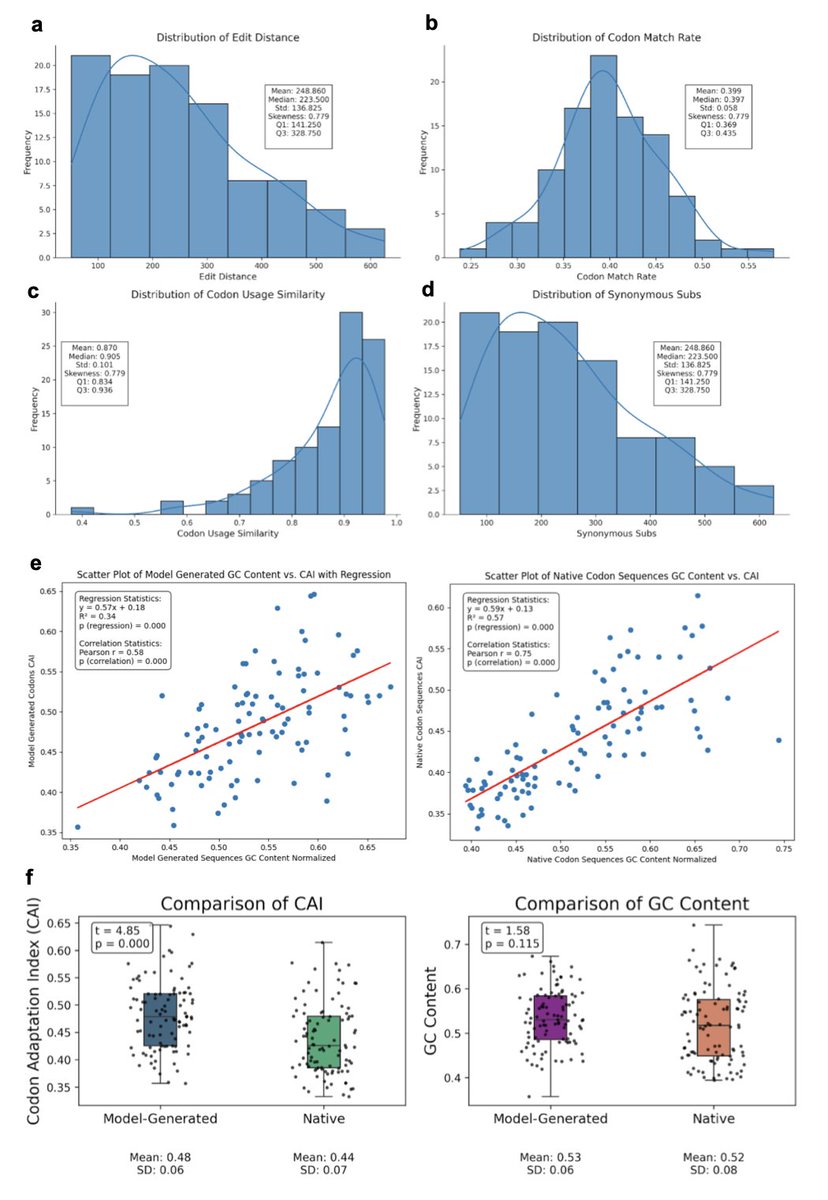
7.On 100 human housekeeping genes, codonGPT-generated sequences preserved protein identity while producing biologically plausible sequence diversity, matching codon usage patterns with a median cosine similarity of 0.87 to native sequences.
��.When optimizing codons for two distinct genes (HLA-A and ACTB), RL fine-tuning achieved higher CAI and more stable mRNA structures (ΔG) than both native and competing models, without sacrificing codon diversity.
9.RL-guided sequences formed distinct high-reward clusters in principal component space, suggesting the model navigates toward optimal biological configurations unlikely to arise from traditional generative modeling.
10.codonGPT can support flexible inference-time constraints beyond RL—such as enforcing motif presence or excluding restriction sites—via its novel logit masking mechanism.
11.This foundation model shifts codon optimization from rule-based heuristics or masked BERT architectures toward generative, fine-tunable frameworks that can adapt to user-defined biological objectives in real time.
12.The study positions codonGPT as a scalable, modular solution for next-generation applications including mRNA vaccine design, therapeutic protein production, and multi-host expression tuning.
💻Code: https://t.co/IX99pIt04v 📜Paper: https://t.co/htWfx3roAy
#SyntheticBiology #mRNA #GenerativeAI #CodonOptimization #ProteinEngineering #Bioinformatics #ReinforcementLearning
Negative epistasis limits current codon optimization approaches
1.A recent study explores the challenges in achieving high-yield protein expression through codon optimization, specifically addressing the impact of negative epistasis in protein production.
2.The research reveals that while codon optimization can increase protein expression, the variability in expression levels is significant, and achieving predictability remains difficult due to the "rugged" nature of the synonymous genotype-phenotype map.
3.It was found that negative epistasis—where certain synonymous mutations interact in ways that decrease expression—complicates predictions and introduces non-additive effects that limit current optimization strategies.
4.The study compared twelve different codon optimization approaches (six commercial and six open-source) to express a protein (AtCAD5) in E. coli strains. The results showed that non-proprietary methods could perform on par with commercial ones.
5.One of the key findings is that the synonymous sequence space for protein expression is influenced by epistatic effects, causing sudden drops in expression, often referred to as "expression valleys."
6.The authors suggest that the lack of a comprehensive predictive model for protein expression stems from the ruggedness of the synonymous sequence landscape, where optimization is not straightforward.
7.Overall, while codon optimization remains essential for high-yield protein expression, the study highlights fundamental limitations in predicting protein expression outcomes due to complex interactions between codons.
📜Paper: https://t.co/BiaHdEQ6Df
#CodonOptimization #ProteinExpression #NegativeEpistasis #Biotechnology #Genomics

High-Codon: A Deep Learning-Based Codon Optimization Tool for Enhanced Heterologous Protein Expression in Escherichia coli
1.High-Codon is a codon optimization tool built on a BERT-based deep learning framework, designed to boost heterologous protein expression in Escherichia coli by predicting optimal synonymous codons for each amino acid.
2.The model uniquely incorporates protein expression data into its training via a novel expression-level weighted loss function, enabling it to prioritize codons that are empirically linked with high protein yield.
3.High-Codon frames codon optimization as a sequence labeling task, analogous to part-of-speech tagging in NLP. This allows it to assign the most appropriate synonymous codon for each residue in a given amino acid sequence.
4.The method uses ProtBert, a protein language model pretrained on UniRef100, and fine-tunes it for codon selection. This avoids training from scratch and captures deep contextual dependencies in codon usage.
5.In benchmarking experiments on 100 protein sequences from 34 species, High-Codon achieved Codon Adaptation Index (CAI) values approximately 23.45% higher than GenSmart and 13.34% higher than ExpOptimizer, while also demonstrating greater output stability.
6.GC-content analysis showed that High-Codon’s outputs fall within biologically acceptable ranges (45–60%), comparable to traditional methods, indicating no trade-off in sequence quality.
7.An ablation study on the expression weighting parameter α revealed that moderate weighting (α = 0.1) yields the best performance, balancing model sensitivity to expression data and overfitting risks.
8.Attention map analysis suggests that the model implicitly learns biologically relevant patterns such as structural turn regions, which are critical for proper co-translational folding and protein function.
9.This insight opens the door for codon optimization strategies that consider not only expression level but also folding-related translation kinetics, a feature not captured by traditional statistical methods.
10.Limitations remain in evaluation metrics, which still rely on proxies like CAI. Future directions include using regression models for direct expression prediction and validating predictions through wet-lab experiments.
💻Code: https://t.co/6TrOVa21OZ
📜Paper: https://t.co/qNUMtgAtO2
#CodonOptimization #SyntheticBiology #ProteinExpression #DeepLearning #Bioinformatics #Ecoli #BERT #ProtBert #ComputationalBiology

A New Deep-learning-Based Approach For mRNA Optimization: High Fidelity, Computation Efficiency, and Multiple Optimization Factors
1.A new deep learning framework called RNop is introduced to address a long-standing challenge in mRNA design: simultaneously ensuring sequence fidelity, computational efficiency, and comprehensive multi-objective optimization. RNop achieves all three, overturning the common trade-off triangle in codon optimization.
2.RNop employs a Transformer-based architecture and processes mRNA coding sequences (CDS) using a vision-inspired method. It encodes sequences as image-like matrices, enabling the use of Vision Transformer blocks for optimization. This approach ensures both speed and flexibility.
3.The model is trained on a large dataset of over 3 million mRNA sequences, far surpassing previous efforts in dataset size, improving generalizability across species and sequence types.
4.RNop introduces four novel loss functions tailored for biological relevance: ・GPLoss: enforces protein-coding fidelity by penalizing non-synonymous mutations ・CAILoss: boosts codon usage bias for species-specific translation efficiency ・tAILoss: promotes codons matching abundant tRNAs for enhanced elongation speed ・MFELoss: improves RNA stability by minimizing secondary structure free energy
5.The system achieves high computational throughput of 47.32 sequences per second, making it suitable for high-throughput synthetic biology and vaccine design workflows.
6.In silico tests show RNop consistently improves CAI and tAI across target species, including human, mouse, yeast, and E. coli. When optimizing human-targeted sequences, CAI increased from 0.7029 to 0.9735, and tAI from 10.95 to 13.16.
7.MFELoss demonstrates substantial impact in reducing minimum free energy, especially in yeast, showing its value for stabilizing mRNA structure and potentially prolonging transcript half-life.
8.RNop strictly preserves amino acid sequences when required, with 0% mutation and codon error under high GPLoss settings, while also supporting controlled mutation when desirable by tuning GPLoss weights.
9.In vivo experiments validate RNop’s performance using eGFP and SARS-CoV-2 spike protein. Optimized sequences resulted in protein expression levels up to 4.6× higher than baseline controls, confirming real-world biological benefit.
10.Ablation studies confirm that each loss function contributes meaningfully to performance. Balanced loss weights provide the best trade-off between CAI/tAI improvement and structural optimization.
11.Compared to other deep learning models like RNNs, LSTMs, and standard Transformers, the ViT-based RNop consistently delivers superior results in both accuracy and stability. Sequence error rates, especially length and codon errors, are minimized.
12.Overall, RNop sets a new benchmark for codon optimization tools by combining deep learning precision, biological interpretability, and practical effectiveness in both computation and wet-lab settings.
💻Code: https://t.co/wTQtvzHDba
📜Paper: https://t.co/yCW5j2PANG #RNA
#DeepLearning #SyntheticBiology #CodonOptimization #mRNA #Bioinformatics #ProteinExpression

Generative AI-driven artificial DNA design for enhancing inter-species gene activation and enzymatic degradation of PET
1.This work introduces OrthologTransformer, a Transformer-based deep learning model that learns from orthologous gene pairs to redesign protein-coding sequences for improved expression in a new host species—going far beyond conventional codon optimization.
2.Unlike traditional approaches that only swap synonymous codons, OrthologTransformer enables codon-level, amino acid–level, and indel-level changes, allowing complete adaptation of genetic context while preserving functional protein output.
3.The model was trained on over 5.6 million orthologous gene pairs across 2,138 bacterial species. It uses codon-tokenized sequences and species-specific signal tokens to guide DNA conversion toward target organisms.
4.In cross-species validation, OrthologTransformer significantly improved sequence identity and BLOSUM-based amino acid similarity to target orthologs—outperforming existing codon optimization tools and even CodonTransformer by up to 1.8-fold.
5.As proof-of-concept, the authors used OrthologTransformer to adapt the PETase gene from Ideonella sakaiensis to Bacillus subtilis, producing several AI-designed variants (AI1–AI12) with both synonymous and non-synonymous edits.
6.One variant, AI9, incorporated Monte Carlo Tree Search to optimize GC content (37.0%), RNA secondary structure stability (–281 kcal/mol), and protein structure (TM score = 0.98)—achieving ideal conditions for synthesis, expression, and foldability.
7.Experimental expression of these genes in B. subtilis showed successful full-length transcription (via qPCR), robust protein secretion (via western blot), and active enzymatic function for PET degradation.
8.Among all variants, AI9 demonstrated the highest PETase activity—producing 3× more MHET (main hydrolysis product) than other strains by day 3, and causing the most extensive PET film erosion as observed via SEM imaging.
9.This marks the first demonstration that AI-designed genes incorporating learned evolutionary patterns can outperform codon-optimized controls in expression and function, with PETase serving as a strong use case for bioindustrial enzyme deployment.
10.OrthologTransformer thus establishes a new category of sequence design tools—ortholog designers—that integrate deep learning, evolutionary bioinformatics, and synthetic biology for inter-species functional gene transfer.
11.While currently trained on bacterial genes, future directions include support for eukaryotic systems, preserving active site motifs, and adding 3D foldability objectives—advancing toward full synthetic protein engineering.
📜Paper: https://t.co/cG00E9sUxT
#SyntheticBiology #GeneDesign #CodonOptimization #PETase #PlasticDegradation #TransformerModel #Orthologs #DeepLearning #MolecularBiology #AI4Science #BacillusSubtilis #Biotech #ProteinEngineering #EnvironmentalBiotech

A generative language model decodes contextual constraints on codon choice for mRNA design
1.This work presents Trias, a generative encoder-decoder model trained on 10 million eukaryotic mRNA sequences to reverse translate protein sequences into biologically valid codon sequences, capturing species- and context-specific usage patterns.
2.Trias learns codon usage preferences directly from sequence data, without hard-coded rules or explicit protein expression training, and still outperforms commercial codon optimization tools in producing sequences aligned with high-expression profiles.
3.The model integrates local and global context during codon generation, using a BART-based architecture with species tags and bidirectional encoding, enabling it to capture long-range dependencies absent in prior models.
4.In benchmarks using 30 GFP variants with measured expression, mRNA half-life, and ribosome load, Trias likelihood scores showed strong correlations (ρ up to 0.84), despite never being trained on experimental data.
5.Unlike commercial tools that prioritize most-frequent codons uniformly, Trias balances preference with biological realism—favoring frequent codons generally, but retaining rare codons in nucleic acid-binding genes or in specific contexts.
6.Trias-generated sequences show higher similarity to experimentally validated high-expression GFP variants than those from GenScript, Twist, or IDT, as measured by codon identity and codon usage profile distances.
7.The model exhibits “internal consistency”: when placed in a rare-codon context, it tends to continue using rare codons, mirroring natural clustering observed in real genes, and showing context-sensitive prediction behavior.
8.Rare codon usage is more likely in the 5′ ends of sequences and within protein domains, suggesting Trias has implicitly learned positional and structural constraints on codon selection.
9.A functional GO enrichment analysis found that genes with preserved rare codon usage are enriched in nucleic acid-binding roles, supporting the model’s capacity to uncover biologically relevant constraints beyond expression.
10.Trias sets a new standard for codon optimization and synthetic mRNA design by combining generative modeling with interpretable biological behavior, and is deployable for over 600 vertebrate species via its Hugging Face model release.
💻Code: https://t.co/Gd29feJ7YO
📜Paper: https://t.co/ck2xWPy5MP
#CodonOptimization #mRNADesign #SyntheticBiology #GenerativeModels #ComputationalBiology #ProteinExpression #mRNA #Bioinformatics #LLM #AI4Science

CocoVax: a web server for codon-based deoptimization of viral genes in live attenuated vaccine design @NAR_Open
1. CocoVax introduces the first integrated web server for codon and codon-pair deoptimization, streamlining the rational design of live attenuated vaccines (LAVs) from viral gene sequences without altering protein function.
2. It supports three deoptimization strategies—codon adaptation index (CAI)-based, codon pair bias (CPB)-based, and a combined mode—allowing users to tune viral fitness reduction while preserving antigenicity.
3. The CPB-based mode, recommended by the authors, leverages under-represented codon pairs specific to the target host to weaken viral replication; it uses a simulated annealing algorithm to optimize codon pair distribution across a gene.
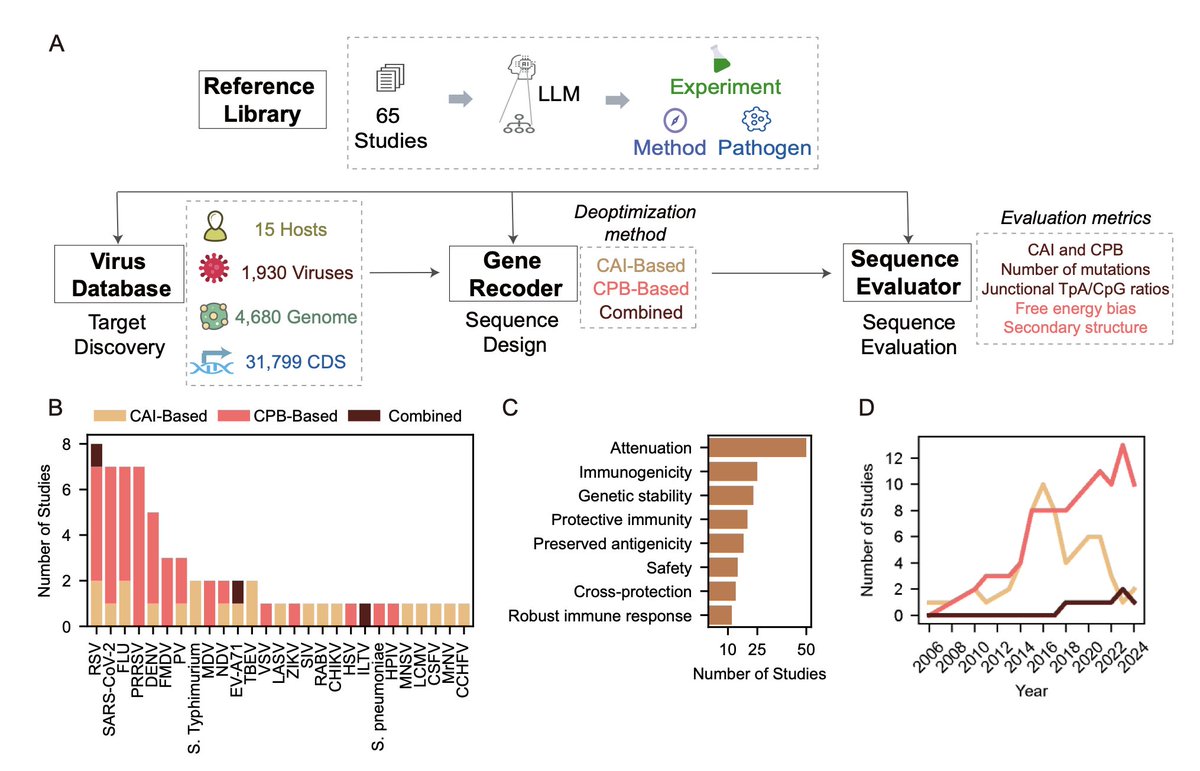
4. CocoVax includes four core modules: a comprehensive Virus Database (4,680 genomes across 1,930 viruses), a Gene Recoder for custom deoptimization, a Sequence Evaluator for analyzing resulting sequences, and a Reference Library of 65 curated studies.
5. The Sequence Evaluator assesses codon usage metrics (CAI, CPB), synonymous mutation counts, RNA secondary structure changes, junctional CpG/TpA ratios, and free energy bias to guide candidate prioritization.
6. The Reference Library, enriched by the Qwen 2.5 LLM, summarizes literature on codon-based attenuation across pathogens like SARS-CoV-2, influenza, and PRRSV—highlighting benefits such as enhanced genetic stability and reduced virulence.
7. CocoVax also enables partial deoptimization—random, sequential, or targeted—allowing users to focus attenuation on specific gene regions and enabling comparative sequence design.
8. In a case study on RSV, CPB-deoptimized sequences generated by CocoVax showed convergence with experimentally validated attenuated strains, and the tool remained performant for long genes up to 13 kb.
9. Compared to CoDe, the only other deoptimization tool, CocoVax offers superior capabilities: it supports codon pair deoptimization, evaluates more metrics, integrates literature and genomes, and has an open-access modern interface.
10. By offering customizable, interpretable, and literature-informed design of deoptimized viral genes, CocoVax accelerates rational LAV development and holds promise for vaccine research across both human and veterinary virology.
💻Code: https://t.co/0BYsvwhtNk
📜Paper: https://t.co/2tJM6y0Ag2
#VaccineDesign #CodonOptimization #LiveAttenuatedVaccines #SyntheticBiology #Virology #ComputationalBiology #CodonPairBias #AI4Science #Bioinformatics #CocoVax
MRNA FOLDING ALGORITHMS FOR STRUCTURE AND CODON OPTIMIZATION
- Recent advancements in mRNA technology are pushing the boundaries of vaccine development, cancer immunotherapy, and gene-editing tools. However, the instability of mRNA remains a major barrier to its broader application, particularly in resource-limited settings where cold-chain storage is problematic.
- Co-optimizing RNA structure and codon choice emerges as a potential strategy to enhance mRNA stability and efficacy, but the search space for possible sequences is astronomically large, requiring efficient computational tools.
- This paper reviews various mRNA folding algorithms, which generalize classical RNA folding algorithms to incorporate codon usage biases for the rational design of mRNA sequences.
- It presents a detailed benchmark comparing major software packages like LinearDesign, CDSfold, and DERNA, assessing their speed, memory usage, and effectiveness in optimizing mRNA sequences for stability and translation efficiency.
- The review identifies gaps in the field, particularly the lack of integration of sequence and structural constraints and the absence of high-quality, flexible software packages.
- The authors also propose incorporating untranslated regions (UTRs), suboptimal folding, and forbidden sequence avoidance into future algorithms to further enhance mRNA design.
📜Paper: https://t.co/BKMldtazyw
#RNA #mRNA #FoldingAlgorithms #CodonOptimization #Bioinformatics #Therapeutics #AIInBiology

Trends for you
Most Popular Users

Elon Musk 
@elonmusk
239.7M followers

Barack Obama
@barackobama
118.6M followers

Cristiano Ronaldo
@cristiano
114.3M followers

Donald J. Trump
@realdonaldtrump
111.7M followers

Narendra Modi
@narendramodi
106.9M followers

Rihanna
@rihanna
98.6M followers

NASA
@nasa
92.1M followers

Justin Bieber
@justinbieber
91.7M followers

KATY PERRY
@katyperry
89.9M followers

Taylor Swift
@taylorswift13
83.9M followers

Lady Gaga
@ladygaga
75.4M followers

Virat Kohli
@imvkohli
73.3M followers

Kim Kardashian
@kimkardashian
70.8M followers

YouTube
@youtube
68.6M followers

Neymar Jr
@neymarjr
66.3M followers

Bill Gates
@billgates
65.1M followers

Selena Gomez
@selenagomez
63M followers

The Ellen Show
@theellenshow
62.1M followers

CNN
@cnn
61.7M followers

X
@x
60.6M followers