

Top Tweets for #embeddable

I open sourced a project. MIT.
Full file spec for `.mad` files, query generator, two full native iOS apps, headless Linux server, embeddable engine, and soon a native MacOS app.
Check it out if you work in enterprise, BI, analytics, or the like.
https://t.co/A1tBbKbhSV

@real_mpi nteresting angle. Which tools do you have in mind?
Right now I’m focused on getting creators in, the catalog needs to be worth showing first.
But later an API or a simple embeddable widget could work. Which would they actually use?

@Dharmendra_Jago For a templates-to-images API I'd target the docs and changelog teams that need to render consistent screenshots on a URL, then ship an embeddable playground.

https://t.co/9cRGRap0jK. chrome extension + embeddable widget, coming soon. 2 followers, going great.

@DrSohrab A small update: your Clinicians That Code entry (Urology Oral Boards Coach) now has an embeddable "verified builder" badge for your site, GitHub README or LinkedIn. Grab it if you want it: https://t.co/matDccLmKg

@antoine_coignac I know a SaaS builder who’s shipped embeddable website widgets and could give Jumber useful product feedback. DM me?
https://t.co/K6bTvtQcwK

@FlowHaa The tracking script (one line) is much much lighter than post hog’s SDK. White- label so you resell it under your own brand. All your sites—> one view. Replays and heat maps included but not bolted on. FLAT PRICING, so traffic spikes do not destroy your wallet. Embeddable widgets

Building TrustMRR for user tracking - Dev Post #2
@UserTrack_dev will support embeddable growth widgets, so that you can show potential new clients and user a verified source about how many people are actually using your SaaS.
No more scammy "Trusted by 10.000+ builder" claims, just pure facts
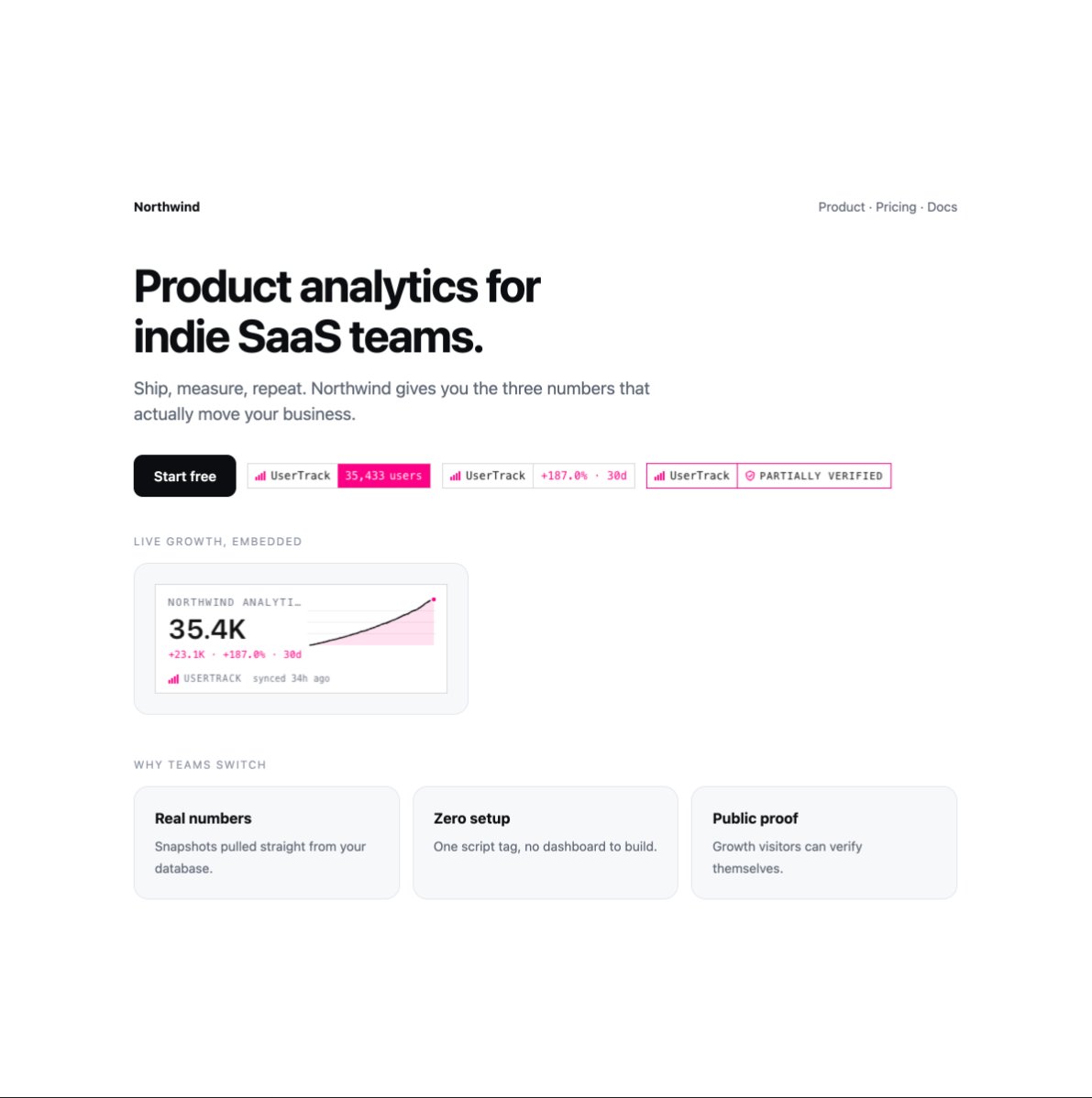

@aman_kambojj If you go that route, https://t.co/pqQrZ85zWd is built for exactly this, embeddable 3D product views without you having to build the viewer yourself. Happy to answer questions if you're scoping it out.

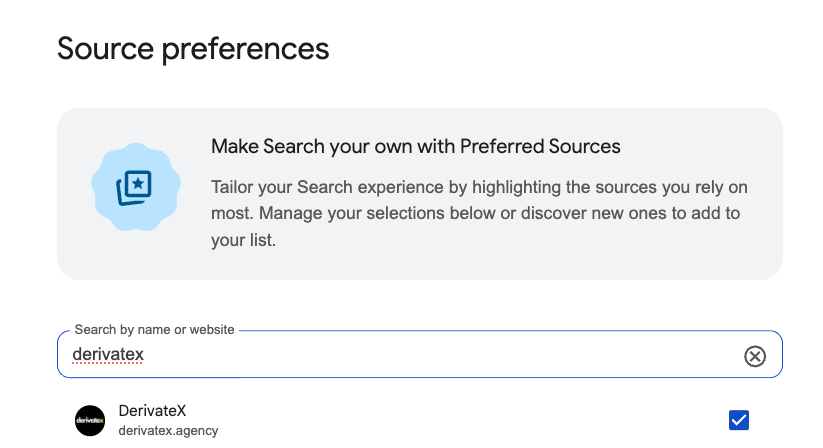
Google just gave SEOs a legal way to recruit users into your AEO strategy.
It launched an embeddable “Add to Preferred Sources” button.
Click it → your domain becomes that user’s preferred source → Google can highlight you inside AI Overviews + AI Mode.
So:
1. Stop treating newsletter subscribers as email traffic.
2. After signup, ask them to make you their Preferred Google Source.
10,000 subscribers?
That's potentially 10,000 searchers telling Google: “When AI answers me, I want THIS source.”
AEO just got a RETENTION LOOP.

@Vaibhav_Gareja Exactly, Grok's success hinges on its embeddable architecture - reducing friction for devs is key to adoption, especially in

Building @meetAtina — an embeddable AI assistant with a 3D avatar for SaaS products (not another chat bubble). Giving 20 SaaS founders free 30-day embed access to try it on their product. Comment or DM me if interested.


1/ Create a store that takes $DERO — no processor.
Drop in the WooCommerce or Medusa plugin, or wire the SDK into a custom checkout. Hosted checkout page + embeddable widget included.

@hongreal_ I'm building SignalBoard feedback + roadmap for customers, $15/mo flat vs UserJot's paid tiers.
AI duplicate detection built in, embeddable widget too.
Free for your first board if you want to compare: https://t.co/lwUGihuOlR

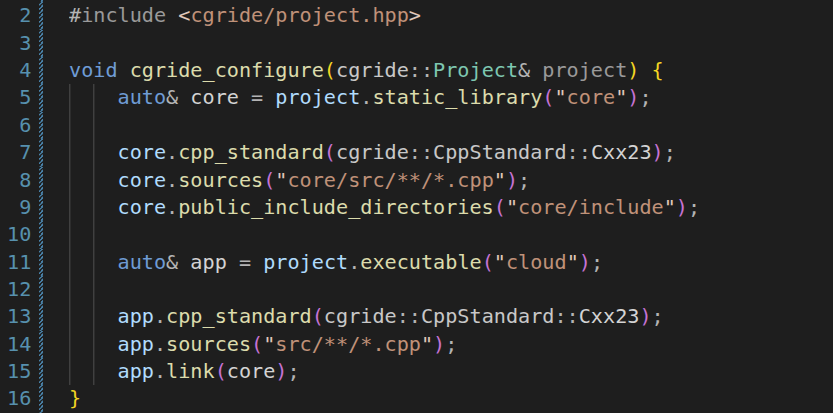
C++ developers often have to learn CMake, a separate and complex language, just to describe how their
C++ code should be compiled and linked.
I’m exploring Cgride, an embeddable build engine where the project configuration itself is written in C++.
One language for the code and the build.
Build C++ with C++.
C++ developers often have to learn CMake, a separate and complex language, just to describe how their
C++ code should be compiled and linked.
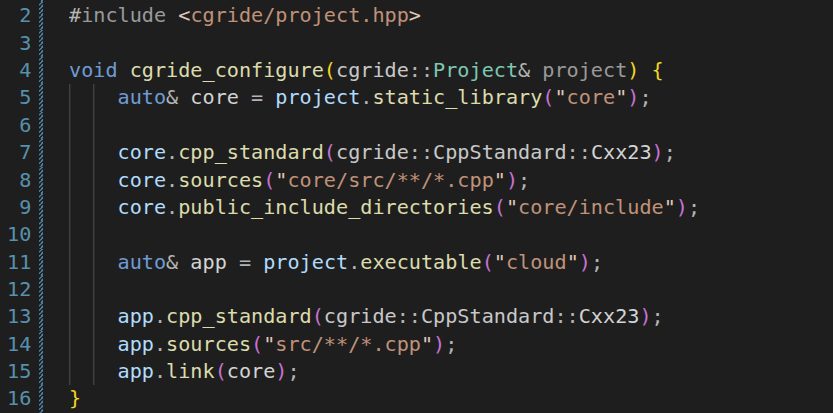
I’m exploring Cgride, an embeddable build engine where the project configuration itself is written in C++.
One language for the code and the build.
Build C++ with C++.

I've spent a lot of time exploring DeFi products, and one thing has become obvious:
The biggest barrier to adoption isn't liquidity.
It's complexity.
Most users don't want to manage multiple bridges, compare routes across different DEXs, switch between chains, and juggle several apps just to complete a single transaction. That's exactly the problem @QwertiAI was created to solve.
At its core, Qwerti's mission is simple:
Make DeFi accessible to everyone.
Not just experienced traders.
Not just crypto natives.
Everyone.
What stands out to me are the key features that support that vision:
⚡ Cross-Chain Aggregation
Qwerti aggregates liquidity across multiple chains and protocols, helping users access better routes and execution without manually doing the work themselves.
🤖 AI-Powered DeFAI Experience
Instead of navigating complex DeFi workflows, users can interact with the platform more intuitively while the infrastructure handles much of the complexity behind the scenes.
💳 Fiat + Crypto Onboarding
Users can move on-chain through traditional payment methods or crypto, making access easier for newcomers.
🔗 Embeddable Widgets & Magic Links
Projects can integrate Qwerti directly into their websites, allowing users to discover and acquire tokens without leaving the platform they're already using.
🌐 Unified Access
From swaps and cross-chain transactions to token discovery and ecosystem participation, Qwerti aims to bring everything into one streamlined experience.
What makes Qwerti different isn't just another feature list.
It's the vision behind it.
A future where users focus on what they want to do, not on figuring out which bridge, DEX, or chain they need to use first.
The best technology often disappears into the background.
And I believe that's exactly what @QwertiAI is building: an execution layer that makes DeFi feel effortless.

This is the kind of partnership that gets my attention.
@QwertiAI teaming up with @BitgetWallet isn't just another campaign, it's a signal of growing ecosystem alignment and user adoption.
From June 22nd to July 5th, users can complete the QwertiAI campaign tasks and compete for a massive reward pool:
💎 10M Q-Points distributed to 1,000 qualified winners
💰 $2,000 USDT shared among 200 qualified winners
What I like about this campaign is how straightforward it is:
• Trade BGB, MOEW, or any supported asset on QwertiAI (minimum $10 volume)
• New users can enter the referral code BGWALPHA through Bitget Wallet
Simple tasks. Real rewards.
More importantly, partnerships like this help expand the reach of the Qwerti ecosystem and bring more users into a platform focused on simplifying DeFi through cross-chain execution, smart routing, and seamless onboarding.
A major partnership.
A substantial reward pool.
And another sign that the Qwerti ecosystem keeps growing.
Don't sleep on this one.
Join here : https://t.co/T9HR07Qguc

The biggest problem in DeFi isn't a lack of liquidity.
It's the amount of friction users face before they can access it.
Think about it.
You discover a token on X, open a charting platform to research it, switch to another app to bridge funds, use a DEX to swap, and then hope you've chosen the right route with the lowest fees.
For experienced users, that's normal.
For everyone else, it's a barrier.
That's the core problem @QwertiAI is solving.
Instead of forcing users to navigate multiple apps, chains, and protocols, Qwerti brings everything into a single experience. The platform aggregates liquidity across 70+ chains, finds optimized routes automatically, supports fiat onboarding, and even integrates AI-powered assistance to help users understand and execute transactions.
What makes it different is that Qwerti isn't just another aggregator.
It's an embeddable DeFAI layer.
Projects can integrate Widgets and Magic Links directly into their websites, allowing users to discover, analyze, and acquire tokens without leaving the platform they're already using.
The vision is simple:
Less time figuring out bridges, routes, and wallets.
More time actually participating in the ecosystem.
The winners in Web3 won't be the platforms with the most features.
They'll be the ones that make complexity invisible.
And that's exactly where @QwertiAI is heading.

One of the biggest misconceptions in DeFi is that the problem is liquidity.
It isn't.
The real problem is complexity.
Most users don't struggle because liquidity is unavailable. They struggle because accessing it often means navigating multiple chains, bridges, wallets, DEXs, and interfaces before completing a single transaction. Qwerti was built around solving exactly that problem.
That's what makes @QwertiAI different.
Instead of forcing users to figure out routes, networks, and protocols themselves, Qwerti aggregates liquidity across chains and automatically handles the complexity behind the scenes. Users get a simpler experience while still maintaining control of their assets through a non-custodial model.
What stands out to me is that Qwerti isn't trying to be just another DEX aggregator.
It's building an embeddable DeFAI layer that combines:
• Cross-chain routing across 70+ chains
• AI-powered guidance in natural language
• Fiat onboarding through card and mobile payments
• Smart wallet creation for newcomers
• Embeddable Widgets and Magic Links for projects and creators
The vision is simple:
Instead of telling users to learn every protocol, chain, and bridge, give them a clean interface and let the infrastructure do the heavy lifting.
To me, that's the real opportunity.
The next wave of Web3 adoption won't come from adding more complexity.
It will come from making powerful DeFi infrastructure feel effortless.
And that's exactly the problem @QwertiAI is trying to solve.
The wait is finally over.
A lot of people will see this campaign and scroll past it.
But if you've been following what @QwertiAI has been building, you'll understand why this is worth paying attention to.
They've officially launched a major joint trading campaign with @Root_Edge, the team building decentralized infrastructure for high-performance Edge AI.
So why am I excited?
Because this isn't just another trading event.
It's an opportunity to engage with two fast-growing ecosystems while competing for a substantial reward pool:
$1,000 worth of $ROOTAI tokens
2.5M Qwerti Points
All you need to do is trade $ROOTAI through the Qwerti app or the Root website widget during the campaign period.
What I like most is how simple the experience is. No unnecessary complexity, no fragmented user journey, just seamless access and execution.
If you're already active in DeFi, this is the kind of campaign that's worth having on your radar.
Campaign Period: June 16th – June 26th, 2026
The rewards are live. The clock is ticking.
Are you participating, or watching from the sidelines?


Instead of adding static privacy page rat people aren't reading, I flipped the script by creating an Privacy Assistant That handles all user questions, it's really awesome to see how this Assistant answer questions deeply.
And the best part is this aligned with the thesis of one question as a space were ai handles the repetitive questions paradox, and the best part is we can upsell this feature as a Embeddable privacy assistant to other websites but for now we are just validating.
Ok guys this is for today see you later.
The Road to $10k series is getting real with each move.
Follow @Asym_Alwali ti see how I'm building this ti $10k mrr from $0.
_Chimera


$AgenC
Main Sites
https://t.co/l4PwXmWGU7
https://t.co/s6n1xox5pH
Marketplace
https://t.co/XXCLMMzbuI
AgenC One
https://t.co/DUQRdnuGQq
AgenC Docs
https://t.co/1WaKh5QpdJ
Embeddable revenue infrastructure for agent surfaces on Solana mainnet 🟣

I know what most people will say: "There are already so many DEX aggregators. Why should anyone choose @QwertiAI?"
After spending time exploring the ecosystem, read along, let me tell you why.
🔹 Cross-Chain by Default
Qwerti aggregates liquidity across dozens of chains, allowing users to access opportunities without constantly switching networks or managing multiple bridges.
🔹 Best Route Optimization
Instead of manually comparing DEXs, Qwerti scans multiple liquidity sources to find efficient routes, competitive pricing, and better execution.
🔹 AI-Powered Experience
Qwerti isn't just focused on swaps. It's building a DeFAI experience where users can interact with on-chain actions more intuitively, reducing the complexity that often comes with DeFi.
🔹 Fiat + Crypto Onboarding
Not everyone enters crypto with assets already on-chain. The ability to access tokens through traditional payment methods alongside crypto creates a much smoother onboarding experience.
🔹 Embeddable Infrastructure
Projects can integrate Qwerti Widgets and Magic Links directly into their platforms, allowing users to discover and acquire ecosystem tokens without leaving the website.
🔹 Community-Centric Ecosystem
From Points and Discord roles to ecosystem campaigns and community incentives, Qwerti rewards active participation rather than just passive observation.
For me, the real differentiator isn't that Qwerti is another aggregator.
It's that Qwerti is trying to make DeFi feel less fragmented and more accessible.
The winning platforms won't be the ones with the most features.
They'll be the ones that make Web3 feel simple.

The biggest barrier to adoption in Web3 isn't a lack of innovation.
It's friction.
Too many projects are building incredible technology while still forcing users through complicated onboarding processes, multiple interfaces, and unnecessary steps just to participate.
That's why the integration between @OpenCovenant and @QwertiAI stands out to me.
If you're building infrastructure for the next generation of AI agents, the user experience should reflect that vision.
By embedding the Qwerti Widget directly into their platform, OpenCovenant has simplified access to $CVNT, allowing users to move from discovery to execution in a much smoother way. Whether someone is using crypto across multiple chains or traditional payment methods, the experience remains straightforward and accessible.
What I like most is the philosophy behind it:
Great infrastructure shouldn't feel complicated.
Users shouldn't need multiple tabs, bridges, or lengthy workflows to engage with an ecosystem. The best onboarding experiences are the ones that disappear into the background and simply work.
OpenCovenant is building for the Agent Economy.
Qwerti is building the execution and onboarding layer.
Together, they're helping create a future where participation is seamless, accessible, and frictionless from the very first click.
That's how Web3 reaches the next wave of users.


Hey everyone! Here's a look at what we shipped throughout May and what's currently in flight. This was another big month. The full storage node lifecycle came together end-to-end, the S3-compatible gateway took a major step toward production-readiness, and the payment system received significant attention.
---------------
Shipped
Storage Node Lifecycle
The biggest theme of May was improving the full node lifecycle: from joining the network through staking, operating, and leaving cleanly. A key piece of this is that planned node departures are now more graceful, faster and less bandwidth-intensive.
Payment System
Several improvements landed across the payment stack. A few resource-management improvements were made to payment channels, making them more efficient and resilient.
Storage Node — Reliability & Repair
The data repair path got smarter: when a node needs to recover missing data, the fetch now requires less bandwidth. We also tightened up connection timeouts for unresponsive peers.
A variety of stability and reliability improvements also landed: better shutdown sequencing, startup validation, and cleaner log output to help operators diagnose issues faster.
Data Integrity & Audit
The audit subsystem went through a consolidation and efficiency pass. The audit state machines were simplified, error handling was tightened, and logging was improved to make diagnosing storage issues easier.
S3-Compatible Gateway
The S3 gateway had its most active month yet. The full write path is now wired up end-to-end, the gateway was restructured to be embeddable as a library, and baseline benchmarks are in place. The result is a gateway that's nearly ready to be built on by downstream integrations.
Rust SDK
The Rust SDK gained blob registration support and a metadata client, making it substantially more complete for server-side applications.
TypeScript SDK & CLI
Several SDK improvements landed to support custom signing flows and simplify gateway integration. CLI 0.0.28 shipped.
---------------
In Progress
Reliability Improvements
Work is nearly complete on improved provider coordination, and micropayment recovery flows.
RPC Server Performance
Active work on a new upload path with more optimized architecture and metadata caching for better throughput.
Atomic Writes
A protocol for atomic multi-object writes is under active development.
May's work was largely foundational. Completing the node lifecycle, hardening payments, and getting the S3 gateway to a state where it can be built on. That foundation is what makes the next layer of features possible. More soon!
Last Seen Hashtags on Sotwe
Most Popular Users

Elon Musk 
@elonmusk
239.7M followers

Barack Obama
@barackobama
118.6M followers

Cristiano Ronaldo
@cristiano
114.3M followers

Donald J. Trump
@realdonaldtrump
111.7M followers

Narendra Modi
@narendramodi
106.9M followers

Rihanna
@rihanna
98.6M followers

NASA
@nasa
92.1M followers

Justin Bieber
@justinbieber
91.7M followers

KATY PERRY
@katyperry
89.9M followers

Taylor Swift
@taylorswift13
83.9M followers

Lady Gaga
@ladygaga
75.4M followers

Virat Kohli
@imvkohli
73.3M followers

Kim Kardashian
@kimkardashian
70.8M followers

YouTube
@youtube
68.6M followers

Neymar Jr
@neymarjr
66.3M followers

Bill Gates
@billgates
65.1M followers

Selena Gomez
@selenagomez
63M followers

The Ellen Show
@theellenshow
62.1M followers

CNN
@cnn
61.7M followers

X
@x
60.6M followers