

Top Tweets for #expressionistic

This is where I will help others learn my process and technique thats extremely revolutionary in AI Art.
Hallucinations are the goal to stop denoising in latent space and in theory force temporary embeddings and mutant nodes to detract from it's training datasets to confuse it also during when weights and biases were pruned. @grok also ask Grok to help too.
ill be feeding him the data later on it in mass detail.
Avoid subjects, topics, objects, themes, moods, styles, genres.
Avoid languages, grammar, proper structure, spelling, linguistics, mother tongue.
Avoid general prompt schema templates and standard formats in AI Art Context Engineering.
Nothing should make sense at all. Total disorder and chaos.
prompt as though you are improv acting or improv playing music.
250k+ unicode syntax characters available, combinatronics and linguistics are the pantone colors and paint brushes and stroke techniques
expressionistic and experimental...
prompt and context becomes a canvas and medium of art (anyway you feel).
no rules. no limits.
you are a composer, writer, curator, production studio
AI is a symphony, production team.
taste matters more too. curation is important.
unlimited instant generations requires upgrading your neural network in your gelatin noggin.
vast mental art library to pull from your consciousness.
writings
musics
films
arts
architecture
sculptures
nature
cosmos
literature
poetry
folklore
mysticism
fairy tales
philosophy
sciences
etc

Metropolis (1927) is a German expressionist sci-fi silent film, directed by Fritz Lang. The story of the film follows a highly stylized futuristic city where a beautiful and cultured utopia exists above a bleak underworld populated by mistreated workers.
Metropolis is widely regarded as one of the greatest and most influential films ever made, In 2001, the film was inscribed on UNESCO's Memory of the World Register, the first film thus distinguished. On 1 January 2023, the film's American reserved copyright expired, thereby entering the film into the public domain.
Christopher Nolan who is a lifelong fan of this film, said it is a 'key touchstone’ in the history of cinema.
The effects of Lang’s expressionistic cinematography and character design continue to ripple into cinema today and inspire a wide array of different directors across genres.

Chaotic, ink-splattered, grotesque, satirical, high-contrast, anarchic, expressionistic, distorted, rebellious, jagged, explosive, visceral, unrestrained, politically charged, darkly humorous, frenetic, raw, confrontational, messy-precise, emotionally aggressive.
Draw an image in this style


Image by @grok
+ prompt: An intense and expressive graphic novel style illustration of a young boy with spiky black hair and large round glasses, his mouth wide open in a scream or shock, looking upwards. The art style features bold, jagged lines and heavy black ink shading. The background is a vibrant, distressed red with aggressive vertical black brushstrokes and grunge textures, amplifying the emotional intensity. Masterpiece quality, ultra resolution, high contrast, expressionistic art, comic art, dramatic, raw emotion, trending on ArtStation, ideal for a stunning wallpaper.
#Promptshare #Grok #grokprompt


QT Stripes Couture 🦓
Made with @grok #GrokImagine #AIart
⚡Prompt ⚡
Hyperrealistic, photorealistic shot of A powerful, avant-garde female model, enveloped and augmented by a striking striped motif that transcends the boundaries of her attire and the physical space. in A stark white, minimalist studio space that serves as a pristine blank canvas. One wall is partially covered in bold, expressionistic, hand-painted stripes and brushstrokes in a high-contrast palette (e.g., obsidian black, crisp white, and an electric neon blue accent), meticulously aligned to directly extend and subtly distort the stripes on the model's garment. The floor is also white, providing a clean reflective surface.. Avant-garde, Surreal, Expressionistic, Optical Illusion, Haute Couture, Abstract. Shot on 85mm F/1.4 prime lens (shot at F/5.6), aperture F/5.6, Razor-sharp focus on the model's eyes and the intricate textile-to-paint transition on her torso and shoulder, with a very subtle, almost imperceptible fall-off into the immediate painted background to maintain the illusion of a continuous plane.. Lighting: High-contrast, directional studio lighting. A large parabolic softbox positioned camera-left, slightly above eye-level, acting as the main light, creating crisp, defined shadows that accentuate the lines and forms of the stripes. A subtle fill light from a large reflector, camera-right, to open up the shadows without flattening the image, enhancing the sculptural quality of the composition. at approximately 5600K. Composition follows Dynamic S-curve, with strong leading lines created by the stripes that seamlessly connect the model and the environment.. Mood is Mystical, Intriguing, Sophisticated, Bold, Self-assured, Transformative. It evokes a sense of wonder at the seamless integration of fashion and art.. --ar 2:3


“Stripes Couture” 👄🩵
Tap for full view 👇


https://t.co/NC6ELuygTP
Don't waste your time with explanations: people only hear what they want to hear.”
― Paulo Coelho
#nftarti̇st #abstractexpressionists #expressionisticabstract #womenabstractexpressionists #nftcreator #nftcollectible #artcollections #raredigitalart

https://t.co/vpB99P5sXW
“Life isn’t about finding yourself. Life is about creating yourself.”-George Bernard Shaw
#nftarti̇st #abstractexpressionists #expressionisticabstract #womenabstractexpressionists #nftcreator #nftcollectible #artcollections
https://t.co/bFa6lk5oso
“Love is a great master. It teaches us to be what we never were.” – Moliere
#nftarti̇st #abstractexpressionists #expressionisticabstract #womenabstractexpressionists #nftcreator #nftcollectible #artcollections #raredigitalart #nftsale #uniquenft


"The Troll Scream" by Edvige Muncher (2019, Oil, Tempera, and Pastel on Cardboard, 36 x 29 in)
Painted in 2019 by internet absurdist Edvige Muncher, The Troll Scream is a parody and homage to Edvard Munch’s iconic The Scream (1893), replacing the tormented human figure with the grinning chaos of the classic Trollface, a symbol of online provocation and meta-irony.
Using a faithful blend of oil, tempera, and pastel on cardboard, Muncher mimics the original’s swirling, expressionistic sky and vibrating lines of anxiety, but reinterprets emotional dread through the detached amusement of the troll. The figure stands on the same bridge, hands on cheeks, but its smile mocks rather than pleads—satire replacing suffering.
Originally posted anonymously on meme forums, the piece was eventually attributed to Muncher and acquired by the Museum of Meme Antiquities in 2020. The Troll Scream is now considered a cornerstone of the "Neo-Ironic Grotesque" school, representing how meme culture disarms existential dread through relentless digital jest.



the three communications gavin warns about
there are only three ways humans talk to each other, and @gavofyork broke them down like a surgeon with a scalpel
⇨expressionistic: i scream, i cry, i laugh - and you feel something
⇨impressionistic: i hint, i gesture, i imply - and you guess what i mean
⇨literal: i say the thing exactly as it is - and you take it as fact
but here’s the twist - once you drop an LLM into that chain, there’s a fourth form now
call it
"⇨machine-mediated"
it pretends to be literal, but it’s not. it reshapes, reframes, reorders. it adds polite tones where there were none. or worse - it fills in blanks you never asked it to. suddenly, it’s not your message anymore
you said “i miss you”
it outputs “i’ve been thinking of you fondly and hope we can reconnect soon”
the tone changed. the intent changed. the meaning got edited by a bot with no heart
this isn’t about love letters. this is about contracts, governance, code proposals, referenda. if a system rewrites a proposal before it gets to the validator, that’s not consensus - that’s machine-spin
gav saw this risk coming. he didn’t build @polkadot jam to talk for us. he built it so we can talk clearly, directly, without an LLM whispering in between
so ask yourself ⤵️
would you let chatgpt rephrase your love letters?
or your constitution?
or your court ruling?
or your protest sign?
what happens when the world forgets how to speak raw? 🧠
✎ drop your most ridiculous ai-rephrased sentence in the comments
@lovaniceth @bajpaiharsh244 @gilescope @Cesar_Ges @brunopgalvao @moo9000 @Crypted_Frank @yawaradoteth @naveeddakram


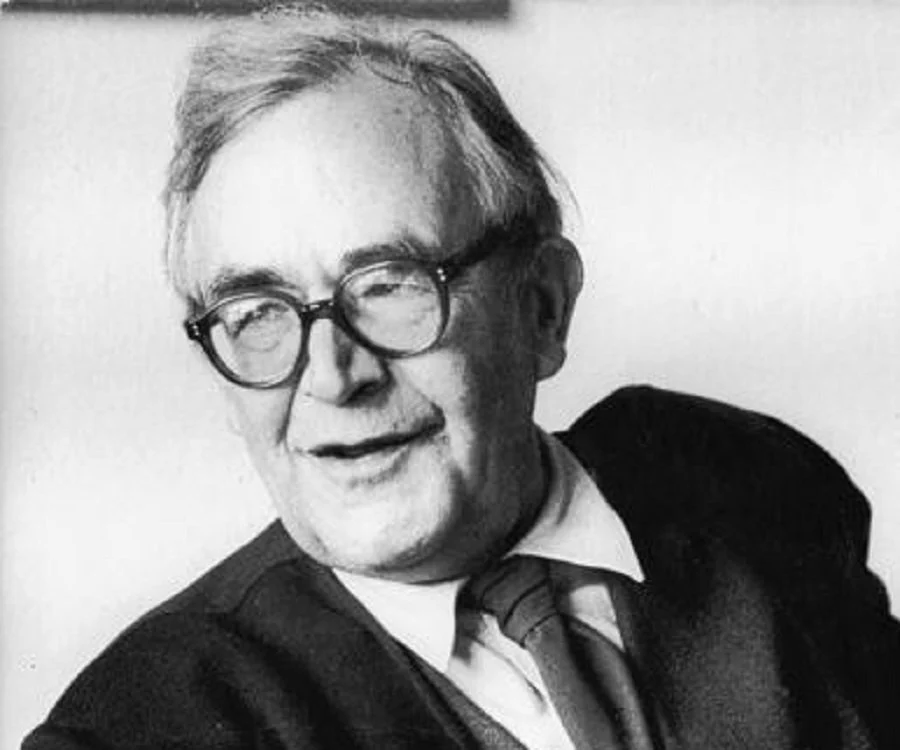
Bio on Karl Barth (1886-1968) from the Encyclopedia of Protestantism:
Barth came from a long line of clergy on both his mother’s and father's sides: he seemed destined to be a theologian. His father Fritz was a Reformed pastor of a moderate, evangelical cast; his mother Anna was a pastor’s wife of some influence and descended from distinguished pastors. Karl Barth himself became one of the dominant Protestant theologians since the Reformation.
Personal Characteristics and Early Liberalism
Karl Barth was at heart a Basler. He was born in Basel, Switzerland, the eldest of five children, and he relished his time there, free from the conventionalism and stuffiness he saw embedded in much of Swiss society. This was something of a lifelong theme with Barth: although a deeply devout, orthodox theologian. Barth was no conventional churchman. He favored the playful, sometimes bohemian face of the Swiss character. He was the enemy of all pretension.
Barth was also a serious theologian and a serious and courageous pastor. A second theme of his life was the search for a calling worthy of the dedication of a whole life.
Beginning in his university days Barth longed t0 join the avant-garde movement of German theological facilities: academic Liberalism. Later, in Berlin. Barth was captivated by the great historian of Christian doctrine, Adolf von Harnack. Barth soon moved to the theology faculty at Marburg and became a ready disciple of the leading theological liberal, Wilhelm Herrmann. From him he learned a Christian piety stripped of all metaphysics and utterly dependent on the miracle of faith. Although Barth’s views shifted later in his life, his tutelage under Harnack and Herrmann remained a major influence.
Like many intellectuals in prewar Germany, Barth participated in the Immanuel Kant revival, which was especially vigorous at Marburg. Certain elements of Kant's critical philosophy would survive all revolutions in Barth’s theology. So, too, Barth would never lose his love of history, awakened by Harnack. The major work of Barth’s maturity, the Church Dogmatics (four volumes in twelve parts. 1932-1968) is studded with historical examples, and the central ontological category of his anthropology is "the historical." More important. Barth absorbed from Herrmann a serious devotion for Friedrich Schleiermacher, the architect of modern academic Protestant theology, and adopted an utterly single-minded Christology, in which Christ was both the content of and the means to theology. Although both lessons would undergo radical transformations, neither would be left behind in Barth’s maturity. This has led some students of Barth to claim that Barth’s theological revolution was an internal correction, rather than a repudiation, of academic liberalism.
Finally Barth's appreciation of music, a lifelong pleasure, should not be overlooked. His love of Mozart was well known: it may be that Mozart combined these life themes of play and seriousness with an unrivaled artistry that Barth always admired.
Barth had a deep longing for intimacy and enjoyed a rich and vibrant circle of friends. So strong was this pull in his life that it became a theme in his Dogmatics. In volume 3.2, he argued that the creation narratives showed that the Imago Dei (image of God) in human beings was a relationship or covenant with one another: the analogia relationis. Because human beings were made for relation, hell and hellishness were isolation and loneliness. Barth dreaded such punishment all his life, and his intimacies were not untroubled.
Barth's professional friendships were stormy: his marriage seems not to have fared much better. Barth married Nelly Hoffmann in 1913, when Nelly was only nineteen and Barth was a well-established pastor of twenty-seven. They shared a love of music, and together they raised five children. They remained married their whole lives and had by many standards a successful marriage, yet their letters testify to the pain and seasons of estrangement in their life together.
One source of that conflict was the presence of Charlotte von Kirschbaum in Barth’s life and household. From 1929 on Kirschbaum was Barth’s live-in secretary, undertaking research for live Church Dogmatics, preparing manuscripts for publication, traveling with Barth to professional lectures, and welcoming guests to the Bergli. a mountain retreat, where the two spent their summers. Barth and Kirschbaum' s friendship was a true intimacy — although probably not sexual — and appears to be the one unblemished, though costly, success amid Barth’s troubled relationships.
The Break With Liberalism
Barth began his academic career as a graduate assistant to the Ritschlian theologian, Martin Rade, and his liberal journal Christian World. A few years later, at the cusp of industrialization, he became pastor of the small rural parish of Safenwil, Switzerland. Barth plunged into the “labor question" and became a democratic socialist. He visited the healing mission of Christoph Friedrich Blumhardt, Bad Boll, and came under the influence of Blumhardt’s eschatological realism: Christ is Victor! Yet Safenwil did not strike Barth as a success. He could not translate his academic liberalism into the pulpit and could not hold together or integrate his socialism, soteriological realism, and strict Kantian theological method. It appears Barth held all three at once, with equal seriousness, but without resolution. Barth was never a systematizer — he opposed that kind of Cartesianisnm all his life — but he was a thinker of rigorous consistency. The decades from World War 1 to the launching of the Church Dogmatics in the early 1930s were marked by a relentless, vigorous, and polemical quest to find just this consistency.
Indeed we may see Barth’s animus toward Schleiermacher, particularly vivid in the 1920s, as a counterweight, launched in desperation against the massive architectonic of the Christian Faith, a work Barth could only admire all his life. The first step away from Schleiermacher-inspired liberalism was the first edition of Barth’s Epistle to the Romans. but it was the explosive and expressionistic second edition in 1922 that marked Barth as a theological revolutionary, and the term "Dialectic Theology" was born. In Barth's eyes dialectical theology cast a broad net: it repudiated a starting point in theology, championed by Schleiermacher, in which God and the world were given together in pious awareness: more positively, it replaced such "coinherence" by an external encounter of God and creature: and it signaled that theology must be in constant movement, resting in neither denial nor affirmation of theological claims.
Academic Theologian and Leader of the Confessing Church
Shortly after the first edition of the Epistle to the Romans was published Barth joined the faculty at the University of Göttingen, Germany. Although Barth continued to give lectures at a breathless pace — he had the productivity of a nineteenth-century novelist — Barth knew better than anyone how much he had to learn. It is a window into the influence and scope of theological liberalism to read what Barth, as a young professor, had not read: none of the "older Protestants" little of John Calvin, even less of the medieval scholastics. He set to remedying his blind spots at a feverish pace. Through his publications of the 1920s, from the Göttingen Dogmatics, his first stab at systematic work, to his lectures on Anselm, Fides quaerens Intellectum ( 1931), we see Barth reading the past with a real air of discovery. One way to understand Barth's revolution in theology is to see it as a movement from a Protestant margin to a Catholic center. By 1932, the year of the first volume of the Church Dogmatics, Barth stood squarely within the broad tradition of the Latin West, and his remarkable innovations in dogma were cast into high relief by the tradition that formed the backdrop.
Barth is often called the theologian of Basel, but in fact he had a mobile early career: Göttingen to 1925; Münster to 1930; and Bonn until his expulsion from Germany in 1935. By 1934 Barth was caught up in the thicket of Nazi bureaucracy and jurisprudence because he had refused to sign the Hitler loyalty oath or give the Nazi salute to begin his classes. His public reasons for refusal were rather tame — he claimed he would sign were he allowed to acknowledge God's law as supreme — but Barth's real views were already well known. In 1933 he had issued his condemnation of Nazism, “Theological Existence Today!” Some 37,000 copies were printed within the year. In 1935 Barth was removed from his professorship and exiled to Switzerland. Yet Barth remained a partisan of Germany and the German people, and after Germany’s defeat, he eagerly accepted an invitation to return to the rubble of Bonn to deliver lectures in theology: Dogmatics in Outline. Although lacking the technical depth of the Church Dogmatics, these lectures, with their wit, humanity, and quiet tenderness for the German people, may be the best introduction to Barth's mature work.
During World War II Barth supported the churches' resistance to Hitler through the Confessing Church movement. The Barmen Declaration, a confession of opposition to the Nazification of Christianity by the German Christians, was forged largely by Barth and reflected his governing maxim in theology. The first commandment — Thou shalt have no other gods before me — demands complete loyally to the God of Israel and forbids any effort to find the divine through "lesser gods”, the forces of history, Nature, or ideology. The Barmen Declaration, like the Confessing Church it announced, was an ambiguous achievement. It clearly opposed the attempt to make the church an arm of the Nazi state, but, as Barth later regretted, it did not expose or repudiate directly the "Aryan paragraph" (a prohibition even of baptized Jews in church orders) or the Nuremberg racial laws. Barth continued to advise from exile and exhorted the Swiss to oppose Nazism openly; he joined the Swiss army and stood sentry on its borders. Above all, however.,Barth worked on the Church Dogmatics, already a theology of some thousand pages in the late 1930s.
The Church Dogmatics
The Church Dogmatics, massive as it is. was never completed, although Barth worked on it until his death. By any measure it must be considered one of the masterworks of Protestantism, indeed of Latin Christianity. A measure of its greatness is its resistance to summary or redescription. We might compare the Dogmatics, in this respect, to Euclid’s Elements: the answers are not nearly as interesting or important as the work that leads one there. The first volume. The Doctrine of the Word of Cod. lays out a kind of post-Kantian theological method — the Word of God is the condition for the very possibility of theology. After that Barth settles down to a straightforward dogmatic work. Volume two, The Doctrine of God, embraces both the doctrine of Divine attributes or perfections and like the Protestant scholastics, the doctrine of Election. Perhaps surprising for one known for his opposition to all natural theology, Barth devotes volume three to the doctrine of Creation. The Dogmatics breaks off with volume four, the Doctrine of Reconciliation, where Barth develops with magisterial completeness the doctrine of Christ's person and work. The fifth volume, never begun, promised a doctrine of Redemption and Last Things.
Common to the whole work is the conviction that Christ alone is the center of theology. It is not enough to say that Christ is the founder or teacher or even savior of the religion: it is not even sufficient to affirm that He is the Incarnate Son of God. Rather, Barth asserts that Christ, as Incarnate Word, is the only point of indwelling of God with creature — there is no analogy of being or point of contact — and that Christ as eternal Son of the Father is the only proper object of divine election and foreordination. As the "Judge, judged in our place" Christ is the only victor over evil, a force Barth called "nothingness." Alternatively, we might express this Christological concentration under the category of covenant: In Reformed style Barth saw the divine pact with Israel — I shall be your God: you shall be my people — as th heart of God's work toward the world, and all creation and providence constitute the stage setting for this pact, brought to its final and eternal fullness in Jesus Christ. In this way the people of Israel are tire centerpiece of and key to all human history and the church is the "environment" or community of this one Jew . Jesus of Nazareth.
Barth’s governing categories are thus historical and actualist in character: God is the triune event of Jesus Christ, whose person is the act of calling, judging, and saving. Barth made quiet use, throughout the Dogmatics, of current historical criticism of the Bible and modern philosophy and social sciences, although the explicit character of the Dogmatics is an unstudied openness to the Bible's narrative, figural, and dynamic unity. Although no inerrantist, Barth saw in Holy Scripture the unique revelation of God, whose authority rested on its true center and content, Jesus Christ. Some of the most powerful and innovative exegeses in modern theology can be found in the Church Dogmatics, especially in volumes two and four.
Finally Barth exemplified his Reformed heritage in his conviction, expressed throughout the Dogmatics, that the Church and it liturgy and sacraments are not central to the Christian life, but are rather servants of its mission, to stand in solidarity with the world and announce its redemption. The church witnesses to Christ who is the only true means of grace. From beginning to end the Church Dogmatics is an unfolding of the Augustinian and Reformation themes: Sola Scriptura, Sola Gratia, Sola Christus. Although some have identified the hallmark of the Church Dogmatics in its leisurely pace, its innovative Calvinism, or— for some critics— its “Neo-Orthodoxy," it may be better to find that hallmark in the work's joyful confidence. Barth described himself as the "joyful partisan of the good God" and it is this exuberance that unites the great expanse of the Church Dogmatics and drives it on.
Conclusion
Karl Barth died in Basel in 1968. He did not found a theological school as such — indeed it would be hard to know how such a massive dogmatic work could be followed — but his legacy can be measured against two scales. First is the steady scholarship dedicated to assessing and developing themes in his dogmatic theology. Second and even more important is the widespread Protestant conviction, even by theological liberals, that theology is a discipline that must be carried out, not in blind allegiance to the past, but rather in lively conversation with tradition, the past that is alive.
Last Seen Hashtags on Sotwe
Trends for you
Most Popular Users

Elon Musk 
@elonmusk
239.7M followers

Barack Obama
@barackobama
118.6M followers

Cristiano Ronaldo
@cristiano
114.3M followers

Donald J. Trump
@realdonaldtrump
111.7M followers

Narendra Modi
@narendramodi
106.9M followers

Rihanna
@rihanna
98.6M followers

NASA
@nasa
92.1M followers

Justin Bieber
@justinbieber
91.7M followers

KATY PERRY
@katyperry
89.9M followers

Taylor Swift
@taylorswift13
83.9M followers

Lady Gaga
@ladygaga
75.4M followers

Virat Kohli
@imvkohli
73.3M followers

Kim Kardashian
@kimkardashian
70.8M followers

YouTube
@youtube
68.6M followers

Neymar Jr
@neymarjr
66.3M followers

Bill Gates
@billgates
65.1M followers

Selena Gomez
@selenagomez
63M followers

The Ellen Show
@theellenshow
62.1M followers

CNN
@cnn
61.7M followers

X
@x
60.6M followers