

Top Tweets for #full_stack


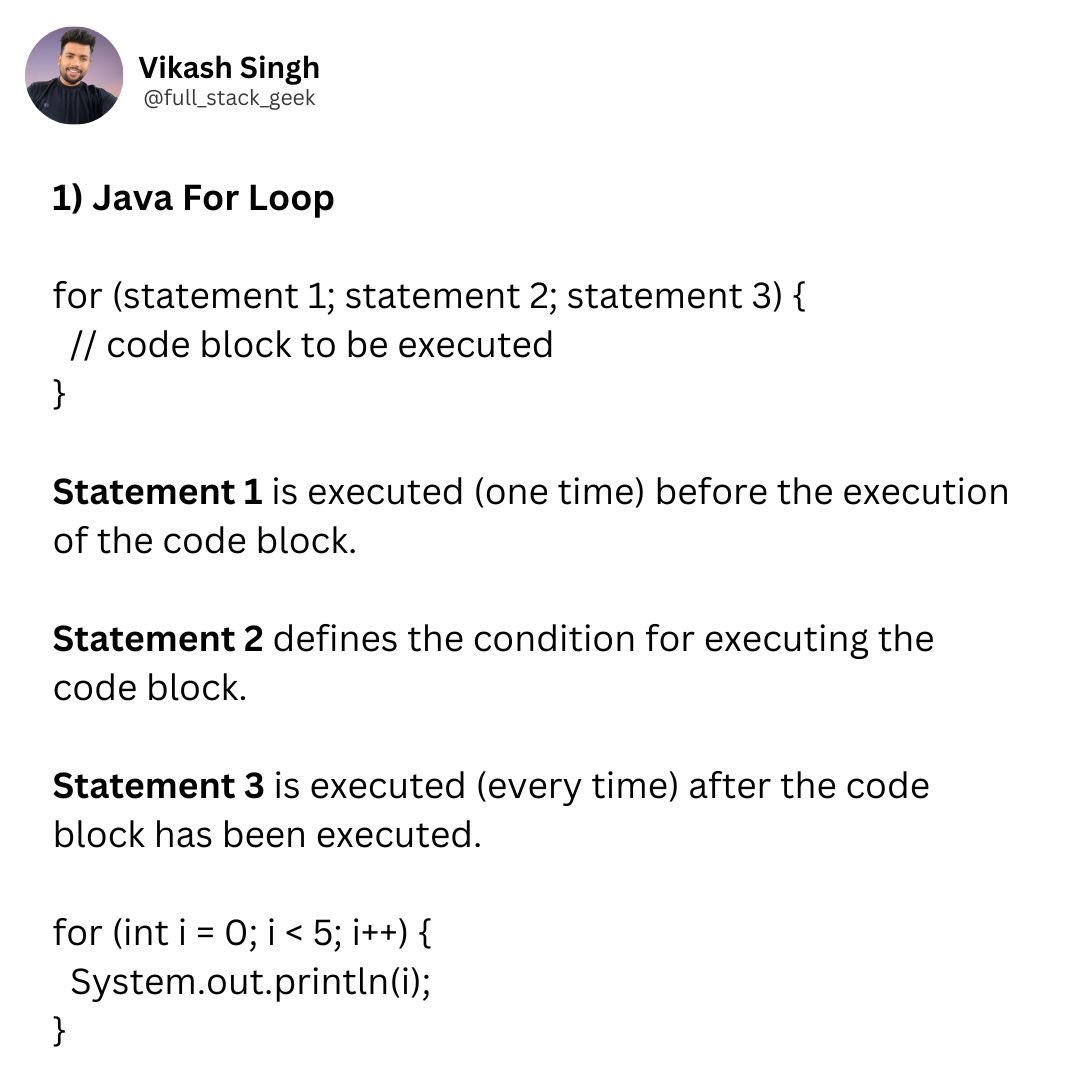
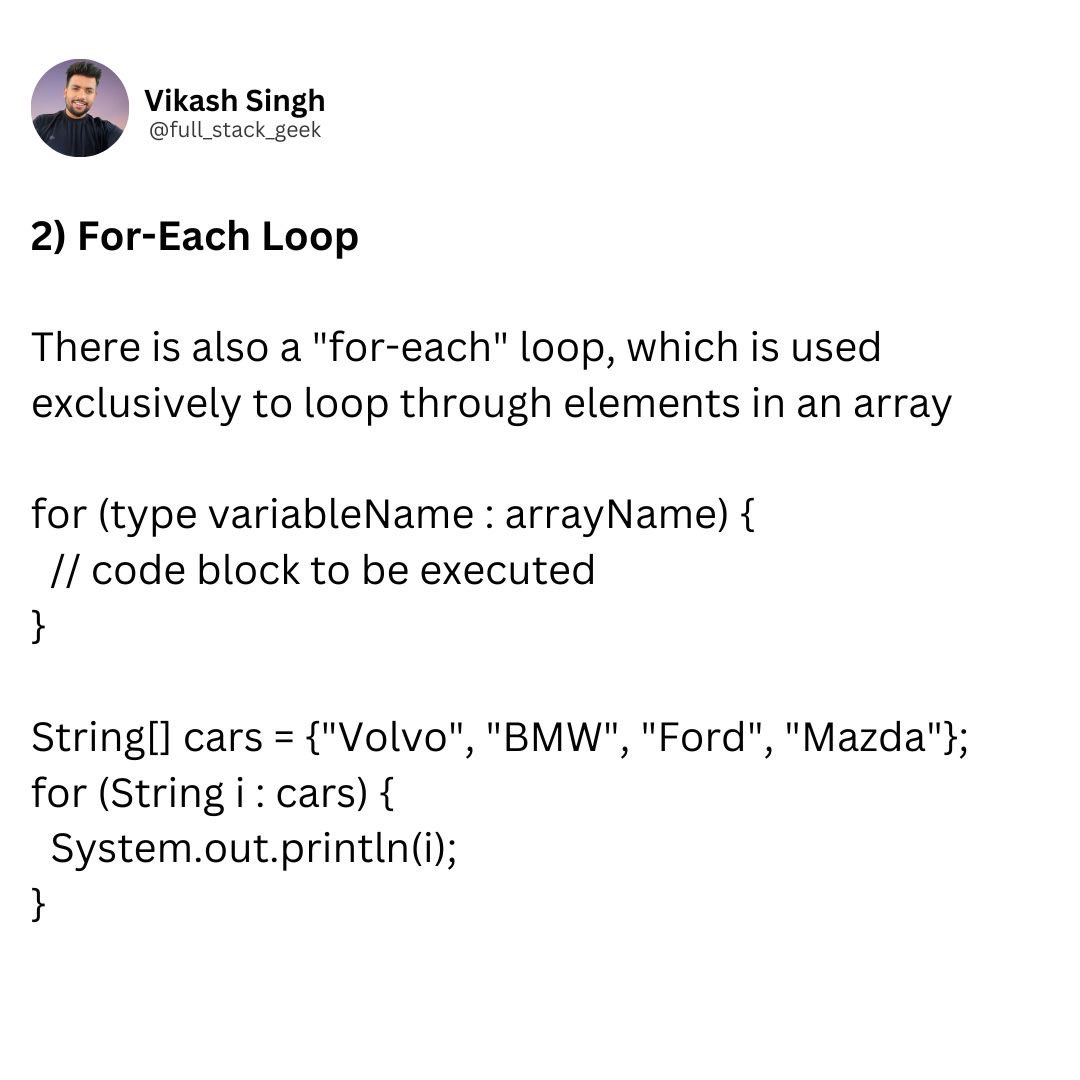
Different types of For loops in Java.
Follow @full_stack_geek for more learning.
#Java #100daysofcoding #100DaysOfCode #SoftwareDeveloper #SoftwareEngineer


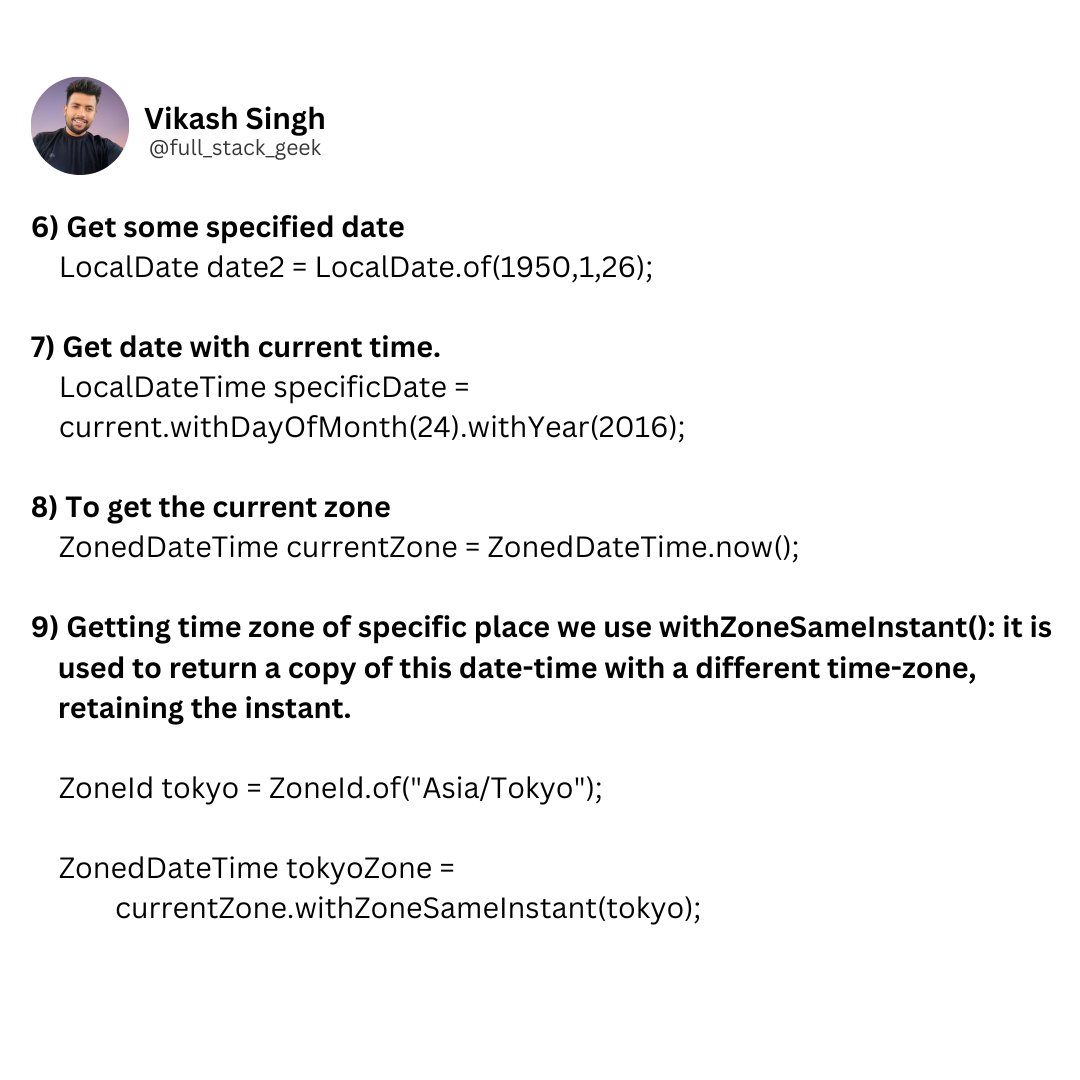
Java Date and Time CheatSheet.
Follow @full_stack_geek for more learning.
#Java #java21 #Java21 #100DaysOfCode #100daysofcoding #100daysofcode #SoftwareDeveloper #softwareengineer



String vs StringBuilder va StringBuffer
Follow @full_stack_geek for more learning content.
#100DaysOfCode #Java #SoftwareDeveloper #SoftwareEngineer

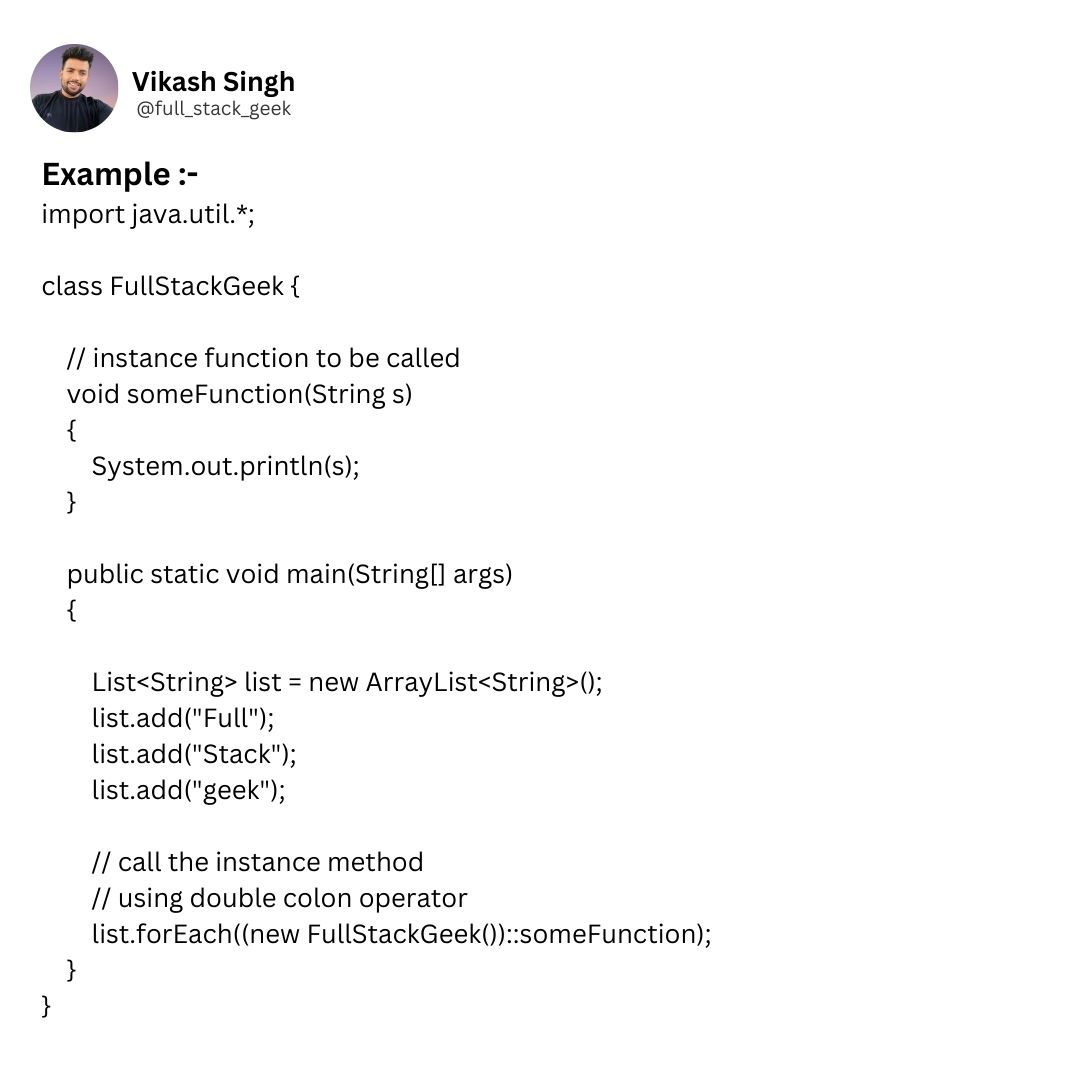
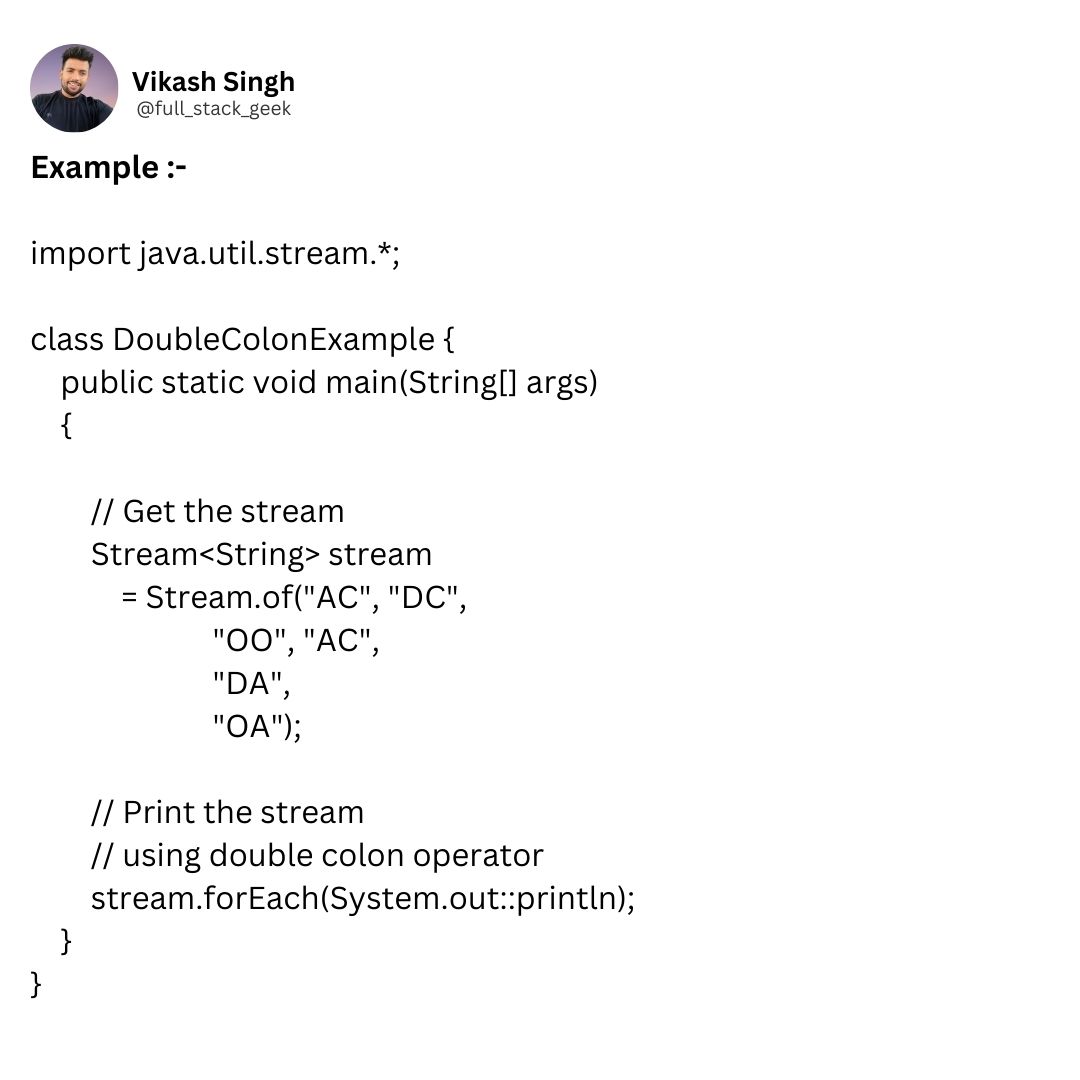
Double colon (::) operator in Java.
Follow @full_stack_geek for more learning.
#Java #java21 #Java21 #100DaysOfCode #100daysofcoding #100daysofcode #SoftwareDeveloper #SoftwareEngineering


Difference between HashMap and HashTable in Java.
Follow @full_stack_geek for more learning.
#Java #java21 #Java21 #100DaysOfCode #100daysofcoding #100daysofcode #SoftwareDeveloper #softwareengineer

Difference between Array and ArrayList in Java.
Follow @full_stack_geek for more learning.
#100DaysOfCode #100daysofcode #100daysofcoding #Java #SoftwareEngineer #SoftwareDeveloper #developer

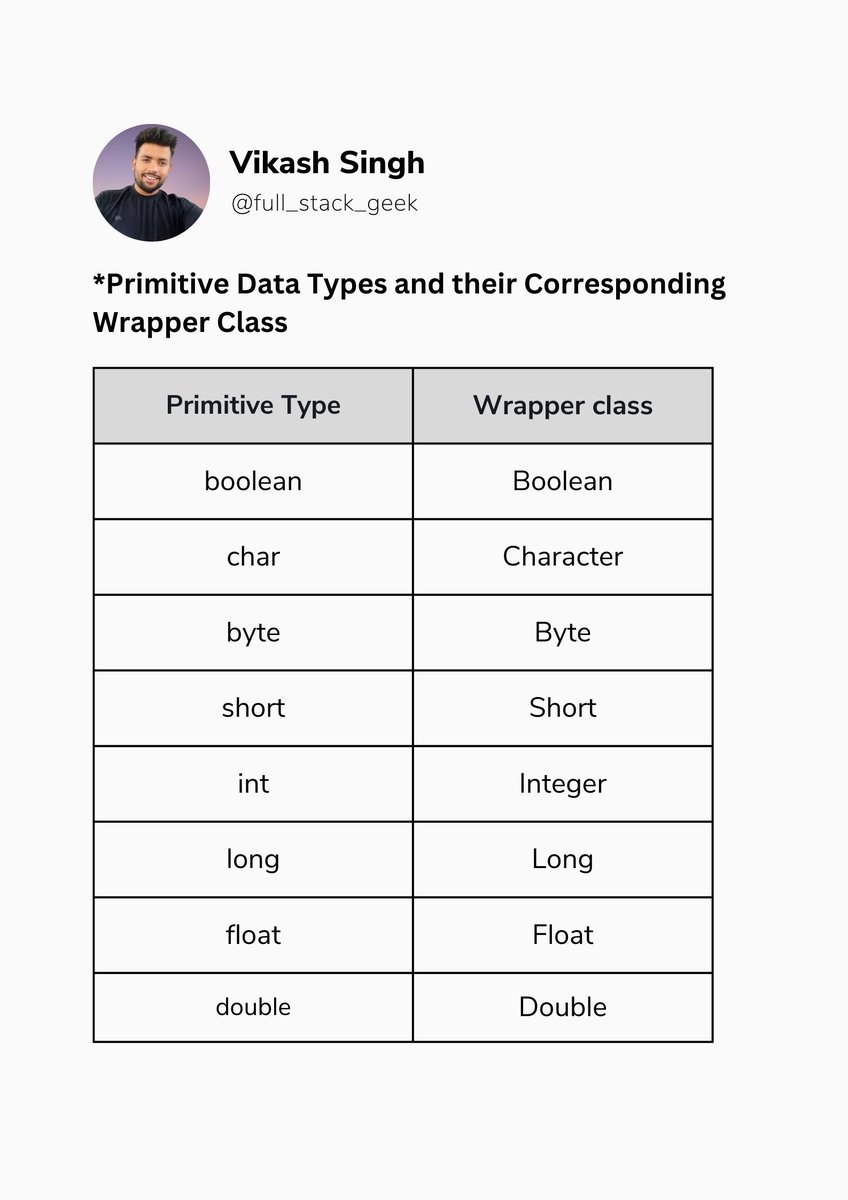
What is Wrapper class in Java ?
The wrapper class in Java provides the mechanism to convert primitive into object and object into primitive.
Advantages of Wrapper Classes
1) Collections allowed only object data.
2) On object data we can call multiple methods compareTo(), equals(), toString()
3) Cloning process only objects
4) Object data allowed null values.
5) Serialization can allow only object data.
Need of Wrapper Classes
1) They convert primitive data types into objects. Objects are needed if we wish to modify the arguments passed into a method (because primitive types are passed by value).
2) The classes in java.util package handles only objects and hence wrapper classes help in this case also.
3) Data structures in the Collection framework, such as ArrayList and Vector, store only objects (reference types) and not primitive types.
4) An object is needed to support synchronization in multithreading.
Example :-
public class Main {
public static void main(String[] args) {
Integer myInt = 5;
Double myDouble = 5.99;
Character myChar = 'A';
System.out.println(myInt);
System.out.println(myDouble);
System.out.println(myChar);
}
}
Follow @Full_stack_geek for more learning content.
#webdevelopment #webstagram #webdesign #webdeveloper #coder #codingforweb #codeismylife #coderslife #coderjourneys #backenddeveloper #backendchallenge #backenddevelopment #backend #programming #java #sql #springboot #variables #java #javadeveloper #webdevelopment #webstagram #webdesign #webdeveloper #animation #boxsizing #boycoder #ai #corejava #backend #java
What is StringJoiner in Java?
Follow @full_stack_geek for more Java learning content
StringJoiner is used to construct a sequence of characters separated by a delimiter and optionally starting with a supplied prefix and ending with a supplied suffix. Though this can also be done with the help of the StringBuilder class to append delimiter after each string, StringJoiner provides an easy way to do that without much code to write.
Constructor:-
StringJoiner(CharSequence delimiter, CharSequence prefix, CharSequence suffix)
Example:-
StringJoiner sj = new StringJoiner(":", "[", "]");
sj.add("George").add("Sally").add("Fred");
String desiredString = sj.toString();
Output :- "[George:Sally:Fred]"
Important Methods:-
1) add(CharSequence newElement):- Adds a copy of the given CharSequence value as the next element of the StringJoiner value.
2) length():- Returns the length of the String representation of this StringJoiner.
3) merge(StringJoiner other):- Adds the contents of the given StringJoiner without prefix and suffix as the next element if it is non-empty.
4) setEmptyValue(CharSequence emptyValue):- Sets the sequence of characters to be used when determining the string representation of this StringJoiner and no elements have been added yet, that is when it is empty.
5) toString():- Returns the current value, consisting of the prefix, the values added so far separated by the delimiter, and the suffix, unless no elements have been added in which case, the prefix + suffix or the emptyValue characters are returned.
#java #SoftwareDeveloper #backenddeveloper #100daysofcodechallenge #100daysofcoding #javadeveloper

String vs StringBuilder vs StringBuffer in Java.
Follow @full_stack_geek for Java learning content.
#java #softwaredeveloper #backenddeveloper #softwareengineer #100DaysOfCode


@full_stack_geek LOL it took them 21 versions to fix this annoying thing

@full_stack_geek Strings are immutable so as to provide security.... Ya thanks for the short blog.👍🏻
Share more like it
@full_stack_geek Keep sharing such short blog, that was an informative one!!

@full_stack_geek Hatts off to your dedication! Good going bro.

@full_stack_geek My bad, Javascript
Difference between Arrays.sort() and Collections.sort() in Java.
👉 𝐀𝐫𝐫𝐚𝐲𝐬.𝐬𝐨𝐫𝐭():-It sorts the arrays which can be the type of primitive data type.
𝐀𝐥𝐠𝐨𝐫𝐢𝐭𝐡𝐦:- Dual-Pivot Quicksort algorithm
𝐓𝐢𝐦𝐞 𝐂𝐨𝐦𝐩𝐥𝐞𝐱𝐢𝐭𝐲: O(nlog(n))
𝐀𝐮𝐱𝐢𝐥𝐢𝐚𝐫𝐲 𝐒𝐩𝐚𝐜𝐞 : O(1)
👉 𝐂𝐨𝐥𝐥𝐞𝐜𝐭𝐢𝐨𝐧𝐬.𝐬𝐨𝐫𝐭():- It sort only the objects which extends List interface(ArrayList,LinkedList etc) or user-defind class objects if class implements Comparable.
𝐀𝐥𝐠𝐨𝐫𝐢𝐭𝐡𝐦:- Adaptive Mergesort algorithm
𝐓𝐢𝐦𝐞 𝐂𝐨𝐦𝐩𝐥𝐞𝐱𝐢𝐭𝐲: O(nlog(n))
𝐀𝐮𝐱𝐢𝐥𝐢𝐚𝐫𝐲 𝐒𝐩𝐚𝐜𝐞 : O(1)
Examples:-
✅ Arrays.sort():-
import java.util.Arrays;
class ArraySort {
public static void main(String arg[]){
int arr[] = {10,4,6,7,8};
Arrays.sort(arr); // {4,6,7,8,10}
}
}
✅ Collections.sort():-
import java.util.Collection;
import java.util.List;
class CollectionSort {
public static void main(String arg[]){
List<Integer> arrList = List.of(11,5,6,3,2,8)
Collections.sort(arrList); // {2,3,5,6,8,11}
}
}
Follow @full_stack_geek👨💻 for more interview questions.
#java #corejava #java8 #springboot #backenddeveloper #fullstackdeveloper #javadeveloper #javaprogramming


@full_stack_geek C...Couldn't understand a damn thing...just copied from the black board😅
@full_stack_geek Trainees hurt my head 🤣


@full_stack_life Not z-index exactly but kind of. Views inside Z-stack, and depth access modifier.
Last Seen Hashtags on Sotwe
Trends for you
Most Popular Users

Elon Musk 
@elonmusk
239.8M followers

Barack Obama
@barackobama
118.6M followers

Cristiano Ronaldo
@cristiano
114.3M followers

Donald J. Trump
@realdonaldtrump
111.7M followers

Narendra Modi
@narendramodi
106.9M followers

Rihanna
@rihanna
98.6M followers

NASA
@nasa
92.1M followers

Justin Bieber
@justinbieber
91.7M followers

KATY PERRY
@katyperry
89.9M followers

Taylor Swift
@taylorswift13
83.9M followers

Lady Gaga
@ladygaga
75.4M followers

Virat Kohli
@imvkohli
73.3M followers

Kim Kardashian
@kimkardashian
70.8M followers

YouTube
@youtube
68.6M followers

Neymar Jr
@neymarjr
66.3M followers

Bill Gates
@billgates
65.1M followers

Selena Gomez
@selenagomez
63M followers

The Ellen Show
@theellenshow
62.1M followers

CNN
@cnn
61.7M followers

X
@x
60.6M followers